 Reading Time: 40 minutes
For most of my life, seeing that word had been enough to make me straighten my posture. To reconsider my tone. To wonder what I had done wrong before I even answered.
Even at thirty-one years old, some part of me still became a little girl whenever Robert Bennett called angry. The daughter who knew there was always a correct answer.
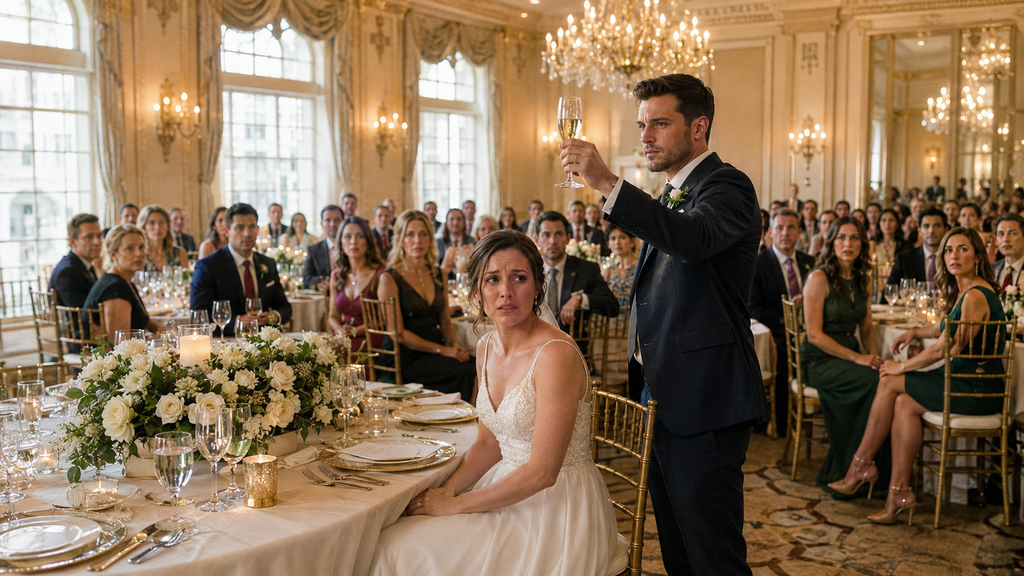
The daughter who learned that peace usually meant giving him one.
But that night, I was standing in the middle of my own wedding reception.
Two hundred people surrounded me.
My husband stood only a few feet away.
And behind me were two empty chairs that had taught me more about my family than thirty-one years of excuses ever had.
I stared at the phone.
It rang again.
Then again.
Ethan stepped toward me.
He didn’t try to take it.
He didn’t tell me what to do.
He simply looked into my eyes.
“You don’t owe him an answer tonight.”
I swallowed.
“I know.”
That was the strange thing.
For the first time, I actually knew.
I didn’t owe my father immediate obedience.
I didn’t owe my mother reassurance.
I didn’t owe Madison another sacrifice.
I didn’t even owe anyone an explanation for getting married on the wedding date I had chosen more than a year earlier.
But I wanted to answer.
Not because I was afraid.
Not because I hoped he would apologize.
Not because I wanted one last chance to convince him that I deserved to matter.
I wanted to answer because there were words inside me that had waited three decades to be spoken.
So I pressed the green button.
“Hello?”
My father didn’t say congratulations.
He didn’t ask whether I was happy.
He didn’t ask how the ceremony had gone.
His first words were—
“What the hell have you done?”
The room around me seemed to disappear.
There it was.
The Robert Bennett I knew.
Not worried that his daughter had walked down the aisle without him.
Not ashamed that his private cruelty had been exposed.
Furious that there had been witnesses.
I looked across the room.
Guests were pretending not to stare.
No one was convincing.
“What have I done?” I repeated.
“You know exactly what I’m talking about.”
His voice thundered through the phone.
“Linda called your mother. Then Charles called me. Apparently Ethan decided to turn your wedding into some kind of public trial.”
I glanced at Aunt Linda.
She stood near table six with one hand over her mouth.
Apparently she had already made a phone call.
My father continued.
“Do you have any idea how humiliating this is?”
Something inside me became very still.
Humiliating.
That was the word he chose.
Not painful.
Not regrettable.
Not unforgivable.
Humiliating.
For him.
“I think I know a little about humiliation, Dad.”
“Don’t start.”
Two words.
I had heard them my entire life.
Don’t start.
Whenever I objected.
Whenever I questioned.
Whenever I pointed out the obvious.
Whenever I attempted to describe a wound before the family could rename it an attitude problem.
I closed my eyes.
For one heartbeat, I was fourteen again.
Madison had wanted my birthday dinner moved because her best friend was having a sleepover.
My parents moved it.
I complained.
My father told me not to start.
I was seventeen.
My final high school theater performance overlapped with Madison’s regional dance competition.
My mother and father went to Madison’s competition.
I told them I wished one of them had stayed.
My father told me not to start.
I was twenty-two.
College graduation.
My parents left my graduation lunch before dessert because Madison had called crying after an argument with her boyfriend.
I said I was hurt.
My mother told me Madison needed them more.
My father told me not to start.
At twenty-eight, I got promoted to senior project director at the architecture firm where I had spent years working sixty-hour weeks.
We planned dinner.
Madison announced a last-minute engagement party.
My celebration disappeared.
When I said I was tired of always being the flexible one, my father said—
“Claire, don’t start.”
But I wasn’t fourteen anymore.
I wasn’t seventeen.
I wasn’t twenty-two.
And I certainly wasn’t standing in my childhood kitchen waiting for permission to be disappointed.
I opened my eyes.
“No.”
Silence.
My father actually stopped talking.
I had never answered him like that.
“No what?”
“No, Dad. You don’t get to say ‘don’t start’ anymore.”
Across the room, Ethan’s eyes lifted.
My voice wasn’t loud.
It didn’t need to be.
“You called me,” I continued. “You asked what I did. So if you want to talk, then you’re going to let me answer.”
“Claire—”
“You skipped my wedding.”
Another silence.
“You and Mom deliberately skipped your daughter’s wedding because I wouldn’t move a date that had been booked for more than a year so Madison could go to Bali.”
“That is not what happened.”
I almost laughed.
Not because anything was funny.
Because denial was so predictable that it had become absurd.
“That is exactly what happened.”
“You forced us into an impossible position.”
“No.”
My voice trembled.
I steadied it.
“Madison booked a vacation during my wedding week. That was her decision. Then you turned her decision into my responsibility.”
“It wasn’t simply a vacation.”
“Oh, right. The wellness retreat.”
“Madison had networking opportunities there.”
“And I was getting married.”
My father exhaled sharply.
“You’re still doing it.”
“Doing what?”
“Acting like your event automatically mattered more because it was a wedding.”
I stared at the two empty chairs.
My father had actually said it.
Even after everything.
Even now.
I turned slightly away from the room.
“Dad, my wedding mattered more to me.”
“It was one day.”
“And apparently that one day was still too much for you to give me.”
He didn’t answer immediately.
I heard muffled voices in the background.
My mother.
Then my father said, “Put Ethan on the phone.”
Old Claire would have obeyed.
Old Claire would have been relieved to hand the confrontation to someone stronger.
I looked at Ethan.
He shook his head once.
Not because he was afraid to speak to my father.
Because he understood.
This was mine.
“No.”
“I said put your husband on.”
“And I said no.”
“Claire Bennett—”
“Cole.”
The word left my mouth before I had even thought about it.
My father stopped.
I looked at Ethan.
His expression changed.
Softened.
My throat tightened.
“My name is Claire Cole now.”
I had not planned to say it that way.
It wasn’t a rejection of the person I had been.
It wasn’t about erasing Bennett.
It was simply the first moment the new name felt real.
Not because paperwork would change.
Because something inside me had.
My father’s voice became quieter.
Which was usually worse than shouting.
“You are allowing that man to divide this family.”
I looked at Ethan.
Then at the packed reception room.
At Aunt Linda.
My cousin Rachel.
My college roommate Sophie.
My coworkers.
Ethan’s parents.
Friends who had flown across the country.
People who had rearranged schedules, paid for hotels, hired babysitters, driven for hours, and shown up because we mattered to them.
“No,” I said.
“You divided this family when you decided Madison’s vacation was worth more than my wedding.”
“Ethan read private correspondence in front of two hundred people.”
“Yes.”
“That was disgusting.”
“Were the words false?”
He paused.
“That isn’t the point.”
“It is exactly the point.”
“Private conversations can be taken out of context.”
“Then give me the context.”
Silence again.
I pressed harder.
“Tell me what context makes this sentence acceptable: ‘Perhaps being abandoned publicly on her wedding day will teach Claire she doesn’t matter more than her sister.’”
His breathing changed.
“Claire—”
“No. Explain it.”
“You’re emotional.”
There it was.
Another old weapon.
When logic failed, I was emotional.
When I stayed calm, I was cold.
When I compromised, it proved the compromise had been reasonable.
When I refused, I was selfish.
There was no winning because the rules were designed to move.
“I am emotional,” I said.
My father clearly hadn’t expected agreement.
“Yes. I’m emotional because my parents chose not to attend my wedding.”
“Then perhaps you should have considered that before forcing the issue.”
Something broke.
Not loudly.
There was no dramatic snap.
It was more like a thread finally becoming too thin to hold anything.
I had spent three months imagining the moment my parents would regret what they had done.
I imagined my mother crying.
My father apologizing.
Madison realizing the damage.
I imagined some magical sentence that would make them look at me differently.
But listening to my father that night, I finally understood.
There was no sentence.
Because this was not a misunderstanding.
He understood perfectly.
He simply believed I should have surrendered.
That realization hurt more than anger ever could.
Yet underneath the pain was something unexpected.
Relief.
Terrible, beautiful relief.
Because once you realize there is no perfect way to explain your pain to someone committed to benefiting from it, you can finally stop explaining.
I took a breath.
“You wanted to teach me humility.”
My father said nothing.
“You told me that refusing to move my wedding was proof that I needed to learn humility.”
“I said you needed perspective.”
“You said humility.”
“Fine.”
His voice hardened.
“I said humility.”
I looked down at the white satin of my dress.
At the flowers stitched along the waist.
At Ethan’s wedding band now resting on his hand.
“You were right.”
My father went quiet.
Maybe he thought I was surrendering.
Maybe for one second he believed the old Claire had returned.
“I did learn humility today.”
My voice cracked.
I didn’t hide it.
“I learned that I cannot force my parents to love me the way I spent my childhood hoping they would.”
No one around me moved.
Even people who couldn’t hear my father could hear me.
“I learned I can’t earn equal treatment by being easier.”
My eyes filled.
“I can’t earn it by asking for less.”
My voice grew stronger.
“I can’t earn it by being the daughter who never causes problems.”
A tear slipped down my cheek.
I let it.
“And I finally learned that making myself smaller was never humility.”
My father inhaled.
I continued before he could interrupt.
“It was survival.”
Across the room, my mother-in-law covered her mouth.
Ethan’s eyes shone.
I kept going.
“So yes, Dad. I learned your lesson.”
My hand stopped shaking.
“I learned I don’t have to spend the rest of my life auditioning for a place in my own family.”
“Claire, you are being ridiculous.”
“No.”
I smiled through tears.
“I think this is the least ridiculous I’ve ever been.”
Then came the sentence I had needed thirty-one years to say.
“You already skipped my wedding, Dad.”
My voice became almost a whisper.
“So what exactly are you threatening to take away from me now?”
Nothing.
No answer.
For several seconds, all I could hear was breathing.
Then my mother’s voice came faintly through the phone.
“Give it to me.”
My father muttered something.
The phone shifted.
“Claire?”
My mother.
Mom.
Elizabeth Bennett.
The woman whose silence had hurt even more than my father’s anger.
My eyes closed.
“Hi, Mom.”
Her voice was shaky.
“Please don’t do this tonight.”
I nearly smiled at the irony.
“Do what?”
“Turn everyone against us.”
My eyes opened.
“Mom, I didn’t write those emails.”
“That isn’t fair.”
“Neither was leaving two empty chairs at my wedding.”
“We were trying to keep the family together.”
“No.”
I looked at those chairs again.
“You were trying to keep Madison happy.”
“That’s not true.”
“Then why aren’t you here?”
She said nothing.
That silence told the truth better than any argument could.
“Claire,” she finally whispered, “your father was angry when he wrote those things.”
“And what about what you wrote?”
My mother’s breathing stopped.
“You told Ethan that Madison had more to lose socially by missing Bali than I had to lose by getting married without my parents.”
“I didn’t phrase it well.”
“Mom.”
“I was trying to make him understand.”
“Understand what?”
“That Madison had already paid—”
“Mom.”
My voice sharpened.
She stopped.
“Listen to what you’re saying.”
I pressed my hand over my stomach.
“You’re explaining why a vacation deposit mattered more than being there when your daughter got married.”
“It wasn’t about the money.”
“I know.”
I swallowed.
“That’s what hurts.”
Another long silence.
Then she whispered, “We thought you would move it.”
There it was.
Not an apology.
A confession.
“You thought I would give in.”
“You’ve always been reasonable.”
The words almost knocked the breath out of me.
Reasonable.
Suddenly I understood the entire machinery of my childhood.
Madison screamed.
I adjusted.
Madison cried.
I understood.
Madison demanded.
I compromised.
And because I compromised, I became the person who was expected to compromise.
Again.
And again.
And again.
My strength had become the excuse for giving me less.
I pressed the phone tighter against my ear.
“Mom, do you know what being ‘reasonable’ meant in our family?”
She didn’t answer.
“It meant you could hurt me and trust that I would absorb it quietly.”
“Claire—”
“You called me mature when what you meant was convenient.”
Her breath caught.
I continued.
“You called Madison sensitive when what you meant was that everyone was afraid of upsetting her.”
“That is not fair to your sister.”
“This conversation isn’t about protecting Madison.”
The words came out before I could soften them.
And for once, I didn’t.
“It is my wedding night, Mom.”
My voice broke.
“And you are still protecting Madison.”
My mother began crying.
Softly.
I heard it.
And for one terrible second, instinct took over.
I almost comforted her.
My mouth actually opened.
I nearly said, Mom, please don’t cry.
Then I caught myself.
That was how deep the pattern went.
Even now.
Even standing abandoned at my own wedding.
I was prepared to soothe the person who had chosen not to attend.
I shut my eyes.
I breathed.
Then I said something different.
“I’m sorry you’re upset.”
Not I’m sorry I upset you.
There was a difference.
A huge one.
“I love you,” my mother whispered.
Those words almost destroyed me.
Because I believed her.
That was the painful part.
I believed she loved me.
She just had not loved me courageously.
She had not loved me fairly.
She had not loved me in a way that protected me when protection required disappointing someone else.
“I love you too.”
My voice shook.
“But love doesn’t make this okay.”
“Can we talk tomorrow?”
I looked at Ethan.
Then at everyone who had shown up.
“No.”
My mother inhaled sharply.
“Not tomorrow.”
“When?”
“I don’t know.”
“Claire—”
“I mean it.”
For once, I did not rush to give her a date.
A deadline.
A reassurance.
A path back to normal.
“I need space.”
“From your own parents?”
“Yes.”
The word was painful.
But clean.
“Yes, Mom.”
She started crying harder.
I felt the familiar guilt rise.
I let it rise.
Then I let it pass.
“I have spent my entire life protecting everybody else from the consequences of hurting me.”
My voice became softer.
“I’m not doing that anymore.”
Then I ended the call.
My thumb hovered over the screen.
For half a second, I waited for lightning.
For the ceiling to fall.
For some invisible judge to declare me a terrible daughter.
Nothing happened.
The reception hall remained standing.
The candles still flickered.
The music speakers still glowed beside the dance floor.
Outside, rows of grapevines stretched into the darkening Napa evening.
Ethan walked toward me.
I looked at him.
And then—
I broke.
Not gracefully.
Not quietly.
Every tear I had swallowed since my parents issued their ultimatum came at once.
I covered my face.
Ethan reached me before my knees could weaken.
He wrapped both arms around me.
I buried my face against his tuxedo.
“I’m sorry,” I whispered.
“For what?”
“I don’t know.”
It was the most truthful answer I had.
He held me tighter.
“Then don’t apologize.”
I cried against him.
Not because my wedding was ruined.
It wasn’t.
That was the strange truth.
My wedding had not been ruined.
My parents had missed it.
There was a difference.
A painful difference.
But an important one.
Eventually I became aware of the room again.
No one was clapping now.
No one was whispering.
Two hundred people were simply waiting.
Not impatiently.
Not hungrily.
Waiting for me.
I pulled back from Ethan.
“I need a minute.”
“Take ten.”
I gave a wet laugh.
He smiled.
Then I looked at him seriously.
“Did you know he was going to call?”
“No.”
“Did you expect this?”
“I expected him to be angry.”
“You read those emails in front of everyone.”
“Yes.”
There was no defensiveness in his voice.
Just fact.
I wiped my cheeks.
“Why?”
His expression changed.
Not regret exactly.
Something more complicated.
“I need to answer that carefully.”
“That sounds like a lawyer.”
“I am a lawyer.”
Despite everything, I laughed.
He took my hands.
“Claire, I didn’t do it because I wanted revenge.”
I waited.
“I did it because I watched you spend three months telling everybody that your parents ‘couldn’t make it.’”
My throat tightened.
“You protected them.”
He squeezed my hands.
“Even after they decided not to protect you.”
I looked down.
“You told people there was a conflict.”
“There was.”
“No.”
His voice remained gentle.
“There was a choice.”
That hurt.
Because it was true.
“And every time someone asked, you made the choice sound mutual so nobody would think badly of them.”
“I didn’t want drama.”
“I know.”
Ethan stepped closer.
“But silence was starting to make their story look reasonable.”
I looked at him.
He continued.
“Your father emailed me because he assumed I would pressure you.”
A muscle shifted in his jaw.
“He expected me to help break you down.”
I remembered Ethan showing me only part of that conversation days earlier.
He had told me my father reached out.
He had not told me how cruel the messages became.
“I wanted this day to be about us,” I whispered.
“I know.”
“And now everyone is talking about them.”
“I know.”
His eyes dropped.
“And if you’re angry with me, you have every right to be.”
That surprised me.
He didn’t justify it.
Didn’t tell me I should be grateful.
Didn’t claim he knew best.
He simply stood there and allowed me to feel what I felt.
“I wish you had warned me.”
“I should have.”
I nodded.
He nodded too.
Then I looked around.
At the faces.
At the empty chairs.
At people wiping tears.
At Aunt Linda standing beside my cousin.
At Ethan’s father with his arms folded across his chest.
At my new mother-in-law looking like she wanted to personally drive to my parents’ house and start a war.
And suddenly I understood why Ethan had done it.
Not perfectly.
Not painlessly.
But I understood.
“If you had warned me,” I admitted, “I probably would’ve stopped you.”
“I know.”
“And I would’ve spent the whole night pretending their absence didn’t hurt.”
“I know.”
I let out a shaky breath.
“You’re annoyingly sure of things tonight.”
“That’s the corporate-attorney training.”
I laughed again.
Then I stepped closer.
“Don’t ever make a decision like that for me again.”
His face became serious immediately.
“I won’t.”
“But…”
I took another breath.
“Thank you for refusing to let them rewrite what happened.”
His eyes softened.
“I love you.”
“I love you too.”
He kissed my forehead.
Then, because apparently the universe had decided I had not cried enough, Ethan’s father approached us.
His name was Michael Cole.
He was sixty-four, broad-shouldered, silver-haired, and had spent most of his career teaching high school history.
He had never once treated me like I needed to earn my place in his family.
He stopped a few feet away.
“Claire?”
“Yes?”
He looked nervous.
Michael Cole almost never looked nervous.
“The DJ asked me something.”
I blinked.
“What?”
“He said the parent dances were supposed to happen next.”
My chest tightened.
Of course.
The father-daughter dance.
I had forgotten.
Or maybe my brain had been protecting me from remembering.
Michael glanced toward the empty chairs.
“We can skip it.”
I nodded quickly.
“Probably best.”
He hesitated.
“Or…”
Ethan looked at his father.
Michael’s eyes returned to me.
“I would never pretend to be your father.”
My throat tightened.
“And I would never want to replace something that can’t be replaced.”
He rubbed his palms against his suit pants, suddenly looking like a nervous teacher on the first day of school.
“But if you don’t want to stand alone when that song starts…”
His voice cracked.
“I’d be honored to dance with you.”
I lost the battle with my tears again.
Michael immediately lifted both hands.
“Only if you want to.”
I laughed through tears.
“Yes.”
His eyes filled.
“Yes?”
“Yes.”
I hugged him.
Behind us, Ethan muttered, “Great. Now everyone’s crying again.”
Michael looked over my shoulder.
“Shut up, son.”
Laughter rippled through the nearest tables.
For the first time in twenty minutes, the room breathed again.
The DJ lowered the lights.
Then the opening notes of the song began.
It was the song I had chosen months ago for my father.
A soft acoustic song about growing older and being carried home.
For one second, I almost asked the DJ to change it.
Then I decided not to.
Robert Bennett did not own the song.
He did not own the meaning.
He did not own the moment.
Michael offered his hand.
I took it.
We walked onto the dance floor.
At first, I was painfully aware of every eye.
Then Michael leaned toward me.
“I should warn you.”
“What?”
“I’m a terrible dancer.”
I sniffed.
“How terrible?”
“Your photographer may need to destroy evidence.”
I laughed.
And just like that, the knot in my chest loosened.
We danced.
Not like father and daughter.
Not pretending.
Simply two people who had chosen kindness in a moment when kindness was needed.
Halfway through the song, Michael said quietly—
“I’m sorry they missed this.”
I swallowed.
“Me too.”
He nodded.
Then he said something I would remember for the rest of my life.
“Missing it is their punishment, Claire.”
I looked at him.
“Not yours.”
My eyes filled again.
Across the dance floor, Ethan watched us.
His mother Diane stood beside him.
She was crying openly now.
Michael continued.
“You don’t have to carry their empty chairs around forever.”
That sentence stayed inside me.
Because until then, I had assumed I did.
I thought being abandoned meant carrying evidence of abandonment.
I thought hurt became identity.
I thought the people who failed to show up got to haunt every future room.
But maybe they didn’t.
Maybe empty chairs could remain empty.
And maybe I could still dance.
When the song ended, people stood.
The applause was different this time.
Warm.
Not angry.
Not vindictive.
Just love.
Michael kissed my forehead.
Then Ethan stepped onto the dance floor.
“My turn.”
His father smiled.
“Try not to ruin her life.”
“No promises.”
I laughed.
Ethan pulled me into his arms.
The DJ switched songs.
And for the next three hours, I allowed myself to have a wedding.
A real wedding.
I danced until my feet hurt.
I ate a slice of cake standing beside the dessert table.
I hugged people I had not seen in years.
My cousin Rachel dragged me into a group dance with six bridesmaids and one extremely confused uncle.
Ethan’s law partners loosened their ties and danced badly.
Aunt Linda drank two glasses of champagne and told anyone who would listen that she had always suspected my father was “emotionally constipated.”
At one point, I laughed so hard that champagne came out of my nose.
The photographer caught it.
I told her the photograph was banned.
She told me absolutely not.
For a few hours, I stopped looking at the empty chairs.
And then something even more surprising happened.
I forgot they were there.
The next morning, I woke in our hotel suite with sunlight coming through the curtains and Ethan’s arm across my waist.
For several seconds, I didn’t remember anything.
Then I saw my wedding dress hanging from the wardrobe door.
My bouquet sat in a glass vase near the window.
My ring caught the sunlight.
I smiled.
Then I saw my phone.
Forty-three missed notifications.
My smile disappeared.
Ethan was still sleeping.
I carefully slid out from beneath his arm.
My phone lit up.
Texts.
Voicemails.
Family group chats.
Instagram messages.
Three calls from my mother.
Seven from my father.
And eleven from Madison.
Madison.
I sat on the edge of the bed.
For one moment, I considered turning the phone off.
Then another message arrived.
Madison: CALL ME. NOW.
I stared at it.
Something about the punctuation irritated me.
Maybe because even from Bali, she still assumed urgency belonged to her.
I opened the messages.
Madison: What the hell happened last night?
Madison: Mom is hysterical.
Madison: Dad says Ethan publicly humiliated them.
Madison: Why was my name dragged into this?
Madison: I didn’t write those emails.
Madison: Claire answer me.
Then, twenty minutes later:
Madison: People are messaging me.
There it was.
Not Are you okay?
Not I’m sorry.
People were messaging her.
Consequences had finally reached Bali.
I almost laughed.
Instead, I called.
She answered before the first ring finished.
“Finally.”
No hello.
No congratulations.
No how was your wedding.
Just—
“Finally.”
I leaned against the hotel window.
Palm trees swayed outside.
Rows of vines stretched beyond the property.
“What do you want, Madison?”
“What do I want?”
Her voice was sharp.
“I want to know why Ethan read private messages about me in front of two hundred people.”
“He read messages from Mom and Dad.”
“My name was all over them.”
“Because Mom and Dad made your vacation the reason they skipped my wedding.”
“That isn’t my fault.”
I closed my eyes.
“Did you know they weren’t coming?”
Silence.
That was enough.
“Madison.”
“They told me there was a disagreement.”
“Did you know?”
Another pause.
“Yes.”
The word was quiet.
I gripped the phone.
“How long?”
“I don’t know.”
“Madison.”
“A couple months.”
I laughed once.
It came out broken.
“You knew for two months that Mom and Dad were going to boycott my wedding because of your Bali trip.”
“I didn’t tell them to.”
“But you knew.”
“I thought you guys would work it out.”
“How?”
Silence.
I already knew the answer.
By me surrendering.
“Did you think I would move the wedding?”
“I thought maybe you could.”
There it was.
My sister.
The center of gravity.
I leaned my forehead against the cool glass.
“Why?”
“What?”
“Why should I have moved it?”
“Because everything was already booked.”
“So was my wedding.”
“It’s different.”
“Explain how.”
Madison sighed.
“Claire, the retreat package was almost eight thousand dollars.”
I stared at the vineyard outside.
“My venue deposit was thirty-two thousand.”
“That’s not what I mean.”
“Then what do you mean?”
“There were twelve of us.”
“There were two hundred wedding guests.”
“I had brand commitments.”
“I had vows.”
“Why are you doing this?”
Her voice suddenly became emotional.
“Doing what?”
“Making everything sound ridiculous.”
I actually pulled the phone away from my ear for a second.
“Madison, you went to Bali.”
“Yes.”
“I got married.”
“Yes.”
“Our parents skipped my wedding.”
“I know.”
“Because I wouldn’t move it around Bali.”
“I didn’t ask them to skip it!”
“Did you tell them to come?”
Silence.
I waited.
“Did you?”
She exhaled.
“I told them I wasn’t getting involved.”
And there it was.
The sentence that defined our relationship.
Not getting involved.
As long as the imbalance benefited her.
I sat down slowly.
“Do you know what the worst part is?”
Madison didn’t answer.
“I never expected you to cancel Bali.”
That surprised her.
“What?”
“I was disappointed you booked it that week. But you’re an adult. You made a choice.”
My eyes burned.
“I never demanded you cancel.”
“No.”
“I never asked Mom and Dad to stop speaking to you.”
“No.”
“I never told anyone they had to pick.”
“No.”
“You know who did that?”
She was silent.
“Mom and Dad.”
I swallowed.
“They decided that if one daughter couldn’t be at the wedding, none of you would come.”
“That was their choice.”
“Yes.”
For once, Madison and I agreed.
“It was.”
I let the silence sit between us.
Then I asked the question I had been carrying all night.
“Madison, if this were your wedding…”
She sighed.
“Claire—”
“No. Answer me.”
My voice stayed calm.
“If you had booked a wedding thirteen months in advance and I later scheduled a girls’ trip during the same week, would Mom and Dad have asked you to move your wedding?”
No answer.
“Would they?”
Still nothing.
I closed my eyes.
“Exactly.”
“That’s not fair.”
“It is the fairest question I have ever asked you.”
“You’ve always acted like I’m some spoiled monster.”
“I have never called you that.”
“You don’t have to.”
I rubbed my temple.
“I don’t hate you, Madison.”
Her voice softened slightly.
“Well, it feels like it.”
“I’m angry with you.”
“That sounds similar.”
“It isn’t.”
I breathed.
“I think Mom and Dad failed both of us.”
She laughed bitterly.
“Please don’t turn this into therapy.”
“I’m serious.”
I looked toward Ethan sleeping.
“They taught me that love meant adapting.”
I swallowed.
“And they taught you that love meant being adapted to.”
Madison said nothing.
“For years, I blamed you for taking everything.”
My voice softened.
“But children don’t build family systems. Parents do.”
“I’m not a child.”
“No.”
I looked at my wedding ring.
“You’re thirty years old.”
She hated when I pointed that out.
“And now you’re responsible for what you do with the system they gave us.”
The line went silent.
For a moment, I thought the call had dropped.
Then Madison spoke.
“You embarrassed me.”
I almost smiled sadly.
“There it is.”
“What?”
“You still think the worst thing that happened yesterday was that you were embarrassed.”
“That isn’t what I said.”
“You haven’t asked me once how it felt walking down the aisle without our father.”
She went silent.
“You haven’t asked whether Mom called me.”
Nothing.
“You haven’t asked if I cried.”
Her breathing changed.
“You haven’t even said congratulations.”
Silence.
Long.
Uncomfortable.
Then, finally—
“Congratulations.”
It sounded miserable.
I laughed.
Not cruelly.
Just tired.
“Thank you.”
“Claire…”
Her voice cracked.
I waited.
“I really didn’t think they would go through with it.”
That was the first honest thing she had said.
My anger loosened by half an inch.
“Neither did I.”
“I thought Dad was bluffing.”
“So did I.”
“I thought you’d figure something out.”
“I did.”
“What?”
“I got married without them.”
She inhaled.
I looked at the bright morning outside.
“I need space from you too.”
“What?”
“I’m not cutting you off forever.”
I chose each word carefully.
“But I don’t want to go back to normal.”
“Why?”
“Because normal was hurting me.”
That silenced her.
“If we’re ever going to have a real relationship, we need a new version.”
“What does that mean?”
“It means I stop pretending things are okay when they aren’t.”
I stood.
“It means you stop expecting me to adjust automatically.”
“I don’t.”
“You do.”
She started to argue.
I interrupted.
“And it means if Mom and Dad use you as a reason to punish me again, you don’t get to hide behind ‘I’m not getting involved.’”
“That’s between you and them.”
“No.”
I shook my head.
“Not when your name is the excuse.”
“That isn’t fair.”
“Maybe not.”
I breathed.
“But boundaries aren’t always comfortable.”
Another silence.
Then Madison said quietly—
“I have to go.”
“Okay.”
“Are you going to tell people to stop messaging me?”
“No.”
“Claire.”
“I didn’t send them.”
“You could say something.”
“What would you like me to say?”
“That it isn’t my fault.”
I stared at the wall.
“Madison…”
My voice softened.
“I’m done managing everybody’s reputation.”
Then I ended the call.
My hand shook afterward.
But not from fear.
From grief.
Because boundaries sound empowering when people talk about them in therapy language.
In real life, they hurt.
They disappoint people you love.
They make you question yourself.
They create silence where familiar chaos used to be.
And even necessary silence can feel lonely at first.
Behind me, Ethan stirred.
“Everything okay?”
I turned.
He was awake.
Hair messy.
Eyes barely open.
“No.”
He sat up instantly.
I smiled faintly.
“But I think it will be.”
He held out his hand.
I walked back to the bed.
We left for our honeymoon two days later.
Before boarding the flight, I did something I had never done before.
I muted my family group chat.
Then I muted my mother.
My father.
Madison.
I did not block them.
I did not announce it.
I did not send a dramatic final message.
I simply stopped volunteering to be available for every emergency they created.
For ten days, Ethan and I disappeared into our new marriage.
We slept late.
We ate ridiculous breakfasts.
We walked through tiny streets without checking the time.
We drank wine overlooking the sea.
We argued once about directions.
We laughed about it twenty minutes later.
I learned marriage didn’t begin with some enormous feeling.
It began with tiny things.
His hand finding mine beneath a restaurant table.
His toothbrush beside mine.
The way he always gave me the crispier potatoes because he knew I liked them.
The way I automatically ordered extra coffee because he always stole half of mine.
And slowly, the wedding stopped feeling like the day my parents abandoned me.
It became the day I married Ethan.
That mattered.
When we came home, there were seventeen voicemails from my mother.
Six from my father.
Three from Madison.
One handwritten letter waiting in our mailbox.
From my father.
The envelope had my maiden name on it.
CLAIRE BENNETT.
Not Claire Cole.
Of course.
I almost threw it away.
Instead, I opened it at the kitchen counter.
The letter was four pages long.
There was no apology.
Not one.
My father wrote that Ethan’s decision to expose private family correspondence had caused “irreparable reputational damage.”
He wrote that family members were treating him differently.
He wrote that two couples from their country club had canceled dinner plans.
He wrote that Aunt Linda was refusing to speak to him until he apologized.
He wrote that my mother had barely left the house.
He wrote that Madison’s social-media pages had received negative comments after someone at the wedding apparently repeated what happened.
He blamed Ethan.
Then he blamed me.
Then he called what happened a “temporary emotional rebellion.”
I actually laughed.
At the bottom of page three, he wrote—
If you expect this family to move forward, you and Ethan need to issue a clear apology for humiliating your mother and me publicly.
And on page four—
I am still your father, Claire. Some degree of respect is not optional.
I read that sentence twice.
Then I folded the letter.
Ethan was watching from the doorway.
“How bad?”
I handed it to him.
He read silently.
His jaw tightened.
When he reached the end, he looked up.
“What do you want to do?”
I loved him for asking.
Not telling.
Not drafting.
Not deciding.
“What would you do?”
“This isn’t about me.”
“I know. I’m asking.”
He considered it.
“As an attorney?”
“No.”
“As your husband?”
“Yes.”
He looked at the letter again.
“I would stop trying to win a case the other side refuses to admit exists.”
That landed.
I leaned against the counter.
“So… nothing?”
“Nothing is a response.”
I stared at the envelope.
For years, silence had been used against me.
My mother’s silence.
Madison’s silence.
My father’s cold silence whenever I disappointed him.
But silence could also be mine.
Not punishment.
Protection.
I folded the letter and placed it in a drawer.
I never answered.
Thanksgiving came seven weeks later.
Every year since I was a child, Thanksgiving had been held at my parents’ house.
Thirty people.
Two turkeys.
My mother’s flower arrangements.
My father opening expensive wine.
Madison arriving forty-five minutes late and somehow receiving applause.
For the first time in my life, I wasn’t there.
Ethan and I hosted twelve people at our house.
His parents came.
Aunt Linda came.
Rachel came.
Two friends from Seattle flew down.
Our kitchen was too small.
The turkey was dry.
Ethan burned the first tray of rolls.
Michael arrived carrying three pies and announced that he had no confidence in our dessert planning.
Diane brought enough mashed potatoes for an infantry battalion.
It was imperfect.
It was noisy.
It was wonderful.
At 2:17 p.m., my mother texted.
There is still a place for you here.
I stared at the message.
Old Claire would have interpreted it as an olive branch.
New Claire noticed what was missing.
No apology.
No acknowledgment.
No I’m sorry we weren’t there.
Just a seat at their table.
As if returning to the table was the same as repairing what happened there.
I set down my phone.
Aunt Linda noticed.
“You okay?”
I looked around our little dining room.
Ethan was arguing with his father about gravy.
Diane was trying to rescue the rolls.
Rachel had already started drinking wine.
I smiled.
“Yeah.”
And I meant it.
“I’m exactly where I want to be.”
Christmas was harder.
Not because I regretted my boundary.
Because memories don’t respect boundaries.
Every ornament reminded me of childhood.
Every Christmas song carried another year inside it.
I remembered waking at six with Madison.
I remembered our father assembling bicycles.
Our mother making cinnamon rolls.
The four of us wearing matching pajamas until Madison and I were teenagers and threatened rebellion.
Families are complicated because people can hurt you deeply and still be inside your happiest memories.
That is why leaving old patterns can feel like grieving people who are still alive.
On December 19, my mother appeared at my office.
No warning.
I was reviewing plans for a hotel renovation when our receptionist called.
“Claire?”
“Yes?”
“There’s an Elizabeth Bennett here to see you.”
My stomach dropped.
For a second, every instinct screamed to hide.
Then I looked through the glass wall.
My mother stood in reception.
She looked smaller than I remembered.
No immaculate makeup.
No perfect hair.
No country-club armor.
Just my mother holding her handbag with both hands.
I walked out.
“Mom.”
“Hi.”
Neither of us moved.
Then she said—
“I know I should have called.”
“Yes.”
“I was afraid you wouldn’t see me.”
“I might not have.”
She looked down.
“I know.”
That was new.
No accusation.
No guilt.
Just acknowledgment.
I glanced at the conference room.
“Come in.”
We sat opposite each other.
For a moment, neither spoke.
Then she reached inside her purse.
I stiffened.
She pulled out a small envelope.
Not a letter.
A photograph.
She placed it on the table.
It was me.
Age seven.
Missing one front tooth.
Holding a soccer trophy.
My father was behind me.
My mother beside me.
Madison sat in a stroller.
“I found this last week.”
I stared.
“You remember that game?”
“Yes.”
“You scored twice.”
I smiled faintly.
“Three times.”
Her lips trembled.
“Three.”
Silence.
Then she whispered—
“When did I stop knowing things like that?”
I looked at her.
Her eyes filled.
“When did I stop knowing your life?”
I didn’t answer.
She wasn’t asking for a date.
She was confronting herself.
“I keep thinking about what you said at the wedding.”
“I said a lot.”
“That being reasonable meant we could hurt you because you would absorb it quietly.”
My throat tightened.
My mother clasped her hands.
“I’ve heard that sentence every night for three months.”
I looked down.
She continued.
“You were an easy baby.”
I blinked at the strange beginning.
“What?”
“You slept through the night at eight weeks.”
A shaky smile.
“You ate anything.”
She looked at the photograph.
“When you started school, teachers loved you. You did your homework without being asked. If plans changed, you adjusted.”
My chest tightened.
“Madison was different.”
Of course.
There was always a Madison explanation.
But this time my mother wasn’t smiling.
“She cried constantly as a baby.”
Her eyes lowered.
“She had reflux. Ear infections. Separation anxiety.”
I knew some of that.
“She struggled in school.”
Mom continued.
“She had panic attacks when routines changed.”
Then she looked at me.
“And somewhere along the way, your father and I decided that because you could handle disappointment better, you should.”
I stopped breathing.
There.
Finally.
Not a justification.
A confession.
“We called it parenting according to different needs.”
Her voice broke.
“But that isn’t what we did.”
I felt tears burn behind my eyes.
“We rewarded instability and punished resilience.”
I looked away.
My mother wiped a tear.
“You were strong.”
Her voice became tiny.
“And instead of protecting that strength, we exploited it.”
Something in me collapsed.
Not from pain this time.
From recognition.
For thirty-one years, I had wanted one of them to name it.
Not perfectly.
Just honestly.
My mother finally had.
“Why didn’t you come?”
I asked.
She started crying.
I didn’t rescue her.
She deserved the question.
“Because your father told me if we gave in, you would never respect us again.”
I stared.
“And you believed him?”
“I wanted to.”
“Why?”
“Because the alternative was admitting we were wrong.”
That answer was brutal.
But honest.
“And Madison?”
Mom wiped her cheeks.
“She said she didn’t want to get involved.”
“I know.”
My mother nodded.
“Your father was convinced you would postpone.”
“You were too.”
“Yes.”
She looked ashamed.
“I told myself the venue would work something out.”
“They wouldn’t.”
“I know that now.”
“You knew it then.”
She closed her eyes.
“Yes.”
The word barely came out.
I felt anger rise again.
Good.
An apology does not erase anger.
Understanding does not cancel consequence.
“I stood alone before the ceremony.”
My mother opened her eyes.
“I know.”
“No.”
My voice shook.
“You don’t.”
I leaned forward.
“I stood in that bridal room wearing the dress you helped me choose.”
Her face crumpled.
“And every time footsteps came down the hall, I thought it might be you.”
“Claire…”
“I kept thinking maybe you had changed your mind.”
Tears streamed down my face.
“I kept thinking my dad would appear at the door and say, ‘Ready?’”
My mother covered her mouth.
“I checked my phone until they took it away from me.”
She sobbed.
I continued.
“I walked down the aisle alone because you wanted to teach me a lesson.”
“No.”
She shook her head.
“Your father—”
“You stayed home.”
The words stopped her.
“I don’t care whose idea it was.”
My voice cracked.
“You stayed home.”
She dropped her gaze.
“You’re right.”
Silence.
Then—
“I am so sorry.”
The words I had waited months to hear.
Years, maybe.
“I’m sorry I wasn’t there.”
She cried openly.
“I am sorry I made Madison’s comfort more important than your joy.”
My own tears fell.
“I’m sorry I made your strength an excuse to give you less.”
Her shoulders shook.
“And I am sorry that when your father forced a choice, I chose the wrong side.”
I looked at her for a long time.
Part of me wanted to run into her arms.
Another part wanted her to suffer longer.
Neither part got to make the decision alone.
“I believe you’re sorry.”
Her eyes lifted.
“But?”
“There is a but.”
I wiped my face.
“I’m not ready for everything to go back to normal.”
She nodded.
“I understand.”
“And I’m not going to pretend the apology fixes it.”
“I know.”
“Dad owes me his own apology.”
Her face tightened.
“I know.”
“You cannot deliver it for him.”
“I won’t.”
“You cannot tell me he loves me as if that is the same thing.”
She nodded.
“I won’t.”
“And if he tells you I’m cruel for needing space…”
My voice strengthened.
“You don’t get to agree just to keep peace with him.”
My mother looked at me for several seconds.
Then nodded.
“Okay.”
I studied her.
There was one more boundary.
“Madison and I have our own relationship.”
“Yes.”
“Don’t mediate.”
“Okay.”
“And Mom?”
“Yes?”
“If we rebuild this…”
I took a breath.
“It will be slowly.”
She nodded.
“Slowly.”
“No surprise visits.”
A faint embarrassed smile.
“Fair.”
“No guilt.”
“Yes.”
“No pretending nothing happened.”
She looked at the childhood photograph.
“I don’t think I can pretend anymore.”
For the first time since before my wedding, I reached across the table.
My mother looked at my hand.
Then placed hers over it.
I didn’t forgive everything that day.
I didn’t forget.
I didn’t erase.
But we began.
Sometimes beginning is enough.
My father did not apologize.
Not at Christmas.
Not in January.
Not in February.
My mother stopped defending him to me.
That was how I knew her apology was real.
She visited once a month.
Always calling first.
Sometimes we talked about the wedding.
Sometimes we didn’t.
She asked about work.
And actually listened.
She asked Ethan about cases.
She brought dinner once when I had the flu and left it outside because I told her I didn’t want company.
She didn’t complain.
She started doing small things my entire life had taught me not to expect.
Respecting “no.”
Remembering dates.
Showing up without making herself the center.
Trust did not return dramatically.
It grew like grass between cracks.
Slow.
Almost invisible.
Then one day you looked down and realized something living had appeared.
My father hated it.
I knew because Aunt Linda still talked to him.
According to her, he thought my mother was “encouraging my behavior.”
Apparently adulthood and boundaries were now a behavior.
He also insisted Ethan had poisoned me against the family.
One evening in March, my mother finally challenged him.
I wasn’t there.
She told me about it weeks later.
My father had complained that I had not called on his birthday.
My mother asked—
“Did you call Claire on her wedding day?”
He said that was different.
Mom asked—
“Did you apologize?”
He became angry.
She told him—
“Then stop expecting the daughter you abandoned to perform closeness so you can feel like a good father.”
When she told me this, I sat silently for almost a minute.
“Did you really say that?”
“Yes.”
“What did he say?”
“He slept in the guest room.”
I laughed so hard I cried.
My mother laughed too.
It was the first time we had laughed together in nearly a year.
Madison took longer.
For months, our communication consisted of birthday texts and occasional polite replies.
Then in April, she called.
Not texted.
Called.
I almost ignored it.
Then answered.
“Hey.”
“Hey.”
She sounded different.
Less sharp.
“Is this a bad time?”
That alone nearly made me drop the phone.
Madison never asked whether it was a bad time.
“No.”
“Okay.”
Silence.
Then she blurted—
“I broke up with Jason.”
Jason was the boyfriend who had gone to Bali with her group for part of the retreat.
They had been together eighteen months.
“I’m sorry.”
“No, you’re not.”
I smiled faintly.
“No. But I’m sorry you’re hurting.”
“Fair.”
She breathed.
Then said—
“Can I ask you something awful?”
“Probably.”
“Did you ever hate me?”
The question stunned me.
I sat on our sofa.
“No.”
“Really?”
“I resented you.”
“That’s just polite hate.”
“No.”
I thought carefully.
“I hated what happened around you.”
She was silent.
“I hated that your wants became emergencies.”
I swallowed.
“I hated that Mom and Dad treated me like the shock absorber for every family conflict.”
Another pause.
“But I never hated you.”
Madison sniffed.
I realized she was crying.
“Jason said something when we broke up.”
“What?”
“He said I expect people to prove they love me by inconveniencing themselves.”
I closed my eyes.
That was sharp.
“He said if plans didn’t revolve around me, I acted like I was being rejected.”
I didn’t respond.
She gave a humorless laugh.
“You’re supposed to say he’s wrong.”
“I don’t think that’s why you called.”
“No.”
Silence.
Then she said—
“I think Bali was part of it.”
My throat tightened.
“What do you mean?”
“I knew your wedding date.”
I said nothing.
“I knew it before we booked.”
There it was.
A piece I hadn’t known.
My fingers tightened around the phone.
“Why?”
“The retreat only had two dates.”
“And?”
“The other one worked too.”
I stopped breathing.
“What?”
Madison began crying harder.
“The other week was available.”
I stood.
Anger flooded me so quickly I became dizzy.
“Then why did you choose my wedding week?”
“Because Chloe’s husband had a conference the other week and she didn’t want to miss him.”
I stared at the floor.
“So Chloe not wanting to miss her husband mattered more than you missing your sister’s wedding?”
“I know how it sounds.”
“It sounds exactly like what happened.”
“I didn’t think Mom and Dad would skip your wedding!”
“That isn’t the point.”
“I know.”
“Do you?”
“Yes!”
She was crying now.
“I do now.”
I walked toward the window.
“Why didn’t you just tell me?”
“Because I thought you’d be angry.”
“I would have been.”
“I know.”
“So you avoided my anger and let me think the conflict was unavoidable.”
“Yes.”
The honesty hurt.
But at least it was honesty.
“I’m sorry.”
I shut my eyes.
“I am really, really sorry.”
I let several seconds pass.
“You should be.”
“I know.”
“I’m not saying that to punish you.”
“I know.”
“You made a selfish choice.”
“Yes.”
“And then when Mom and Dad made it worse, you stayed quiet because their favoritism benefited you.”
She cried.
“Yes.”
Something softened inside me.
Not because the harm was gone.
Because she had finally stopped running from the truth.
“Why are you telling me now?”
Madison took a shaky breath.
“Because I keep thinking about what you said.”
“What?”
“That Mom and Dad taught you love meant adapting, and they taught me love meant being adapted to.”
I remembered.
“I hated you for saying it.”
“I figured.”
“Then Jason basically said the same thing.”
Despite everything, I laughed softly.
“Apparently Jason and I should start a podcast.”
Madison laughed through tears.
Then grew quiet again.
“I don’t want to be this person forever.”
I looked at the sunlight across our living room.
“Then don’t.”
“That sounds easy.”
“It won’t be.”
“No.”
“But you get to choose.”
She was silent.
Then—
“Can I come visit you sometime?”
My first instinct was yes.
The old reflex.
Make peace.
Fix it.
Then I remembered that rebuilding slowly was not cruelty.
“Not yet.”
She inhaled.
“Okay.”
No argument.
No guilt.
Just okay.
That mattered.
“But maybe next month we can have lunch.”
“Really?”
“Yes.”
“Just us?”
“Just us.”
She sniffed.
“Okay.”
Then, timidly—
“Claire?”
“Yeah?”
“Congratulations.”
I smiled.
“You already said that.”
“No.”
She exhaled.
“I mean it this time.”
My eyes stung.
“Thank you.”
“And…”
She paused.
“I’m sorry I wasn’t there.”
That hurt more than I expected.
“I’m sorry too.”
We both cried.
And for once, neither of us asked the other to stop.
Summer came.
Then autumn.
Almost a year passed.
My marriage settled into ordinary life.
Bills.
Work.
Laundry.
Dinner.
Sunday mornings.
Tiny arguments over the thermostat.
Bigger conversations about where we wanted to live long term.
Ethan still stole my coffee.
I still stole his sweatshirts.
Nothing about marriage felt like a fairy tale.
It felt better.
It felt real.
My mother and I continued rebuilding.
Madison and I had lunch.
Then another.
The first was awkward.
The second less so.
By the fourth, we managed to talk for two hours without discussing our parents.
That felt like progress.
She started therapy.
She stopped calling Mom every time something went wrong.
She apologized to Aunt Linda for getting angry at her after the wedding.
She even laughed one afternoon and admitted—
“I was kind of insufferable.”
I raised an eyebrow.
“Kind of?”
She threw a napkin at me.
We weren’t healed.
But we were becoming sisters instead of roles.
My father remained the final locked door.
Then, eleven months after the wedding, a letter arrived.
No return address was needed.
I knew the handwriting.
Claire Cole.
This time, he used my married name.
I sat at the kitchen table.
Ethan saw the envelope.
He didn’t ask.
He poured himself coffee and sat across from me.
I opened it.
One page.
Not four.
My father had written—
Claire,
I have spent most of the past year waiting for you to realize how badly the wedding conflict was handled by everyone involved.
My jaw tightened.
There it was.
Everyone involved.
I almost stopped reading.
Then came the next line.
Your mother has informed me repeatedly that this is part of the problem.
I glanced at Ethan.
“What?”
“Mom apparently edited him.”
“Good for Elizabeth.”
I kept reading.
So I am going to try this without qualifications.
My chest tightened.
I was wrong.
I stopped.
Read it again.
I was wrong.
My father had perhaps never written those three words voluntarily in his life.
I continued.
You should never have been asked to move your wedding.
When you refused, I felt challenged. Instead of asking myself why I expected you to surrender, I decided your refusal was disrespect.
My eyes filled.
I confused obedience with respect.
I covered my mouth.
Ethan watched silently.
Worse, I believed that because you had always been the child who recovered, you would recover from this too.
My vision blurred.
I told myself missing the ceremony would teach you a lesson.
It taught me one instead.
A tear landed on the paper.
Your mother keeps our wedding photograph in the upstairs hallway. For thirty-four years, I have walked past it without thinking about the people in that picture who are no longer alive. My parents. Her parents. Friends.
After your wedding, she placed one of your photographs beside ours.
My breath caught.
The photograph shows you walking down the aisle alone.
I pressed my lips together.
Every time I pass it, I see where I should have been.
I couldn’t read for several seconds.
Ethan reached across the table and took my free hand.
I continued.
At first, I hated that photograph because I believed your mother was using it to shame me.
Then I realized the shame was already there.
The photograph was simply honest.
I cried silently.
I cannot undo what I did.
I cannot walk you down an aisle that has already been walked.
I cannot sit in a chair I deliberately left empty.
And I cannot ask you to forget it so I can feel better.
My hands shook.
Then came the line that broke me.
You were never difficult to love, Claire.
I closed my eyes.
For thirty-one years, I had never realized I needed to hear that.
I made you believe being loved required being easy.
That was my failure as your father.
Ethan lowered his head.
He was crying too.
I wiped my face and continued.
I am sorry.
Not for Ethan reading my words.
For writing them.
Not for the family finding out what I did.
For doing it.
Not because people judged me afterward.
Because I gave them something true to judge.
I actually laughed through tears.
That sounded like Aunt Linda had probably helped.
Then the final paragraph.
You do not owe me forgiveness.
You do not owe me a phone call.
You do not owe me access to your life because I am your father.
But if there ever comes a day when you are willing to sit across from me, I would like the opportunity to know the woman you became while I was busy demanding that she remain the daughter I could control.
Dad
I read it twice.
Then a third time.
Ethan waited.
Finally, he asked—
“How do you feel?”
I laughed through tears.
“I have absolutely no idea.”
“That seems reasonable.”
I looked at him.
“I spent a year wanting him to say this.”
“I know.”
“Now that he did…”
“You don’t have to know what comes next.”
I stared at the letter.
Old Claire would have called immediately.
Because an apology would have been treated like a command.
The hurt person’s job was to make the apologizer feel forgiven.
But healing had taught me something else.
An apology opens a door.
It does not drag you through it.
So I waited.
Three days.
Not to punish him.
To listen to myself.
Then I sent one text.
I received your letter. I’m not ready for everything to be normal, but I’m willing to have coffee. Just you and me.
His reply came twelve minutes later.
Thank you. Tell me when and where.
No pressure.
No lecture.
No demand.
That was the first proof the apology might be real.
We met at a small café halfway between our houses.
I arrived first.
My father walked in three minutes later.
He looked older.
Maybe he was.
Maybe I had simply never allowed myself to see him as anything other than enormous.
He stopped beside the table.
“Hi.”
“Hi.”
He sat.
Neither of us knew what to do with our hands.
For several seconds, we stared at the menus.
Then my father said—
“I am not going to ask whether you forgive me.”
I looked up.
“Okay.”
“Your mother told me not to.”
I almost smiled.
“Smart woman.”
“She’s become very opinionated.”
“She was always opinionated.”
“Apparently just not with me.”
That made us both laugh.
Awkwardly.
But it was a laugh.
Then he became serious.
“I’m sorry.”
I nodded.
“I read the letter.”
“I know.”
“I’m not ready to say it’s okay.”
“It isn’t.”
My chest tightened.
He continued.
“What I did was not okay.”
There was no defense.
No lesson.
No humility lecture.
Just truth.
“I wanted control.”
His voice lowered.
“And when I couldn’t have it, I punished you.”
I swallowed.
“Why?”
His eyes dropped.
“Because I thought fathers were supposed to be respected.”
“They are.”
He looked up.
“But respect isn’t obedience.”
I said nothing.
“That took me an embarrassingly long time to understand.”
“Why was Madison always different?”
His face tightened.
There it was.
The question beneath everything.
He folded his hands.
“Because she needed more.”
I almost laughed bitterly.
He raised one hand.
“That is what I told myself.”
I waited.
“She cried more.”
He looked toward the window.
“Failed more.”
His mouth tightened.
“Fell apart more.”
Then he looked at me.
“You didn’t.”
My throat tightened.
“You kept succeeding.”
“And you punished me for that.”
“Yes.”
The word came quietly.
“I think…”
He struggled.
“I think your mother and I became addicted to rescuing her.”
That was an interesting way to put it.
“Every crisis made us feel useful.”
He rubbed his thumb against his coffee cup.
“With you, there were fewer crises.”
A sad smile.
“So we started assuming fewer needs.”
My eyes filled.
“I needed you.”
“I know.”
“No.”
My voice cracked.
“I needed you even when I didn’t fall apart.”
His eyes lowered.
“I know that now.”
Silence.
Then I asked—
“Did you really think I would move the wedding?”
“Yes.”
No hesitation.
“Why?”
“Because you always moved.”
That answer hurt.
He saw it.
“I’m sorry.”
I looked away.
“And when I didn’t?”
“I felt like I was losing authority.”
“You were.”
He nodded slowly.
“Yes.”
I looked back at him.
“But I was thirty-one, Dad.”
“I know.”
“You weren’t supposed to have authority over my wedding.”
“I know.”
“You were supposed to have a relationship with me.”
His face broke.
“Yes.”
For several moments, neither of us spoke.
Then my father cried.
I had seen Robert Bennett angry.
Annoyed.
Proud.
Frustrated.
I had seen him misty-eyed at funerals.
But I had never seen him truly cry.
He covered his mouth.
“I missed your wedding.”
I swallowed.
“Yes.”
“I missed my daughter’s wedding because I wanted to win an argument.”
My own tears started.
“Yes.”
His shoulders shook.
“I am so sorry.”
This time, I believed him.
Believing did not erase the empty chairs.
It did not rewrite the ceremony.
It did not put his arm beneath mine.
It did not return the moment.
But it mattered.
I reached across the table.
Not because he deserved immediate absolution.
Because I wanted to.
He took my hand.
And for the first time in years, it felt like two adults holding hands.
Not a father commanding.
Not a daughter obeying.
Just two flawed people sitting with something they could not undo.
Our first wedding anniversary arrived three weeks later.
Ethan surprised me by booking one night at the same vineyard venue.
“You’re insane.”
“Probably.”
“Do you know how much this place costs?”
“I’m a corporate attorney.”
“That isn’t a personality.”
“It’s a billing rate.”
I laughed.
We drove through Napa in the late afternoon.
The vineyard looked almost exactly as it had the year before.
Golden sunlight.
Rows of vines.
The same stone terrace.
The same oak tree where we had taken photographs.
We walked toward the ceremony lawn.
No chairs this time.
No flowers.
No guests.
Just grass.
Ethan took my hand.
“Do you regret having the wedding here?”
I thought about it.
“No.”
“Even after everything?”
“Especially after everything.”
He looked surprised.
I smiled.
“For a long time, I thought this was the place my parents abandoned me.”
I looked across the lawn.
“Now I think it was the place I stopped abandoning myself.”
Ethan squeezed my hand.
We stood where we had said our vows.
The air smelled like dry grass and roses.
“I have something.”
Ethan reached into his jacket.
I laughed.
“If that’s another email from my father, I’m divorcing you.”
“Understandable.”
He pulled out a photograph.
I took it.
It was from our wedding.
Not the ceremony.
Not the confrontation.
The reception.
I was dancing with Michael.
My head thrown back.
Laughing.
In the background, dozens of people were standing.
Clapping.
Ethan had written something on the back.
I turned it over.
You were never standing alone.
My eyes filled.
“You’re impossible.”
“I know.”
I kissed him.
Then we sat on the grass.
For a while, we said nothing.
And I thought about the two empty chairs.
For months, they had symbolized rejection.
Then anger.
Then grief.
Now?
They were simply chairs.
That was all.
Furniture.
Places people could have occupied but chose not to.
Their emptiness was not proof that I lacked value.
It was proof that someone had failed to recognize it.
There is a difference.
A life-changing difference.
My mother called that evening.
“Happy anniversary!”
“Thanks, Mom.”
“Your father is here.”
I smiled.
“Hi, Dad.”
His voice came through the speaker.
“Happy anniversary, sweetheart.”
Sweetheart.
I closed my eyes.
“Thank you.”
Then Madison shouted from somewhere in the background—
“Tell her I said happy anniversary!”
My mother sighed.
“You have your own phone.”
“I’m charging it!”
I laughed.
The sound surprised me.
Not because it had been so long since I laughed with them.
Because it felt easy.
Not perfect.
Not erased.
Just easy.
My family did not magically become healthy because of one wedding.
My father still had controlling instincts.
My mother still occasionally tried to smooth over conflicts too quickly.
Madison still sometimes assumed everyone would accommodate her.
And I still sometimes said yes when I desperately wanted to say no.
Healing did not transform us into different people.
It made us notice ourselves sooner.
My father learned to ask instead of instruct.
My mother learned that peace purchased with someone else’s silence was not peace.
Madison learned that disappointment would not kill her.
And I learned that being loved did not require disappearing.
That may have been the hardest lesson of all.
Because when you spend your whole life being praised for how little space you take up, taking up normal space feels selfish.
Saying no feels cruel.
Having needs feels dramatic.
Choosing yourself feels like betrayal.
Until one day, you look around and realize that healthy people are not asking you to vanish.
They are making room.
Ethan made room.
His parents made room.
My friends made room.
Even my mother eventually learned to make room.
My father was learning.
Madison too.
And most importantly—
I made room for myself.
Two years after our wedding, I found the original seating chart while cleaning the office.
It had been tucked inside a wedding-planning binder.
Table assignments.
Meal preferences.
Vendor schedules.
At the front was a diagram of the ceremony.
Two seats were labeled—
Mother of Bride
Father of Bride
I stared at it for a long time.
Ethan walked in carrying laundry.
“What did you find?”
“The seating chart.”
He set the basket down.
“Ouch.”
I smiled.
“Actually…”
I looked again.
“It doesn’t hurt the same anymore.”
He came beside me.
“You want to throw it out?”
I considered it.
Then shook my head.
“No.”
“Keep it?”
“Yeah.”
“Why?”
I traced the little boxes with my finger.
“Because that day changed my life.”
“Our wedding usually does.”
“I don’t mean marrying you.”
He looked offended.
“Wow.”
I laughed.
“You know what I mean.”
“I’m listening.”
I closed the binder.
“For years, I thought being a good daughter meant never forcing my parents to choose.”
He nodded.
“But they were choosing every day.”
I looked at him.
“They were choosing who got accommodated.”
“Who got forgiven.”
“Who got centered.”
“Who could be disappointed.”
I swallowed.
“And I spent years pretending choices weren’t choices because naming them felt disloyal.”
Ethan put his arm around me.
“Then on our wedding day, they made one choice too big for me to explain away.”
The empty chairs.
I smiled sadly.
“I hated those chairs.”
“I know.”
“But now I think I needed them.”
He raised an eyebrow.
“That is disturbingly philosophical for a seating chart.”
I nudged him.
“I’m serious.”
“I know.”
I looked toward the window.
“Sometimes someone has to disappoint you so completely that denial becomes impossible.”
Ethan was quiet.
“And once denial was gone, I could finally stop bargaining.”
“Bargaining for what?”
“The love I thought I could earn.”
His expression softened.
I tucked the seating chart back inside the binder.
“And that’s the part nobody tells you about boundaries.”
“What?”
“They aren’t walls.”
I smiled.
“They’re doors.”
Ethan waited.
“You decide who comes through.”
I looked at our wedding photograph on the shelf.
Michael and me dancing.
Ethan laughing beside us.
My mother now had a copy.
My father had asked for one too.
“And sometimes,” I continued, “people who hurt you can come back through the door.”
Ethan nodded.
“But they have to knock differently.”
He smiled.
“I like that.”
“You can use it in court.”
“I bill by the hour. I’m absolutely stealing it.”
I laughed.
Then I closed the office door behind us.
People sometimes ask whether I regret Ethan reading those emails publicly.
The answer is complicated.
Part of me wishes my wedding reception had never contained that confrontation.
I wish my father had simply shown up.
I wish my mother had helped me into my dress.
I wish Madison had been one of my bridesmaids instead of posting photographs from Bali while I exchanged vows.
I wish the story were softer.
But wishes do not change history.
And if Ethan had stayed silent, I know exactly what I would have done.
I would have protected my parents.
I would have told guests there had been “scheduling problems.”
I would have told relatives not to judge them.
I would have smiled.
I would have swallowed everything.
Then three months later, six months later, a year later, another sacrifice would have been requested.
And I probably would have made it.
Because patterns rarely end when everybody remains comfortable.
Sometimes they end when the truth becomes impossible to hide.
My husband did not save me that night.
That distinction matters.
He stood beside me.
He told the truth.
He refused to participate in my family’s lie.
But I was the one who answered the phone.
I was the one who said no.
I was the one who hung up.
I was the one who told my mother I needed space.
I was the one who refused to answer my father’s letter.
I was the one who decided when to reopen the door.
For most of my childhood, I thought strength meant enduring.
Now I know better.
Sometimes strength means leaving.
Sometimes it means staying.
Sometimes it means forgiving.
Sometimes it means refusing.
Sometimes it means answering the phone.
Sometimes it means letting it ring.
There is no single correct shape.
But strength should never require you to disappear.
That was the lesson my father accidentally gave me.
He wanted me to learn humility.
Instead, I learned self-respect.
He wanted me to understand that the world did not revolve around me.
I already knew that.
I had been raised around everyone else.
What I finally learned was that my life did not have to revolve around them either.
My wedding happened exactly when it was supposed to.
Not because the date was sacred.
Because I finally stopped moving.
I stood still.
And when I did, the people who truly loved me adjusted their own steps and came to stand beside me.
Two hundred people filled that vineyard.
Friends.
Coworkers.
Relatives.
A new family.
A man waiting for me at the end of the aisle.
And yes—
Two chairs remained empty.
But when I look at the photographs now, I no longer see the people who were missing first.
I see the people who came.
I see Michael holding out his hand.
I see Diane crying beside the dance floor.
I see Aunt Linda raising a champagne glass.
I see Rachel wiping mascara from her face.
I see Ethan looking at me as though there was nowhere else in the world he wanted to be.
Most of all—
I see myself.
Walking down the aisle.
Alone for a few steps.
But never abandoned by life.
Never unworthy.
Never less.
Just a woman finally walking toward the people who had already chosen her.
And after thirty-one years of being asked to shrink so someone else could shine—
I finally understood something.
There was room for my light too.
I never needed permission to use it.
THE END! THANK YOU FOR READING!❤️