 Reading Time: 39 minutes
I BURIED MY HUSBAND, THEN SECRETLY BOOKED A ONE-YEAR CRUISE—MY SON THOUGHT I’D STAY HIS PERSONAL SERVANT
Seven missed calls from Ryan. Three from Chloe. Two from numbers I didn’t recognize. And then another message appeared on the screen.
Ryan: Mom, what is this?
I stared at it for several seconds.
Another came before I could lock the phone.
Ryan: Where are you?
Then:
Ryan: Are you seriously gone?
A strange smile touched my lips.
Not because my son was upset.
Not because I wanted revenge.
And certainly not because I enjoyed imagining him standing in my bedroom with that blue envelope in his hand, realizing that the woman he had treated like permanent household staff had disappeared.
I smiled because, for the first time in my adult life, Ryan’s panic did not immediately become my emergency.
I didn’t have to fix it.
I didn’t have to apologize.
I didn’t have to rush home.
I didn’t even have to answer.
That realization felt almost sinful.
I slipped my phone into my purse.
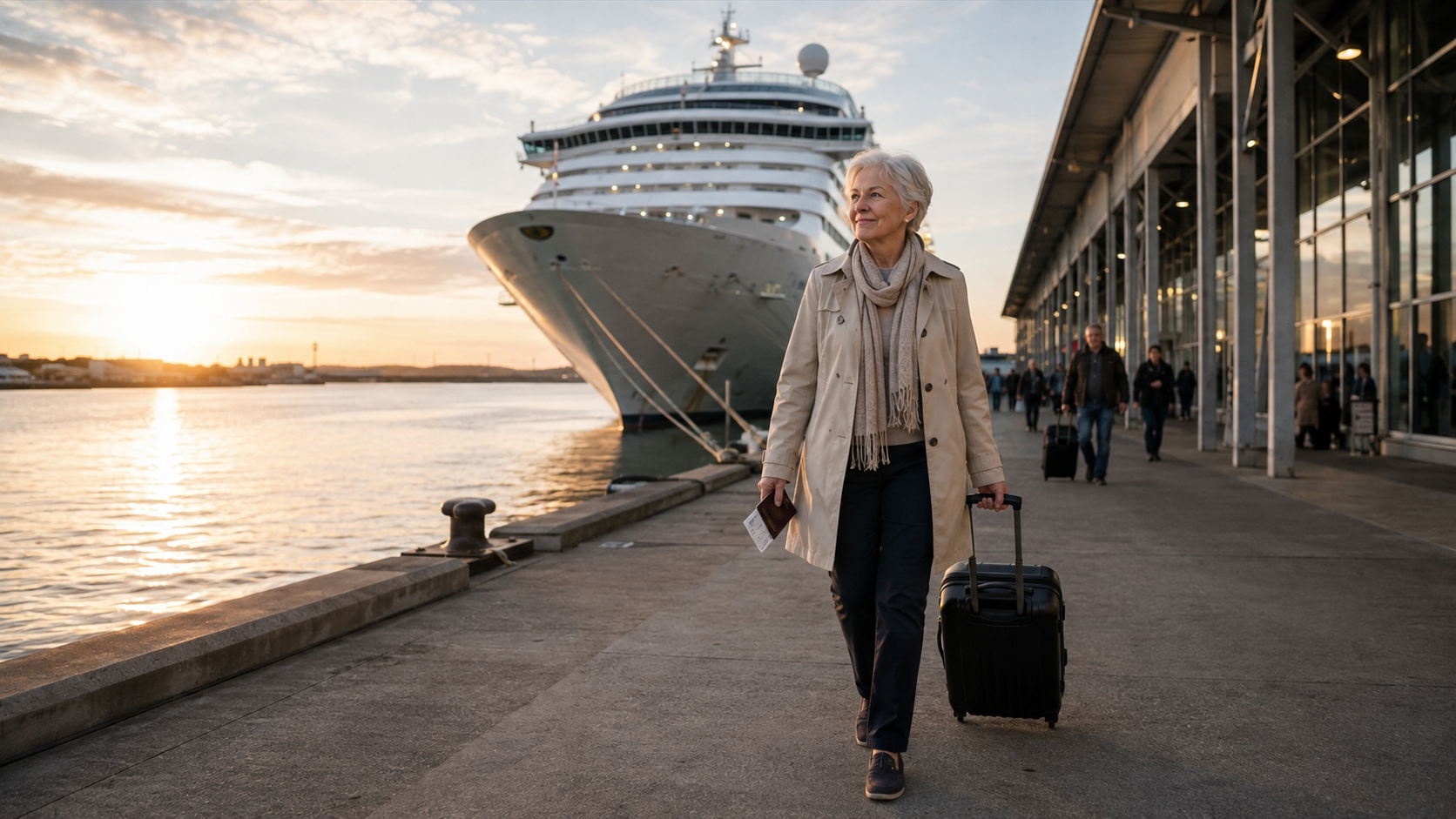
A uniformed steward passed me on the promenade deck and smiled.
“First day?”
“Yes.”
“Traveling alone?”
The question should have frightened me.
For forty years, alone had been a word people used as a warning.
You don’t want to eat alone.
You don’t want to grow old alone.
You shouldn’t travel alone.
You shouldn’t live alone after your husband dies.
You shouldn’t make important decisions alone.
But I looked out across the endless blue water and discovered that the word no longer sounded frightening.
It sounded like freedom.
“Yes,” I said.
“I’m traveling alone.”
The steward nodded as if there were nothing remarkable about that.
“Enjoy the adventure.”
Adventure.
I nearly laughed.
To him, I was simply another passenger.
A sixty-three-year-old widow beginning a long voyage.
He did not know that I had spent most of my life believing adventure belonged to younger women.
Braver women.
Single women.
Women who didn’t have children constantly calling with problems.
Women who didn’t have husbands expecting dinner at six.
Women who didn’t feel guilty for buying themselves something they didn’t need.
He didn’t know that six months earlier, I had sat at my kitchen table at two in the morning with my laptop open, my credit card trembling between my fingers, staring at the button that said:
CONFIRM BOOKING.
I had almost closed the page.
Three times.
Then I remembered something Arthur had said during one of our last good evenings together.
We had been watching a documentary about Greece.
White buildings.
Blue roofs.
Water so bright it looked unreal.
I had whispered, “Wouldn’t it be wonderful to see that?”
Arthur had smiled without taking his eyes from the television.
“Maybe someday.”
Someday.
We had built an entire marriage around that word.
Someday we would travel.
Someday we would slow down.
Someday we would spend money on ourselves.
Someday we would stop worrying about Ryan.
Someday.
Then Arthur died.
And someday died with him.
So I had pressed the button.
Now, ninety feet above the Atlantic, I watched Miami shrink behind me.
First the buildings became small.
Then the shoreline became thin.
Then the city turned into nothing more than gray shapes beneath the morning haze.
The wind lifted my hair from my shoulders.
I gripped the rail.
My heart was beating faster than it had in years.
“Goodbye,” I whispered.
I wasn’t sure whether I meant Miami.
My house.
Arthur.
Ryan.
Or the version of myself who had spent forty years waiting for permission to live.
My phone vibrated again.
I considered ignoring it.
Then I saw the name.
Linda.
My best friend of thirty-one years.
Linda: Eleanor, Ryan just called me. What on earth is going on?
I stared at her message.
I had nearly told Linda about the cruise at least twenty times.
Once over lunch.
Once while we were standing in the frozen-food aisle.
Once when she had come over after Arthur’s funeral and sat beside me until midnight.
But every time the words came close to my mouth, fear stopped them.
Not because I didn’t trust her.
Because I did.
And I knew exactly what love could sound like when it was afraid.
Are you sure?
Is this too soon?
What about the house?
What about Ryan?
What about the grandchildren?
What if something happens?
What if you regret it?
And I had been afraid that one small crack in my courage would be enough for the old Eleanor to return.
So I had told no one.
I typed:
Me: I’m on a ship.
The typing bubble appeared immediately.
Disappeared.
Appeared again.
Then:
Linda: What ship?
I laughed.
I sent her a photograph of the ocean.
Then one of my cabin key.
Then another of the ship’s railing disappearing toward the horizon.
Finally, I wrote:
Me: I’m taking a year for myself.
My phone rang almost instantly.
I answered.
“Hello?”
Silence.
Then one long breath.
“Eleanor.”
“Yes?”
“Please tell me you’re joking.”
“I’m not.”
“You are actually on a cruise?”
“Yes.”
“As in right now?”
I looked at the wake stretching behind the ship.
“As in right now.”
“For how long?”
I smiled.
“One year.”
Silence.
Then:
“One year?”
“Yes.”
“A whole year?”
“That is usually what one year means, Linda.”
“Do not get smart with me. I’m trying not to have a stroke.”
I laughed.
A real laugh.
Not polite.
Not quiet.
Not the little laugh women sometimes use to make other people comfortable.
A loud, ridiculous laugh that made a nearby couple glance in my direction.
Linda finally said, “You planned this?”
“For six months.”
“Six months?”
“Yes.”
“And you didn’t tell me?”
“I was afraid you’d try to stop me.”
There was another silence.
Then, unexpectedly, Linda started crying.
My smile disappeared.
“Oh, Eleanor.”
“I’m all right.”
“That’s not why I’m crying.”
“Then why?”
“Because you finally did something for yourself.”
My throat tightened.
“I didn’t know how to tell anyone.”
“You could have told me.”
“I know.”
“I would have supported you.”
“I know.”
“I might have come with you.”
I smiled again.
“That is exactly why I didn’t tell you.”
She laughed through her tears.
“You horrible woman.”
“I love you too.”
Then her voice became serious.
“Ryan called me.”
“I assumed he would.”
“He said you abandoned him.”
I leaned my elbows against the railing.
“Did he mention the dogs?”
A pause.
“What dogs?”
“Exactly.”
“What happened?”
So I told her.
I told her how Ryan and Chloe had arrived with their animals and luggage as if my house were already theirs.
How they had handed me instructions.
Medication schedules.
Feeding times.
Walking times.
How they had casually discussed leaving the children with me.
How Chloe had talked about which bedroom would be best for Sophie as though my home were a property she had inherited while I was still alive.
I told her about Ryan assuming I would rearrange my life because they had travel plans.
And how the moment I objected, he had reminded me:
We all have lives to live, Mom.
Linda was silent for a long time.
Then she said something I would remember until the day I died.
“Eleanor, you didn’t abandon your son.”
My eyes burned.
“No?”
“No.”
The wind whipped across my face.
Linda’s voice softened.
“You finally stopped abandoning yourself.”
Something inside me broke open.
I turned away from the other passengers.
For the first time since Arthur’s funeral, I cried without trying to stop.
At the funeral, I had cried because I had lost my husband.
At night, I had cried because the other side of the bed was cold.
In the grocery store, I had cried when I automatically reached for Arthur’s favorite cereal.
But these tears were different.
They came from relief.
From exhaustion.
From forty years of swallowing every sentence that began with:
I want.
I need.
I’m tired.
I can’t.
I deserve.
“I’m scared,” I admitted.
“I know.”
“What if I’ve made a terrible mistake?”
“Then you made your own mistake.”
I laughed shakily.
“That’s supposed to comfort me?”
“Yes.”
“How?”
“Because for once, nobody else gets to make it for you.”
I wiped my eyes.
There were moments in life when a person you love says something so simple that it rearranges the furniture inside your mind.
That was one of them.
Then Linda asked, “What was in the blue envelope?”
“The house documents.”
“And the second envelope?”
I smiled.
“You noticed that?”
“Ryan mentioned it.”
“He opened the blue one?”
“Apparently.”
I looked at the sea.
“Well, then he’s about to learn something.”
“What?”
“That my house is not his inheritance while I’m still breathing.”
Linda laughed.
“You know, Eleanor, I always thought you were the soft one.”
“I was.”
“What happened?”
I stared toward the horizon.
“I got tired.”
After we hung up, I stayed outside for another hour.
The ocean had no expectations.
No grocery lists.
No medication schedules.
No ringing doorbell.
No child asking me to solve something.
No husband calling from another room.
Nothing.
Only wind.
Water.
And the enormous, frightening possibility that my remaining years could belong to me.
Back in my house, Ryan stood beside my bed holding the blue envelope.
Chloe was behind him.
The animals were already making noise downstairs.
One dog scratched at the back door.
The cat had disappeared beneath the guest bed.
And their parrot had spent the morning screaming the same phrase it had somehow learned from Chloe’s father.
“USELESS OLD LADY!”
Under normal circumstances, I would have hated that bird.
At that moment, had I been there, I might have kissed it.
“Open it,” Chloe said.
Ryan hesitated.
“Mom didn’t say anything about this.”
“She’s not here.”
“That’s exactly the point.”
Chloe rolled her eyes.
“So?”
“So maybe we shouldn’t be going through her things.”
The irony of that statement apparently escaped both of them.
Chloe folded her arms.
“Ryan, your mother just disappeared on a cruise after leaving us with a house full of animals. I think normal boundaries are already gone.”
Ryan looked down at the envelope.
Written across the front in my handwriting were the words:
READ THIS BEFORE YOU MAKE ANY MORE DECISIONS ABOUT MY HOUSE.
He opened it.
Inside was one sheet of legal stationery.
He read the first line.
Then the second.
His face changed.
“What?” Chloe demanded.
Ryan didn’t answer.
She grabbed the paper.
“Give me that.”
Her eyes moved quickly.
Then stopped.
“What the hell?”
Ryan sat on the edge of my bed.
“She can’t do this.”
Ryan rubbed his jaw.
“Apparently, she already did.”
The letter was from my attorney.
It explained, in very simple language, that following Arthur’s death, every ownership document relating to the house had been reviewed.
The house belonged to me.
Entirely.
The mortgage had been paid years earlier.
And six months before Arthur died, after a conversation we had kept private, we had placed the property into an estate structure designed to protect my right to remain there for the rest of my life.
Ryan had no authority to sell it.
No authority to mortgage it.
No authority to move into it.
And no legal right to treat it as property waiting to fall into his hands.
But that wasn’t the paragraph that frightened him.
The final paragraph did.
During Mrs. Eleanor Miller’s travel, no person—including relatives—has permission to occupy, alter, encumber, sell, lease, or otherwise exercise authority over the property without her written approval. Unauthorized entry or occupancy may be treated accordingly under applicable law.
Chloe looked at Ryan.
“She wouldn’t actually make us leave.”
Ryan stared at the page.
“You sure about that?”
“She’s your mother.”
“Yes.”
“So?”
He looked up.
“I’m beginning to think that’s the problem.”
The parrot shrieked downstairs.
“USELESS OLD LADY!”
Chloe spun toward the hallway.
“I swear I am going to put that bird outside.”
“It’s ninety degrees.”
“I don’t care.”
“The bird will die.”
“Then you take care of it.”
“It’s your bird.”
“You told me your mother would watch it.”
“And my mother is somewhere in the Atlantic Ocean.”
“That isn’t my fault!”
Ryan stood.
“No, Chloe. Apparently nothing is.”
They stared at each other.
That was the first crack.
Their marriage had always worked because inconvenience had somewhere else to go.
Usually to me.
If the grandchildren needed rides, I drove them.
If Chloe wanted to shop without the children, I babysat.
If Ryan forgot a birthday, I reminded him.
If they needed help with a bill, I found money.
If their vacations overlapped with school schedules, I rearranged mine.
If someone needed a package collected, an appointment scheduled, a dog walked, a meal cooked, a form printed, a prescription picked up, a family dinner planned or a shoulder to cry on—
they called Mom.
I had become a private emergency service.
Available twenty-four hours a day.
No salary.
No vacation.
No retirement.
And almost no gratitude.
Now their emergency service was sipping sparkling water on Deck Eleven.
Three days later, they were exhausted.
The older dog needed medication twice a day and refused to swallow pills unless they were hidden inside cheese.
The younger dog had diarrhea.
The cat refused food because it was stressed.
The parrot screamed whenever someone turned off the television.
Their delayed flight caused them to cancel their trip.
Chloe blamed Ryan.
Ryan blamed Chloe.
Both of them blamed me.
But I wasn’t there to hear it.
Meanwhile, I discovered something extraordinary.
I liked my own company.
For decades, I had confused solitude with loneliness.
They were not the same thing.
Loneliness was lying beside Arthur during the final months of our marriage while both of us were afraid to talk about death.
Loneliness was sitting at Christmas dinner surrounded by people who only noticed me when the gravy boat was empty.
Loneliness was hearing Ryan say, “Mom, I need a favor,” without once asking, “How are you?”
Being alone on that ship was different.
I woke when I wanted.
I ate breakfast at eleven if I felt like it.
I drank coffee while watching sunlight move across the ocean.
I sat through an entire movie without getting up to bring anyone anything.
I bought a blue dress because I liked it.
Nobody asked what it cost.
I ordered dessert before dinner once simply because I could.
Nobody laughed.
Nobody sighed.
Nobody said, “At your age?”
The fourth evening, I sat alone in the dining room beside a wall of windows.
The sun was dropping over the horizon.
Gold spilled across the water.
A gray-haired man stopped beside the empty chair across from me.
“Would you mind some company?”
For one second, the old Eleanor almost said no out of habit.
Then I looked at him.
He seemed nervous.
Not dangerous.
Not flirtatious.
Just human.
“Of course.”
He sat down.
“Walter.”
“Eleanor.”
“Traveling alone?”
“Yes.”
He smiled.
“Me too.”
There was that word again.
Alone.
This time it sounded almost companionable.
Walter was seventy.
His wife, Margaret, had died three years earlier.
They had been married forty-five years.
He told me about her without turning her into a saint.
She hated mornings.
She overwatered plants.
She cheated at cards.
She once refused to speak to him for two days because he bought a fishing boat without telling her.
I laughed.
“You loved her.”
“Very much.”
“People ever tell you to remarry?”
“All the time.”
“Will you?”
He looked through the window.
“Maybe.”
Then he smiled.
“Maybe not.”
“Why not?”
He thought for a moment.
“Because after she died, everyone kept telling me I needed to find somebody so I wouldn’t be alone.”
“And?”
“And eventually I realized I was meeting myself for the first time since I was twenty-two.”
I stopped moving.
Walter lifted his glass.
“I liked the man I found.”
That sentence stayed with me.
Maybe that was what I was doing.
Not escaping Ryan.
Not running from grief.
Not punishing anyone.
Meeting Eleanor.
The woman beneath Mom.
Beneath Grandma.
Beneath Arthur’s wife.
Beneath everyone else’s emergency contact.
On the seventh day, Ryan called again.
This time, I answered.
“Hello?”
A pause.
“Mom.”
“Yes?”
“Can we talk?”
“We’re already talking.”
“I mean really talk.”
I looked at the ocean.
“All right.”
He breathed out.
“The animals are difficult.”
“I imagine.”
“Mom.”
“What?”
“Please don’t do that.”
“Do what?”
“Act like you don’t know what I’m asking.”
I waited.
Finally, he said it.
“We need you.”
My chest tightened.
Three words.
We need you.
For years, I had mistaken them for love.
When Ryan was eight and had pneumonia, we need you meant love.
When my granddaughter was born and Ryan was terrified, we need you meant family.
But somewhere along the way, need had turned into entitlement.
And I had allowed it.
“What do you need, Ryan?”
“We need you to come home.”
“No.”
“Mom.”
“I’m not coming home.”
“This is ridiculous.”
“No. It’s inconvenient.”
“What?”
“You’re not angry because I’m in danger.”
“That’s not fair.”
“You’re not calling because you miss having coffee with me.”
“I do miss you.”
“Maybe. But that’s not why you called.”
Silence.
“You want me home because your life is harder without my labor.”
“That’s not true.”
“Then tell me something.”
“What?”
“If there were no dogs, no children, no errands, no house, and no problems waiting for me, would you still be begging me to come home?”
He said nothing.
The silence answered for him.
“What about the house?” he finally asked.
“What about it?”
“You’re really serious?”
“Yes.”
“But eventually it’s going to be mine.”
I closed my eyes.
“Do you hear yourself?”
“What?”
“I’m alive, Ryan.”
“I know.”
“Then stop discussing my home as though you’re waiting for me to die.”
“That’s not what I meant.”
“It’s exactly what you meant.”
His voice hardened.
“You’ve changed.”
I smiled sadly.
“I hope so.”
“You used to care what the family thought.”
“I still care.”
“Then why are you doing this?”
I looked toward the horizon.
“Because loving you is not supposed to require destroying myself.”
The line went quiet.
Then something happened that I hadn’t expected.
Ryan’s voice softened.
“Mom…”
“Yes?”
“I’m sorry.”
My hand tightened around the phone.
“For what?”
He hesitated.
“For treating you like…”
“Like what?”
“Like you were always going to be there.”
I sat down.
The deck chair beneath me suddenly felt unsteady.
“I was always there.”
“I know.”
“And that made you stop seeing it as a gift.”
He breathed shakily.
“I thought you liked taking care of everyone.”
“I did.”
“Then what changed?”
I stared at the wake behind the ship.
“Nothing changed.”
“What do you mean?”
“I liked taking care of people.”
I swallowed.
“I just forgot that I was one of the people I was supposed to take care of.”
He said nothing.
A minute passed.
Then two.
Finally:
“I don’t want you to hate me.”
“I don’t.”
“Do you still love me?”
My heart hurt.
“Ryan, you are my son.”
“That isn’t an answer.”
“Yes, it is.”
“Mom.”
“I love you.”
His breath broke.
“Even now?”
“Especially now.”
Then my forty-year-old son began to cry.
Not politely.
Not quietly.
He sounded, suddenly, like the little boy who used to crawl under my blanket during thunderstorms.
“Come home,” he whispered.
I closed my eyes.
“I will.”
He inhaled sharply.
“Really?”
“Yes.”
“When?”
“Not yet.”
The silence returned.
“I have somewhere else to be first.”
“Where?”
I looked out at the impossible blue distance.
“Everywhere.”
Then I ended the call.
For the next two months, the cruise became my world.
I visited places I had once circled in travel magazines.
I danced badly.
I took a cooking class and burned a sauce so badly the instructor opened a window.
I learned enough Italian to embarrass myself.
I bought earrings Arthur would have called unnecessary.
I stood beneath skies I had never seen.
I watched strangers kiss on docks.
I drank wine with widows.
I laughed with women who had divorced husbands they thought they would die beside.
I listened to stories.
And I told mine.
At night, I wrote in a journal.
Some entries were about Ryan.
Some were about grief.
Most were about Arthur.
One night, somewhere far from home, I wrote:
Arthur,
I miss you.
I miss the way you snored when you fell asleep in the chair.
I miss how you pretended not to like dancing even though you always danced with me at weddings.
I miss hearing your keys in the door.
But there is something I am finally brave enough to admit.
I miss you.
But I do not miss disappearing.
I stared at those words for a long time.
Then I cried.
Not because they were cruel.
Because they were true.
Arthur had loved me.
I had loved him.
But love did not erase the ways I had made myself smaller.
I had spent decades being useful.
Efficient.
Dependable.
Easy.
I had confused sacrifice with goodness.
And now, at sixty-three, I was discovering that I could grieve my husband without grieving the woman I had been beside him.
Then, on the ninety-third day of my voyage, everything changed.
The email arrived at 6:17 in the morning.
The subject line read:
URGENT — PROPERTY MATTER
It was from my attorney, Daniel Bennett.
I opened it while still sitting in bed.
By the third paragraph, my hands were cold.
Someone had contacted a real estate agent regarding my house.
The caller had identified himself as a family representative.
He claimed authority to discuss a possible sale.
Mr. Bennett had blocked the inquiry.
But that wasn’t the worst part.
Attached to another message was a document.
A power of attorney.
Supposedly signed by me.
Except I had never signed it.
I called Mr. Bennett immediately.
He answered on the second ring.
“Mrs. Miller?”
“Who did this?”
“We’re investigating.”
“Was it Ryan?”
“I don’t want to speculate.”
“Daniel.”
Silence.
“I need the truth.”
“The documents were submitted in connection with your son.”
My stomach dropped.
“Submitted for what?”
“A loan.”
I stood.
The cabin shifted beneath my feet.
“How much?”
“Approximately four hundred thousand dollars.”
I gripped the desk.
“Against what?”
“Your property.”
I couldn’t speak.
The sea outside my window was perfectly calm.
Inside me, something was tearing apart.
“My house?”
“Yes.”
“He doesn’t own my house.”
“I know.”
“So how?”
“The application claims you granted authority.”
“I didn’t.”
“I know.”
“So it’s fraud.”
“It appears that way.”
I pressed my hand against my mouth.
For weeks, I had believed Ryan was learning.
I had replayed his apology.
I had even allowed myself to imagine that distance was making us better.
Now I felt foolish.
“Where did the money go?”
“We’re tracing it.”
“Did the loan close?”
“Not fully. We intervened before the transaction completed.”
I shut my eyes.
“Thank God.”
“There’s more.”
I opened them.
“What?”
“Someone provided documentation suggesting you may not be capable of managing the property yourself.”
For a second, I thought I had misheard him.
“What?”
“There are references to diminished capacity.”
My knees weakened.
“They’re saying I have dementia?”
“They appear to be laying groundwork for that claim.”
I sat.
All the freedom I had felt during the previous three months suddenly vanished.
I wasn’t an adventurous widow on a ship.
I was a woman thousands of miles from home while someone tried to erase her legally.
My phone buzzed.
Another email.
A scanned contract.
My address.
My property.
A proposed sale price.
And near the bottom—
Ryan Miller.
The signature looked real.
I knew the loops.
The R.
The long final stroke.
I had watched my son write his name since kindergarten.
I called him.
No answer.
Again.
Nothing.
I called Chloe.
Voicemail.
Again.
Nothing.
I typed:
Ryan, I received the property documents. Call me immediately.
Three minutes later, my phone rang.
But it wasn’t Ryan.
It was Sophie.
My granddaughter.
“Grandma?”
The fear in her voice made me stand.
“Sophie?”
“There’s something you need to know.”
“What happened?”
She began crying.
“Dad’s in trouble.”
“What kind of trouble?”
“I don’t know exactly.”
“Where are you?”
“At home.”
“Are you alone?”
“Yes.”
“Where are your parents?”
“Mom left.”
“What do you mean left?”
“She packed yesterday.”
“And your father?”
“I don’t know.”
My heart began pounding.
“Sophie, listen to me. Tell me what you know.”
She sniffed.
“Dad didn’t sell your house.”
“Then what did he do?”
“He borrowed money.”
“Against my house?”
“Yes.”
“How?”
She hesitated.
“He said you gave him permission.”
“I didn’t.”
“I know.”
“Who told him he could?”
Another silence.
“Sophie.”
“Grandma…”
“Tell me.”
“Uncle Michael.”
Every muscle in my body went still.
“What did you say?”
“Uncle Michael.”
I had not heard that name spoken inside my family in nearly thirty years.
Arthur’s younger brother.
The brother who disappeared after the business collapsed.
The man Arthur once accused of stealing tens of thousands of dollars.
The man who vanished from our lives carrying enough anger to poison an entire family.
“Michael is back?”
“Yes.”
“How long?”
“I don’t know.”
“Does your father see him?”
“Yes.”
“How often?”
“A lot.”
I gripped the phone.
“How long has this been happening?”
“Months.”
“How many?”
“Maybe a year.”
My heart sank.
A year.
That meant Michael hadn’t appeared after I left.
He had been there before.
Before the animals.
Before the sudden concern that the house was too much for me.
Before Ryan began asking oddly specific questions about ownership.
Before Chloe started talking about my future as though it were a logistical inconvenience.
I suddenly remembered something.
Arthur.
Two years before he died.
We had been sitting on the porch.
He had been unusually quiet.
Out of nowhere, he said:
“Michael didn’t steal that money.”
I had stared at him.
“What?”
“The business money.”
“But you said—”
“I was wrong.”
“Then why didn’t you call him?”
Arthur had stared into the yard.
“Because by the time I knew the truth, too much had happened.”
“What truth?”
He shook his head.
“Doesn’t matter anymore.”
At the time, I had let it go.
Marriage teaches you the dangerous habit of assuming there will always be another conversation.
There wasn’t.
Now Michael was back.
And Arthur was dead.
“Sophie.”
“Yes?”
“Lock every door.”
“What?”
“Do it.”
“Grandma, you’re scaring me.”
“I know.”
“What’s happening?”
“I don’t know yet.”
I looked at the ocean beyond my cabin window.
For the first time since boarding the ship, I wanted to go home.
Not because Ryan needed me.
Not because I felt guilty.
Not because I was afraid of being alone.
Because somebody had crossed a line.
A line that could not be softened by family.
A line that could not be excused as stress.
A line between entitlement and theft.
“I’m coming home,” I said.
Sophie sobbed.
“Grandma?”
“Yes?”
“There’s something else.”
My stomach tightened.
“What?”
“The documents Dad had…”
“Yes?”
“I saw Michael give them to him.”
I closed my eyes.
“And, Grandma?”
“Yes?”
“Mom was there.”
Chloe.
Of course she was.
Suddenly the animals were no longer funny.
The demands were no longer careless.
The discussion about bedrooms was no longer rude.
A horrible thought formed.
What if they had never expected me to return?
I called the ship’s guest services office.
The nearest major port was four days away.
Four days.
Normally, four days surrounded by open sea would have sounded heavenly.
Now it felt unbearable.
Mr. Bennett arranged security at the house.
He froze every possible transaction connected to the property.
He contacted the appropriate institutions.
And each night, Sophie called me.
On the second night, I finally told her the story of Michael.
Arthur and Michael had started a construction company when they were young.
Arthur was good with people.
Michael was good with numbers.
For years, the company did well.
Then money disappeared.
Nearly sixty thousand dollars.
A fortune to us then.
Arthur accused Michael.
Michael swore he was innocent.
They screamed at each other in our kitchen.
I remembered Michael’s face that night.
Not guilty.
Wounded.
At the time, I had mistaken one for the other.
Within months, the company collapsed.
Michael left town.
Arthur never spoke his name again.
Until that night on the porch decades later.
“He told me Michael didn’t take the money,” I said.
Sophie was quiet.
“Then who did?”
“I don’t know.”
“Could Grandpa have taken it?”
“No.”
“Are you sure?”
I hesitated.
“I was sure about many things once.”
That was the terrible thing about age.
You don’t always become certain.
Sometimes you become humble enough to realize how wrong certainty can be.
The next afternoon, Mr. Bennett called.
“We found where some of the loan proceeds were intended to go.”
“Where?”
“Several creditors.”
“What kind?”
“Personal debt.”
“Ryan’s?”
“Some.”
“And the rest?”
He paused.
“Chloe’s.”
I shut my eyes.
Credit cards.
Luxury purchases.
Private vacations.
Jewelry.
Hotels.
Thousands upon thousands of dollars they had hidden from each other.
The image of their marriage suddenly changed.
Their beautiful house.
Their new vehicles.
Chloe’s handbags.
The photographs from expensive resorts.
So much of the life they displayed was being financed by panic.
“What about Michael?”
“We’re still tracing his role.”
“Find him.”
“We will.”
“No.”
My voice surprised even me.
“Daniel, listen to me.”
“Yes?”
“For forty years, I have accepted people saying they’ll try. I am done with try.”
I looked at my reflection in the cabin window.
Gray hair.
Tired eyes.
A face lined by grief and laughter and decades of making dinner when I didn’t feel like making dinner.
“Find him.”
There was a pause.
“Yes, Mrs. Miller.”
Four days later, I left the ship.
I packed one suitcase.
My cabin remained reserved.
The rest of the cruise was still waiting.
When I stepped onto land, I did not feel defeated.
That mattered.
I was not ending the adventure.
I was interrupting it to defend the life that made the adventure possible.
A car took me home.
As we drove through familiar streets, everything looked smaller than I remembered.
The grocery store.
The church.
The pharmacy.
The little park where Ryan had learned to ride a bicycle.
Then my street appeared.
And finally my house.
For thirty-seven years, that house had represented safety.
Arthur and I had painted the kitchen twice.
We had raised Ryan inside those walls.
We had buried two dogs beneath the maple tree.
We had celebrated Christmases.
Birthdays.
Graduations.
Arguments.
Illness.
Ordinary Tuesday nights that now seemed more precious than any holiday.
I expected relief when I saw it.
Instead, I felt rage.
Someone had tried to reduce all of that to collateral.
Two security officers stood near the driveway.
Mr. Bennett waited by the porch.
Across the street, someone moved behind the curtain of my neighbor’s house.
A second later, the door opened.
Ryan stepped outside.
“Mom.”
I stopped.
He looked terrible.
His shirt was wrinkled.
His beard had grown in unevenly.
His eyes were swollen.
For one dangerous second, instinct took over.
My son looked hurt.
I wanted to cross the street.
Touch his face.
Ask whether he had eaten.
That instinct had ruled my life.
Then I remembered the forged document.
The four hundred thousand dollars.
The claim that I was mentally incompetent.
I stayed where I was.
“Where is Chloe?”
His face tightened.
“She left.”
“Where?”
“I don’t know.”
“Where is Michael?”
He looked down.
That was enough.
“You’ve been working with him.”
“Mom—”
“Yes or no?”
“Yes.”
The word barely escaped him.
“How long?”
“A little over a year.”
My heart cracked.
Before Arthur died?
Almost.
Before my cruise?
Yes.
Before every conversation in which Ryan pretended concern for me?
Yes.
“Why?”
“I was in trouble.”
“What kind of trouble?”
“Money.”
“How much?”
He swallowed.
“Three hundred and eighty thousand.”
I stared at him.
“How does a grown man with a good income get almost four hundred thousand dollars in debt?”
“I invested.”
“In what?”
“A company.”
“What company?”
“Technology. Digital assets. Some other things.”
“And it failed.”
He nodded.
“It wasn’t supposed to.”
I almost laughed.
Nobody stands beside the ruins of a mistake and says it went exactly as planned.
“And Michael offered to help.”
“Yes.”
“With my house.”
Ryan looked away.
“I thought I could repay everything before you knew.”
I stepped closer.
“Listen to yourself.”
“Mom—”
“You did not borrow twenty dollars from my purse.”
“I know.”
“You used my home.”
“I know.”
“You lied.”
“Yes.”
“You signed documents.”
He flinched.
“I didn’t forge your signature.”
I stopped.
“Who did?”
Ryan’s eyes filled.
“Michael.”
“And you used it anyway.”
He said nothing.
“Look at me.”
Slowly, he did.
“You knew the signature wasn’t mine.”
“Yes.”
“And you used it.”
“Yes.”
There it was.
No excuse.
No misunderstanding.
A choice.
My son had not stumbled into betrayal.
He had walked toward it.
One decision at a time.
“Why did they think this could work?” I asked.
Ryan covered his face.
I waited.
Finally, he whispered:
“Michael said we needed to establish that you weren’t capable of managing things anymore.”
The air left my lungs.
“What?”
“He said if the lender thought you had cognitive problems, they might accept me acting for you.”
“You told people I had dementia?”
“Mom—”
“Did you?”
His eyes filled with tears.
“I didn’t say dementia.”
“What did you say?”
“That you were confused after Dad died.”
My hand started shaking.
I clasped it with the other one.
He continued.
“That you forgot things.”
“I forget where I put my glasses sometimes.”
“I know.”
“That does not make me incompetent.”
“I know.”
“You used my grief as evidence that I had lost my mind.”
He began crying.
“I was desperate.”
Something in me hardened.
Not into hatred.
Into clarity.
“Do you know what desperation is, Ryan?”
He looked at me.
“Desperation is sitting beside your husband in intensive care knowing the machines are keeping him alive and still having to sign forms because somebody has to stay functional.”
He lowered his eyes.
“Desperation is burying the person you expected to grow old with.”
My voice shook.
“Desperation is waking up the morning after his funeral and discovering that the world still expects breakfast.”
Tears streamed down his face.
“You were not desperate.”
I stepped closer.
“You were afraid of consequences.”
He covered his mouth.
“I’m sorry.”
“I know.”
“No, Mom. I’m so—”
“Stop.”
He went quiet.
“Sorry is not a broom, Ryan.”
He stared at me.
“You cannot sweep this away with it.”
I turned to Mr. Bennett.
“Where is Michael?”
Ryan answered first.
“The warehouse.”
I looked back.
“What warehouse?”
“Dad’s old place.”
The abandoned construction warehouse stood on the edge of town.
Arthur had once dreamed of turning it into a workshop after retirement.
Instead, weeds climbed through cracks in the pavement and rust ate through the loading doors.
The police arrived before we entered.
Inside, the building smelled of dust, oil and damp cardboard.
There was a desk.
A laptop.
Several filing boxes.
And photographs.
Dozens.
I walked toward the nearest wall.
My breath stopped.
There I was.
Leaving the grocery store.
Sitting on my porch.
Driving to the doctor.
Ryan.
Sophie.
Chloe.
Arthur’s grave.
My house.
My car.
And then—
the ship.
A photograph of the vessel I had boarded in Miami.
Taken from the terminal.
I touched the edge of the print.
“He knew.”
Mr. Bennett came beside me.
“He knew you were leaving.”
A chill ran through me.
The cruise had not disrupted their plan.
It had accelerated it.
One officer opened a filing box.
Another examined the computer.
Mr. Bennett suddenly called my name.
“Mrs. Miller.”
I joined him.
A spreadsheet filled the screen.
Transfers.
Payments.
Debts.
Names.
Michael appeared repeatedly.
So did Ryan.
Then I saw another name.
Chloe.
My daughter-in-law had received seventy-five thousand dollars.
Hotel charges.
Credit-card payments.
Luxury retailers.
Jewelry.
Travel.
My hands turned cold.
Then one officer found a folder.
Inside was a printed document.
No letterhead.
No signature.
Just bullet points.
I began reading.
Phase One: Increase family presence.
Phase Two: Emphasize age-related concerns.
Phase Three: Establish inability to maintain property.
Phase Four: Encourage temporary relocation.
Phase Five: Obtain authority over property.
Phase Six: Liquidate.
At the bottom was one line.
Once Eleanor is removed, everything becomes easier.
I read it twice.
Three times.
Removed.
Not helped.
Not protected.
Removed.
They had not been worried about me living alone.
They wanted me gone.
The spare bedrooms Chloe kept mentioning.
The pets she dropped off.
The pressure.
The questions.
The comments about assisted living.
The jokes about the house being too large.
It had all been part of something.
Perhaps Ryan had not understood every piece.
Perhaps Chloe hadn’t.
But somebody had.
For weeks, I had wondered whether taking the cruise made me selfish.
Standing in that filthy warehouse, reading a plan to remove me from my own home, I finally understood the truth.
Leaving had saved me.
If I had remained in that house, they might have worn me down gradually.
One concern at a time.
One favor.
One signature.
One argument.
One accusation that I was emotional.
One comment about my age.
One moment when grief made me doubt myself.
My absence had forced them to move too quickly.
And greed had made them careless.
The officer beside me asked, “Mrs. Miller, are you all right?”
“No.”
Then I looked at the document again.
And something changed.
“Yes.”
He frowned.
“Which is it?”
I straightened my shoulders.
“I’m furious.”
He waited.
“And I have never felt more certain of my own mind.”
Michael was arrested two days later at a motel three counties away.
The legal process that followed was ugly.
Slow.
Humiliating.
Family secrets became evidence.
Messages were recovered.
Financial records examined.
Statements taken.
Ryan was charged in connection with the fraudulent loan application and forged documents he knowingly used.
Chloe was eventually found staying with a friend in another state.
She denied understanding the full plan.
Some of that may even have been true.
But she had known enough.
Enough to accept money.
Enough to discuss moving me.
Enough to benefit from my disappearance.
Michael’s motives turned out to be complicated.
He had returned carrying thirty years of resentment toward Arthur.
Arthur had eventually discovered that Michael had not stolen the original company money.
A third partner had.
But Arthur had been too proud to repair what he destroyed.
Michael lost his share of the company.
His reputation.
His brother.
Years of his life.
His anger was not invented.
But hurt does not make cruelty righteous.
Rather than confronting the dead brother who had wronged him, Michael chose to punish the family that remained.
And Ryan—
Ryan was useful.
Entitled.
Financially desperate.
Easy to manipulate.
Michael told him something Ryan already wanted to believe.
That the house would be his eventually.
That taking control now was merely “accelerating the inevitable.”
That I was old.
That I didn’t need such a valuable property.
That I would probably move somewhere smaller anyway.
That inheritance was practically ownership.
Michael did not create my son’s entitlement.
He simply discovered it.
That was the hardest truth.
For weeks, I wanted to blame Michael for everything.
It would have been easier.
He was the villain who returned from the past.
The bitter brother.
The manipulator.
The criminal plan.
But Ryan was not a child.
He had choices.
And he made them.
Eventually, he pleaded guilty to several charges connected to the scheme.
He avoided the harshest possible sentence, but received probation, restitution obligations, community service and financial restrictions.
Chloe filed for divorce.
Their marriage collapsed beneath the weight of debts, lies and blame.
Sophie moved out.
One evening, months after I returned, she appeared at my front door holding a suitcase.
Her eyes were swollen.
“Grandma?”
“Yes?”
“Can I stay here for a while?”
There was a time when I would have immediately said:
Of course.
Then carried the bag.
Prepared food.
Changed my plans.
Asked no questions.
But I was learning that kindness could have boundaries too.
“How long are you thinking?”
She blinked.
Then smiled faintly.
“I don’t know.”
“Then we’ll figure it out together.”
“Is that a yes?”
I opened the door.
“Yes.”
She hugged me so hard I nearly lost my balance.
That night, she made dinner.
Terrible pasta.
The sauce was too salty.
The noodles were overcooked.
I ate two bowls.
Not because it tasted good.
Because for once, someone was feeding me.
My house slowly became mine again.
Not because people stopped entering it.
Because they started asking.
Six months later, a letter from Ryan arrived.
I left it unopened on the kitchen table all morning.
Then all afternoon.
Old Eleanor would have opened it immediately.
She would have worried about hurting his feelings.
New Eleanor made coffee.
Watered her plants.
Went for a walk.
Came home.
Sat beside the window.
Then opened it when she was ready.
The letter began:
Mom,
I don’t expect forgiveness.
I don’t think I deserve it yet.
I almost stopped.
Instead, I continued.
I spent my whole life believing you would rescue me.
When I was little, that was what mothers did.
You rescued me from fevers, bullies, bad grades, heartbreak and every stupid decision I made.
The problem is that I became an adult and kept expecting the same thing.
I turned your love into an obligation.
My eyes filled.
When you left on that cruise, I told everyone you abandoned me.
The truth is that I panicked because for the first time I had to experience the consequences of my own life without handing them to you.
Then I did something worse.
I allowed desperation and greed to convince me that what belonged to you would eventually belong to me anyway.
I know now how disgusting that sounds.
I covered my mouth.
Michael manipulated me.
But he did not make my choices.
I did.
I need you to know that I finally understand that.
That sentence made me cry.
Not because it erased what he had done.
Because it was the first time Ryan had stopped placing his decisions inside somebody else’s hands.
I continued.
I’m learning how to live without calling you every time something breaks.
I’m working.
I’m paying what I owe.
I’m going to counseling.
I’m trying to become the kind of man Dad thought I was.
Maybe someday I can become someone you are proud of again.
Not because I’m your son.
Because I earn it.
At the bottom:
I love you.
I folded the letter.
I cried.
And then I placed it in a drawer.
I did not call.
Not that day.
Forgiveness does not require immediate access.
Love does not require forgetting.
And boundaries do not mean hatred.
Sometimes distance is where damaged love learns how to breathe.
One year after Arthur died, I returned to the sea.
This time, I didn’t leave secretly.
There was no blue envelope.
No escape before sunrise.
No phone switched to silent.
Linda came to the terminal.
Sophie came too.
Walter had emailed that he would be on a different voyage and told me to “try not to burn down any cooking classes.”
Ryan did not come.
He understood.
Linda looked at my suitcase.
“How long?”
“Six months.”
Her eyebrows rose.
“Only six?”
“I have plans afterward.”
“What plans?”
“I don’t know.”
She laughed.
“You’ve become impossible.”
“I know.”
Sophie hugged me.
“Grandma?”
“Yes?”
“Are you happy?”
The question surprised me.
For most of my life, happiness had been treated as something that happened after everyone else was satisfied.
The children are healthy.
The bills are paid.
Dinner is cooked.
Your husband is comfortable.
Everyone has what they need.
Then maybe you can be happy.
I looked at Sophie.
“Yes.”
She smiled.
“Really?”
I looked toward the ship.
“Very.”
Three months into that second voyage, Ryan sent me a message.
I finished my community service today.
I stared at it.
Another followed.
I got a job. Nothing impressive. Warehouse management. Benefits are decent.
Then:
I’m not asking you for anything. I just wanted you to know.
I typed:
I’m glad.
A week later:
Sophie said the back porch railing was loose. I fixed it. I didn’t go inside the house.
I smiled.
Then another message:
I know that matters now.
My eyes burned.
Thank you, I typed.
Three months later, when I returned home, a package waited on the kitchen table.
Sophie had left it there.
“From Dad,” she said.
Inside was a small wooden box.
Handmade.
Uneven at one corner.
On the lid, Ryan had carved:
FOR MOM
Inside lay a photograph of Arthur.
He was young.
Maybe thirty-two.
Standing beside a lake.
Holding a fishing rod.
Smiling with the ridiculous confidence of a man who had probably caught nothing all day but intended to pretend otherwise.
Behind the photograph was a note.
Dad told me once that you were the strongest person he had ever known.
I thought he meant because you took care of all of us.
Now I think he meant because you survived all of us and still knew how to love.
I laughed through my tears.
Then I read the final line.
I’m sorry it took losing the right to depend on you for me to learn how much I loved you.
I sat at the kitchen table for a long time.
That day, something healed.
Not completely.
Healing is not a door that closes behind you.
It is more like a scar.
It remains.
But eventually you can touch it without bleeding.
Years passed.
I traveled.
Not constantly.
But often.
Greece.
Italy.
Alaska.
Japan.
Small towns nobody in my family had heard of.
Sometimes with Linda.
Sometimes with groups.
Sometimes alone.
Especially alone.
People often asked me:
“Wasn’t it frightening?”
“Yes.”
“Didn’t you miss home?”
“Of course.”
“Didn’t you miss your family?”
“Every day.”
“Then why go?”
That question always made me smile.
Because people still believed leaving meant loving less.
I had finally learned otherwise.
“I didn’t travel because I stopped loving my family,” I would say.
“I traveled because loving them no longer required me to disappear.”
On my seventieth birthday, Sophie organized a party in my garden.
She had grown into a remarkable woman.
Not because she never made mistakes.
Because she learned early that love and obedience were not the same thing.
Linda arrived carrying a cake and complaining loudly that the bakery had spelled my name wrong on the first one.
My grandchildren came.
Neighbors.
Friends from my travels.
Even Walter sent flowers.
And then, near sunset, Ryan appeared at the garden gate.
He was holding a small bouquet of white roses.
He looked older.
Not old.
Just changed.
His hair had gray at the temples.
His face had softened.
He stood outside the gate.
He did not walk in.
That mattered more than anyone else there understood.
“Mom.”
I approached him.
“Ryan.”
“Happy birthday.”
“Thank you.”
He held out the roses.
I took them.
He stayed where he was.
“Would you like to come in?” I asked.
His eyes flicked toward the garden.
Then back to me.
“Are you sure?”
Seven years earlier, that question would never have left his mouth.
My house had simply been available.
My time had been available.
My labor.
My food.
My car.
My emotional energy.
Everything.
Now he asked.
I smiled.
“Yes.”
He stepped through the gate.
We hugged.
It was not the embrace of a perfect mother and son.
I did not suddenly forget.
He did not suddenly become innocent.
There were years of pain between us.
But there was also something new.
Respect.
Later, everyone gathered around the table.
Food covered every surface.
For once, I had cooked almost nothing.
Sophie had organized most of it.
Linda had brought salads.
My granddaughter had made dessert.
Ryan washed the dishes.
I sat in the garden with a cup of coffee.
Nobody asked me to get up.
Nobody shouted:
Mom!
Grandma!
Eleanor!
Can you just—
I sat.
And watched.
Linda lowered herself into the chair beside me.
“You know what I remember?”
“What?”
“The day you left on that first cruise.”
I laughed.
“I remember your phone call.”
“You scared ten years off my life.”
“I gave them back.”
“No, you didn’t.”
We watched Ryan drying dishes through the kitchen window.
Linda nudged me.
“You proved everyone wrong.”
I thought about it.
Then shook my head.
“No.”
“No?”
“I spent too much of my life trying to prove things to everyone else.”
She turned toward me.
“Then what did you do?”
I smiled.
“I proved myself right.”
That night, after everyone left, the house became quiet.
I walked upstairs.
Opened the bottom drawer of my desk.
And there it was.
The old blue envelope.
Faded.
Soft along the edges.
Inside lay the original cruise confirmation.
I held it carefully.
Paper.
Ink.
A booking number.
Such ordinary things.
And yet that sheet had once felt like a declaration of war against the woman I had been taught to be.
I remembered the morning I left.
The suitcase beside the door.
The coffee growing cold.
The dogs.
The parrot.
Ryan’s messages.
The terror I felt as the car carried me toward the port.
I remembered believing my absence might destroy my family.
I had been wrong.
My absence did not destroy them.
It revealed them.
It revealed Ryan’s entitlement.
Chloe’s resentment.
Michael’s bitterness.
Sophie’s fear.
And my own exhaustion.
Once everything was visible, each of us had a choice.
Michael chose revenge.
Chloe chose escape.
Ryan, eventually, chose responsibility.
Sophie chose honesty.
And I chose myself.
Not instead of them.
Alongside them.
That distinction changed everything.
I walked to the bedroom window.
Moonlight covered the garden.
My garden.
Beyond it stood the porch Ryan had repaired without entering my home.
My porch.
Behind me was the bed where Arthur and I had spent almost four decades.
My memories.
My grief.
My life.
For years after Arthur’s death, I still occasionally spoke to him.
That night, I did again.
“Arthur.”
Silence.
I smiled.
“I finally did it.”
The room remained still.
“I went everywhere we said we’d go.”
My throat tightened.
“I wish you could have seen it.”
I waited.
There was no answer.
For once, I didn’t need one.
I placed the cruise ticket beside my passport.
Then I turned off the light.
The next morning, I woke before sunrise.
Old habit.
For decades, mornings meant responsibility.
Breakfast.
Lunches.
Laundry.
Appointments.
Arthur.
Ryan.
Grandchildren.
Animals.
Bills.
Calls.
That morning, nothing needed me.
I made coffee.
Carried it outside.
Sat beneath the maple tree.
And watched the sky turn pale.
A neighbor’s dog barked.
A car started somewhere down the street.
The ordinary world woke around me.
I thought about how desperately I had once believed life needed a dramatic purpose.
Marriage.
Motherhood.
Sacrifice.
Duty.
Legacy.
But some of the most beautiful moments of my later life were small.
Coffee I drank while it was still hot.
A hotel room where I slept diagonally across the bed.
A stranger laughing beside me in Italy.
A postcard from Sophie.
A three-word text from Ryan.
A quiet afternoon when nobody needed anything.
A blue dress.
A sunset.
A passport with too many stamps.
At sixty-three, I thought my life was ending.
My husband was dead.
My son was grown.
My grandchildren no longer needed a babysitter.
The world had spent decades telling women like me that those things were our purpose.
So what happens when those things change?
For a while, I believed the answer was nothing.
You become background.
Helpful.
Reliable.
Invisible.
Then I boarded a ship.
And I learned the most important thing anyone had ever taught me.
A woman’s life does not end when the people she loves stop needing her in the same way.
It does not end when her children grow up.
It does not end when her husband dies.
It does not end when the house becomes quiet.
It does not end when someone younger calls her old.
It does not end at sixty-three.
Or seventy.
Or whenever the world decides she should start becoming smaller.
Sometimes life begins again precisely there.
The moment you stop waiting for permission.
I spent forty years being Arthur’s wife.
I loved that role.
I spent more than forty years being Ryan’s mother.
I loved that too.
I became Sophie’s grandmother.
One of the greatest gifts of my life.
But beneath every title, there was still a name.
Eleanor.
Not Mom.
Not Grandma.
Not Mrs. Miller.
Eleanor.
A woman who loved deeply.
A woman who stayed too long in places where she was taken for granted.
A woman who made mistakes.
A woman who sometimes mistook being needed for being valued.
A woman who buried her husband and believed she had buried her future with him.
A woman who boarded a ship alone with shaking hands.
A woman who crossed oceans.
A woman who came home when home needed defending.
A woman who learned that forgiveness did not require surrender.
A woman who discovered that saying no did not make her cruel.
A woman who finally understood that boundaries were not walls built to keep love out.
They were doors.
Doors that allowed love to enter respectfully.
Years later, Sophie asked me one question I have never forgotten.
We were sitting at the kitchen table.
She was considering a job in another state.
She wanted it.
But she was afraid.
“What if everyone thinks I’m selfish?”
I smiled.
“Someone probably will.”
“That doesn’t help.”
“I’m not finished.”
She laughed.
“All right.”
I took her hand.
“People who benefit from you having no boundaries will often call your boundaries selfish.”
She became quiet.
“And?”
“And sometimes they’ll be right about something else.”
“What?”
“You are allowed to consider yourself.”
She frowned.
“Isn’t that selfish?”
“No.”
I shook my head.
“Selfishness is believing only you matter.”
I squeezed her hand.
“Self-respect is remembering that you matter too.”
She stared at me.
Then smiled.
“You learned that on the cruise?”
“No.”
I looked around the kitchen.
“I learned it when I came home.”
Because freedom had not been the ship.
The ship merely showed me what freedom felt like.
Real freedom was returning to the same house, the same family and the same responsibilities—
and refusing to become the same invisible woman.
That was harder.
And far more important.
On my seventy-third birthday, I booked another trip.
Portugal this time.
Linda claimed she was coming.
Then complained about the walking.
Sophie threatened to buy her orthopedic shoes.
Ryan offered to drive us to the airport.
The morning of the flight, he arrived ten minutes early.
He carried my suitcase to the car.
Then stopped.
“Mom?”
“Yes?”
“Can I ask you something?”
I looked at him.
“Of course.”
“Do you ever wish you hadn’t gone?”
I knew exactly which trip he meant.
The first one.
The year-long cruise.
The blue envelope.
The trip that opened every wound our family had spent decades hiding.
I thought about Arthur.
Michael.
The warehouse.
The police.
The courtroom.
The letters.
The tears.
The years it had taken to rebuild what remained.
Then I shook my head.
“No.”
Ryan looked down.
“Even after everything that happened?”
“Especially because of what happened.”
He frowned.
I touched his arm.
“Your uncle didn’t become dangerous because I left.”
“I know.”
“You didn’t become entitled because I left.”
His face tightened.
“I know.”
“Chloe didn’t start lying because I left.”
“I know.”
“My leaving didn’t create the cracks.”
I looked toward my house.
“It turned on the light.”
He swallowed.
“I’m sorry.”
I smiled softly.
“You don’t have to apologize every time we remember it.”
“I know.”
“Then stop.”
He laughed a little.
“Yes, ma’am.”
I raised an eyebrow.
He laughed again.
“All right. Sorry.”
I pointed at him.
He lifted both hands.
“I’m done.”
Then, unexpectedly, he hugged me.
“Have fun.”
“I intend to.”
“Call when you land.”
“I will.”
He opened the car door for me.
I climbed inside.
Then he leaned down.
“Mom?”
“What now?”
His eyes were wet.
“Dad would be proud of you.”
For a moment, neither of us spoke.
Then I said:
“I think he’d be shocked.”
Ryan laughed.
“Probably that too.”
As the car pulled away, I looked back.
Ryan stood in the driveway.
Not waving frantically.
Not asking me to come back.
Not handing me instructions.
Simply watching his mother leave.
And letting her go.
That was when I knew we had finally healed as much as we were ever going to.
Not because the past disappeared.
Because it stopped controlling the future.
At the airport, Linda was waiting with an enormous hat, two bags she insisted counted as one carry-on and enough snacks to feed an entire flight.
“You’re late.”
“I’m twelve minutes early.”
“In travel time, that’s late.”
“You sound like Arthur.”
She made the sign of the cross.
“God forbid.”
I laughed.
We checked our bags.
Passed through security.
Bought coffee.
Then sat beside the enormous windows watching planes rise into the morning sky.
Linda leaned back.
“You nervous?”
“Always.”
“Good.”
“Why good?”
“It means you still have something to lose.”
I looked at her.
“That’s unexpectedly wise.”
“Write it down. It won’t happen again.”
I laughed.
Our flight was called.
I stood.
Picked up my passport.
And walked toward the gate.
I no longer needed to sneak away.
No more envelopes.
No more guilt.
No more explanations.
I was not running from anybody.
I was going somewhere because I wanted to see it.
Such a simple thing.
Such a revolutionary thing.
Before boarding, I glanced at my reflection in the glass.
The woman looking back at me had silver hair now.
Deeper lines around her eyes.
A body that moved more slowly than it once had.
But she did not look invisible.
She looked alive.
I smiled at her.
For most of my life, I had waited for people to recognize my value.
My husband.
My son.
My daughter-in-law.
My grandchildren.
Friends.
Neighbors.
I wanted somebody to say:
Eleanor, you have done enough.
Eleanor, sit down.
Eleanor, we’ll take care of it.
Eleanor, you deserve this.
Eleanor, go.
But life rarely gives us permission in such neat sentences.
Sometimes nobody comes.
Sometimes nobody notices.
Sometimes the people who love you become so accustomed to your sacrifice that they stop recognizing it as sacrifice at all.
And eventually, you have to become the person who gives yourself permission.
To leave.
To rest.
To say no.
To begin again.
To spend the money.
To take the trip.
To close the door.
To open another one.
To forgive.
To refuse.
To love someone without becoming their servant.
To choose yourself without abandoning the people you love.
If I could sit beside the woman I had been on the morning Arthur died, I would hold her hand.
I would not tell her everything would be fine.
Because it wouldn’t.
Some things would never be fine again.
Arthur would still be gone.
The house would still feel empty.
Ryan would still betray her.
Michael would still return.
There would be lawyers.
Police.
Tears.
Courtrooms.
Sleepless nights.
I would tell her something better.
I would say:
You will survive becoming someone you never planned to be.
You will learn that grief is not the end of identity.
You will learn that motherhood does not require lifelong servitude.
You will learn that a grown child can be loved and still be allowed to face consequences.
You will learn that forgiveness and trust are different things.
You will learn that being alone is sometimes less lonely than being surrounded by people who only see what you can do for them.
You will learn to order dessert first.
You will buy the ridiculous earrings.
You will wear the blue dress.
You will stand beside oceans Arthur never got to see.
You will laugh again.
And one day, you will wake up and realize you are not merely surviving the life that remained after your husband died.
You are living it.
That would be enough.
My boarding group was called.
Linda stood beside me.
“Ready?”
I thought of the first voyage.
The terrified woman clutching a cabin key.
The son demanding answers.
The blue envelope.
The shrinking shoreline.
Then I looked toward the plane waiting beyond the glass.
“Yes.”
We started walking.
Halfway down the jet bridge, my phone vibrated.
A message from Ryan.
I opened it.
Have a great trip, Mom.
Then:
No emergency here.
And finally:
Take your time.
I stopped walking.
Linda glanced back.
“What?”
I showed her.
She smiled.
“Well.”
I swallowed past the tightness in my throat.
“Well what?”
“Looks like somebody finally learned.”
I slipped the phone into my purse.
“Yes.”
Then I smiled.
“So did I.”
We boarded.
I found my seat.
Fastened my belt.
Outside the window, the airport began sliding away.
The engines grew louder.
The plane accelerated.
And then the earth released us.
Buildings shrank.
Roads became lines.
Cars became dots.
The world spread beneath me.
I pressed my fingertips to the glass.
Once, leaving home had felt like betrayal.
Now it felt like possibility.
That is the lesson I carried with me.
I did not stop loving my family when I learned to love myself.
I did not become cruel when I stopped being useful on command.
I did not abandon anyone by refusing to disappear.
And I did not become less of a mother when I required my grown son to become a man.
The truth was almost embarrassingly simple.
Being needed is not the same as being loved.
Being useful is not the same as being valued.
Sacrifice is not proof of goodness when it destroys the person making it.
And family is not ownership.
Love says:
I want you in my life.
Entitlement says:
I want access to your life.
It took me sixty-three years to understand the difference.
But once I understood it, I never forgot.
My name is Eleanor Miller.
I was a wife.
I am a mother.
I am a grandmother.
I am a widow.
I am a friend.
I am a woman who has grieved.
A woman who has failed.
A woman who has forgiven things she once thought unforgivable.
A woman who learned to close doors.
A woman who learned to open others.
A woman who buried the man she loved and believed the best part of her story was behind her.
She was wrong.
The best part began when she stopped asking everyone else what she was allowed to do with the years she had left.
If you are reading this while sitting in a quiet house wondering whether your life has become too small, hear me.
If everyone calls you only when something is wrong—
hear me.
If your children are grown but still believe your time belongs to them—
hear me.
If you have spent decades introducing yourself through other people—
someone’s wife,
someone’s mother,
someone’s grandmother—
hear me.
You still belong to yourself.
Not completely.
Love always claims pieces of us.
That is its beauty.
But no healthy love should consume everything.
There should still be a room inside you with your own name on the door.
Keep that room.
Protect it.
Visit it.
Fill it with dreams nobody else understands.
Because someday the house will become quiet.
Someday the children will stop calling so often.
Someday someone you love may leave.
Someday age will change the face in the mirror.
And when that happens, you deserve to know the person who remains.
I almost didn’t.
Then I boarded a ship.
I left behind dogs.
A screaming parrot.
An entitled son.
A blue envelope.
And forty years of believing that a good woman was measured by how much of herself she gave away.
I crossed an ocean.
Then another.
And somewhere between one shore and the next, I found Eleanor.
Not Mom.
Not Grandma.
Not Arthur’s widow.
Me.
Years later, when people heard my story, they often focused on the dramatic parts.
The cruise.
The forged documents.
Michael.
The warehouse.
The court case.
They would shake their heads and say:
“You must have been furious.”
I was.
Or:
“You were brave to leave.”
Perhaps.
But they almost always misunderstood the most important moment.
It was not when I boarded the ship.
It was not when I confronted Ryan.
It was not when Michael was arrested.
It was one ordinary morning long afterward.
I woke up.
Walked downstairs.
Made one cup of coffee.
Sat in my garden.
And did absolutely nothing for anybody.
I did not feel guilty.
That was freedom.
Not the ocean.
Not the passport.
Not the cruise ticket.
The absence of guilt.
I finally knew my life was mine.
Not only when nobody needed me.
But even when they did.
That morning, I lifted my coffee toward the rising sun.
“To you, Arthur,” I whispered.
Then I smiled.
“And to me.”
Because I loved him.
I loved Ryan.
I loved Sophie.
I loved my family.
But I had finally learned something that should never have taken sixty-three years to understand.
I was part of my family too.
My happiness counted.
My exhaustion counted.
My dreams counted.
My time counted.
My home counted.
My voice counted.
My life counted.
And so does yours.
Don’t wait until grief teaches you.
Don’t wait until betrayal forces you.
Don’t wait until your children finally understand.
Don’t wait until somebody says you deserve it.
There is no official permission slip coming.
Sometimes the bravest sentence you will ever speak is not:
“I love you.”
Sometimes it is:
“No.”
Sometimes:
“I’m tired.”
Sometimes:
“I’m going anyway.”
And sometimes it is simply:
This life belongs to me, too.
That was the sentence I had spent most of my life being afraid to say.
Now I carried it everywhere.
Across oceans.
Through airports.
Back into my own home.
Into every conversation where someone expected the old Eleanor to return.
She never did.
The woman who came home was kinder in some ways.
Harder in others.
She laughed more.
Apologized less.
Loved carefully.
Gave generously.
But never automatically.
And when she said yes, it finally meant something.
Because she had learned how to say no.
As our plane climbed through the clouds, Linda reached across the armrest.
“Where are we going after Portugal?”
I laughed.
“We haven’t even arrived yet.”
“I like planning.”
“I know.”
“So?”
I looked through the window.
Clouds stretched beneath us like an endless white ocean.
Once, the unknown had terrified me.
Now it made my heart beat faster.
I smiled.
“I don’t know.”
Linda stared.
“That doesn’t bother you?”
“No.”
“Since when?”
I thought about the ship pulling away from Miami all those years ago.
The trembling hands.
The unanswered calls.
The blue envelope.
The woman whispering goodbye to a life she wasn’t sure she could leave.
Then I looked forward.
“Since I learned I don’t have to know exactly where I’m going to know that I’m allowed to go.”
Linda laughed.
“Now that one I’m stealing.”
“Go ahead.”
I closed my eyes.
The engines hummed beneath us.
And for the first time in my life, uncertainty felt like a gift.
I had no idea exactly what waited at the other end of the flight.
That was all right.
I had my passport.
I had my suitcase.
I had people I loved.
I had a home to return to.
And most importantly—
I had myself.
At sixty-three, I thought my story was almost finished.
At seventy, I knew better.
At seventy-three, I was still writing it.
And I planned to keep writing for as long as life gave me pages.
The woman everyone once expected to stay home and make herself useful was flying above the clouds.
I smiled.
Then I leaned back in my seat.
Tomorrow there would be another city.
Another street.
Another meal I had never tasted.
Another sunrise.
Another memory.
Another page.
And this time, nobody had packed my bags for me.
Nobody had chosen the destination.
Nobody had given me permission.
I had done it myself.
Because this was my life.
And I was finally living it.
THE END! THANK YOU FOR READING!❤️