 Reading Time: 35 minutes
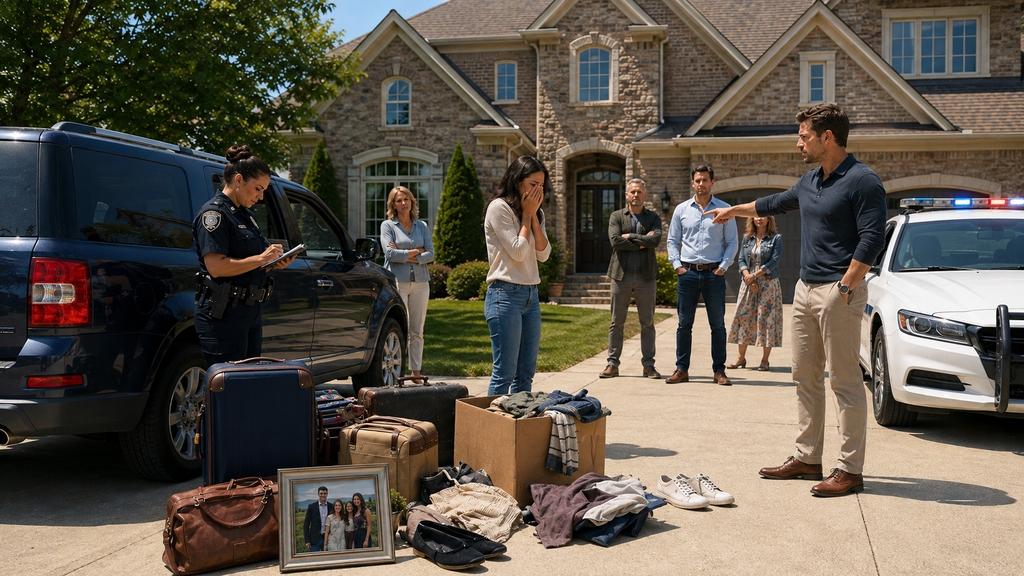
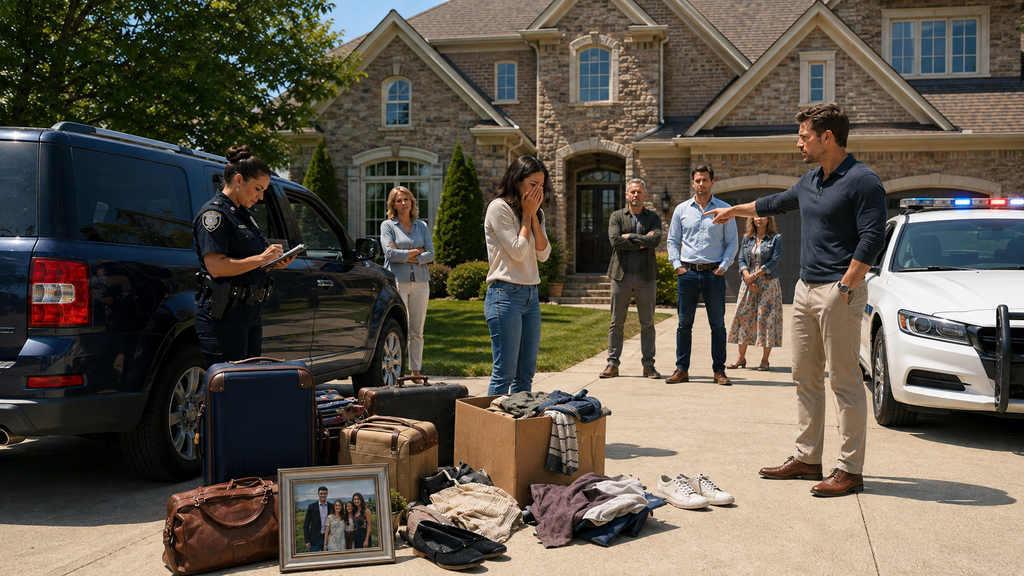
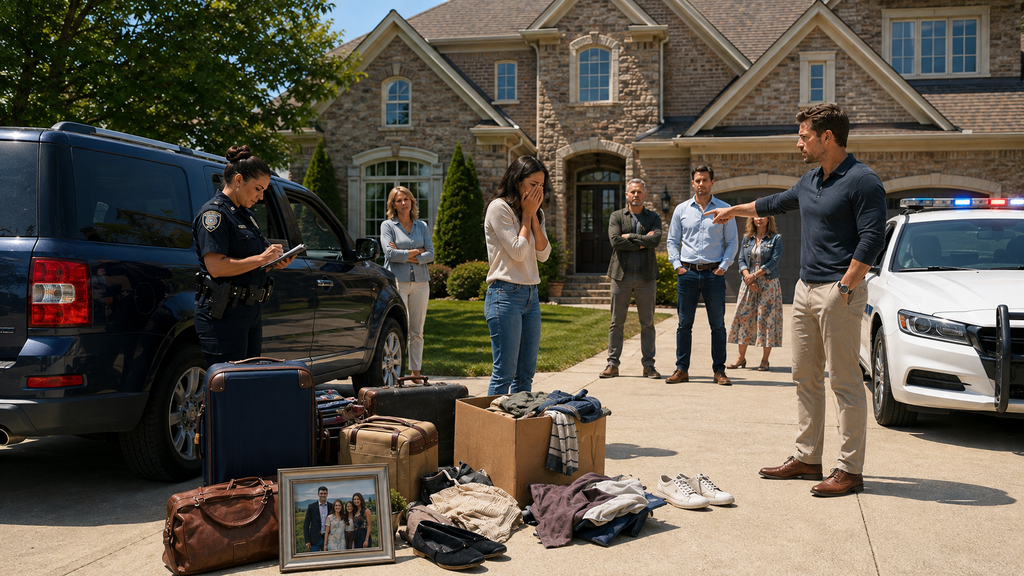
The deputy looked at Grant. Then at Patricia. Then at the rows of carefully packed belongings spread across the lawn. His voice remained calm. Almost painfully calm.
“Mr. Monroe, according to the final judgment entered by Judge Henderson at 10:42 this morning, you no longer have any legal right to occupy this property.”
Grant stared at him.
For several seconds, he didn’t speak.
It was as though the words had reached him but his mind refused to accept them.
“What?”
The deputy lifted the paperwork slightly.
“The court determined that the residence at 1847 Brookhaven Crest is the sole and separate property of Ms. Allison Monroe.”
Patricia actually laughed.
Not because anything was funny.
Because she thought the deputy had made some kind of ridiculous mistake.
“That’s impossible.”
The deputy didn’t react.
Patricia pointed toward the house.
“That is my son’s house.”
“No,” I said quietly.
Everyone turned toward me.
For the first time that day, I allowed myself to look directly at Patricia.
“No, Patricia.”
My voice didn’t shake.
“It isn’t.”
Her face changed.
Only slightly.
But I saw it.
A flicker.
A crack.
The first tiny fracture in the confidence she had worn all morning.
Grant walked toward my attorney.
“Michael, what is this?”
My attorney, Michael Reyes, didn’t move.
“You heard the deputy.”
Grant’s voice rose.
“This is my home.”
Michael opened the manila folder in his hands.
“No. It was your marital residence.”
“That’s the same thing.”
“No, Grant. It isn’t.”
Patricia stepped closer.
“This family has lived here for years.”
“That also doesn’t make it yours.”
Grant looked at me.
And suddenly the arrogance disappeared.
Not all of it.
But enough.
Enough for me to see the panic underneath.
“Allison.”
I said nothing.
“What did you do?”
It was such a strange question.
After everything he had done.
After the lies.
The affair.
The humiliation.
The months of allowing his mother to treat me like a parasite in a home she had never owned.
After standing beside Patricia outside the courthouse while she celebrated what she called my defeat.
His first question was still—
What did you do?
I almost smiled.
Instead, I looked at the house behind him.
The house I had loved long before I loved Grant.
And I remembered the day I bought it.
I had been twenty-nine years old.
My father had died eighteen months earlier.
My mother had been gone since I was in college.
I was completely alone in the world except for an aunt in Savannah and a few cousins I barely saw.
My father had left me a modest inheritance.
Not millions.
Not enough to stop working.
But enough for a down payment on a house if I was careful.
At the time, Brookhaven Crest wasn’t the kind of neighborhood people bragged about.
The house had needed work.
The kitchen was outdated.
The roof leaked over the back bedroom.
The hardwood floors were scratched.
The porch railing leaned slightly to the left.
But I loved it.
I loved the magnolia tree beside the driveway.
I loved the old brick fireplace.
I loved the way afternoon sunlight fell through the windows in the front room.
I used almost every dollar my father left me for the down payment.
Then I spent four years fixing the house slowly.
One paycheck at a time.
I refinished the floors myself.
Painted the upstairs bedrooms.
Replaced the windows.
Saved for the roof.
And six years after buying it, I met Grant.
He moved in after our engagement.
For the first three years of our marriage, the house remained exactly what it had always been.
Mine.
Grant knew that.
He had always known that.
He just eventually convinced himself that my things belonged to him because I had allowed him to use them.
That was Grant’s greatest talent.
He could turn generosity into entitlement faster than anyone I had ever met.
At first, it had been small things.
My house became our house.
My savings became our emergency fund.
My car became the vehicle Patricia borrowed whenever hers was being serviced.
Then Patricia sold her condominium.
She told us she needed somewhere temporary to stay while she searched for something smaller.
Temporary became six months.
Six months became a year.
Then Patricia stopped searching altogether.
She moved antique cabinets into my dining room.
Replaced curtains without asking.
Changed the landscaping.
Started referring to the downstairs guest suite as “my wing.”
She hosted bridge nights.
Holiday dinners.
Fundraisers.
Birthday lunches.
And somewhere along the way, she began calling my home—
“The Monroe house.”
The first time I corrected her, she laughed.
“Oh, Allison. Once you marry into a family, everything becomes family property.”
I should have listened more carefully to that sentence.
It told me exactly how Patricia saw the world.
What belonged to you belonged to the family.
What belonged to the family belonged to Grant.
And what belonged to Grant belonged to Patricia.
But nothing belonging to Patricia ever belonged to anyone else.
That arrangement worked beautifully for her.
Until that morning.
Grant stepped closer to me.
“You can’t throw us out.”
I looked at him.
“I’m not throwing anyone out.”
He gestured toward the lawn.
“Our belongings are literally outside.”
“The court ordered you to surrender possession.”
“When?”
“This morning.”
“I was in court this morning!”
“Yes.”
“I never heard anything about this.”
Michael spoke.
“You did.”
Grant whipped around.
“No, I didn’t.”
“Yes, you did.”
Michael pulled another page from the folder.
“Page forty-seven of the final decree.”
Grant’s face tightened.
“You knew exactly what your attorney was arguing.”
His attorney, Henry Wallace, had followed the SUVs back from the restaurant in a separate car.
Until that moment, he had remained near the sidewalk.
Silent.
Watching.
Now Grant turned toward him.
“Henry?”
Henry looked exhausted.
“Grant.”
“You told me the property issue was handled.”
“I told you Judge Henderson was unlikely to recognize your claim.”
Patricia spun toward him.
“What claim?”
No one answered her.
Her eyes moved from Henry to Grant.
“Grant?”
He rubbed one hand over his mouth.
That was when I realized something.
Patricia didn’t know.
Not everything.
Grant had lied to her too.
Of course he had.
Liars rarely reserve dishonesty for one person.
He had told Patricia whatever kept her useful.
Just as he had told me whatever kept me quiet.
She looked at her son.
“What claim?”
Grant said nothing.
Michael closed the folder.
“I think you should explain it to your mother.”
Patricia’s voice sharpened.
“Explain what?”
Grant glanced toward me.
I could almost see him calculating.
Trying to decide whether another lie could still save him.
But there were too many witnesses.
His lawyer.
My lawyer.
The deputy.
The locksmith.
Two members of his family standing beside the SUVs.
And me.
Finally, Grant muttered, “I argued that the house should be considered marital property.”
Patricia blinked.
“Of course it’s marital property.”
“It isn’t,” Henry said.
She turned toward him.
“What are you talking about?”
Henry sighed.
“Allison purchased the property four years before the marriage.”
“So?”
“With inherited funds.”
Patricia looked confused.
“And?”
“And the title remained solely in Allison’s name.”
Patricia stared at him.
Grant jumped in quickly.
“I paid for improvements.”
Henry nodded.
“Yes.”
“So I had an interest.”
“You had a potential reimbursement argument.”
Grant’s face reddened.
“Potential?”
“The judge rejected the ownership claim.”
“Why?”
Henry looked at him for a long moment.
“You know why.”
I did too.
Because the money Grant claimed he had invested in the home wasn’t his money.
That had been the first major crack in his case.
For months, Grant insisted that he had poured hundreds of thousands of dollars into renovations.
He had claimed the kitchen remodel.
The swimming pool.
The new garage.
The guest-house conversion.
The landscaping.
All evidence, according to him, that the house had transformed from my separate property into a marital asset.
There was only one problem.
Every large payment had come from an account funded primarily by me.
Grant had earned good money.
But he spent better than he earned.
Cars.
Golf trips.
Private clubs.
Designer watches.
Restaurant bills.
Weekend trips he claimed were for clients.
And, eventually, hotel suites for the woman he was sleeping with.
My salary had quietly carried the household for years.
Grant’s contribution sounded impressive until someone actually examined the numbers.
And during the divorce—
Someone finally had.
My forensic accountant.
A woman named Denise Carter.
Patricia had mocked her during one of the early hearings.
She called Denise “that little bookkeeper.”
That little bookkeeper spent three months reconstructing eight years of financial records.
She found everything.
Every transfer.
Every credit-card payment.
Every renovation invoice.
Every mortgage payment.
Every deposit.
And every lie.
By the end, Grant couldn’t prove that his money had purchased even one percent of the property.
Worse—
He had tried to hide assets during the divorce.
A brokerage account.
Two business accounts.
A cryptocurrency wallet.
And nearly eighty-seven thousand dollars in payments to a woman named Lauren Whitmore.
Lauren.
The replacement.
The woman Patricia had referred to when she smiled outside the courthouse and told me some women didn’t know when they had been replaced.
I had learned about Lauren eleven months earlier.
It started with a hotel receipt.
The St. Regis.
Buckhead.
One room.
One night.
Two breakfasts.
I found the receipt in the inside pocket of Grant’s blazer.
At first, I told myself it could have been business.
That is what people do when they love someone.
They help construct the lie that will hurt them less.
I placed the receipt back into his pocket.
I said nothing.
Three weeks later, I found a charge for jewelry.
Four thousand eight hundred dollars.
Grant hadn’t bought me jewelry.
Not for Christmas.
Not for our anniversary.
Not for my birthday.
I asked him about the charge.
He kissed my forehead.
“Client gift.”
I wanted to believe him.
So I did.
Or at least pretended to.
Then one Saturday morning, his phone lit up on the kitchen counter.
He was upstairs showering.
I wasn’t snooping.
I didn’t need to.
The message appeared across the screen.
Lauren:
I hate sleeping without you after nights like last night.
I remember staring at those words.
I expected my heart to explode.
Instead, everything inside me became strangely quiet.
The refrigerator hummed.
Rain tapped against the windows.
A lawn mower started somewhere down the street.
Ordinary sounds.
Ordinary morning.
Extraordinary betrayal.
I photographed the message with my own phone.
Then I set Grant’s phone back down exactly where it had been.
When he came downstairs twenty minutes later, he wrapped his arms around me from behind.
“Morning, beautiful.”
I nearly vomited.
But I smiled.
“Morning.”
For another six weeks, I said nothing.
People sometimes hear stories like mine and ask how someone can stay quiet once they know.
The answer is simple.
Because knowledge changes fear into strategy.
Before I knew about Lauren, I felt crazy.
After I knew, I became careful.
I hired Michael.
I opened a separate account.
I copied every financial record I could access.
I photographed documents.
Downloaded bank statements.
Saved tax records.
Checked property records.
Updated passwords.
Made copies of the deed.
And waited.
Grant mistook my silence for weakness.
Patricia mistook my politeness for surrender.
Both mistakes became very expensive.
The deputy gestured toward the court order.
“Mr. Monroe, your occupancy rights terminated when the final decree was entered.”
Grant looked toward the house.
“What about my clothes?”
“They’re outside.”
“My office?”
“Packed.”
“My computers?”
“Packed under supervision.”
“My personal documents?”
“In sealed boxes.”
“You went through my things?”
“No,” I said. “A bonded moving company did.”
He stared at me.
“You arranged all this?”
Michael answered.
“We arranged it after receiving authorization from the court.”
“When?”
“Three days ago.”
Grant looked stunned.
The hearing that morning had been the final formality.
Judge Henderson had circulated his intended ruling through counsel three days earlier.
Grant’s attorney knew.
Michael knew.
I knew.
The only reason Grant appeared shocked was because he had not bothered to listen to his own lawyer.
He had been too busy planning his victory lunch.
Patricia’s celebration had been organized two days before the divorce became final.
She had made reservations for fourteen people.
Private dining room.
Champagne.
Steaks.
A cake.
Yes.
A cake.
I found that out later.
Across the top, written in elegant black frosting, were the words:
WELCOME BACK, GRANT.
As though I had kidnapped him for eight years.
As though marriage to me had been some terrible exile from which he had finally escaped.
While they were slicing that cake—
The movers had been packing Patricia’s crystal glasses.
While she raised champagne to celebrate my defeat—
A locksmith was drilling out the cylinders in my front door.
While Grant told his cousins he was finally free—
A deputy was checking the serial numbers on items removed from his office.
The timing was almost poetic.
But I hadn’t arranged it for revenge.
That is the part Patricia never understood.
I wanted my house back.
Not revenge.
There is a difference.
Revenge keeps you tied to people.
Freedom lets you leave them behind.
Patricia marched toward the porch.
“I’m going inside.”
The deputy moved slightly.
“No, ma’am.”
She stopped.
“I live here.”
“You occupied the property.”
“I have lived in that house for nearly five years.”
“Yes, ma’am.”
“My medication is inside.”
“All medications identified by the movers were packed separately.”
He pointed toward a small table beside the garage.
A clearly labeled plastic container sat there.
Patricia’s name was written across the top.
She looked humiliated.
“You had no right to touch that.”
“No one opened the containers, ma’am.”
“I’m calling the police.”
The deputy looked down at his uniform.
Patricia followed his gaze.
For one second, no one said anything.
Even Grant’s cousin Tyler looked away to hide a smile.
Patricia’s face flushed deep red.
“You know what I mean.”
The deputy remained professional.
“You’re welcome to contact my supervisor.”
Patricia turned toward me.
“This is cruel.”
That word nearly took my breath away.
Cruel.
She had called me barren at Thanksgiving after Grant told her privately that we were struggling to conceive.
She had criticized my body at family dinners.
She once told Grant—in front of me—that if he wanted children, he might need to “upgrade.”
When my father died, she complained that I was too emotional during Christmas because my grief made everyone uncomfortable.
When I miscarried at ten weeks, she told me perhaps it was “God’s way of correcting the timing.”
When Grant began his affair, Patricia knew.
Not immediately.
But she knew long before I confronted him.
I later discovered she had met Lauren for lunch.
Twice.
Once while Grant and I were still trying to save our marriage.
And now—
A court order returning my own home to me was cruel.
I looked at her.
“Cruel?”
Patricia lifted her chin.
“You could have given us notice.”
“I did.”
“No, you didn’t.”
“My attorney sent formal notice six weeks ago.”
“That was legal nonsense.”
“It was notice.”
“You knew we didn’t think you were serious.”
“That isn’t my fault.”
“You could have spoken to us like family.”
I almost laughed.
“Family?”
Grant closed his eyes.
He knew.
Patricia didn’t.
Not yet.
I stepped closer.
“You want to talk about family now?”
She crossed her arms.
“I treated you like family for eight years.”
“No.”
My voice remained quiet.
“You treated me like staff you couldn’t fire because Grant married me.”
Her jaw tightened.
“That is not true.”
“Would you like examples?”
“Allison—”
“Christmas, 2021. You told me to eat in the kitchen because there weren’t enough seats at the main table after you invited three extra people.”
Patricia’s mouth opened.
“Thanksgiving, 2022. You introduced me to Senator Collins’s wife as Grant’s ‘first wife’ while I was still married to him.”
“That was a joke.”
“My miscarriage.”
Her face changed.
I continued.
“You told me maybe God knew Grant needed a woman who could give him children.”
Patricia looked away.
Grant stared at the ground.
“You came into my bedroom three days later,” I said. “I was still bleeding. And you asked when I planned to start cooking again because Grant shouldn’t have to eat takeout.”
No one spoke.
Not even the relatives near the SUVs.
I had never said those things aloud in front of them.
Patricia glanced around.
Embarrassment replaced anger.
“Private family matters do not belong on the front lawn.”
I nodded.
“You’re right.”
Then I looked toward her boxes.
“So take your private family matters with you.”
Grant whispered my name.
“Allison.”
I turned toward him.
He looked older than he had that morning.
Strange what several hours can do to a person.
At the courthouse, he had looked polished.
Confident.
Almost handsome.
Now his tie was loose.
Sweat darkened the collar of his shirt.
His face was pale.
“Can we talk?”
“We’re talking.”
“Alone.”
“No.”
“Please.”
It was the first time I had heard that word from him in months.
Please.
I wondered whether he remembered how often I had used it.
Please tell your mother to stop.
Please come home before midnight.
Please don’t humiliate me in front of everyone.
Please tell me the truth.
Please try.
Please choose us.
I had spent years asking.
Now Grant finally understood what it felt like to need something from a person who had already stopped giving.
“There’s nothing left to discuss privately.”
He stepped closer.
“What am I supposed to do?”
I looked toward Patricia.
She looked equally offended.
Apparently neither of them had considered that question before celebrating.
“I imagine the Four Seasons has rooms.”
Grant stared at me.
“That’s funny.”
“I wasn’t joking.”
“My accounts are frozen.”
“Some of them.”
His eyes narrowed.
That was another surprise.
As part of the divorce, Judge Henderson had ordered several disputed accounts restricted pending a supplemental asset hearing.
Not because of me.
Because Grant had attempted to transfer marital funds after being instructed not to.
Two weeks earlier, he moved $190,000 into an account belonging to his business partner.
He claimed it was repayment of a loan.
There was no loan.
Denise found the transfer in less than forty-eight hours.
Grant’s financial games had turned what might have been a relatively straightforward divorce into something far more serious.
“You did that too?” he asked.
“No.”
I shook my head.
“You did.”
“What’s that supposed to mean?”
“It means actions have consequences.”
Grant laughed bitterly.
“Listen to you.”
I waited.
“You’ve changed.”
I considered that.
Then nodded.
“Yes.”
His expression flickered.
Maybe he expected me to deny it.
I didn’t.
“I had to.”
“The woman I married would never do something like this.”
“The woman you married didn’t know what you were capable of.”
His face tightened.
Patricia spoke sharply.
“Grant, stop begging.”
He turned toward her.
“I’m not begging.”
“You’re acting weak.”
I nearly felt sorry for him.
Nearly.
Because even now—
Standing beside his boxes.
Locked out of a house he had never owned.
Facing financial scrutiny and the end of his marriage—
His mother’s greatest concern was whether he looked weak.
That was when a silver Mercedes turned onto the street.
Slowly.
Grant saw it first.
His entire body froze.
Patricia followed his gaze.
The Mercedes pulled behind Henry’s car.
The engine shut off.
A woman stepped out.
Thirty-two.
Blonde.
Cream-colored dress.
Large sunglasses.
Lauren Whitmore.
Patricia’s replacement for me.
Or at least the woman she had hoped would replace me.
Lauren looked around at the lawn.
Then at the sheriff’s vehicle.
Then at Grant.
She removed her sunglasses.
“What happened?”
Grant muttered something under his breath.
Patricia immediately straightened.
Apparently humiliation had limits.
She hurried toward Lauren.
“There has been a misunderstanding.”
Lauren looked at the furniture.
“This is your furniture.”
“Yes.”
“Why is it outside?”
Patricia lowered her voice.
“Allison is having some kind of episode.”
I laughed.
I couldn’t help it.
Patricia spun around.
“Something amusing?”
“Yes.”
I nodded.
“Actually.”
Lauren looked at me for the first time.
We had never officially met.
I knew her face from social media.
From hotel security images produced during discovery.
From photographs a private investigator had taken.
From the picture Grant forgot to delete from his cloud account.
But we had never stood three yards apart.
She was beautiful.
That hurt once.
It didn’t anymore.
Because betrayal eventually teaches you something important.
The person your spouse cheats with doesn’t have to be uglier than you.
Or prettier.
Smarter.
Younger.
Richer.
More interesting.
Infidelity is not a beauty contest you lost.
It is a decision someone else made.
Lauren crossed her arms.
“Grant told me the house was his.”
There it was.
Another lie.
Grant closed his eyes.
“Lauren—”
She turned toward him.
“You said your grandfather bought it.”
Patricia stared at her son.
I felt something almost like fascination.
Grant’s lies were colliding now.
One after another.
He had told Patricia he was fighting to preserve a marital asset.
He had told Lauren it was generational family property.
He had told me for years that ownership didn’t matter because marriage meant everything was shared.
Three women.
Three stories.
One deed.
Lauren pointed toward the house.
“You told me we would live here.”
Patricia’s head snapped toward her.
“You what?”
Grant looked like he wanted the earth to open beneath him.
“Mom.”
“You told her what?”
Lauren’s expression changed.
“You didn’t know?”
Patricia looked at Grant.
“Know what?”
Silence.
Lauren took one small step backward.
“Oh my God.”
Patricia moved toward her.
“What?”
Lauren hesitated.
Then said it.
“Grant said after the divorce you were moving to the condo in Sandy Springs.”
Patricia went completely still.
I blinked.
That part was new to me.
For perhaps the first time all day, I was genuinely surprised.
Patricia turned toward Grant.
“You told her I was moving?”
“Mom, this isn’t the time.”
“You told this woman I was leaving the house?”
“It wasn’t like that.”
Lauren frowned.
“You said the downstairs suite was becoming an office.”
Patricia’s mouth opened.
Grant ran a hand through his hair.
“I was trying to figure things out.”
Patricia stared at him.
“You told me Allison was trying to remove me.”
Grant said nothing.
“You told me we had to fight because she wanted to push me out.”
“Mom—”
“All this time, you planned to push me out yourself?”
“No.”
Lauren laughed once.
A sharp, humorless sound.
“That is exactly what you told me.”
Grant turned on her.
“Could you stop talking?”
Lauren’s expression hardened.
“Excuse me?”
“I said this isn’t helping.”
“I drove all the way across town because you texted me that there was an emergency.”
“There is.”
“And now I’m discovering that the house you promised me isn’t yours.”
Grant lowered his voice.
“Lauren.”
“And the money?”
He froze.
I saw Michael glance at me.
Patricia noticed too.
“What money?”
Lauren looked around.
“Oh, wonderful.”
Grant stepped toward her.
“Don’t.”
She backed away.
“Don’t what?”
“What money?” Patricia demanded.
Lauren looked at Grant.
Then at me.
And perhaps because she realized she had also been lied to—
She answered.
“The investment account.”
Grant’s face turned almost gray.
Patricia stared at him.
“What investment account?”
Lauren continued.
“The account Grant said he was receiving in the divorce.”
I remained silent.
This was better than anything I could have planned.
“What account?” Patricia asked.
Lauren shrugged.
“Two-point-something million.”
Patricia looked at Grant.
“You said there wasn’t that much liquid money.”
Grant spoke through clenched teeth.
“There isn’t.”
Lauren frowned.
“You told me you’d have at least two million after everything settled.”
“I said potentially.”
“You told me we could buy in Tuxedo Park if I didn’t want to stay here.”
Patricia’s face twisted.
“Tuxedo Park?”
Lauren’s cheeks flushed.
“I think I should leave.”
“No,” Patricia snapped.
“Mother,” Grant warned.
“No. I would very much like to hear what my son has apparently been promising everyone.”
Lauren looked toward her car.
I almost felt sorry for her.
Almost.
Then she turned to me.
“For what it’s worth, he told me you had been separated for more than a year before we met.”
There are moments when life gives you a choice.
You can wound someone.
Or you can tell the truth without cruelty.
I chose the second.
“We weren’t.”
Lauren swallowed.
“How long?”
“When did you meet?”
“March.”
“Grant and I attended marriage counseling in April.”
Her face fell.
Grant looked away.
“We took an anniversary trip in June.”
Lauren’s eyes filled.
Not dramatically.
Just enough.
“He told me that was a business conference.”
“No.”
I shook my head.
“We were trying to save our marriage.”
She looked at Grant.
“You told me she refused to sleep with you.”
I didn’t answer.
Some humiliations do not need to be discussed with strangers.
Grant snapped.
“Enough.”
Lauren stared at him.
“You lied to me.”
“I never said everything was perfect.”
“You told me the marriage was over.”
“It was.”
I finally interrupted.
“No, Grant.”
He looked at me.
“The marriage became over when you decided honesty was optional.”
He opened his mouth.
I continued.
“Not when you got caught.”
Lauren stood silently for several seconds.
Then she reached into her purse.
She pulled out a key.
Grant’s key.
I recognized the blue tag.
He had given her a key to my house.
My stomach turned.
Not because I wanted him anymore.
Because there are some violations the heart understands only after the fact.
She walked toward him.
Held out her hand.
And dropped the key at his feet.
“I’m done.”
Grant stared down at it.
“Lauren.”
“No.”
She shook her head.
“I was stupid enough to believe you once. I’m not doing it twice.”
Patricia stepped forward.
“Well, at least you’ve finally made one intelligent decision.”
Lauren looked at her.
“You knew he was married.”
Patricia stiffened.
“And you slept with him anyway.”
Lauren nodded.
“Yes.”
She looked ashamed.
“I did.”
Then she glanced toward me.
“And I’ll have to live with that.”
Her eyes returned to Patricia.
“But don’t act morally superior. You had lunch with me while your son was still in counseling with his wife.”
Patricia’s face went white.
The relatives by the SUVs stopped pretending not to listen.
Lauren turned.
Walked toward her Mercedes.
Grant followed.
“Lauren.”
She opened the door.
“Please.”
She looked at him over the roof of the car.
“I hope the next woman asks for paperwork.”
Then she got in.
The Mercedes drove away.
Grant stood in the street watching until it disappeared.
No one said a word.
Finally, the deputy cleared his throat.
“I need signatures confirming receipt of the personal property inventory.”
The normalcy of it almost made me laugh again.
Lives were collapsing.
Relationships were exploding.
And the deputy still needed signatures.
That was the strange beauty of paperwork.
It didn’t care about drama.
It cared about facts.
Grant slowly walked back toward the lawn.
Patricia sat down on one of her own packed dining chairs.
Right there beside the curb.
For once, she had nothing to say.
Michael handed Grant the inventory.
He signed without reading.
Then Michael handed one to Patricia.
She looked at me.
“You planned this.”
“Yes.”
“How long?”
“The legal preparation?”
“No.”
Her voice sounded smaller.
“All of it.”
I knew what she meant.
How long had I known?
How long had I smiled at family dinners knowing the marriage was already dead?
How long had I allowed her to insult me while building the case that would eventually remove her from my home?
I answered honestly.
“Eleven months.”
Patricia stared.
“You knew for eleven months?”
“Yes.”
Grant looked at me.
“That’s impossible.”
“No.”
“You acted normal.”
“I acted carefully.”
“You slept beside me.”
“Sometimes.”
“You made dinner.”
“Yes.”
“You came to Mom’s birthday.”
“Yes.”
“You went to Savannah with us.”
“Yes.”
His expression twisted in disbelief.
“How?”
I looked at him.
“Because I finally understood something.”
“What?”
“You don’t announce your escape to the person holding the keys.”
His face went still.
Patricia whispered, “Escape?”
I turned toward her.
“Yes.”
“You make us sound abusive.”
I held her gaze.
“You were.”
Grant stepped forward.
“I never hit you.”
I almost felt tired.
“Do you think hitting someone is the only way to destroy them?”
“I never abused you.”
“You lied to me every day.”
“That’s not abuse.”
“You controlled our finances while hiding money.”
“I earned that money.”
“You monitored my credit cards.”
“For budgeting.”
“You demanded location sharing on my phone.”
“We were married.”
“You read my messages.”
“I was worried about you.”
“You slept with another woman.”
His jaw tightened.
“That was a mistake.”
“No.”
I shook my head.
“A wrong turn is a mistake. Forgetting an appointment is a mistake. One drunken kiss might even be called a mistake.”
I stepped closer.
“Booking the same hotel every Thursday for seven months is a schedule.”
His eyes dropped.
Patricia muttered, “This doesn’t need to be public.”
I looked at her.
“You made my divorce public when you invited fourteen people to celebrate it.”
Silence.
“That lunch wasn’t private, Patricia. You wanted an audience.”
Her lips tightened.
“You wanted people to watch me lose.”
I looked around at the furniture.
“And now they’re watching you discover that you misunderstood the score.”
Patricia stood.
“You think a house makes you better than us?”
“No.”
I shook my head.
“The house makes me a homeowner.”
Tyler coughed into his hand.
Patricia shot him a glare.
Michael’s mouth twitched.
Grant looked toward the house again.
“What happens now?”
Michael answered.
“You collect your property.”
“And then?”
“You secure temporary housing.”
Grant laughed bitterly.
“You make it sound simple.”
“It is simple.”
Michael pointed at the order.
“You don’t live here.”
“What about the divorce settlement?”
“You know the terms.”
Grant looked at me.
“Half the retirement account.”
“The marital portion.”
“The cars?”
“You kept the Porsche.”
“The business?”
“Yours.”
“The brokerage account?”
“Subject to the supplemental hearing.”
He rubbed both hands over his face.
“And the house?”
Michael answered.
“Allison’s.”
Grant looked at me.
I watched something collapse inside him.
Not love.
I don’t think it was love.
It was entitlement.
He had convinced himself I would lose the house because he needed that to be true.
The home represented the life he wanted to keep without keeping the woman who helped build it.
He wanted the kitchen I designed.
The patio where my father’s old table sat.
The pool I paid for.
The bedroom where we slept.
The neighborhood.
The address.
The social status.
He wanted all of it.
Just not me.
And Patricia had wanted the same.
That was why the divorce had become so vicious.
Not because Grant was heartbroken.
Because he couldn’t imagine a world in which leaving me meant leaving anything else behind.
He finally whispered, “You could sell it.”
I frowned.
“What?”
“The house.”
“Why?”
“Because you don’t need something this big.”
I almost couldn’t believe it.
Even now.
Even standing on the lawn.
He was still telling me what I needed.
“I’ll decide what I need.”
“You’ll be alone here.”
The words were meant to hurt.
Months earlier, they would have.
Now they sounded almost peaceful.
“Yes.”
I nodded.
“I will.”
Grant stared at me.
“And that doesn’t scare you?”
I looked at my front door.
My new locks.
My windows.
My porch.
My magnolia tree.
“No.”
For the first time, I smiled.
“It doesn’t.”
Because there is a particular kind of loneliness that happens inside a bad marriage.
It is worse than an empty house.
An empty house does not betray you.
It does not lie.
It does not roll over at midnight smelling like someone else’s perfume.
It does not let its mother humiliate you at your own dinner table.
It does not make you question your worth.
An empty house is simply quiet.
And after eight years of emotional noise—
Quiet sounded beautiful.
Patricia picked up her purse.
“I suppose you’re pleased with yourself.”
“I’m relieved.”
“You destroyed this family.”
That sentence finally made me laugh.
Not loudly.
Not cruelly.
Just once.
“You really believe that?”
“You filed for divorce.”
“After Grant cheated.”
“You could have forgiven him.”
“I tried.”
“You could have tried harder.”
“I attended counseling alone after he stopped going.”
Patricia said nothing.
“I read the books.”
Nothing.
“I changed therapists when he complained about the first one.”
Nothing.
“I canceled a promotion because he said my travel schedule was hurting us.”
Grant looked away.
“I hosted your family every holiday because you said married women create homes.”
Patricia’s face tightened.
“I tried for eight years.”
My voice finally cracked.
Only slightly.
“And when I lost my baby, I tried to survive that too.”
The lawn blurred for half a second.
I swallowed.
I had promised myself I wouldn’t cry in front of them.
Then I realized—
That promise belonged to the old me.
The woman who believed tears meant losing.
They didn’t.
So I let one fall.
Just one.
“And while I was grieving our child, your son started sleeping with someone else.”
Grant whispered, “Allison.”
I looked at him.
“No.”
My voice sharpened.
“You don’t get to interrupt this part.”
He went silent.
“I spent months wondering what I had done wrong.”
My chest tightened.
“Was I too sad?”
“Too distant?”
“Too tired?”
“Not beautiful enough?”
“Not fun enough?”
“Not forgiving enough?”
I looked toward Patricia.
“And you helped him.”
She shook her head.
“I never encouraged the affair.”
“You welcomed it.”
“That is not the same thing.”
“It is when you’re speaking to the woman whose marriage you were helping bury.”
Patricia swallowed.
“You wanted Lauren because she was younger.”
“That’s ridiculous.”
“You wanted grandchildren.”
Her face gave her away.
There it was.
The truth.
I nodded slowly.
“You thought if Grant replaced me with a younger woman, you might finally get the grandchildren I failed to give you.”
“Allison—”
“I didn’t fail.”
The words came from somewhere deeper than anger.
They came from the hospital room.
From blood.
From grief.
From the ultrasound that had gone silent.
“I did not fail because my baby died.”
Patricia’s face changed.
I stepped toward her.
“I carried that shame because you handed it to me.”
My voice trembled.
“But it was never mine.”
No one moved.
Grant’s eyes were wet now.
I had seen him cry only twice in eight years.
Once when his grandfather died.
Once when Georgia lost a championship game after he’d been drinking.
He looked at me.
“I’m sorry.”
The words were almost inaudible.
I stared at him.
How many nights had I imagined hearing those words?
How many times had I lain awake wanting him to understand?
Now they arrived—
And they were too late.
“I know.”
He blinked.
“You know?”
“I know you’re sorry.”
I wiped the tear from my cheek.
“But regret doesn’t rebuild trust.”
He took one step forward.
“Maybe not now.”
I immediately understood.
He thought there might be another chance.
Someday.
After enough time.
After Lauren disappeared.
After his finances stabilized.
After Patricia calmed down.
He thought perhaps the door could reopen.
I looked at the new lock.
Then back at him.
“No, Grant.”
His face fell.
“Not now.”
“Not later.”
“Allison—”
“I forgive you.”
He froze.
Patricia looked surprised.
So did Michael.
I had surprised myself the first time I said those words aloud in therapy.
But I meant them.
Not the kind of forgiveness that pretends harm never happened.
Not reconciliation.
Not permission.
Not forgetting.
A different forgiveness.
The kind that stops carrying someone.
“I forgive you because I don’t want to wake up ten years from now still angry.”
Grant’s eyes filled.
“But forgiveness is not another chance.”
I looked directly at him.
“It is me choosing to stop letting what you did live inside me.”
He whispered, “I loved you.”
Past tense.
For once, honest grammar.
“I know.”
“And you loved me.”
“Yes.”
That answer hurt.
But it was true.
“I loved you very much.”
Grant looked toward the driveway.
“I messed everything up.”
I said nothing.
Some truths do not need comforting.
Patricia slowly gathered herself.
“I need somewhere to stay.”
I looked at her.
“Call your sister.”
“She lives in Birmingham.”
“Then you have a two-hour drive.”
“My things won’t fit in my car.”
“The moving company can deliver them wherever you choose.”
“Today?”
“Yes.”
She shook her head.
“This is unbelievable.”
Michael handed her a business card.
“They can place everything in storage.”
Patricia stared at him.
“I have antiques out here.”
“They’re professionally wrapped.”
“It could rain.”
I glanced toward the sky.
Clear blue.
“Forecast looks good.”
She glared at me.
I didn’t care.
Eventually, Tyler approached Patricia.
“Aunt Pat.”
She turned.
He lifted his keys.
“You can stay with Emily and me tonight.”
Patricia looked relieved for exactly half a second.
Then Tyler added—
“Just tonight.”
I had to look away.
Apparently I wasn’t the only person who had learned boundaries.
The moving crew began loading Patricia’s boxes into a truck headed toward storage.
Grant booked a hotel.
His Porsche was already packed with luggage.
The relatives disappeared one by one.
Nobody mentioned the lunch.
Nobody mentioned the champagne.
Nobody mentioned Patricia’s cake.
The celebration had ended.
By six that evening, only Grant remained.
He stood beside the driveway with one final cardboard box in his hands.
The sheriff had left.
The movers were gone.
Michael had gone back to his office after making me promise to call if Grant caused trouble.
The neighborhood had become quiet again.
Grant looked at the house.
Then at me.
“Eight years.”
I folded my arms.
“Yes.”
“That’s a long time.”
“It is.”
“Does it feel wasted?”
The question surprised me.
I thought about it.
“No.”
He looked at me.
“No?”
“No.”
I walked toward the porch.
“Painful doesn’t always mean wasted.”
Grant listened.
“I learned things.”
“About me?”
“About myself.”
He gave a sad smile.
“That sounds like something a therapist told you.”
“She did.”
He nodded.
Then looked at the box in his hands.
“I found this upstairs.”
He opened the top.
Inside was a framed photograph.
Our wedding day.
I recognized it immediately.
Grant in his tuxedo.
Me in ivory.
Both of us laughing beneath strings of lights at the reception.
For years, that had been my favorite photograph.
Because we looked happy.
We were happy.
At least then.
Grant lifted it.
“Do you want it?”
I stared at the photo.
For a moment, I expected bitterness.
Instead, I felt something softer.
Grief.
Not for the man standing in front of me.
For the people in the photograph.
They had believed things.
They had made promises.
They had no idea how badly they would fail each other.
“I’ll keep it.”
Grant looked surprised.
I took the frame.
“Why?”
“Because that day happened.”
I held the photograph against my chest.
“I don’t need to erase my life to move forward.”
He looked down.
“I thought you’d smash it.”
“Maybe six months ago.”
“And now?”
“Now it’s just a picture.”
That hurt him.
I could tell.
But it wasn’t intended to.
He lifted the box again.
“Goodbye, Allison.”
I had imagined that moment many times.
In some versions, I slammed the door.
In others, I gave a speech.
In one particularly angry fantasy, I handed him Patricia’s cake with the word DEFEATED written across the top.
Reality was quieter.
“Goodbye, Grant.”
He walked to his car.
Put the box into the trunk.
Then stopped before opening the driver’s door.
“Allison?”
“Yes?”
He looked at the house one final time.
“I’m sorry I made you feel like you were hard to love.”
My throat tightened.
That apology landed differently.
Because it named the wound.
Not the affair.
Not the house.
Not the money.
The wound beneath everything.
For years, Grant and Patricia had made me feel as though loving me required patience.
Tolerance.
Sacrifice.
As though I should be grateful anyone chose me.
I looked at him.
“You didn’t make me hard to love.”
He swallowed.
“You made me forget that I wasn’t.”
His face crumpled for half a second.
Then he nodded.
Got into the Porsche.
And drove away.
I stood in the driveway until the taillights disappeared.
Then I turned toward my house.
My house.
I had been afraid to say those words for years.
They sounded selfish.
Possessive.
Ungenerous.
Now they sounded factual.
I climbed the porch steps.
The locksmith had given me three new keys.
I placed one into the lock.
Turned it.
Opened the door.
And stepped inside.
Silence.
Not the tense silence that used to fill the house after arguments.
Not the silence of waiting for Grant to come home.
Not the silence of hearing Patricia moving around downstairs while knowing she was angry with me.
This silence belonged to me.
Boxes were gone.
Grant’s shoes were gone from the foyer.
Patricia’s purse no longer sat on the hall table.
Her perfume no longer floated through the air.
The huge portrait of the Monroe family that Patricia hung over my fireplace without asking had been removed.
For the first time in five years, the brick above the mantel was bare.
I stood there staring at the empty space.
Then I started crying.
Not because I wanted them back.
Because my body finally understood I was safe.
I slid down against the wall.
Sat on the floor.
And cried until my chest hurt.
I cried for my father.
For the inheritance he had left me.
For the house he never got to see finished.
I cried for the baby I lost.
For the woman I had been before Grant.
For the woman I became while trying to keep him.
For every dinner where I swallowed anger.
Every holiday where I performed happiness.
Every night I smelled unfamiliar perfume and convinced myself I was imagining things.
Every apology I made for having needs.
Every time I allowed Patricia to insult me because I thought defending myself would make Grant’s life harder.
I cried for all of it.
Then eventually—
I stopped.
I sat in the quiet living room with my back against the wall.
And for the first time in years—
I took a full breath.
Three weeks later, Patricia filed a motion.
Of course she did.
She claimed she had established residency rights.
Judge Henderson denied it.
She claimed she had financially contributed to the property.
Denise produced records showing Patricia had paid no rent, no mortgage, no taxes, and no utilities.
Denied.
She claimed I had illegally removed her belongings.
The sheriff’s inventory ended that argument.
Denied.
Then she claimed a valuable diamond brooch was missing.
The moving company produced video showing Patricia wearing it at the courthouse that morning.
That one was almost impressive.
Even Michael laughed.
Grant’s financial hearing went less smoothly.
The judge discovered two additional accounts.
One contained $310,000.
Another held $74,000.
Money Grant had failed to disclose.
His attorney withdrew shortly afterward.
Not dramatically.
Just a formal notice.
I heard Grant hired another lawyer.
Then another.
I stopped following the details.
That was another kind of freedom.
Not knowing.
Lauren contacted me once.
Only once.
She sent a short email.
No excuses.
No attempt to become friends.
She apologized.
She admitted she had known Grant was legally married but said she believed the marriage was functionally over.
She wrote that learning about counseling and our anniversary trip forced her to understand how thoroughly he had lied.
At the end, she said:
You owe me nothing, including forgiveness. I just wanted to say I’m sorry for participating in something that hurt you.
I read it twice.
Then replied with three sentences.
I accept your apology.
I hope you learn from it.
Take care of yourself.
And that was the end.
Patricia never apologized.
I wasn’t surprised.
People like Patricia sometimes believe apology is surrender.
She moved to Birmingham for six months.
Then rented a condominium north of Atlanta.
I heard through a cousin that she told people she had always planned to downsize.
Apparently being removed by court order had somehow become a lifestyle decision.
I didn’t correct the story.
Let people keep whatever version helps them sleep.
Grant moved into an apartment near Midtown.
His relationship with Patricia deteriorated badly after the divorce.
That surprised everyone except me.
They needed a common enemy to function well together.
For years, that enemy had been me.
Without me—
They had to face each other.
Apparently it wasn’t pleasant.
Nine months after the divorce, I sold the Porsche dealership stock that had been part of my settlement.
I used a portion of the money to renovate the house.
Not because it needed major work.
Because I wanted to choose what stayed.
The first thing I changed was the dining room.
Patricia had selected the wallpaper.
Cream with tiny gold vines.
She called it timeless.
I hated it.
I had hated it from the day she installed it while I was away at a conference.
I tore it down myself.
Every strip.
Every stubborn corner.
Every tiny gold vine.
My friend Rebecca helped.
We ordered Thai food.
Played music too loudly.
Drank wine from coffee mugs because I had packed most of the stemware.
At midnight, we stood in the middle of the stripped room covered in wallpaper dust.
Rebecca looked at me.
“What color?”
I smiled.
“Anything Patricia would hate.”
We laughed until we cried.
Eventually, I chose deep green.
Not because Patricia would hate it.
Because I loved it.
That distinction mattered.
For months after the divorce, I kept catching myself making decisions in relation to them.
Would Grant like this?
Would Patricia hate that?
Would this prove something?
Would that make them jealous?
Healing required me to stop letting them remain imaginary guests in my life.
So I chose the green because sunlight made it beautiful.
I bought a round oak table.
Eight chairs.
None at the head.
That was intentional.
The following Thanksgiving, I invited eleven people.
Rebecca.
Michael and his wife.
My aunt from Savannah.
Two coworkers who had nowhere else to go.
My neighbor, Mrs. Chen.
Tyler and Emily.
Yes.
Tyler.
Patricia didn’t attend.
Obviously.
But Tyler had called me four months after the divorce.
He apologized.
Not for Grant.
Not for Patricia.
For himself.
“For laughing,” he said.
“At what?”
“The courthouse.”
I remembered.
He had laughed when Patricia said the Monroe house was safe again.
“I should have known better,” he told me.
“You didn’t know everything.”
“I knew enough.”
That mattered.
So I invited him.
Thanksgiving was messy.
The turkey finished forty minutes late.
Rebecca burned the rolls.
Michael opened a bottle of wine that cost far too much.
Mrs. Chen brought dumplings even though no one had asked for dumplings.
They were the first thing everyone finished.
Halfway through dinner, I looked around the table.
People were talking over each other.
Laughing.
Passing plates.
No one was afraid of saying the wrong thing.
No one was keeping score.
No one was deciding who deserved the best seat.
And suddenly I understood something.
A house is not a family.
A last name is not a family.
Marriage certificates do not create family.
Blood does not guarantee family.
Family is created by the people who make space for you without making you earn the chair.
After dinner, everyone helped clean.
I stood at the sink beside Rebecca while she dried plates.
“You okay?” she asked.
I nodded.
“Why?”
“You went quiet.”
I looked through the doorway.
Michael was losing badly at cards.
Tyler and Emily were arguing over pie.
Mrs. Chen had fallen asleep in an armchair.
My aunt was telling someone an embarrassing story about me at age twelve.
I smiled.
“I’m good.”
Rebecca bumped her shoulder against mine.
“Actually good?”
I thought about it.
“Yes.”
Actually good.
A year after the divorce, I received an envelope.
No return address.
Inside was a single photograph.
It had been taken at Patricia’s celebration lunch.
Someone had printed it.
Maybe Tyler.
Maybe another cousin.
I never found out.
In the photograph, Patricia stood at the head of the private dining table.
Champagne glass raised.
Grant sat beside her.
Relatives smiled around them.
And in the center of the table was the cake.
WELCOME BACK, GRANT.
On the back of the photograph, someone had written the time.
12:18 p.m.
I stared at it.
Then I checked the paperwork in my office.
At 12:18 p.m. that day—
The locksmith had already changed the front lock.
The irony made me smile.
I considered throwing the photograph away.
Instead, I placed it inside the same box as the wedding picture.
Not trophies.
Not wounds.
History.
Because forgetting is not the same as healing.
Healing is remembering without bleeding.
Two years later, I received another surprise.
Grant called.
I almost didn’t answer.
His number still existed in my phone because deleting it somehow felt more dramatic than leaving it alone.
I picked up.
“Hello?”
“Allison.”
His voice sounded different.
Older.
“Hi.”
“Is this a bad time?”
“No.”
There was a pause.
“I heard you got promoted.”
I smiled slightly.
“I did.”
“Congratulations.”
“Thank you.”
Another pause.
He had always hated silence.
This time, he allowed it.
Finally, he said—
“I’m getting married.”
I closed my eyes.
Not because it hurt.
Because I was checking.
Searching inside myself for pain.
Jealousy.
Anger.
Something.
There was none.
Just surprise.
“That’s wonderful.”
He laughed softly.
“I don’t know if wonderful is the word.”
“Who is she?”
“Her name is Hannah.”
I didn’t know her.
That felt healthy.
“How long have you been together?”
“A year.”
“Does your mother approve?”
Grant laughed.
Actually laughed.
“No.”
I smiled.
“Maybe that’s a good sign.”
He laughed again.
Then became quiet.
“I’m different now.”
I didn’t respond.
“I know I don’t get credit for that.”
“This isn’t about credit.”
“I know.”
He breathed.
“I went to therapy.”
That surprised me.
“Good.”
“For a long time.”
“Good.”
“I finally understood some things.”
I looked out the window toward the magnolia tree.
“What things?”
“That I let my mother manage my emotions because it was easier than disappointing her.”
I said nothing.
“That I used money to feel important.”
Nothing.
“That I cheated because I wanted admiration without accountability.”
That one landed.
Grant continued.
“And I understood what you meant.”
“About what?”
“Making you forget you were easy to love.”
My throat tightened.
Not with pain.
Recognition.
“I did that,” he said.
“Yes.”
“I’m sorry.”
“I know.”
“I’m not asking you to forgive me.”
“I already did.”
“I know.”
Silence.
Then I asked—
“Why did you call?”
He took a long breath.
“To say thank you.”
That surprised me more than anything else.
“For what?”
“For not taking me back.”
I laughed softly.
“That’s a strange thank-you.”
“I would have learned nothing.”
Maybe he was right.
Maybe he wasn’t.
His growth was no longer my responsibility.
“I hope you treat Hannah well.”
“I’m trying.”
“Don’t try.”
I smiled.
“Do.”
He laughed.
“Still Allison.”
“No.”
I looked around my house.
“Not exactly.”
He understood.
“I’m glad.”
We said goodbye.
And that time—
It really felt like goodbye.
Not angry.
Not unfinished.
Just complete.
Three years after the divorce, I planted another magnolia tree beside the first.
The original tree had been there before I bought the house.
Before Grant.
Before Patricia.
Before all of it.
The new tree was smaller.
Thin trunk.
Fragile branches.
Rebecca asked why I wanted another magnolia when the first already dominated the yard.
I told her—
“Because one reminds me what survived.”
“And the other?”
I pressed soil around the roots.
“What grew afterward.”
That spring, the new tree produced three flowers.
Only three.
I stood beneath them one morning drinking coffee.
Barefoot.
Still wearing pajamas.
The house behind me was quiet.
Sunlight warmed the brick.
Birds moved through the branches.
There was no Porsche in the driveway.
No Patricia criticizing the garden.
No Grant checking his phone while pretending to listen.
No fear.
No performance.
Just peace.
For years, I thought winning the divorce would mean watching Grant lose.
I was wrong.
Winning had nothing to do with him.
Winning was sleeping through the night.
Winning was not checking someone’s phone.
Winning was choosing paint because I liked the color.
Winning was having friends over without wondering whether Patricia approved.
Winning was hearing my own laughter in rooms that once held arguments.
Winning was understanding that I did not need a husband to validate my life.
Winning was no longer needing Patricia to regret what she did.
Winning was waking up one morning and realizing I had gone three entire days without thinking about either of them.
That was freedom.
And the funny thing was—
Patricia had been right about one thing outside that courthouse.
Something had become safe again.
She had smiled at me and said—
“At least the Monroe house is safe again.”
She just had the name wrong.
It had never been the Monroe house.
It was the home my father helped me buy.
The home I repaired with my own hands.
The home I paid for.
The home I nearly surrendered piece by piece because I thought keeping a marriage required giving until nothing remained.
And on the morning that marriage ended—
A judge gave me legal possession.
But the truth was—
I had started taking my life back long before the ink dried.
It began the morning I saw Lauren’s message.
It continued every time I quietly copied a bank statement.
Every time Patricia insulted me and I chose not to reveal what I knew.
Every appointment with Michael.
Every session with Denise.
Every night I reminded myself that silence could be strategy instead of surrender.
By the time Patricia raised that champagne glass—
She was celebrating a battle she had never understood.
She thought divorce meant Grant had discarded me.
She thought I was walking away with nothing.
She thought the house belonged to the family because she had repeated the lie long enough to believe it.
And Grant—
Grant thought he could replace the wife without losing the life she had built around him.
Neither of them understood the most important thing.
I wasn’t fighting to keep Grant.
I was fighting to keep myself.
The deputy’s words on that lawn became family legend eventually.
Tyler told me that years later.
Apparently whenever someone in the extended Monroe family became too arrogant about winning something prematurely, someone else would say—
“Careful. Check the deed.”
I laughed when he told me.
Patricia hated the joke.
Which probably guaranteed it would survive for generations.
I never saw her again.
Not intentionally.
Atlanta is large enough for people to disappear while living only twenty minutes apart.
Once, I thought I saw her in the produce section of a grocery store.
Older.
Shorter somehow.
She turned toward me.
Our eyes almost met.
Then a woman with a cart passed between us.
When I looked again, Patricia was gone.
I felt nothing.
That was perhaps the greatest surprise.
There had been a time when just hearing her name made my stomach tighten.
Now she was simply someone I used to know.
Grant sent a Christmas card the year after he married Hannah.
There was a photograph of the two of them.
And a baby girl.
I stared at the picture for a long moment.
Not because the baby hurt me.
Because once, that image would have destroyed me.
Grant.
A wife.
A child.
The future Patricia had told me I was incapable of giving him.
I waited for the old shame.
It never came.
Instead, I noticed the baby had Grant’s ears.
I smiled.
Then placed the card on the mantel with all the others.
No secret grief.
No dramatic burning.
No tears.
Just a card.
Because I finally understood—
Someone else receiving a life you once wanted does not mean your life is smaller.
My story had changed.
That didn’t make it less valuable.
I never remarried quickly.
I dated.
Badly at first.
I had forgotten how.
One man spent forty minutes discussing cryptocurrency before asking a single question about me.
Another told me on our second date that women over thirty-five needed to be “realistic.”
I paid for my dinner and left before dessert.
Eventually, I met someone kind.
His name was Daniel.
An architect.
Divorced.
One teenage daughter.
He never rushed me.
Never asked when he could move in.
Never called my boundaries walls.
The first time he stayed overnight, he made coffee the next morning and asked—
“Which mug can I use?”
I laughed.
He looked confused.
“What?”
“Nothing.”
But it wasn’t nothing.
Grant would have opened every cabinet.
Patricia would have rearranged them.
Daniel asked.
Such a small thing.
But after a life where people mistook access for ownership—
Permission felt romantic.
We took things slowly.
Very slowly.
When he eventually asked whether I could imagine marrying again, we were sitting under the magnolia trees.
I looked toward the house.
Then at him.
“Yes.”
I smiled.
“But I’m keeping the deed.”
He laughed.
“I was hoping you would.”
And that was how I knew.
Not because he wanted nothing from me.
But because he didn’t need to own what I had built in order to feel secure beside me.
Whether Daniel and I married isn’t the important part.
The important part is that I learned love should expand your life.
Not confiscate it.
Love should not require you to become smaller so someone else can feel bigger.
Love should not make you afraid to speak inside your own home.
Love should not punish independence.
Love should not demand gratitude for basic respect.
And family—
Real family—
Should never need your humiliation in order to feel united.
I wish I had understood that sooner.
But maybe understanding comes when it comes.
Today, if you walk past my house in early spring, you’ll see two magnolia trees beside the driveway.
One enormous.
One younger.
Their branches almost touch now.
In the dining room, the walls are still green.
The oak table is scratched from dinners and holidays.
There is a mark near one leg where Michael dropped a serving tray at Thanksgiving.
I never repaired it.
Mrs. Chen still brings dumplings.
Rebecca still burns bread.
My aunt still tells humiliating childhood stories.
And sometimes Tyler comes with Emily and their two children.
There is laughter in the house now.
Not performance.
Laughter.
There is a difference.
Above the fireplace hangs no family portrait.
Instead, there is a photograph of the two magnolia trees.
Beneath it sits a small framed picture of my father.
That is enough.
Occasionally, someone asks about my divorce.
Especially when they hear the story about the lawn.
They want the dramatic version.
They want to know what Patricia said.
What Grant’s face looked like.
Whether I stood at the window afterward laughing while they carried away their boxes.
Whether I felt victorious.
I usually disappoint them.
Because the strongest feeling wasn’t victory.
It was relief.
The moment that stayed with me wasn’t Patricia staring at her furniture.
It wasn’t Lauren dropping the key.
It wasn’t Grant learning the house wasn’t his.
It wasn’t even the deputy reading the court order.
The moment I remember most happened later.
After everyone left.
After the street became quiet.
After I walked through the new lock.
I stood alone in the living room.
And realized—
Nobody inside that house hated me anymore.
Nobody was waiting to criticize me.
Nobody was cheating on me.
Nobody was using my grief against me.
Nobody was making me audition for love.
The house was silent.
And for the first time—
Silence did not mean punishment.
It meant peace.
So yes.
Patricia celebrated my defeat.
She gathered the family.
Ordered champagne.
Bought steaks.
Cut a cake.
Raised a glass.
And congratulated her son for finally getting rid of me.
Then she returned to the house she thought she owned and found every possession she recognized arranged neatly across the lawn.
The locks were changed.
The deputy was waiting.
The court order was taped to the front door.
And the house she had spent years calling—
“The Monroe house”—
never belonged to a Monroe at all.
Grant lost his marriage because he believed loyalty was something he could demand while giving none.
Patricia lost her place in my home because she confused tolerance with permission.
And I?
I stopped losing the moment I stopped trying to convince people to value me.
That was the lesson none of them understood when they climbed those courthouse steps laughing.
They thought I had walked away empty-handed.
But inside my purse were the divorce papers.
Inside Michael’s folder was the court order.
Inside my phone were years of evidence.
And inside me—
For the first time in almost a decade—
Was enough strength to close a door without wondering whether someone would come back through it.
Patricia once told me that some women simply didn’t know when they had been replaced.
She was right about that too.
Someone had been replaced.
But it wasn’t me.
The frightened woman who spent eight years begging for a seat at someone else’s table—
She was gone.
In her place stood a woman who finally understood that she could build her own table.
Choose her own guests.
Lock her own door.
And never again apologize for calling her own home—
hers.
THE END! THANK YOU FOR READING!❤️