 Reading Time: 21 minutes
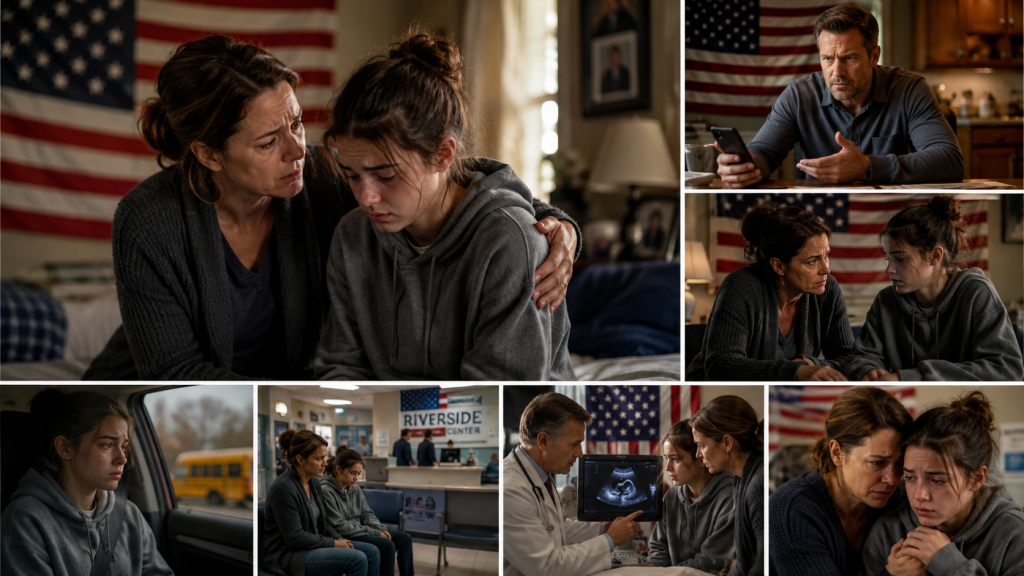
My fifteen-year-old daughter kept telling me her stomach hurt and that she felt sick all the time. My husband kept saying the same thing. “She’s faking it. Don’t throw money away on hospitals.”
I took her to the doctor behind his back anyway. The second the doctor looked at the scan, his face changed. And I felt the whole room tilt beneath my feet. I knew something was wrong before anyone else in our house wanted to admit it.
For weeks, Maya had been fading in front of me in small, terrifying ways Robert kept dismissing from across the dinner table.

First came the nausea. Then the sharp pain low in her stomach.
Then the dizzy spells that made her grab the hallway wall as if the floor had shifted beneath her worn sneakers.
She was fifteen, but lately she looked younger.
The girl who used to stay outside until dark kicking a soccer ball against the garage door had disappeared into oversized hoodies and silence.
She stopped taking blurry sunset pictures over our mailbox.
She stopped laughing too loudly on FaceTime with her friends.
At dinner, she pushed chicken around her plate until it went cold.
One Thursday night, the kitchen smelled like reheated leftovers and dish soap while the porch flag tapped against the post outside.
Robert never looked up from his phone.
“She’s putting on an act,” he said. “Teenagers make everything dramatic. We’re not wasting money on hospitals because she wants attention.”
I tried to answer, but he cut me off.
“Maya is stressed about school. If you keep babying her, she’ll keep doing it.”
Fear over money can make people cautious.
In Robert, it had become something colder—a polished kind of neglect that sounded almost reasonable if you did not look at the child sitting three feet away.
So I looked.
I watched Maya fall asleep after school with her sneakers still on.
I watched her wince when she bent to tie them the next morning.
I watched the color drain from her face and weight slip from her body while Robert protected the checkbook as if it mattered more than she did.
Then, at 2:13 a.m. on a Monday, I heard a sound from Maya’s bedroom.
Not a scream.
A breath.
Thin, broken, wrong.
I opened her door and found her curled on her side beneath the desk lamp, both arms wrapped around her stomach. Her knuckles were white against the gray fabric of her hoodie. Tears had soaked a dark crescent into the edge of her pillow.
“Mom,” she whispered, barely louder than the air conditioner, “please… make it stop hurting.”
That was enough.
Whatever fear I had of Robert’s anger left the room.
The next afternoon, while he was still at work, I signed Maya out through the school office at 1:42 p.m.
The attendance clerk checked my ID, slid the checkout sheet toward me, and printed a dismissal slip with the time stamped across the top.
Maya walked beside me slowly, one hand pressed beneath her hoodie.
I buckled her into our family SUV and drove straight to Riverside Medical Center without telling Robert.
She barely spoke.
She stared through the passenger window at strip malls, gas stations, and yellow school buses rolling past as if she were already somewhere I could not reach.
At intake, a woman slid a clipboard toward me with patient forms, a consent line, and a bright orange insurance sticker that tightened my stomach.
I signed anyway.
I gave them Maya’s date of birth.
I answered every question.
I watched a nurse wrap a blood pressure cuff around her thin arm and print a plastic wristband with her name on it.
By 3:08 p.m., they had ordered bloodwork and an ultrasound.
Robert texted once.
Where are you?
I turned my phone facedown in my lap.
Fear can train you to obey for years, but motherhood has a different spine.
It stands up even when the rest of you is shaking.
Maya lay on the exam table beneath a thin paper sheet, her hoodie folded beside her, her fingers gripping the mattress edge.
The room smelled like antiseptic and warm plastic.
The ultrasound machine gave off a low electric hum while the technician moved the wand across Maya’s abdomen.
With every pass, the technician became quieter.
She took two extra images.
Then three more.
She measured something on the screen.
I could not understand what I was seeing, but I understood her face.
Professionals learn how to hide alarm.
Mothers learn how to recognize it anyway.
The technician saved the images without a word and left, saying the doctor would be in shortly.
Seven minutes later, Dr. Lawson entered holding a clipboard too tightly.
One look at his face made my stomach drop.
“Mrs. Thorne,” he said gently, “we need to talk.”
Maya pushed herself onto one elbow, trembling enough to make the exam paper crinkle.
“Am I in trouble?” she whispered.
“No, sweetheart,” I said, though my voice sounded like it belonged to someone else.
Dr. Lawson looked at the scan.
Then at Maya.
Then at me.
“The scan shows there is something inside her,” he said.
For one second, the room stopped being a room.
The lights were too bright.
The monitor sounded too loud.
My hand found Maya’s ankle through the paper sheet because I needed proof she was still there.
“Inside her?” I repeated. “What does that mean?”
He did not answer immediately.
Instead, he turned the ultrasound monitor just enough for me to see a large pale shape.
Maya’s fingers tightened around my sleeve.
Then Dr. Lawson looked from the scan to the hospital intake form with my daughter’s name printed at the top.
“Mrs. Thorne,” he said, “there is something we need to confirm before I say this out loud.”
My heart hammered.
“Confirm what?”
“I don’t want either of you assuming the worst based on an ultrasound alone. Maya has a large mass in her lower abdomen, most likely arising from one of her ovaries.”
Maya stared at him.
“A mass?”
“Yes.”
Her face went completely white.
“Does that mean cancer?”
Dr. Lawson pulled his chair closer.
“It does not automatically mean cancer. In girls your age, many ovarian masses are benign. Some are cysts. Some are other types of growths. But this one is large enough that it may be causing the pain and nausea, and we need more imaging immediately.”
I could barely process the words.
“How large?”
He paused.
“Approximately fourteen centimeters at its widest point.”
I stared at him.
I didn’t know exactly how big fourteen centimeters was.
But I knew it was too big to be inside my fifteen-year-old daughter without anyone doing something.
“Can you remove it?”
“That depends on what the additional imaging shows. My immediate concern is that a mass this size can twist the ovary or interfere with nearby structures. Maya’s symptoms suggest we shouldn’t delay.”
Maya looked at me.
“Mom?”
I took her hand.
“I’m right here.”
Dr. Lawson ordered additional blood tests and an urgent CT scan, and he contacted the hospital’s pediatric gynecology team.
Everything started moving faster.
A nurse brought Maya a warm blanket.
Another inserted an IV.
Someone wheeled her down a fluorescent hallway while I walked beside the bed trying not to let her see how frightened I was.
That was when my phone began vibrating again.
Robert.
I ignored it.
It rang again.
And again.
Finally, Maya looked toward my purse.
“You should answer.”
“No.”
“He’ll get mad.”
Something about the way she said it stopped me.
Not worried.
Not surprised.
Resigned.
My fifteen-year-old daughter had learned to measure decisions by how angry they might make her father.
I had allowed that to become normal.
I picked up the phone.
Robert did not say hello.
“Where the hell are you?”
“At Riverside.”
Silence.
Then his voice dropped.
“You took her to the hospital?”
“Yes.”
“After I specifically told you not to?”
I looked through the glass panel in the CT waiting area.
Maya was lying under a white blanket.
“Yes.”
“You had no right to make that decision without talking to me.”
I almost laughed.
Instead, I said, “She has a fourteen-centimeter mass in her abdomen.”
Nothing.
Not one word.
For perhaps three seconds, there was complete silence.
I expected panic.
I expected him to ask whether she was all right.
I expected the voice of a father.
Instead, Robert said something I will remember until the day I die.
“How much is this going to cost?”
I closed my eyes.
“Robert.”
“What?”
“Your daughter may need surgery.”
“And you just agreed to everything they suggested?”
I lowered my voice.
“She has been in pain for weeks.”
“She exaggerates.”
“The scan does not exaggerate.”
Another silence.
Then he said, “Don’t sign anything else until I get there.”
I hung up.
Twenty-five minutes later, Dr. Lawson returned with another physician.
Her name was Dr. Elena Patel, a pediatric gynecologic surgeon.
She introduced herself to Maya first.
That mattered to me.
She did not speak over her.
She sat at eye level and explained everything in language a frightened fifteen-year-old could understand.
The CT had confirmed a large ovarian mass.
There were also signs that the ovary might be intermittently twisting because of the weight of it.
That could explain why Maya’s pain came in waves.
“We recommend surgery,” Dr. Patel said.
“Tonight?” I asked.
“If her pain worsens or we see signs of complete torsion, yes. Based on what we’re seeing, I don’t want her going home.”
Maya swallowed.
“Will I lose my ovary?”
Dr. Patel did not make promises she could not keep.
“Our goal is to preserve as much healthy tissue as possible. We won’t know exactly what we’re dealing with until surgery.”
Maya nodded bravely.
Then she asked, “Did I do something to cause it?”
That question broke me more than anything else had.
Dr. Patel immediately shook her head.
“No. Absolutely not.”
Maya looked down.
“You didn’t cause this,” I told her.
She whispered, “Dad said I was being dramatic.”
I saw Dr. Patel’s expression change.
Only slightly.
But enough.
She glanced at me.
“How long has Maya been experiencing symptoms?”
“About six weeks.”
“And this is her first medical evaluation for them?”
“Yes.”
“Why?”
I opened my mouth.
Before I could answer, the door swung open.
Robert walked in.
His tie was loose, his face red, his car keys still clenched in one hand.
“What exactly is going on?”
He didn’t walk to Maya.
He didn’t touch her.
He looked directly at the doctors.
Dr. Patel stood.
“You must be Maya’s father.”
“I am. And nobody is doing surgery until someone explains why this is necessary.”
“Dad,” Maya whispered.
Robert barely glanced at her.
Dr. Patel remained calm.
She explained the mass.
She explained the possibility of ovarian torsion.
She explained why waiting could create greater risk.
Robert listened with his arms folded.
When she finished, he asked, “What happens if we take her home and monitor it?”
“We do not recommend that.”
“But technically we could?”
Dr. Patel’s expression hardened.
“Technically, you could refuse recommended treatment. Medically, I believe that would be a poor decision.”
Robert turned toward me.
“See? It isn’t an emergency.”
I stared at him.
“Did you hear anything she just said?”
“I heard her say we have options.”
Maya began crying silently.
That decided it.
I stepped between Robert and the hospital bed.
“We are not taking her home.”
His eyes narrowed.
“You don’t make that decision alone.”
“I already did.”
He leaned closer.
“You want to destroy us financially?”
Something inside me finally snapped.
“No, Robert. I want our daughter alive and healthy.”
He looked around the room as if embarrassed that other people had heard me.
Then he lowered his voice.
“You have no idea what our insurance deductible is.”
Actually, I didn’t.
Robert had handled our insurance for years.
He handled the bills.
The retirement accounts.
The mortgage.
The savings.
Whenever I asked questions, he told me he was protecting me from unnecessary stress.
I had once considered that an act of love.
Standing in that hospital room, I suddenly understood how convenient my ignorance had been for him.
“What is our deductible?” I asked.
Robert’s jaw tightened.
“That’s not the point.”
“It is exactly the point. You keep talking about money. How much?”
He did not answer.
Dr. Patel excused herself to give us privacy.
Robert waited until the door closed.
Then he said, “We have a high-deductible plan.”
“How high?”
“Very.”
“How high, Robert?”
Maya was watching us.
He finally said, “Twelve thousand.”
I stared at him.
“That isn’t what you told me.”
“It changed.”
“When?”
“Last year.”
“Why?”
“Because premiums were getting ridiculous.”
I felt sick.
“You changed our health insurance without telling me?”
“I handle the finances.”
“You reduced our coverage.”
“I made a responsible decision.”
“Our daughter has been begging for medical care, and you knew we’d have to pay thousands before insurance covered most of it.”
His face changed.
There it was.
Not disbelief.
Not confusion.
Recognition.
For weeks, Robert had not believed Maya was pretending.
He had needed her to be pretending.
Because believing her meant spending money.
Maya understood it at the same moment I did.
She turned her face toward the wall.
“Dad knew.”
Robert snapped, “That’s not what happened.”
“You knew I was sick,” she whispered.
“No, Maya. I thought—”
“You knew I could be.”
He stepped toward her.
She pulled the blanket higher.
“Don’t.”
That single word stopped him.
Dr. Patel returned a few minutes later.
I signed the consent forms.
Robert refused to sign.
It did not matter.
As Maya’s mother and legal guardian, I could authorize the recommended treatment.
Robert stormed into the hallway to call the insurance company.
I stayed beside our daughter.
At 7:36 that evening, Maya’s pain suddenly became unbearable.
Her pulse rose.
She vomited.
Dr. Patel returned immediately.
The suspected intermittent torsion had become more concerning.
Surgery could no longer wait.
They began preparing Maya for the operating room.
I walked beside her bed until a nurse told me I could go no farther.
Maya reached for me.
“Mom.”
I bent down.
Her eyes were huge above the hospital blanket.
“What if I don’t wake up?”
I pressed my forehead against hers.
“You’re going to wake up.”
“You don’t know that.”
“No,” I admitted. “But I know those doctors are going to take care of you, and I will be right here when you come back.”
She started crying.
“So will Dad?”
I looked over my shoulder.
Robert was sitting twenty feet away staring at his phone.
“I will,” I said.
It was the only promise I could make.
Then the doors closed.
For the next two hours and forty-one minutes, I learned how long a minute can be.
I sat in a plastic chair beneath a television nobody was watching.
Robert paced.
He made phone calls.
He complained about the insurance.
At one point, he muttered that we could have gone to a cheaper hospital.
I stopped answering him.
Around 10:20 p.m., Dr. Patel appeared.
I stood so quickly my chair scraped backward.
“How is she?”
“She’s stable.”
My knees nearly gave out.
Dr. Patel motioned for us to sit.
“The mass had caused the ovary to twist. We were able to remove the mass and restore blood flow. We also preserved the ovary.”
I covered my mouth.
Robert asked, “So she’s okay?”
“She did very well.”
“What was the mass?”
“The appearance is consistent with a mature ovarian teratoma, sometimes called a dermoid cyst. These are usually benign, but pathology will confirm that.”
I frowned.
“A teratoma?”
Dr. Patel nodded.
“They can contain different types of tissue because they arise from germ cells. The important thing is that this is not something Maya caused, and based on what we saw, I am cautiously optimistic.”
I cried.
Not loudly.
I simply folded forward with my face in my hands while six weeks of fear poured out of me.
Robert put his hand on my shoulder.
I moved away.
He noticed.
Neither of us said anything.
Maya woke after midnight.
Her voice was rough and sleepy.
The first thing she said was, “Mom?”
I took her hand.
“I’m here.”
Her eyes opened slowly.
“Did they get it?”
“They got it.”
“My ovary?”
“They saved it.”
A tiny smile appeared.
Then she fell asleep again.
Robert stood at the foot of the bed.
For once, he had nothing to say.
But the story did not end with the surgery.
In some ways, that was where it began.
The next morning, while Maya slept, a hospital social worker named Denise stopped by.
She explained that it was routine to speak with families when a minor had experienced a significant delay in medical care.
Robert immediately became defensive.
“There was no delay. We brought her here.”
“I brought her here,” I said.
He glared at me.
Denise remained neutral.
She asked when Maya had first complained of pain.
I told her.
She asked whether I had tried to arrange an appointment earlier.
I hesitated.
Then I told the truth.
Twice I had asked Robert whether we should take Maya to urgent care.
Twice he said no.
Once, three weeks earlier, I had actually called our pediatrician.
They offered an appointment for the following morning.
Robert overheard me.
After I hung up, he spent twenty minutes telling me we could not afford to panic every time Maya had a stomachache.
I canceled the appointment.
Saying that aloud filled me with shame.
Denise looked at me.
“Why did you cancel?”
“Because my husband told me to.”
Robert scoffed.
“I didn’t force her.”
No.
He had not physically forced me.
That was what made the truth harder to explain.
He had simply spent years making every independent decision feel like betrayal.
Every purchase required justification.
Every disagreement became a lecture.
Every question about money became evidence that I did not trust him.
Eventually, I had stopped asking.
And Maya had paid the price.
Denise asked if she could speak to Maya privately later.
Robert objected.
I said yes.
That afternoon, while Denise spoke with our daughter, I went downstairs to the hospital billing office.
I needed to understand our insurance.
The woman behind the desk pulled up our information.
Then she frowned.
“Mrs. Thorne, are you sure this is your current policy?”
“That’s what my husband gave admissions.”
She checked again.
“This policy has been active for eleven months.”
“What did we have before?”
“I can’t see all the details of your previous plan, but this one appears to be an individual family plan purchased through Robert Thorne.”
Something felt wrong.
“Individual? His employer provides insurance.”
“I can’t speak to his employment benefits.”
I thanked her and walked outside.
The afternoon sun hit my face.
I sat on a concrete bench near the hospital entrance and called Robert’s employer.
I had never done that before.
I asked for benefits.
After verifying enough information for them to tell me what they legally could, I learned something that made my hands shake.
Robert’s company still offered family medical insurance.
He had declined dependent coverage during the previous enrollment period.
I did not understand.
Why would he do that?
That night, after Maya was resting comfortably, I confronted him in the hospital cafeteria.
“Why did you decline your company’s family insurance?”
His fork stopped halfway to his mouth.
“Who told you that?”
“So it’s true.”
“It was expensive.”
“How expensive?”
He looked away.
“Robert.”
He gave me a number.
It was not cheap.
But it was less than I expected.
And considerably better than the plan he had purchased privately.
“Why?”
“I told you. I was cutting expenses.”
“What expenses?”
“Our expenses.”
I stared at him.
“We both work. Our mortgage hasn’t changed. We don’t have credit-card debt. Where is our money going?”
His expression closed.
“Not here.”
“Yes. Here.”
“Lower your voice.”
“No.”
Several people turned toward us.
For fifteen years I had lowered my voice whenever Robert told me to.
Not anymore.
“Where is our money going?”
He stood.
“We’ll discuss it at home.”
I stayed seated.
“No, we won’t.”
He walked away.
That answer told me more than an explanation would have.
Two days later, Maya came home.
The pathology results arrived the following week.
Benign.
One word.
Six letters.
I read it three times before I believed it.
The mass was not cancerous.
Maya would need follow-up appointments, but the doctors expected a full recovery.
I thought relief would restore our family.
Instead, it gave me enough room to see how damaged our family had already become.
Maya avoided Robert.
She stopped eating dinner when he was at the table.
If he entered the living room, she found an excuse to leave.
One evening I heard him tell her, “You know I didn’t mean for you to get hurt.”
Maya answered, “But I told you I was hurting.”
He had no response.
Neither did I.
Because she had told me too.
And although I eventually listened, I had waited far too long.
I began examining our finances.
Robert had always kept everything on his laptop.
I did not need his password.
The mortgage statements and tax records were legally mine too, and I requested copies directly.
Then I pulled our joint bank records.
That was when I found the transfers.
$1,200.
$1,500.
$900.
$2,000.
Again and again.
Always transferred into an account I did not recognize.
Over eighteen months, more than $38,000 had disappeared from our joint savings.
I sat at the dining table with statements spread around me.
Robert walked in at 6:17 p.m.
He saw the papers.
Then he saw my face.
“What are you doing?”
“Where is the money?”
He froze.
I pointed to the transfers.
“Thirty-eight thousand dollars.”
He put his briefcase down.
“It isn’t what you think.”
“I don’t know what to think because you haven’t told me anything.”
He rubbed his forehead.
“It was an investment.”
“What investment?”
“A business opportunity.”
“Whose business?”
He did not answer.
I stood.
“Whose business, Robert?”
Finally he said, “Mine.”
I stared at him.
He had been quietly investing in a real-estate partnership with two coworkers.
They were buying distressed properties, renovating them, and hoping to resell them.
The project had not gone well.
One property needed structural repairs.
Another sale had fallen through.
Robert had poured more and more of our savings into keeping the partnership alive.
Then he reduced our health coverage to free up additional money.
He had gambled with our financial security.
And when Maya became sick, every hospital visit threatened to expose what he had done.
Suddenly six weeks of cruelty made perfect sense.
Robert had not been protecting us from unnecessary medical bills.
He had been protecting his secret.
“You called her a liar,” I said.
“I thought it was probably nothing.”
“You needed it to be nothing.”
He looked away.
“You made her doubt her own pain because you were afraid I would discover this.”
“I was trying to fix it before you found out.”
I laughed once.
It sounded nothing like laughter.
“Our daughter needed surgery.”
“I know.”
“She could have lost an ovary.”
“I know.”
“The surgeon said if the twisting had continued—”
“I KNOW!”
His shout filled the kitchen.
For years, that sound would have ended the argument.
This time, it didn’t.
Maya appeared at the hallway entrance.
She was still moving carefully from surgery.
Robert saw her.
His face collapsed.
“Maya.”
She looked at the bank statements.
Then at me.
“What happened?”
I wanted to protect her.
But I was finished protecting Robert.
“Your father moved money from our savings into a business investment. He also changed our insurance because he wanted to reduce expenses.”
Maya stared at him.
“So that’s why you wouldn’t take me?”
Robert stepped forward.
“No. It wasn’t like that.”
She backed away.
“You said I was lying.”
“I made a mistake.”
“For six weeks?”
He opened his mouth.
Maya’s eyes filled with tears.
“I started thinking maybe I was crazy.”
That sentence destroyed whatever defense Robert had left.
She pressed one hand against the healing incision beneath her shirt.
“I thought maybe pain was supposed to hurt that much and I was just weak.”
Robert whispered, “I’m sorry.”
Maya shook her head.
Then she went upstairs.
I heard her bedroom door close.
Robert sat down at the kitchen table.
For the first time in our marriage, he looked small to me.
Not powerful.
Not frightening.
Small.
“What happens now?” he asked.
I had already decided.
“Maya and I are staying with my sister for a while.”
His head snapped up.
“You’re leaving?”
“Yes.”
“Over this?”
I looked at him.
“No, Robert. Because of this.”
I pointed toward the staircase.
“Because our daughter begged us to believe her and you taught her that money mattered more than her pain.”
Then I pointed at myself.
“And because I let you control me long enough that I almost failed her too.”
“You didn’t fail her.”
“That isn’t yours to decide.”
He stared at me.
I packed that night.
Not everything.
Just enough.
Clothes.
Medication.
Maya’s follow-up paperwork.
Her favorite blanket.
Her camera.
The soccer ball she had not touched in nearly two months.
When I told her we were going to Aunt Claire’s, she did not ask how long.
She simply whispered, “Okay.”
Robert stood in the driveway while I loaded the SUV.
He did not try to stop us.
Maybe he finally understood that stopping us would only prove the point.
Three weeks later, I filed for legal separation.
I did not make the decision because Robert had made one terrible financial choice.
I made it because the financial choice exposed something deeper.
He believed control was the same thing as responsibility.
He believed being the husband meant being the final authority.
And somewhere along the way, I had mistaken surrender for keeping the peace.
Maya began counseling.
So did I.
Robert started attending sessions separately.
For several months, Maya refused to see him except during family counseling.
I respected that.
Her body recovered faster than her trust.
By autumn, she returned to school full-time.
One Saturday afternoon, I heard a familiar thump against my sister’s garage.
Then another.
Then another.
I walked outside.
Maya was kicking her soccer ball against the wall.
Her hair was tied back.
There was color in her face again.
Her phone was propped on the porch railing, recording the orange sunset beyond the trees.
She noticed me watching.
“What?”
“Nothing.”
“You’re doing the mom stare.”
I smiled.
“Sorry.”
She kicked the ball again.
Then she stopped.
“Mom?”
“Yeah?”
“Thank you for taking me.”
The words landed harder than she knew.
I walked toward her.
“I should have taken you sooner.”
“But you did take me.”
I shook my head.
“I need you to understand something.”
She waited.
“If your body tells you something is wrong, you deserve to be heard. By me. By a doctor. By anyone responsible for taking care of you. You don’t need permission to be in pain.”
She looked down at the soccer ball.
“Okay.”
“And if I ever forget that again, you remind me.”
That made her smile.
“I can definitely do that.”
Six months after the surgery, Maya had another ultrasound.
I sat beside her while the technician moved the wand across her abdomen.
This time, I watched the screen without feeling like the world was ending.
Dr. Patel came in afterward.
Everything looked normal.
The ovary had recovered.
There were no concerning new growths.
Maya could return fully to sports.
When Dr. Patel said those words, Maya grinned.
A real grin.
The kind I had not seen in almost a year.
On the way home, we stopped for milkshakes.
Maya ordered chocolate.
I ordered vanilla.
We sat in the parking lot with the windows cracked while late-afternoon sunlight poured across the dashboard.
Then Maya said something I wasn’t expecting.
“Dad called yesterday.”
I kept my expression neutral.
“What did he say?”
“He apologized again.”
“And?”
“He asked if I’d come to dinner.”
“You don’t have to.”
“I know.”
That answer mattered.
Not “Will he be mad if I don’t?”
Not “Do you think I should?”
Just:
I know.
She understood that she had a choice.
“What did you tell him?”
“I said maybe next month.”
I nodded.
“How do you feel about that?”
She thought for a moment.
“I don’t hate him.”
“You don’t have to.”
“But I’m still angry.”
“You’re allowed.”
She stirred her milkshake.
“Do you think people really change?”
I looked through the windshield.
“I think they can. But saying you’ve changed and changing are different things.”
She nodded.
“Dad talks differently now.”
“Maybe that’s a beginning.”
“Would you ever go back?”
That question was harder.
Robert had asked the same thing.
He had sold his share of the investment partnership.
He had repaid part of our savings.
He had moved Maya onto better medical coverage.
He had continued counseling.
He had apologized without excuses.
Those things mattered.
But they did not erase what happened.
“I don’t know,” I told Maya.
And for once, I was comfortable not knowing.
A year earlier, uncertainty would have terrified me.
Now I understood that uncertainty was sometimes healthier than forcing yourself into an answer because someone else demanded one.
Maya took another sip.
“I’m glad you didn’t listen to him.”
I looked at her.
“So am I.”
The following spring, nearly a year after the night I found her curled beneath her desk lamp, Maya played her first full soccer match since surgery.
I stood near the field with my sister.
Robert stood farther down the sideline.
We were not together.
Maybe we never would be again.
But when Maya ran onto the field, both of us applauded.
She looked healthy.
Strong.
Alive.
Halfway through the second half, Maya stole the ball near midfield.
She sprinted down the right side.
For one second, I remembered her gripping the hospital mattress, asking whether she had caused the thing growing inside her.
Then she crossed the ball toward a teammate.
Goal.
Her team erupted.
Maya threw both arms into the air.
I cried.
My sister laughed and handed me a tissue.
“You’re embarrassing her.”
“I know.”
“Going to stop?”
“Absolutely not.”
After the match, Maya came running toward us.
She hugged me first.
Then she walked toward Robert.
He did not reach for her.
He waited.
Maya decided.
Then she hugged him.
Only for a moment.
But she did.
Robert closed his eyes.
When she stepped away, he said something I could barely hear.
“I’m proud of you.”
Maya looked at him.
“Then believe me next time.”
Robert’s face changed.
He nodded.
“I will.”
Maya turned and walked back toward me.
That was the lesson none of us would ever forget.
The mass inside my daughter had been frightening.
But it was visible.
Doctors could measure it.
Surgeons could remove it.
Pathologists could examine it.
The other thing growing inside our home had been harder to see.
Control.
Silence.
Fear.
The habit of dismissing someone because listening to them would be inconvenient.
Those things do not appear on an ultrasound.
There is no blood test for them.
But they can damage a family just as surely if nobody is willing to name them.
I still keep one piece of paper from that terrible week.
Not the hospital bill.
Not the pathology report.
Not the insurance statement.
It is Maya’s school dismissal slip.
Monday.
1:42 p.m.
A small white piece of paper with her name and the time I signed her out of school.
For anyone else, it means nothing.
For me, it marks the minute I finally stopped asking whether Robert would approve of my decision and started asking whether my daughter needed me to make it.
I wish I had done it six weeks earlier.
I cannot change that.
But I can make sure Maya never has to beg me to believe her again.
Today, she is sixteen.
Her sneakers are permanently dirty again.
There are soccer balls in the garage, camera batteries on the kitchen counter, and half-finished homework spread across the dining table.
She laughs loudly on the phone with her friends.
She takes too many photographs of sunsets.
She eats everything in the refrigerator and then complains that there is nothing to eat.
Normal teenage things.
Beautiful, irritating, ordinary things.
Sometimes I stand in the kitchen and listen to her moving around upstairs.
A drawer opens.
Music starts.
She laughs.
And I think about that night at 2:13 a.m., when the house was silent and I heard one broken breath through her bedroom door.
One sound changed everything.
Not because it was the first time Maya told me she was hurting.
It wasn’t.
She had been telling us for weeks.
It changed everything because it was finally the moment I listened.
That distinction still hurts.
But I refuse to hide from it.
Parents are supposed to protect their children.
Sometimes that means protecting them from strangers.
Sometimes from illness.
And sometimes, painfully, it means standing between your child and another person you love who refuses to see what is happening.
Robert once told me taking Maya to the hospital would be throwing money away.
The final bills were substantial.
We arranged a payment plan.
I took extra work.
Robert contributed under our separation agreement.
It wasn’t easy.
But every time I mailed a payment, I thought about what that money had purchased.
Not a perfect outcome.
Not a guarantee.
A chance.
A chance for doctors to find the mass before it caused permanent damage.
A chance for a surgeon to save Maya’s ovary.
A chance for my daughter to return to the soccer field.
A chance for our family to confront truths we had been avoiding.
Some things are expensive.
Ignoring them can cost far more.
Last month, Maya came downstairs wearing her gray hoodie—the same one she had worn during those terrible weeks.
For a moment, seeing it stopped me.
Then I noticed she had cut the sleeves shorter and covered one pocket with little embroidered yellow flowers.
“What did you do to that thing?” I asked.
She looked down.
“Improved it.”
I laughed.
She grabbed an apple from the counter.
Then she kissed my cheek and headed for the door.
“Practice ends at six.”
“I’ll be there.”
“I know.”
She ran outside.
Through the window, I watched her toss her soccer bag into the back seat.
The porch flag moved gently in the spring wind.
Maya climbed into the car with a teammate, and a moment later they disappeared down the street.
I stood there for another minute.
Then I looked at the empty kitchen.
There had been a time when Robert’s voice filled that room so completely that I doubted my own judgment.
Now the house was quieter.
Our lives were more complicated.
The marriage I thought would last forever might not survive.
And yet, for the first time in years, the quiet did not frighten me.
Because silence and peace are not the same thing.
I know that now.
And so does Maya.
If there is one thing I wish I could tell the woman I was before that Monday afternoon, it would be this:
When your child keeps telling you something hurts, listen.
You do not need another adult’s permission to take their suffering seriously.
You do not need to wait until the pain becomes unbearable.
You do not need to protect someone else’s pride, bank account, or comfort at the expense of the person asking you for help.
Because sometimes the most important decision you make as a parent will look unreasonable to the person who benefits from your silence.
Make it anyway.
I did.
And at 1:42 p.m. on an ordinary Monday afternoon, with my frightened fifteen-year-old daughter walking beside me toward our SUV, I had no idea I was doing more than taking her to a hospital.
I was choosing to believe her.
I was choosing to become her mother again instead of Robert’s obedient wife.
And, although I didn’t understand it yet, I was choosing the moment our entire family would finally begin to heal.
THE END! THANKS FOR READING!