 Reading Time: 20 minutes
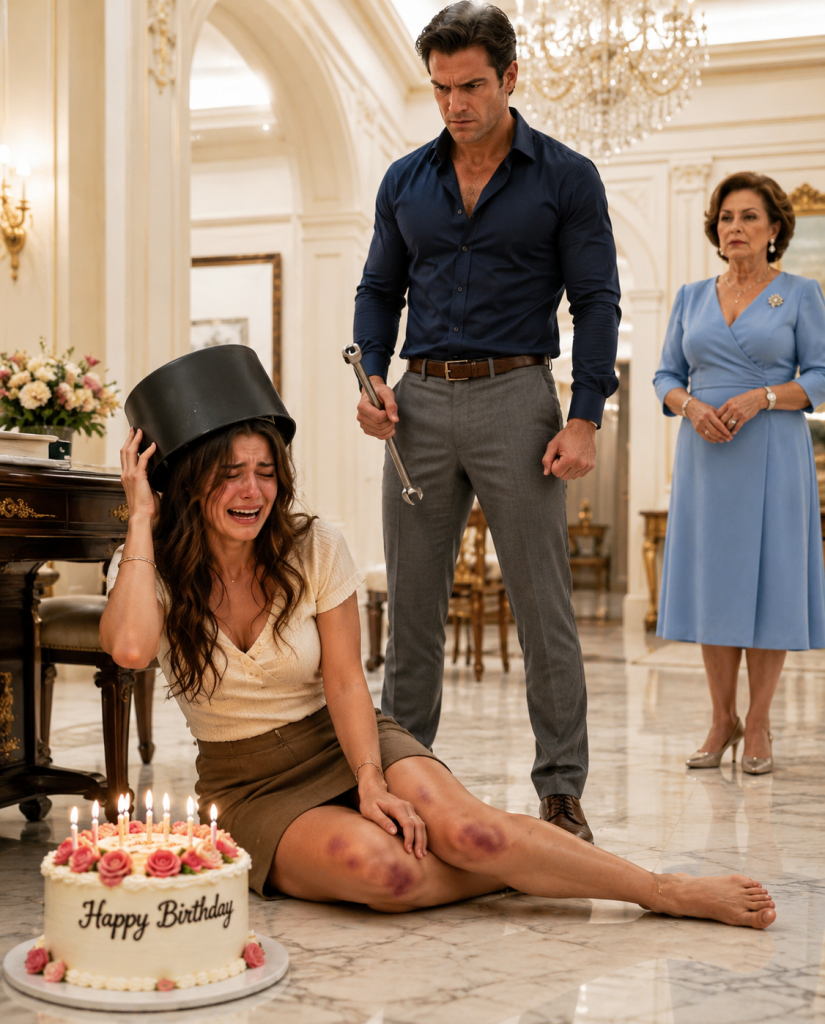
My brother shattered my knee with a tire iron because I told his fiancée he had been secretly married for five years. While my mother applauded and said, “You brought this on yourself,” I simply called 911. At the hospital, a nurse asked one question that ended up exposing a far more serious crime..
PART 1 — The Question in the Emergency Room “Your brother broke your leg because you didn’t know when to keep your mouth shut,” my mother said in front of the nurse, as though that were a perfectly reasonable explanation.
The emergency room nurse had already asked me the same question three times.
“Did someone do this to you?” And all three times, my mother answered for me. “No. She fell down the backyard stairs.”
But the nurse kept looking at me.
Her name badge said ELENA RAMIREZ, RN.

She was probably in her forties, with tired eyes and the calm expression of someone who had learned to recognize fear even when a patient tried to hide it.
I lowered my eyes toward my left leg.
The pain was so severe that thinking required effort. My knee was badly injured, and every tiny movement sent another wave of agony through me.
My mother, Amanda Wellman, stood beside the hospital bed with her arms folded.
She wasn’t worried about me.
She was watching me.
That distinction mattered.
The nurse leaned closer.
“Monica, I need you to answer. Not your mother.”
My mother immediately interrupted.
“She’s confused because of the pain.”
The nurse didn’t even look at her.
“Monica?”
I took the smallest breath I could manage.
“My brother hit me with a tire iron.”
The room went silent.
My mother shot out of her chair.
“That’s a lie!”
A police officer standing near the curtain quietly opened his notebook.
“She’s always wanted to ruin his life!” my mother continued. “Ask anyone in our family. She’s jealous of her brother.”
The nurse moved between my mother and the bed.
“Ma’am, you need to step outside.”
“I’m her mother.”
“And she is an adult patient.”
“I’m not leaving her alone.”
The officer finally spoke.
“Mrs. Wellman, please step outside.”
My mother stared at me.
It was the same look she had given me since childhood whenever I refused to protect Austin.
You’ll regret this.
She didn’t have to say it.
I already understood.
Then she walked out.
Those eight words—My brother hit me with a tire iron—changed my life.
But the truth was that my family had been preparing me for that moment for years.
It had all started forty-eight hours earlier with an ivory-colored wedding invitation.
My name is Monica Wellman.
I was thirty-one years old and worked as a forensic auditor for a private hospital network in San Diego.
I liked numbers.
Numbers didn’t become angry when you asked questions.
Numbers didn’t demand loyalty.
Numbers didn’t tell you that protecting someone from consequences was the same thing as loving them.
My older brother, Austin, had spent his entire life being protected from consequences.
When he wrecked our mother’s car at seventeen, she told the insurance company she had been driving.
When money disappeared from my grandmother’s purse, Mom said Grandma had probably misplaced it.
When Austin borrowed $8,000 from our uncle and never repaid him, my mother called it “a misunderstanding.”
There was always an explanation.
There was always someone else to blame.
Usually me.
I was the difficult daughter.
The suspicious daughter.
The daughter who “kept records.”
Mom said those words like they described a disease.
Austin arrived at my office on a Thursday afternoon wearing an expensive navy suit.
He walked past reception carrying himself like he owned the building.
When he reached my desk, he dropped an ivory envelope in front of me.
“You’re invited.”
I opened it.
Austin Wellman and Naomi Millican.
The wedding was scheduled for the following month at a private hacienda near Temecula.
More than three hundred guests.
I looked up.
“You finally picked a date?”
Austin grinned.
“Naomi’s dad is paying for practically everything.”
That sounded exactly like Austin.
Then he pointed at me.
“And Monica?”
“What?”
“No weird accountant questions.”
“I’m an auditor.”
“Same thing.”
“No, it isn’t.”
“You know what I mean. Don’t start investigating people. Don’t embarrass me.”
I should have recognized the warning.
Instead, I laughed.
“I’m coming to your wedding, Austin. I’m not conducting an audit.”
He left ten minutes later.
That evening, our family attended Naomi’s engagement dinner at an upscale restaurant overlooking the Pacific.
Naomi was twenty-nine, intelligent, gracious, and far more patient with Austin than he deserved.
Her father, Richard Millican, had spent thirty years developing commercial properties throughout Southern California.
Austin loved mentioning that.
He rarely mentioned Naomi’s work as an architect.
Halfway through dinner, a waiter accidentally knocked over a glass of water.
Most of it spilled across the table and onto Naomi’s handbag.
“I’ve got it,” I said.
We moved the bag away from the table and began removing wet items.
Her wallet.
Keys.
Makeup.
A passport.
Then a folded document slipped from an interior pocket.
I picked it up.
At first, I thought it belonged to Naomi.
Then I saw my brother’s name.
Austin James Wellman.
Beside it was another name.
Kathleen Marie Hilliard.
It was a marriage certificate.
The date was from five years earlier.
My stomach tightened.
Naomi noticed my expression.
“What is it?”
I folded the document.
“Where did you get this?”
“Austin asked me to hold some paperwork last week. Why?”
I looked across the restaurant.
My brother was laughing with Naomi’s father.
“Naomi, can we talk somewhere private?”
Her smile disappeared.
We stepped into the hallway.
I showed her the certificate.
She stared at it for several seconds.
“I don’t understand.”
“Neither do I.”
“He was married?”
“Apparently.”
“He told me he had never been married.”
There was one possibility that could have made everything innocent.
A divorce.
So I told Naomi not to confront him yet.
The next morning, I checked the relevant public records.
I found the marriage.
I found no divorce.
No annulment.
Nothing indicating that marriage had legally ended.
Then I found Kathleen.
She lived in Oceanside.
I stared at her phone number for almost five minutes before calling.
A woman answered.
“Hello?”
“My name is Monica Wellman.”
Silence.
“I’m Austin’s sister.”
The silence became heavier.
Finally Kathleen said, “I’ve been wondering when someone from his family would finally come looking for me.”
That sentence told me almost everything.
“Do you know he’s getting married?”
Kathleen inhaled sharply.
“What?”
“Next month.”
Another long silence.
Then she said something I will never forget.
“I thought he was still my husband.”
Kathleen and I met that morning at a coffee shop.
She brought documents.
Photographs.
Tax records.
Messages.
Austin had married her quietly five years earlier after dating her for less than a year.
Then, approximately eighteen months into their marriage, he told Kathleen he needed to leave California temporarily for work.
He never came home.
At first, he continued calling.
Then the calls became less frequent.
Eventually he disappeared almost completely.
Kathleen had tried to locate him.
Austin had convinced our mother to tell her he had moved overseas.
Mom knew.
That realization hurt almost as much as discovering what Austin had done.
My mother had known her son was married.
She had helped him disappear from his wife.
And now she was helping him marry someone else.
Kathleen called Naomi that afternoon.
By midnight, the wedding was canceled.
Naomi’s father removed Austin from a real estate project he had recently joined.
The engagement announcement disappeared from social media.
Austin called me seventeen times.
I didn’t answer.
The following day was my birthday.
I wanted to cancel dinner.
Mom insisted.
“A family should stay together when things are difficult.”
I almost laughed.
But I went.
That decision nearly cost me my ability to walk.
It was just the three of us.
Austin.
Mom.
And me.
No one sang happy birthday.
No one touched the cake.
Austin stared at me from across the kitchen table.
“You destroyed everything.”
“I told the truth.”
“You contacted Kathleen.”
“Yes.”
“You contacted Naomi.”
“Kathleen contacted Naomi.”
“Because of you.”
I put down my fork.
“Austin, you were already married.”
“You had no right.”
“Naomi had a right to know.”
His face changed.
Mom noticed it too.
But instead of stopping him, she said, “Monica, maybe you should apologize.”
I looked at her.
“For what?”
“For interfering.”
“He was planning another wedding while still married.”
“That was between Austin and those women.”
“Those women?”
My mother shrugged.
“Relationships are complicated.”
“No. This isn’t complicated.”
Austin stood.
Then he walked into the garage.
I heard drawers opening.
Metal scraping against concrete.
He came back holding a tire iron.
I stood slowly.
“Austin.”
“You ruined my future.”
“Put that down.”
“You chose two strangers over your own blood.”
“I chose to stop lying.”
He moved toward me.
The next few seconds became fragments in my memory.
My mother watching.
Austin shouting.
Me stepping backward.
Then pain.
I hit the floor.
My mother didn’t rush toward me.
She clapped twice.
“It’s about time someone put the trash in its place.”
Austin looked down at me.
For one terrifying moment, I thought he might continue.
Instead, he lowered the tire iron.
“Let’s go, Mom.”
They walked out.
The front door closed.
I was alone.
My phone was on the kitchen counter.
Maybe twelve feet away.
It might as well have been a mile.
I dragged myself across the floor.
I don’t remember reaching the phone.
I remember hearing the dispatcher.
I remember saying my address.
I remember telling her my brother had attacked me.
Then nothing.
When I woke up, I was in the emergency room.
And somehow my mother was there.
She had apparently returned after hearing the ambulance.
She immediately began telling everyone that I had fallen.
But Nurse Elena kept asking questions.
After I finally told the truth, the officer took my statement.
Then Elena asked something unexpected.
“Monica, does your brother have access to your financial information?”
I blinked.
“What?”
“Bank accounts. Insurance. Employee benefits. Anything like that?”
My mother, standing outside the room, suddenly stopped arguing with the officer.
I saw her through the narrow window.
Her face changed.
And because I was a forensic auditor, I recognized that expression immediately.
It was the expression people wore when someone had just asked the one question they desperately hoped would never be asked.
“Yes,” I whispered.
“My mother does.”
PART 2 — The Account I Never Opened
Elena closed the curtain.
“Why does your mother have access?”
“She helped me manage some paperwork after my father died.”
“How long ago?”
“Seven years.”
“Did you ever give her permission to open accounts in your name?”
“No.”
Elena nodded slowly.
“Have you recently received mail about insurance policies, loans, medical bills, or accounts you don’t recognize?”
I started to say no.
Then I remembered an envelope.
Three weeks earlier, I had received a letter from an insurance company I didn’t recognize.
I assumed it was advertising and threw it away.
There had also been a credit-card notice six months earlier.
And a strange collections call the previous year.
I had dismissed each incident because my credit report had always looked normal when I checked it.
“What are you thinking?” I asked.
Elena hesitated.
“I’m not making an accusation. But when family violence is involved, we ask about financial control too.”
The police officer returned.
His name was Detective Marcus Hale.
He asked whether I wanted to make a formal complaint against Austin.
“Yes.”
My mother started shouting from the hallway.
“You’re going to send your own brother to jail?”
Hale closed the door.
I looked at him.
“Yes.”
It was the first time in my life I had answered that question without guilt.
Austin was arrested later that evening.
My mother went home.
I underwent surgery the following morning.
The damage was serious, but the orthopedic surgeon believed I would eventually walk normally again with rehabilitation.
I should have been thinking about recovery.
Instead, I kept thinking about Elena’s question.
Financial information.
The moment I was awake enough to use my laptop, I began searching.
Forensic auditors are professionally incapable of leaving suspicious numbers alone.
I requested a complete credit history.
Nothing obvious appeared.
Then I searched insurance databases and old correspondence.
That was when I found the first policy.
A life insurance policy had been opened in my name four years earlier.
The beneficiary was my mother.
The coverage amount was $750,000.
I stared at the screen.
I had never purchased it.
There was another policy.
$500,000.
Beneficiary: Amanda Wellman.
Then a third.
That one was different.
The beneficiary was Austin.
Total coverage exceeded $1.8 million.
My hands started trembling.
There could have been legitimate explanations.
Employer-sponsored policies.
Administrative mistakes.
Fraud committed by an unrelated person.
I knew better than to jump to conclusions.
So I documented everything.
Screenshots.
Account numbers.
Dates.
Addresses.
Then I noticed something strange.
One policy listed an email address I didn’t recognize.
The address included my initials and birth year.
I requested password recovery.
The recovery phone number ended in 4482.
My mother’s number.
I called Detective Hale.
He arrived at the hospital that afternoon.
I handed him a folder.
“I think you need to see this.”
He spent nearly twenty minutes reading.
“Did you authorize any of these?”
“No.”
“Sign anything?”
“No.”
“Your mother had access to your Social Security number?”
“Yes.”
“And your brother?”
“Possibly through her.”
Hale leaned back.
“This changes things.”
“How?”
“I can’t tell you what it means yet. But I’m sending this to our financial crimes unit.”
Then I remembered Kathleen.
I called her.
“Did Austin ever take out insurance on you?”
She went quiet.
“I don’t know.”
“Check.”
She called back three hours later.
There was a $400,000 policy.
She had never authorized it.
The beneficiary was Austin.
The coincidence had disappeared.
PART 3 — My Mother’s Filing Cabinet
Two days after my surgery, Detective Hale returned with another investigator.
Special Agent Priya Shah worked with a state financial-crimes task force.
She carried a tablet and spoke carefully.
“We’re investigating potential identity theft, insurance fraud, and financial exploitation. We need your cooperation.”
“You have it.”
“Your mother’s home may contain records relevant to the investigation.”
“My father’s old office.”
“What about it?”
“Mom keeps everything.”
Receipts.
Tax returns.
Birth certificates.
Insurance documents.
My father used to joke that Amanda could produce a grocery receipt from 1997 if someone challenged her about the price of milk.
After Dad died, she turned his office into her private filing room.
No one was allowed inside.
Not even Austin.
At least that was what she claimed.
Investigators obtained a warrant.
What they found inside that room transformed a family assault investigation into something much larger.
There were folders with names.
Mine.
Austin’s.
Kathleen’s.
My deceased father’s.
My grandmother’s.
Two former employees from a small medical-billing company my mother had once owned.
Inside the folders were copies of identification documents, signatures, bank statements, and insurance correspondence.
There were also notebooks.
My mother had documented almost everything.
Premium dates.
Policy values.
Beneficiaries.
Account balances.
Even handwritten notes about people’s medical histories.
Agent Shah visited me again.
“Your mother appears to have been maintaining these records for years.”
“How many?”
“We’re still counting.”
Then she placed a photocopy on the table.
My father’s name was at the top.
He had died seven years earlier after what everyone believed was a sudden heart attack.
There were two life insurance policies.
Together they had paid my mother approximately $900,000.
That alone wasn’t suspicious.
Then Shah showed me another document.
A medical authorization.
The signature looked like my father’s.
Except I knew it wasn’t.
I had spent years reviewing signatures and financial documents.
My father always formed the capital W in Wellman with a distinctive narrow center.
This one was wrong.
“That isn’t his signature.”
“We have the same concern.”
I felt cold.
“What exactly are you investigating?”
Shah chose her words carefully.
“Right now, document fraud.”
But I understood what she wasn’t saying.
My father’s death was being looked at again.
The next discovery came from Kathleen.
She called me one evening while I was still hospitalized.
“I found something.”
“What?”
“Austin used my identity to guarantee a business loan.”
“How much?”
“Two hundred and eighty thousand dollars.”
My stomach dropped.
“He told the lender we jointly owned a consulting company. We never owned anything together.”
“Send everything to Detective Hale.”
“I already did.”
Then she started crying.
“I feel so stupid.”
“You aren’t stupid.”
“I married him.”
“So did you know he was doing this?”
“No.”
“Then trusting your husband wasn’t the crime. What he did with that trust was.”
I realized while saying it that I needed to hear those words too.
For years, Mom had trained me to believe that noticing wrongdoing was somehow worse than committing it.
That belief was finally dying.
PART 4 — Austin Wanted a Deal
Austin remained in custody while prosecutors reviewed the assault and financial evidence.
His attorney initially insisted the injury had been accidental.
That changed when police recovered the tire iron.
Then they obtained footage from a neighbor’s security camera showing Austin and Mom leaving the house immediately afterward.
My 911 call had been recorded.
So had my mother’s statements at the hospital.
The case was no longer easy to explain away.
Austin changed strategies.
He wanted a deal.
And suddenly, he wanted to talk.
Detective Hale warned me before telling me what Austin had said.
“Your brother is blaming your mother.”
I almost laughed.
Of course he was.
Austin had spent his entire life letting Amanda rescue him.
Now that she couldn’t, he was pushing her toward the fire.
According to Austin, Mom had been controlling financial schemes for years.
She used relatives’ identities to create accounts, manipulate insurance applications, and move money between businesses.
Austin claimed he had only followed instructions.
But investigators found emails proving otherwise.
He had actively participated.
He had forged signatures.
He had submitted applications.
He had used Kathleen’s identity.
And he had helped Mom open policies in my name.
Then Hale told me something that made the hospital room feel suddenly smaller.
“Austin says your mother increased one of your policies two months ago.”
“Why?”
“He says she was angry because you had started asking questions about money missing from your grandmother’s estate.”
I remembered.
My grandmother had died fourteen months earlier.
Her will divided her estate equally between Mom, Austin, and me.
But the numbers had never made sense.
Approximately $240,000 seemed to have disappeared before distribution.
When I asked Mom, she became furious.
She accused me of treating my grandmother’s death like an audit.
I stopped asking because I didn’t want another family war.
Now I understood that the war had already started.
I simply hadn’t realized I was in it.
“Are you saying my mother wanted me dead?”
Hale shook his head.
“I’m saying we’re investigating financial crimes. I don’t want you drawing conclusions beyond the evidence.”
It was a careful answer.
A professional answer.
But I saw concern in his face.
My discharge date was approaching.
I couldn’t return home.
The house where Austin attacked me belonged partly to my mother.
Hale recommended staying somewhere she couldn’t access.
Naomi surprised me by offering her guesthouse.
“You don’t owe me anything,” I told her.
“You told me the truth before I made the biggest mistake of my life.”
“That doesn’t mean you need to take care of me.”
“I’m not taking care of you. I’m giving you a place to recover.”
So after eleven days in the hospital, I left using crutches and moved temporarily into a small guesthouse overlooking a canyon outside La Jolla.
Naomi had already canceled the wedding.
She had also changed every password Austin knew.
Her father’s attorneys were investigating several business transactions involving him.
That was where the next problem appeared.
Austin had convinced Richard Millican to invest $600,000 into a property-development company.
The company existed.
The property did not.
Austin had shown Richard forged purchase documents.
Nearly $410,000 had already been transferred elsewhere.
Investigators traced part of it to an account controlled by my mother.
This was no longer a family secret.
It was an organized financial scheme.
And I had spent my career finding fraud everywhere except inside my own family.
PART 5 — The Truth About Dad
Three weeks after the assault, Agent Shah asked me to come to her office.
I was walking with crutches by then.
Slowly.
Painfully.
But walking.
She had documents arranged across a conference table.
“Monica, we completed an initial review of your father’s insurance records.”
I sat down.
“Okay.”
“One policy was legitimate.”
“And the other?”
“We believe your mother submitted it using falsified information.”
My throat tightened.
“Was Dad aware?”
“We don’t believe so.”
Then came the part I had feared.
“Because of discrepancies in related records, authorities are reviewing the circumstances surrounding his death.”
I stared at the table.
Dad had been fifty-eight.
Healthy enough to hike every weekend.
He had collapsed at home one evening.
Mom said she found him unconscious.
He died before reaching the hospital.
There had been no reason at the time to suspect anything criminal.
I asked the question anyway.
“Do you think she killed him?”
Shah’s expression remained neutral.
“We do not have evidence that allows me to say that.”
That answer mattered.
Suspicion was not proof.
As an auditor, I knew that better than anyone.
Weeks passed.
Records were reviewed.
Medical evidence was reexamined.
Witnesses were interviewed.
Eventually, investigators told me they could not establish that my father’s death had been caused deliberately.
It was painful not to have a dramatic answer.
But truth is not obligated to be dramatic.
What they could prove was serious enough.
Mom had fraudulently obtained an insurance policy connected to Dad.
She had forged documents.
She had concealed assets from his estate.
She had later repeated similar schemes using other relatives.
And the missing money from Grandma’s estate?
Investigators found it.
My mother had transferred $238,000 into a company controlled jointly by herself and Austin.
The company had no employees.
No office.
No legitimate operations.
It existed to move money.
Then prosecutors uncovered another victim.
A woman named Evelyn Parker.
She was seventy-four.
Years earlier, she had hired my mother’s medical-billing company.
After the company closed, Mom continued using information from Evelyn’s records.
Accounts had been opened without her knowledge.
Loans had been taken out.
Evelyn had spent years believing she was simply bad with money.
When investigators explained what had happened, she cried.
That affected me more deeply than anything else.
Because Evelyn wasn’t family.
Mom couldn’t claim she had been “protecting Austin.”
She couldn’t call it complicated family loyalty.
She had simply seen someone vulnerable and used her.
The excuses were gone.
PART 6 — My Mother Came to See Me
Six weeks after the attack, I was sitting outside Naomi’s guesthouse doing physical therapy exercises when a black sedan stopped near the gate.
My mother stepped out.
I froze.
She wasn’t supposed to contact me.
There were legal restrictions in place.
She stood outside the gate.
“Monica.”
I reached for my phone.
“Leave.”
“I just want five minutes.”
“You’re not allowed to be here.”
“I’m your mother.”
That sentence had controlled me for thirty-one years.
I’m your mother.
Therefore forgive me.
Therefore believe me.
Therefore protect your brother.
Therefore ignore what you see.
I stood carefully.
“Leave.”
She gripped the gate.
“You don’t understand what you’ve done.”
“What I’ve done?”
“Our family is destroyed.”
“Austin attacked me.”
“You provoked him.”
“You helped steal Grandma’s money.”
Her expression changed.
“You don’t know anything about that.”
“I know enough.”
“You always thought you were smarter than us.”
“No, Mom. I just finally stopped pretending I couldn’t see what you were doing.”
She stared at me.
Then she said something almost unbelievable.
“If you cooperate with prosecutors, your brother could spend years in prison.”
“Yes.”
“He’s your brother.”
“Yes.”
“And you’re okay with that?”
“No.”
That surprised her.
I continued.
“I’m not okay with any of this. I’m not okay that Austin attacked me. I’m not okay that you watched. I’m not okay that Kathleen lost five years to a husband who disappeared. I’m not okay that Naomi almost married someone who was already married. I’m not okay that Grandma’s estate was stolen. And I’m not okay that you used my identity.”
Her eyes hardened.
“So this is revenge.”
“No.”
I held up my phone.
“This is accountability.”
I called the police.
Mom left before officers arrived.
But the security camera recorded the entire conversation.
For once, I had not needed to argue.
I had simply documented what happened.
PART 7 — The Trial
Nine months after my birthday, Austin entered a plea agreement covering the assault and several financial offenses.
Kathleen sat beside me in court.
Naomi sat on my other side.
Three women who had once been connected through Austin were now sitting together because we had all stopped protecting him.
When Austin entered, he looked smaller than I remembered.
He didn’t look at me.
His attorney described his childhood.
Pressure.
Dependency.
A controlling mother.
Poor decisions.
Then the prosecutor stood.
She didn’t shout.
She didn’t need to.
She described a pattern.
Austin lied when lying benefited him.
He hid his marriage when marriage became inconvenient.
He exploited Kathleen financially.
He deceived Naomi.
He participated in fraudulent transactions.
And when I exposed one of those lies, he responded with violence.
The judge asked whether I wanted to speak.
I stood with a cane.
My knee would probably never feel exactly the same again.
But I could walk.
That mattered.
I looked at Austin.
“For most of my life, our family treated consequences like cruelty. Every time Austin did something wrong, someone rushed to protect him from what happened next. Usually our mother. Sometimes me.”
Austin finally looked up.
“I used to think loyalty meant keeping family secrets. I know better now.”
My voice shook slightly.
“Loyalty without truth isn’t love. Sometimes it is just permission.”
I looked toward the judge.
“My brother didn’t lose his future because I exposed him. He lost opportunities because of choices he made repeatedly, even when people gave him chances to stop.”
I sat down.
Austin received a substantial prison sentence under the plea agreement, along with restitution obligations.
My mother’s case took longer.
Her attorneys fought nearly everything.
But paper trails are patient.
Bank records don’t forget.
Insurance applications don’t change their stories.
Digital transfers don’t become sentimental because the person who authorized them is someone’s mother.
Prosecutors ultimately proved multiple financial offenses involving identity theft, fraud, forged documents, and stolen estate assets.
They did not charge her with causing my father’s death.
There wasn’t enough evidence.
I was grateful for that distinction.
Justice should be based on what can be proven, not what makes the most dramatic story.
My mother was convicted on several counts.
Before sentencing, she asked to speak.
She turned toward me.
For a moment, I thought she might apologize.
Instead she said, “I hope you’re happy.”
The old Monica would have felt guilty.
The new Monica understood what she was doing.
She was offering me the blame one final time.
I refused to take it.
“I’m healing,” I said.
That was all.
PART 8 — One Year Later
One year after the night Austin attacked me, I returned to the same hospital where Nurse Elena had asked me that question.
I wasn’t a patient.
I was there for work.
Our hospital network had expanded its fraud-prevention program, and I had been promoted to lead a new internal financial-integrity team.
My knee still ached after long days.
There was a scar.
Cold mornings were difficult.
But I could walk without a cane.
As I crossed the emergency department, someone called my name.
“Monica?”
I turned.
Elena.
The nurse who had refused to let my mother answer for me.
She smiled.
“You’re walking.”
“I’m walking.”
She came over and hugged me carefully.
“I wondered what happened to you.”
“A lot.”
We sat in the cafeteria during her break.
I told her the short version.
Austin.
The insurance policies.
Grandma’s estate.
The fraudulent company.
Evelyn.
Mom.
Elena looked stunned.
“All because I asked about financial access?”
“Not exactly.”
“What do you mean?”
“You opened a door.”
She shook her head.
“You told the truth. That’s what opened it.”
Maybe she was right.
Kathleen eventually finalized her divorce from Austin.
She moved to Arizona and started over.
Naomi returned to architecture and later designed a community housing project outside San Diego.
We stayed friends.
Evelyn recovered part of what had been stolen from her.
My grandmother’s estate was reopened, and recovered funds were redistributed appropriately.
I used part of my share to establish a small emergency assistance fund through a local nonprofit for people dealing with financial abuse by relatives.
I named it after my father.
Not because I knew exactly what happened during the final years of his life.
I probably never would.
I named it after him because he once told me something when I was thirteen.
I had caught Austin stealing money from my bedroom.
When I confronted him, Mom demanded that I apologize for accusing my brother.
Dad found me crying later.
He sat beside me and said:
“Being the person who notices the truth can be lonely. Notice it anyway.”
For years, I had forgotten that.
Now I understood.
EPILOGUE — The Birthday Cake
On my thirty-second birthday, I invited six people to dinner.
Naomi came.
Kathleen flew in from Arizona.
Elena came after her shift.
Detective Hale stopped by briefly.
Agent Shah sent flowers.
And Evelyn, now seventy-five, brought a homemade apple pie because she insisted birthday cake was overrated.
We ate outside beneath string lights.
Nobody shouted.
Nobody demanded an apology.
Nobody told me I was betraying anyone by telling the truth.
At some point Naomi raised her glass.
“To Monica.”
I groaned.
“Please don’t make a speech.”
“I’m making a speech.”
Everyone laughed.
She continued.
“To the woman who ruined my wedding.”
Kathleen nearly choked on her drink.
Naomi smiled.
“And saved my life from becoming a lie.”
We raised our glasses.
Later, after everyone left, I carried the plates into the kitchen.
For a second, I remembered my previous birthday.
Austin walking into the garage.
Mom watching.
The sound of metal hitting the floor afterward.
I expected the memory to hurt.
It did.
But it no longer controlled the room.
My phone buzzed.
It was a message from Kathleen.
Best birthday yet?
I smiled.
Not even close.
She immediately replied.
Seriously?
I looked through the kitchen window at the empty chairs, half-finished glasses, and crumbs from Evelyn’s pie.
Then I typed:
The best one is still ahead.
I put the phone down.
For most of my life, my mother taught me that family loyalty meant silence.
Austin taught me what happens when someone mistakes forgiveness for permission.
But a nurse in an emergency room taught me something different.
Sometimes the most important question isn’t:
“Why did they hurt you?”
It is:
“What else have they been controlling?”
That question uncovered forged insurance policies.
It uncovered stolen inheritance money.
It uncovered identity theft.
It exposed years of financial manipulation that had been hidden beneath excuses about family loyalty.
But more importantly, it forced me to examine the lie I had believed since childhood.
That keeping the peace was my responsibility.
It wasn’t.
Neither was protecting Austin from consequences.
Neither was protecting my mother’s reputation.
Neither was carrying shame that belonged to someone else.
I had spent years auditing companies for fraud.
I searched for missing money, false records, fabricated invoices, suspicious transfers, and signatures that didn’t belong.
I thought being good at my job meant I could recognize deception.
But the hardest fraud to recognize was the one I had grown up calling normal.
Austin didn’t suddenly become dangerous on my birthday.
Mom didn’t suddenly become manipulative in the emergency room.
Those things had been growing for years.
Every excuse had fed them.
Every secret had protected them.
Every time someone said, “That’s just how Austin is,” another boundary disappeared.
Until finally there were no boundaries left.
People sometimes ask whether I regret telling Naomi about the marriage certificate.
My answer is always the same.
No.
I regret that Kathleen spent years wondering why her husband disappeared.
I regret that Naomi almost built a marriage on a lie.
I regret ignoring the inconsistencies in Grandma’s estate because I was tired of fighting.
I regret believing my mother when she told me that asking questions made me disloyal.
But I will never regret telling the truth.
Because Austin was wrong about one thing.
I didn’t ruin his future.
He did.
My mother didn’t lose her freedom because I refused to forgive her.
She lost it because evidence proved what she had done.
And I didn’t destroy my family.
I stopped allowing the word “family” to be used as an excuse for deception, control, and abuse.
There is a difference.
My knee healed.
The money was traced.
The documents were uncovered.
The people responsible faced consequences.
But the greatest thing I recovered wasn’t money.
It was my ability to trust myself.
That was something my mother had been taking from me since childhood.
And unlike everything else she stole, I recovered every last piece of it.
THE END! Thank you for reading.