 Reading Time: 19 minutes
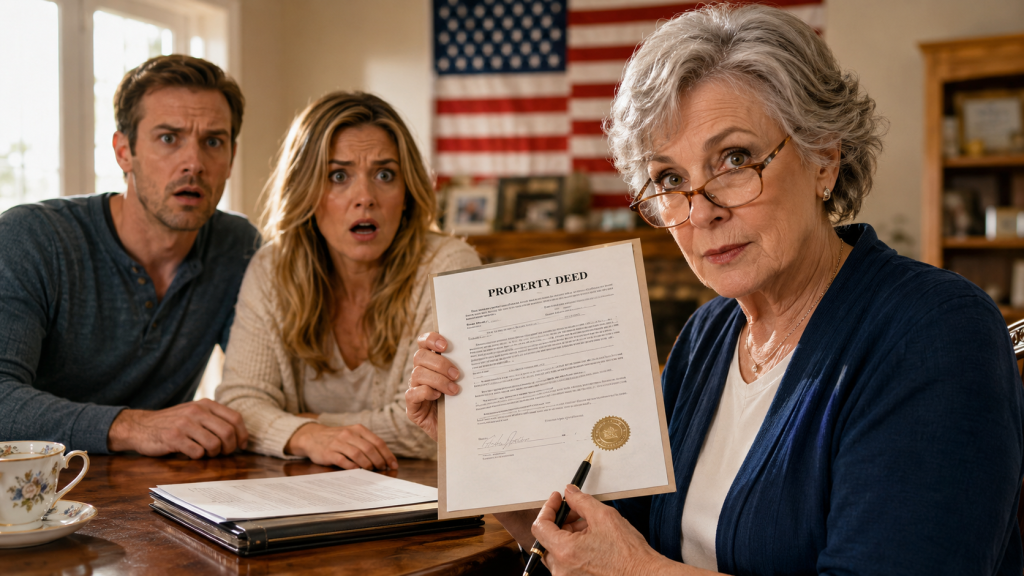
My daughter-in-law pocket-dialed me at 7:15 that morning. She never knew I answered. For nineteen minutes, I sat at my kitchen table with my tea going cold and listened to her and my son plan, in detail, what they were going to do with me by Christmas.
They were in the car. They were driving to my house. So I pulled my grocery notepad closer, clicked my pen, and started writing down every word. My name is Dorothy Bennett.
I am seventy-three years old.
My husband, Raymond, has been gone four years now.

We were married for forty-six years, and during all that time Raymond had one habit that used to drive me crazy.
He wrote everything down.
Receipts.
Phone numbers.
Promises people made.
Names of plumbers.
Dates the furnace was serviced.
How much we paid to have the maple tree trimmed in 2004.
Once, I teased him because I found a notebook where he had written down the exact date we bought our first washing machine.
He just smiled.
“Dot,” he said, “memory is wonderful until two people remember the same thing differently. When it matters, write it down.”
That morning, sitting alone at our old kitchen table, I finally understood exactly what he meant.
My son Mark calls me every Sunday at five.
Exactly five.
The calls usually last eleven minutes.
Sometimes twelve if one of the twins has done something worth mentioning.
Mark is forty-eight now.
It is strange how motherhood works.
You can look at a forty-eight-year-old man with gray beginning around his temples and still remember the seven-year-old who climbed into your bed during thunderstorms.
You remember skinned knees.
Halloween costumes.
The first bicycle.
The first heartbreak.
The night before he left for college when he stood in this same kitchen pretending he wasn’t frightened.
Maybe that is why mothers forgive things we would never forgive from anyone else.
And maybe that is why what happened that morning hurt as much as it did.
Mark’s wife, Alicia, calls me “Mother D.”
She says it in a voice like sweet tea with something floating in it.
Too sweet.
Always too sweet.
At 7:15 that morning, my phone rang.
Her name appeared on the screen.
ALICIA.
My heart jumped.
Alicia never called that early.
I immediately thought someone was in the hospital.
I answered.
“Alicia?”
Nothing.
Then road noise.
A turn signal.
A radio playing softly.
Then Alicia spoke.
But she wasn’t speaking to me.
“Did you bring the folder?”
“It’s in the back seat,” Mark answered.
My son.
I froze.
“And the brochure?” Alicia asked.
“Glovebox.”
I opened my mouth.
I almost said, “Hello? Alicia, you called me.”
Then she laughed.
And what she said next closed my mouth for me.
“Relax, Mark. She’ll sign. She signs whatever we put in front of her. Remember the flu shot forms? She didn’t read one line.”
I put my hand flat on the table.
For a moment, I honestly believed I had misunderstood.
Then Raymond’s voice seemed to come back to me.
When it matters, write it down.
I reached for the grocery notepad beside the fruit bowl.
7:19.
Mark: “What if she asks to read it first?”
Alicia: “Then you take her glasses to get ‘cleaned.’ Honestly, do I have to think of everything?”
I stopped writing.
My reading glasses were on the table beside me.
I touched them with one finger.
Then I kept listening.
At 7:21, the brochure got a name.
Silver Meadows.
I had heard of it.
A senior living facility forty minutes outside town.
Alicia said her cousin worked there and could get them a “family discount.”
Then she laughed.
Mark laughed too.
Not loudly.
But he laughed.
That mattered.
At 7:24, Mark became quiet.
“It just feels fast.”
For one breath, my boy was in that car.
The boy I remembered.
The one who used to bring injured birds home in shoeboxes.
The boy who cried when Raymond’s old dog died.
I held my breath.
Maybe he would stop this.
Maybe he would say they had gone too far.
Then Alicia answered.
“Fast? We have been paying for that house for four years.”
I nearly dropped my pen.
Now here is something you need to know.
Nobody pays for my house.
Raymond and I bought this place in 1979.
Three bedrooms.
Two bathrooms.
A small porch.
A backyard that slopes toward a creek.
Nothing fancy.
But it was ours.
Raymond worked maintenance at the paper mill.
I spent twenty-eight years working in the office at the elementary school.
We raised Mark here.
We pinched pennies.
We skipped vacations.
We refinanced once when Raymond’s mother got sick.
And in 1998, we made the final mortgage payment.
Raymond came home with a grocery-store cake that said FREE AT LAST in blue frosting.
We burned a photocopy of the mortgage statement in the barbecue grill.
I own this house to the last shingle.
What Alicia called “paying for that house” was something entirely different.
Four years earlier, after Raymond died, Mark and Alicia were struggling.
The twins were starting college.
Their rent had increased.
Mark called me one evening sounding exhausted.
I had received Raymond’s life insurance settlement months earlier.
So I gave my son forty thousand dollars.
Not a loan.
A gift.
I told him to use it toward a down payment so his family could stop renting.
He cried.
Actually cried.
He hugged me in this kitchen and said, “Mom, I will never forget this.”
Apparently, forgetting took less than four years.
At 7:26, Alicia continued.
“And the minute she’s settled at Silver Meadows, we list her place. Bruce says one-eighty, easy. That’s the lake trip, that’s the boat, that’s everything.”
Bruce.
Their realtor friend.
Bruce had been inside my house twice.
Both times Alicia claimed he was “just admiring the crown molding.”
I wrote his name in capital letters.
BRUCE.
My hand was shaking now.
Not from age.
From anger.
At 7:31, Alicia said, “Let me do the talking. You just look sad. Can you manage sad?”
My son answered.
“Yeah.”
That “yeah” cost me more than every word she said.
At 7:34, the call ended.
She must have shifted her purse and disconnected it.
The kitchen became completely silent.
I stared at my phone.
Nineteen minutes.
Nineteen minutes had taken seventy-three years of assumptions about my family and turned them upside down.
I sat there one more minute.
Then I stood.
I rinsed my tea cup.
I washed it carefully.
I dried it.
And I made two phone calls.
The first was to Eleanor.
Eleanor Whitaker has lived next door for forty years.
She watched Mark learn to ride a bicycle on this street.
She brought casseroles when Raymond died.
She knows exactly where I hide the spare key, and I know exactly which cabinet she keeps the good bourbon in.
“Eleanor,” I said. “I need your kitchen window and your phone camera for one hour.”
There was a pause.
Then she said, “Finally.”
And hung up.
That is why we have been friends for forty years.
The second call was downtown.
To a man Raymond trusted his entire adult life.
His name was Samuel Harris.
Sam was seventy-one, semi-retired, and had handled practically every legal document Raymond and I had signed since 1983.
Our wills.
The house deed.
Insurance paperwork.
Raymond’s estate.
When Sam answered, I told him what had happened.
I expected questions.
He asked only one.
“Did you write down exactly what you heard?”
“Yes.”
“Good.”
Then I told him what I wanted.
It took him ten seconds to agree.
After that, I put out the good cups.
I sliced the banana bread Alicia always complimented and never ate.
I set three places at the table.
Then I added one more.
For a guest they were not expecting.
Their car pulled into my driveway at 8:40.
I watched through the curtain.
Alicia checked her lipstick in the passenger mirror.
Mark sat behind the steering wheel staring straight ahead.
Then Alicia said something to him.
He nodded.
And, I swear to you, my forty-eight-year-old son practiced looking sad.
The doorbell rang.
I counted to ten.
The way you do with children.
Then I opened the door with my warmest smile.
“What a surprise!”
“Mother D,” Alicia sang.
The folder was tucked against her chest.
“We were just in the neighborhood.”
At eight-forty in the morning.
On a Sunday.
Forty minutes from their house.
With paperwork.
But I smiled.
“Come in, come in. I even have banana bread.”
They entered.
Mark kissed my cheek.
It was quick.
Barely there.
He would not look into my eyes.
Alicia sat at the table and immediately placed the folder beside the butter dish.
Casual as a napkin.
I poured coffee.
“Everything all right?” I asked.
Mark glanced at Alicia.
Alicia reached across the table and patted my hand.
“Mother D, Mark and I have been thinking about what’s best for you.”
There it was.
People should be very careful with the phrase “what’s best for you.”
It has covered a great many selfish intentions over the years.
“This big house,” Alicia continued. “All these stairs.”
“You’re so right,” I said. “Stairs at my age.”
Her shoulders relaxed.
Mark finally looked at me.
I smiled at him.
He looked away.
Alicia opened the folder.
“I knew you would understand.”
She pulled out several pages.
I could see highlighted sections.
Little yellow tabs showed where someone wanted my signature.
Then she clicked her pen.
“It’s just some boring paperwork. You don’t need to read every—”
The doorbell rang.
Alicia frowned.
“Are you expecting someone?”
“Oh,” I said, standing. “Didn’t I mention?”
I walked to the door.
I opened it.
And watched every drop of color leave Alicia’s face.
Because walking into my kitchen, carrying his own folder, saying, “Morning, folks,” was Samuel Harris.
My attorney.
Mark stood so quickly his chair scraped across the floor.
“Mr. Harris?”
Sam smiled.
“Hello, Mark.”
Alicia looked from Sam to me.
Then to the folder in front of her.
“Dorothy,” she said slowly, “why is there an attorney here?”
I returned to my chair.
“Banana bread?”
Nobody answered.
Sam sat in the fourth chair.
He placed his folder on the table.
Alicia closed hers.
That small movement told me everything.
If those papers were as harmless as she claimed, there would have been no reason to hide them.
Sam noticed too.
“What were you folks discussing?” he asked.
Mark cleared his throat.
“Mom’s future.”
“Wonderful,” Sam said. “That’s exactly what Dorothy and I were discussing this morning.”
Alicia’s eyes snapped toward me.
“This morning?”
“Yes,” I said.
Her face changed.
Only slightly.
But I saw it.
She was calculating.
“When did you call him?”
“After breakfast.”
“You called an attorney before we arrived?”
“I did.”
Mark finally spoke.
“Mom, what’s going on?”
I looked at my son.
“That is exactly what I was wondering.”
Silence.
Then I pulled my grocery notepad toward me.
Alicia stared at it.
I read the first line.
“Seven nineteen. Mark: ‘What if she asks to read it first?’ Alicia: ‘Then you take her glasses to get cleaned.’”
Nobody moved.
I continued.
“Seven twenty-one. Silver Meadows. Family discount.”
Alicia’s mouth opened.
I kept reading.
“Seven twenty-six. ‘The minute she’s settled at Silver Meadows, we list her place. Bruce says one-eighty, easy. That’s the lake trip, that’s the boat, that’s everything.’”
Mark’s face collapsed.
“Mom—”
I raised one hand.
For once in his life, my son stopped when I told him to.
Then I read the final line.
“Seven thirty-one. Alicia: ‘You just look sad. Can you manage sad?’ Mark: ‘Yeah.’”
I closed the notepad.
The clock above the stove ticked.
Alicia was the first person to recover.
“It was a joke.”
Sam leaned back.
“A nineteen-minute joke?”
“You don’t understand the context.”
“Then explain it,” I said.
She looked at Mark.
Mark looked at the table.
I waited.
Alicia took a breath.
“We are worried about you.”
“Because of my stairs?”
“Among other things.”
“What other things?”
“You’re alone.”
“So is Eleanor.”
“That’s different.”
“Why?”
“She—”
Alicia stopped.
I folded my hands.
“Do I forget things?”
“No.”
“Have I fallen?”
“No.”
“Have I left the stove on?”
“No.”
“Have I missed appointments?”
“No.”
“Have I asked either of you to manage my finances?”
“No.”
“Have I asked you to sell my house?”
“No.”
“Then what exactly requires me to be removed from it by Christmas?”
Mark whispered, “Nobody said removed.”
I turned toward him.
“You were planning to take my glasses so I couldn’t read papers you wanted me to sign.”
His face went red.
“I wasn’t actually going to do that.”
“You didn’t tell her no.”
Silence.
That was the part he could not escape.
He had not invented the plan.
Maybe he had not even liked it.
But he had gone along with it.
There are betrayals committed by people who attack you.
And there are betrayals committed by people who stand beside the attacker and say nothing.
At seventy-three, I had learned the second kind hurts more.
Sam tapped Alicia’s folder.
“May I see what you brought?”
“No,” Alicia said immediately.
Too quickly.
Sam nodded.
“Of course. It’s your property.”
I smiled.
“Actually, I believe some of those papers require my signature.”
Alicia looked at me.
Then she pushed the folder across the table.
Sam opened it.
He read silently.
One page.
Then another.
His expression changed.
“What?” Mark asked.
Sam removed his glasses.
“This is not simply admission paperwork for a senior community.”
Mark frowned.
“What do you mean?”
Sam turned several pages around.
There were forms authorizing financial management.
Property-related permissions.
A document granting broad authority over certain decisions.
And tucked behind them was a preliminary agreement involving Bruce’s real estate office.
Mark stared.
“I didn’t know that was in there.”
Alicia turned sharply.
“Don’t start.”
“I didn’t.”
“You knew what we were doing.”
“I knew we were talking to Mom about Silver Meadows.”
“And the house.”
“Yes, eventually.”
“Eventually?” I repeated.
Mark rubbed his forehead.
Alicia pushed back from the table.
“This is ridiculous. We were trying to simplify things.”
“For whom?” I asked.
Nobody answered.
I pointed toward the folder.
“Where does the boat fit into simplifying my life?”
Alicia looked at me with something I had never seen from her before.
Not sweetness.
Not politeness.
Resentment.
Real resentment.
“You have a paid-off house sitting here while we’re drowning.”
There it was.
Finally.
The truth.
I nodded slowly.
“You’re drowning.”
“Yes.”
“After I gave you forty thousand dollars?”
“That was four years ago.”
“I see.”
“The twins’ tuition is expensive. Mark’s company cut bonuses. Everything costs more now. You have no idea.”
That almost made me laugh.
No idea.
I had raised a child during years when Raymond and I counted coins before grocery shopping.
I had patched Mark’s jeans instead of buying new ones.
I had worked Saturdays during one terrible winter because the furnace needed replacing.
I knew what it meant to struggle.
What I did not know was when struggling had become permission to steal from your mother.
Mark whispered, “Alicia, stop.”
She turned on him.
“No. Somebody needs to say it. This house is going to be his someday anyway.”
The room went still.
I looked at Mark.
He looked sick.
I asked very quietly, “Is that how you think of my home?”
“No.”
“An inheritance you’re waiting for?”
“No, Mom.”
“Then tell me what you thought would happen after I signed those papers.”
He couldn’t answer.
Sam closed Alicia’s folder.
Then he opened his.
“I think this would be an appropriate moment for Dorothy to explain why she called me.”
Alicia stared at me.
I reached for my tea.
It had gone cold again.
I took a sip anyway.
“This house,” I said, “was supposed to go to Mark.”
My son closed his eyes.
“Mom…”
“Raymond and I wrote our wills years ago. When your father died, I changed very little. You remained the primary beneficiary.”
Alicia sat perfectly still.
“Remained?” she asked.
Sharp woman.
She caught the word immediately.
“Yes,” I said. “Remained.”
Sam slid a document from his folder.
“As of this morning, Dorothy has instructed me to begin changing her estate plan.”
Mark stared at me.
“You’re cutting me out?”
His voice cracked.
And for one second, I hated myself for noticing how much he sounded like the little boy who once asked if I was giving away his dog.
“I haven’t decided exactly what I’m doing yet,” I said.
Alicia gave a bitter laugh.
“Of course. Punish us.”
“No.”
I looked directly at her.
“Protect myself.”
Sam nodded.
“Dorothy has also revoked any informal permissions previously given to either of you regarding financial accounts, medical discussions, property inquiries, or access to documents.”
Alicia stood.
“You can’t do this.”
I almost smiled.
It was such a strange sentence.
Apparently, I could not control my own house because I was old.
But she could sell it because she wanted a boat.
“I believe,” Sam said calmly, “she can.”
Mark stood too.
“Mom, please.”
I looked at him.
For the first time that morning, his eyes met mine.
There were tears in them.
I wished that made everything easier.
It didn’t.
“I need to explain.”
“Yes,” I said. “You do.”
Alicia grabbed her purse.
“I’m not sitting here for this.”
She reached for her folder.
Sam placed one hand over it.
“These are yours,” he said, “but Dorothy would like copies of anything bearing her name.”
Alicia glared.
“You can’t keep them.”
“No one said we would.”
He pulled out his phone.
“I can photograph the relevant pages.”
Alicia looked at Mark.
“Are you coming?”
Mark didn’t move.
“Mark.”
He sat back down.
“No.”
Her face changed.
It was the first time I had ever seen my son openly refuse her.
Alicia laughed once.
“Unbelievable.”
She left.
The front door slammed.
Through the kitchen window, I saw Eleanor’s curtain move.
I almost smiled.
Then I looked at my son.
He covered his face with both hands.
For several minutes, nobody spoke.
Finally Mark said, “I am so sorry.”
I wanted to accept it.
Mothers are trained to accept apologies from their children before the words have even finished leaving their mouths.
But Raymond had taught me something else.
Words matter.
Actions matter more.
“Tell me everything,” I said.
And he did.
It took almost an hour.
Their finances were worse than I knew.
Mark had lost a significant portion of his income after his company reorganized.
Instead of telling me, he and Alicia kept spending as if nothing had changed.
A newer SUV.
Trips.
Credit cards.
Tuition expenses.
A kitchen renovation they could not afford.
Then Alicia started talking about my house.
At first, according to Mark, it was hypothetical.
Someday Dorothy won’t want all that space.
Someday she’ll need help.
Someday the house will be yours anyway.
Someday slowly became this year.
Then this year became Christmas.
Bruce had estimated the house’s value.
Alicia’s cousin had sent information about Silver Meadows.
And Mark had done what weak people often do when a bad idea arrives one small step at a time.
He kept telling himself he would stop it later.
“When?” I asked.
He stared at the table.
“I don’t know.”
“After I signed?”
“No.”
“After you took my glasses?”
He flinched.
“I never would have done that.”
“But you sat in the car while she planned it.”
“Yes.”
“Why?”
His answer was barely audible.
“Because I was ashamed.”
That surprised me.
“Of what?”
“Everything.”
He told me he had been borrowing money.
Moving balances between credit cards.
Hiding bills.
Alicia believed selling my house would solve their problems.
I listened.
Then I asked the question that mattered.
“Did you believe it too?”
Mark cried then.
Not dramatically.
He simply put his head down and cried.
“Yes.”
I looked toward the window.
Raymond had planted the maple tree outside when Mark was six.
It was enormous now.
I remembered the three of us standing around that skinny little tree while Raymond shoveled dirt around the roots.
Time does strange things.
Trees grow.
Children grow.
Parents age.
And somewhere along the way, people begin confusing what they expect to inherit with what they already own.
Sam left shortly before eleven.
Before he did, he took copies of everything.
He also changed the locks on nothing.
That part was mine.
At noon, I called a locksmith.
By two o’clock, every exterior lock had been changed.
Mark’s spare key no longer worked.
Neither did Alicia’s.
I changed the garage code.
I changed my banking passwords.
I removed Mark as an emergency contact on two financial accounts and added Eleanor.
Then I did something harder.
I went upstairs.
In my bedroom closet was a gray metal box containing Raymond’s papers.
His watch.
Our marriage certificate.
Old photographs.
And the last letter he wrote me.
Raymond knew he was dying.
Cancer gives some families months to say goodbye and still somehow leaves everything unfinished.
His letter was six pages.
I had read it only twice.
That afternoon, I read it again.
Near the end, he had written:
“Don’t let being lonely make you afraid to disappoint people. You were a whole person before me, Dot. Stay one after me.”
I cried for the first time that day.
Not because of Alicia.
Not even because of Mark.
I cried because I wanted my husband sitting beside me.
I wanted to tell him what our boy had done.
I wanted Raymond to become angry so I wouldn’t have to.
I wanted him to tell me what to do.
But the dead leave us their wisdom, not their decisions.
The decisions remain ours.
For the next week, Mark called every day.
I did not answer.
He left messages.
“Mom, I understand.”
“Mom, I’m sorry.”
“Mom, please just tell me you’re okay.”
On Thursday, Alicia called.
One message.
Her voice had changed.
No “Mother D.”
“Dorothy, we need to talk about what happened.”
We.
Need.
I deleted it.
Bruce called Friday.
I answered that one.
“Mrs. Bennett, I think there may have been some misunderstanding regarding your property.”
“No misunderstanding.”
“I was told you were considering downsizing.”
“By whom?”
Silence.
Then he said, “Alicia mentioned it.”
“Did I?”
“No.”
“Did I ask you to evaluate my house?”
“No.”
“Then do not discuss my property again.”
He became very professional after that.
“Yes, ma’am.”
“And Bruce?”
“Yes?”
“Sam Harris has copies of the documents.”
A long silence.
“I understand.”
He never called again.
Two weeks passed.
Then Mark came to my door alone.
He knocked because his key no longer worked.
I watched him through the window.
He had no folder.
No brochure.
No practiced expression.
Just my son.
I opened the door but did not invite him in.
“Hi, Mom.”
“Hello, Mark.”
He looked at the new lock.
“I deserved that.”
I said nothing.
“Alicia and I separated.”
That I had not expected.
I stepped onto the porch and closed the door behind me.
“When?”
“Three days ago.”
“Because of me?”
“No.”
He shook his head.
“Because of us.”
He told me the morning in my kitchen had broken something open.
Once the plan was exposed, they started admitting other things.
Debt.
Lies.
Resentments.
Alicia blamed him for backing down.
He blamed her for pushing the plan.
Then Mark finally admitted the truth.
“It was easier to blame Alicia than admit I agreed.”
I looked at him.
“That is the first honest thing you’ve said about it.”
He nodded.
“I know.”
We sat on the porch.
For a while, we watched cars pass.
Then he said, “I’m selling the SUV.”
I almost laughed.
“Good.”
“And the boat isn’t happening.”
“You don’t have a boat.”
“I know.”
That time I did laugh.
A small one.
He smiled.
Then his face became serious.
“I started seeing a financial counselor.”
“Good.”
“I also told the twins.”
That surprised me.
“You told them what?”
“Everything.”
I turned toward him.
“Why would you do that?”
“Because I spent years teaching them that when you mess up, you own it. Then I did the opposite.”
He swallowed.
“They’re angry with me.”
“They should be.”
“I know.”
That became the beginning.
Not forgiveness.
The beginning.
People think forgiveness happens like a door opening.
It doesn’t.
Not after real betrayal.
It happens more like rebuilding a staircase.
One step at a time.
And you test every board before putting your full weight on it.
Mark started visiting on Saturdays.
He fixed the loose railing on my back steps.
Not because I needed him to.
Because he asked whether he could.
That difference mattered.
He stopped discussing my money.
He stopped asking about my will.
He never mentioned Silver Meadows again.
Alicia and I did not speak for nearly three months.
Then, in early December, she sent me a letter.
A real letter.
Handwritten.
Four pages.
There were no excuses in it.
That surprised me.
She admitted she had viewed my house as future money.
She admitted she had convinced herself that because Mark would probably inherit it someday, using it early wasn’t really stealing.
She admitted the plan to keep me from reading the documents was indefensible.
At the end, she wrote:
“I don’t expect you to forgive me. I only want to stop pretending what I did was concern. It was greed, and I am ashamed.”
I put the letter in a drawer.
I did not answer immediately.
But I did not throw it away.
Christmas arrived.
The date they had chosen as my deadline.
The date by which I was supposed to be “settled” at Silver Meadows while Bruce prepared to sell my home.
Instead, at seven o’clock Christmas morning, I walked downstairs in Raymond’s old robe and made coffee in my own kitchen.
Snow had fallen overnight.
The maple tree was white.
My house was quiet.
Mine.
Every stair.
Every window.
Every shingle.
At nine, the doorbell rang.
Mark stood outside carrying a casserole.
Behind him were the twins, now twenty-one.
Emma hugged me first.
Luke followed.
Mark remained on the porch.
“May we come in?”
May we.
Such a small phrase.
Such an important one.
“Yes,” I said.
They entered.
We opened presents.
We ate too much.
At noon, Eleanor came over with pie.
At one, Sam stopped by with a bottle of sparkling cider and pretended he had only come because Eleanor invited him.
Nobody believed him.
We laughed.
Real laughter.
Not the kind Alicia and Mark had shared in the car.
Around three, another car stopped outside.
Alicia.
Mark looked at me.
“I didn’t invite her.”
“I know.”
She remained in her car.
Waiting.
I watched her through the window for almost a minute.
Then I went outside.
She stepped out.
“Merry Christmas, Dorothy.”
“Merry Christmas.”
She looked tired.
Different.
She held no folder.
Only a small wrapped package.
“I brought something for you. I can leave it here.”
I accepted it.
“Thank you.”
She turned to leave.
“Alicia.”
She stopped.
“I read your letter.”
Her eyes filled.
“Okay.”
“I believe you meant it.”
She nodded.
“I did.”
“That doesn’t erase what happened.”
“I know.”
“And trust isn’t coming back because it’s Christmas.”
“I know.”
I looked through the window.
Mark was inside with his children.
Then I looked at the woman who had almost helped my son steal my home.
“You may come in for coffee.”
She stared at me.
“Are you sure?”
“Coffee,” I said. “Don’t turn it into sainthood.”
For the first time since I had known her, Alicia laughed without calculation.
“All right.”
She came inside.
Christmas dinner was awkward.
That is the truth.
Healing is often awkward.
Nobody made a speech.
Nobody pretended everything was fixed.
But we sat around the same table.
And for that year, that was enough.
Three months later, Mark and Alicia decided to work on their marriage.
Whether they stay together forever is their business.
I no longer confuse loving my family with managing their lives.
As for Silver Meadows, I visited it once.
Not because anyone made me.
Because I was curious.
It was actually quite lovely.
Nice gardens.
Good food.
A library.
I told the director I might consider something like it someday.
When I choose.
She smiled.
“That’s exactly how it should be.”
Yes.
Exactly.
And my house?
I still live here.
I did make changes.
I added a railing to the basement stairs.
I installed better lighting in the hallway.
I hired someone to handle the gutters because seventy-three is old enough to know that proving you can climb a ladder is not the same as needing to.
And I changed my estate plan.
Mark knows that.
He does not know the details.
Nobody does except Sam and me.
Some money will go to Mark.
Some will go directly to the twins.
A portion will go to the elementary school where I worked for twenty-eight years.
And the house?
Well.
That depends.
Maybe Mark will inherit it.
Maybe the twins will.
Maybe I’ll sell it myself someday and spend six months traveling through Italy.
Raymond always wanted to see Florence.
Maybe I’ll go for both of us.
The point is, the decision belongs to me.
Last Sunday, Mark called at five.
We spoke for thirty-seven minutes.
Not eleven.
Before hanging up, he said, “Mom?”
“Yes?”
“I’ve been thinking about Dad.”
“What about him?”
“He would have been ashamed of me.”
I considered that.
“No,” I said. “He would have been disappointed in what you did.”
“Isn’t that the same?”
“No.”
I looked at Raymond’s photograph on the mantel.
“Your father knew people could do terrible things without being terrible forever.”
Mark was quiet.
Then he said, “Do you believe that?”
“I wouldn’t still answer your calls if I didn’t.”
He cried a little.
So did I.
After we hung up, I went into the kitchen.
My grocery notepad was still in the drawer.
I took it out.
The original page was there.
7:19.
7:21.
7:26.
7:31.
Nineteen minutes written in blue ink.
I considered throwing it away.
Then I remembered Raymond.
When it matters, write it down.
So I kept it.
Not because I want to hold my son’s worst morning over his head forever.
Not because I enjoy remembering what Alicia said.
I keep it because there is something I never want to forget.
Getting older does not make your life public property.
Being widowed does not make you helpless.
Loving your children does not mean surrendering your judgment to them.
And generosity does not create a debt that allows someone to claim what remains.
Sometimes the people closest to you become so accustomed to your kindness that they mistake it for weakness.
Sometimes they think because you speak softly, you cannot say no.
Sometimes they think because you are seventy-three, you are no longer paying attention.
They may even arrive at your house with a folder full of yellow tabs, believing all they need is a sad face and a pen.
Let them believe it.
Then put on your glasses.
Read every page.
Ask every question.
Call someone you trust.
And when it matters—
write it down.
Because that Christmas, I learned something Raymond had understood long before I did.
A home is more than walls and shingles.
It is where your choices still belong to you.
And as long as I am capable of making those choices, nobody—not my daughter-in-law, not my son, not a realtor admiring my crown molding—gets to make them for me.
That morning they came to take control of my future.
Instead, I took it back.
And Christmas morning found me exactly where I belonged.
Standing in my own kitchen.
Drinking hot coffee from one of the good cups.
Looking out at Raymond’s maple tree.
And holding the only set of keys that mattered.
My own.
THE END — THANK YOU FOR READING.