 Reading Time: 17 minutes
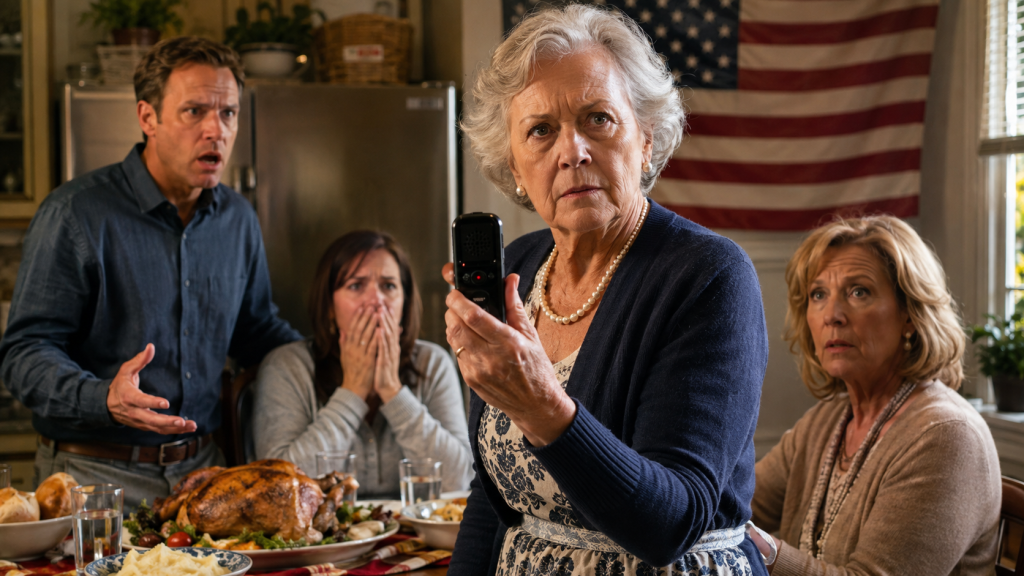
I hid a baby monitor in my daughter’s kitchen three weeks ago, and I listened to my son-in-law every night after that. I thought the worst thing I would hear was what he called me when I was not in the room.
Then, on Thursday night, a second woman spoke. I am seventy-six years old, and I live in what used to be the den of my daughter Paula’s house. Dale, my son-in-law, had it converted into a small bedroom when I sold my own house and moved in with them four years ago.
There is an important part of that story Dale has never once said out loud to anybody.
I paid for this house.
Not all of it, technically. But when Paula and Dale found the place they wanted and could not manage the down payment, I sold the little brick house on Ridgeway where my husband, Frank, and I had lived for thirty-eight years.
After the mortgage and closing costs were settled, I had $186,400.
I transferred $175,000 of it toward Paula and Dale’s purchase.
I kept a little for myself and moved into their converted den because the understanding was simple: I would have a home for the rest of my life.
That was the arrangement.
At least, that was the arrangement I thought all three of us understood.
Dale described it differently.
“The lodger’s up,” he told Paula one morning.
I heard him through the wall.
I had been awake for twenty minutes, but I stayed in bed after hearing it.
The lodger.
Not Mom.
Not Marguerite.
Not even your mother.
The lodger.
At breakfast, Dale smiled and asked whether I wanted more coffee.
I looked at him and wondered how many other things he said after I closed my bedroom door.
That night, I decided to stop wondering.
The baby monitor cost thirty-one dollars at the drugstore.
I told the young woman at the register that it was for my grandbaby. She congratulated me.
I thanked her.
There was no grandbaby.
Paula and Dale never had children.
I placed the transmitter behind the flour canister on top of the refrigerator.
I figured it was safe there because no man in the history of the world has ever voluntarily looked on top of a refrigerator.
The receiver went under my pillow every night at nine.
For the first week, I heard mostly nothing.
Dishes.
Television.
Cabinet doors.
Dale complaining about a coworker named Boyd, whom I came to dislike despite never meeting him.
Then came Tuesday.
“She has to go, Paula.”
I turned the receiver louder.
“Dale, do not start.”
“I am not starting. I am finishing. It has been four years. She was supposed to be temporary.”
“She is my mother.”
“She is a line item,” Dale said. “Do you know what her room would rent for?”
I lay in the darkness with a plastic receiver pressed against my ear and made myself keep breathing.
“Where would she even go?” Paula asked.
Not no.
Where.
There is a difference between those answers, and a mother hears it.
“There are places,” Dale said. “She has the settlement money.”
“What settlement money?”
A long silence followed.
The refrigerator hummed directly into the microphone.
“From the house,” Dale finally said. “The Ridgeway house.”
“Mom put that into the down payment. All of it.”
“Sure she did.”
My hand tightened around the receiver.
“What is that supposed to mean?” Paula asked.
“Nothing.”
“No. You said it like you know something.”
“I said forget it.”
“Dale.”
He opened the refrigerator.
Bottles clinked.
Then he said, “I thought she kept most of it.”
“No.”
“How much did she give us?”
Another pause.
“A hundred and seventy-five thousand.”
The refrigerator door slammed.
“What?”
“You knew that.”
“No, Paula. I did not.”
“Yes, you did.”
“You told me your parents helped.”
“My father was already dead.”
“Well, then you told me it came from family money.”
“It came from Mom.”
I closed my eyes.
Four years of birthdays.
Four Christmases.
Four Thanksgivings.
Four years of Dale walking through a house my money had helped him buy while apparently believing I was an elderly dependent living there because his wife could not bring herself to throw me out.
Or perhaps he knew more than he was pretending.
I could not tell yet.
So I kept listening.
During the second week, I learned something else.
Every night at approximately 9:40, Dale took his phone into the garage.
He stayed there twenty to twenty-five minutes.
The monitor could not reach far enough for me to hear what he said.
At 10:05 or so, he would return.
Sometimes he was cheerful.
Sometimes nervous.
Once, I heard Paula ask who he had been talking to.
“Boyd.”
Poor Boyd.
By then that man was apparently responsible for half of Dale’s life.
Then came Thursday.
At 9:43, Dale did not go to the garage.
Instead, I heard the back door open.
A woman entered the kitchen.
“Is she asleep?”
I sat straight up.
“She goes down at nine,” Dale answered. “Out cold. Deaf as a post anyway.”
I almost laughed.
I have worn hearing aids for eleven years, and because Dale had never bothered to learn anything about them, he apparently believed taking them out turned me into a stone.
“And Paula?” the woman asked.
“Second shift until eleven thirty.”
Then she laughed.
Low.
Comfortable.
Familiar.
I knew that laugh.
I had known it since 1998.
“Did you bring it?” Dale asked.
“It is in the car. Dale, if she signs it, that is it. She cannot undo it after.”
“She will sign it. She signs whatever Paula puts in front of her.”
I heard papers moving.
A chair scraped across the floor.
“And your wife?”
“Paula does not need to be in the middle of this.”
I did not sleep Thursday night.
I did not sleep Friday night either.
Saturday morning, I called Paula at work.
I almost never called her there.
“Mom? What is wrong?”
“Nothing is wrong. I want to make Sunday lunch. The pot roast. You and Dale, one o’clock.”
“Mom, we usually just do sandwiches.”
“One o’clock,” I repeated. “And, Paula, I want you to bring Aunt Colleen.”
Silence.
“Colleen?”
“Yes.”
“Mom, you two have not spoken since Dad’s funeral.”
“It has been long enough.”
That was true.
It was simply not the reason.
“She will not come.”
“Call her. Tell her I said the words she has been waiting to hear.”
“What words?”
“That she was right.”
Another silence.
“Right about what?”
“She will know.”
Colleen came.
At five minutes to one Sunday afternoon, the roast was resting on the kitchen counter.
The table was set for four.
The baby-monitor receiver was in my apron pocket.
And the little cassette recorder I had bought in 2003 to record church sermons sat behind the bread box, running.
Dale was at the head of the table telling Paula another story about Boyd.
Colleen stood near the window with her purse still hanging from her shoulder.
She had not sat down.
More importantly, she had not looked at Dale once since entering the house.
If I had known nothing else, that alone would have told me plenty.
I carried in the roast.
“Colleen, sit.”
“Marguerite, I really cannot stay.”
“Sit,” I said, “or I will play it standing up.”
Dale’s fork stopped halfway to his mouth.
Paula looked between us.
“Play what?”
I reached into my apron pocket.
I pressed the button.
And the first voice that came out of the receiver was not Dale’s.
It was Colleen’s.
“Is she asleep?”
Paula’s face emptied.
Colleen closed her eyes.
Dale stood.
“What the hell is that?”
“Sit down,” I said.
“You recorded us?”
“Sit.”
“You cannot—”
“Dale.”
I had spent most of my adult life speaking softly.
I raised two children without shouting.
I had buried a husband without screaming.
I had sold the house where my babies had taken their first steps without making a scene.
Perhaps that was why, when I finally said his name in a voice that did not bend, he sat.
The recording continued.
“She goes down at nine. Out cold. Deaf as a post anyway.”
Paula stared at her husband.
Then Colleen’s voice:
“And Paula?”
“Second shift until eleven thirty.”
I stopped the recording.
Nobody moved.
Paula turned toward her aunt.
“Aunt Colleen?”
Colleen finally put her purse on the floor.
“I can explain.”
“I would certainly hope so,” I said.
Dale pointed at the receiver.
“That recording is illegal.”
“Maybe,” I said. “That will be something for a lawyer to discuss. Right now I am more interested in the papers you wanted me to sign.”
Paula turned sharply toward him.
“What papers?”
“Nothing.”
I looked at Colleen.
“Go get them.”
She went pale.
“Marguerite—”
“The papers in your car.”
Dale pushed his chair backward.
“Do not bring anything into this house.”
Paula stood now.
“Sit down, Dale.”
He looked at her.
Something changed in my daughter’s face.
For four years, I had watched her accommodate that man in a hundred small ways.
She changed dinner times for him.
Canceled plans for him.
Lowered the television when he had headaches.
Apologized when he was angry.
But I had not heard her use that tone with him before.
He sat.
Colleen went outside.
She returned carrying a large brown envelope.
She placed it on the table.
I did not touch it.
“Open it, Paula.”
My daughter pulled out the documents.
I watched her eyes move down the first page.
Then she looked up.
“What is this?”
Dale answered too quickly.
“Estate planning.”
“No, it is not.”
She kept reading.
“What does ‘quitclaim’ mean?”
I knew.
I had learned on Friday.
At 8:15 that morning, I had been sitting across from a lawyer named Evelyn Mercer, who specialized in elder law.
I had brought notes.
Bank statements.
The original paperwork from my Ridgeway sale.
Proof of the transfer.
And a written account of everything I had heard.
Evelyn read it all without interrupting.
Then she said, “Mrs. Bell, do not sign anything.”
I told her I had no intention of doing so.
She smiled.
“That puts you ahead of many people who come into this office.”
The documents Colleen had brought were designed to make it appear that I was voluntarily relinquishing any financial interest I might claim in Paula and Dale’s house.
There was also a separate financial authorization.
Broadly written.
Far broader than anything an elderly woman should sign because her daughter tells her it is “just some paperwork.”
Paula read the first page twice.
Then she looked at her husband.
“Why does Mom need to sign away a claim to our house?”
“She does not have a claim.”
“Then why do you need her signature?”
Dale said nothing.
I answered for him.
“Because he wants to refinance.”
His head snapped toward me.
That was the first moment I knew Evelyn had been right.
We had checked public records.
Dale had already made inquiries about borrowing against the house.
There were also credit-card balances Paula apparently did not know existed.
A personal loan.
And something else.
A debt tied to a failed investment.
“How much?” Paula whispered.
Dale rubbed his forehead.
“Paula, this is complicated.”
“How much?”
“About eighty.”
“Eighty what?”
He did not answer.
Her voice rose.
“Eighty thousand dollars?”
“Closer to ninety-two.”
Paula sat down.
For a few seconds, the only sound in the kitchen was the old clock above the pantry.
Then she looked at Colleen.
“What does Aunt Colleen have to do with this?”
That was the question I had been waiting for.
I folded my hands.
“Tell her, Colleen.”
My sister looked seventy-nine years old in that moment.
Not the sharp, immaculate woman she had always tried to be.
Just old.
Tired.
Ashamed.
“Dale called me.”
“When?”
“About two months ago.”
“Why?”
Colleen looked at me.
“Because he knew about Frank.”
My late husband.
Paula stared.
“What about Dad?”
Colleen swallowed.
And suddenly I was back in 1998.
Frank and I had been married twenty-six years.
Paula was twenty-three.
Her brother Michael had just moved to Arizona.
My marriage was not perfect, but I had believed it was solid.
Then Colleen came to my house one afternoon.
She told me Frank had borrowed money from our mother.
She told me he had hidden it from me.
She also told me something worse—that Frank had used Colleen’s name to help secure a business obligation.
I called her a liar.
Frank denied everything.
My sister and I did not speak for almost a year.
Eventually, I discovered enough to know that some of what Colleen said was true.
But by then pride had built a wall between us.
We repaired parts of the relationship over the years, but never all of it.
At Frank’s funeral, we fought again.
She said, “You spent your whole life protecting people from the consequences of what they do.”
I told her to leave.
She did.
We had not spoken since.
Now she sat at my daughter’s table and twisted a napkin in her hands.
“Dale found some old paperwork after Frank died,” she said. “Something that mentioned me.”
“How?” I asked.
“He said it was in a box Paula brought from your house.”
Paula frowned.
“What box?”
“The files from Dad’s desk,” Dale said quietly.
My stomach turned.
Those boxes had been stored in the garage.
I had never given Dale permission to open them.
Colleen continued.
“He called and said he needed help understanding some documents. Then he started asking questions about you. Your finances. The Ridgeway sale. Whether you had ever made loans to family.”
“And you answered him?”
“Yes.”
“Why?”
Her eyes filled.
“Because he told me you were forgetting things.”
Paula covered her mouth.
Dale looked down.
“He said you were confused,” Colleen continued. “He said Paula was worried. He said you had started accusing them of taking money.”
“I never said any such thing,” Paula whispered.
“I know that now.”
Colleen looked at me.
“He told me they needed to get everything settled before you became incapable of signing.”
There are betrayals that make you angry.
Then there are betrayals so carefully constructed that anger arrives later because first you must stand in awe of the planning.
Dale had not simply wanted my room.
He had been building a version of me.
Forgetful Marguerite.
Confused Marguerite.
Dependent Marguerite.
Marguerite who did not understand money.
Marguerite who could be persuaded to sign something and later dismissed if she objected.
The lodger.
The line item.
The old woman who was “deaf as a post.”
I looked at my daughter.
She was crying silently.
“Did you think I was losing my mind?”
“No.”
“Paula.”
She wiped her face.
“Sometimes Dale said you repeated yourself.”
“I am seventy-six. Sometimes I do.”
“He said you left the stove on.”
“Once. In four years.”
“I know.”
“Did you believe him?”
She hesitated.
That hurt more than if she had simply said yes.
“I wondered,” she whispered.
I nodded.
“Thank you for telling me.”
“Mom—”
“Not yet.”
I turned toward Colleen.
“What did he promise you?”
“Nothing.”
“Colleen.”
She looked at Dale.
Then back at me.
“Ten thousand dollars.”
Paula made a sound like the air had been knocked from her.
“For what?”
“To help convince her to sign,” Colleen said.
Dale shot up.
“That is not what happened.”
I reached behind the bread box.
I placed the cassette recorder in the middle of the table.
His face changed.
“That has been recording since before you arrived,” I said.
“You cannot do this.”
“I already did.”
“This is insane.”
“No,” I said. “Insane would have been signing whatever you put in front of me.”
He grabbed his keys.
Paula stood between him and the doorway.
“Where are you going?”
“Out.”
“No.”
“Move.”
“This is my house too.”
Dale laughed.
It was a short, ugly laugh.
“Your house? With what money, Paula?”
I saw her flinch.
Then something inside me became very still.
I went to my bedroom.
From the locked drawer beside my bed, I retrieved the blue folder Evelyn had prepared.
When I returned, Dale was still arguing.
I put the folder in front of Paula.
“What is that?” she asked.
“Read.”
Inside was the documentation from the Ridgeway sale.
The bank transfer.
The closing paperwork from their house.
And most importantly, the agreement Paula had signed four years earlier.
She had forgotten it existed.
Dale apparently never knew it existed.
When I gave them the money, my attorney at the time had insisted that we document it.
I had resisted.
“They are family,” I had said.
He replied, “Family is exactly why you document it.”
The $175,000 was not recorded as a casual gift.
It was an equity contribution secured by a written agreement acknowledging my lifetime right of occupancy and providing protections if the property was sold or refinanced.
Dale took the document.
His face lost its color.
“This is not valid.”
“It is,” I said.
“You are not on the deed.”
“No. But my agreement exists.”
“You cannot stop me refinancing my own property.”
“My lawyer thinks differently.”
“Your lawyer?”
“Yes, Dale. Old women are allowed to have lawyers.”
Paula almost laughed.
It came out as a sob instead.
Dale stared at me.
“You planned this.”
“No. You planned this. I simply listened.”
Then I looked at my sister.
“Why did you come today?”
Colleen began crying.
“Because you told Paula to say I was right.”
“That got you through the door. It did not make you bring the papers.”
“No.”
“Then why?”
She took a long breath.
“Because I could not do it again.”
“Do what?”
“Help a man hide something from you.”
The kitchen became quiet.
She looked at me directly for the first time.
“In 1998, I should have brought you every document I had instead of arguing. I let Frank convince me to keep part of it quiet because he promised he would fix everything himself. Then when I finally told you, it looked like I had been part of the lie.”
“You were part of it.”
“Yes.”
Her voice cracked.
“I was.”
She wiped her eyes.
“When Dale called me, I told myself I was helping Paula. Then he offered me money. I wish I could tell you I refused immediately. I did not.”
I appreciated that she did not try to make herself noble.
“I took the envelope,” she said. “I took the papers. But Thursday night, sitting in this kitchen, I heard him talking about you like you were already gone. I went home and could not sleep.”
“Neither could I.”
“I was going to call you Saturday.”
“Would you?”
“I do not know.”
That answer, strangely, made me believe her.
Paula looked at her husband.
“How long have you been planning to make Mom leave?”
He sighed.
“Can we stop using dramatic language?”
“No.”
“She does not belong here forever.”
I felt Paula straighten.
Dale continued.
“We are fifty-two years old. We have no privacy. We cannot travel because somebody always has to think about Marguerite. We cannot use a quarter of our own house because it is her bedroom.”
I said nothing.
Some grievances are real even when the person expressing them is cruel.
Perhaps living with me had been harder than I understood.
Perhaps Dale wanted his home back.
He had every right to feel that.
What he did not have was the right to erase how the home had become his.
Paula said it for me.
“She gave us a hundred and seventy-five thousand dollars.”
“I did not know that!”
“You knew after Tuesday.”
He froze.
I watched him calculate.
Paula looked at me.
“How do you know he found out Tuesday?”
I lifted the receiver.
She understood.
Dale’s face hardened.
“You have been spying on us for weeks?”
“Yes.”
“You think that makes you innocent?”
“No.”
That surprised him.
“I should not have hidden a monitor in your kitchen,” I said. “I knew it was wrong when I did it. I did it because I had started to feel unsafe in a home I helped purchase. I will answer for my decision. Will you answer for yours?”
He had no response.
Then Paula asked the question that ended their marriage.
“Who were you refinancing the house for?”
Dale looked at her.
“What?”
“The ninety-two thousand. What is it?”
“Debt.”
“What debt?”
“Investments.”
“What investments?”
He did not answer.
I had one more document.
I slid it across the table.
Paula read the name.
“North Shore Development Partners.”
Dale closed his eyes.
It was a company.
A company Dale had created with Boyd.
So Boyd existed after all.
They had invested in a small property project that had collapsed.
Dale had personally guaranteed part of the financing.
He had hidden the losses from Paula for nearly a year.
He needed money.
Their house was the largest asset available.
But my agreement complicated refinancing.
So I had become an obstacle.
Not a mother-in-law.
Not family.
A line item.
Something to remove.
Paula took off her wedding ring.
She did not throw it.
That would have been dramatic.
She simply placed it beside his plate.
“I want you to leave.”
Dale stared at it.
“Paula.”
“Today.”
“This is ridiculous.”
“Today.”
“This is my house.”
“Then we can let attorneys decide what happens to the house.”
He looked at me.
I expected anger.
Instead, I saw something that gave me far more satisfaction.
Fear.
Not fear of me.
Fear of paperwork.
Fear of records.
Fear of dates, signatures, bank statements and people who had finally stopped taking his word for things.
He packed two suitcases.
Colleen stayed.
Paula sat at the kitchen table while we heard drawers opening upstairs.
At one point she whispered, “How did I not see this?”
I took her hand.
“Because people do not usually begin by asking you to believe a giant lie. They give you small ones until believing them becomes a habit.”
She cried then.
So did I.
Colleen sat across from us.
Eventually Paula looked at her.
“Did you really take ten thousand dollars?”
Colleen nodded.
“Five thousand. He promised another five after Mom signed.”
“What did you do with it?”
“It is still in my closet.”
“Return it to him,” I said.
“No.”
I looked at her.
“I am giving it to your lawyer.”
“For what?”
“For whatever this costs you.”
I almost argued.
Then I remembered what she had said at Frank’s funeral.
You spend your whole life protecting people from the consequences of what they do.
So I let her pay.
The months that followed were not neat.
Real life rarely gives you the pleasure of a perfect ending by Tuesday.
There were attorneys.
Financial disclosures.
Arguments about the house.
Dale claimed my contribution had been a gift despite the agreement.
His attorney eventually stopped making that argument with much enthusiasm.
Paula discovered more debt.
Not another woman.
For a while she thought there must be one.
There was not.
The secret woman in the kitchen had been my sister, which was somehow both better and worse.
Boyd and Dale’s business venture eventually folded completely.
Dale moved into an apartment.
Paula filed for divorce.
The house had to be dealt with.
For weeks, my daughter kept apologizing.
For calling my room “temporary” years earlier.
For not asking enough questions.
For allowing Dale to describe me as dependent when, financially, the truth had been almost the reverse.
Finally I told her to stop.
“You do not owe me the rest of your life because I helped you buy a house.”
“But I should have protected you.”
“You should have respected me. That is different.”
She looked at me for a long time.
“I did not.”
“Not enough.”
“I am sorry.”
“I know.”
That was the beginning of us becoming mother and daughter again instead of two women quietly trying not to inconvenience the same man.
Six months later, the house was sold.
After the mortgage, costs, legal obligations and division were handled, my protected contribution was addressed according to the agreement.
I did not get magically rich.
Dale did not leave with nothing.
Justice is rarely that theatrical.
But I recovered enough to make a choice nobody at that Sunday table had expected.
I bought a condominium.
Two bedrooms.
Second floor.
Elevator.
Small balcony.
A kitchen with terrible cabinet handles that I replaced immediately.
Paula came with me to the closing.
When the agent handed me the keys, my daughter cried.
“Mom, are you sure you want to live alone?”
“Yes.”
“You could stay with me.”
She had rented a townhouse by then.
“I know.”
“Then why not?”
I smiled.
“Because I would like to stop being anybody’s line item.”
She laughed through her tears.
My sister came over the first Sunday after I moved.
She brought a pie.
It was not homemade.
Colleen has been lying about her baking abilities since approximately 1974.
We sat on my balcony.
For a while we talked about ordinary things.
Then she said, “Do you forgive me?”
I looked at her.
“For 1998 or Thursday?”
“Both.”
“Not completely.”
She nodded.
“I understand.”
“But I would like to.”
She looked down at her coffee.
“That is more than I expected.”
We are still working on it.
At seventy-six, I have learned that forgiveness does not have to be a door you throw open.
Sometimes it is a chain you remove one link at a time.
Paula visits every Wednesday.
She is doing better.
She works days now.
She started seeing a counselor after the divorce, and one afternoon she told me she had spent years confusing keeping peace with having peace.
I understood exactly what she meant.
As for Dale, I saw him once after everything was finalized.
It was in the parking lot outside an attorney’s office.
He looked older.
So did I, probably.
He approached me and said, “I hope you are happy.”
There was enough bitterness in those five words to poison a well.
I considered several answers.
Then I said, “I am safe.”
He stared at me.
I walked away.
That was the last conversation we ever had.
The baby monitor came with me to the condominium.
For a month, it sat in a drawer.
Then one Saturday, I found it while looking for batteries.
I held that little plastic receiver and thought about three weeks spent lying in darkness listening to people discuss my life as though I had already lost the right to participate in it.
I thought about the flour canister.
The refrigerator humming.
Colleen’s voice.
Dale calling me a line item.
Paula asking where I would go instead of saying I would never be thrown away.
I thought about how frightened I had been.
Then I put the monitor in a box for donation.
I do not need it anymore.
My home is quiet now.
Not the suspicious quiet of a room where you press your ear against the wall.
A peaceful quiet.
My own quiet.
There is one photograph on the shelf beside my chair.
Frank and me in 1987.
I used to look at it and remember only what was good.
Then, after everything happened, I looked at it and remembered only what had gone wrong.
Now I can hold both truths.
He loved me.
He also hid things from me.
My sister betrayed me.
She also came back.
My daughter failed me.
She also chose to change.
I made mistakes too.
That may be the strangest privilege of getting old: eventually you realize people are almost never one thing.
Good people can be cowards.
People who love you can fail you.
People who hurt you can regret it.
And sometimes the person everyone thinks is helpless is simply the only person in the room who has not shown her cards yet.
Last month, Paula came over carrying a small cardboard box.
“What is that?” I asked.
“A present.”
“I told you not to buy me things.”
“Open it.”
Inside was a little wooden plaque.
I groaned.
“I hate plaques.”
“Read it.”
I did.
It said:
MARGUERITE’S HOUSE
NO LODGERS.
I laughed so hard I had to sit down.
Paula laughed too.
Then she hugged me.
We hung the plaque beside the front door.
It is still there.
Every Wednesday, when Paula arrives, she knocks even though she has a spare key.
Every Wednesday, I tell her she does not need to knock.
And every Wednesday she says the same thing.
“It is your house, Mom.”
Those five words mean more to me than she knows.
Sometimes I think about that Sunday lunch.
The roast growing cold.
Dale’s fork suspended in midair.
Colleen standing by the window.
My daughter asking, “Play what?”
There are moments when your entire life divides itself into before and after.
Mine began with a thirty-one-dollar baby monitor hidden behind a flour canister.
But the monitor did not save me.
The recording did not save me.
The lawyer did not save me either.
They helped.
What saved me was finally believing that discomfort was not the price I had to pay to remain loved.
I had spent years making myself smaller because I was grateful to have a room.
I had forgotten whose sacrifice had helped build the walls around it.
Dale remembered eventually.
Paula remembered.
And most importantly, so did I.
I am seventy-six years old.
I live alone.
I pay my own bills.
I make pot roast when I feel like it and sandwiches when I do not.
Nobody discusses where to put me.
Nobody decides what I should sign.
Nobody calls me a line item.
And at nine o’clock each night, I turn off my lamp, put my head on my pillow, and listen to absolutely nothing.
It is the most beautiful sound I have ever heard.
THE END. THANK YOU FOR READING.