 Reading Time: 22 minutes
My father kicked me out after I married his driver. Eight years later, he came to meet his grandchildren for the first time and screamed, “How is this possible?” For twenty-three years, my father’s house had rules for everything.
Which fork to use at dinner. Which schools mattered. Which charities were respectable. Which families were worth knowing. Which names could be mentioned at the table. And which people were allowed to love his daughter.
I was twenty-seven when I broke the last rule. My name is Anna Whitmore, though for most of my childhood, people did not say my name without attaching my father’s to it. Anna Whitmore.
Daughter of Harrison Whitmore. Daughter of the man who owned half the skyline downtown, sat on hospital boards, funded museum wings, and believed money was not simply power but proof of worth.
My father’s mansion sat behind iron gates on a hill above Portland.
From the outside, it looked like a dream.
White stone walls.
Tall windows.
A circular driveway.
Gardens trimmed so perfectly even the roses seemed afraid to grow in the wrong direction.
Inside, everything was polished, expensive, and cold.
My father called it discipline.
My mother called it standards.
I called it learning how to breathe quietly.
At dinner, my father corrected posture before he asked about school.
At parties, my mother reminded me to smile without showing too much emotion.
When I cried as a child, my father would say, “Tears are useful only if they solve something.”
So I learned not to cry where he could see.
For years, I did everything right.
Private school.
Piano lessons.
French tutoring.
Charity luncheons.
Summer internships arranged through men my father played golf with.
I wore the dresses my mother chose and dated the sons of people my father approved of.
Then I met Liam.
Liam Carter had been my father’s driver for six years.
He knew every back gate, every airport route, every private club entrance, every shortcut through the city when traffic turned ugly.
He drove the black Mercedes my father preferred because it made people notice him before he stepped out.
At first, Liam was simply part of the background of my father’s world.
A quiet man in a navy suit, holding doors, carrying bags, waiting beside the car in rain, heat, and winter fog.
But unlike most people in that house, Liam saw things without pretending not to.
He saw when my father humiliated staff with a smile.
He saw when my mother placed one hand on my back and dug her nails in if I said something too honest.
He saw when I sat in the back seat after charity galas, silent and exhausted, holding my shoes in my lap because my feet hurt from performing elegance all night.
The first real conversation we had happened on a rainy Thursday.
My father had sent me to collect donation papers from a hospital board meeting.
I came out twenty minutes later, shaken because I had overheard two women laughing about how my father “kept his daughter like a porcelain investment.”
I got into the car and tried to hold myself together.
Liam glanced at me through the rearview mirror.
“Do you want to go home, Miss Whitmore?”
I hated being called that.
“Not yet.”
He did not ask why.
He simply drove.
Ten minutes later, he pulled into a quiet overlook above the river.
Rain blurred the windshield.
The city lights shimmered below.
He kept both hands on the wheel and said, “Sometimes it helps to sit somewhere no one expects you to be.”
I looked at him in the mirror.
It was the first time anyone in my father’s world had offered me space instead of instructions.
After that, I began asking him questions.
Small ones at first.
Where he grew up.
What music he liked.
Whether he enjoyed driving or only did it for money.
He answered carefully, never crossing lines.
He had grown up in Spokane.
His mother had been a school secretary.
His father had left early.
He had worked since he was fifteen.
He drove because it paid well and because he liked roads.
“Roads?” I asked once.
He smiled.
“They remind you there is always somewhere else.”
That sentence stayed with me.
Over time, Liam became the person I spoke to when I could not speak anywhere else.
He never flattered me.
Never treated me like a prize.
Never asked what my father could do for him.
He asked what books I liked.
What I wanted to do if no one expected anything from me.
What food I actually enjoyed when my mother was not ordering for the table.
When I told him I wanted to become a pediatric nurse, he did not laugh.
He did not say, “But your father already arranged a foundation position.”
He simply said, “You’d be good at that.”
No one had ever said that so plainly.
No one had ever imagined me outside my father’s shadow without making it sound like betrayal.
We fell in love slowly.
Carefully.
Terrified of what it would cost.
I tried to stop it.
So did he.
Liam resigned once.
He handed my father a formal notice, claiming he had found another job.
My father barely looked up from his desk.
“You are replaceable,” he said.
I found Liam outside near the garage afterward, jaw tight, resignation folded in his hand.
“Don’t go,” I said.
He looked at me.
“I should.”
“I know.”
“Your father will destroy me if he finds out.”
“Probably.”
“And you?”
I laughed once, bitterly.
“He has been destroying me politely for years.”
Liam’s face softened.
“Anna.”
That was the first time he said my name without Miss.
I loved him for that before I admitted I loved him.
The night I told my father I was marrying him, the dining room was set for twelve though only four of us were eating.
My father sat at the head of the table.
My mother sat at his right.
Liam stood beside me in the same navy suit he wore to drive my father to charity dinners.
I wanted him to sit, but he refused.
“Not in that house,” he whispered before we entered. “Not until I’m invited as your equal.”
My hands were cold under the table.
My father cut into his steak before looking up.
“Well?”
I swallowed.
“Liam and I are getting married.”
For a moment, there was no sound except the soft scrape of silver against china.
Then my father laughed.
Not loudly.
Softly.
The way he laughed when someone made an embarrassing mistake at a party.
“You are not serious.”
“I am.”
My mother set down her wineglass.
“Anna, this is not amusing.”
“It isn’t meant to be.”
My father finally looked at Liam.
Not like a man.
Like an object that had been placed in the wrong room.
“You will not bring that man into this family,” he said.
My spine stiffened.
“He has a name.”
My father’s eyes did not move from Liam.
“No,” he said. “He has a place.”
That sentence changed everything.
Not because it surprised me.
Because it clarified the truth.
My father did not simply disapprove of Liam.
He believed Liam was beneath humanity in any space where Whitmores existed.
I stood.
“Then I’m leaving this family.”
My mother gasped.
“Do not be dramatic.”
I looked at her.
For twenty-seven years, she had chosen comfort over protection.
She watched my father shape my life into something ornamental and called it love.
“I am not being dramatic,” I said. “I am being honest.”
My father’s face hardened.
“If you walk out with him, do not come back.”
Liam’s hand brushed mine.
A silent question.
Are you sure?
I held his hand.
“Yes,” I told my father. “I know.”
By morning, my key card no longer worked.
My bank account was frozen.
My phone plan was canceled.
The woman who raised me told the housekeeper not to open the gate.
My mother did not call.
My father did not call.
Their silence arrived more efficiently than any goodbye.
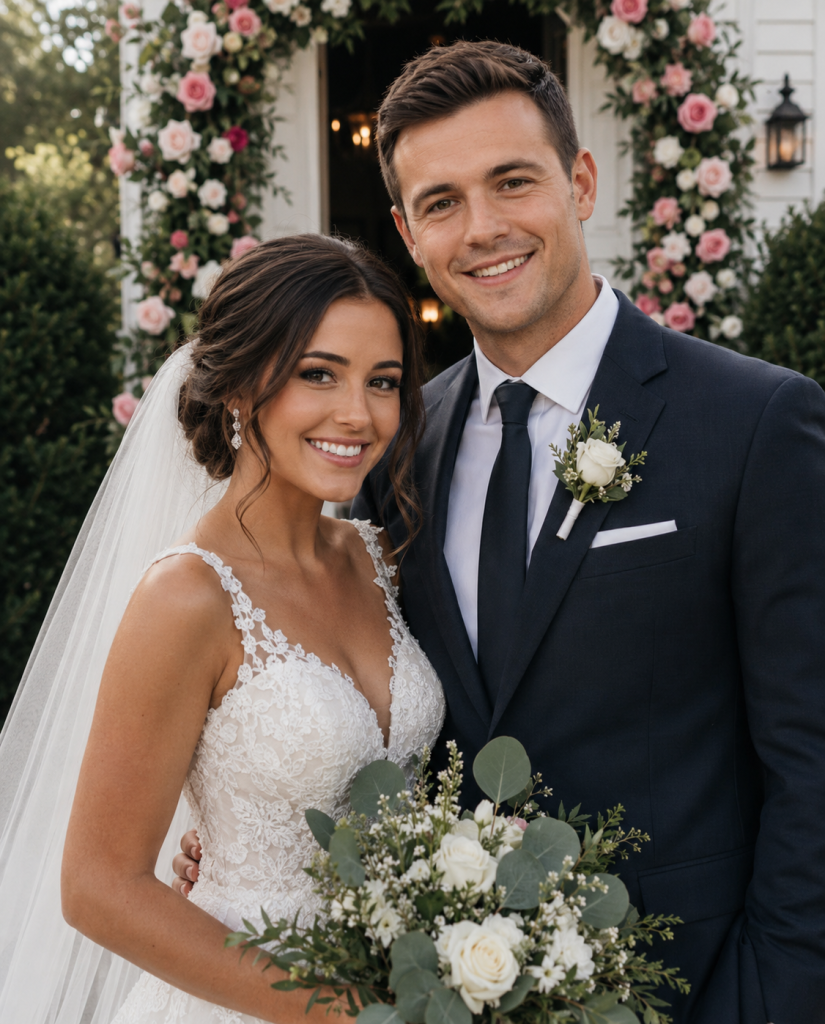
Liam and I married three weeks later at a courthouse.
My dress cost eighty dollars.
His suit was the same navy one, but this time he wore it as himself, not as my father’s employee.
The clerk who married us had kind eyes and a coffee stain on her sleeve.
There were no flowers, no string quartet, no family crest embossed on invitations.
Just two witnesses from the county office and Liam’s mother, Helen, who cried so hard the clerk gave her tissues from a drawer.
Afterward, we ate burgers in the park.
Liam held my hand across the picnic table.
“I’m sorry,” he said.
“For what?”
“For what you lost.”
I looked at him.
Then at the simple gold ring on my finger.
“I didn’t lose everything.”
He kissed my hand.
“No,” he said. “You didn’t.”
But love did not make life easy.
That first year humbled me.
I had never paid a utility bill in my life.
I did not know how to compare insurance plans, cook more than three meals, or live without someone silently cleaning behind me.
Our apartment was small, with noisy pipes and a view of a brick wall.
The couch came from Liam’s cousin.
The kitchen table had one uneven leg.
I burned rice twice and cried once because I could not open a jar and hated how helpless that made me feel.
Liam never mocked me.
He taught me quietly.
How to budget.
How to change a tire.
How to argue with a landlord.
How to laugh when things were not perfect.
He also worked constantly.
After my father fired him from every private driving network he could influence, Liam took night shifts driving airport transfers, then delivery routes, then anything that paid.
I enrolled in nursing school.
At first, people assumed I would quit.
Maybe part of me feared I would.
But the first time I held a frightened child’s hand during clinical training and helped him breathe through a blood draw, I knew.
This was mine.
Not my father’s ambition.
Not my mother’s performance.
Mine.
Two years after we married, our son Noah was born.
He came early, angry, and loud.
The nurse placed him on my chest, red-faced and furious, and Liam burst into tears.
I had never seen him cry before.
“He has your mouth,” he whispered.
“He has your temper,” I said.
“Impossible. I’m calm.”
The baby screamed harder.
We laughed like exhausted fools.
I sent one birth announcement to my parents.
Not because I expected anything.
Because some small piece of me still believed a grandchild might soften what pride had hardened.
No reply came.
No flowers.
No card.
No call.
My mother did not ask to see him.
My father did not acknowledge his name.
I told myself I was not surprised.
That did not mean it did not hurt.
Three years later, Elise was born.
She was tiny, silent at first, and blue enough to stop my heart.
They rushed her to the NICU before I could hold her properly.
For six days, Liam and I lived between plastic chairs, vending machine coffee, and whispered prayers.
Elise had a breathing complication, then jaundice, then one terrifying night when alarms sounded and nurses moved too quickly.
I called my mother from the hospital hallway.
I do not know why.
Maybe exhaustion.
Maybe fear.
Maybe the childish belief that mothers come when babies are in danger.
The call rang four times.
Then went to voicemail.
I left a message.
“Mom, it’s Anna. Elise is in the NICU. She’s your granddaughter. I know things are complicated, but I thought you should know.”
She never called back.
Liam found me sitting on the floor outside the NICU, phone in my lap.
He sat beside me without speaking.
After a long time, I said, “I think I’m done waiting.”
He put his arm around me.
“Good.”
But grief does not leave just because you decide to stop feeding it.
It lingers.
It whispers during birthdays.
During school plays.
During the first time Noah asked why he did not have another grandpa.
He was four, sitting on the living room rug building towers with wooden blocks.
“Daddy has Grandma Helen,” he said. “Mommy has who?”
I froze.
Liam looked at me from the kitchen.
I sat beside Noah.
“I had parents,” I said carefully. “But they are not part of our life.”
“Why?”
Because your grandfather thought your father was beneath him.
Because pride mattered more than love.
Because some people would rather be right than know you.
I said, “Because they made choices that hurt me.”
Noah considered that.
“Did you make bad choices too?”
Children are merciless philosophers.
“Yes,” I said. “Everyone does sometimes.”
“Can they say sorry?”
I brushed hair from his forehead.
“They can.”
“Did they?”
“No.”
He returned to his blocks.
“Then they don’t get tower.”
That became family law.
People who did not say sorry did not get tower.
Eight years passed.
Not quickly.
Not easily.
But fully.
We built a life.
A real one.
Liam eventually started his own private transportation company with one used black sedan and a website I built from a template at midnight.
At first, he drove every ride himself.
Airport transfers.
Weddings.
Medical appointments.
Business trips.
He was professional, reliable, and kind.
Clients remembered him.
They recommended him.
Within five years, he had six drivers.
Within seven, twelve.
By our eighth anniversary, Carter Executive Transport had contracts with two hotels, a hospital network, and several law firms.
No one could say Liam did not know his place anymore.
He had built it.
I finished nursing school and became a pediatric nurse.
Every day I worked with children whose parents were frightened, exhausted, angry, hopeful.
I learned that love is rarely elegant in hospital rooms.
It looks like wrinkled clothes, shaking hands, bad cafeteria coffee, and refusing to leave a bedside.
Liam and I were tired often.
Broke sometimes.
Scared more than we admitted.
But our house was warm.
Small, yes.
A yellow craftsman home in Portland with a front porch, chipped paint, and a backyard where Noah built complicated mud kingdoms.
Elise painted on everything.
Paper.
Rocks.
Her own arms.
Once, the dog.
We had Sunday pancakes.
Laundry piles.
Arguments about bills.
Birthday cakes that leaned sideways.
A life my father would have called ordinary.
And it was.
Gloriously ordinary.
Then, one October afternoon, a black car parked outside our house.
I noticed it through the kitchen window while rinsing paint cups.
At first, I thought it was one of Liam’s drivers arriving early for a route.
Then the back door opened.
My father stepped out.
Eight years had changed him.
His hair was almost fully silver.
His shoulders, once squared like architecture, seemed narrower.
He still wore an expensive coat.
Still carried himself like a man who expected doors to open.
But without marble floors, staff, and polished silence around him, he looked less like a king and more like an old man standing on a sidewalk.
I dried my hands slowly.
Liam came in from the backyard carrying a bag of soil.
He saw my face.
“What is it?”
“My father.”
Liam moved to the window.
For a moment, neither of us spoke.
Then he set down the soil.
“You don’t have to open the door.”
“I know.”
But my heart was already pounding.
Not with hope exactly.
Hope had become too expensive.
More like shock.
Curiosity.
Old pain waking up and stretching.
The doorbell rang.
Noah shouted from the hallway, “I’ll get it!”
“No,” I said too quickly.
He froze.
Elise appeared behind him, hands covered in blue paint.
“Is it pizza?”
“No, sweetheart.”
I walked to the front door with Liam beside me.
He did not stand in front of me.
He did not stand behind me.
Beside me.
That mattered.
I opened the door.
My father stood on the porch holding his leather gloves in one hand.
For a few seconds, he only stared.
“Anna,” he said.
His voice was rougher than I remembered.
“Father.”
His eyes flicked to Liam.
Something old moved across his face.
Instinctive disdain.
Then he buried it.
Not perfectly.
But enough to show effort.
“Liam.”
Liam nodded once.
“Mr. Whitmore.”
My father swallowed.
“I came to speak with you.”
“You have my number.”
“I thought in person would be better.”
“After eight years?”
He looked down.
A rare thing.
“Yes.”
I did not invite him in.
The silence stretched.
Finally, he said, “I want to meet them.”
My throat tightened.
“Who?”
“My grandchildren.”
The word sounded strange in his mouth.
As if it had been sitting unused for years and had gathered dust.
Behind me, Noah whispered, “Mom?”
My father’s eyes lifted toward the sound.
Before I could stop him, Noah stepped into view holding his toy airplane.
He was seven then, tall for his age, with dark hair, serious eyes, and a stubborn line to his mouth.
My father froze.
The color drained from his face.
His hand tightened around his gloves.
Elise came next, carrying a paintbrush like a wand.
She was five, curls wild, blue paint on her cheek.
My father stared at Noah.
Then at Elise.
Then back at Noah.
His face twisted with something like disbelief.
“How is this possible?” he shouted.
The sound made both children flinch.
Liam’s hand moved protectively to Noah’s shoulder.
My whole body went cold.
“Lower your voice,” I said.
My father seemed not to hear me.
He pointed at Noah with a trembling hand.
“He looks exactly like me as a boy.”
Noah stepped closer to Liam.
Elise hid behind my skirt.
I looked at my father and understood.
He had not come prepared to see children.
Not really.
He had come prepared to see consequences in miniature.
Proof that the man he had rejected had helped create something that looked like him.
Blood had crossed the class line he tried so hard to guard.
“Blood recognizes what pride tried to reject,” I said quietly.
My father’s eyes moved to mine.
For a moment, I saw grief there.
Or maybe horror.
Maybe both.
Liam stepped forward.
“They’re your grandchildren,” he said evenly. “Mine and Anna’s.”
My father stared at him.
Eight years earlier, he had said Liam had a place.
Now Liam stood in the doorway of his own home, with his wife beside him and his children behind him, and there was nothing my father could take away.
“I…” My father stopped.
He looked back at Noah.
“What is your name?”
Noah did not answer.
I said, “Noah.”
My father’s lips parted.
“My middle name.”
“Yes.”
That seemed to hit him harder than anger would have.
I had not named Noah after my father to honor him.
I had named him because when he was born, before the silence had fully hardened, I thought maybe someday my father would want to know he was remembered.
I would not have made that choice later.
But names, like scars, sometimes remain from versions of ourselves who still hoped.
“And her?” he asked.
“Elise.”
My father’s eyes flickered.
“My mother.”
“Yes.”
His face crumpled slightly.
Not enough for tears.
Harrison Whitmore did not cry easily.
But enough that I saw the blow land.
For all his pride, I had given my children names from his family.
And still he had stayed away.
Noah tugged Liam’s sleeve.
“Dad, who is he?”
Liam looked at me.
My choice.
Always my choice.
I crouched beside Noah.
“This is my father,” I said. “Your grandfather.”
Noah studied him.
“The one who didn’t say sorry?”
My father inhaled sharply.
Children have a way of walking straight into the locked room adults avoid.
I said, “Yes.”
Noah nodded solemnly.
“Then he doesn’t get tower.”
My father looked confused.
Liam almost smiled, but did not.
I stood.
“Why are you here?”
My father’s gaze lowered to the porch.
“Your mother died.”
The air left my body.
For a moment, I heard nothing.
Not the birds.
Not Elise shifting behind me.
Not Liam saying my name softly.
My mother.
Victoria Whitmore.
The woman who told the housekeeper not to open the gate.
The woman who ignored my voicemail from the NICU.
The woman who never asked to hold my children.
Dead.
“When?” I asked.
“Three months ago.”
Pain moved through me so strangely I almost laughed.
Three months.
He had not called when she died.
He had waited three months.
“Why didn’t you tell me?”
His mouth tightened.
“She asked me not to.”
Of course.
Even death came with rules.
“She did not want me at the funeral?”
“She said it would create talk.”
Talk.
Her last concern had been talk.
I looked past him toward the black car.
“Then why come now?”
My father’s face changed.
“I found letters.”
“What letters?”
“In her desk. Unsent. To you.”
My throat tightened despite myself.
He reached into his coat and pulled out a bundle tied with a ribbon.
My mother’s ribbon.
Pale gray.
Elegant even in apology.
“She wrote after Noah was born,” he said. “After Elise. After your voicemail. She never mailed them.”
I did not reach for the bundle.
Not yet.
“Why are you giving them to me?”
“Because I read them.”
Anger sparked through the numbness.
“You read letters addressed to me?”
His face tightened with shame.
“Yes.”
“Why?”
“Because I wanted to know if she regretted it.”
There it was.
Not pure generosity.
Not fatherly awakening.
He came because my mother’s death had left him alone with questions his money could not answer.
“And did she?” I asked.
His eyes filled.
“Yes.”
That word hurt more than I expected.
I stepped back.
The house behind me smelled like finger paint, coffee, and soil.
My children watched silently.
Liam’s hand rested warm at my back.
I could close the door.
I had every right.
Instead, I opened it wider.
“Come in.”
My father looked surprised.
I held up one hand.
“This is not forgiveness.”
He nodded slowly.
“I understand.”
“No, you don’t,” I said. “But you can come in anyway.”
He stepped into my house carefully, as if crossing a border.
His eyes moved over everything.
The shoes by the door.
The family photos on the wall.
Noah missing two front teeth.
Elise covered in birthday cake.
Liam and me in the backyard, laughing under string lights.
Our wedding photo from the courthouse, small and simple in a wooden frame.
My father stopped in front of that picture.
His face tightened.
I wondered if he remembered the dining room.
The navy suit.
The words he had used like a blade.
No, he has a place.
Liam watched him from the kitchen entrance.
My father turned.
“I was wrong,” he said.
The words were abrupt.
Almost harsh.
Like they had been dragged out of him.
Liam said nothing.
My father looked at me.
“I was wrong about him.”
“You were wrong about me too.”
He swallowed.
“Yes.”
“You missed birthdays,” I said.
“I know.”
“Fevers.”
“Yes.”
“First steps.”
His jaw tightened.
“Yes.”
“Elise almost died.”
His eyes snapped to her.
She was peeking around my leg.
“I didn’t know,” he whispered.
“I called Mom.”
Pain crossed his face.
“I heard the voicemail after she died.”
That almost knocked me backward.
“She kept it?”
“Yes.”
“For six years?”
He nodded.
“She kept many things.”
I looked at the bundle of letters in his hand.
My mother had kept my pain, but not answered it.
I did not know what to do with that.
Noah stepped forward slowly.
“Do you like airplanes?” he asked my father.
My father blinked, startled.
“I beg your pardon?”
Noah lifted the toy airplane.
“Airplanes. Do you like them?”
My father looked at the toy as if it were a complicated contract.
“I suppose I do.”
Noah considered him.
“Grandma Helen says if someone is sorry, they have to show it with actions.”
“She sounds wise,” my father said.
“She is.”
A tiny smile tugged at Liam’s mouth.
My father crouched awkwardly, expensive coat pulling at his shoulders.
“I am sorry I scared you by shouting.”
Noah studied him.
“You shouldn’t shout at kids.”
“No,” my father said. “I shouldn’t.”
“You can look at my airplane, but you can’t keep it.”
My father nodded gravely.
“That seems fair.”
Noah handed it to him.
It was the smallest bridge imaginable.
Plastic wings.
Sticky fingerprints.
A child’s cautious mercy.
My father held the toy like something fragile.
Elise emerged next.
“Are you rich?” she asked.
“Elise,” I said.
My father almost smiled.
“Yes.”
She frowned.
“Then why do you look sad?”
The room went silent.
My father looked at her for a long moment.
“Because I made very foolish choices.”
She nodded.
“Mom says choices have consequences.”
“She is right.”
Elise looked at me.
“Can he have juice?”
I let out a shaky breath.
“Yes. He can have juice.”
So my father sat at our kitchen table drinking apple juice from a plastic cup with dinosaurs on it.
He looked absurd.
He looked human.
For years, I had imagined confronting him in some grand way.
In his office.
At a gala.
In a courtroom of emotional justice.
Instead, he sat beneath a crooked drawing taped to our fridge while my daughter explained that blue paint was better than green because “it feels louder.”
He listened.
Awkwardly.
But he listened.
After the children went outside with Liam, my father and I sat alone.
The bundle of letters lay between us.
I finally touched it.
“How many?”
“Twelve.”
My chest hurt.
“Twelve letters she never sent.”
“Yes.”
“Did she ask about them? The children?”
His voice softened.
“Constantly.”
Anger rose.
“Then why didn’t she come?”
“Pride.”
“That’s not an answer.”
“No,” he said quietly. “It’s a disease.”
I looked at him.
He seemed smaller than he had on the porch.
“My mother died without meeting her grandchildren because of pride?”
His eyes lowered.
“Yes.”
“And you came because you don’t want to do the same.”
His mouth trembled slightly.
“Yes.”
I hated that his honesty moved me.
I wanted him cruel.
Dismissive.
The same man from the dining room.
That man was easier to reject.
This one was harder.
Old.
Lonely.
Wrong.
Trying too late.
“You don’t get to buy your way in,” I said.
“I know.”
“You don’t get to make Liam feel small in his own house.”
“I know.”
“You don’t get private-school plans, trust funds, family portraits, or grandfather privileges because you appeared once with guilt in your coat pocket.”
He nodded.
“I know.”
“If you want to know them, you start slowly. You show up when invited. You follow our rules.”
“Our rules,” he repeated.
“Yes.”
For the first time, I saw something like respect in his eyes.
Not approval.
Respect.
“What are your rules?” he asked.
I thought carefully.
“No insults. No class comments. No gifts meant to impress or control. No decisions without me and Liam. No talking about my mother to the children until I decide how. And if they don’t want affection from you, you don’t force it.”
He nodded.
“Anything else?”
“Yes.”
I leaned forward.
“You apologize to Liam properly.”
My father’s face tightened.
Then he looked through the window.
Liam was crouched beside Elise near the garden beds, letting her pour water onto soil he had already watered.
Noah was flying the toy airplane around them.
My father watched them.
“I will.”
He did not do it perfectly.
Men like my father are not transformed by one visit.
This was not a movie.
He stumbled.
The first apology to Liam was stiff.
“I regret my behavior.”
Liam stood silently until my father tried again.
“I’m sorry I treated you like you were beneath me,” he said finally. “You were not. You are not. I was wrong.”
Liam nodded.
“Thank you.”
That was all.
He did not offer instant forgiveness.
He did not hug him.
He did not pretend eight years could be repaired with one sentence.
My father seemed almost relieved by that.
Maybe he knew cheap forgiveness would not mean much.
The first months were careful.
He visited once every other Sunday.
At first, Noah called him “Anna’s dad.”
Then “Mr. Harrison.”
Then, one day, “Grandpa Harrison,” though he said it quickly and ran outside before anyone could react.
My father sat very still for almost a full minute after that.
Elise was harder.
She accepted his books but not his hugs.
She once told him, “You smell like serious.”
He changed cologne after that.
He brought small gifts after asking permission.
Puzzles.
Books.
A model airplane kit for Noah.
Paintbrushes for Elise.
Once, he tried to bring an expensive tablet.
I handed it back.
He did not argue.
That mattered more than the gift would have.
He learned to sit on our porch.
To eat Liam’s grilled burgers without mentioning better restaurants.
To listen when I talked about work.
To ask Liam about the transport company with real interest, not disguised judgment.
One Sunday, Liam showed him the scheduling software he used.
My father studied it, then said, “This is efficient.”
Liam raised an eyebrow.
“That almost sounded like a compliment.”
“It was intended as one.”
“Needs work.”
My father nodded.
“I’ve been told that.”
They both smiled.
Small.
But real.
I read my mother’s letters slowly over the course of a year.
Not all at once.
I could not.
Some were painful.
Anna, I saw a blue baby blanket today and thought of your son.
Anna, your father says you are stubborn, but I know where you got it.
Anna, I listened to your voicemail again. I am sorry I did not answer. I was afraid if I came, I would have to admit I chose wrong.
The letter after Elise’s birth broke me.
My darling girl,
I heard your fear in that message. I sat with the phone in my hand for an hour. I wanted to come to the hospital. I even put on my coat. Then I imagined the nurses looking at me, Liam seeing me, you asking why it took a crisis for me to arrive, and I took the coat off.
That is the truth. Ugly as it is.
I loved my pride more than my courage that day.
I do not know how to forgive myself.
I folded that letter and cried in my bathroom so the children would not hear.
I was angry at her.
I pitied her.
I missed her.
All at once.
Grief is cruel when love is unfinished.
My father and I spoke of her sometimes.
Not often.
One evening, after the children were asleep, he sat on the porch with me while rain softened the yard.
“She would have loved them,” he said.
I stared ahead.
“She chose not to know them.”
“I know.”
“I don’t want you turning her into a saint because she died.”
He nodded.
“She was not a saint.”
“Neither are you.”
“No.”
The rain tapped the porch roof.
After a while, he said, “I thought status protected people.”
I looked at him.
“From what?”
“Pain. Need. Humiliation. Loss.”
“And did it?”
He gave a sad smile.
“No. It only made me lonely in expensive rooms.”
That was the first time I felt sorry for him without feeling responsible for him.
There is a difference.
Years passed.
Slowly, carefully, my father became part of our life.
Not the center.
Never the authority.
Part.
He came to Noah’s school play and sat in the third row without demanding better seats.
He attended Elise’s art fair and bought a five-dollar painting of a purple dog, which he later framed in his office.
He invited us to his house once, but I said no.
Not yet.
He accepted that.
When we finally went, three years after his first visit, the mansion looked smaller to me.
Still grand.
Still cold in places.
But no longer powerful.
No gate could lock me in now.
No dining room could shrink Liam.
No family portrait could erase my children.
My father had changed things.
Not everything.
But enough.
The housekeeper who once would not open the gate hugged me when she saw me.
“I wanted to,” she whispered.
“I know.”
My father gave Noah and Elise the garden to run in.
I watched them race past the roses that had always seemed afraid to grow wrong.
Elise picked one without asking.
I waited for my father to correct her.
He simply said, “That one was ready.”
I looked at him.
He looked embarrassed.
“Too much?”
“A little,” I said.
But I smiled.
Noah is fifteen now.
Elise is thirteen.
They know the story, in age-appropriate pieces.
They know Grandpa Harrison hurt me.
They know Dad was once treated unfairly.
They know people can apologize and still need to rebuild trust.
They know forgiveness is not a door you throw open.
It is a path people must walk with consistency.
Liam’s company is thriving.
He sometimes drives still, not because he needs to, but because he likes roads.
I am now a pediatric nurse supervisor.
My father tells everyone this with absurd pride, as if he supported the plan from the beginning.
The first time he did it, I pulled him aside.
“You do not get credit for my career.”
He looked startled, then nodded.
“You’re right.”
The next time, he said, “Anna built this herself.”
That correction mattered.
A few months ago, my father found Noah in the garage helping Liam polish one of the company cars.
I watched from the doorway.
My father stood quietly for a while.
Then he said, “Your father knows more about dignity than I did at his age.”
Noah looked up.
“My dad knows more about dignity than most people at any age.”
Liam laughed.
My father nodded.
“He does.”
Later, he told me, “That boy is protective.”
“He learned from Liam.”
“And you.”
Maybe.
Maybe I had learned protection by being denied it.
Maybe Liam had taught me how to make it gentle instead of sharp.
My father is old now.
Not ancient.
But old enough that stairs slow him down and doctors have begun using phrases like “monitor closely.”
He has a relationship with my children that is real, though not uncomplicated.
Elise still does not hug him unless she feels like it.
He still waits.
Noah calls him when he has history questions because my father knows everything about old wars and dead presidents.
Liam and my father are not close exactly.
But they respect each other.
Some men never reach that.
They did.
As for me, I do not call him Dad.
Not often.
Usually, I call him Father.
Some wounds leave formalities behind.
But once, after he spent six hours at the hospital with me when Elise broke her ankle, I was so tired that I said, “Thanks, Dad.”
He froze.
I pretended not to notice.
He pretended not to cry.
That is how we handled it.
Not everything heals cleanly.
My mother never got to meet Noah and Elise.
That truth remains.
No letters can change it.
No regret can resurrect missed birthdays, first words, NICU nights, or the sound of my children laughing in the backyard.
But my father did meet them.
Late.
Badly.
Awkwardly.
With a shout that frightened them and a face full of shock.
He came to my door expecting perhaps to repair a relationship with his daughter.
Instead, he found grandchildren who carried his eyes, his mother’s name, his family’s history, and none of his permission.
He screamed, “How is this possible?”
The answer was simple.
Love had survived without him.
Life had continued beyond his gate.
The man he called “that driver” had become a husband, father, business owner, and the safest person I had ever known.
The daughter he cast out had become a mother, a nurse, and a woman who no longer needed his approval to stand upright.
That was what shocked him.
Not just resemblance.
Not just blood.
The evidence that his rejection had not destroyed us.
For years, I thought being kicked out was the end of my family.
Now I understand it was the beginning of the one I chose.
My father’s house had rules for everything.
My house has some too.
Say sorry when you are wrong.
No shouting at children.
No one’s worth is measured by money.
Love is proven by showing up.
And anyone who wants tower must earn it.
My father is still earning it.
Slowly.
Imperfectly.
But he shows up.
And sometimes, on Sunday afternoons, I look out my kitchen window and see him sitting in the backyard while Noah explains airplanes and Elise paints his hand blue for no clear reason.
Liam stands beside me, smiling.
The house smells like pancakes or coffee or wet dog.
Nothing is polished.
Nothing is perfect.
But everything is real.
And every time my father laughs with my children, I think of the girl standing in that dining room years ago, holding the hand of the man she loved while her father said he had a place.
He was right about one thing.
Liam did have a place.
Beside me.
In our home.
At the head of a family my father almost never knew.
And when he finally stepped through our door, eight years too late, he discovered that the life he had rejected had become the only one worth being invited into.
THE END! THANKS FOR READING!