 Reading Time: 23 minutes
Noah looked down at the brass key in his palm as if it weighed far more than a few ounces. The room around us had gone strangely quiet.
People were still speaking in hushed voices near the funeral-home doors. Chairs scraped. Someone coughed. A woman dabbed at her eyes with a tissue.
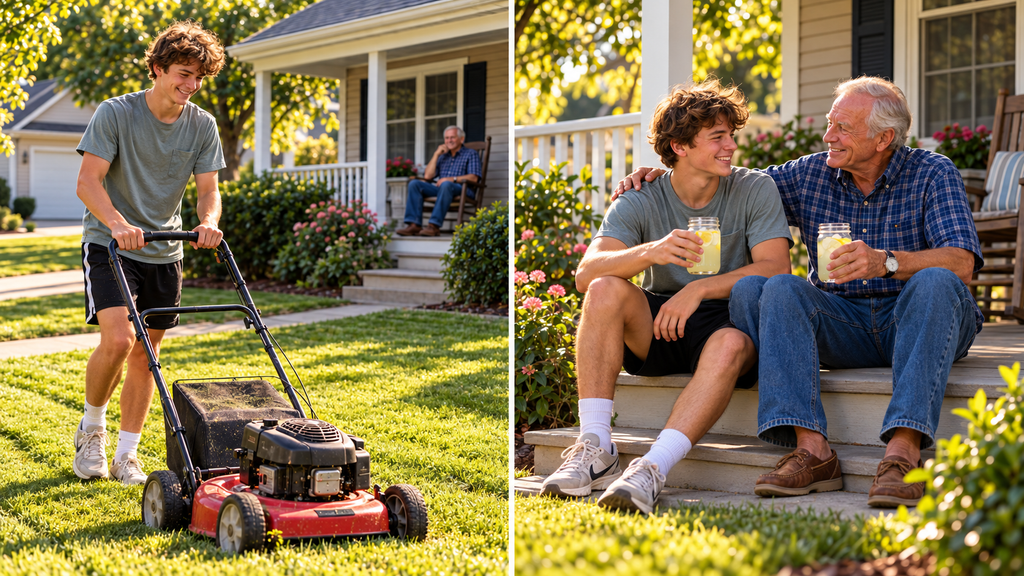
But around Noah, the lawyer, Mr. Vance’s children, and me, there was a silence that felt almost physical.
Mr. Vance’s son stared at the key.
His name was Daniel.
I remembered seeing him only a handful of times over the years.
He lived several states away and usually arrived around Christmas in a dark SUV, stayed perhaps a day, and disappeared again.
His sister, Rebecca, visited even less.
Now both of them were staring at the small brass key in Noah’s hand.
Daniel’s expression hardened.
“What exactly is that supposed to open?”
The lawyer, Mr. Whitaker, turned toward him.
“Your father left instructions.”
“I heard you the first time.”
Daniel pointed toward Noah.
“But why him?”
Noah immediately looked uncomfortable.
“I didn’t ask for anything.”
“I know that,” I said quickly.
Rebecca stepped forward.
Her eyes were red from crying, but there was something sharper underneath the grief now.
“Mr. Whitaker,” she said, “we’re his children. If Dad left something inside the house, shouldn’t we be there?”
The lawyer adjusted his glasses.
“Your father anticipated that question.”
Daniel gave a humorless laugh.
“Of course he did.”
Mr. Whitaker looked at Noah.
“Your instructions are to go to the house tomorrow morning at ten.”
Noah blinked.
“Tomorrow?”
“Yes.”
“Why not today?”
“Because your neighbor wanted the house left exactly as it was for twenty-four hours following his funeral.”
Daniel shook his head.
“This is ridiculous.”
The lawyer didn’t react.
“He also instructed me to accompany Noah.”
Rebecca folded her arms.
“And us?”
Mr. Whitaker paused.
Then he said quietly,
“You were specifically instructed not to enter until Noah had completed what your father asked him to do.”
The silence deepened.
Daniel’s face changed completely.
“You’re joking.”
“I’m not.”
“That’s our father’s house.”
“Legally,” Mr. Whitaker said, “that question is more complicated than you may realize.”
I felt my stomach tighten.
Noah looked at me.
“Mom?”
I didn’t know what to tell him.
Because suddenly this no longer felt like an old man’s thank-you gift.
It felt like we had stepped into something that had been waiting years to happen.
Daniel stepped closer to the lawyer.
“What did my father do?”
Mr. Whitaker’s voice remained calm.
“Tomorrow.”
Daniel’s jaw tightened.
“You expect me to wait until tomorrow?”
“Yes.”
“And you expect me to stand outside while some teenager walks through my father’s property?”
Noah flinched.
That bothered me.
I stepped between them.
“Don’t talk about my son like he’s done something wrong.”
Daniel looked at me.
“I didn’t say he did.”
“You didn’t have to.”
Rebecca touched her brother’s arm.
“Daniel.”
He pulled away.
“No. Something isn’t right here.”
Mr. Whitaker closed his leather folder.
“Your father was of sound mind when he signed every document involved.”
Daniel stared at him for another moment.
Then his eyes shifted to Noah.
And for one unsettling second, there was anger there.
Not grief.
Not confusion.
Anger.
“Ten o’clock,” he said.
Then he walked away.
Rebecca remained behind.
She looked at Noah.
“You really mowed Dad’s lawn every week?”
Noah nodded.
“Most weeks.”
“For four years?”
“Yes.”
She looked down.
Then she whispered,
“I didn’t know.”
There was something in her voice that made my anger soften slightly.
She looked toward the doorway where her brother had disappeared.
Then back at Noah.
“I don’t think Daniel knew either.”
Noah folded Mr. Vance’s letter carefully.
“I wasn’t trying to make anyone look bad.”
Rebecca gave him a tired smile.
“I know.”
She walked away.
On the drive home, Noah barely spoke.
The brass key sat inside the cup holder between us.
Every few minutes, I saw him glance at it.
Finally, I asked,
“What are you thinking?”
He looked out the passenger window.
“I don’t know.”
“That’s allowed.”
He was quiet again.
Then he said,
“I wish Mr. Vance would’ve just told me.”
“Told you what?”
“Anything.”
He laughed softly, but there was sadness in it.
“I mowed that guy’s lawn for four years and he probably said fifty words to me.”
I smiled.
“Maybe sixty.”
“Most of them were ‘You missed a spot.'”
That made both of us laugh.
For the first time since the funeral, the tension eased.
Then Noah became serious again.
“He was lonely, wasn’t he?”
“I think so.”
“Really lonely.”
“Yes.”
Noah stared out the window.
“I should’ve sat with him more.”
My heart tightened.
“Noah.”
“I mean it. Sometimes I’d finish and he’d still be sitting there. I could’ve stayed.”
“You were fourteen when this started.”
“So?”
“So you gave him four years of Saturdays.”
“That’s not the same.”
“No.”
I glanced at him.
“But don’t turn kindness into guilt.”
He looked at me.
“What’s that supposed to mean?”
“It means you don’t punish yourself for the things you didn’t know someone needed.”
Noah said nothing after that.
But I saw him wipe his eyes with the sleeve of his jacket.
The next morning, we walked across the street at exactly 9:55.
I had walked that route hundreds of times.
But it felt completely different now.
Mr. Vance’s lawn was slightly uneven.
For the first Saturday in four years, Noah hadn’t mowed it.
The porch chair was empty.
That somehow made the house look abandoned.
Mr. Whitaker stood beside the front steps holding the same leather folder.
Daniel and Rebecca were near the driveway.
Daniel had his arms folded.
Rebecca gave us a small nod.
At ten precisely, Mr. Whitaker turned to Noah.
“The key.”
Noah held it up.
The lawyer pointed toward the front door.
“Third lock.”
There were three locks.
Two normal deadbolts.
And one tiny brass keyhole neither Noah nor I had ever noticed.
Noah inserted the key.
It turned easily.
Something clicked inside the wall.
Daniel stepped forward.
“What is that?”
Mr. Whitaker raised a hand.
“Wait.”
Noah pushed open the door.
The smell inside hit me immediately.
Old books.
Coffee.
Dust.
And something faintly medicinal.
It was unmistakably Mr. Vance’s house.
Noah stopped in the doorway.
For years, he had only been inside a few times.
Once to help move a chair.
Once when Mr. Vance slipped in the kitchen.
Once to change a smoke-detector battery.
Now the house felt like a museum of a life that had suddenly ended.
Photographs lined the hallway.
Mr. Vance and his wife.
Young.
Laughing.
Standing beside a lake.
Another of Daniel and Rebecca as children.
Another of the family at Christmas.
Noah stared at them.
Mr. Whitaker entered behind us.
“The instructions say to go to the study.”
Daniel spoke from outside.
“How long is this supposed to take?”
Mr. Whitaker turned.
“As long as necessary.”
Then he shut the door.
Noah and I looked at each other.
“Okay,” he whispered.
The study was at the end of the hallway.
We found the door closed.
Another brass lock.
Noah’s key fit.
Inside was a small room I had never seen before.
Books covered two walls.
A heavy wooden desk stood beneath the window.
And on top of it sat a black metal box.
Noah stopped.
“That’s it?”
Mr. Whitaker opened his folder.
“Not exactly.”
He handed Noah another envelope.
This one had three words written across the front.
FOR SATURDAY MORNINGS.
Noah stared at the handwriting.
Then he opened it.
Inside was another letter.
His hands began to tremble as he read aloud.
“Dear Noah.
If you are reading this, then I have finally gone wherever stubborn old men go when doctors run out of ways to keep them around.”
Noah laughed despite himself.
His voice cracked.
He continued.
“You are probably wondering why I never told you any of this while I was alive.
The answer is simple.
I was afraid.”
Noah looked up.
I felt a chill move through me.
He kept reading.
“Not afraid of dying.
I made peace with that years ago.
I was afraid that if you knew what I planned to give you, your Saturdays would stop being what they were.
I never wanted you mowing my lawn because you expected something.”
Noah swallowed.
“You started helping me when you thought I had nothing to offer you.
That matters more than you know.”
He paused again.
The room blurred slightly through my tears.
Noah continued.
“After my wife, Evelyn, died, I became difficult.
Ask my children and they will use stronger words.”
Mr. Whitaker almost smiled.
Noah read on.
“I pushed everyone away.
Some deserved it.
Some did not.
Grief can make a man believe isolation is dignity.
It isn’t.
It is just loneliness wearing a suit.”
Noah stopped reading.
His voice broke completely.
I touched his shoulder.
He shook his head.
“I’m okay.”
He wasn’t.
But he continued anyway.
“Then one Saturday, a skinny fourteen-year-old boy pushed an old red lawn mower across the street and started cutting my grass without asking permission.”
Noah laughed through his tears.
“He was annoyed with me.”
“You were trespassing,” I whispered.
That made him laugh again.
Then he continued.
“I intended to send you home.
But I watched you finish one strip.
Then another.
Then another.
And for reasons I did not understand at the time, I didn’t stop you.”
Noah lowered the letter.
“I remember that day.”
I did too.
He had come home sweating and covered in grass.
I had asked what he was doing.
He had simply said,
“Mr. Vance’s yard looked sad.”
Noah continued.
“That first Saturday gave me something I had not had in months.
A reason to open the curtains.”
I covered my mouth.
Noah’s voice had dropped to almost a whisper.
“The second Saturday gave me a reason to make coffee.
The third gave me a reason to sit outside.
By the tenth, I knew what time you would arrive.
By the twentieth, I began looking forward to hearing that miserable lawn mower.”
Noah laughed.
“It was miserable.”
The lawyer smiled.
Noah read the next lines.
“And somewhere during those four years, you became something I had stopped believing in.
Proof that kindness can arrive without an invoice.”
Silence.
Noah lowered the paper.
His eyes were red.
Mr. Whitaker looked toward the metal box.
“There is more.”
Noah resumed reading.
“The box on my desk contains three things.
The first belongs to my children.
The second belongs to your mother.
The third belongs to you.
Open them in that order.”
Noah stared at the box.
He unlocked it with the same key.
Inside were three envelopes.
DANIEL AND REBECCA.
SARAH.
NOAH.
Seeing my name made my stomach drop.
“Why am I in this?”
Mr. Whitaker looked at me.
“You’ll understand.”
Noah handed him the first envelope.
The lawyer opened it.
Inside was a letter and several documents.
“Do I read it?” Noah asked.
Mr. Whitaker nodded.
He took the letter and began.
“My dear Daniel and Rebecca.
If you are angry that someone else is standing in my study before you, then perhaps that anger will finally force you to ask the question none of us asked often enough while I was alive.
How did we become strangers?”
Outside, we heard something move near the front door.
Daniel.
He was listening.
Mr. Whitaker continued reading.
“I will not pretend innocence.
After your mother died, I punished both of you for surviving differently than I did.
Daniel, when you tried to move me closer to your family, I accused you of wanting my house.
Rebecca, when you asked me to come live with you, I accused you of pity.
You both stopped asking.
I told myself that proved I was right.
It did not.
It proved I was cruel.”
There was silence outside.
Mr. Whitaker read on.
“I know both of you loved me.
I also know neither of you knew how to reach me anymore.
That failure belongs to all of us.”
I heard a quiet sound from the hallway.
Someone crying.
Rebecca.
The lawyer continued.
“My estate has not been designed to punish you.
You will each receive financial inheritances, family possessions, and the investment accounts already disclosed to Mr. Whitaker.
But the house will not pass to either of you.”
Daniel pushed the study door open.
“What?”
Mr. Whitaker looked at him.
“You were asked to remain outside.”
“I heard enough.”
Rebecca appeared behind him.
Her eyes were wet.
Daniel pointed toward the documents.
“Who gets the house?”
Noah looked frightened now.
The lawyer said calmly,
“That is addressed later.”
Daniel laughed bitterly.
“Of course it is.”
Rebecca touched his arm.
“Let him finish.”
Daniel looked at her.
“You’re okay with this?”
“No.”
She wiped her eyes.
“But Dad is talking to us for the last time.”
That stopped him.
He looked away.
Mr. Whitaker continued.
“Daniel, Rebecca, I hope someday you understand that inheritance is not a scoreboard for love.
You are my children.
Nothing written in this room changes that.
But some things are given because of blood.
Other things are entrusted because of character.”
Daniel’s face tightened.
Mr. Whitaker finished the letter.
“I loved you both poorly near the end.
I am sorry.
Please do better with each other than I did with you.”
Rebecca started crying openly.
Daniel stared at the floor.
For several seconds, no one spoke.
Then Noah quietly handed me the envelope with my name.
I didn’t want to open it.
But I did.
The letter was shorter.
“Dear Sarah.
You probably do not realize how much I know about you.”
My hands froze.
Noah looked at me.
“What?”
I kept reading.
“I know you raised Noah alone.
I know there were years when money was tight.
I know you worked evenings after already working all day.
I know because your kitchen light was often still on at two in the morning.”
My throat tightened.
Memories I hadn’t thought about in years came rushing back.
Bills spread across the kitchen table.
Noah asleep on the couch.
Me calculating groceries down to the dollar.
I continued.
“I also know you never once sent Noah over to ask me for money.
Not when your car broke down.
Not when your furnace failed.
Not when he needed school fees.
That told me something important.
You taught your son kindness without teaching him to profit from it.”
I couldn’t keep reading.
Noah took the letter gently.
He continued for me.
“For that, you deserve more credit than he will ever understand until he has children of his own.”
Noah glanced at me.
I was crying now.
No point hiding it.
He kept reading.
“I have arranged for the remaining balance on your mortgage to be paid in full.”
I stopped breathing.
“What?”
Noah stared at the page.
Daniel looked up sharply.
Mr. Whitaker nodded.
“It’s correct.”
I shook my head.
“No.”
“Sarah—”
“No. I can’t accept that.”
The lawyer spoke gently.
“It’s already been arranged through the estate.”
“I don’t care. That’s too much.”
Noah looked stunned.
“Mom…”
I sat down.
My knees had gone weak.
Mr. Whitaker handed me a document.
Numbers blurred in front of my eyes.
The mortgage.
Paid.
Completely.
I whispered,
“Why?”
Mr. Whitaker pointed toward the letter.
Noah continued.
“Please do not insult an old man by refusing his final chance to do something useful.
You gave me the boy who gave me back my Saturdays.
Consider us even.”
I laughed and cried at the same time.
Then Noah looked at the final envelope.
His name.
The room became quiet again.
Daniel stared at it.
Rebecca stared at it.
I wanted to tell Noah he didn’t have to open it.
But he already was.
Inside were two folded documents.
And one letter.
Noah started reading.
“Dear Noah.
Now for the part everyone is probably fighting about.”
Despite everything, Rebecca laughed.
Even Daniel’s mouth twitched.
Noah continued.
“The house across the street is yours.”
Everything stopped.
Noah stared at the sentence.
Then read it again.
“The house across the street is yours.”
He looked at Mr. Whitaker.
“No.”
The lawyer nodded.
“Yes.”
Daniel exploded.
“Absolutely not.”
Rebecca said,
“Daniel—”
“No!”
He pointed toward Noah.
“He’s eighteen years old.”
Noah stepped backward.
“I don’t want anybody fighting.”
Daniel ignored him.
“My father leaves his house to the kid who mowed his lawn?”
Mr. Whitaker spoke firmly.
“Your father left you considerably more money than the market value of this property.”
“That’s not the point.”
“Then what is?”
Daniel opened his mouth.
But nothing came out.
Rebecca looked around the study.
“It’s home.”
Daniel looked at her.
“Exactly.”
She shook her head.
“No. I mean that’s why you’re angry.”
Daniel stared at her.
Rebecca walked toward the window.
“We left this place years ago.”
“We didn’t abandon him.”
“I didn’t say we did.”
“He pushed us away.”
“I know.”
Daniel’s voice rose.
“You think I didn’t try?”
“I know you tried.”
“You think I don’t regret every Christmas I skipped because I was tired of being insulted?”
Rebecca turned.
“I regret them too.”
Daniel’s eyes filled suddenly.
That stopped everyone.
His anger collapsed in a single second.
He looked around the room.
“I thought there’d be more time.”
Nobody answered.
Because there was nothing to say.
Daniel sat down hard in one of the chairs.
“I thought eventually he’d soften.”
Rebecca whispered,
“So did I.”
For the first time, Noah stepped toward them.
He held the letter awkwardly.
“I don’t think he wanted you to feel like he chose me instead of you.”
Daniel looked at him.
“You don’t know what he wanted.”
Noah flinched.
But then he stood straighter.
“You’re right.”
Daniel looked surprised.
Noah continued.
“I barely knew him.”
“You saw him every week.”
“That’s not the same.”
Noah looked around the room.
“You have all those pictures with him.”
He pointed toward one on the shelf.
“That’s you, right?”
Daniel looked.
A little boy sat on Mr. Vance’s shoulders near a lake.
Daniel nodded.
Noah said,
“I don’t have memories like that with him.”
Daniel’s anger softened slightly.
Noah looked down at the letter.
“I think he just trusted me with something.”
Mr. Whitaker nodded.
“Keep reading.”
Noah did.
“The house is not a reward for mowing grass.
If four years of lawn care were worth a house, landscapers would rule the country.”
Rebecca smiled through her tears.
Noah continued.
“I am giving you the house because I know something about you that you may not yet know about yourself.
You notice people.”
Noah stopped.
His eyes watered again.
“You noticed me when adults who had known me for twenty years had stopped noticing.
That is not an accusation against them.
It is a truth about you.”
He continued.
“This house does not need another owner.
It needs someone who understands that a home is valuable because of who is invited inside.”
Daniel looked away.
“The deed is yours without restriction.
Sell it.
Live in it.
Rent it.
Burn the furniture if you hate my taste.
But I have one request.”
Noah read the next sentence slowly.
“Open the basement door.”
We all looked toward the hallway.
Daniel frowned.
“The basement?”
Rebecca looked confused.
“Dad kept that locked.”
Mr. Whitaker nodded.
“For almost fifteen years.”
Daniel stood.
“What’s down there?”
The lawyer looked at Noah.
“That is the last instruction.”
We walked through the kitchen toward the basement.
I had seen the door before.
Old oak.
Heavy deadbolt.
Noah inserted the brass key.
It fit again.
The stairs creaked as we descended.
The basement smelled faintly of cedar and dust.
At first, it looked ordinary.
Shelves.
Boxes.
Old tools.
A workbench.
Then Noah pulled the chain on the overhead light.
Rebecca gasped.
Along the far wall were dozens of wooden shelves.
Every shelf held boxes labeled with dates.
Some went back more than thirty years.
Daniel moved closer.
“What is this?”
Mr. Whitaker handed him another document.
“Your father’s archives.”
Noah opened the nearest box.
Inside were photographs.
Birthday cards.
School drawings.
Letters.
Daniel reached into another.
His hands began shaking.
“This is mine.”
It was a Father’s Day card.
Written in childish handwriting.
BEST DAD EVER.
Daniel sat down on an old stool.
Rebecca opened another box.
Inside was a pink ballet slipper.
She covered her mouth.
“Oh my God.”
Every box contained pieces of their childhood.
Report cards.
Trophies.
Holiday ornaments.
Letters.
Even movie tickets.
Daniel looked around the room.
“He kept everything.”
Rebecca was crying again.
“He acted like he didn’t care.”
Mr. Whitaker spoke quietly.
“People are often poor translators of their own feelings.”
Noah stood near the stairs.
Suddenly the house no longer felt like his inheritance.
It felt like a message meant for someone else.
Then he saw one box separated from all the others.
It was newer.
On the front, written in black marker, were the words:
SATURDAYS.
Noah opened it.
Inside was a collection of small things.
The first was an old spark plug.
Noah laughed immediately.
“From the mower.”
I remembered.
The mower broke during Noah’s second summer helping Mr. Vance.
The old man had sat beside him in the driveway and shown him how to replace the plug.
Underneath it was a photo.
Noah mowing the lawn at fourteen.
He had no idea the picture existed.
Another photo showed him at fifteen carrying groceries up the steps.
Another at sixteen shoveling snow.
Another sitting beside Mr. Vance on the porch.
Noah stared at that one for a long time.
“I don’t remember this.”
I did.
That had been the afternoon Noah missed soccer practice because Mr. Vance had received a call telling him an old friend had died.
Noah had sat beside him for nearly two hours.
There was also a birthday card Noah had given him.
A grocery receipt with handwriting on the back.
NOAH BOUGHT MILK. WOULD NOT TAKE MONEY.
A tiny screwdriver.
A movie ticket.
A broken watch.
Meaningless things.
Except they weren’t meaningless.
They were four years of tiny moments Mr. Vance had quietly kept.
At the bottom was one final envelope.
Noah opened it.
Inside was a photograph of Mr. Vance as a young man standing beside another teenage boy.
They were both holding lawn mowers.
Noah turned it over.
On the back was written:
ME AND CHARLIE, 1961.
Noah looked at Mr. Whitaker.
“Who’s Charlie?”
The lawyer’s expression changed.
“I believe that is the real reason your father became attached to Noah.”
Daniel stared at him.
“What are you talking about?”
Mr. Whitaker took a long breath.
“Charlie was your father’s younger brother.”
Rebecca frowned.
“Dad didn’t have a brother.”
“Yes,” Mr. Whitaker said.
“He did.”
Daniel went still.
Mr. Whitaker continued.
“Charlie died when he was seventeen.”
Nobody moved.
Noah looked down at the picture again.
“What happened?”
The lawyer hesitated.
Then answered.
“A car accident.”
Daniel whispered,
“Why did he never tell us?”
Mr. Whitaker looked toward the photograph.
“Because your father was driving.”
The basement became completely silent.
Even the air seemed to change.
Mr. Whitaker spoke slowly.
“They were coming home from summer work.
They had been mowing lawns together to save money.
Your father lost control on a wet road.
Charlie died at the scene.”
Rebecca sat down.
Daniel stared at the floor.
“Jesus.”
“Your father carried that guilt for the rest of his life.”
Noah looked at the two boys in the photo.
“That’s why he watched me mow?”
Mr. Whitaker nodded.
“I believe so.”
Noah sat on the bottom stair.
Suddenly everything made sense.
The silence.
The watching.
The Saturdays.
The strange attachment.
Mr. Whitaker handed Noah one final folded page.
“This was not part of the legal file.”
Noah unfolded it.
The handwriting was shakier than the other letters.
He read quietly.
“Dear Noah.
There is one truth I never found the courage to tell you.
When I was seventeen, I had a brother named Charlie.
He was better than me in most ways.
Kinder.
Funnier.
More patient.
We mowed lawns every Saturday.
One rainy afternoon, I drove too fast around a curve.
Charlie never came home.”
Noah’s hands trembled.
“For sixty-one years, Saturday mornings reminded me of the worst thing I ever did.”
I felt tears running down my cheeks.
“Then you came along.”
Noah stopped reading.
He wiped his eyes.
Then continued.
“You pushed that ridiculous mower across the street and gave Saturday back to me.”
Rebecca covered her face.
Daniel turned away.
Noah kept reading.
“You did not replace my brother.
No one could.
What you did was remind me that a painful memory does not have to own every future version of the same day.”
Noah’s voice cracked.
“For four years, Saturday became something I could look forward to again.”
He paused.
Then read the last lines.
“That is why I left you the house.
Not because you cut my grass.
Because without ever knowing it, you gave an old man part of his life back.
Take care of your mother.
Be patient with people who seem difficult.
Some of them are carrying accidents that happened sixty years ago.
And please buy a better lawn mower.
That thing sounds terrible.
Your friend,
Arthur Vance.”
Noah laughed and cried at the same time.
So did Rebecca.
Even Daniel wiped his face.
For several minutes, the five of us stayed in that basement.
Nobody cared about deeds.
Nobody cared about accounts.
Nobody cared about who inherited what.
We were surrounded by the remains of an entire human life.
Proof that people could love each other deeply and still fail to say the right things.
Proof that regret could last decades.
Proof that kindness could travel further than the person offering it ever understood.
Eventually, Daniel walked toward Noah.
I instinctively stepped closer.
But there was no anger left in him.
He looked at the photograph of Charlie.
Then at Noah.
“I owe you an apology.”
Noah shook his head.
“You were upset.”
“That’s not an excuse.”
Daniel swallowed.
“I walked into that funeral thinking I knew everything important about my father.”
He looked around the basement.
“Apparently I knew almost nothing.”
Rebecca said softly,
“None of us did.”
Daniel looked at Noah again.
“You really don’t have to feel guilty about the house.”
Noah blinked.
“I kind of do.”
Daniel gave a sad smile.
“So do I.”
They both laughed slightly.
Then Daniel held out his hand.
Noah shook it.
It wasn’t dramatic.
No speeches.
No miraculous forgiveness.
Just two people meeting each other somewhere between grief and understanding.
Over the next several weeks, strange things happened.
Not mysterious things.
Human things.
Daniel stayed in town longer than planned.
So did Rebecca.
Every morning, they came to the house.
Not to fight over possessions.
To sort the basement.
Noah joined them.
Sometimes I did too.
We discovered hundreds of photographs.
Letters Mr. Vance had written but never mailed.
Apologies.
Birthday messages.
Notes addressed to his late wife.
One read simply:
Evelyn,
I still make too much coffee.
I don’t know when I’ll learn.
There were receipts from places they had visited together.
Menus.
Maps.
A dried flower pressed inside an old dictionary.
One afternoon, Rebecca found a cassette tape.
She stared at it.
“Dad used to record everything.”
Daniel found an old player in the garage.
The tape crackled.
Then Mr. Vance’s younger voice filled the room.
He was laughing.
A woman’s voice laughed with him.
Their mother.
Rebecca sat on the floor and listened with both hands over her mouth.
Daniel went outside halfway through.
Noah followed him.
I watched through the window.
They sat on the porch together.
The exact place where Mr. Vance used to watch Noah mow.
I couldn’t hear their conversation.
But eventually Daniel placed his hand on Noah’s shoulder.
Something changed after that day.
The house stopped feeling like the center of a dispute.
It became a place where unfinished relationships were slowly being finished.
One afternoon, Mr. Whitaker arrived with the final paperwork.
Noah officially owned the house.
He stared at his name on the deed.
“This is insane.”
The lawyer smiled.
“Most inheritances feel that way.”
Noah looked at me.
“What am I supposed to do with a house?”
I laughed.
“Pay property taxes.”
His smile disappeared.
“Wait, seriously?”
Daniel burst out laughing.
“Welcome to adulthood.”
For the first time, all of us laughed together.
But Noah didn’t move into the house.
Not immediately.
He was eighteen.
College was approaching.
His life was still unfolding.
Instead, he made a decision none of us expected.
He wanted to use the house for something else.
The idea came one Saturday morning.
We were sitting on Mr. Vance’s porch.
Noah looked across the street toward our house.
Then down at the old lawn.
“What if somebody else needs Saturdays?”
I looked at him.
“What do you mean?”
He explained slowly.
There were elderly people in our neighborhood who lived alone.
Widowers.
Widows.
People whose families lived far away.
People everyone recognized but few actually knew.
Noah wanted to create a volunteer group.
Teenagers would help with lawns.
Groceries.
Snow removal.
Small repairs.
But the rule was simple.
You couldn’t just do the chore and leave.
You had to spend ten minutes talking.
At least ten.
Daniel loved the idea.
Rebecca loved it even more.
Mr. Whitaker helped establish a small nonprofit foundation.
Part of Mr. Vance’s estate funded the first year.
They called it Saturday Neighbors.
The first Saturday, seven teenagers showed up.
The second week, thirteen.
Within two months, there were thirty-one volunteers helping elderly residents throughout town.
But the strangest part was what happened to Noah.
People started telling him stories.
A retired firefighter named Mr. Jenkins told him about rescuing three children from an apartment fire in 1978.
Mrs. Alvarez showed him love letters her husband had sent from Korea.
An eighty-nine-year-old woman named Joan admitted she had once sung professionally in Chicago.
Noah came home amazed every week.
“Mom, do you realize how interesting old people are?”
I laughed.
“I’ll remind you of that sentence when I’m seventy.”
He rolled his eyes.
“You’re already old.”
“Get out of my kitchen.”
But beneath the jokes, I saw something changing in him.
He had always been kind.
Now he was beginning to understand the weight of attention.
There is a difference.
Kindness is helping someone carry groceries.
Attention is remembering they live alone.
Kindness is mowing a lawn.
Attention is noticing the curtains haven’t opened in two days.
Kindness is saying hello.
Attention is realizing their voice sounds different than last week.
Noah learned that from Mr. Vance.
And I think Mr. Vance learned it from Noah.
Six months after the funeral, Daniel came back to town.
He arrived carrying something wrapped in an old blanket.
We were sitting on the porch.
“Noah.”
He set the object down.
“I found this in my garage.”
Noah pulled away the blanket.
It was a lawn mower.
Old.
Red.
Rust along the handle.
He stared.
Daniel smiled.
“My grandfather bought it for Dad and Uncle Charlie.”
Noah looked at him.
“The mower from the picture?”
Daniel nodded.
“I thought it belonged here.”
Noah ran his hand across the handle.
For once, he had no joke.
No sarcastic comment.
Nothing.
He simply whispered,
“Thank you.”
They placed the mower in the front room beneath the photograph of Arthur and Charlie.
Not as something sad.
As something completed.
A year passed.
Then another.
Saturday Neighbors grew.
Local businesses donated supplies.
A hardware store provided rakes and shovels.
A landscaping company donated two new mowers.
A grocery store gave fuel cards.
Noah went away to college, but he came home whenever he could.
The first Saturday after his freshman year ended, I heard a lawn mower at 8:15 in the morning.
I looked out the window.
Noah was across the street.
Cutting Mr. Vance’s lawn.
The same lawn.
He had hired someone to maintain the property while he was away.
But that morning he wanted to do it himself.
I walked over.
He stopped the mower.
“What?”
“Nothing.”
“You’re staring.”
“I know.”
He smiled.
“You getting sentimental?”
“Absolutely not.”
“Liar.”
He started the mower again.
I sat in the faded porch chair.
Mr. Vance’s chair.
And watched my son work.
When he finished, he came up the steps.
“You missed a spot,” I said.
He stared at me.
Then laughed.
“You’ve been waiting years to say that.”
“Maybe.”
He sat beside me.
For a while, neither of us spoke.
A breeze moved through the maple trees.
Somewhere down the block, children were playing.
Noah looked at the empty street.
“Do you think he knew?”
“Knew what?”
“How much all this would become.”
I thought about it.
“No.”
Noah looked surprised.
“You don’t?”
“No.”
I smiled.
“I think that’s the point.”
He leaned back.
I continued.
“I think people want kindness to work like an investment.
Do something good.
Get something good back.
But most of the time, you never see where it goes.”
Noah looked toward the lawn.
“You just do it anyway.”
“Exactly.”
He was quiet.
Then he smiled.
“I still think leaving me a house was excessive.”
“Definitely.”
“And paying off your mortgage.”
“Extremely excessive.”
“He was kind of dramatic.”
“Very.”
Noah laughed.
Then his face became thoughtful.
“I’m glad I went over that first Saturday.”
“So am I.”
“I almost didn’t.”
I turned toward him.
“What?”
He smiled.
“You remember Trevor?”
“From middle school?”
“Yeah.”
“He wanted me to go play basketball that morning.”
I stared at him.
“You never told me that.”
“I forgot.”
He looked at the lawn.
“I was already walking toward his house when I saw Mr. Vance trying to pull that trash bin up the driveway.”
“What happened?”
“He dropped it.”
Noah shrugged.
“I don’t know. Something about it bothered me.”
“So you changed your mind.”
“Yeah.”
He looked at me.
“Kind of weird, right?”
I thought about four years of Saturdays.
The funeral.
The brass key.
The letters.
Charlie.
The basement.
The mortgage.
The house.
Daniel and Rebecca.
Saturday Neighbors.
An entire chain of events caused by one teenager changing direction in the middle of a summer morning.
“No,” I said.
“Not weird.”
“What, then?”
I watched leaves move across the lawn.
“Important.”
Three years after Mr. Vance died, Saturday Neighbors held its first annual dinner.
More than two hundred people attended.
Teenagers.
Parents.
Elderly residents.
Local businesses.
Daniel flew in with his wife and two children.
Rebecca came with hers.
Mr. Whitaker sat near the front.
They asked Noah to speak.
He hated public speaking.
He complained about it for a month.
But eventually he walked onto the small stage.
He looked nervous.
Then he saw me.
And smiled.
He began.
“When I was fourteen, I mowed a man’s lawn because it looked terrible.”
Everyone laughed.
“Seriously. That’s it. There wasn’t some inspiring plan.”
He glanced toward Daniel and Rebecca.
“Mr. Vance was not easy to talk to.”
Daniel shouted,
“Understatement.”
The room laughed again.
Noah smiled.
“But he taught me something I didn’t understand until after he was gone.”
The room quieted.
“We think loneliness looks obvious.”
He paused.
“We imagine lonely people crying beside windows or asking someone to stay.”
He shook his head.
“Usually it doesn’t look like that.”
“It looks like someone who says they’re fine.”
“It looks like someone who gets irritated when you offer help.”
“It looks like someone sitting on the same porch every afternoon.”
“It looks like an empty chair beside them.”
Nobody moved.
Noah continued.
“Mr. Vance never asked me to mow his lawn.”
“He never asked me to visit.”
“He never said he was lonely.”
“But I showed up anyway.”
His voice softened.
“And when he died, I found out those Saturdays mattered to him.”
Noah looked at the audience.
“So Saturday Neighbors has one rule.”
Several volunteers smiled because they knew it.
Noah said,
“Finish the chore.”
He paused.
“Then stay.”
A murmur moved through the room.
“Stay ten minutes.”
“Ask a question.”
“Drink the terrible coffee.”
The audience laughed.
“Listen to the story you’ve already heard three times.”
More laughter.
“Because sometimes the ten minutes after the lawn is finished are the reason the lawn mattered.”
I lowered my head.
Tears fell onto my hands.
Noah finished his speech with a sentence I still remember word for word.
“You may never know which ordinary thing you do becomes someone’s reason to open the curtains tomorrow.”
The entire room stood.
Not instantly.
Not theatrically.
One person first.
Then another.
Then everyone.
Noah looked overwhelmed.
Daniel walked onto the stage and hugged him.
Rebecca followed.
Mr. Whitaker stood in the audience clapping with tears in his eyes.
And I sat there remembering a fourteen-year-old boy pushing a cheap lawn mower across the street because a yard looked sad.
That was all.
No grand plan.
No reward.
No inheritance.
Just a boy noticing another human being.
Years later, people would tell the story differently.
They would say Noah mowed a man’s lawn and inherited a house.
They would focus on the money.
The property.
The mortgage.
The surprise at the funeral.
Because those were the dramatic parts.
But they were never the important parts.
The important part happened before anyone knew there was something to inherit.
It happened when Noah was fourteen.
On an ordinary Saturday.
When no one was watching.
When there was no lawyer.
No envelope.
No brass key.
No reward.
Just an overgrown lawn.
A lonely old man.
And a boy who noticed.
Mr. Vance once wrote that Noah gave him his Saturdays back.
But I think Arthur Vance gave Noah something too.
He taught my son that some people don’t know how to ask for company.
That anger can hide regret.
That silence can hide love.
That difficult people often carry old wounds no one can see.
And that kindness does not become valuable because somebody rewards it.
It was valuable before that.
The house is still across the street.
Noah kept it.
He refused to sell.
The upstairs rooms are sometimes used by visiting volunteers.
The basement archives remain carefully stored.
The old red mower sits beneath the photograph of Arthur and Charlie.
And on the porch is the faded wooden chair where Mr. Vance used to sit.
Beside it, Noah added another chair.
There is a small plaque between them.
It contains only seven words.
SIT DOWN.
STAY A WHILE.
LISTEN.
Every Saturday morning, people still gather there before heading into the neighborhood.
Some are teenagers.
Some are adults.
Some are people who were once helped and later became volunteers themselves.
They pick up gloves.
Rakes.
Groceries.
Paint.
Tools.
Then they scatter across town.
And sometimes, when I’m sitting on my own porch with coffee, I hear lawn mowers starting in different directions.
One after another.
I always think of Arthur.
I imagine him sitting in that faded chair.
Quiet.
Stubborn.
Watching a fourteen-year-old boy cut his grass.
Never knowing quite how to say what it meant.
Maybe that is why he needed the letters.
Some people spend their whole lives saying the important things too late.
But late is still better than never.
And because Arthur finally found a way to say them, Daniel learned that his father had loved him even when grief made him cruel.
Rebecca learned that the distance between them had not erased decades of memories.
I learned that raising a child with very little money did not mean I had given him very little.
And Noah learned that four years of ordinary Saturdays had changed a man’s life.
Not because he inherited a house.
Not because a lawyer handed him an envelope.
Not because his kindness was eventually rewarded.
But because every Saturday, he crossed the street.
And sometimes that is the difference between being alone and being remembered.
Sometimes the greatest inheritance isn’t what someone leaves you.
It’s what they teach you to carry forward.
THE END! THANK YOU FOR READING!❤️