 Reading Time: 32 minutes
My mother pointed at the folder and snapped, “You have no idea what happens to the company if she refuses.” For the first time since Alistair had entered the room, my father looked genuinely afraid.
Not angry. Not offended. Afraid. I noticed because I had spent my entire childhood learning the differences between his silences. There was the silence he used when an employee disappointed him.
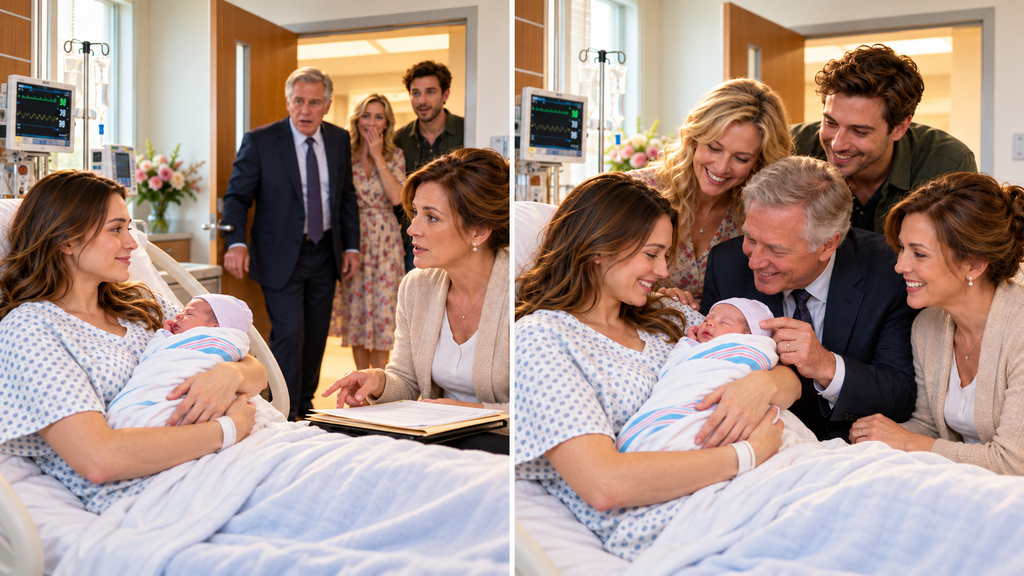
The silence he used when my brother embarrassed him.
The silence he used when my mother had said too much in front of outsiders.
And then there was this one.
The silence of a man watching the floor disappear beneath his feet.
Alistair noticed it too.
He slowly turned toward my mother.
“What happens?”
She looked at my father.
My father gave her a warning glance.
That was enough.
Alistair’s attorney, Rebecca Shaw, stepped forward.
She was a woman in her late fifties with silver threaded through her dark hair and the kind of calm expression that made powerful people nervous.
“Mrs. Whitmore,” she said, “you just indicated that there is an immediate corporate consequence if our client refuses to transfer her shares. I recommend you explain what you meant.”
My mother laughed nervously.
“I don’t have to explain anything to you.”
“No,” Rebecca said.
“You don’t.”
She opened her portfolio.
“But you may eventually have to explain it under oath.”
The room went completely still.
Kirk made a tiny sound against my chest.
I lowered my face and kissed the top of his head.
He smelled like warmth and something impossibly new.
My son had been alive for less than an hour.
And already people were fighting over the world he had been born into.
I hated that.
More than anything, I wanted to close the door, turn off the lights, and spend the next twenty-four hours learning every detail of his face.
Instead, I was watching my parents try to steal twelve percent of a company from me while my body still trembled from giving birth.
My father stepped toward Alistair.
“This does not concern you.”
Alistair’s eyes hardened.
“She concerns me.”
He nodded toward Kirk.
“He concerns me.”
Then he looked at the folder.
“And anyone who tries to exploit the mother of my child while she is recovering concerns me.”
My father’s jaw tightened.
“You’re making assumptions.”
“No,” Alistair said.
“I’m asking questions.”
He pulled the visitor’s chair beside my bed and sat down.
That simple gesture unsettled my father more than shouting would have.
Alistair crossed one ankle over the opposite knee.
“Let’s begin again.”
My father said nothing.
Alistair looked at my mother.
“What happens if she keeps her twelve percent?”
My mother folded her arms.
“Nothing.”
My father immediately said, “Enough.”
I looked between them.
Something cold moved through me.
My mother had lied too quickly.
“Dad?”
He refused to look at me.
“Dad, what happens?”
“Nothing you need to concern yourself with.”
“They came into my hospital room demanding my shares.”
I could hear my voice rising.
“They threatened to abandon me and my son if I didn’t sign.”
My father finally looked at me.
“You don’t understand business.”
There it was.
The sentence I had heard in different forms since I was sixteen.
You wouldn’t understand.
Your brother understands these things better.
This is complicated.
Leave the serious decisions to us.
The funny thing was that I had a master’s degree in finance.
My brother had dropped out of college during his second year.
But he was the son.
And I was the daughter who was supposed to smile at charity dinners and eventually sign whatever papers my father placed in front of me.
“I understand twelve percent,” I said.
My father’s face changed.
Only slightly.
But I saw it.
“So tell me why you need mine.”
He looked toward the window.
My mother answered instead.
“Because your brother needs controlling authority.”
Alistair leaned forward.
“There it is.”
My mother realized too late what she had admitted.
My father turned on her.
“Margaret.”
“What?” she snapped. “They already know something is happening.”
I stared at them.
“Controlling authority over what?”
No answer.
“Dad.”
Still nothing.
Rebecca removed a pen from her portfolio.
“Perhaps we should discuss Whitmore Holdings.”
My father’s eyes snapped toward her.
“How much do you know?”
Rebecca smiled faintly.
“Enough to know that your daughter’s twelve percent is significantly more important than you’ve represented to her.”
My heartbeat quickened.
I looked at Alistair.
He was watching me.
Not my parents.
Me.
And suddenly I understood something.
He knew.
Maybe not everything.
But something.
“You knew there was more to this,” I whispered.
Alistair’s expression softened.
“I suspected.”
“For how long?”
“Three weeks.”
My stomach tightened.
“And you didn’t tell me?”
“I was going to.”
“When?”
“When I had proof.”
“Alistair—”
“I didn’t want to frighten you in the final weeks of your pregnancy with something I couldn’t substantiate.”
My mother gave a bitter laugh.
“How touching.”
Alistair didn’t even look at her.
I did.
And something inside me finally broke free.
“Get out.”
My mother blinked.
“What?”
“You heard me.”
“This is our family company.”
“This is my hospital room.”
“You are behaving irrationally.”
“No.”
I tightened my arm around Kirk.
“For the first time in my life, I’m behaving exactly the way I should have behaved years ago.”
My father reached for the folder.
Rebecca stepped between him and the bed.
“Leave it.”
He glared at her.
“That document belongs to me.”
“No,” she said. “It was presented to my client.”
“I’m taking it.”
The hospital administrator finally spoke.
“Mr. Whitmore, I need you to step away from the patient.”
My father stared at him as though he had forgotten other people could give orders.
“I beg your pardon?”
“This is a recovery unit. Your daughter has requested that you leave.”
“I am her father.”
“And she is an adult patient.”
My mother grabbed her handbag.
“This is ridiculous.”
She looked at me.
Her eyes were furious.
But underneath the anger was fear.
Real fear.
“You’re making a catastrophic mistake.”
I looked down at my sleeping son.
“No.”
Then I raised my eyes.
“I think I’m finally refusing to make one.”
My father walked toward the door.
But before leaving, he stopped.
He turned back.
And the expression on his face frightened me more than his anger ever had.
“You think Sanders is protecting you?”
Alistair rose.
My father ignored him.
“You think this man suddenly appeared because he loves you?”
“Careful,” Alistair said.
My father smiled.
It was an ugly smile.
“You should ask him why he started investigating our company three weeks ago.”
My eyes moved toward Alistair.
My father saw it.
And his smile widened.
“There are no heroes in this room, sweetheart.”
Then he walked out.
My mother followed.
The door closed.
And silence settled over us.
I stared at Alistair.
He stared back.
The nurse quietly lifted Kirk from my arms.
“I think someone needs a diaper change.”
I almost laughed.
Almost.
Instead, I whispered, “Thank you.”
She carried Kirk toward the bassinet on the other side of the room.
Rebecca and the hospital administrator exchanged a glance.
Alistair understood.
“Give us a moment.”
Rebecca nodded.
“We’ll be outside.”
The administrator left with her.
The door clicked shut.
Now it was only Alistair and me.
And our son.
I looked at him.
“Why were you investigating my family?”
He exhaled slowly.
“Because your father approached one of my companies.”
“When?”
“Six weeks ago.”
My mouth went dry.
“About what?”
“A loan.”
I stared at him.
“My father doesn’t borrow.”
“He does now.”
The words landed heavily.
Alistair walked to the window.
“He requested eighty million dollars.”
I actually laughed.
Not because it was funny.
Because it was impossible.
“Eighty million?”
“Yes.”
“For what?”
“He wouldn’t say.”
“That makes no sense.”
“I agreed.”
He turned.
“So I asked my people to examine Whitmore Holdings.”
I could hear my pulse.
“And?”
“The company is in trouble.”
“How much trouble?”
He hesitated.
That frightened me.
“Alistair.”
“Potentially fatal trouble.”
I stared at him.
Whitmore Holdings had existed for sixty-three years.
My grandfather started it with two trucks and a warehouse.
My father expanded it into logistics, industrial property, and regional manufacturing.
Growing up, the company had seemed immortal.
Christmas parties happened there.
Birthdays happened there.
My first summer job had been there.
My grandfather’s portrait still hung in the boardroom.
“That’s impossible.”
“I thought so too.”
He returned to my bedside.
“The public numbers look healthy because the operating businesses are healthy.”
“Then what’s wrong?”
“The debt above them.”
I shook my head.
“There shouldn’t be that much debt.”
“There wasn’t.”
“Wasn’t?”
“Someone has been borrowing against company assets.”
My throat tightened.
“How much?”
“Over two hundred million.”
I stopped breathing for a second.
“No.”
“I’m afraid so.”
“Who?”
“We don’t know yet.”
I thought about my father.
My mother.
My brother.
“Daniel?”
Alistair didn’t answer.
That was answer enough.
I closed my eyes.
My younger brother had been named chief operating officer four years earlier.
No vote.
No serious board discussion.
Dad simply announced it.
Daniel loved cars, watches, resorts, and photographs of himself standing beside people richer than he was.
But Dad worshipped him.
The heir.
The son.
The future.
“What did he do?”
“We’re still determining that.”
I opened my eyes.
“And my twelve percent?”
“That’s the interesting part.”
Alistair picked up the transfer folder.
He handed it to me.
“Your grandfather’s trust agreement has a provision.”
I stared at him.
“What provision?”
“Certain extraordinary transactions require approval from holders representing eighty-five percent of voting shares.”
My mind started calculating automatically.
My father owned thirty-eight.
My mother had eight.
Daniel had twenty-seven.
A family trust controlled fifteen.
And I owned twelve.
Eighty-eight without me if the trust voted with them.
Unless—
“The trust can’t vote on related-party transactions,” I whispered.
Alistair’s eyes sharpened.
“Exactly.”
I felt cold.
“So they need me.”
“Yes.”
“Why?”
“We believe someone is trying to sell a major company asset to a related entity.”
“Which asset?”
Alistair hesitated.
“Whitmore Industrial.”
I stared at him.
That was the crown jewel.
Seven manufacturing facilities.
Thousands of employees.
Almost half the family company’s operating profit.
“They’re selling it?”
“Not exactly.”
“What does that mean?”
“The proposed buyer appears to be a shell company.”
“Owned by whom?”
“That is what we’re trying to establish.”
A terrible thought came to me.
“If Daniel controls it…”
“We don’t know.”
I looked toward the door where my parents had disappeared.
Now their desperation made sense.
They didn’t need my shares forever.
They needed my vote.
Or they needed my brother to own enough of the company that I could no longer block them.
My mother’s words returned to me.
You have no idea what happens to the company if she refuses.
I looked at Alistair.
“What happens if I refuse?”
His answer came quietly.
“Tomorrow morning?”
“Yes.”
“Your father loses the ability to force the transaction through.”
“And after that?”
“We find out what they’re hiding.”
Kirk began crying.
Every thought vanished.
I turned toward him immediately.
The nurse had stepped outside during our conversation, so Alistair walked toward the bassinet.
He froze.
I watched him stare down at our son.
The billionaire disappeared.
The businessman disappeared.
The man who terrified boardrooms disappeared.
What remained was a new father staring at a tiny human being and realizing he had absolutely no idea what to do.
“He’s crying,” Alistair said.
Despite everything, I laughed.
“Yes.”
“What do I do?”
“Pick him up.”
His eyes widened.
“He’s extremely small.”
“He was the same size ten minutes ago.”
“What if I hold him incorrectly?”
“Support his head.”
Alistair carefully slid his hands beneath Kirk.
I had never seen him look so terrified.
He lifted our son.
Kirk cried louder.
Alistair looked at me in alarm.
“I made it worse.”
“You didn’t.”
“I clearly did.”
“Bring him here.”
He carried Kirk to the bed.
Then something unexpected happened.
Before he reached me, Kirk stopped crying.
Just stopped.
His tiny face relaxed against Alistair’s chest.
Alistair froze again.
“Oh.”
One word.
Barely audible.
I watched his expression change.
He looked down at Kirk.
Then at me.
His eyes were wet.
That frightened me more than anything else that day because Alistair Sanders did not cry.
Not publicly.
Not privately.
Not when his father died.
Not when he nearly lost a company he had spent fifteen years building.
But now one tear moved down his cheek.
“He knows me,” he whispered.
I swallowed.
“Yes.”
He sat beside me.
For several minutes, nothing outside that room mattered.
Not my parents.
Not the company.
Not eighty million dollars.
Not two hundred million dollars.
There were only three people.
Me.
Alistair.
And Kirk.
Then Alistair’s phone vibrated.
He looked at the screen.
His expression changed immediately.
“What?”
He stood carefully and handed Kirk back to me.
“Rebecca.”
The door opened before he could answer.
Rebecca entered.
She wasn’t calm anymore.
That was how I knew something had happened.
“Alistair.”
“What?”
“We found the shell company.”
My heart began pounding.
“Who owns it?” I asked.
Rebecca looked at me.
“Not Daniel.”
For some reason, that almost relieved me.
Then she continued.
“It’s your mother.”
I stared at her.
“What?”
“Indirectly. Three holding companies, two trusts, and an LLC registered in Delaware. But the beneficial ownership traces back to Margaret Whitmore.”
My hands went cold.
“My mother?”
“Yes.”
Alistair’s jaw tightened.
“So Daniel isn’t the architect.”
Rebecca shook her head.
“It appears Daniel may not even know the full structure.”
I looked toward the door.
The woman who had just called my son fatherless had been trying to force me to surrender the one vote standing between her and control of the company.
“Why?”
Rebecca closed her portfolio.
“That’s what we need to find out.”
We found out twelve hours later.
At 3:17 in the morning.
I was awake feeding Kirk when my phone rang.
Daniel.
I stared at his name.
He hadn’t called me during the pregnancy.
Not once.
I answered.
“Hello?”
Nothing.
Then breathing.
“Daniel?”
His voice came as a whisper.
“Are Mom and Dad there?”
I sat upright.
“No.”
“Is Sanders there?”
“He’s sleeping in the chair.”
Across the room, Alistair’s eyes opened instantly.
He hadn’t been sleeping.
“What happened?”
Daniel started crying.
I had never heard my brother cry.
Not even as a child.
“Daniel.”
“I screwed up.”
My stomach tightened.
“What did you do?”
“I thought I could fix it.”
“Fix what?”
“The company.”
Alistair stood and walked toward me.
I put the phone on speaker.
Daniel’s voice filled the room.
“Dad put me in charge of the expansion fund three years ago.”
I remembered.
The company had announced an aggressive push into automated manufacturing.
“What happened?”
“I invested some of it.”
“In what?”
Silence.
“Daniel.”
“A private fund.”
Alistair’s expression darkened.
“How much?” he asked.
Daniel went silent.
Then, “Who is that?”
“You know who.”
“Put my sister back on.”
“I’m here,” I said. “How much?”
“Twenty million.”
My chest tightened.
Then he added:
“At first.”
I closed my eyes.
“How much altogether?”
“Sixty-four.”
Alistair swore under his breath.
I whispered, “Company money?”
“Yes.”
“What happened to it?”
“The fund collapsed.”
I felt sick.
“So the debt—”
“No. That came after.”
“What do you mean?”
“I borrowed money to replace what I lost before Dad found out.”
“Daniel…”
“I thought I could make it back.”
The oldest sentence in the history of financial disasters.
I looked at Alistair.
He looked furious.
“Where did you borrow it?” he asked.
“Private lenders.”
“Secured against what?”
Daniel didn’t answer.
Alistair repeated the question.
“Against what?”
“Company property.”
I covered my mouth.
“How?”
“My authorization.”
“You didn’t have authority.”
“I had Dad’s signature stamp.”
I stared into the darkness.
My brother had committed fraud.
Maybe worse.
“And Mom?”
Daniel started crying harder.
“She found out.”
“When?”
“Last year.”
“What did she do?”
“She said she would fix everything.”
Alistair and I looked at each other.
“How?” I asked.
“She created the buyer.”
The shell company.
My mother.
“She said we’d sell Whitmore Industrial cheaply to the new company, move the debt into what remained, and then let the old holding company collapse.”
My stomach turned.
Thousands of employees.
Retirement funds.
Creditors.
Suppliers.
People whose lives depended on the company.
All sacrificed to save my brother.
“And my shares?” I whispered.
“You were the problem.”
Those four words hurt more than they should have.
Not because I was surprised.
Because I finally understood.
I had always been the problem.
When I got better grades than Daniel, I was showing off.
When I wanted a position at the company, I was being competitive.
When Grandfather left me twelve percent, I was lucky.
When I asked questions at board meetings, I was difficult.
When I refused to transfer my shares, I was disloyal.
And when I became pregnant outside marriage, they finally saw the perfect opportunity to break me.
Daniel continued.
“Mom said if we got your shares, nobody could stop the transaction.”
“And Dad?”
Silence.
“Does Dad know?”
“He knows some of it.”
“How much?”
“I don’t know.”
Alistair took the phone.
“Daniel, where are you?”
“At my apartment.”
“Stay there.”
“No.”
“Why?”
Another silence.
Then Daniel whispered:
“Mom knows I called you.”
The line went dead.
I stared at the phone.
Alistair was already dialing Rebecca.
She answered immediately.
“We need someone at Daniel’s apartment.”
“I’m on it.”
“And Rebecca?”
“Yes?”
“Call federal counsel.”
I looked at him.
“Federal?”
He ended the call.
“Fraud at this level crosses several lines.”
I looked down at Kirk.
He had fallen asleep.
So peaceful.
So unaware.
I envied him.
At 4:02 a.m., Rebecca called back.
Daniel was gone.
His apartment door had been open.
His phone was sitting on the kitchen counter.
And there was blood on the floor.
Not much.
But enough.
My mother didn’t answer her phone.
Neither did my father.
By sunrise, everything had changed.
Police arrived.
Detectives asked questions.
Attorneys arrived.
Two company board members called me.
Then five.
At 8:30 a.m., Rebecca entered my hospital room holding a laptop.
“The board meeting starts in thirty minutes.”
I stared at her.
“What board meeting?”
“Emergency session.”
“I’m in a hospital.”
“You’re also a director.”
I had forgotten that.
Or perhaps my family had trained me to forget.
Rebecca placed the laptop on the tray table.
“Your father called the meeting.”
“Why?”
“To approve the sale.”
My eyes widened.
“He’s still trying?”
“Yes.”
“After Daniel disappeared?”
“Especially after Daniel disappeared.”
Alistair stood near the window.
“He knows the window is closing.”
I looked at Kirk sleeping beside me.
“I can’t go anywhere.”
“You don’t have to,” Rebecca said. “The bylaws permit remote attendance.”
At 8:58, I was sitting upright in a hospital bed wearing a robe, my hair tied loosely behind my head, my newborn son asleep beside me.
At 9:00, the screen filled with faces.
My father.
My mother.
Board members.
Outside counsel.
Daniel’s empty chair.
My father stared into his camera.
Then he saw me.
His expression darkened.
“You should be resting.”
“I should.”
“Then disconnect.”
“No.”
My mother leaned toward him.
He muted himself.
They argued silently.
I almost smiled.
For once, I was the person they could not remove from the room.
My father unmuted.
“We are here to approve the divestiture of Whitmore Industrial.”
A board member named Harold Stein interrupted.
“Before we proceed, where is Daniel?”
My father’s expression remained flat.
“Unavailable.”
“Police are looking for him.”
“This meeting is not about Daniel.”
“It may be.”
Another director spoke.
“Charles, we received documents this morning concerning undisclosed liabilities.”
My father went pale.
My mother leaned toward the screen.
“What documents?”
Rebecca smiled beside me.
I understood.
She had sent them.
My father looked directly at me.
“What have you done?”
For the first time in my life, I did not feel like his daughter when he used that tone.
I felt like a shareholder.
“A question was asked,” I said.
“Where is Daniel?”
“He is an adult. I do not track his movements.”
“Did you know he misappropriated company funds?”
Silence.
“Did you know he borrowed against company property without board authorization?”
My father’s face tightened.
“This is inappropriate.”
“No.”
My voice surprised even me.
“What was inappropriate was coming into my hospital room and trying to take my shares while I was medicated.”
Several directors looked shocked.
My mother snapped, “That has nothing to do with this.”
“It has everything to do with this.”
I lifted the transfer folder into view.
“You needed my twelve percent.”
Nobody spoke.
I continued.
“You needed it because without my vote, you cannot approve a related-party transaction.”
Harold Stein leaned forward.
“Related party?”
My mother went white.
My father said, “Stop.”
I looked directly into the camera.
“The proposed buyer is beneficially owned by my mother.”
Chaos erupted.
Three directors started speaking simultaneously.
My father shouted.
My mother stood.
Someone demanded documentation.
Outside counsel muted everyone.
When the noise stopped, my father looked twenty years older.
“You have no idea what you are doing.”
I looked at him.
“No, Dad.”
“I finally do.”
I took a breath.
“I vote no.”
My mother slammed her hand onto the table.
“You selfish little—”
The screen froze.
Not technically.
Emotionally.
Everyone stared at her.
She realized what she had almost said.
I smiled sadly.
“Go ahead, Mom.”
She sat down.
“Say it.”
Nothing.
“You came into the hospital less than an hour after I gave birth.”
My voice shook now.
I didn’t care.
“You looked at your grandson and called him fatherless. You told me you would never acknowledge him. You threatened to abandon me unless I surrendered my shares.”
My eyes filled with tears.
“And you know what hurts most?”
My mother looked away.
“I would have forgiven you for almost anything.”
She looked back.
“Almost anything.”
I touched Kirk’s blanket.
“But you looked at my baby like he was something dirty.”
My voice broke.
“He had done nothing to you.”
The board was silent.
My father stared downward.
My mother’s face hardened.
“This sentimental performance—”
“Enough.”
The word did not come from me.
It came from my father.
My mother stared at him.
“What?”
“I said enough, Margaret.”
Something passed between them.
Something old.
Something ugly.
And suddenly I realized there was still a secret.
My father turned toward the camera.
“I withdraw the motion.”
My mother stood.
“You cannot.”
“I just did.”
“You coward.”
His eyes lifted toward her.
“I said it’s over.”
“No.”
She leaned toward him.
“If that transaction doesn’t happen today, everything comes out.”
Nobody moved.
My father closed his eyes.
“What comes out?” I asked.
My mother realized what she had done.
Too late.
My father whispered, “Margaret.”
But I wouldn’t let it go.
“What comes out?”
My mother laughed.
A strange, exhausted laugh.
Then she looked into the camera.
“You all want the truth?”
My father stood.
“Don’t.”
“You want the great Whitmore family truth?”
“Margaret.”
She pointed at him.
“He knew.”
My stomach dropped.
My father’s face collapsed.
“He knew about Daniel?”
She laughed again.
“Daniel?”
She shook her head.
“This started before Daniel.”
I stopped breathing.
My mother sat down slowly.
“Ask your father what happened to your grandfather’s trust.”
I looked at him.
He wouldn’t meet my eyes.
“Dad?”
Nothing.
“Dad.”
Finally he spoke.
“I borrowed against it.”
“When?”
“Years ago.”
“How many years?”
“Seventeen.”
I felt dizzy.
Seventeen years.
“What for?”
My mother answered.
“To save himself.”
My father looked at her with hatred.
She didn’t care anymore.
“He made a terrible acquisition. Your grandfather warned him against it. Charles did it anyway.”
My father whispered, “Stop.”
“He lost nearly everything.”
“Stop.”
“So he borrowed against assets that were supposed to remain protected.”
I stared at my father.
“How?”
He finally looked at me.
“With signatures.”
My blood turned cold.
“Whose?”
Silence.
“Whose signatures?”
He looked away.
Mine.
I knew before he said it.
Mine.
“You forged my signature.”
He closed his eyes.
“I intended to repay everything.”
The world became very quiet.
I remembered being twenty-four.
I remembered Dad bringing papers to my apartment.
Routine trust documents, sweetheart.
Sign here.
Here.
And here.
I had trusted him.
My own father.
“How much?”
“Thirty million initially.”
“Initially?”
“It grew.”
I felt physically ill.
My mother continued.
“When Daniel lost the money, the whole structure began collapsing.”
“So you created the shell company.”
“Yes.”
“To steal the profitable assets.”
“To save them.”
“For yourselves.”
“For the family.”
I laughed.
The sound came out broken.
“What family?”
Nobody answered.
“What family are you talking about?”
I held my newborn son closer.
“Because apparently this one wasn’t good enough for you an hour ago.”
My mother stared at me.
For the first time, she had no response.
Then someone knocked on their boardroom door.
My father looked toward it.
Two men entered.
Then another.
One displayed identification.
Federal investigators.
My mother stood so quickly her chair fell backward.
My father did not move.
He simply sat there.
As though he had been expecting them for years.
The video feed continued for another eleven seconds.
Then disconnected.
I stared at the black screen.
Nobody in my hospital room spoke.
Finally Rebecca closed the laptop.
“It’s done.”
But it wasn’t.
Not even close.
Daniel was still missing.
And two hours later, the police found his car.
Abandoned beneath an overpass.
Blood on the steering wheel.
Driver’s door open.
Wallet inside.
No Daniel.
My mother refused to answer questions without an attorney.
My father cooperated.
Partially.
The company’s stock plunged when news leaked.
Reporters gathered outside the hospital.
Someone photographed Alistair leaving the maternity wing.
By lunchtime, headlines were everywhere.
SANDERS HEIR?
BILLIONAIRE’S SECRET SON?
WHITMORE FAMILY CORPORATE CRISIS.
I wanted to scream.
Kirk was twelve hours old.
And strangers were discussing his inheritance.
At 2:40 that afternoon, Alistair walked into my room holding two coffees.
“You can’t have this one.”
I stared at him.
“Then why did you bring two?”
“One is mine.”
“You already have one.”
“I need both.”
Despite everything, I laughed.
He smiled.
Then he sat beside me.
For several seconds, neither of us spoke.
Finally I said, “Are you angry with me?”
He looked confused.
“Why would I be angry with you?”
“My family.”
“Your family’s crimes are not hereditary.”
“That isn’t what the newspapers will say.”
“I don’t live according to newspapers.”
I looked down at Kirk.
“Neither will he.”
Alistair’s expression softened.
Then I asked the question I had been avoiding.
“Why didn’t you tell them?”
“About Kirk?”
“Yes.”
He looked toward our son.
“Because you asked me not to.”
Six months earlier, when I discovered I was pregnant, Alistair had wanted to announce everything.
Not because he was ashamed.
The opposite.
He was delighted.
I was terrified.
My relationship with him had begun quietly after years of knowing each other professionally.
He was famous.
I wasn’t.
His name attracted cameras.
Mine attracted family expectations.
I had asked for time.
He gave it to me.
Even when people assumed he had left me.
Even when my parents began whispering that I had humiliated them.
He kept his promise.
“I thought they would eventually ask,” I said.
“Ask what?”
“Who the father was.”
Alistair smiled sadly.
“They never did.”
“No.”
That was the strangest part.
They never asked.
Because they didn’t care.
The pregnancy wasn’t a daughter needing support.
It was leverage.
A weakness.
An opportunity.
I wiped my eyes.
“I spent my whole life trying to make them proud.”
“I know.”
“I went to the university Dad wanted.”
“I know.”
“I worked at the company even though they never gave me real authority.”
“I know.”
“I attended every fundraiser Mom organized.”
“I know.”
“And the second I stopped living according to their plan…”
I couldn’t finish.
Alistair took my hand.
“Look at me.”
I did.
“You are allowed to grieve people who are still alive.”
That broke me.
I cried.
Not delicately.
Not quietly.
I cried for the little girl who waited outside my father’s study hoping he would invite her inside.
For the teenager who watched Daniel receive praise for mediocre grades while mine were treated as expected.
For the young woman whose grandfather had believed in her enough to leave her twelve percent of everything he built.
For the daughter who still believed, until that morning, that somewhere beneath all their cruelty her parents loved her.
And I cried for my son.
Because for one terrible hour after his birth, his grandparents had looked at him and seen a bargaining chip.
Alistair held me.
Kirk slept between us.
Eventually my tears stopped.
Then Alistair’s phone rang.
Rebecca.
He answered.
His expression changed.
“What?”
He listened.
Then looked at me.
“Where?”
Another pause.
“We’re coming.”
He ended the call.
I sat upright.
“Daniel?”
“They found him.”
My heart jumped.
“Alive?”
“Yes.”
I nearly collapsed with relief.
“Where?”
Alistair hesitated.
“At our house.”
I stared at him.
“What?”
“He went to my house.”
“Why?”
“He says he has something for you.”
Three hours later, against medical advice and accompanied by a nurse, security, Rebecca, and Alistair, I left the hospital through a private exit.
Kirk remained with me.
I refused to leave him.
When we reached Alistair’s house, Daniel was sitting in the library.
His face was bruised.
His shirt was stained with dried blood.
And one hand was bandaged.
I stopped in the doorway.
“Oh my God.”
He stood.
“Sis.”
I wanted to slap him.
I wanted to hug him.
I did neither.
“What happened?”
“Mom’s security guy.”
I stared.
“What?”
“He came to my apartment after I called you.”
Alistair’s expression became deadly.
“Name.”
Daniel gave it.
Rebecca immediately stepped away to make a call.
“He told me Mom wanted my phone.”
“Why?”
“She knew I had records.”
“What records?”
Daniel looked at me.
“Everything.”
He pointed toward a black backpack on the table.
“I started copying documents when I realized what Mom was planning.”
I stared at him.
“Why didn’t you come to me?”
His eyes filled.
“Because I was ashamed.”
“You should be.”
“I know.”
“You stole sixty-four million dollars.”
“I know.”
“You forged approvals.”
“I know.”
“You helped them hide it.”
“I know.”
His voice cracked.
I hated how much he looked like the little boy who used to climb into my bed during thunderstorms.
“I know.”
I looked away.
“What’s in the bag?”
“Emails. Contracts. Account statements. Recordings.”
“Recordings?”
“Mom started threatening me.”
His face changed.
“So I recorded her.”
Alistair walked toward the backpack.
“May I?”
Daniel nodded.
Inside were three laptops, two external drives, folders, and a small digital recorder.
Rebecca returned.
“Police are coming for your statement.”
Daniel nodded.
He looked exhausted.
Then he looked at Kirk.
My body tensed automatically.
He noticed.
His face crumpled.
“That’s him?”
“Yes.”
He took one step closer.
Then stopped.
“Can I see him?”
I hesitated.
The memory of my parents staring at Kirk returned.
But Daniel wasn’t looking at him with disgust.
He was looking at him with wonder.
I shifted the blanket slightly.
Daniel stared down at his nephew.
“He’s tiny.”
“So everyone keeps telling me.”
A weak smile appeared.
“What’s his name?”
“Kirk Alexander.”
Daniel nodded.
Then tears filled his eyes.
“I’m sorry.”
I said nothing.
“I’m so sorry.”
“For what?”
“For not calling you.”
“That’s a long list.”
“I know.”
He wiped his face.
“I should have called when you told us you were pregnant.”
“Yes.”
“I should have defended you.”
“Yes.”
“I should have told Mom to shut up.”
“Yes.”
He almost smiled.
Then his expression became serious.
“And I should have told you what was happening with the company before any of this.”
“Yes.”
He looked at Kirk again.
“Can I hold him?”
My first instinct was no.
Then Kirk moved.
A tiny fist emerged from the blanket.
Daniel stared at it.
I looked at my brother.
“Sit down.”
His eyes widened.
“Really?”
“Sit.”
He sat.
I carefully placed Kirk in his arms.
Daniel looked terrified.
“Support his head.”
“I am.”
“You’re not.”
“I am trying.”
Alistair laughed softly behind me.
Daniel adjusted his hand.
Kirk opened his eyes.
My brother stopped breathing.
“Hey,” he whispered.
Kirk stared at him.
“I’m your uncle.”
His voice broke.
“I’m not a very good one yet.”
Tears ran down Daniel’s cheeks.
“But I’m going to try.”
I turned away.
Because despite everything he had done, I believed that part.
The next six months destroyed the Whitmore family as I had known it.
My father pleaded guilty to conspiracy, fraud, and falsifying financial records.
Daniel cooperated fully with investigators.
His cooperation reduced his sentence, but it did not erase what he had done.
He served twenty-two months in federal prison.
My mother fought everything.
Every charge.
Every document.
Every witness.
She blamed Daniel.
Then Dad.
Then accountants.
Then lawyers.
Then me.
Especially me.
According to her, I had destroyed the family.
I had embarrassed them.
I had chosen an outsider over blood.
I had betrayed my parents.
Not once did she mention the hospital room.
Not once did she apologize for Kirk.
Then came the final twist.
The one none of us expected.
My grandfather had known.
Not everything.
He had died before most of the fraud.
But he had suspected my father could not be trusted.
Rebecca discovered a sealed amendment to his trust.
It had been sitting in the archives of the law firm that originally drafted his estate plan.
The amendment stated that if any controlling family member attempted to improperly coerce another beneficiary into transferring shares, voting control of the family trust would temporarily pass to the beneficiary targeted by that coercion until an independent review could be completed.
Me.
My grandfather had built a trap into the company.
And my parents walked directly into it.
My twelve percent suddenly came with temporary voting authority over the trust’s fifteen.
Twenty-seven percent.
Enough to block them.
Enough to force an independent audit.
Enough to protect Whitmore Industrial from the shell-company sale.
The day Rebecca explained it, I sat in silence.
Then I asked, “Why me?”
She handed me a copy of a letter my grandfather had written.
It was only three paragraphs.
The final one destroyed me.
He wrote that I possessed something rarer than intelligence.
Judgment.
He said I listened before speaking.
He said I noticed people others ignored.
And he said that if the company ever reached a moment when money mattered more than people, he trusted me to remember what the company had originally been built for.
I cried until I couldn’t read anymore.
Alistair sat beside me.
“What are you going to do?”
I looked through the glass wall of the conference room.
Employees moved through the headquarters below.
People who had mortgages.
Children.
Parents.
Lives.
“I’m going to save it.”
And I did.
Not alone.
Never alone.
The board removed my father.
Daniel resigned from every position.
My mother lost all management authority.
We sold nonessential properties.
Renegotiated debt.
Closed two failing divisions.
Protected the manufacturing plants.
Alistair offered to inject capital.
I refused.
He looked offended.
“You realize I have money.”
“I had noticed.”
“I could solve half of this in an afternoon.”
“And then everyone will say you bought the company for me.”
“I don’t care what everyone says.”
“I do.”
He studied me.
Then smiled.
“Good.”
“What?”
“That was a test.”
I threw a pen at him.
He caught it.
“You’re insufferable.”
“You’re keeping the company.”
“Yes.”
“Then rebuild it yourself.”
“I intend to.”
He leaned across the table and kissed me.
A year after Kirk was born, Whitmore Holdings returned to profitability.
Two years later, we had repaid almost half the emergency debt.
Three years later, every employee retirement account damaged by the fraud had been made whole.
That mattered more to me than any headline.
Daniel came home when Kirk was nearly two.
I was nervous about seeing him.
Prison had changed him.
He was thinner.
Quieter.
Older.
He came to my house carrying one duffel bag.
No designer luggage.
No watch.
No expensive car.
Alistair answered the door.
Daniel looked at him.
“Is she here?”
“Yes.”
“Will she see me?”
Alistair stepped aside.
I stood in the hallway.
For several seconds, my brother and I stared at each other.
Then a little voice came from behind me.
“Unca Dan?”
Daniel froze.
Kirk ran past my legs.
My brother dropped the bag.
He fell to his knees.
Kirk ran into his arms.
Daniel began crying.
So did I.
He had sent Kirk letters from prison.
Not excuses.
Stories.
Drawings.
Birthday cards.
Kirk knew him from photographs.
“Unca Dan!”
Daniel held him as though he were the most precious thing on earth.
Maybe that was redemption.
Not pretending the past never happened.
Not demanding forgiveness.
Just showing up differently, over and over, for as long as someone allows you to.
My father met Kirk once.
It happened five years after the hospital.
By then, Dad had served his sentence.
He was seventy-two.
Gray.
Thin.
Smaller somehow.
He requested the meeting through Rebecca.
I almost refused.
Alistair said nothing.
He never told me what to do about my parents.
That was another reason I loved him.
Finally, I agreed.
Public park.
One hour.
My terms.
Dad was sitting on a bench when we arrived.
Kirk was five.
He held my hand.
My father stood.
His eyes immediately went to the little boy beside me.
Kirk looked up at him.
“Who’s that?”
I swallowed.
“That’s my father.”
Kirk considered this.
“So he’s Grandpa?”
My father closed his eyes.
That one word nearly knocked him down.
“Yes,” I said.
“Technically.”
Kirk walked closer.
My father looked at me for permission.
I nodded once.
He crouched.
“Hello, Kirk.”
“Hi.”
“I’m Charles.”
Kirk frowned.
“My grandpa’s name is Charles?”
“Yes.”
“Why haven’t I met you?”
Children are merciless that way.
They ask the question adults spend years avoiding.
My father looked at me.
Then back at Kirk.
“Because I made some very bad choices.”
“What choices?”
My father swallowed.
“I hurt your mother.”
Kirk looked at me.
Then at him.
“Did you say sorry?”
My father’s eyes filled.
“I’m trying to.”
Kirk considered this.
Then he said something I will remember until the day I die.
“My mom says sorry means you don’t do it again.”
Dad looked at me.
I had said that to Kirk dozens of times.
“Yes,” my father whispered.
“Your mother is right.”
They spent forty minutes together.
My father never asked to hold him.
Maybe he remembered what he had said in the hospital.
Maybe he knew that privilege had to be offered.
When the hour ended, Kirk ran toward the playground.
Dad remained beside me.
“I’m sorry.”
I stared ahead.
“For what?”
He looked down.
“All of it.”
“That’s too big.”
“I know.”
“You can’t apologize for thirty years in two words.”
“I know.”
“You forged my name.”
“I know.”
“You tried to take my company shares.”
“Yes.”
“You stood there while Mom called my son fatherless.”
His face collapsed.
“Yes.”
“And you said you would never hold him.”
“I remember.”
I looked at him.
“Do you?”
“Every day.”
For the first time, I believed him.
Not because he cried.
Not because he looked old.
Because he didn’t ask me to forgive him.
He simply accepted what he had done.
“I don’t know if I can forgive you.”
“I know.”
“I may never trust you.”
“I understand.”
“You will never have access to the company again.”
“I don’t deserve it.”
I studied him.
Then I looked toward Kirk.
He was trying to climb a rope ladder.
“Would you like to watch your grandson play?”
Dad’s breath caught.
“Yes.”
We sat on the bench.
Not reconciled.
Not healed.
Just sitting.
Sometimes that is how healing begins.
My mother was different.
She never apologized.
Not really.
Three years after her conviction, I received a letter.
Eight pages.
She explained everything.
Her childhood.
Her marriage.
Her fears.
Her sacrifices.
Her humiliation.
Her reasons.
She used hundreds of words.
But not the ones I needed.
I am sorry.
I was wrong.
You deserved better.
Kirk deserved better.
So I wrote back.
One sentence.
“When you are ready to apologize without explaining why I deserved what you did, I will read your next letter.”
For two years, nothing came.
Then, on Kirk’s seventh birthday, an envelope arrived.
No excuses.
No history.
No accusations.
Only four sentences.
I was wrong.
I hurt you.
I rejected an innocent child because I wanted power.
I am sorry.
I cried.
I did not immediately invite her into our lives.
Forgiveness is not the same as access.
Love is not the same as trust.
But I wrote back.
That was the beginning.
Not an ending.
A beginning.
And Alistair?
He proposed when Kirk was eighteen months old.
It was spectacularly unromantic.
I was standing in the kitchen wearing sweatpants.
Kirk had thrown mashed banana into my hair.
Alistair was cleaning applesauce from the wall.
He looked at me and said, “We should get married.”
I stared at him.
“That’s your proposal?”
He looked around.
“I had another plan.”
“Apparently.”
“There was supposed to be a restaurant.”
“Of course.”
“Candles.”
“How original.”
“A string quartet.”
I laughed.
He walked toward me.
Then he got down on one knee.
Right there.
On the kitchen floor.
With applesauce on his sleeve.
He pulled a ring from his pocket.
I stopped laughing.
“I’ve been carrying this for four months,” he said.
My eyes filled.
“Four months?”
“I kept waiting for the right moment.”
“And this is it?”
He looked at Kirk sitting in his high chair.
Our son banged a spoon against the tray.
Alistair smiled.
“Yes.”
He looked back at me.
“This is exactly it.”
I started crying.
“Before you answer, I have prepared remarks.”
“You have prepared remarks?”
“Several pages.”
“Absolutely not.”
He laughed.
Then his expression softened.
“I love you.”
Everything inside me went quiet.
“I loved you before Kirk.”
He looked toward our son.
“I loved you more after him.”
Then back at me.
“And I would like the privilege of annoying you for whatever remains of my life.”
I laughed through my tears.
“That could be a very long time.”
“I have excellent doctors.”
I kissed him.
He pulled back.
“You haven’t answered.”
“Yes.”
“Yes?”
“Yes.”
Kirk screamed happily despite having no idea what was happening.
Alistair lifted him from the high chair.
The three of us stood in the kitchen.
Banana in my hair.
Applesauce on Alistair.
Kirk laughing between us.
And I thought about that hospital room.
My mother’s face.
My father’s folded arms.
The folder on my blanket.
Sign.
Give us your shares.
Give us your power.
Give us the last piece of yourself that still belongs to you.
I almost felt grateful.
Not for what they did.
Never for that.
But for what their cruelty forced me to see.
I had spent thirty-six years asking my parents for permission to belong to my own life.
That day, I stopped asking.
Five years after Alistair and I married, I became chairwoman of Whitmore Holdings.
I kept my grandfather’s portrait in the boardroom.
But I changed something else.
On the wall opposite him, I placed photographs of employees.
Not executives.
Employees.
Machinists.
Drivers.
Receptionists.
Engineers.
Warehouse teams.
People who had kept the company alive while my family nearly destroyed it.
Every new executive was required to walk past those photographs before entering the boardroom.
Below them were seven words:
PEOPLE ARE NOT COLLATERAL FOR YOUR AMBITION.
Daniel eventually returned to business.
Not ours.
He started a small logistics consultancy.
No family money.
No inherited title.
No shortcuts.
He became surprisingly good at it.
Maybe because failure had finally taught him what privilege never could.
Kirk adored him.
My father saw Kirk occasionally.
Always supervised at first.
Eventually less so.
Trust returned in teaspoons.
Never buckets.
My mother took longer.
The first time she saw Kirk after the hospital, he was eight years old.
She stood on our porch holding nothing.
No presents.
No flowers.
No expensive peace offering.
Just herself.
I opened the door.
For a moment, neither of us spoke.
She looked older.
So did I.
“Hello,” she said.
“Hello.”
Her eyes moved past me.
Kirk was sitting at the dining table doing homework.
She began crying.
Quietly.
Not dramatically.
“I said I would never acknowledge him.”
“Yes.”
“I think about that sentence every day.”
“So do I.”
She nodded.
“I don’t expect you to forgive me.”
“Good.”
That surprised her.
I continued.
“Because if you come inside expecting forgiveness, you’re coming for yourself.”
She swallowed.
“If you come inside willing to know him without demanding anything from him, that’s different.”
She looked at Kirk.
“I would like that.”
I stepped aside.
She entered.
Kirk looked up.
I walked beside him.
“Kirk, this is Margaret.”
My mother flinched.
Not Grandma.
Not yet.
He studied her.
“Your mom?”
“Yes.”
He looked impressed.
“You’re old.”
I covered my mouth.
My mother stared at him.
Then, unexpectedly, she laughed.
A real laugh.
“Yes,” she said.
“I am.”
Kirk shrugged and returned to his homework.
“Do you know fractions?”
My mother looked at me.
I nearly smiled.
“She does.”
“Good. Dad is terrible at explaining them.”
From the kitchen, Alistair shouted, “I heard that.”
Kirk grinned.
My mother sat beside him.
She did not touch him.
She did not demand affection.
She simply helped him with fractions.
Twenty minutes later, Kirk reached across the table and took her hand without thinking.
My mother froze.
Her eyes filled.
She looked at me.
I said nothing.
She looked down at his hand.
Eight years earlier, she had stood beside my hospital bed and declared she would never hold that baby.
Now that baby was holding her.
Life has a strange sense of justice.
Not the dramatic kind.
Not always courtrooms.
Not always prison sentences.
Sometimes justice is quieter.
Sometimes it is being forced to sit across from the person you rejected and realize they grew into someone wonderful without you.
Sometimes it is understanding that the door is open only because the person you hurt became kinder than you were.
And sometimes justice is being given one last chance and knowing exactly how easily you could lose it.
Years later, on Kirk’s eighteenth birthday, we had dinner at home.
Daniel came.
My father came.
My mother came.
Alistair sat beside me.
Kirk stood at the end of the table.
He was tall now.
Taller than me.
Almost as tall as his father.
He had Alistair’s eyes and, according to Daniel, my stubbornness.
After dinner, Kirk tapped his glass.
“I have an announcement.”
Alistair looked at me.
“Did you know about this?”
“No.”
Kirk smiled.
“I got accepted.”
I stopped breathing.
“Accepted where?”
He named the university.
My grandfather’s university.
Mine.
I burst into tears.
Kirk laughed.
“Mom.”
“I’m allowed.”
“You cry at commercials.”
“Only meaningful ones.”
Everyone laughed.
Then Kirk reached into his pocket.
“And there’s something else.”
He placed a folded piece of paper on the table.
I opened it.
It was a copy of an internship acceptance letter.
Whitmore Holdings.
I stared at him.
“No.”
His face fell.
“What?”
“No special treatment.”
“I applied under Kirk Sanders.”
I looked at Alistair.
He raised both hands.
“Not me.”
Daniel grinned.
“I may know something.”
I pointed at him.
“You better not.”
“I didn’t do anything.”
Kirk laughed.
“Mom, I interviewed with three people. Nobody knew who I was.”
I stared at the letter.
Operations internship.
Entry level.
Warehouse rotation.
Exactly the way my grandfather had started me.
My throat tightened.
“You want to work there?”
Kirk shrugged.
“I want to understand what you saved.”
The table became silent.
He looked around.
“I know what happened.”
My mother lowered her eyes.
My father did too.
Kirk continued.
“I know what everybody did.”
Then he looked at me.
“And I know what Mom did.”
I couldn’t speak.
“She didn’t save a company because she wanted to be rich.”
His eyes moved toward the photographs visible through the doorway of our family room.
“She saved people’s jobs.”
I wiped my face.
“Kirk…”
“So yes.”
He smiled.
“I want to understand it.”
Alistair put his arm around me.
I looked around the table.
My brother.
My father.
My mother.
My husband.
My son.
It was not the family photograph I would have imagined eighteen years earlier.
Too many scars.
Too many empty spaces.
Too much history.
But it was honest.
And honesty, I had learned, was worth more than appearances.
Later that night, after everyone left, I walked onto the balcony.
Alistair followed.
“You okay?”
“Yes.”
He wrapped his arms around me from behind.
Inside, Kirk was laughing on the phone with his friends.
I looked through the glass doors.
Eighteen years.
How could eighteen years disappear so quickly?
“Do you remember the hospital?” I asked.
Alistair laughed softly.
“I remember being terrified to hold him.”
“You looked terrified.”
“He was seven pounds.”
“Seven pounds, four ounces.”
“Exactly. Dangerously small.”
I leaned against him.
“Do you remember what my mother said?”
His arms tightened.
“Yes.”
I did too.
We will never acknowledge a fatherless child.
And don’t expect us to ever hold that baby.
I remembered the folder landing on my blanket.
The signatures waiting.
The threat.
The humiliation.
I remembered looking down at my newborn son and realizing I had a choice.
I could keep begging people to love us.
Or I could stop.
That was the real decision.
Not the shares.
Not the company.
Not the money.
I stopped begging.
And everything changed.
I kept my twelve percent.
I kept my son.
I kept my dignity.
Eventually, I helped save the company my grandfather built.
But the greatest thing I saved that morning was something nobody could put on a balance sheet.
Myself.
I turned toward Alistair.
“Do you know what I would change?”
“About that day?”
“Yes.”
He thought for a moment.
“What?”
“Nothing.”
He looked surprised.
“Nothing?”
“I wish they hadn’t hurt me.”
I looked through the window at our son.
“I wish they hadn’t rejected Kirk.”
Then I shook my head.
“But I wouldn’t change my answer.”
Alistair smiled.
“Then don’t.”
He kissed my forehead.
Inside, Kirk shouted, “Mom! Dad! Come look at this!”
Alistair sighed.
“Apparently we’re being summoned.”
“Better go.”
We walked inside together.
And as I crossed the doorway, I thought of the woman I had been eighteen years earlier.
Exhausted.
Frightened.
Holding a newborn child while two people told her she would have nothing if she refused to obey.
If I could go back to that hospital room, I would sit beside her.
I would take her hand.
And I would tell her something nobody had taught her yet.
Family is not whoever shares your blood.
Family is whoever refuses to make love conditional on obedience.
Family does not demand your weakness as proof of loyalty.
Family does not threaten to abandon your child to control you.
And anyone who tells you that you must surrender yourself to keep their love has already admitted that what they are offering is not love.
I would tell her to hold that baby tightly.
Keep the shares.
Let them walk away.
Because sometimes the people threatening to leave are unknowingly giving you the greatest gift of your life.
They are showing you exactly who they are.
My parents walked into that hospital believing they had chosen the weakest moment of my life.
They were wrong.
They had chosen the moment I became a mother.
And when my mother looked at my newborn son and said she would never acknowledge him, something inside me became stronger than my fear of losing them.
She thought she was threatening me with loneliness.
She did not understand that the tiny boy sleeping against my chest had already changed the definition of family.
My father thought twelve percent was only a number.
He was wrong too.
That twelve percent became my voice.
My grandfather’s protection.
Thousands of employees’ protection.
And ultimately the thread that unraveled every secret my family had buried.
But even that wasn’t the greatest irony.
The greatest irony came years later.
On my seventieth birthday, our entire family gathered at the house.
Kirk arrived late.
He had become an executive by then, although not at Whitmore.
He had built something of his own.
That made me prouder than any title I could have handed him.
He came through the door carrying a little girl.
Three months old.
My granddaughter.
Alistair immediately reached for her.
Kirk laughed.
“Wash your hands.”
“I raised you.”
“And somehow you survived.”
“Barely.”
Everyone laughed.
Then I saw my mother.
She was sitting near the window.
Very old now.
Fragile.
She watched Kirk carrying his daughter.
Something moved across her face.
Regret.
Memory.
Maybe both.
Kirk noticed.
He walked toward her.
“Margaret?”
Even after all those years, he still occasionally called her that.
She looked up.
“Yes?”
“Would you like to hold her?”
My mother stopped breathing.
I watched her hands begin to tremble.
“May I?”
Kirk smiled.
“Of course.”
He placed his daughter carefully into her arms.
My mother looked down at her great-granddaughter.
Tears immediately rolled down her face.
She touched one tiny cheek.
Then she looked across the room at me.
Neither of us spoke.
We didn’t need to.
We were both remembering another baby.
Another room.
Another version of her.
The woman who had once looked at a newborn and said:
We will never hold that baby.
Now she was holding his daughter.
My mother lowered her face and kissed my granddaughter’s forehead.
“I’m sorry,” she whispered.
Maybe she was speaking to the baby.
Maybe to Kirk.
Maybe to me.
Maybe to the woman she used to be.
I walked across the room and sat beside her.
She looked at me.
“I wasted so much time.”
“Yes.”
She began crying harder.
“I thought being right mattered.”
“I know.”
“I thought control was the same as respect.”
“I know.”
“And I nearly lost everything.”
I looked around the room.
Alistair arguing playfully with Kirk.
Daniel stealing cake before dinner.
My father asleep in an armchair.
My granddaughter resting against my mother’s chest.
“Yes,” I said.
“You did.”
She reached for my hand.
I let her take it.
Not because the past disappeared.
It never does.
Not because everything was forgiven.
Some things leave scars even after forgiveness.
I let her take my hand because I no longer needed punishment to prove that what she had done was wrong.
I already knew.
She already knew.
And the baby sleeping between us deserved a family that had learned something from its mistakes.
That evening, after everyone went home, I found the old transfer documents in my study.
I had kept them.
Not because they had legal value.
They didn’t.
Not anymore.
I kept them because they reminded me how close I had come to surrendering.
The signature line was still empty.
I ran my finger across it.
Then I smiled.
Alistair appeared in the doorway.
“What are you looking at?”
I held up the papers.
He recognized them instantly.
“You kept those?”
“Yes.”
“Why?”
I looked at the blank line.
“Because sometimes the most important thing you ever write is nothing.”
He smiled.
I folded the documents.
Placed them back inside the folder.
And closed the drawer.
That empty signature had changed everything.
My parents had come for twelve percent.
They lost control of an empire.
They came expecting shame.
They exposed their own.
They threatened me with abandonment.
And forced me to discover who would actually stay.
But most importantly, they looked at my newborn son and believed he made me vulnerable.
They never understood the truth.
Kirk was the reason I finally became impossible to intimidate.
Because there are things you tolerate for yourself that you will never tolerate for your child.
There are insults you swallow.
Doors you keep knocking on.
People you keep forgiving.
Until you look down at someone innocent who depends entirely on you.
Then suddenly you understand.
The cycle stops here.
The humiliation stops here.
The manipulation stops here.
The fear stops here.
I had entered that hospital as a daughter still hoping for her parents’ approval.
I left it as a mother who no longer needed it.
And that was why, when my mother dropped those papers onto my hospital blanket and demanded that I surrender my future, I kissed my newborn son and smiled.
Because footsteps were already approaching the door.
Because the truth was approaching with them.
Because my parents thought the billionaire walking toward my room was the person they should fear.
They were wrong about that too.
The person they should have feared was already inside the room.
She was exhausted.
She was bruised.
She was holding a newborn baby against her chest.
And for the first time in her life…
she was no longer afraid of them.
Her name was mine.
THE END! THANK YOU FOR READING!❤️