 Reading Time: 29 minutes
“Then tell her I called.” Gregory was silent for a moment. “I will inform Miss Caldwell in the morning.” Roland’s jaw tightened. “Her name is Mrs. Tran.”
This time, Gregory did not hesitate. “Not in this house, sir.” The line went dead. Roland stood in the middle of our kitchen staring at his phone.
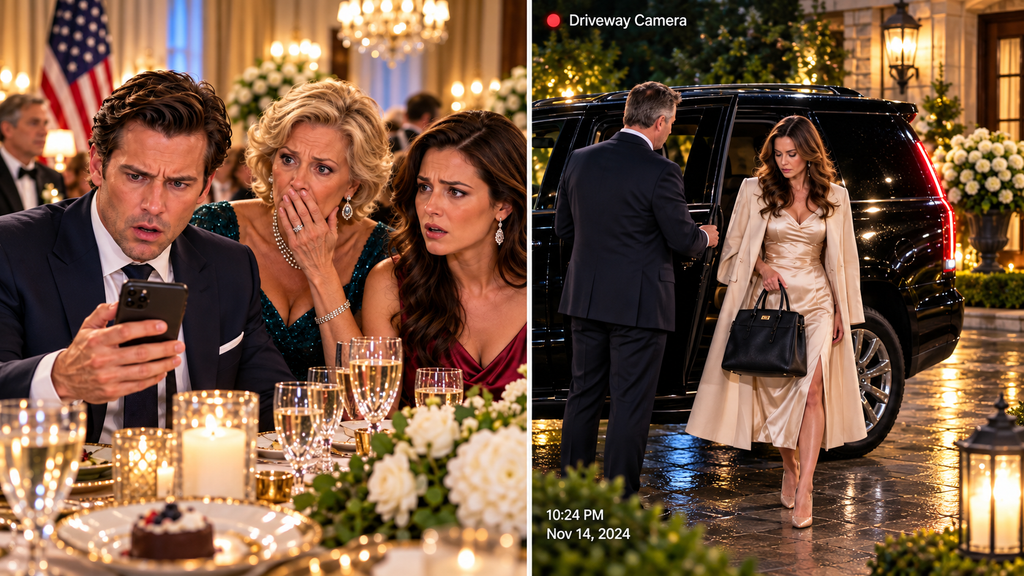
Behind him, his mother, Lenora, slowly lowered herself into one of the chairs.
Faye remained near the doorway.
“What exactly did that man say?” Lenora asked.
Roland turned.
“He called her Simone Caldwell.”
Faye frowned.
“So?”
Roland looked at her as if she had asked the stupidest question imaginable.
“So my wife’s maiden name is Bennett.”
At least, that was what he believed.
That was the name I had used professionally when Roland and I met.
Simone Bennett.
My mother’s surname.
The name I had chosen to use after college because I wanted a career that belonged to me rather than one attached to my father.
Roland knew that much.
What he apparently had never bothered to learn was why.
Lenora folded her arms.
“Maybe Caldwell is some stepfather.”
Roland said nothing.
He was already searching the name on his phone.
Simone Caldwell Atlanta.
Nothing useful appeared.
Then he searched:
Caldwell Atlanta.
His thumb stopped.
Faye leaned closer.
“What?”
Roland didn’t answer.
The first result was a business article.
Caldwell Meridian Holdings Announces $640 Million Redevelopment Partnership.
Beneath the headline was a photograph.
An older man with silver hair stood beside the mayor at a groundbreaking ceremony.
My father.
Nathaniel Caldwell.
Roland enlarged the photograph.
Lenora came around the table.
“That’s him?”
“I’ve met him,” Roland whispered.
“What?”
“At our wedding.”
My father had attended quietly.
No entourage.
No speeches about his companies.
No introductions designed to impress anyone.
He had worn an ordinary dark suit and spent most of the reception dancing with my grandmother.
Roland had shaken his hand.
Once.
For perhaps twenty seconds.
I had introduced him simply as Dad.
Roland had never asked what he did.
Not because Roland was humble.
Because at that point, my father did not seem useful to him.
Faye took Roland’s phone.
She scrolled.
Her face changed.
There were photographs of Caldwell Meridian office towers.
Hotels.
Commercial developments.
A charitable foundation.
A medical research center carrying my grandmother’s name.
Then she found another article.
It was seven years old.
A photograph showed my father standing at a charity gala.
Beside him was a younger version of me.
The caption read:
Nathaniel Caldwell with daughter Simone Caldwell Bennett, trustee of the Caldwell Family Foundation.
Faye looked up.
“Roland.”
He snatched the phone from her.
He read the caption twice.
His face slowly drained of color.
Lenora whispered:
“She never told us.”
That sentence would become important later.
Because it was the sentence they repeated whenever they wanted to avoid asking the much more uncomfortable question.
Why had none of them ever cared enough to find out?
I woke at 4:17 the next morning.
Not because of Roland.
Because Wren was hungry.
For the first time since leaving the hospital, I wasn’t afraid to close my eyes again afterward.
My father’s house was silent.
Wren lay against me in the rocking chair while pale morning light slowly appeared behind the curtains.
She had my nose.
Roland’s chin.
Tiny fingers that curled around mine as though holding on was the most important job in the world.
I kissed the top of her head.
“You don’t know anything about this yet.”
She made a sleepy sound.
“I’m going to try to keep it that way.”
A soft knock came at the door.
“Come in.”
Dad entered carrying two cups.
One coffee.
One tea.
He handed me the tea.
“You remembered.”
“You haven’t had coffee after four in the afternoon since college.”
I smiled weakly.
“You remember everything.”
“No.”
He sat across from me.
“I remember the things I consider important.”
That hurt more than I expected.
Because I immediately thought of Roland.
Dad looked at Wren.
“He called six times.”
“I know.”
“His mother called twice.”
“I blocked her.”
“Good.”
“Dad.”
“I’m not telling you what to do.”
“You sounded very satisfied when you said that.”
“I can be supportive and satisfied simultaneously.”
Despite everything, I laughed.
It was the first real laugh I had managed in days.
Then Dad’s expression softened.
“What happened?”
So I told him.
Not just about dinner.
Everything.
The little things.
The things that sounded ridiculous when described individually.
How Lenora had arrived at the hospital four hours after Wren was born and complained that I hadn’t let Roland announce the birth first.
How she had held my daughter while criticizing the name we chose.
How Roland had laughed when his mother called breastfeeding “dramatic.”
How, two days after I came home, Faye invited Roland out for drinks because he “needed a break.”
How nobody asked whether I needed one.
How Lenora entered our bedroom without knocking while I was feeding Wren.
How she rearranged the nursery because she said I had put things in the wrong places.
How Roland kept saying:
“She’s just trying to help.”
Dad listened.
He did not interrupt.
That was one of the differences between him and Roland.
My father never confused listening with waiting for his turn to speak.
Finally, I told him about the message.
“He deserves one peaceful night away from you.”
Dad stared into his coffee.
Then he asked:
“What did Roland say when you showed him?”
“I didn’t.”
His eyes lifted.
“I left.”
“Why?”
“Because I suddenly realized I was exhausted from presenting evidence in my own marriage.”
Dad leaned back.
That sentence stayed between us.
After a while he said:
“You know what your mother told me the night before our wedding?”
I shook my head.
“She said, ‘If I ever have to convince you that I deserve kindness, we’re already in trouble.’”
My throat tightened.
I remembered almost nothing about my mother.
She died when I was eleven.
But sometimes Dad could bring her into a room with one sentence.
“What should I do?”
He shook his head.
“That decision belongs to you.”
“What would you do?”
“I would make sure you have enough space to discover what you want without anyone frightening you into choosing quickly.”
He stood.
Then he reached into his pocket.
Another key landed beside my tea.
I looked at it.
“What’s that?”
“The first key was to this house.”
“And this one?”
“The Buckhead apartment.”
I stared at him.
“Dad.”
“It has been empty since June.”
“I’m not taking an apartment.”
“You’re not taking anything.”
He walked toward the door.
“You already own it.”
I froze.
“What?”
He stopped.
“You really should open the rest of the envelope.”
I had been so tired the previous night that I had seen only the key and Dad’s handwritten note.
Now I emptied the cream envelope onto the bed.
Three documents slid out.
The first was a deed.
The second was a trust statement.
The third was a letter dated eleven months earlier.
My name appeared on all three.
The apartment had been purchased through a trust my grandmother created when I was born.
I had forgotten about it.
Not literally.
But emotionally.
There is a strange thing that happens when you spend years trying not to be defined by money.
Eventually you stop looking at what belongs to you.
I had spent most of my adult life deliberately living below what I could afford.
I went to public university.
I worked.
I bought used furniture.
I drove a Camry.
When Roland and I married, I told him my family was comfortable.
That was the word I used.
Comfortable.
He never asked another question.
At first, I loved that.
I thought it meant he loved me without caring about money.
Years later, I understood something less flattering.
Roland had not avoided questions because money did not matter.
He avoided questions about anything that did not revolve around him.
There is a difference.
A massive one.
My phone buzzed.
Roland.
Again.
This time I answered.
“Hello.”
His breath rushed out.
“Thank God.”
“What happened?”
“I’ve been calling all night.”
“I was sleeping.”
“Simone, we need to talk.”
“We are talking.”
“In person.”
“No.”
“Why?”
“Because I’m six days postpartum, Roland. I’m tired. Wren is sleeping. And I’m not coming home simply because you discovered Google.”
Silence.
So he knew I knew.
Finally he said:
“Why didn’t you tell me who your father was?”
There it was.
Not:
Are you okay?
Not:
How is Wren?
Not:
I’m sorry.
I closed my eyes.
“That’s your first question?”
“No, but—”
“It was.”
“Simone, your father is Nathaniel Caldwell.”
“Yes.”
“The Nathaniel Caldwell.”
“He usually answers to Dad.”
“This isn’t funny.”
“I agree.”
“You let me think—”
He stopped.
I waited.
“Let you think what?”
Nothing.
“Finish the sentence.”
“I just mean you never explained.”
“I told you my father was in commercial real estate.”
“You said he owned some properties.”
“He does.”
“Some properties?”
I almost laughed.
“Would a portfolio have made you treat me differently?”
“That’s not fair.”
“Then why does it matter now?”
“It matters because you hid something enormous from your husband.”
I looked at Wren.
“No. I kept my family finances private. You knew my father. You met him. You had his phone number. You never asked him a single question about himself.”
“That’s different.”
“Why?”
Another silence.
Then Roland finally said:
“Mom thinks you did this deliberately.”
I actually laughed.
“Of course she does.”
“She thinks you were testing us.”
“I wasn’t.”
“That’s exactly what it looks like.”
“Roland, I spent seven years married to you. If this were a test, don’t you think seven years would be an unusually long exam?”
He exhaled sharply.
“Can I see my daughter?”
That was the first useful question he had asked.
“Yes.”
“When?”
“This afternoon.”
“At home?”
“No.”
“Where?”
“Dad’s house.”
He hesitated.
“Your father will be there?”
“Yes.”
Another pause.
And suddenly I understood.
He was nervous.
Not about seeing me.
About meeting Nathaniel Caldwell again.
That realization hurt.
“Three o’clock,” I said.
“Okay.”
“And Roland?”
“Yeah?”
“Come alone.”
At 2:43, the security camera showed Roland’s Camry entering the gates.
My Camry.
He parked near the circular drive.
For nearly a minute he remained inside.
Then he got out.
He had changed clothes three times.
I knew because our home security app still sent me alerts.
First he had worn jeans.
Then a blazer.
Finally, he arrived wearing the charcoal suit he usually saved for client meetings.
I stared at the screen.
Dad noticed.
“He dressed for me.”
“Yes.”
“That’s unfortunate.”
“Please behave.”
“I am always charming.”
“Dad.”
He smiled.
“I’ll disappear.”
But he didn’t need to.
Roland found him first.
Dad was standing in the library when Gregory brought Roland inside.
“Nathaniel.”
Dad looked up.
“Roland.”
They shook hands.
Roland’s posture changed immediately.
Straighter.
More formal.
“I didn’t realize when we met before that you were—”
“My daughter’s father?”
Roland blinked.
Dad smiled politely.
“Yes. I was.”
“I meant—”
“I know what you meant.”
That ended the conversation.
I came downstairs carrying Wren.
Roland’s entire face changed when he saw her.
Whatever else was broken between us, he loved our daughter.
I believe that.
He crossed the room.
“Can I hold her?”
“Yes.”
I placed Wren in his arms.
His eyes filled immediately.
“Hi, little bird.”
That was his nickname for her.
Wren stretched one hand against his shirt.
Roland kissed her forehead.
For a few minutes, nobody spoke.
Then Dad quietly left.
Roland sat on the sofa.
I took the chair opposite him.
“How are you feeling?”
It was the first time he had asked.
“Sore.”
“I’m sorry.”
“Tired.”
“I’m sorry.”
“Humiliated.”
His eyes lifted.
“Simone—”
“You left your six-day-postpartum wife without transportation so you could attend a dinner where everyone knew I wasn’t invited.”
“I thought you needed rest.”
“Then why didn’t you tell your mother that?”
“What?”
“When she texted that you deserved a peaceful night away from me, why didn’t you tell her she was wrong?”
“I didn’t know she sent that.”
“You knew how she felt.”
“That’s different.”
“No.”
I leaned forward.
“That is exactly the problem.”
Wren stirred.
Roland rocked her gently.
“I messed up.”
“Yes.”
“I’m sorry.”
“I believe you’re sorry.”
Hope appeared in his face.
Then I continued.
“But I don’t know what you’re sorry for yet.”
His eyebrows pulled together.
“What does that mean?”
“Are you sorry you hurt me?”
“Yes.”
“Or sorry I left?”
“Both.”
“Are you sorry your mother insulted me?”
“Yes.”
“Or sorry her message became evidence?”
His expression hardened.
“Evidence of what?”
“That you allowed your family to treat your wife like an inconvenience.”
“That’s not what happened.”
“Then tell me what happened.”
“It was one dinner.”
“No.”
“Simone—”
“It wasn’t one dinner.”
My voice cracked.
And suddenly everything I had swallowed came pouring out.
“It was your mother telling me not to hold Wren too much because I’d spoil her.”
Roland stared at me.
“It was Faye posting photographs from the hospital after I explicitly asked everyone not to.”
His face changed slightly.
“It was your mother telling people I was being controlling because I didn’t want visitors during labor.”
“Simone—”
“It was you taking a nap the afternoon we came home while I was bleeding through a pad and trying to sterilize bottles.”
His face went pale.
“I didn’t know.”
“Exactly.”
The room went silent.
I wiped my cheek.
“That is the entire marriage in three words, Roland.”
I looked directly at him.
“You didn’t know.”
He lowered his head.
For once, he had nothing to say.
Then his phone buzzed.
He ignored it.
It buzzed again.
Then again.
I glanced at the screen.
MOM.
Roland silenced it.
“She’s upset.”
“I don’t care.”
“She feels like you embarrassed her.”
I stared at him.
“How?”
“Leaving like that.”
A laugh escaped me.
“Your mother excluded me from a family dinner six days after I gave birth and then sent me a message telling me you deserved peace away from me, but my leaving embarrassed her?”
“When you say it like that—”
“How else would I say it?”
He closed his eyes.
Then Wren began crying.
Immediately, I stood.
Roland looked up.
“I can settle her.”
“She’s hungry.”
“I brought a bottle.”
“You did?”
I stopped.
He reached into the diaper bag he had brought from my car.
Inside were bottles.
Diapers.
Burp cloths.
And the small stuffed bird he had bought Wren before she was born.
For the first time that afternoon, something inside me softened.
Not enough.
But something.
Roland handed me the bottle.
“I warmed it before I came.”
I checked the temperature.
Perfect.
He watched me feed her.
“I want to fix this.”
“I know.”
“I’ll tell Mom to apologize.”
“That won’t fix it.”
“I’ll set boundaries.”
“That might help.”
“I’ll go to counseling.”
“That might help too.”
“Then what do you want?”
I looked at him.
“I want to know something.”
“What?”
“If my father lived in a two-bedroom apartment and drove a fifteen-year-old Honda, would you be sitting here this scared of losing me?”
Roland stared at me.
“That’s insulting.”
“Answer.”
“Yes.”
“Then why did you spend the first ten minutes of our phone call asking about my father’s money?”
He opened his mouth.
Nothing came out.
And there it was.
Not proof that Roland was a gold digger.
Life is rarely that simple.
But proof that status had entered the room the moment respect had failed.
That mattered.
Roland left at 5:18.
He kissed Wren goodbye.
At the door he turned to me.
“I’m not giving up on us.”
I answered quietly.
“Then don’t fight for the marriage.”
He frowned.
“Fight to become someone I could safely be married to.”
He stood there for several seconds.
Then he left.
I thought that would be the hardest conversation of the week.
I was wrong.
Because at 7:11 the following morning, Faye arrived.
She was not alone.
Lenora was with her.
Gregory called upstairs.
“Miss Caldwell, Mrs. Tran’s mother is at the gate.”
I almost corrected him.
Then stopped.
Roland’s mother.
Not mine.
“Did she say why?”
“She said she intends to retrieve her granddaughter.”
Every muscle in my body tightened.
“Excuse me?”
Gregory’s voice remained calm.
“She appears upset.”
“Do not let her in.”
“Your father has already given the same instruction.”
Then Gregory added:
“There is another woman with her.”
“Faye.”
“Yes.”
I walked to the window.
From the second floor I could see Lenora standing beside Faye’s Mercedes at the gate.
She was waving her arms.
Even from that distance, she looked furious.
My phone rang.
Lenora.
I answered.
“What?”
“You need to tell these people to open this gate.”
“No.”
“I came to see my granddaughter.”
“You came without asking.”
“I do not need permission to see my own granddaughter.”
“Yes, you do.”
“Simone, stop behaving like a child.”
Something inside me became completely still.
“I gave birth seven days ago, Lenora.”
“I’m aware.”
“You told your son he deserved peace away from me.”
“I was protecting him.”
“From what?”
“You’ve been emotional.”
I actually looked at the phone.
“Emotional?”
“You know what I mean.”
“No. Explain it.”
“You just had a baby. Women can become irrational afterward.”
There it was.
The oldest trick in the book.
A woman draws a boundary.
Call her emotional.
A woman gets angry.
Call her unstable.
A woman refuses mistreatment.
Call her irrational.
I walked downstairs.
Dad was standing near the front window.
He had heard enough.
I put the phone on speaker.
“Lenora,” I said, “did Roland tell you to come here?”
Silence.
“Did he?”
“No.”
“Then leave.”
“I want to see Wren.”
“You will not see her today.”
“You can’t keep family away from her.”
I almost smiled.
“You had no problem keeping family away from dinner.”
Dad looked at me.
Even he appreciated that one.
Lenora’s voice sharpened.
“That was Faye’s dinner.”
“Then why did you message me?”
No answer.
“Why did you tell me Roland deserved peace away from me?”
“I was frustrated.”
“With what?”
“You.”
“Why?”
Another silence.
And then she made the mistake that changed everything.
“Because ever since Roland married you, he has forgotten who his real family is.”
Dad slowly turned his head toward the phone.
I felt something inside me break.
Not loudly.
Quietly.
Cleanly.
“Thank you,” I said.
“For what?”
“For finally saying it clearly.”
I ended the call.
Ten minutes later, they left.
But not before Faye did something unbelievably stupid.
She posted online.
A photograph of the Caldwell gates.
The caption read:
Money really does reveal people. Some mothers think wealth gives them the right to weaponize children.
She deleted it twenty-three minutes later.
It did not matter.
Roland saw it.
So did Dad’s attorney.
So did half of Atlanta.
Roland called Faye before he called me.
I know because she later told everyone.
“What the hell are you doing?”
Faye apparently laughed.
“Defending you.”
“I didn’t ask you to defend me.”
“Someone needs to.”
“Delete the post.”
“Why?”
“Because that’s my wife.”
“She left you.”
“I left her first!”
That silenced Faye.
Roland repeated it.
“I left her.”
He had finally understood.
Not physically.
He had left me emotionally long before the Escalade entered our driveway.
“I took her car,” he continued. “I left her home with a newborn. I went to dinner knowing there wasn’t a place set for her.”
“Mom said Simone wanted to rest.”
“No.”
“What?”
“She didn’t.”
Silence.
Then Roland said something that surprised even me when I heard about it later.
“Stop turning my cruelty into her character flaw.”
And he hung up.
It was the first boundary he had ever set with his family.
Unfortunately for him, it came seven years late.
Three days passed.
Then four.
Roland did not pressure me.
He texted only about Wren.
Morning:
How did she sleep?
Afternoon:
Do you need anything from the house?
Evening:
Tell little bird Dad loves her.
He came to see her every day.
Always alone.
Always on time.
He stopped wearing suits.
He brought diapers.
He washed bottles.
He changed Wren without asking me where anything was.
On the fifth visit, she spit up down the front of his shirt.
I laughed.
He looked at the stain.
Then at me.
And laughed too.
For thirty seconds, we felt married again.
That was almost worse.
Because love does not disappear just because trust gets damaged.
Sometimes love remains perfectly alive inside something that can no longer survive.
That is the cruel part.
On Friday, Roland sat beside me while Wren slept.
“I started therapy.”
I looked over.
“When?”
“Wednesday.”
“You moved quickly.”
“I had a lot to explain.”
I smiled slightly.
“How did that go?”
“My therapist asked me why I keep saying my mother is difficult instead of saying I’m afraid of disappointing her.”
That got my attention.
“And?”
“He’s annoying.”
I laughed.
Roland smiled.
Then the smile disappeared.
“I think he’s right.”
We sat quietly.
Then he handed me an envelope.
“What’s this?”
“Something I should have given you years ago.”
Inside was a document.
A financial statement.
His financial statement.
I frowned.
“I know what you own.”
“No.”
He swallowed.
“You don’t.”
My stomach tightened.
I looked down.
There were three credit cards I had never seen.
Two personal loans.
And one line of credit.
The total made my mouth go dry.
$186,400.
“Roland.”
“I know.”
“What is this?”
His face collapsed.
“Faye’s restaurant.”
I stared at him.
“What?”
“Three years ago.”
My hands became cold.
“Explain.”
“She was going to open that second location.”
“I remember.”
“She couldn’t qualify for financing.”
I looked back at the statement.
“No.”
“Simone—”
“No.”
“I guaranteed part of it.”
“You told me you invested twenty thousand dollars.”
“I did.”
“This is not twenty thousand dollars.”
“The restaurant failed.”
“I know the restaurant failed.”
“I had guaranteed the lease.”
I stood.
Wren stirred.
I lowered my voice.
“You put our household at risk for your sister?”
“I thought she would repay it.”
“And when she didn’t?”
“I refinanced.”
“With what?”
He looked away.
My stomach dropped.
“Roland.”
“Our house.”
The room tilted.
“Our house?”
“Not the entire house.”
“What does that mean?”
“I opened a HELOC.”
I stared at him.
“Without telling me?”
“It’s in my name.”
“The house is in both our names.”
“The original mortgage is.”
I could barely hear him anymore.
Every quiet suspicion I had carried for years suddenly rearranged itself.
The canceled vacation.
The strange transfer from savings.
The year Roland insisted we couldn’t afford to renovate the nursery.
The bonuses that somehow disappeared.
“How much?”
“Seventy-eight thousand remains.”
I sat down slowly.
“You lied to me.”
“Yes.”
“For three years.”
“Yes.”
“And Faye knows?”
“Yes.”
“Your mother?”
His silence answered.
I felt physically sick.
That dinner suddenly looked different.
Not kinder.
Worse.
Because Faye and Lenora had not merely excluded me.
They had excluded the woman whose household had been quietly financing their mistakes.
“Why tell me now?”
Roland looked at Wren.
“Because if I ask you to trust me while hiding this, then I haven’t learned anything.”
That was the first thing he said that I respected completely.
It did not save him.
But I respected it.
“Is there anything else?”
“No.”
“Think carefully.”
He looked directly at me.
“There’s something else.”
Of course there was.
“What?”
“My mother owes me money too.”
I laughed once.
There was no humor in it.
“How much?”
“Thirty-two thousand.”
“For what?”
“Her Savannah condo.”
I closed my eyes.
The trip.
She was leaving for Savannah the morning after the dinner.
The condo she had spent months bragging about.
Partially funded by my husband.
While he complained about the cost of the rocking chair I wanted for Wren’s nursery.
I stood.
“Leave.”
“Simone—”
“Please leave.”
He stood.
“I’m sorry.”
“Leave.”
He walked to the door.
Then stopped.
“I’m selling my car.”
I stared at him.
“What?”
“The SUV.”
“Why?”
“To pay down the debt.”
“That’s your decision.”
“I told Faye she has ninety days to arrange repayment.”
I said nothing.
“And Mom too.”
“Good.”
He nodded.
Then he left.
I cried for almost an hour.
Not because of the money.
Because suddenly I understood the architecture of my marriage.
I had been building a home.
Roland had been maintaining a family system.
And whenever the two competed, I lost.
The following Monday, Dad asked me to come into his study.
An attorney was waiting.
Her name was Marianne Holt.
I knew her.
She had handled Caldwell family matters for almost twenty years.
“I’m not filing for divorce today,” I said immediately.
Marianne smiled.
“I didn’t ask you to.”
Dad sat near the window.
I glared at him.
“You invited a divorce attorney?”
“She is also a trust attorney.”
Marianne opened a folder.
“Your father asked me to explain something.”
She placed a document in front of me.
The deed to our house.
I recognized the address.
But not the ownership structure.
The property had originally been purchased using money from a trust distribution I received shortly before marrying Roland.
I remembered that.
What I had forgotten was how Dad’s attorneys structured it.
My trust owned sixty percent.
Roland and I jointly owned the remaining forty.
The HELOC Roland had taken was secured only against his legally available interest.
He had not touched my trust share.
I stared at Marianne.
“So Wren and I aren’t going to lose the house?”
“No.”
Relief hit so quickly I almost cried.
“But,” Marianne continued, “the situation is serious.”
“I know.”
“Roland appears to have represented certain assets as more accessible than they actually were.”
“Fraud?”
“No evidence of that yet.”
Dad spoke for the first time.
“And we are not going hunting for crimes.”
I looked at him.
He held my gaze.
“This is your marriage. Not my revenge.”
That mattered.
Because Dad could have destroyed Roland financially.
Instead, he refused.
Not because Roland deserved protection.
Because I deserved agency.
That evening, Roland called.
“I told Faye.”
“Told her what?”
“She needs to repay everything.”
“How did she react?”
He laughed bitterly.
“She said family doesn’t keep receipts.”
I almost choked.
“And?”
“I told her banks do.”
I smiled despite myself.
“She cried.”
“I’m sure.”
“Mom called me selfish.”
“Of course.”
“Then she said something interesting.”
“What?”
“She said none of this would have happened if you hadn’t left.”
I became quiet.
Roland continued.
“And for the first time, I heard how insane that sounds.”
I said nothing.
“I think I’ve spent my entire life believing that keeping Mom happy meant keeping the family together.”
“That wasn’t your job.”
“I know that now.”
“Do you?”
“I’m learning.”
That was different from claiming he had changed.
Learning.
I respected the word.
Two weeks after I left, Roland moved out of our house.
Not because I demanded it.
Because he offered.
“You and Wren should be there,” he said.
“I can stay in an apartment near work.”
“What about your mother?”
“She offered her guest room.”
“And?”
“I said no.”
I looked at him.
He smiled faintly.
“Therapist said something about boundaries.”
“Still annoying?”
“Extremely.”
I returned home three days later.
The first thing I noticed was the kitchen island.
My note was still there.
Wren and I are safe.
We’re staying with my family.
Roland had placed it inside a clear plastic sleeve.
I stared at it.
“Why did you keep this?”
He stood behind me.
“Because it’s the first honest thing anyone put in this kitchen in years.”
I turned.
He looked exhausted.
Different.
Not transformed.
Real change does not happen in fourteen days.
But cracks had appeared in the version of himself he had spent years protecting.
Sometimes cracks are where rebuilding begins.
Sometimes they are simply proof that something needs to come down.
I still did not know which ours would be.
Then came the final betrayal.
And it did not come from Roland.
It came from Lenora.
Three weeks after Wren was born, I received a call from the pediatrician.
“Mrs. Tran, we wanted to confirm Wren’s appointment was moved.”
My stomach tightened.
“I didn’t move it.”
There was a pause.
“Our records show her grandmother called.”
“What?”
“She identified herself as an authorized caregiver.”
My hand tightened around the phone.
“When?”
“Yesterday.”
“Did you change the appointment?”
“Yes, but—”
“Change it back.”
“Of course.”
“And remove anyone except Roland Tran and me from authorization.”
I called Roland immediately.
He answered on the first ring.
“What happened?”
“Did you tell your mother she could change Wren’s medical appointments?”
“No.”
“She did.”
Silence.
Then:
“She what?”
Twenty minutes later, Lenora called me.
Not Roland.
Me.
“Simone, this has gotten ridiculous.”
“You called my daughter’s pediatrician.”
“The appointment conflicted with my schedule.”
I could not believe what I was hearing.
“Your schedule is irrelevant.”
“I wanted to attend.”
“You were not invited.”
“I’m her grandmother.”
“And I am her mother.”
“You are keeping her from us because you’re angry.”
“No.”
My voice became calm.
“I am keeping you from overriding me because you believe your relationship with my daughter gives you authority over her.”
“Roland would never allow this.”
“Ask him.”
Silence.
She had already asked.
That was why she was calling me.
“He has changed,” she said bitterly.
“No.”
I looked at Wren sleeping beside me.
“He finally grew up.”
Lenora hung up.
That evening, Roland arrived carrying a cardboard box.
“What’s that?”
“Everything Mom had at my apartment.”
He opened it.
A spare key.
Documents.
Photographs.
An old insurance folder.
“What are you doing?”
“She isn’t getting unrestricted access anymore.”
I looked at him.
“Because of me?”
“No.”
He shook his head.
“Because of me.”
That answer mattered.
If he had done it merely to win me back, the boundary would disappear the moment he felt secure again.
He had to understand it himself.
“I told her she cannot contact Wren’s doctors, daycare when that happens, schools later, anyone.”
“How did she respond?”
“She told me you were controlling me.”
I raised an eyebrow.
“And?”
“I asked her whether you somehow controlled her fingers when she called the pediatrician.”
I laughed so hard I woke Wren.
Roland started laughing too.
Then Wren began screaming.
We both stopped.
“Nice work,” I whispered.
“You laughed louder.”
“You made the joke.”
“You encouraged me.”
For a moment, we were us.
Again.
Those moments kept happening.
Tiny glimpses.
They made everything harder.
Six weeks after Wren was born, Roland and I began marriage counseling.
Not reconciliation.
Counseling.
There is a difference.
Our counselor was Dr. Mercer.
During our second session, she asked Roland a question.
“When Simone needed you most, why did you choose dinner?”
He looked down.
“My mother wanted me there.”
“That explains why she wanted you there.”
Dr. Mercer waited.
“It doesn’t explain why you went.”
Roland was silent for almost a minute.
Finally:
“Because disappointing my mother felt dangerous.”
“And disappointing your wife?”
He looked at me.
“I thought Simone would forgive me.”
That sentence hurt.
But it was true.
Dr. Mercer nodded.
“So the safest person received the worst behavior.”
Roland’s eyes filled.
“Yes.”
I looked away.
Because there it was.
The truth.
He had mistreated me not because I mattered least.
But because he assumed I would stay.
Love had become permission.
The financial mess took months to unravel.
Roland sold the SUV.
Faye sold jewelry.
Lenora refinanced the Savannah condo.
The failed restaurant debt was restructured.
Roland picked up consulting work.
For the first time in years, he showed me every account.
Every statement.
Every debt.
Every dollar.
Not because I demanded passwords.
Because secrecy had nearly destroyed us.
Faye refused to speak to me.
That was fine.
Lenora sent three apology letters.
The first blamed postpartum hormones.
I returned it unopened after reading the first paragraph.
The second blamed “miscommunication.”
I ignored it.
The third arrived four months later.
It contained only five sentences.
Simone,
I treated you as competition instead of my son’s wife.
I acted as though becoming Wren’s grandmother gave me rights I did not have.
I hurt you when you were vulnerable.
There is no excuse for what I wrote or what I did.
I am sorry.
I kept that one.
Not because it erased anything.
Because for the first time, she apologized without demanding forgiveness.
Faye took longer.
Almost eight months.
She came to the house one rainy afternoon.
No warning.
No mother.
No performance.
I almost didn’t open the door.
Then I saw the envelope in her hand.
“What do you want?”
“To give you this.”
She handed it over.
Inside was a cashier’s check.
$41,600.
I stared at it.
“What’s this?”
“The rest of what I owe Roland.”
“You should give it to him.”
“He told me to give it to you.”
My eyes lifted.
“Why?”
“Because he said the money came out of your marriage.”
That sounded like Roland.
New Roland, anyway.
Faye looked toward the living room.
Wren was crawling near the sofa.
“She’s beautiful.”
“Thank you.”
Faye swallowed.
“I was jealous of you.”
I said nothing.
“Not the money.”
She laughed bitterly.
“I didn’t even know about that.”
“Then what?”
“You never needed Lenora.”
That surprised me.
Faye looked down.
“I spent my whole life trying to make Mom happy. Roland did too. Then you came along and didn’t care whether she approved of you.”
“That isn’t true.”
“It looked true.”
She wiped her cheek.
“When you had Wren, Mom became obsessed with being needed. And when you set boundaries, she took it personally.”
“And you helped her.”
“Yes.”
“Why?”
“Because if she was angry with you, she wasn’t angry with me.”
It was ugly.
But honest.
I could work with honest.
“I’m sorry,” Faye whispered.
I believed her.
That did not mean we became friends.
Forgiveness is not the same thing as access.
That lesson had taken me thirty-four years to learn.
A year passed.
Then another.
People always want to know whether Roland and I stayed married.
They expect a dramatic answer.
Either:
I divorced him and took everything.
Or:
He changed completely and we lived happily ever after.
Life rarely gives us endings that clean.
Here is what actually happened.
For nine months, Roland lived separately.
He attended therapy every week.
We attended counseling every other week.
He saw Wren almost every day.
He never missed a pediatric appointment.
He learned how to pack the diaper bag.
He learned which cry meant hungry and which meant tired.
He learned that parenting is not helping your wife.
It is parenting.
He learned to say no to his mother without blaming me.
Most importantly, he learned that an apology is not a down payment on forgiveness.
It is simply acknowledgment of debt.
Whether the relationship survives is a separate question.
On our eighth wedding anniversary, Roland asked me to dinner.
I almost said no.
Then he said:
“Not to celebrate.”
So I went.
We sat at a small restaurant near Piedmont Park.
Nothing fancy.
No family.
No speeches.
Halfway through dinner, he placed something on the table.
My old house key.
The one I had left on the kitchen island the night I left.
I stared at it.
“I kept it.”
“I know.”
“I think I finally understand why you left it.”
“Why?”
“You weren’t leaving the house.”
He swallowed.
“You were leaving the version of yourself that kept accepting things just to keep peace.”
My eyes burned.
Roland continued.
“I don’t want that version of you back.”
I looked at him.
“What do you want?”
“The woman sitting here.”
I almost cried.
He did.
“I don’t know if I deserve another chance.”
“That’s not really how chances work.”
“I know.”
He smiled through tears.
“I’m trying to stop making everything about deserving.”
“Your therapist?”
“Annoying man.”
I laughed.
Then he slid the key toward me.
“I’m not asking you to come home.”
I looked down.
“I’m asking whether someday you might let me earn a new key.”
That was the first time I considered it.
Really considered it.
Not because he had become perfect.
Because he had finally stopped asking me to pretend the past had not happened.
Three months later, Roland moved back in.
Slowly.
One suitcase.
Then another.
We kept separate finances at first.
We maintained counseling.
His mother visited only when invited.
The first time Lenora came over after Roland returned, she stood at the door holding a casserole.
“May I come in?”
That question almost made me smile.
“Yes.”
She entered.
Wren toddled toward her.
“Grandma!”
Lenora’s face lit up.
She crouched.
Then she looked at me before picking Wren up.
I nodded.
A small thing.
But boundaries are built from small things.
So is trust.
My father never said “I told you so.”
Not once.
That may have been his greatest act of love.
One afternoon, nearly two years after the Escalade carried me away, Dad and I sat on his porch watching Wren chase bubbles across the lawn.
Roland was running behind her.
Every time she popped one, she screamed with laughter.
Dad sipped his coffee.
“You look happy.”
“I am.”
“You trust him?”
I watched Roland scoop Wren into his arms.
“More than I did.”
“That wasn’t my question.”
I smiled.
“Mostly.”
Dad nodded.
“That sounds realistic.”
I looked at him.
“Were you disappointed when I took him back?”
“No.”
“Really?”
“I would have been disappointed if you took him back without requiring change.”
That stayed with me.
Dad looked toward Roland.
“People can become better.”
Then he added:
“But they should never receive credit for becoming the person they should have been all along.”
I laughed.
“That sounds like something Mom would say.”
“It is.”
Of course it was.
On Wren’s third birthday, we held a party at our house.
Nothing extravagant.
Balloons.
Cupcakes.
A tiny inflatable castle.
Children running everywhere.
Dad arrived in the same black Escalade.
Raymond drove.
When Roland saw it pull into the driveway, he laughed.
“What?” I asked.
“That car still terrifies me.”
“Good.”
He wrapped an arm around my waist.
“You know, I thought your father was going to have me killed.”
“My father owns office buildings, Roland.”
“I didn’t know that at the time.”
“You didn’t know much.”
He winced.
“Fair.”
Raymond stepped out.
Dad followed carrying a ridiculous stuffed bird nearly as tall as Wren.
She screamed:
“GRANDPA!”
and ran across the lawn.
Dad dropped to one knee.
She crashed into him.
Everyone laughed.
Even Lenora.
Even Faye.
Things were different now.
Not perfect.
Different.
Faye had opened a small catering company without borrowing money from anyone in the family.
Lenora sold the Savannah condo.
She moved into a smaller place fifteen minutes away.
She had learned that being nearby did not mean being entitled.
And Roland?
Roland became the man who left dinner early because his daughter wanted him to read her bedtime story.
The first time he did that at Lenora’s house, she said:
“Can’t Simone do it?”
Roland simply replied:
“She can. But Wren asked for me.”
Then he left.
No argument.
No guilt.
No permission.
That was when I knew the change was real.
Not because he chose me over his mother.
Because he stopped believing love required choosing sides.
Healthy love has room for boundaries.
That evening, after everyone left, Wren fell asleep on the sofa surrounded by wrapping paper.
Roland carried her upstairs.
I stayed behind cleaning plates.
When he returned, he found me holding something.
The cream-colored envelope Dad had sent with Raymond three years earlier.
“You kept that?”
“Yes.”
Inside were the original brass key and Dad’s note.
Your room is ready.
Everything else can wait until you are.
Roland read it.
Then handed it back.
“Your father saved our marriage.”
I shook my head.
“No.”
“He saved you.”
“No.”
I looked toward the stairs where our daughter slept.
“He gave me somewhere safe enough to think.”
That was different.
Roland leaned against the counter.
“And what did you decide?”
I looked at him.
“That leaving you was the right decision.”
Pain crossed his face.
Then I smiled.
“And coming back later was a different decision.”
He understood.
I needed him to understand.
I did not regret leaving.
I would never rewrite that night simply because our marriage eventually survived it.
Walking out had not been an overreaction.
It had been the moment everything changed.
The night I stopped begging to be included.
The night Roland finally saw what his passivity cost.
The night Lenora discovered that motherhood did not give her permanent ownership of her adult son.
The night Faye learned that family loyalty could not mean financing disrespect.
The night I remembered who I was before marriage taught me to make myself smaller.
Simone Caldwell.
Simone Bennett.
Simone Tran.
All of those names belonged to me.
But none of them defined my worth.
There was one final conversation.
It happened a few months later.
Lenora and I were alone in the kitchen.
Roland had taken Wren to the park.
She was helping me slice strawberries.
Out of nowhere she said:
“I hated you for leaving that night.”
I stopped cutting.
“I know.”
“I thought you were punishing Roland.”
“I wasn’t.”
“I know that now.”
She placed the knife down.
“I thought wives stayed.”
I looked at her.
She continued.
“My mother stayed through everything. I stayed through everything with Roland’s father.”
I knew very little about Roland’s father.
He had died before we met.
Lenora rarely spoke about the marriage.
“He cheated,” she said.
I froze.
“More than once.”
She looked toward the window.
“He spent money we didn’t have. Disappeared for days. His mother treated me terribly.”
My chest tightened.
Suddenly I understood something.
Not an excuse.
An explanation.
“You stayed.”
“Yes.”
“And you thought I should too.”
“Yes.”
“Why?”
Her eyes filled.
“Because if leaving was allowed…”
Her voice broke.
“…then I had to ask myself why I never did.”
There it was.
The deepest truth Lenora had ever given me.
Her anger had never really been about me.
My boundary forced her to confront the absence of her own.
I reached across the counter.
Not to hug her.
Not yet.
I simply placed my hand over hers.
“You did what you knew how to do.”
She nodded.
“So did I.”
She cried quietly.
Then she whispered:
“I’m glad you knew something different.”
That was the day I forgave her.
Not because she deserved it.
Not because family demanded it.
Because I no longer needed anger to protect me.
The boundary could do that.
People sometimes ask about the money too.
The Caldwell money.
As though that were the great twist.
It wasn’t.
Yes, my father was wealthy.
Yes, there were trusts.
Properties.
Investments.
Things Roland had never known.
But the Escalade was never the rescue.
The mansion was never the rescue.
The trust was never the rescue.
If my father had lived in a trailer and arrived in a twenty-year-old pickup truck, I still would have needed to leave that night.
Money only made leaving easier.
It did not make leaving right.
The reason I left was much simpler.
My daughter was six days old.
And I suddenly realized I was about to teach her what love looked like.
Children learn relationships long before they understand them.
They watch who apologizes.
Who sacrifices.
Who gets interrupted.
Who gets excused.
Who gets included.
Who is expected to tolerate disrespect for the sake of peace.
I did not want Wren growing up believing love meant accepting the smallest chair at someone else’s table.
I wanted her to know she could build her own table.
And if necessary, walk away from one where she was never given a seat.
Years later, Roland and I drove past Faye’s old house.
The house where that dinner happened.
Someone else owned it now.
A swing hung from the oak tree.
Roland glanced toward it.
“Do you ever think about that night?”
“Yes.”
“Me too.”
We stopped at a red light.
He reached for my hand.
“I wish I could change it.”
“I don’t.”
He looked at me.
“Really?”
“Really.”
“Why?”
“Because you needed to see me leave.”
His expression softened.
“And you?”
“I needed to know I could.”
The light turned green.
We drove on.
That night, Wren climbed into our bed at 2:13 in the morning because she had dreamed there was a monster under hers.
She was five now.
All elbows and curls and questions.
Roland lifted the blanket.
“Come here, little bird.”
She crawled between us.
“Daddy?”
“Yeah?”
“If a monster comes, will you make it leave?”
Roland kissed her forehead.
“Absolutely.”
Wren turned toward me.
“Mommy?”
“Yes?”
“What if it’s a really big monster?”
I smiled.
“Then we leave together.”
Roland looked at me over her head.
He smiled too.
Wren seemed satisfied.
Within minutes, she was asleep.
I lay awake for a while.
Listening to her breathe.
Listening to Roland breathe.
Thinking about the woman I had been when that black Escalade arrived.
Seven days postpartum.
Exhausted.
Humiliated.
Carrying one bag.
Holding a newborn.
Terrified that leaving might destroy my marriage.
I wish I could go back and tell her something.
Not that everything would be fine.
Because sometimes things are not fine.
Not that Roland would change.
Because she could not know that.
Not that the marriage would survive.
Because that should never have been the condition for leaving.
I would tell her:
You are allowed to respond to what is happening now.
You do not have to stay somewhere painful because someone might become better later.
You do not need certainty about tomorrow to protect yourself today.
And most importantly—
You do not need anyone’s permission to recognize when enough is enough.
The next morning, I woke to the smell of pancakes.
Roland was downstairs with Wren.
I stood halfway down the staircase listening.
“Daddy, that one looks weird.”
“It’s a bird.”
“It looks like a potato.”
“It’s an artistic bird.”
“It’s a potato.”
I covered my mouth to keep from laughing.
Then Wren shouted:
“Mommy!”
I walked into the kitchen.
Flour covered the counter.
Roland had somehow gotten batter on his shoulder.
Wren pointed proudly toward a plate.
“We made breakfast!”
“I can see that.”
Roland kissed my cheek.
“Tea?”
“Yes.”
He handed me a cup.
Exactly the way I liked it.
Wren climbed onto her chair.
“Grandma coming?”
“Which one?” Roland asked.
“Grandma Lenora.”
“At noon.”
“And Grandpa?”
“Grandpa Caldwell is coming too.”
“With Raymond?”
“Probably.”
Wren clapped.
She loved Raymond.
Mostly because he kept candy in the Escalade.
Roland looked at me.
“Your dad still hates me a little.”
“He does not hate you.”
“He watches me like a federal investigation.”
“That means he likes you.”
Roland laughed.
Then his expression softened.
“I love you.”
Once, those words would have been enough to end any argument.
Not anymore.
Now they meant something better.
Because love was no longer the excuse.
It was the responsibility.
“I love you too.”
Wren groaned.
“Ewww.”
Roland grabbed her.
“You think love is disgusting?”
“Yes!”
He covered her face in kisses.
She screamed with laughter.
I stood there watching them.
And suddenly I remembered the photograph from that dinner.
Seven plates.
Warm pendant lights.
Roland sitting beside his mother.
No place for me.
At the time, I thought the empty chair proved I was unwanted.
Years later, I understood something else.
Sometimes the chair nobody saves for you is the one that finally teaches you to stand.
I had stood.
I had walked.
And when I eventually returned, I did not return begging for a place.
The entire table had changed.
That afternoon, a black Escalade pulled into our driveway.
Roland was outside helping Wren ride her bicycle.
He glanced toward the vehicle.
Then toward me.
“Still terrifying.”
I laughed.
Raymond stepped out.
Dad emerged carrying a bakery box.
Wren abandoned her bicycle.
“GRANDPA!”
She ran.
Dad opened his arms.
Behind him, Lenora’s car pulled in.
She got out holding a bowl of fruit.
For one brief second, I saw the impossible picture.
My father.
My mother-in-law.
My husband.
My daughter.
All walking toward the same house.
Not pretending the past never happened.
Not pretending everyone suddenly became perfect.
Simply choosing to behave differently.
That is what healing looked like for us.
Not forgetting.
Not excusing.
Changing.
Roland came beside me.
He slipped his fingers through mine.
“You okay?”
I nodded.
“Yeah.”
“You sure?”
I looked at our daughter.
At the little yellow bicycle lying forgotten in the grass.
At Raymond helping Dad carry boxes.
At Lenora waiting until Wren ran toward her instead of demanding the child’s attention.
At Faye’s car appearing at the end of the street.
Then I looked at my husband.
“I’m sure.”
Roland squeezed my hand.
Three years earlier, I had walked out of this house carrying one bag because my husband told me staying home would be easier for everyone.
He had been right about one thing.
Leaving had made something easier.
It made the truth impossible to avoid.
And sometimes that is the beginning.
Not of revenge.
Not of victory.
Not even necessarily of reconciliation.
Of choice.
My father gave me a room.
My money gave me options.
But neither gave me courage.
That came when I looked down at my six-day-old daughter and understood that whatever life I accepted would someday become part of her definition of normal.
So I changed it.
Roland had to decide whether he would change too.
He did.
Not overnight.
Not because my father was rich.
Not because he was frightened of losing a comfortable life.
But because losing us forced him to look at the man he had become.
He did not like what he saw.
And instead of asking me to lower the mirror, he finally changed the reflection.
That was why our marriage survived.
Not because I stayed.
Because I left.
And because when I eventually came back, neither of us expected me to become smaller just to fit inside it again.
Wren ran toward us.
“Mommy! Daddy! Grandpa brought chocolate cake!”
Roland gasped theatrically.
“Before dinner?”
Dad called from across the lawn.
“Grandfathers operate under separate laws.”
Lenora laughed.
Faye shook her head.
Raymond pretended not to hear.
Wren grabbed one of my hands and one of Roland’s.
“Come on!”
She pulled us toward the house.
This time there were enough chairs.
Not because someone had finally remembered to set one for me.
Because it was my home too.
And nobody who entered it would ever again be allowed to make me—or my daughter—feel otherwise.
I looked once at the black Escalade parked beneath the trees.
Then I followed my family inside.
And for the first time in a very long while, nobody had been left behind.
THE END! THANK YOU FOR READING!❤️