 Reading Time: 25 minutes
Nathan stared at me as though I had suddenly started speaking another language. For several seconds, neither of us moved. The clock above the kitchen doorway ticked softly.
12:43 a.m. Outside the floor-to-ceiling windows, Boston glittered beneath us. For years, Nathan had loved that view.
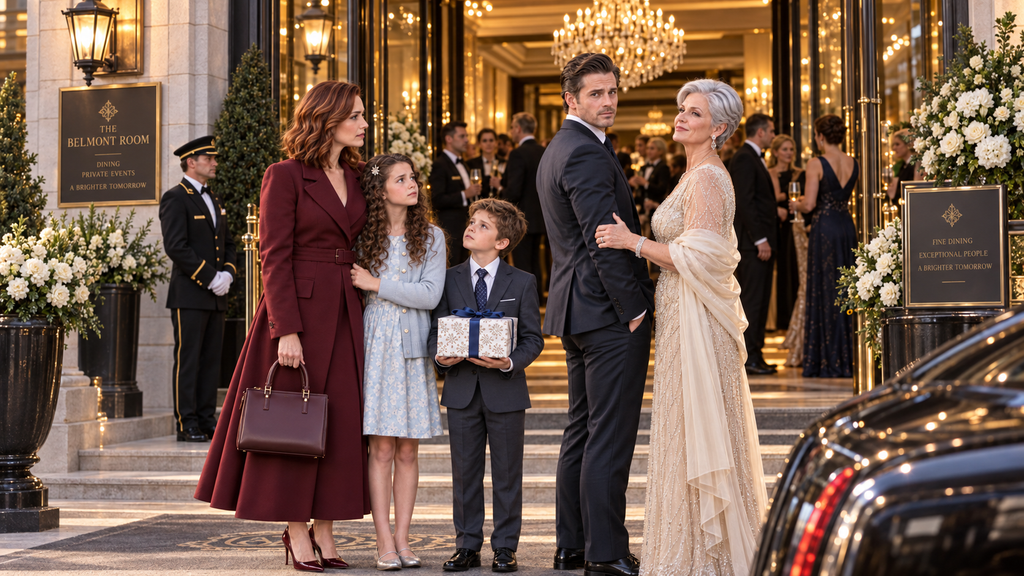
He loved standing beside those windows when friends visited, one hand tucked casually into his pocket, talking about “our place in the Seaport.”
Sometimes he called it his investment.
Sometimes he joked about how expensive it was to maintain.
He had never once asked to see the deed.
He had simply assumed.
Maybe that was the real problem with Nathan.
He assumed everything.
He assumed my silence meant dependence.
He assumed my generosity meant weakness.
He assumed that because I never corrected Margaret when she bragged about her successful son supporting his wife, I must have been embarrassed by the truth.
But I wasn’t embarrassed.
I had simply never thought marriage was supposed to be a competition.
Until that night.
Nathan finally swallowed.
“What do you mean Margaret doesn’t own the condo?”
I folded my arms.
“Exactly what I said.”
“But I bought that place for her.”
“No.”
His eyebrows drew together.
“Yes, I did.”
“You found it.”
“That’s the same thing.”
“No, Nathan. It isn’t.”
He stared at me.
I continued.
“You found the listing. You took Margaret to see it. You told her you wanted her somewhere safer after she complained about the stairs in her old townhouse.”
“That was my idea.”
“Yes.”
I nodded.
“It was your idea.”
His shoulders relaxed slightly, as though he thought he had won something.
Then I finished.
“But my company purchased it.”
His face changed.
“What company?”
I almost laughed.
Not because anything was funny.
Because after seven years of marriage, my husband had just asked me what company I was talking about.
“Monroe Residential Holdings.”
He blinked.
“What?”
“My company.”
“You don’t have a company.”
I looked at him.
There it was.
The certainty.
The casual dismissal.
The absolute confidence of a man who had spent years benefiting from something he had never bothered to understand.
“Yes, Nathan.”
I spoke slowly.
“I do.”
He shook his head.
“No. James has companies. Your father had investments. You handle some family paperwork.”
“Is that what you think I do?”
“You told me you worked with James.”
“I told you James handles some of my legal work.”
“That’s not the same thing.”
“No.”
I nodded.
“It isn’t.”
Nathan dragged a hand over his face.
He looked exhausted now.
The anger had started leaking out of him, replaced by confusion.
“What exactly is Monroe Residential Holdings?”
“A real estate company.”
“And you own it?”
“Eighty-two percent.”
His lips parted.
“Eighty-two?”
“James owns six percent. Sophie and Caleb each have six percent held through trusts.”
Nathan stared at me.
I watched the calculation begin behind his eyes.
Not emotional calculation.
Financial calculation.
I knew that look.
Suddenly he wasn’t thinking about his mother’s birthday anymore.
He was thinking about numbers.
Properties.
Money.
The penthouse.
The condo.
And whatever else he suspected might exist.
“How much is the company worth?”
I smiled sadly.
“That is your first question?”
“What?”
“Your first question after learning your wife owns a company you apparently knew nothing about is how much it is worth.”
“That isn’t what I meant.”
“It’s exactly what you meant.”
He stepped toward me.
“Caroline, stop twisting everything.”
I didn’t move.
“You left my children outside a restaurant tonight.”
“I told you, that wasn’t—”
“You left them outside.”
My voice cracked for the first time.
Nathan stopped.
“Sophie made your mother a scrapbook.”
I could feel tears pressing behind my eyes, but I refused to let them fall.
“She printed photographs from every Christmas, every birthday, every summer trip. She found pictures of Margaret holding Caleb when he was little. She wrote captions underneath them. She stayed awake until almost midnight Wednesday because she wanted every page to look perfect.”
Nathan looked away.
“And Caleb…”
I had to stop for a moment.
My throat tightened.
“He saved seventy-three dollars and sixteen cents.”
Nathan looked back at me.
“What?”
“For the tea set.”
His face softened slightly.
“He counted it at the kitchen table three times. He wanted to buy Margaret something himself because he said it would mean more if it came from his own money.”
Nathan rubbed the back of his neck.
“I didn’t know.”
“Of course you didn’t.”
“That’s not fair.”
“No, Nathan.”
My voice became quieter.
“What happened tonight wasn’t fair.”
He said nothing.
“Your mother rejected them like they were strangers who had wandered into the wrong party.”
“She was angry at you.”
“And she punished children.”
Nathan sighed.
“She has never completely adjusted to—”
“To what?”
I stepped closer.
“To the fact that I was married before you?”
He didn’t answer.
“To the fact that Sophie and Caleb had a father?”
Silence.
“To the fact that Daniel existed?”
“Caroline…”
“No.”
For years, I had let Nathan end difficult conversations by saying my name that way.
Softly.
Warningly.
As though I was becoming unreasonable.
Not anymore.
“You knew what you were marrying.”
He looked at me.
“I never hid my children from you. I never pretended Daniel hadn’t existed. I never asked you to replace him.”
“I know.”
“Then why have you allowed your mother to treat Sophie and Caleb like evidence of some mistake I made before meeting you?”
“She doesn’t think that.”
“She called them another man’s children tonight.”
Nathan flinched.
“She said it badly.”
“She said it honestly.”
That landed.
He looked toward the windows.
For a long moment, all I could hear was the distant hum of traffic below.
Then he asked quietly,
“So what happens now?”
I looked at the man I had spent seven years calling my husband.
I remembered our wedding.
Nathan standing beneath an arch of white roses.
Sophie carrying flowers.
Caleb, only two years old, gripping James’s finger as he toddled down the aisle.
Nathan had knelt afterward and promised both children that marrying me meant choosing them too.
At the time, I believed him.
Maybe he believed himself.
Promises are easy when nobody is asking you to prove them.
Tonight, Margaret had asked.
And Nathan had answered.
“We divorce,” I said.
His head snapped toward me.
“Caroline.”
“You asked.”
“You can’t decide something like that in a few hours.”
“I didn’t.”
“What does that mean?”
“It means tonight didn’t create the problem.”
I looked straight at him.
“It revealed it.”
His expression hardened again.
“So you’re just throwing seven years away?”
“No.”
I shook my head.
“I spent seven years trying not to throw them away.”
He laughed bitterly.
“You’ve already called James, haven’t you?”
“Yes.”
“Of course.”
“What is that supposed to mean?”
“Your brother has always been waiting for this.”
“James has never interfered with our marriage.”
“He hates me.”
“James doesn’t hate you.”
Nathan scoffed.
“He barely tolerates me.”
“Because three years ago you told him I didn’t need to understand investments because I had a husband.”
Nathan’s mouth closed.
He remembered.
So did I.
Thanksgiving.
Margaret had laughed.
Nathan had laughed.
James hadn’t.
My brother had looked across the table at me with an expression I understood only now.
Not anger.
Concern.
“I’m going to bed,” I said.
Nathan stepped into my path.
“Wait.”
I stopped.
“We need to discuss the properties.”
“No, we don’t.”
“Yes, we do.”
His voice changed.
Suddenly practical.
Businesslike.
“The penthouse is our marital home.”
“Yes.”
“And the Brookline condo was bought during our marriage.”
“Yes.”
“So legally—”
“James will explain the legal details to your attorney.”
“My attorney?”
“You should get one.”
Nathan stared at me.
“You already planned this.”
“No.”
I looked past him toward the hallway where my children were sleeping.
“I started planning it when my son asked me whether he was a burden.”
Then I walked away.
Nathan didn’t follow.
The next morning, I woke at 6:17.
I had barely slept.
For several minutes, I lay staring at the ceiling.
Then I heard movement outside my bedroom.
A soft knock.
“Mom?”
Sophie.
“Come in.”
The door opened.
She was already dressed for school.
But she wasn’t carrying her backpack.
She stood there uncertainly.
“Can I ask you something?”
“Always.”
She walked inside and sat on the edge of my bed.
For fourteen years, I had watched that face change.
Baby cheeks disappearing.
Little-girl curls becoming long brown hair.
Daniel’s eyes appearing more clearly every year.
That morning, she looked older than fourteen.
“Are you and Nathan getting divorced?”
Children always know.
Adults convince themselves they’re hiding things.
We rarely are.
I sat up.
“Yes.”
She stared at her hands.
“Because of us?”
My heart broke.
“No.”
She looked at me.
“Absolutely not.”
“But if Grandma Margaret had let us inside—”
“This isn’t because of you.”
I reached for her hands.
“This is because Nathan made a choice a husband and stepfather should never make.”
Sophie swallowed.
“Do you still love him?”
That question hurt more than I expected.
“Yes.”
Her eyes filled.
“Then why are you leaving?”
I brushed a strand of hair away from her face.
“Because loving someone doesn’t mean you have to keep giving them opportunities to hurt the people you’re responsible for protecting.”
A tear rolled down her cheek.
I wiped it away.
“Your father loved you more than anything in this world.”
She nodded.
“I know.”
“And before he died, I promised him something.”
“What?”
“That whatever happened to me, I would always protect you and Caleb.”
She leaned into me.
I wrapped my arms around her.
For a few minutes, neither of us spoke.
Then she whispered,
“I didn’t give Grandma the scrapbook.”
“I know.”
“Can I throw it away?”
I closed my eyes.
“You can do whatever you want with it.”
She nodded against my shoulder.
But she didn’t throw it away.
Not that morning.
Caleb came into the room ten minutes later carrying the tea set.
Still wrapped.
“Mom?”
“Yes, sweetheart?”
“Can we return this?”
I looked at the box.
“Of course.”
He hesitated.
“Do I get my money back?”
Every part of me wanted to cry.
Instead, I smiled.
“Every penny.”
His shoulders relaxed.
“Okay.”
Then he looked toward the hallway.
“Is Nathan mad at us?”
“No.”
“Is Grandma?”
I chose my words carefully.
“Margaret’s feelings are Margaret’s responsibility.”
He thought about that.
Then he asked the question I had been dreading.
“Does Nathan still want to be my stepdad?”
I couldn’t lie.
But I couldn’t put adult failures onto a nine-year-old either.
“That is something Nathan will have to decide through his actions.”
Caleb nodded.
Then he climbed onto the bed and hugged me.
I held both my children.
And for the first time since the restaurant, I knew with absolute certainty that I had made the right decision.
Not the easy decision.
The right one for us.
At 8:04 that morning, Nathan emerged from the guest room.
His suit was wrinkled.
His eyes were red.
Sophie and Caleb had already left for school with James.
Nathan poured himself coffee.
“We need to talk.”
“We did.”
“No. We fought.”
“I didn’t fight.”
“That’s even worse.”
He sat across from me.
“I barely slept.”
“Neither did I.”
“I’ve been thinking.”
I waited.
He rubbed both hands over his face.
“I should have brought the kids inside.”
I said nothing.
“I know that.”
Still nothing.
“I handled it badly.”
“Badly?”
He exhaled.
“Terribly.”
That was closer.
“I was trapped between you and my mother.”
“No.”
His eyebrows tightened.
“Caroline—”
“You were not trapped between me and Margaret.”
“Yes, I was.”
“No. Your mother was mistreating children. There were not two equally valid sides.”
He leaned back.
“You always make everything sound simple.”
“Some things are simple.”
“Family isn’t.”
“Protecting children is.”
He looked away.
I continued.
“You weren’t choosing between your mother and me. You were choosing whether humiliating two children was acceptable if stopping it upset your mother.”
His jaw tightened.
“And you decided upsetting Margaret was worse.”
Nathan said nothing.
Then his phone rang.
He glanced at the screen.
Mom.
Of course.
He declined the call.
Three seconds later, it rang again.
He declined it again.
Then a text arrived.
Another.
Another.
Nathan finally turned the phone face down.
“What does she want?” I asked.
“She wants to know why the condo management office called her.”
I already knew.
At 7:30 that morning, Monroe Residential’s property manager had emailed Margaret the annual occupancy paperwork that she had ignored for almost two months.
Nothing unusual.
Nothing retaliatory.
But Margaret had apparently noticed the company name for the first time.
Nathan stared at me.
“She says the management company claims you own her condo.”
“My company does.”
“She thinks it’s some mistake.”
“It isn’t.”
“How did she not know?”
I almost smiled.
“How did you not know?”
Nathan didn’t answer.
The truth was embarrassingly simple.
Because I handled everything.
When Margaret wanted new appliances, she called Nathan.
Nathan called me.
I arranged them.
When the property taxes were due, my accounting office paid them.
When the condo association assessed owners for elevator renovations, Monroe Residential paid it.
When Margaret’s HVAC system failed during a July heat wave, I had a contractor there within three hours.
Nathan accepted the praise.
Margaret thanked her son.
And I never corrected either of them.
Not because I was weak.
Because I genuinely didn’t care who got credit.
I thought we were family.
That was my mistake.
Nathan looked at me carefully.
“Are you going to evict her?”
“No.”
He seemed surprised.
“No?”
“Your mother is sixty-five years old. I’m not throwing her onto the street because she behaved cruelly at a birthday party.”
Relief appeared on his face.
“But her occupancy arrangement will now be formalized.”
His relief disappeared.
“What does that mean?”
“It means lawyers will handle it.”
“Caroline.”
“She will receive proper notice regarding the terms under which she occupies the property. Nothing illegal. Nothing vindictive.”
He stared at me.
“She’ll say you’re punishing her.”
“She can say whatever she wants.”
“And the penthouse?”
“I’ll remain here with the children for now.”
“You mean you’re kicking me out.”
“I mean my attorney and yours can discuss temporary living arrangements.”
Nathan laughed once.
Coldly.
“Your attorney.”
“Yes.”
“Your company.”
“Yes.”
“Your penthouse.”
“Yes.”
“Your money.”
I studied him.
“Interesting.”
“What?”
“You never objected when Margaret called everything yours.”
Nathan went quiet.
“You never said, ‘No, Mom, it’s Caroline’s money too.’”
His eyes dropped.
“You only became offended by ownership when you discovered the owner wasn’t you.”
He had no answer.
At 10:30, James arrived.
He brought coffee.
And a thick folder.
Nathan saw it and immediately became tense.
“You couldn’t wait twenty-four hours?”
James removed his coat.
“My sister called me for legal help.”
“This is a marriage, not a lawsuit.”
James looked at him.
“Then you should have treated it like a marriage.”
“James.”
I gave him a warning look.
He nodded.
Professional again.
“I’m here only to deliver information and make sure boundaries are clear until both parties retain appropriate counsel.”
Nathan scoffed.
“You’ve always wanted her to leave me.”
James’s expression didn’t change.
“No.”
“You think I’m beneath her.”
“No.”
“You think I’m some idiot.”
James paused.
Then he said,
“I think you stopped being curious about your wife a long time ago.”
Nathan blinked.
That sentence hit harder than an insult would have.
James set the folder on the kitchen island.
“You should obtain independent counsel. Caroline and I have already discussed the obvious conflict, so another attorney at my firm will not represent her in the divorce. I’ve given her referrals to independent family-law counsel.”
Nathan looked at me.
“So even your brother can’t represent you.”
“This isn’t a television show, Nathan.”
James slid several documents across the island.
Nathan glanced at them.
His face changed as he read.
I watched him reach the page containing the Seaport property information.
Then the Brookline condo.
Then another property.
Then another.
His eyes lifted.
“What is this?”
“An asset summary,” I said.
Nathan flipped the page.
“Cambridge?”
“Yes.”
“You own an apartment building in Cambridge?”
“Monroe Residential does.”
He turned another page.
“Somerville?”
“Yes.”
“Beacon Hill?”
“Yes.”
His breathing changed.
“Caroline…”
He looked at me as if seeing me for the first time.
“How much real estate do you own?”
“Enough.”
James said nothing.
Nathan kept reading.
Then he reached the business valuation summary.
His face drained of color.
I won’t pretend that moment gave me pleasure.
It didn’t.
I didn’t want my husband humiliated.
I had wanted him to know me.
There is a difference.
“Why didn’t you tell me?”
he whispered.
“I did.”
His head jerked up.
“No, you didn’t.”
“Yes, Nathan.”
“When?”
“Do you remember our second date?”
He frowned.
“We went to that Italian place in the North End.”
“And you asked what I did.”
“You said property management.”
“I said I was rebuilding my father’s small real estate portfolio after he died.”
Nathan stared at me.
“You made it sound like a hobby.”
“No. You treated it like one.”
He opened his mouth.
I continued.
“Do you remember when I bought the Cambridge building?”
He looked down.
“I told you I was closing on a twenty-two-unit property.”
“I thought you were handling paperwork for James.”
“Why?”
He didn’t answer.
“Because when I said ‘I’m closing on a building,’ you somehow heard ‘my brother is buying a building.’”
James looked out the window.
He didn’t need to say anything.
Nathan sat down.
For several moments, he simply stared at the papers.
Then he whispered,
“My God.”
I felt no triumph.
Only sadness.
Seven years.
Seven years beside someone who had never actually wondered what I did after breakfast.
Nathan knew how Margaret took her coffee.
He knew the names of Margaret’s hairdresser, dermatologist, accountant, and favorite florist.
He knew which hotel Margaret preferred in Paris.
He knew she hated lilies.
He knew she considered sauvignon blanc “too sharp.”
But he couldn’t name my company.
That realization hurt more than anything written on those papers.
Nathan finally looked at me.
“Was I ever actually contributing anything?”
“Yes.”
He seemed surprised.
“You were my husband.”
His expression crumpled slightly.
“That mattered to me.”
I swallowed.
“It was supposed to matter more than money.”
James quietly excused himself to take a phone call.
I knew he was giving us privacy.
Nathan remained seated.
“I loved you.”
“I know.”
“I still love you.”
“I know.”
“Then don’t do this.”
My eyes burned.
“Nathan…”
“I made one horrible decision.”
“No.”
I shook my head.
“You made hundreds of small decisions before the horrible one.”
He stared at me.
“Every time Margaret insulted my parenting and you told me to ignore it.”
I counted them softly.
“Every Christmas when she bought expensive gifts for her biological nieces and nephews and gave Sophie and Caleb generic gift cards.”
His eyes closed.
“Every vacation where she complained about paying for children who weren’t ‘really family,’ even though I was paying.”
“Nathan…”
“Every time she introduced me as ‘Nathan’s wife’ but introduced the children as ‘Caroline’s kids.’”
He lowered his head.
“I noticed all of it.”
A tear finally slipped down my cheek.
“I just kept telling myself you would notice too.”
He whispered,
“I did.”
“Then why didn’t you stop it?”
He had no answer.
That was the answer.
The following weeks were painful.
Divorce is rarely the dramatic door slam people imagine.
It’s forms.
Emails.
Bank statements.
Calendars.
Meetings.
Long conversations after children go to sleep.
It is remembering passwords.
Separating insurance.
Finding photographs while looking for documents.
Crying over something stupid like an old grocery list because the handwriting belongs to a version of your life that no longer exists.
Nathan moved into a furnished apartment in South Boston.
I never threw his belongings onto the sidewalk.
I never changed the locks while he was at work.
I never tried to destroy him.
I didn’t want revenge.
I wanted peace.
Margaret, however, wanted war.
Three days after Nathan moved out, she called me.
I almost didn’t answer.
Then I did.
“Caroline.”
Her voice was icy.
“Margaret.”
“What exactly do you think you’re doing?”
“Which part?”
“Don’t be cute with me.”
“I wasn’t.”
“You have humiliated my son.”
I closed my eyes.
Even now.
Nathan.
Always Nathan.
“Your son made his own choices.”
“You manipulated him.”
“No.”
“You’ve apparently been hiding money from him for years.”
“I haven’t hidden anything.”
“You secretly own my home.”
“Nothing about the ownership is secret. Monroe Residential is listed on the deed.”
“I don’t read deeds.”
“That doesn’t make them secret.”
She inhaled sharply.
“Nathan told me you’re planning to divorce him.”
“Yes.”
“Over a birthday party.”
“No.”
“Then what?”
I looked through the glass wall of my office.
Employees moved between desks.
People whose names I knew.
People whose children I knew.
A business Margaret apparently believed had materialized overnight.
“Because your son watched you hurt my children and decided your comfort mattered more than their dignity.”
“They aren’t his children.”
There it was again.
I closed my eyes.
“Thank you, Margaret.”
“For what?”
“For making this easier.”
“What does that mean?”
“It means I no longer have to wonder whether I misunderstood you.”
“Caroline—”
“Goodbye, Margaret.”
I ended the call.
She called back four times.
I didn’t answer.
Two weeks later, Margaret received paperwork regarding the condo.
Contrary to what she apparently told half of Boston, it was not an eviction notice.
It was an occupancy agreement.
For years, she had lived there without paying rent.
I could have charged market rent.
I didn’t.
Instead, my attorney offered her a long-term lease at a dramatically reduced amount, with protections that would allow her ample time to make other arrangements if she chose not to sign.
It was more generous than required.
Margaret rejected it.
Then she hired an attorney.
Then another.
Then she threatened to sue.
Her first attorney apparently explained the deed to her.
Her second apparently explained it again.
The threats gradually disappeared.
What didn’t disappear was the anger.
And then something happened I hadn’t expected.
Nathan began seeing Sophie and Caleb.
Not because I asked him to.
Because he asked them.
The first request came through me.
“Would they be willing to have lunch with me?”
I asked Sophie.
She shrugged.
“Do I have to?”
“No.”
“Then not yet.”
I told Nathan.
He didn’t argue.
Two weeks later, he asked again.
Caleb said yes.
Sophie said no.
So Nathan took Caleb to lunch.
When Caleb returned, he was carrying a baseball glove.
I frowned.
“He bought you that?”
Caleb shook his head.
“No. He took me to return Grandma’s tea set.”
I froze.
“What?”
“He remembered where we bought it.”
Caleb held up an envelope.
“He made sure I got all my money back.”
Inside was seventy-three dollars and sixteen cents.
Exactly.
I had to sit down.
“What else happened?”
Caleb shrugged.
“We ate burgers.”
“Did Nathan say anything?”
Caleb nodded.
“He apologized.”
“For what?”
“For making me feel like I wasn’t family.”
My throat tightened.
“And what did you say?”
“I told him he did.”
Children can be devastatingly direct.
“What did Nathan say?”
“He cried.”
I looked away.
That evening, I received a message.
Not from Nathan.
From Sophie.
She was upstairs.
Mom, can I go with Caleb next time?
I stared at the screen for a long time.
Then typed back.
Yes.
Because protecting children doesn’t always mean protecting them from every person who hurts them.
Sometimes it means giving them control over whether that person gets the opportunity to repair what they broke.
Nathan never asked me to pressure them.
That mattered.
Months passed.
Our divorce moved forward.
Nathan stopped arguing about the assets once his attorney reviewed the documents.
Most of Monroe Residential had originated from assets I owned before the marriage and from structures established by my father years earlier.
Other marital financial matters were negotiated appropriately through our attorneys.
There was no dramatic courtroom ambush.
No judge pounding a gavel.
No one walked away “destroyed.”
Real endings are usually quieter than that.
But Margaret wasn’t finished.
The final confrontation came almost six months after her birthday.
It happened at Sophie’s school.
She had been selected to present a photography project at a student exhibition.
The theme was:
HOME.
Sophie’s photographs weren’t pictures of houses.
They were pictures of people.
Caleb asleep in the backseat after baseball practice.
James cooking pancakes.
Me standing barefoot in our kitchen.
An old photograph of Daniel holding Sophie when she was a baby.
And one picture that surprised me.
Nathan.
He was sitting across from Caleb in a diner.
Caleb was laughing.
Nathan wasn’t looking at the camera.
The caption beneath the photograph read:
“Home can be someone trying to find their way back.”
I cried when I saw it.
Nathan did too.
He was standing several feet away from me.
We looked at each other.
Neither of us spoke.
We didn’t need to.
Then I heard a familiar voice behind us.
“This is ridiculous.”
Margaret.
I turned.
She stood near the entrance wearing a cream-colored coat.
Nathan’s expression changed immediately.
“Mom?”
“I wanted to support Sophie.”
Sophie looked at her.
Six months earlier, that sentence would have made my daughter light up.
Now she simply nodded politely.
“Thank you.”
Margaret walked closer to the photographs.
Then she saw the picture of Daniel.
Her lips tightened.
“You included him?”
Sophie looked confused.
“He’s my dad.”
“I understand that, but Nathan is standing right here.”
Nathan stepped forward.
“Mom.”
“What?”
“Stop.”
Margaret blinked.
I had heard Nathan say that word to her before.
But never like that.
She laughed awkwardly.
“I was simply pointing out—”
“No.”
His voice remained calm.
“You were doing exactly what you’ve always done.”
People nearby began glancing toward us.
Margaret lowered her voice.
“Don’t embarrass me.”
Something almost sad passed across Nathan’s face.
“I spent most of my marriage terrified of embarrassing you.”
“Nathan.”
“I let you disrespect Caroline because confronting you was uncomfortable.”
Margaret’s face hardened.
“This is not the place.”
“Apparently there was never a place.”
He glanced toward Sophie.
Then Caleb.
“Not Christmas.”
He looked back at Margaret.
“Not birthdays.”
His voice cracked slightly.
“Not even the night you left two children standing outside a restaurant.”
Margaret’s eyes flashed.
“We’ve already discussed this.”
“No.”
Nathan shook his head.
“You talked. I made excuses.”
I watched silently.
This wasn’t my confrontation.
It was his.
Margaret pointed toward me.
“She has turned you against me.”
Nathan followed her finger.
Then looked back at his mother.
“No.”
His answer was immediate.
“Caroline spent years doing the opposite.”
Margaret stared at him.
“What?”
“She defended you.”
Nathan gave a sad laugh.
“Do you know that?”
Margaret said nothing.
“Every time you said something cruel, Caroline told me you probably didn’t mean it.”
I remembered.
“She said you were lonely.”
Another memory.
“She said Dad’s death made you afraid of losing me.”
Margaret’s expression shifted.
“She made excuses for you longer than I did.”
Nathan looked toward me.
“And I rewarded her by asking her to tolerate more.”
My eyes filled.
He turned back to Margaret.
“You didn’t destroy my marriage.”
For the first time, his voice trembled.
“I did.”
Silence.
“I destroyed it every time I knew better and stayed quiet.”
Margaret looked stunned.
Nathan continued.
“And if I ever want Sophie and Caleb to trust me again, I’m not going to stay quiet anymore.”
Margaret’s mouth tightened.
“So you’re choosing them over your mother.”
There it was.
The question that had governed Nathan’s entire adult life.
Choose.
Her or them.
Mother or wife.
Mother or children.
Loyalty as a weapon.
Nathan stared at her.
Then he said something I wish he had understood years earlier.
“There was never supposed to be a choice.”
Margaret blinked.
“I could have loved you and protected them.”
His voice softened.
“But you kept demanding proof that loving you meant failing somebody else.”
Margaret’s eyes filled with tears.
Nathan looked devastated.
But he didn’t take the words back.
“I’m not doing that anymore.”
Margaret left shortly afterward.
She didn’t create a scene.
She simply walked away.
For once, Nathan didn’t chase her.
A few minutes later, Sophie approached him.
“Did you mean that?”
Nathan looked down.
“Every word.”
She hesitated.
Then hugged him.
Nathan closed his eyes.
His arms wrapped around her carefully.
Caleb joined them.
I turned away because watching it hurt too much.
Not because I wanted Nathan back.
But because that was the man I had spent years waiting for him to become.
And sometimes the cruelest part of an ending is watching someone finally learn the lesson that could have saved everything.
Our divorce became final eleven months after Margaret’s birthday.
Nathan and I stood outside the courthouse afterward.
It was cold.
Boston had received snow the night before, and the sidewalks were lined with gray slush.
Nathan shoved his hands into his coat pockets.
“So that’s it.”
“Yes.”
He nodded.
For several seconds, neither of us moved.
Then he looked at me.
“I owe you an apology that is probably too late.”
“Probably.”
He laughed softly.
I did too.
Then his expression became serious.
“I spent years thinking providing money was what made a man valuable.”
I didn’t interrupt.
“My father died when I was twenty-three. After that, Mom constantly talked about how I was the man of the family.”
He looked toward the street.
“I think somewhere along the way, I started believing being needed was the same thing as being loved.”
I listened.
“And when I married you, I thought you needed me.”
His mouth twisted into a sad smile.
“Finding out you didn’t financially need me made me realize something ugly.”
“What?”
“I had built half my identity around rescuing a woman who was never asking to be rescued.”
My eyes stung.
“Nathan…”
“And because I needed that story to be true, I never really looked at what you were doing.”
He shook his head.
“I loved being the successful husband. The provider. The son who bought his mother a condo.”
A humorless laugh escaped him.
“I didn’t even buy the condo.”
“No.”
“I let Mom praise me for things you did.”
“Yes.”
“I should have corrected her.”
“Yes.”
He nodded.
No excuses.
That mattered.
Then he looked at me.
“Why didn’t you?”
“What?”
“Why didn’t you correct us?”
I thought about it.
“I didn’t think love kept score.”
Nathan’s eyes filled.
“It shouldn’t.”
“No.”
I smiled sadly.
“But love should notice.”
That broke him.
He looked down.
For a moment, I thought he might cry.
Then he nodded.
“I hope someone notices you better than I did.”
I swallowed hard.
“And I hope someday you stop believing love has to be earned by choosing one person against another.”
He looked at me.
“I’m trying.”
“I know.”
We hugged.
Not like husband and wife.
Not like lovers.
Like two people saying goodbye to a life they had once believed would last forever.
Then we separated.
Nathan walked down the courthouse steps.
I watched him disappear into the crowd.
And that was the end of our marriage.
But it wasn’t the end of our family.
Nathan remained in Sophie and Caleb’s lives.
Carefully.
Respectfully.
On their terms.
He attended Caleb’s baseball games.
He showed up for Sophie’s exhibitions.
He never asked them to call him Dad.
He never tried to replace Daniel.
He simply became Nathan again.
And strangely, once he stopped trying to prove that he belonged, the children gradually allowed him to.
Margaret’s story took longer.
For almost a year, she refused meaningful contact with me.
She signed the condo agreement eventually.
Not happily.
But she signed it.
She also began paying modest rent.
The first payment arrived by check.
On the memo line she had written:
“Under protest.”
I laughed for ten minutes.
James framed a photocopy.
But something changed after Nathan stopped protecting her from consequences.
People stopped rearranging themselves around Margaret’s moods.
When she criticized, Nathan ended conversations.
When she insulted Sophie or Caleb, visits ended.
When she tried to blame me for the divorce, Nathan corrected her.
Not angrily.
Consistently.
For the first time in decades, Margaret discovered that other people’s boundaries did not disappear simply because she disliked them.
Then, eighteen months after the birthday dinner, something unexpected happened.
A package arrived at my office.
No return address.
Inside was a scrapbook.
Sophie’s scrapbook.
I recognized it immediately.
I called Sophie.
“Did you give this to Margaret?”
“No.”
“Are you sure?”
“Mom, I haven’t seen her in months.”
I opened the scrapbook.
Nothing seemed different until I reached the final page.
Someone had added an envelope.
My name was written across it.
Caroline.
Margaret’s handwriting.
I sat down.
Then I opened it.
The letter wasn’t long.
And it wasn’t perfect.
Margaret didn’t suddenly become a different person.
She didn’t accept responsibility for every hurt.
She still explained too much.
Defended herself too often.
But there were six words I never expected to see.
I was cruel to your children.
I read that sentence several times.
Then another.
I mistook Nathan’s loyalty for permission.
And finally:
I cannot undo that night, but I am sorry Sophie and Caleb ever believed they were less worthy of belonging because of me.
I cried.
Not because everything was repaired.
It wasn’t.
Not because forgiveness suddenly erased what happened.
It didn’t.
I cried because accountability sometimes arrives long after the damage.
And even late accountability can matter.
I showed the letter to Sophie.
She read it quietly.
Then handed it back.
“Do I have to forgive her?”
“No.”
“Do you?”
“No.”
She thought about it.
“Maybe someday.”
I smiled.
“Maybe.”
She took the scrapbook upstairs.
Two weeks later, she mailed it back to Margaret.
This time, she added one page.
It contained a photograph from her school exhibition.
Nathan.
Caleb.
Me.
Sophie.
And underneath it, she had written:
“Family is how you treat people after nobody is forcing you to be kind.”
Margaret never responded.
But she kept the scrapbook.
I know because two years later, when she invited Sophie and Caleb to lunch, Sophie saw it sitting on the coffee table.
Open.
Not hidden.
Not put away.
Open to that final page.
The children went to lunch.
I didn’t.
Some relationships need distance before they can become anything healthier.
Mine with Margaret was one of them.
Life continued.
Monroe Residential grew.
Sophie eventually started working summers in our office.
The first time she joined me for a property meeting, she whispered,
“Wait. You own all this?”
I laughed so hard everyone turned around.
“Apparently nobody in this family listens when I explain my job.”
She laughed too.
Caleb became obsessed with architecture.
He started drawing buildings in notebooks.
James insisted this meant he was destined to become a developer.
Caleb insisted he was going to design houses with secret rooms.
I told him there was probably a market for both.
And me?
For a while, I didn’t date.
Not because Nathan had ruined love for me.
He hadn’t.
I simply needed to rediscover the difference between peace and loneliness.
They aren’t the same.
I learned how much energy I had spent managing everyone’s emotions.
Margaret’s.
Nathan’s.
The children’s.
Even my own.
I had spent years believing being a good wife meant making myself easy to live with.
Not complaining.
Not demanding recognition.
Not correcting people.
Not making anyone uncomfortable.
But silence doesn’t always create peace.
Sometimes it simply gives disrespect more room.
One evening, almost three years after that birthday dinner, I found myself back in Back Bay.
The restaurant was still there.
Same brass doors.
Same glowing windows.
Same private dining room upstairs.
I was walking with Sophie and Caleb after a charity event when Caleb noticed it.
“Mom.”
I knew immediately.
“Yeah.”
“That’s the place.”
Sophie stopped.
For a second, all three of us stood there.
Three years earlier, we had walked away from those doors feeling unwanted.
Caleb had been nine.
Now he was twelve.
Taller.
Louder.
Confident.
Sophie was seventeen and already talking about colleges.
She slipped her arm through mine.
“Want to go inside?”
I looked at her.
“Seriously?”
“Why not?”
Caleb grinned.
“I could eat.”
“You can always eat.”
“Exactly.”
So we went inside.
No private room.
No orchids.
No photographer.
Just the three of us.
The hostess led us to a table near the windows.
Caleb ordered something ridiculously expensive.
I pretended to be offended.
Sophie stole food from my plate.
We laughed.
Halfway through dinner, Caleb suddenly became quiet.
“What?” I asked.
He looked toward the entrance.
“Do you remember what I asked in the car that night?”
I knew.
But I let him say it.
“If we were a burden.”
Sophie stopped eating.
I reached across the table.
“Yes.”
Caleb looked embarrassed.
“I can’t believe I thought that.”
My heart tightened.
“You were nine.”
“I know.”
He smiled.
“But it’s weird.”
“What is?”
“I don’t remember feeling like that anymore.”
That sentence was worth everything.
Every attorney bill.
Every sleepless night.
Every difficult conversation.
Every moment I had wondered whether ending my marriage had been too drastic.
Children don’t always remember the exact words adults say.
But they remember how adults make them feel about themselves.
And my son no longer felt like a burden.
That was enough.
When the bill arrived, Sophie reached for it jokingly.
“Maybe Nathan should pay.”
I laughed.
“Absolutely not.”
I put down my card.
Caleb grinned.
“American Express?”
I stared at him.
“How do you even know that?”
“Uncle James told me the birthday story.”
“Of course he did.”
We laughed again.
Then I looked around the restaurant.
Nothing about the room frightened me anymore.
It was simply a restaurant.
The power I had given that memory was gone.
Outside, snow had begun falling softly.
We walked toward the car together.
Sophie was telling Caleb something about college.
Caleb was pretending not to listen.
I watched them.
My children.
Daniel’s children.
My children.
Never baggage.
Never complications.
Never “another man’s children.”
Just children who deserved adults brave enough to choose them when choosing mattered.
I used to believe the most important decision I made that night was calling my brother.
It wasn’t.
It wasn’t withdrawing authorization for the extra wine.
It wasn’t revealing who owned the penthouse.
It wasn’t exposing the truth about Margaret’s condo.
It wasn’t filing for divorce.
The most important thing I did happened before all of that.
I took my son’s hand.
I took my daughter home.
I showed them that when someone tells you that you don’t belong, you don’t always need to fight your way through their door.
Sometimes you simply stop begging for entry.
You turn around.
You leave.
And you build somewhere better.
Nathan learned that too.
Years later, at Sophie’s college graduation, all of us ended up standing together for a photograph.
Me.
Caleb.
James.
Nathan.
And, several feet away at first, Margaret.
The photographer waved her closer.
Margaret hesitated.
Then looked at Sophie.
Not Nathan.
Sophie nodded.
Margaret stepped forward.
She didn’t push herself into the center.
She stood at the edge beside Caleb.
Then she quietly asked him,
“Is this all right?”
Caleb looked at her.
For a moment, I remembered the little boy outside the restaurant clutching a blue-flowered tea set.
Then he smiled.
“Yeah.”
Margaret nodded.
“Thank you.”
The photographer raised the camera.
“Everyone ready?”
We smiled.
The shutter clicked.
Nobody owned anybody in that photograph.
Nobody had won.
Nobody had been defeated.
We were simply people who had hurt each other, lost things, learned things, and somehow managed to stand in the same frame without pretending the past had never happened.
Later, Nathan found me outside.
“You know something strange?”
“What?”
He smiled.
“I used to think that birthday was the night everything fell apart.”
I looked through the windows toward Sophie laughing with her friends.
“So did I.”
“And now?”
I thought for a moment.
Then I smiled.
“Now I think it was the night everything stopped pretending to be fine.”
Nathan nodded.
“That sounds more accurate.”
He started walking away.
Then stopped.
“Caroline?”
“Yes?”
“Thank you for never telling the kids they had to hate me.”
I looked at him.
“I didn’t need them to hate you.”
He waited.
“I needed you to become someone they didn’t have to protect themselves from.”
His eyes lowered.
Then he nodded.
“Fair.”
He walked back inside.
I remained outside for another minute.
The evening air was warm.
I thought about the woman I had been standing outside Margaret’s birthday party.
She had believed she was walking away from a marriage.
She didn’t yet understand she was walking back toward herself.
That night had cost me something.
A husband.
A future I had imagined.
A version of family I desperately wanted to believe was real.
But it also gave something back.
My voice.
My boundaries.
My children’s certainty that they were worth defending.
And the understanding that generosity without boundaries eventually becomes permission.
Margaret had thought my silence meant she could exclude me.
Nathan had thought my financial discretion meant dependence.
Both had mistaken kindness for weakness.
They weren’t the same.
Kindness is choosing not to use every weapon available to you.
Weakness is believing you have no weapons at all.
I had spent years choosing kindness.
That night, I finally added boundaries.
And that made all the difference.
Because the greatest thing I owned had never been the Seaport penthouse.
It wasn’t the Brookline condo.
It wasn’t Monroe Residential Holdings.
It wasn’t the apartment buildings, investments, accounts, or anything else Nathan discovered inside James’s folder.
Those things were property.
They could be bought.
Sold.
Transferred.
Lost.
The most valuable thing I had was the trust of two children who knew that when the world tried to make them feel small, their mother would never ask them to become smaller just to keep somebody else comfortable.
I had protected that trust.
And years later, standing outside my daughter’s graduation with laughter drifting through the open doors behind me, I finally understood something else.
That night, Margaret had stood in front of an expensive restaurant and told us we weren’t welcome at her table.
For years, I thought the story was about what happened next.
The divorce.
The properties.
The truth.
The money.
The consequences.
It wasn’t.
It was about the table.
Because eventually I stopped worrying about whether Margaret would give my children a seat at hers.
I built our own.
And at our table, Sophie belonged.
Caleb belonged.
I belonged.
Nathan was welcome when his actions earned trust.
Margaret was welcome when she could treat everyone with dignity.
Nobody had to beg.
Nobody had to prove they deserved to be called family.
Nobody had to sit quietly while somebody else decided their worth.
And nobody—
not even me—
would ever again teach my children that keeping the peace was more important than protecting their dignity.
Margaret had been right about one thing that night.
She had said:
“This is my birthday. I decide who attends.”
She was absolutely right.
It was her party.
Her choice.
Her door.
What she never understood was that I had a choice too.
I could stop paying for a celebration where my children were treated like intruders.
I could stop financing a lifestyle while being told I contributed nothing.
I could stop protecting a husband who wouldn’t protect us.
I could stop confusing endurance with commitment.
And most importantly—
I could walk away.
So I did.
Not angrily.
Not helplessly.
Not defeated.
I walked away holding my children’s hands.
And it turned out that the door Margaret closed in our faces wasn’t the end of our family.
It was simply the first door I finally stopped trying to reopen.
And behind me was a life where my children had to wonder whether they belonged.
Ahead of me was one where they would never have to ask again.
So I kept walking.
And this time,
I never looked back.
THE END! THANK YOU FOR READING!❤️