 Reading Time: 37 minutes
“Owed her?” The word came out of my mouth like something broken. Chloe stood on my porch with tears sliding silently down her face. Beside her, five-year-old Nora hugged the stuffed rabbit against her chest.
The child had no idea that two grown women were standing above her with a secret big enough to change all three of our lives. Chloe looked down at the creased paper in her hands. Then she finally held it out to me.
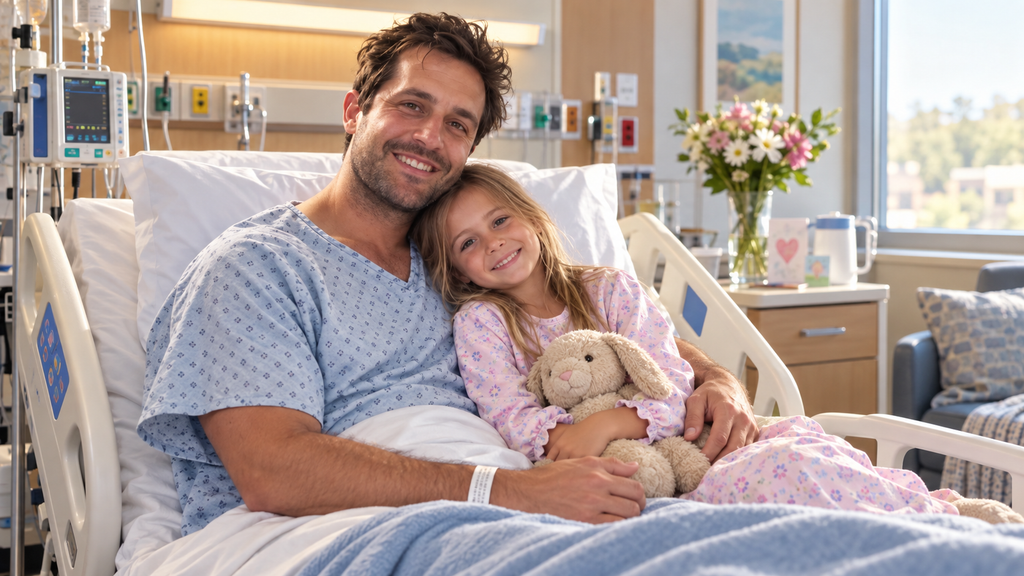
“Julian used that exact word,” she whispered.
My fingers wouldn’t move.
“What word?”
“Owed.”
I stared at her.
She swallowed.
“When I told him the truth, he sat in my kitchen for almost an hour without saying anything. Then he looked at Nora’s picture on my refrigerator and said, ‘I owe her five years.’”
My heart stopped.
Five years.
Nora was five.
I looked at the little girl standing beside her mother.
Then back at Chloe.
“No.”
Chloe closed her eyes.
“I’m sorry.”
“No.”
“Mrs. Vance—”
“Don’t.”
My voice became sharp.
So sharp that Nora flinched.
I immediately hated myself for frightening her, but I couldn’t seem to breathe.
I pointed toward the paper.
“What is that?”
Chloe stepped closer.
“A DNA test.”
The porch tilted beneath me.
For several seconds, I heard nothing.
Not the traffic two streets away.
Not the wind moving through the maple tree.
Not even Nora’s small shoes scraping against the wooden porch.
Only my own heartbeat.
“No.”
Chloe’s mouth trembled.
“Yes.”
I stared at Nora again.
Her brown eyes.
Julian’s eyes.
The same slightly uneven eyebrows.
The little crease that appeared between them when she was confused.
I had noticed it the moment Chloe arrived, but grief had been playing tricks on me for days.
I had been seeing Julian everywhere.
In strangers at the supermarket.
In a man crossing the street.
In the reflection of someone wearing a grey coat in a coffee shop window.
So when I saw something familiar in Nora’s face, I had told myself it was grief again.
It wasn’t.
Chloe finally placed the paper in my hand.
At the top was the name of a laboratory.
Below that were lines of numbers I could barely understand.
Then I saw the sentence near the bottom.
Probability of paternity: 99.99%.
My knees nearly gave out.
I grabbed the doorframe.
“Julian was her father?”
Chloe nodded.
The sound that left me wasn’t a word.
It was something lower.
Something pulled from a place in me that had already been torn open once that week.
“My son had a daughter?”
“Yes.”
“And you knew?”
Chloe looked away.
“For a while.”
“How long?”
She didn’t answer.
“How long, Chloe?”
Nora pressed closer to her mother.
Chloe put one hand protectively on the child’s shoulder.
“Please,” she whispered. “Not in front of Nora.”
“How long?”
“Mommy?”
Nora’s voice was tiny.
Chloe crouched immediately.
“It’s okay, sweetheart.”
“Why is she mad?”
I turned away.
That question almost destroyed me.
Why was I angry?
Because my son was dead.
Because my granddaughter was standing three feet away from me.
Because I had apparently had a granddaughter for five years and hadn’t known.
Because Julian had known before he died.
Because he had walked into my kitchen and told me he was giving a kidney to a little girl while carrying a secret that would have changed my entire world.
Because there were things I should have said.
Questions I should have asked.
Hugs I should have given him.
And now I never could.
I stepped backward into the house.
“I can’t do this.”
Chloe’s face crumpled.
“I understand.”
“No, you don’t.”
I looked at her.
“You don’t understand anything.”
“I know you’re angry.”
“Angry?”
I laughed once.
It sounded horrible.
“My son is in the ground.”
Chloe covered her mouth.
“And now you’re standing here the morning after his funeral telling me that he had a daughter?”
“I’m sorry.”
“Stop saying that!”
Nora started crying.
The moment I heard her, I stopped.
Everything inside me went still.
The little girl pressed her face against Chloe’s side.
And suddenly I heard Julian’s voice from his hospital bed.
Weak.
Barely more than air.
Whatever happens, please don’t blame Nora or her mother.
At the time, I thought he was worried that grief would make me irrational.
Now I understood.
He had known.
He had known exactly what secret might reach me after he was gone.
I pressed one hand over my mouth.
“Oh, Julian.”
Chloe was crying harder now.
“He made me promise.”
I looked at her.
“What?”
“He made me promise that if anything happened during surgery, I wouldn’t let Nora believe it was her fault.”
The anger inside me cracked.
Not disappeared.
Cracked.
Chloe wiped her cheeks.
“He said she was old enough to understand that he got hurt after helping her, but too young to understand risk. He was terrified she would think she killed him.”
I looked at Nora.
She was staring down at the stuffed rabbit.
One tiny hand rested over the front of her sweater.
Under that sweater was a healing incision.
Inside her small body was part of my son.
I stepped aside.
“Come in.”
Chloe hesitated.
“Are you sure?”
“No.”
I turned toward the hallway.
“But come in anyway.”
They followed me.
Julian’s jacket was still hanging by the door.
Chloe stopped when she saw it.
Her breath caught.
Nora looked up.
“Is that Julian’s?”
I couldn’t answer.
Chloe nodded.
“Yes, baby.”
Nora reached toward the sleeve but didn’t touch it.
“He wore it when we got ice cream.”
I turned around.
“You went for ice cream?”
Chloe looked frightened again.
“Yes.”
“When?”
“A few weeks before the surgery.”
My chest tightened.
“You said he found out recently.”
“He did.”
“How recently?”
“Seven months ago.”
Seven months.
My son had known he had a daughter for seven months.
Seven months of Sunday dinners.
Seven months of phone calls.
Seven months of him sitting across from me at this very table.
Seven months of me asking, “Anything new?”
And him answering, “Not much.”
I gripped the back of a chair.
“Tell me everything.”
Chloe slowly sat down.
Nora climbed into the chair beside her.
I remained standing.
I wasn’t ready to sit.
Not yet.
Chloe stared at her hands.
“Julian and I dated in college.”
“I knew that.”
“You knew?”
“He brought you home once.”
Her eyes widened slightly.
“You remember?”
“Of course I remember.”
She looked down.
“It was Thanksgiving break.”
“You hated my cranberry sauce.”
A broken little smile appeared through her tears.
“I was nineteen.”
“You moved it around your plate for twenty minutes.”
“I thought I was subtle.”
“You weren’t.”
For one impossible second, the kitchen felt almost normal.
Then reality returned.
“You and Julian broke up the year after Daniel died,” I said.
Chloe nodded.
Daniel.
My older son.
Julian’s brother.
The first child I had buried.
He had been twenty-four.
A sudden infection.
Ten days in intensive care.
Ten days of machines and needles and whispered conversations in hospital corridors.
Julian had been twenty-one.
He went into the hospital with a brother.
He walked out terrified of hospitals and carrying a grief he never fully admitted.
After Daniel died, Julian changed.
He stopped sleeping.
Dropped two classes.
Stopped answering friends.
And eventually, Chloe disappeared from his life.
I had assumed she had simply moved on.
Apparently, nothing had been that simple.
Chloe spoke quietly.
“Julian pushed everyone away after Daniel died. Including me. He kept saying that people disappeared, so there was no point depending on anyone.”
“That sounds like him.”
“I tried.”
“I know.”
Her eyes filled again.
“We broke up. Then, about four years later, we ran into each other at a friend’s birthday party.”
I felt my stomach turn.
“Nora.”
Chloe nodded.
“We spent one night together.”
She looked toward her daughter, careful with her words.
“At the time, I had recently separated from someone I’d been seeing. Julian and I talked for hours. Mostly about Daniel. About you. About how much he regretted the way he had treated people after his brother died.”
She wiped her face.
“The next morning, we both agreed that it had been a mistake.”
I said nothing.
“A few weeks later, I found out I was pregnant.”
“And you didn’t tell him.”
“I thought the baby belonged to the man I’d been seeing before.”
“You thought?”
“The dates were close.”
My jaw tightened.
Chloe nodded before I even said anything.
“I know how it sounds.”
“How it sounds?”
“I was scared.”
“That doesn’t excuse—”
“No.”
She looked directly at me.
“It doesn’t.”
Her answer stopped me.
She wasn’t arguing.
She wasn’t defending herself.
She was simply sitting in my kitchen accepting my anger.
“I got back together with Marcus,” she continued. “He believed Nora was his. I believed it too.”
“Where is he?”
“Gone.”
“What does that mean?”
“We separated before Nora turned two. He lives in Arizona now. He has no contact with her.”
I looked at Nora.
She was quietly turning one floppy rabbit ear between her fingers.
“When did you learn Julian was her father?”
“Last year.”
My voice hardened.
“How?”
“When Nora got sick, the doctors started asking questions about family medical history. There were things I didn’t know. Marcus finally admitted he’d taken a private paternity test when Nora was a baby.”
I stared at her.
“He knew?”
“He knew he wasn’t her biological father.”
“And didn’t tell you?”
“He used it during our separation.”
Her voice became smaller.
“He threw the result on the kitchen counter during an argument and told me to figure out who her real father was.”
I closed my eyes.
The cruelty of that sentence made me sick.
“I contacted Julian.”
“Immediately?”
Chloe looked away.
“No.”
“How long did you wait?”
“Almost four months.”
I pushed away from the chair.
“Why?”
“Because I was ashamed!”
Her voice broke.
Nora looked at her.
Chloe lowered her tone.
“I was ashamed,” she repeated.
“I had already kept five years from him without meaning to. Then I realized he might be Nora’s father, and every day I waited made the truth harder to tell.”
“You should have told him the first day.”
“Yes.”
“He had a right to know.”
“Yes.”
“I had a right to know.”
She looked at me.
“Yes.”
My anger had nowhere to go when the person in front of me refused to fight back.
I hated that.
I wanted her to defend herself.
I wanted an argument.
I wanted someone I could blame enough to make the pain cleaner.
But grief is never clean.
Chloe reached into her handbag.
“There’s something else.”
I almost laughed.
“Of course there is.”
She pulled out her phone.
“The first message I sent Julian.”
She opened it.
Then slid the phone across the table.
I looked down.
The message was dated seven months earlier.
Julian, I need to tell you something and I don’t know how. There is a possibility Nora is your daughter. She’s very sick. I swear I didn’t know until recently. I understand if you hate me.
Underneath it was Julian’s reply.
Sent seven minutes later.
Seven minutes.
I read it once.
Then again.
Does she need me?
That was all.
Not:
How could you?
Not:
Why didn’t you tell me?
Not:
Are you sure?
His first question had been:
Does she need me?
I sat down.
My legs could no longer hold me.
Chloe whispered, “That was Julian.”
I pressed my fingertips against my eyes.
“Yes.”
“He was furious later.”
That surprised me.
“He was?”
“Very.”
A faint smile touched her face.
“He came to my apartment and yelled at me for almost twenty minutes.”
I imagined it.
Julian pacing.
Running one hand through his hair.
Talking too fast.
Getting louder when frightened.
“He told me I had robbed him of first steps, first words, birthdays, Christmas mornings…”
Chloe’s voice cracked.
“He asked whether she liked pancakes.”
I opened my eyes.
“What?”
“He was in the middle of yelling at me and suddenly he stopped and said, ‘Does she like pancakes?’”
A sob escaped me before I could stop it.
Julian loved pancakes.
Every Sunday morning when the boys were growing up, he would make pancakes shaped like ridiculous things.
Dinosaurs.
Cars.
Clouds.
Once he made one shaped like Florida because Daniel told him it couldn’t be done.
It looked like a broken shoe.
We laughed until we cried.
“What did you tell him?” I asked.
“That she loved blueberry pancakes.”
I looked at Nora.
She lifted her head.
“I like extra blueberries.”
My heart folded in on itself.
Julian always put too many blueberries in his.
Always.
I looked away quickly.
Chloe continued.
“We did the DNA test three days later.”
“And then?”
“When the result came back, Julian asked if he could meet her.”
“What did Nora know?”
“Only that he was an old friend of mine.”
“Why not tell her he was her father?”
“Because everything was happening too quickly. She was sick. She was scared. We were talking to a child therapist about how to explain it.”
Chloe touched Nora’s hair.
“We decided we would tell her after the transplant, when she was stronger.”
I stared at the little girl.
“How many times did he see her?”
“Eleven.”
Eleven.
The number cut me.
“You counted?”
“Julian did.”
Chloe unlocked her phone again.
“He kept a list.”
She showed me a note.
Nora Days.
Underneath were dates.
Eleven of them.
Beside each date, a few words.
Library. She likes dinosaur books.
Pancakes. Extra blueberries. Obviously.
Park. Hates swings. Loves slides.
Doctor appointment. Brave kid.
Aquarium. Sharks > dolphins apparently.
Ice cream. Strawberry. Terrible taste but I’ll work on it.
I laughed through my tears.
That was exactly how Julian wrote.
Then I saw the final entry.
Bike shop. Not yet. After surgery.
My finger stopped.
“What does this mean?”
Chloe’s expression changed.
“I don’t know.”
Nora suddenly spoke.
“Julian said he was going to teach me.”
I turned toward her.
“Teach you what?”
“To ride a bike.”
The kitchen disappeared.
All I could hear was Julian standing in this room weeks earlier.
She should be learning to ride a bike, not counting hospital ceiling tiles.
I had thought he was speaking about a sick child.
He had been speaking about his daughter.
His little girl.
His Nora.
My granddaughter.
I covered my face.
And for the first time since Chloe had knocked on my door, I cried without anger.
I cried because my son had become a father and had barely gotten time to understand what that meant.
I cried because somewhere during those seven months, he had apparently started building a future in his head.
Birthday cakes.
School plays.
Bike lessons.
Blueberry pancakes.
Christmas mornings.
And then he had walked into a hospital terrified of needles because his daughter needed him more than he feared them.
Nora slipped down from her chair.
I felt a tiny hand touch my arm.
I lowered my hands.
She stood beside me.
Up close, I could see Julian everywhere.
Not in some dramatic, impossible way.
In little things.
The tilt of her head.
The shape of her chin.
The serious expression she wore when she wasn’t sure what adults expected from her.
“Why are you crying?” she asked.
I looked at Chloe.
Chloe’s eyes closed.
Then she nodded.
Barely.
I turned back to Nora.
Because there are moments when a child’s life changes in the space between one sentence and the next.
And no adult is ever truly prepared to speak that sentence.
“Nora…”
My voice trembled.
“Do you remember Julian?”
She nodded.
“He gave me my kidney.”
“Yes.”
She hugged the rabbit tighter.
“And he brought me strawberry ice cream.”
“He did.”
“He was funny.”
A sob caught in my throat.
“Yes.”
“He made the nurse laugh.”
“That sounds like him.”
I took her small hand.
“Nora, Julian wasn’t only your mommy’s friend.”
She looked at Chloe.
Then at me.
“What was he?”
My eyes filled.
“He was your daddy.”
The room became completely silent.
Nora stared at me.
Children don’t react to life-changing information the way adults imagine they will.
There was no dramatic gasp.
No scream.
No immediate tears.
She simply looked confused.
“My daddy?”
I nodded.
“Your biological daddy.”
She frowned.
“Like a real daddy?”
Chloe moved beside her.
“Yes, sweetheart.”
Nora looked back at me.
“Did he know?”
That question shattered something inside me.
“Yes.”
My voice broke.
“He knew.”
“When?”
Chloe answered.
“Not for very long.”
Nora looked at her stuffed rabbit.
Then she asked the question Julian had feared more than anything.
“Did he die because he gave me his kidney?”
Chloe’s face went white.
“No.”
I answered before she could.
Nora looked at me.
I took both of her hands.
“No, sweetheart.”
“But he went to the hospital for me.”
“Yes.”
“And then he died.”
“Yes.”
She stared at me.
I could see a five-year-old mind building a terrible equation.
Kidney.
Hospital.
Julian.
Death.
Me.
I pulled her closer.
“Nora, listen to me.”
She looked up.
“Julian chose to help you because he loved you. The surgery was supposed to be safe. Something very rare went wrong afterward.”
Her lower lip trembled.
“If I didn’t need his kidney, he wouldn’t have gone.”
I closed my eyes for half a second.
There it was.
Exactly what Julian had predicted.
Exactly what he had begged me to prevent.
I moved from the chair to my knees so we were eye to eye.
“You listen to me very carefully.”
Nora’s eyes filled.
“What happened to Julian was not your fault.”
“But—”
“No.”
I gently touched her cheek.
“You didn’t hurt him.”
A tear rolled down her face.
“You didn’t ask to be sick.”
Another tear.
“You didn’t make him go to the hospital.”
Her mouth trembled.
“He made a choice because he was your father.”
I could barely speak now.
“And fathers are allowed to love their children.”
Nora suddenly wrapped both arms around my neck.
I froze.
Then held her.
Her body was tiny.
Warm.
Alive.
Somewhere inside that tiny body, my son’s kidney was working.
I could feel her heartbeat through her sweater.
Fast.
Strong.
I held her tighter.
Nora cried against my shoulder.
“I miss him.”
I shut my eyes.
“So do I.”
That was the first time my granddaughter hugged me.
I wish I could tell you it healed me.
It didn’t.
Love is not medicine.
A child cannot replace another child.
A granddaughter cannot replace a son.
Nothing replaces anyone.
But when Nora put her arms around me, something inside my grief changed shape.
For the first time since Julian died, the pain wasn’t only an ending.
There was something living inside it.
Something small.
Something breathing.
Something that needed me.
Eventually, Nora grew tired.
Chloe settled her on the living-room couch with a blanket.
Within minutes, she was asleep with the stuffed rabbit tucked beneath her chin.
I stood in the doorway staring at her.
“She does that thing with her foot,” I whispered.
Chloe looked over.
“What?”
“When she sleeps.”
Nora had pushed one foot out from beneath the blanket.
Julian had done the same thing his entire life.
Even as a teenager.
One foot always outside the blanket.
I laughed weakly.
“Both my boys did that.”
Chloe stood beside me.
For a while, neither of us spoke.
Then she said, “You can hate me.”
I didn’t look at her.
“I don’t know what I feel.”
“I deserve whatever you feel.”
“That’s not helpful.”
“I know.”
I turned toward her.
“Why didn’t Julian tell me?”
Chloe hesitated.
“He wanted to.”
“But?”
“He was afraid.”
I almost laughed.
“Julian wasn’t afraid of me.”
“No.”
She glanced toward Nora.
“He was afraid for you.”
I frowned.
“What does that mean?”
“He said you never recovered from Daniel.”
My jaw tightened.
“That wasn’t his decision to make.”
“No.”
“He didn’t get to decide what I could handle.”
“No.”
“Stop agreeing with everything.”
A sad smile appeared.
“Sorry.”
I sighed.
“What exactly did he say?”
Chloe thought for a moment.
“He said, ‘My mom already knows what it feels like to stand beside one child in a hospital and wonder if he’s coming home. I’m not making her do that again unless I have to.’”
I stared at her.
“He thought Nora might die?”
“The doctors were honest about how sick she was.”
Chloe’s eyes moved toward her daughter.
“He wanted you to meet her after the transplant.”
My breath caught.
“He had a plan?”
“Yes.”
“What plan?”
“He wanted to bring us here.”
I gripped the doorway.
“He said he was going to knock on your door with Nora and tell you he had been keeping the biggest secret of his life.”
A tear slid down Chloe’s cheek.
“He thought you would slap him.”
Despite everything, I laughed.
“I might have.”
“He thought so too.”
“What else?”
“He said you would cry.”
“Yes.”
“He said you would hug Nora before you hugged him.”
I covered my mouth.
“And then he said you’d immediately start trying to feed everyone.”
That broke me.
I leaned against the wall.
Chloe reached into her handbag again.
“There’s one more thing.”
“Please tell me there are no more daughters.”
For the first time, she laughed.
A real laugh.
Small and broken, but real.
“No.”
She pulled out a sealed envelope.
My name was written on the front.
In Julian’s handwriting.
Mom.
I stopped breathing.
“He gave me that the night before surgery.”
I stared at it.
“He wrote me a letter?”
“He wrote several.”
“Several?”
“One for Nora.”
My heart twisted.
“One for me.”
She swallowed.
“And one for you.”
“Why didn’t you give me this yesterday?”
“Because you buried your son yesterday.”
I looked at her.
“And I thought one unbearable thing at a time was enough.”
I couldn’t argue.
I took the envelope.
Julian’s handwriting blurred beneath my tears.
The J in Mom—because he had apparently started writing something else before changing his mind.
A tiny ink smear near the corner.
I ran my thumb across it.
His hand had touched this paper.
His living hand.
Before a hospital room.
Before the alarms.
Before the cold palm inside mine.
“I need to read this alone.”
“Of course.”
Chloe gathered Nora carefully.
The child stirred.
“Are we leaving?”
“Yes, baby.”
Nora looked at me sleepily.
“Okay.”
I walked them to the door.
Just before Chloe stepped outside, Nora turned.
“Are you really my grandma?”
There are questions that somehow contain an entire lifetime.
I looked at her.
“Yes.”
“Did Julian call you Mom?”
I smiled through tears.
“Every day.”
She considered that.
Then nodded as though that settled something important.
“Okay.”
She took Chloe’s hand.
They reached the porch steps before I spoke.
“Nora?”
She turned.
“You can call me Grandma if you want.”
Her expression became shy.
“Okay.”
They walked toward Chloe’s car.
I remained at the door until they disappeared.
Then I locked it.
Walked into my kitchen.
Sat in Julian’s usual chair.
And opened the letter.
Mom,
If you’re reading this, I’m guessing something went wrong.
I immediately stopped.
My vision blurred.
I pressed the paper against my chest.
“No.”
The word escaped me.
“No, baby.”
But he was already gone.
And these were the last words he had left me.
I forced myself to continue.
Before anything else, I need you to promise me something.
Do not blame Nora.
Do not blame Chloe either, although you’re allowed to be mad at her for a while. I was.
A laugh escaped through my sob.
Even dead, Julian knew me.
Nora is my daughter.
I found out seven months ago.
I know you’re probably furious that I didn’t tell you. You have every right to be. If I’m around when you read this, you can yell at me. If I’m not, yell anyway. I probably deserve it.
I looked toward the ceiling.
“You absolutely do.”
My voice broke.
I wanted to tell you about her every single day.
The first time I met her, she asked me why sharks don’t drown. I had no idea. I made something up. She told me I was wrong.
She is five and she already fact-checks me. You’re going to love her.
I laughed.
Then cried harder.
I didn’t tell you because she was very sick.
Maybe that was the wrong decision.
I kept thinking about Daniel.
My hands began shaking.
I remember you sleeping in that hospital chair for nine nights. I remember you pretending you weren’t scared because you thought we needed you to be strong. I remember watching you walk out of that hospital without my brother.
I could not bring another sick child into your heart and then possibly make you lose her too.
“Idiot,” I whispered.
“You stupid, beautiful idiot.”
So I made a plan.
After the transplant, when Nora was stable, I was going to bring her to your house.
I told Chloe you would cry, hug Nora, yell at me, feed everyone, yell at me again, and then start looking online for Christmas presents even if it was July.
I laughed so hard that it hurt.
He had known exactly how it would go.
Exactly.
There’s something else I need you to understand.
I am not giving Nora my kidney because I feel guilty.
I told Chloe I owe Nora five years, but that doesn’t mean I’m trying to buy forgiveness with a body part.
I’m doing it because she is my daughter and I am a match.
That’s it.
I wiped my eyes.
Everybody keeps calling me brave.
I’m not.
You know I nearly passed out getting a flu shot when I was twenty-six.
I laughed again.
That had actually happened.
He had called me from the pharmacy parking lot afterward.
I am terrified.
But being scared doesn’t mean you don’t do something.
Sometimes it just means the thing matters enough that you do it while scared.
I stopped reading.
That sentence felt different.
Maybe because I knew what came after it.
Maybe because I knew my son had walked into the operating room afraid.
Not fearless.
Afraid.
And he had gone anyway.
If something happens to me, please never let Nora grow up believing her life cost mine.
My hand flew to my mouth.
That is not the story.
The story is that she needed help, and I had something I could give her.
If the universe decides to be cruel after that, that’s on the universe. Not a five-year-old girl.
I pressed the paper against my lips.
Tell her I chose her.
Please.
Tell her every time she doubts it.
My tears fell onto the page.
And Mom, please don’t turn me into a saint.
I laughed through my sobs.
Tell her I hated folding laundry.
Tell her I cheated at Monopoly.
Tell her about the time I backed Dad’s car into the mailbox and blamed Daniel for two days.
I whispered, “I knew that was you.”
Tell her I once got a D in chemistry.
Tell her I burned pancakes.
Tell her I wasn’t perfect.
I don’t want her growing up thinking she has to be extraordinary because I donated a kidney.
I want her to be a kid.
A loud, annoying, happy kid.
Let her scrape her knees.
Let her get bad grades sometimes.
Let her stay up too late.
Let her eat terrible strawberry ice cream.
I smiled.
There’s a yellow bicycle in my garage.
I froze.
I bought it three weeks ago.
I know it was too soon.
I know the transplant hadn’t happened yet.
But I wanted to believe she would need it.
A sound came out of me that was half sob, half laugh.
You taught Daniel and me to ride bikes in the church parking lot.
You ran behind us until you were exhausted.
I remember looking back and realizing you had let go twenty feet earlier.
I was furious.
Then I realized I was still riding.
My hands trembled.
If I’m not there, teach Nora.
Don’t let Chloe hire someone.
You do it.
And when she starts pedaling on her own, let go.
Even if you’re scared.
I could barely see.
I love you, Mom.
I know you already lost Daniel.
If you lost me too, I’m sorry.
I wish I could make that sentence bigger somehow because “sorry” feels ridiculously small.
But don’t bury yourself with us.
My breathing stopped.
You’re still here.
So live like you’re still here.
Love,
Julian
I don’t know how long I sat at the kitchen table.
Minutes.
Hours.
Eventually the afternoon sunlight moved across the floor.
The house became colder.
I read the letter again.
Then a third time.
At some point, I walked into the hallway and took Julian’s jacket off the hook.
I held it to my face.
It still smelled faintly like him.
Laundry detergent.
Coffee.
That cedar soap he bought because he thought it made him smell “expensive.”
I sank to the floor.
And I screamed.
Not elegantly.
Not quietly.
I screamed like a mother whose body had finally understood that her child was never walking through that door again.
I screamed Daniel’s name.
Then Julian’s.
I screamed until my throat hurt.
Until there was nothing left.
Then I sat against the wall holding my son’s jacket.
And eventually, I slept.
The next morning, I drove to Julian’s house.
I had his spare key.
For several minutes, I sat in the driveway staring at the garage.
I didn’t want to go inside.
The last time I had been there, Julian was alive.
There had been dirty dishes beside the sink.
Shoes kicked beneath the coffee table.
An open book facedown on the couch.
Life interrupted.
After his death, every ordinary thing became sacred.
A grocery list.
A sock beneath the bed.
A voicemail asking me whether I needed anything from the store.
We spend our lives believing the important things will announce themselves.
They don’t.
Sometimes the most precious evidence that someone existed is a half-used bottle of shampoo.
I unlocked the garage.
Turned on the light.
And there it was.
A small yellow bicycle.
Brand new.
Training wheels attached.
A white helmet hung from one handlebar.
I covered my mouth.
On the seat was a blue sticky note.
Julian’s handwriting.
NORA
Underneath, in smaller letters:
No more hospital ceilings.
I bent over the bike and cried.
Again.
Grief does not care whether you already cried yesterday.
It is greedy.
It keeps finding new rooms inside you.
I noticed a cardboard box on the workbench.
Inside were things Julian had apparently started collecting.
A dinosaur book.
A tiny baseball glove.
A puzzle.
A child-sized apron.
A packet of glow-in-the-dark stars.
A birthday card still sealed in plastic.
And eleven photographs.
Nora at the aquarium.
Nora with strawberry ice cream across her face.
Nora sitting beside Julian in a library.
Nora asleep against his shoulder.
I picked up that photograph.
Julian was looking at her.
Not at the camera.
At her.
And I knew that look.
I had seen it on my husband’s face when our sons were babies.
I had felt it on my own.
The terrified wonder of loving someone so much that suddenly the world contains a thousand new ways to hurt you.
My son had become a father.
And I had missed it.
I sat on the garage floor for almost an hour.
Then I called Chloe.
She answered immediately.
“Mrs. Vance?”
“Margaret.”
Silence.
“What?”
“My name is Margaret.”
“I know.”
“Then call me Margaret.”
Her voice cracked slightly.
“Okay.”
I looked at the yellow bicycle.
“Can you bring Nora over Saturday?”
There was a pause.
“Are you sure?”
“No.”
I smiled through tears.
“But Julian bought a bicycle.”
Chloe began crying.
“Oh.”
“He wants me to teach her.”
Another pause.
Then I heard Chloe laugh softly.
“That sounds like him.”
“Yes.”
“So Saturday?”
“Yes.”
“What time?”
I almost answered noon.
Then I remembered something.
“Ten.”
“Okay.”
“And don’t feed her breakfast.”
Chloe laughed harder.
“Why?”
“Blueberry pancakes.”
She went quiet.
Then whispered, “Ten o’clock.”
That Saturday, my granddaughter walked into my house for the second time.
She wore purple sneakers.
A denim jacket.
And the expression of someone entering a place she wasn’t sure belonged to her.
I opened the door.
“Hi.”
“Hi.”
Chloe stood behind her.
“We brought something.”
Nora held up the stuffed rabbit.
“I named him Julian.”
I felt the air leave my chest.
Chloe looked embarrassed.
“She decided that yesterday.”
I crouched.
“That’s a good name.”
Nora considered my face.
Then asked, “Can rabbits eat pancakes?”
“I don’t think so.”
“What about toy rabbits?”
“Toy rabbits can eat anything.”
She nodded seriously.
“Okay.”
That was how it started.
Not with a dramatic promise.
Not with instant healing.
Pancakes.
I made too many.
Nora put so many blueberries on hers that the pancake nearly disappeared.
I watched her take the first bite.
My chest tightened.
“What?”
She looked concerned.
“Nothing.”
“Why are you staring?”
“You eat pancakes like your dad.”
She looked down at her plate.
“How?”
“Too many blueberries.”
She smiled.
“Did he like them?”
“Loved them.”
“More than strawberries?”
“Much more.”
She grinned.
“I’m still keeping strawberry ice cream.”
“You can.”
We ate.
After breakfast, I showed her photographs.
Julian at five.
Julian at ten.
Julian missing both front teeth.
Julian dressed as a pirate for Halloween.
Julian in a ridiculous tuxedo at senior prom.
She laughed at that one.
“His hair looks funny.”
“It was 2013. Everyone made mistakes.”
Chloe nearly choked on her coffee.
Then Nora pointed to a photograph of two boys.
“Who’s that?”
My chest tightened.
“Daniel.”
“Who’s Daniel?”
“Julian’s big brother.”
“Where is he?”
I looked at her.
“He died a long time ago.”
Nora became serious.
“So Julian missed him?”
“Very much.”
“Do you miss both of them?”
I swallowed.
“Every day.”
She thought for a moment.
“That’s a lot of missing.”
Children sometimes say things adults spend entire books trying to explain.
“Yes.”
I smiled sadly.
“It is.”
After breakfast, I took her to Julian’s garage.
When she saw the bicycle, she stopped.
Her mouth fell open.
“For me?”
“For you.”
“Julian bought it?”
“Yes.”
She looked at Chloe.
“Can I ride it?”
Chloe looked at me.
I nodded.
“Not today.”
Nora’s face fell.
“Why?”
“Because your doctor says you’re still healing.”
“Oh.”
“But soon.”
“How soon?”
I smiled.
“You really are Julian’s daughter.”
“What does that mean?”
“Impatient.”
“I’m not impatient.”
“When can I ride it?”
Chloe burst out laughing.
I laughed too.
And for the first time since Julian died, laughter filled my house without making me feel guilty.
That surprised me.
The guilt.
Nobody warns you about it.
The first time you laugh after your child dies, part of you feels disloyal.
As if grief is proof of love and any moment without pain is betrayal.
I almost stopped laughing.
Then I remembered Julian’s letter.
Don’t bury yourself with us.
So I let myself laugh.
The weeks that followed were complicated.
There were beautiful moments.
And terrible ones.
There were afternoons when Nora sat at my kitchen table coloring while I cooked dinner.
There were mornings when Chloe called because Nora had asked a question about Julian that she didn’t know how to answer.
There were evenings when I stared at the empty chair across from me and hated the entire world.
Sometimes seeing Nora helped.
Sometimes seeing Nora made everything worse.
Her eyes belonged to Julian.
Her smile sometimes belonged to Julian.
When she grew frustrated, she pulled at her left earlobe.
Julian had done that since childhood.
The first time I noticed, I went into the bathroom and cried.
Chloe found me.
“I’m sorry.”
I shook my head.
“Stop apologizing for her existing.”
“I wasn’t.”
“I know.”
I looked at myself in the mirror.
“I don’t want Nora thinking every time I cry that she did something wrong.”
“She doesn’t.”
“She will if we aren’t careful.”
Chloe nodded.
That became our unspoken rule.
Nora would never carry the weight of adult regret.
Not Chloe’s.
Not mine.
Not Julian’s.
Especially not Julian’s death.
One afternoon, Nora asked me something that almost broke the rule.
We were making cookies.
She was standing on a chair because she insisted she was tall enough to measure flour.
She wasn’t.
“Grandma?”
“Yes?”
“If Daddy didn’t know me when I was a baby, did he still love me?”
I stopped stirring.
“What do you mean?”
She shrugged.
“Emma at school says daddies love babies when they’re born.”
“They do.”
“But Daddy wasn’t there when I was born.”
I put the spoon down.
“Nora.”
She looked at me.
“Your daddy didn’t know you existed when you were born.”
“I know.”
“That doesn’t mean he didn’t love you.”
“How can you love someone you don’t know?”
That was a harder question.
I pulled out a chair.
“Come here.”
She climbed into my lap.
“When your daddy found out about you, do you know what the first thing he asked was?”
She shook her head.
I smiled.
“He asked your mommy, ‘Does she need me?’”
Nora listened carefully.
“He didn’t ask whether you looked like him.”
“He didn’t?”
“No.”
“Didn’t ask whether you were smart.”
“No.”
“Didn’t ask if you liked him.”
“No.”
“What did he ask?”
“Does she need me?”
Nora leaned against my chest.
“And when he found out you needed him, he came.”
She was quiet.
“So he loved me fast?”
I closed my eyes.
“Yes.”
I kissed her hair.
“He loved you very fast.”
She considered that.
“I love people fast too.”
I smiled.
“I know.”
My relationship with Chloe took longer.
Love for Nora was simple.
Forgiving Chloe was not.
There were nights when I lay awake thinking about five stolen years.
First birthday.
Second birthday.
First word.
First day of preschool.
Christmas mornings.
Five years my son would never get back.
Five years I would never get back.
One evening, after Nora fell asleep upstairs, I finally asked Chloe the question I had been avoiding.
“Why didn’t you contact him sooner?”
She stared into her tea.
“I told you.”
“You told me you were ashamed.”
“Yes.”
“That isn’t enough.”
She looked up.
“I need the ugly answer.”
Her eyes filled.
“That is the ugly answer.”
“No.”
I shook my head.
“People say ‘I was scared’ when they don’t want to explain what they were scared of.”
Chloe looked down again.
I waited.
Finally, she whispered, “I was scared Julian would take her away from me.”
I said nothing.
“There.”
She wiped her face.
“That’s the ugly answer.”
“Why would he do that?”
“I didn’t know if he would.”
“You knew him.”
“I knew him at twenty-one.”
Her voice rose slightly.
“I hadn’t seen him in years. I didn’t know who he had become. I didn’t know whether he would hate me. I didn’t know whether he would sue for custody. I didn’t know whether his family would have more money for lawyers than I did.”
I flinched.
“His family.”
“You.”
That hurt.
“I would never have tried to take Nora.”
“I know that now.”
“But then?”
“Then you were a stranger who had every reason to hate me.”
I leaned back.
Chloe cried quietly.
“I had already had one man use Nora’s paternity like a weapon. Marcus told me during our separation that if I ever went after child support, he would make sure everyone knew she wasn’t his.”
She swallowed.
“I started thinking every truth was dangerous.”
I softened despite myself.
“That doesn’t make hiding her right.”
“No.”
“But I understand it better.”
She nodded.
“I wish I could go back.”
“So do I.”
There was no magical forgiveness after that conversation.
I didn’t suddenly hug Chloe and announce that everything was fine.
Forgiveness, I discovered, is usually much less dramatic.
It happened when Chloe left Nora’s favorite sweater at my house and didn’t panic.
It happened when she gave me a key to her apartment.
It happened when Nora had a fever and Chloe called me at two in the morning instead of sitting alone and terrified.
It happened when I accompanied them to a hospital appointment because Chloe knew walking into that building would hurt me, yet also knew I wanted to be there.
It happened in inches.
One ordinary act of trust at a time.
The first hospital visit nearly destroyed me.
Nora needed follow-up tests.
Routine.
Nothing alarming.
Chloe told me I didn’t need to come.
I came anyway.
The moment the elevator doors opened onto the pediatric floor, my body remembered things my mind had tried to forget.
Antiseptic.
Rubber gloves.
The soft squeak of nurses’ shoes.
Monitors.
Fluorescent lights.
I was suddenly back beside Daniel.
Then Julian.
Two sons.
Two hospital beds.
Two goodbyes.
I stopped walking.
Chloe noticed.
“Margaret?”
“I’m fine.”
“You’re not.”
“I said I’m fine.”
Nora turned.
“Grandma?”
I looked at her.
She was holding out her hand.
I stared at it.
Then took it.
Her fingers closed around mine.
“Come on.”
So I did.
That little girl walked me down the same kind of hallway where I had lost my children.
And somehow I kept moving.
At the appointment, the doctor smiled while reviewing Nora’s results.
“Everything looks excellent.”
Chloe started crying.
I did too.
Nora looked horrified.
“Why are you both crying if it’s good?”
The doctor laughed.
“Adults are confusing.”
“You have no idea,” I said.
Nora’s new kidney was working beautifully.
Julian’s kidney.
I hated thinking of it as his at first.
It felt as if part of my son had been taken from me.
Then one day I realized something.
He hadn’t been taken.
He had given.
Those are not the same thing.
And that distinction mattered.
Three months after Julian died, Nora was medically cleared for normal activity.
She called me that afternoon.
Not Chloe.
Me.
“Grandma.”
“Yes?”
“The doctor said I can ride my bike.”
I smiled.
“So I heard.”
“When?”
“Saturday.”
“That’s four days.”
“I’m aware.”
“Can Saturday be tomorrow?”
“That’s not how calendars work.”
“Can we pretend?”
“No.”
She groaned.
I closed my eyes.
Julian.
Completely Julian.
Saturday arrived cold and bright.
We chose the old church parking lot.
The same place where I had taught Daniel and Julian decades earlier.
Chloe stood near the curb holding coffee.
Nora wore the white helmet Julian had bought.
It was slightly too big.
I tightened the strap.
“Too tight?”
“No.”
“You sure?”
“Yes.”
“Can you breathe?”
“Grandma.”
“Fine.”
She climbed onto the bicycle.
I gripped the back of the seat.
“Remember, look forward.”
“I know.”
“Don’t look at your feet.”
“I know.”
“Pedal steadily.”
“I know.”
“If you feel—”
“Grandma!”
Chloe covered her mouth to hide a laugh.
“What?”
“I know.”
I sighed.
“Fine.”
Nora pushed one foot onto the pedal.
“Ready?”
I wasn’t.
Not remotely.
But I said, “Ready.”
She pedaled.
The bike moved six feet.
Then tipped.
I caught her.
Again.
Nine feet.
Tip.
Again.
Twelve feet.
Tip.
By the tenth attempt, my back hurt.
My hands were freezing.
Nora was furious.
“I can’t do it.”
“Yes, you can.”
“I keep falling!”
“That’s what learning is.”
“I hate learning.”
“Everyone does when it involves falling.”
She glared at the bike.
“I don’t want to.”
I crouched.
“You don’t have to.”
That surprised her.
“I don’t?”
“No.”
“We can go home.”
She looked toward the car.
Then back at the yellow bicycle.
“What would Daddy say?”
I smiled.
“He would probably say a bad word.”
Her eyes widened.
“Grandma!”
“He was thirty.”
“What bad word?”
“Nice try.”
She giggled.
Then became serious.
“Would he make me keep trying?”
“No.”
That surprised her again.
“He would ask what you wanted.”
Nora looked at the bike.
“I want to ride.”
“Then try again.”
She climbed back on.
I held the seat.
“Look forward.”
She pedaled.
Ten feet.
Twenty.
Thirty.
I was running behind her.
My lungs burned.
My knees complained.
Then suddenly Julian’s letter flashed through my mind.
I remember looking back and realizing you had let go twenty feet earlier.
I was furious.
Then I realized I was still riding.
My hand loosened.
Fear shot through me.
What if she fell?
What if she got hurt?
What if—
I let go.
Nora kept moving.
One second.
Two.
Five.
She didn’t know.
She was riding.
Actually riding.
Chloe screamed.
“Nora!”
Nora looked back.
Big mistake.
The bicycle swerved.
She shrieked.
Then corrected herself.
I laughed.
“Look forward!”
She turned back.
Pedaled harder.
And suddenly my granddaughter was flying across the church parking lot on a yellow bicycle her father had bought for a future he would never see.
I stopped running.
Bent over.
Hands on my knees.
And cried.
Nora made a huge circle.
Then came back toward us.
“I did it!”
“You did!”
“You let go!”
“I did.”
“You weren’t supposed to!”
I laughed through tears.
“You were ready.”
“I could’ve fallen!”
“Yes.”
“But I didn’t!”
“No.”
She threw herself into my arms.
I held her tightly.
Then she pulled away.
Her cheeks were pink from the cold.
Her eyes bright.
“Do you think Daddy knows?”
The question took all the air from the morning.
Chloe looked at me.
I looked at Nora.
There are some questions I won’t lie about, even for comfort.
“I don’t know what people know after they die.”
Nora looked disappointed.
I touched the helmet Julian had chosen.
“But I know he believed you would do this.”
“How?”
“He bought the bike.”
She looked down at it.
“He knew?”
“He hoped.”
She smiled.
Then whispered, “I wish he saw.”
“So do I.”
I kissed her forehead.
“So do I.”
That night, after Chloe and Nora left, I went home and took Julian’s letter from the drawer where I kept it.
I read the bicycle paragraph again.
Then I added something beneath it in pencil.
She did it.
I stared at those words for a long time.
Then added:
You were right. She was ready.
The first anniversary of Julian’s death arrived quietly.
I had spent months dreading it.
People talk about first anniversaries as though grief follows a calendar.
It doesn’t.
The Tuesday before hurt worse.
For no reason.
I smelled Julian’s soap in a department store and had to leave.
The anniversary itself was cold but sunny.
Chloe asked what I wanted to do.
I didn’t want a ceremony.
I didn’t want speeches.
I didn’t want balloons released into the sky or social media tributes filled with words like hero and angel.
Julian had explicitly told me not to make him a saint.
So we made pancakes.
Blueberry.
Too many blueberries.
Nora burned the first batch.
“Daddy burned pancakes too,” she reminded me.
“He would’ve been proud.”
Then we drove to the cemetery.
Nora carried a small paper bag.
“What’s in there?” I asked.
“Secret.”
At Julian’s grave, she sat cross-legged in the grass.
His name was carved beneath Daniel’s on the family stone.
Two sons.
No mother should ever see both her children’s names in stone.
Nora took something from the paper bag.
A tiny yellow bicycle.
A toy.
She placed it beside Julian’s headstone.
“I can ride now,” she told him.
Chloe turned away.
I closed my eyes.
Nora continued talking.
“I’m good at reading too.”
Pause.
“I still like strawberry ice cream.”
I smiled.
“And Grandma says you were wrong about it.”
“I did not say that.”
Nora looked at the grave.
“She did.”
“Traitor.”
Nora giggled.
Then her expression grew serious.
“And my kidney is good.”
Chloe’s shoulders shook.
Nora touched the grass.
“Mom says I don’t have to say thank you for it every day because you didn’t want me to feel like I owe you.”
I stared at Chloe.
She nodded.
We had both worked hard on that lesson.
Nora continued.
“But I’m saying thank you today.”
She touched her chest.
Then her side.
“Thank you, Daddy.”
I broke.
Not loudly.
Not the way I had screamed after reading Julian’s letter.
I simply cried.
Quietly.
And this time, the grief felt different.
Still enormous.
Still permanent.
But no longer empty.
People sometimes ask whether I forgive Chloe completely.
I don’t know what completely means.
I forgave her enough to love her.
Maybe that is more important.
She made a terrible decision out of fear.
Then another.
Then another.
By the time she tried to correct them, years had passed.
But when Nora became sick, Chloe finally told the truth.
Julian had every reason to hate her.
Instead, after seven minutes, he asked:
Does she need me?
That sentence changed the way I understood my son.
And eventually, it changed the way I understood Chloe.
We are all capable of wasting years defending decisions we made when we were frightened.
Sometimes redemption begins when somebody finally stops defending themselves and tells the truth.
Chloe did that.
Too late for some things.
But not too late for everything.
Nora is eight now.
Three years have passed.
Her health remains good.
She has a thin scar that she occasionally shows people without warning.
Last year she lifted her shirt during a school presentation about families.
Chloe received an interesting phone call from the teacher.
Apparently, Nora announced to twenty-two second-graders:
“My dad gave me a kidney because mine were terrible.”
Then she explained organ transplantation with such confidence that the teacher simply let her finish.
Julian would have loved that.
She still rides the yellow bike, although she is getting too tall for it.
Last month, Chloe suggested buying a larger one.
Nora refused.
“This is Daddy’s.”
I explained that keeping something doesn’t always mean continuing to use it.
Sometimes loving something means allowing it to become a memory.
She thought about that for two weeks.
Then agreed.
The yellow bicycle now hangs in my garage.
Julian’s garage became mine after we sold his house.
I couldn’t keep everything.
That was another lesson.
For months, I thought giving away his belongings meant losing pieces of him.
Then I realized Julian had never lived in his coffee mugs.
Or shirts.
Or furniture.
He lived in stories.
In habits.
In the way I still laugh when I remember the Florida-shaped pancake.
In Chloe’s phone full of eleven precious dates.
In Nora asking impossible questions.
In a scar.
In a kidney.
In love.
I kept the jacket.
The photographs.
His letter.
And the yellow bicycle.
That was enough.
On Nora’s eighth birthday, she asked me for something unexpected.
“Grandma?”
We were washing dishes after everyone had left.
“Yes?”
“Can I read Daddy’s letter?”
My hands stopped.
“What letter?”
“The one he wrote you.”
I looked at her.
“How do you know about that?”
“Mom.”
I made a mental note to discuss certain boundaries with Chloe.
Nora smiled innocently.
“She said Daddy wrote letters before surgery.”
“He did.”
“Can I read yours?”
I dried my hands.
“Some of it.”
“Why not all?”
“Because some things belong between a mother and her son.”
She considered that.
“Okay.”
I brought the letter downstairs.
The paper was softer now.
Folded and unfolded so many times that the creases had begun to weaken.
I sat beside Nora.
I didn’t give her the whole thing.
I read selected parts.
The shark question.
The strawberry ice cream insult.
The bicycle.
Then I reached the part that mattered most.
My voice shook.
“Your daddy wrote, ‘Tell her I chose her.’”
Nora went very still.
I continued.
“‘Please. Tell her every time she doubts it.’”
She looked at me.
“Do you think I doubt it?”
“Sometimes.”
“How do you know?”
“Because sometimes you ask the same question in different ways.”
She looked down.
“Like what?”
“Did he love me?”
She nodded.
“Would he have stayed?”
Another nod.
“Would he have come to my school?”
Nora’s eyes filled.
“Would he have lived with us?”
I put the letter down.
“Oh, sweetheart.”
“I don’t remember him enough.”
There it was.
A new kind of grief.
Mine was remembering too much.
Hers was remembering too little.
She had only eleven days with him.
Eleven.
A library.
Pancakes.
A park.
A doctor visit.
An aquarium.
Ice cream.
Tiny fragments from which she would have to build an entire father.
I pulled her close.
“Then I’ll remember for you.”
She cried against me.
“I don’t know his voice.”
“I do.”
“I don’t know what songs he liked.”
“I do.”
“I don’t know what he was scared of.”
“Needles.”
That made her laugh through tears.
“Really?”
“Terrified.”
“But he had surgery.”
“Yes.”
“Wasn’t he scared?”
“Very.”
She became quiet.
“Then why did he do it?”
I looked at her.
The answer had taken me three years to understand fully.
“Because courage isn’t when you aren’t afraid.”
“What is it?”
“It’s when you know you’re afraid and love something more than the fear.”
Nora thought about that.
Then she touched the faint scar beneath her shirt.
“Me?”
I nodded.
“You.”
She leaned against me.
After a while, she whispered, “Grandma?”
“Yes?”
“Tell me again.”
“What?”
“That he chose me.”
So I did.
“Your father chose you.”
“Again.”
“He chose you.”
“Again.”
I kissed the top of her head.
“He chose you, Nora.”
She closed her eyes.
And I understood why Julian had written it that way.
Tell her every time she doubts it.
He knew.
Even then.
Some truths need to be heard more than once.
Later that night, after Nora fell asleep in Julian’s old bedroom, I sat alone on the back porch.
The neighborhood was quiet.
A warm breeze moved through the trees.
For years after Daniel died, Julian and I avoided talking about him too much.
We thought mentioning the dead caused pain.
What I understand now is that silence causes a different kind of pain.
The dead do not disappear because we stop speaking their names.
They simply become lonely inside us.
So we talk about Julian.
We talk about Daniel.
Sometimes we laugh.
Sometimes we cry.
Sometimes both.
Nora knows that her father was kind.
But also stubborn.
Generous.
But terrible at answering texts.
Brave in the hospital.
But afraid of needles.
She knows he hated olives.
Loved thunderstorms.
Couldn’t whistle properly.
Always cheated at Monopoly.
And once blamed his dead brother for backing a car into a mailbox.
She knows he wasn’t perfect.
That matters to me.
Heroes are difficult to love because they stop being human.
Julian was human.
He made mistakes.
He kept secrets.
He made decisions for me that he had no right to make.
I am still angry with him sometimes.
Then I feel guilty for being angry with someone who died.
Then I remember he specifically gave me permission to yell.
So occasionally, when the house is empty, I do.
“You should have told me!”
Or:
“You should have let me be there!”
Or simply:
“I miss you, you idiot.”
I like to think he would laugh.
One evening last spring, Nora and I rode bicycles together.
She was on her new blue bike.
I was on a ridiculous silver bicycle Chloe bought me because apparently telling your granddaughter you are “too old for bikes” is not legally binding.
We rode through the neighborhood until we reached the hill near the park.
Nora stopped at the top.
“Race you!”
“No.”
“Scared?”
“Yes.”
She laughed.
“You said being scared means you do it anyway.”
“That advice has limits.”
“Race you!”
She took off.
“Nora!”
I followed.
For thirty seconds, I was not a grieving mother.
Not a woman who had buried two sons.
Not a grandmother trying to preserve a dead man’s memory.
I was simply alive.
Wind in my face.
Hands gripping handlebars.
A child laughing ahead of me.
At the bottom of the hill, Nora stopped.
I reached her breathless.
“You cheated.”
“How?”
“You started first.”
“You’re slow.”
“I’m sixty-two.”
“Excuses.”
I laughed.
Then she looked at me.
“You’re happy.”
The words caught me off guard.
“I am.”
“Does that mean you don’t miss Daddy today?”
I looked toward the trees.
“No.”
“I miss him and I’m happy.”
She frowned.
“You can do both?”
That question.
I wish someone had answered it for me after Daniel died.
I wish someone had sat me down and said:
You are allowed to laugh again.
You are allowed to enjoy food.
You are allowed to sleep.
You are allowed to have good days.
You are allowed to love people without feeling disloyal to the dead.
So I told Nora what nobody had told me.
“Yes.”
I touched her cheek.
“You can miss someone and still have a beautiful day.”
She smiled.
“Good.”
“Why?”
“Because today is beautiful.”
Then she got back on her bicycle.
“Race you home!”
And disappeared down the path.
I watched her go.
The brown hair flying behind her helmet.
Julian’s stubborn shoulders.
Julian’s impatience.
Her own fearless heart.
And suddenly I remembered the morning he first told me about the transplant.
His photograph of Nora sliding across my kitchen table.
She should be learning to ride a bike, not counting hospital ceiling tiles.
At the time, I thought it was simply something compassionate my son had said.
Now I understood it for what it really was.
A father imagining his daughter’s future.
And despite everything—
He had been right.
Nora learned to ride.
She learned to swim.
She lost two teeth.
She started third grade.
She got in trouble for talking during math.
She became obsessed with space.
She changed her favorite ice cream flavor from strawberry to mint chocolate chip, which I considered progress.
She lived.
Julian never got to see those things.
That truth will always hurt.
But he helped make them possible.
Not because he owed her.
Not because he was trying to repay five missing years.
Not because he needed to be a hero.
Because he was her father.
Because when he discovered that somewhere in the world there was a little girl who carried his eyes, his stubbornness, his love of blueberries and half of his DNA, his first question was not about himself.
It was:
Does she need me?
She did.
And he came.
Sometimes I imagine the version of our lives Julian planned.
The knock on my door.
Julian standing on the porch looking guilty.
Chloe beside him.
Nora hiding behind their legs.
“Mom,” he would have said, “I need to tell you something.”
I would have known immediately that something was wrong.
I would have demanded the truth.
He would have stumbled through it.
I would have cried.
I would have yelled.
He would have apologized.
I would have hugged Nora.
Then him.
Then probably yelled again.
I would have made dinner.
Nora would have sat where she sits now.
Julian would have complained that I was overwhelming her.
I would have ignored him.
Afterward, he would have assembled that yellow bicycle in my driveway.
Probably incorrectly.
I would have fixed it.
He would have claimed he was about to fix it.
Nora would have learned to ride with both of us running behind her.
That life should have happened.
I will never pretend otherwise.
Gratitude does not require denying tragedy.
I am grateful Nora lived.
I am devastated Julian died.
Both are true.
One does not cancel the other.
That may be the hardest lesson grief ever taught me.
Last week, Nora came home from school carrying a family-tree assignment.
“Grandma, I need pictures.”
“Of whom?”
“Everyone.”
“That sounds ambitious.”
She spread the paper across my kitchen table.
There were spaces for parents.
Grandparents.
Aunts.
Uncles.
Siblings.
She had already written Chloe’s name.
Then Julian’s.
Under Julian, she had drawn a tiny kidney.
I stared at it.
“What is that?”
She looked embarrassed.
“I didn’t know what else to draw.”
I laughed so hard I had to sit down.
“What?”
“You made your father a kidney?”
“Well, it’s important.”
“Yes.”
I wiped my eyes.
“It certainly is.”
Then she pointed to the grandparent section.
“I need your picture.”
I stopped.
My name was already written there.
Grandma Margaret.
Not Mrs. Vance.
Not Julian’s mother.
Grandma.
I touched the paper.
Three years earlier, I had opened my front door believing my entire life had been reduced to loss.
My older son was dead.
My younger son was dead.
My house was silent.
My future looked like an endless collection of rooms full of people who were no longer there.
Then a grieving woman stood on my porch beside a five-year-old girl carrying a stuffed rabbit.
And she told me my son had left behind a secret.
At first, I thought the secret was another cruelty.
Another thing death had stolen from me.
I was wrong.
The secret was a relationship Julian never got enough time to finish.
A story he had barely begun writing.
And somehow, he had left the next pages with me.
Not to replace him.
Never.
But to continue loving where he no longer could.
Nora slid the family-tree paper toward me.
“Grandma?”
“Yes?”
“You’re crying again.”
“I know.”
“Good crying?”
I smiled.
“Mostly.”
She accepted that.
Children understand mixed emotions better than adults sometimes.
She returned to coloring.
I watched her.
Alive.
Safe.
Growing.
Then I looked toward the hallway.
Julian’s jacket no longer hangs there.
I finally put it away last year.
That hurt.
But I did it.
His coffee mug is gone too.
The house has changed.
It needed to.
There are crayons in the kitchen drawer now.
A spare toothbrush upstairs.
Children’s books beside my couch.
A pair of purple sneakers sometimes abandoned by the door.
Evidence of another life.
Not instead of his.
Because of him.
Nora looked up.
“Grandma?”
“What now?”
“Can we make pancakes?”
“It’s four in the afternoon.”
“So?”
I stared at her.
She raised one eyebrow.
Julian’s eyebrow.
I sighed.
“Blueberry?”
She grinned.
“Extra blueberries.”
I stood.
“Obviously.”
As I reached for the mixing bowl, Nora ran toward the refrigerator.
And for just a fraction of a second, sunlight crossed her face at exactly the right angle.
I saw my son.
Not literally.
Not as a ghost.
Not as some sign I could prove.
I saw him in the ordinary way we continue inside the people who loved us.
A smile.
A habit.
A stubborn little crease between the eyebrows.
A child reaching for too many blueberries.
My throat tightened.
But this time I didn’t turn away from the feeling.
I let it come.
Grief.
Love.
Pride.
Pain.
All of it.
Because Julian had been right about one more thing.
I was still here.
And being alive meant carrying all of it.
Nora dumped almost the entire container of blueberries into the bowl.
I stared at her.
“That is way too many.”
She smiled.
“Dad liked too many.”
I laughed.
“Yes.”
Then I handed her the spoon.
“He did.”
And while my granddaughter stirred pancake batter in the kitchen where her father had once told me he was going to save a little girl, I finally understood the truth Julian never got the chance to tell me himself.
He hadn’t walked into that hospital because he owed Nora his life.
He walked in because after five lost years, he had finally found his daughter.
And when he found her—
he chose to be her father.
Even if he only got to do it for a little while.
Nora carries his kidney.
I carry his memories.
Chloe carries the regret of the years that were lost.
And together, imperfectly, we carry the love he left behind.
My son saved his daughter’s life.
But in the years after he died, that little girl did something he never could have planned.
She walked into my silent house.
She called me Grandma.
She climbed onto the yellow bicycle he had bought her.
And little by little—
without replacing anyone,
without erasing anything,
without asking me to stop missing him—
she reminded me how to live.
And every time I watch her race down the street now, laughing as the wind catches her hair, I remember the last instruction my son left me.
When she starts pedaling on her own, let go.
So I did.
I let go of the bicycle.
I let go of some of the anger.
I let go of the life I thought I was supposed to have.
But I never let go of Julian.
I finally understood that I didn’t have to.
Love was never the thing I was supposed to release.
Only fear.
And as Nora disappeared around the corner one bright Saturday afternoon, I could almost hear my son laughing.
I placed one hand over my heart.
And whispered the words I had wanted to say since the morning he died.
“You did good, baby.”
My voice cracked.
“You did so good.”
Then Nora’s voice came from halfway down the street.
“GRANDMA! COME ON!”
I wiped my eyes.
Picked up my bicycle.
And followed her.
Because my son was gone.
My heart was still broken.
I still missed him every single day.
But Julian’s final gift had never been only the kidney that saved a five-year-old girl.
It was the truth he left behind.
That being afraid is not a reason to stop loving.
That grief and joy can live inside the same heart.
That sometimes the people we lose leave us one last responsibility:
Not to follow them into the dark.
But to carry their love forward.
And live.
THE END! THANK YOU FOR READING!❤️