 Reading Time: 27 minutes
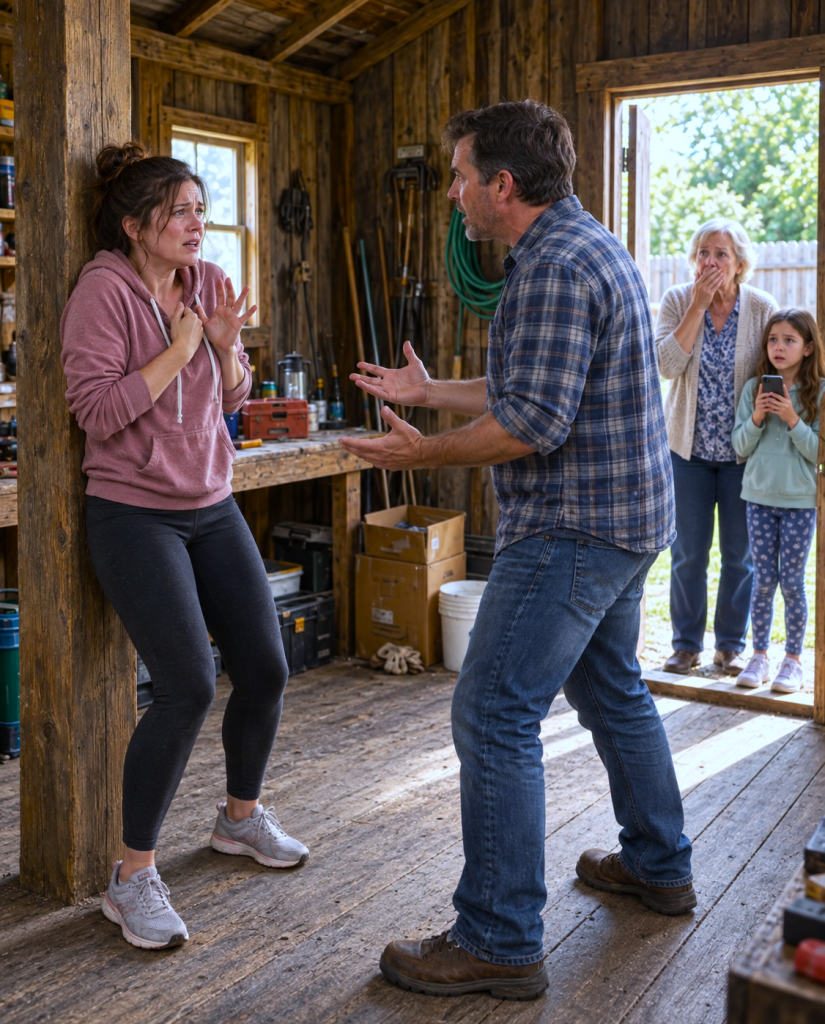
“Let her remember her place.” By the time I reached the hospital, the doctors were not only documenting what had happened that afternoon.
They were asking about injuries that were much older. And my youngest daughter was sitting beside my bed with a cracked old phone hidden inside the sleeves of her hoodie.
The hospital blanket felt rough against my skin, and the paper cup of coffee beside the bed had gone cold before I ever touched it.
My daughter, Lily, sat in the chair closest to me with both hands buried inside the sleeves of her gray hoodie.

She would not look toward the door.
I had spent years explaining things away.
A bruise came from bumping into a cabinet.
A torn shirt happened while carrying laundry.
A swollen wrist came from slipping in the garden.
A canceled family visit was because I had a headache.
Every excuse had sounded believable when I said it quickly enough.
That was the strange thing about lies you told to protect someone hurting you.
Eventually, you learned to tell them before anyone even asked.
This time, there was nothing left to explain.
The staff had already documented what they could see. A nurse had asked me gentle questions while another woman from the hospital sat nearby explaining that I did not have to return home if I did not feel safe.
Then the doctor noticed older marks.
Some faint.
Some not.
He looked at me with the kind of expression people use when they already know the answer but are giving you one last opportunity to say it yourself.
“How did these happen?”
I stared at the white plastic hospital wristband around my arm.
I could not answer.
Lily did.
“It wasn’t the first time.”
Her voice was so quiet I almost wished I had misheard her.
I turned toward her.
“What do you mean?”
She pulled her knees closer to the chair.
For a few seconds, she looked younger than twelve.
Then she spoke with the exhausted seriousness of someone who had been carrying an adult secret much too long.
“I started paying attention.”
My chest tightened.
“To what?”
“Everything.”
She told me she knew which footsteps meant her father was angry.
She knew the difference between the sound of his work boots when he was tired and the sound they made when he was looking for someone to blame.
She knew that if the refrigerator door slammed twice, she should take her little sister upstairs.
She knew that when her grandmother came over unexpectedly, there was often going to be an argument because her grandmother never calmed him down.
She encouraged him.
Lily knew when to turn the television louder.
She knew when to bring eight-year-old Emma into her bedroom and tell her they were having a movie night.
She knew when to send my sister, Claire, a meaningless text like:
Do you still have that cookie recipe?
Because Claire had once told the girls that if they ever felt frightened and could not explain why, they could send her any random question and she would call.
I had thought I was hiding the worst of my marriage from my children.
Instead, they had been learning how to survive it with me.
That hurt differently.
I covered my mouth.
“Oh, Lily.”
Her eyes filled.
“I’m sorry.”
I immediately shook my head.
“No. No, sweetheart. You have nothing to be sorry for.”
“But I should’ve told someone sooner.”
The words cut through me.
I reached for her hand.
“You were a child.”
She looked down.
“I’m still a child.”
I had no answer for that.
Because she was right.
And yet my daughter had been watching doors, listening to footsteps, protecting her sister, and memorizing escape routes while I kept convincing myself that staying was somehow keeping the family together.
That realization nearly broke me.
Lily pulled the cracked phone from her hoodie pocket.
It was an old device that had belonged to the family years earlier. The screen was splintered in one corner and the battery barely held a charge.
My husband, Mark, stopped caring about it long ago.
Lily had not.
“Why do you still have that?” I asked.
She looked at me.
“Because Dad doesn’t check it.”
Not for games.
Not for pictures.
Not because she wanted another phone.
She kept it because no one checked it anymore.
When Mark pulled me toward the shed that afternoon, Lily grabbed the phone.
When he tied my hands, she followed far enough behind that he did not notice.
When my mother-in-law, Diane, stood near the doorway laughing, Lily recorded what she could without stepping into sight.
Then she sent the video to my sister.
“Why Claire?” I asked.
Lily finally looked directly at me.
“Because she always believes you before Dad starts talking.”
That sentence landed harder than any excuse I had ever made for him.
Mark had always been good at arriving after the damage with a softer voice.
He could turn rage into a misunderstanding before anyone else finished explaining what had happened.
If he shoved something from a table, I had “provoked him.”
If he grabbed my wrist, he had been “trying to stop me from walking away.”
If I cried, I was “emotionally unstable.”
If the girls became frightened, I had “filled their heads with nonsense.”
Diane supported every version.
“Marriage is difficult.”
“Men lose their tempers.”
“You’re too sensitive.”
“My son works hard.”
“You know how to push his buttons.”
“Why do you always need to make yourself the victim?”
Over time, those sentences had become walls.
But this time, Lily sent the truth outside our house before either of them could rewrite it.
Footsteps suddenly came fast down the hospital corridor.
Lily straightened.
My entire body tensed.
Then my sister appeared in the doorway.
Claire carried her purse in one hand and her phone in the other.
Her face changed when she saw me.
Not dramatically.
Claire had always been careful about letting her emotions make decisions for her.
But I saw her jaw tighten.
She crossed the room, kissed the top of Lily’s head, and pulled a chair beside my bed.
“I got it,” she said.
My throat tightened.
She looked at Lily first.
“You did exactly what you needed to do.”
Then she looked at me.
“There’s something in that video you need to hear again.”
“I already remember what Diane said.”
Claire shook her head.
“Not her.”
Lily went still beside me.
Claire unlocked her phone, found the clip, and lowered the volume until only the three of us could hear.
I recognized the shed.
I recognized Mark’s voice.
I recognized Diane laughing.
I recognized the scrape of rope against the old beam.
Then another sentence came through the speaker.
One I had been too terrified in that moment to register.
Claire stopped the video.
She looked at Lily.
Then at me.
And put the phone into my hand.
“Play it,” I said.
Claire restarted the clip from a few seconds earlier.
Mark’s voice came first, low and angry.
Then Diane laughed near the doorway.
After that came the detail I had missed.
“Don’t worry,” Mark said. “Once she calms down, she’ll tell everyone she fell in here. She always does.”
Diane answered.
“She knows what happens if she embarrasses this family.”
My hand began shaking.
The recording did not contain some dramatic confession made for a courtroom.
It captured something worse.
A routine.
An expectation.
They already knew what story I would tell afterward because I had been telling versions of that story for years.
Mark knew I would protect him.
Diane expected it.
My daughter had recorded the moment they counted on my fear.
“That’s why I kept recording,” Lily whispered.
Claire waited.
She did not tell me what to do.
She did not say I had to leave.
She did not tell me I should have left earlier.
She simply waited for me to make a choice.
For years, that choice had belonged to everyone except me.
I handed the phone back to Lily.
“Keep the original.”
She closed both hands around it.
Then the hospital-room door opened.
Mark stepped inside.
For a second, nobody moved.
He had changed clothes.
That was the first thing I noticed.
He had showered.
His hair was combed.
He wore the navy button-down shirt he usually wore when we attended school meetings or family dinners.
He looked less like the man from the shed and more like the husband everyone else knew.
That was intentional.
Mark understood appearances.
“Sarah.”
His voice was quiet.
Almost gentle.
Lily stood immediately.
Claire did too.
Mark looked at them.
Then he looked back at me.
“What are they doing here?”
The question was so familiar that for half a second my old instincts returned.
Explain.
Soften.
Calm him.
Protect everyone from what might happen if he became angry.
Then I looked at Lily.
Her shoulders were shaking.
And something inside me changed.
“They’re with me,” I said.
Mark blinked.
“I asked what they’re doing here.”
“And I answered you.”
Claire stepped slightly closer to Lily.
Mark’s eyes narrowed.
“I need to speak to my wife privately.”
“No,” I said.
He looked genuinely surprised.
“What?”
“You’re not speaking to me privately.”
“Sarah, don’t do this.”
“Do what?”
“Turn this into some kind of spectacle.”
Claire’s mouth tightened.
Mark noticed.
“This is between my wife and me.”
“No,” Claire said. “It stopped being private when Lily had to record it because she was afraid nobody would believe her mother.”
His face changed.
Only slightly.
But I saw it.
“What recording?”
Nobody answered.
Mark turned toward Lily.
“What did you do?”
She stepped backward.
I pushed myself higher against the pillows despite the pain.
“Do not talk to her.”
Mark looked at me.
Something cold passed across his face before the gentle expression returned.
“Sarah, you’re upset. I understand that.”
I almost laughed.
He had used that phrase so many times.
You’re upset.
You’re tired.
You’re confused.
You’re emotional.
You misunderstood.
He took one step toward the bed.
Claire moved between us.
“Don’t.”
His face hardened.
“Get out of my way.”
The monitor beside me began beeping faster.
A nurse appeared almost immediately.
“Sir, you need to step back.”
Mark changed again.
His shoulders relaxed.
His voice softened.
“I’m sorry. My wife and I had an accident at home. Everyone’s emotional.”
An accident.
There it was.
The story had begun.
The nurse looked at me.
“Do you want this visitor here?”
For most people, that was a simple question.
For me, it felt like standing at the edge of a cliff.
Mark stared at me.
Not openly threatening.
He did not need to.
I knew the looks.
I knew what different versions meant.
This one meant:
Think carefully.
I looked at Lily.
Then at Claire.
Then at the nurse.
“No.”
Mark’s eyes widened.
The nurse nodded.
“Sir, you need to leave.”
“Sarah.”
“I said no.”
He laughed once, quietly.
“You don’t know what you’re doing.”
That sentence had controlled half my adult life.
I looked at him.
“No,” I said. “I think I finally do.”
The nurse called security.
Mark did not fight them.
Of course he did not.
There were witnesses.
Instead, he walked out while shaking his head like he was the disappointed one.
Just before disappearing into the corridor, he looked at me.
“You’ll regret humiliating me like this.”
The nurse heard him.
So did hospital security.
For once, his threat did not disappear into a room where only I could remember it.
A hospital social worker named Maria arrived less than twenty minutes later.
She spoke slowly.
She asked where Emma was.
My blood turned cold.
I had been so focused on the hospital that I had forgotten Mark’s mother picked Emma up from school twice a week.
“Diane,” I whispered.
Claire immediately pulled out her phone.
“Not anymore.”
She called our neighbor, Mrs. Alvarez, whose granddaughter attended the same elementary school.
Then Claire called the school.
Maria helped contact the appropriate authorities while another staff member verified who was allowed to remove Emma.
My hands shook the entire time.
“What if Diane already has her?”
Claire squeezed my shoulder.
“We’ll find her.”
The answer came twelve agonizing minutes later.
Emma was still at school.
Diane had called the office saying she would be late.
Those twelve minutes changed the shape of fear for me forever.
I could tolerate being frightened for myself.
Fear for my daughter felt like drowning.
Claire drove directly to the school with the proper authorization after hospital staff and authorities confirmed arrangements.
Lily stayed with me.
She refused to leave.
By evening, Emma was sitting beside her sister in my hospital room eating crackers from a plastic package.
She did not know everything.
She knew enough.
“Are we going home tonight?” she asked.
I looked at Claire.
Then Maria.
Then my daughters.
“No.”
Emma frowned.
“Where are we going?”
“To Aunt Claire’s for now.”
Her face relaxed immediately.
“Can we sleep in the room with the yellow blanket?”
Claire smiled.
“You can sleep anywhere you want.”
Emma nodded and returned to her crackers.
Children sometimes accepted life-changing events with heartbreaking simplicity.
Yellow blanket.
Crackers.
A familiar aunt.
A safe door.
That was enough for one night.
The police arrived later.
I almost changed my mind when they entered.
Not because I wanted to protect Mark.
Because telling strangers the truth felt like betraying the person I had been pretending to be.
The wife who had everything under control.
The mother keeping her family together.
The woman whose marriage had “normal problems.”
Once I said the truth aloud, I could never crawl back inside that story.
One officer sat near the foot of the bed.
Another spoke with Lily separately, with proper support present.
I told them about the shed.
Then about the incident six months earlier when Mark had thrown my keys into the woods because I tried to leave during an argument.
Then about the night he punched the pantry door beside my head.
Then about the time he squeezed my arm so tightly that my fingers went numb.
Then I remembered another incident.
And another.
Once the door opened, the memories did not arrive in order.
They fell out of me.
The officer did not interrupt.
When I apologized for becoming confused about dates, he said, “Take your time.”
Take your time.
I had not realized how rarely anyone in my life allowed me to do that.
Claire handed over a copy of Lily’s recording while keeping the original preserved.
She also showed messages Mark had sent me.
Most looked harmless.
Where are you?
Answer me.
Why aren’t you home?
You’re making this worse.
Call me now.
Taken individually, they looked like an impatient husband.
Placed beside everything else, they became part of a pattern.
Then Claire showed me something I had forgotten.
Three years earlier, I had texted her after Mark broke a lamp during an argument.
I wrote:
I’m okay. Please don’t come over. He’s calmed down.
Claire had replied:
You don’t have to keep protecting him.
At the time, I became angry with her.
Now I stared at the message until the words blurred.
“I’m sorry,” I whispered.
Claire shook her head.
“For what?”
“For every time you tried to help me.”
She leaned closer.
“You were trying to survive.”
I began crying.
Not loudly.
I was too tired for that.
The tears simply came.
Claire held my hand.
“I kept thinking if I found the right words,” she said, “you’d leave.”
“I kept thinking if I became the right wife, he’d stop.”
Neither of us spoke after that.
There was nothing left to say.
I was released from the hospital the following afternoon with instructions for follow-up care.
Walking into Claire’s house felt strange.
Her home smelled like coffee, laundry detergent, and the chicken soup she had started before coming to get us.
Normal smells.
I had forgotten normal houses could smell peaceful.
The girls went upstairs.
Claire had turned her guest room into a temporary bedroom.
Two mattresses.
Fresh sheets.
A lamp between them.
A basket filled with toothbrushes, shampoo, socks, notebooks, and small things we had left behind.
Emma sat on one mattress.
“Are we living here now?”
“For a little while,” I said.
“What about Dad?”
My stomach tightened.
Lily looked toward me.
I sat between them.
There was no perfect way to explain something like this.
So I stopped trying to find perfect words.
“Dad hurt me,” I said. “What he did was wrong. We are staying somewhere safe while adults help us figure out what happens next.”
Emma’s eyes filled.
“Is Dad bad?”
I inhaled slowly.
“Your dad made choices that were dangerous and wrong. You can love someone and still need to be protected from what they do.”
She thought about that.
“Is Grandma bad?”
Lily looked down.
That question was harder.
“Grandma also made choices that were wrong.”
Emma nodded slowly.
Then she asked the question I had feared.
“Did I do something?”
I pulled her into my arms.
“No.”
“Because sometimes Dad got mad when we were loud.”
“No, sweetheart.”
“Or when I spilled things.”
“No.”
“Or when Lily didn’t clean her room.”
“No.”
I looked at both daughters.
“None of this happened because of you. Not one part.”
Lily stared at me.
“And not because of you either?”
The room became very quiet.
I had spent years telling my daughters things I never believed about myself.
You deserve respect.
People should not scare you.
You can say no.
You can leave situations where you feel unsafe.
Suddenly Lily was asking whether those rules applied to me.
I swallowed.
“No,” I said. “Not because of me either.”
That was the first time I said it and meant it.
The next morning, Mark began calling.
When I did not answer, he texted.
Sarah, we need to talk like adults.
Then:
The girls need their father.
Then:
My mother is devastated by what you’re accusing her of.
Then:
People are going to find out about this.
Then:
Think about what you are doing to our family.
Not what he had done.
What I was doing by refusing to hide it.
That distinction suddenly seemed so obvious that I could not understand how I had missed it for years.
Claire told me not to respond without speaking to the people helping with the case.
Mark called eleven times that day.
Diane called seventeen.
Her voicemails changed in tone.
The first was furious.
“How dare you send police asking questions about my son?”
The second was wounded.
“I treated you like a daughter.”
The third was threatening without using the word threat.
“You need to consider how ugly things become when families start making accusations.”
The fourth sounded almost sweet.
“Sarah, honey, marriages have difficult moments. Don’t destroy twenty years because of one bad afternoon.”
One bad afternoon.
I saved every message.
On the third day, Lily came downstairs carrying the old phone.
“There’s more.”
I looked up from Claire’s kitchen table.
“More what?”
“Videos.”
My heart sank.
“How many?”
“Not all are videos.”
She sat beside me.
Some were audio recordings.
Some were photographs of damaged objects.
One showed a broken bedroom door.
Another showed food Mark had swept from the kitchen counter during an argument.
Lily had recorded dates in a notes app.
March 18—Dad yelled because Mom visited Aunt Claire.
April 2—Grandma said Mom needs to learn who runs this family.
April 29—Dad took Mom’s car keys.
May 11—Dad checked Mom’s phone for almost an hour.
June 7—Mom slept in my room after they fought.
I could barely continue reading.
“Why did you do this?”
Lily rubbed the edge of the cracked screen.
“I thought someday someone would ask.”
A sound escaped me somewhere between a sob and a gasp.
My twelve-year-old daughter had been building evidence because she did not trust adults to see what was happening without proof.
I pushed the phone away.
“Come here.”
She leaned into me.
“I’m so sorry.”
She stiffened.
I realized immediately what I had said.
“No,” I corrected myself. “Not sorry that you helped. I’m sorry you ever believed this had to be your job.”
She began crying against my shoulder.
“I thought if you died—”
Her voice broke.
My entire body went cold.
She could not finish.
She did not need to.
I held her tighter.
“I’m here.”
“I thought he was going to kill you one day.”
The kitchen disappeared around me.
Everything became that sentence.
I had spent years measuring Mark against previous versions of himself.
He calmed down last time.
He apologized eventually.
He never went too far.
I realized I had been judging danger by whether I survived it.
Lily had been judging it by whether I might not survive next time.
That afternoon, I made another decision.
“We are not going back.”
Claire looked at me.
I repeated it.
“I don’t care what happens to the house. The furniture. The dishes. The photographs. Whatever is there. We are not going back to live with him.”
For the first time since the hospital, Lily’s shoulders dropped.
Not completely.
Just enough for me to notice.
The weeks that followed were harder than stories usually make them sound.
Leaving did not instantly make me fearless.
Sometimes it made me more afraid.
I checked Claire’s windows constantly.
I flinched when cars slowed near the house.
I woke at two in the morning convinced I heard Mark’s truck.
The girls slept with the hallway light on.
Emma began asking whether the doors were locked before bed.
Lily stopped wearing headphones because she wanted to hear what was happening around her.
Recovery did not look heroic.
It looked like three people learning that every unexpected noise did not require a plan.
We worked with professionals who helped us handle legal steps and safety arrangements.
I filed for protection.
Mark disputed everything.
Of course he did.
His lawyer described our marriage as “volatile on both sides.”
Mark told relatives I was having some kind of emotional collapse.
Diane called my cousins and said Claire had manipulated me.
She told one aunt that I had become obsessed with punishing Mark.
She told another that Lily was a confused child being pressured by adults.
Then the recording became known.
The stories changed.
Mark stopped saying nothing happened.
He began saying what happened had been “misinterpreted.”
Diane stopped saying she was not there.
She began saying she had only arrived near the end.
Then another piece of evidence appeared.
It came from the most unexpected person.
Our neighbor, Mr. Patterson.
He was seventy-one and lived across the road.
I had known him for nine years.
He rarely spoke longer than necessary.
One afternoon, he called Claire.
“I heard Sarah isn’t staying at the house,” he said.
Claire looked at me before answering.
“That’s right.”
There was a pause.
“I have something she might want.”
Twenty minutes later, he stood on Claire’s porch holding a small memory card.
He looked uncomfortable.
“I’ve got security cameras because people used to steal tools from my garage,” he explained. “One camera catches part of your driveway.”
My stomach tightened.
“What did it record?”
“Your husband pulling you toward the back of the property.”
I stared at him.
He looked down.
“I should’ve called someone.”
I did not know what to say.
He continued.
“I saw you two arguing before. Figured it wasn’t my business. That day looked different. I went outside, but by then you were behind the house.”
He swallowed.
“I heard shouting.”
Claire took the card.
Mr. Patterson looked at me.
“I’m sorry.”
For years I had heard the phrase private family problem.
Mr. Patterson had believed it too.
But now he looked like a man realizing privacy should never be confused with permission.
The camera footage did not show the shed interior.
It did not need to.
It showed Mark gripping my arm.
It showed me trying to pull away.
It showed Diane arriving minutes later and walking calmly toward the back.
It showed Lily slipping out with the old phone.
Then it showed emergency responders arriving later.
Piece by piece, the truth existed outside my memory.
That mattered more than I expected.
Because abuse had changed the way I trusted myself.
Mark could tell me something had not happened ten minutes after it happened, and somehow I would end up wondering whether I had exaggerated.
Now there were recordings.
Messages.
Medical records.
Photographs.
Witnesses.
Dates.
Evidence did more than prove things to other people.
It returned my own memories to me.
A month after leaving, I was allowed to collect essential belongings under safe arrangements.
I did not want to go.
The girls stayed with Claire.
When I entered the house, I expected to feel grief.
Instead, I felt disoriented.
Everything looked smaller.
The kitchen where I had spent thousands of hours looked like an ordinary kitchen.
The staircase where I once sat crying after everyone went to bed looked like wood and carpet.
The dining table where Diane lectured me about respecting Mark looked cheap.
Fear had made that house enormous.
Without him inside it, the walls were just walls.
I packed clothing.
Documents.
The girls’ birth certificates.
Family photographs.
My grandmother’s jewelry.
Emma’s stuffed rabbit.
Lily’s favorite books.
Then I entered the bedroom Mark and I had shared.
His side of the closet was half empty.
I found a cardboard box pushed behind some shoes.
Inside were old financial records.
I sat on the floor and went through them.
That was when I discovered another kind of control.
For years, Mark told me we barely had enough money.
He questioned grocery receipts.
He complained when I bought the girls new shoes.
He criticized me for spending twenty dollars on lunch with Claire.
Meanwhile, statements showed an account in his name containing far more than I knew we had.
There were transfers.
Cash withdrawals.
Money moved into accounts I had never seen.
It was not the dramatic fortune people discover in movies.
It was enough to show that when Mark told me we could not afford for me to leave, he was lying.
I photographed everything and gave the documents to my attorney.
Standing in that bedroom, I suddenly remembered an argument from four years earlier.
I had mentioned applying for a full-time administrative position at the school district.
Mark laughed.
“Why? So strangers can raise our girls while you pretend to have a career?”
I did not apply.
Another year, Claire offered to help me complete a certification course.
Mark said the tuition was impossible.
It was not.
He did not just want a wife.
He wanted dependence.
Once I understood that, dozens of memories rearranged themselves.
The friends he disliked.
The jobs he discouraged.
The car that was always technically “his” even though I drove it.
The passwords he insisted on knowing.
The family gatherings he found reasons to cancel.
The way every independent decision became evidence that I did not respect him.
When I left the house that afternoon, I took one final thing.
A framed photograph from the hallway.
It showed the four of us at the beach six years earlier.
Mark had his arm around my shoulder.
Lily was smiling with two missing front teeth.
Emma was a toddler.
We looked happy.
I almost left it behind.
Then I realized I did not need to erase every happy memory to acknowledge what came later.
The girls deserved their childhood.
Even the good pieces.
I packed the photograph.
The legal process moved slowly.
Mark eventually faced serious consequences connected to what happened and the evidence surrounding it.
Diane was also forced to answer for her role.
Neither accepted responsibility easily.
At one hearing, I saw Mark for the first time in weeks.
He looked tired.
Older.
Smaller.
I expected my body to collapse when I saw him.
Instead, I felt my hands tremble and then settle.
He looked at me across the room.
For years, one look from him could change my entire day.
That afternoon, he had to sit where he was told and speak when permitted.
He could not follow me into the hallway.
He could not demand a private conversation.
He could not decide when I left.
The structure of the room gave me something our marriage never had.
Boundaries he could not rewrite.
At one point, his attorney referred to the shed as an “isolated incident arising from marital conflict.”
My attorney placed Lily’s timeline beside the medical documentation.
Isolated.
The word disappeared quickly.
Diane continued telling anyone who listened that she had only been trying to protect her son.
Claire heard about one conversation in which Diane said:
“A mother is supposed to stand by her child.”
When Claire told me, I thought about it for a long time.
Then I realized Diane was right about one thing.
A mother should stand by her child.
But standing by your child does not mean teaching him that he can hurt people without consequences.
It does not mean laughing while someone else is terrified.
It does not mean helping hide the truth.
It means telling your child when he is wrong before the world has to do it for you.
Diane had confused loyalty with permission.
And Mark had built his entire adulthood inside that permission.
Lily started therapy first.
At the beginning, she barely spoke.
Then one afternoon on the drive home she said, “I told her about the phone.”
I kept my eyes on the road.
“How did that feel?”
“Weird.”
“Good weird or bad weird?”
“Both.”
I nodded.
After a moment she asked, “Do I have to keep it forever?”
I knew exactly what she meant.
The old phone.
“No.”
“But it has everything.”
“The important things have been safely copied where they need to be.”
She stared through the window.
“I hate looking at it.”
“Then you don’t have to.”
Two weeks later, after confirming everything necessary had been preserved, Lily asked me to sit with her on Claire’s back porch.
She placed the cracked phone on the table.
“I want to throw it away.”
“Okay.”
She looked surprised.
“That’s it?”
“It’s yours.”
She turned it over.
“I thought you’d say we should keep it because it saved us.”
I thought carefully.
“It helped us,” I said. “You saved us by being brave enough to use it. The phone is just a phone.”
Her eyes filled.
“What if I wasn’t brave?”
“You were twelve. You should never have needed to be brave like that.”
She looked down.
For a long time neither of us moved.
Then Lily placed the phone inside a small electronics recycling box Claire kept in the garage.
No ceremony.
No dramatic goodbye.
Just a girl deciding she did not need to sleep beside evidence anymore.
Afterward, she asked if we could get ice cream.
We did.
Emma’s healing looked different.
She became attached to routines.
Every night she asked three questions.
“Doors locked?”
“Yes.”
“Windows locked?”
“Yes.”
“Aunt Claire downstairs?”
“Yes.”
Eventually the third question changed.
“Mom downstairs?”
“Yes.”
Then months later she stopped asking.
One evening I noticed her bedroom door was closed while she slept.
For most parents that would mean nothing.
I stood in the hallway crying.
Safety had become so normal that my eight-year-old no longer needed to listen for footsteps.
My own recovery came more slowly.
I found work at the school district.
The same district where I almost applied years earlier.
The position was not glamorous.
I handled attendance reports, parent calls, records, and schedules.
The first time my supervisor handed me my identification badge, I stared at my name printed beneath my photograph.
SARAH BENNETT.
No Mrs. Mark Bennett.
No wife.
No explanation.
Just me.
My first paycheck went into an account Mark could not see.
I bought groceries without photographing the receipt.
I ordered lunch with Claire and did not calculate whether the cost would start an argument.
I replaced my shoes because the old pair hurt my feet.
Tiny acts of freedom felt embarrassingly enormous.
One Saturday, Lily found me standing in the supermarket aisle staring at two brands of coffee.
“What are you doing?”
“Choosing coffee.”
“You’ve been standing here five minutes.”
“I know.”
She laughed.
“Mom, just pick one.”
I laughed too.
“I can pick whichever one I want.”
She looked at me strangely.
Then she understood.
“Get the expensive one.”
We put it in the cart.
For months, there were still moments when guilt returned.
Mark wrote letters through approved channels.
Some apologized.
Some blamed.
Some combined both.
One said:
I know I made mistakes, but I never thought you’d take my daughters from me.
My daughters.
As if they were possessions.
Another said:
I loved you more than anyone, and you turned everyone against me.
I read that sentence three times.
Then I wrote something on a separate sheet of paper.
Love does not require fear to survive.
I taped it inside my desk drawer.
Whenever doubt returned, I read it.
The hardest letter arrived close to what would have been our twentieth wedding anniversary.
Mark wrote about our first apartment.
The old green couch.
The night Lily was born.
The camping trip where rain flooded our tent and we laughed until sunrise.
The letter was filled with good memories.
That made it dangerous in a different way.
People imagine abusive relationships are terrible every minute.
Mine was not.
There had been birthdays.
Vacations.
Inside jokes.
Christmas mornings.
Sunday pancakes.
There were years when Mark could be funny, attentive, generous.
That did not erase what he became.
But remembering the good parts made grief complicated.
I sat at Claire’s kitchen table holding that letter.
“I miss who I thought he was,” I admitted.
Claire nodded.
“That doesn’t mean you want him back.”
“I know.”
“You’re allowed to grieve.”
I looked at her.
“Even after everything?”
“Especially after everything.”
That helped.
I stopped treating sadness like betrayal.
I could miss the man who once held our newborn daughter at three in the morning while still refusing to return to the man who frightened her twelve years later.
Both truths could exist.
A year after the hospital, I moved out of Claire’s house.
Not far.
Fourteen minutes away.
The girls and I rented a small three-bedroom house with white siding and a maple tree in front.
It was not impressive.
The kitchen cabinets were outdated.
The living-room carpet had a stain near one wall.
The upstairs bathroom faucet squeaked.
I loved every inch.
On moving day, Emma ran through the empty rooms.
“This one is mine!”
Lily called from the hallway.
“You picked the smaller room.”
“I like the window!”
Claire carried in a box.
“Someone please tell me where the coffee maker is before I resign from this family.”
We laughed.
That evening, we ate pizza on the living-room floor because the dining table had not arrived.
Sunset came through the front windows.
I realized I had not checked the driveway once.
After dinner, Lily disappeared upstairs.
She returned carrying something wrapped in tissue paper.
“This is for you.”
“What is it?”
“Open it.”
Inside was a small wooden sign she had painted in art class.
Three words.
OUR SAFE PLACE.
I pressed my hand over my mouth.
Emma leaned against me.
“Do you like it?”
“I love it.”
We hung it inside the front entrance.
Not because I wanted our home to be defined forever by what we escaped.
Because safety deserved to be celebrated until it became ordinary.
A few months later, I received one of the last major updates regarding Mark’s case.
By then, the evidence had become impossible to explain away.
The recording.
The medical findings.
The previous injuries.
The messages.
The timeline.
The neighbor’s footage.
Statements from people who had seen pieces of the pattern over the years.
Mark ultimately accepted legal consequences rather than continue pretending nothing happened.
Diane also faced consequences for her actions and involvement.
When I heard the final outcome, I expected satisfaction.
Maybe triumph.
Instead, I felt tired.
Claire hugged me.
“It’s over.”
I shook my head.
“Not exactly.”
She understood.
Court cases can end on paper.
Healing does not follow court calendars.
But something important had ended.
They could no longer force me to carry their version of what happened.
That belonged to them now.
The shame too.
For years, I carried shame for being hurt.
I carried shame for staying.
Shame for lying.
Shame for making excuses.
Shame for what the girls witnessed.
Eventually, I understood that shame had been doing Mark’s work long after I left him.
So I began putting it down.
Not all at once.
Piece by piece.
One afternoon, nearly eighteen months after the hospital, I drove past the road leading toward our old house.
I normally avoided it.
That day, traffic had been rerouted.
My hands tightened around the steering wheel.
Lily sat beside me.
She noticed.
“You okay?”
“Yes.”
“You sure?”
I looked at her.
“I think so.”
When we passed the intersection, I caught a glimpse of the distant roof between trees.
My chest tightened.
Then we kept driving.
That was all.
The house did not pull me backward.
It did not own me.
At the next intersection, Lily changed the radio station.
A song she liked came on.
She turned it up.
And we continued toward the shopping center because she needed poster board for a school project.
That ordinary moment became one of my favorite memories.
Not escaping dramatically.
Not standing in court.
Not hearing a verdict.
Buying poster board with my daughter while the past disappeared behind us.
Lily was fourteen when she finally asked me the question I knew would come one day.
“Why didn’t you leave earlier?”
We were sitting on our back steps.
Emma was inside doing homework.
I could have defended myself.
I could have described money.
Fear.
Threats.
Isolation.
The gradual way boundaries moved until you forgot where they began.
All of those things were true.
Instead, I said, “I was afraid.”
Lily waited.
“I also kept believing things would change.”
“Did Dad always act like that?”
“No.”
“When did it start?”
I thought about it.
“There wasn’t one day.”
That was the truth.
“First, he criticized people I loved. Then he made it difficult to see them. Then he controlled money. Then arguments became frightening. Then frightening became normal.”
She looked at me.
“So you didn’t notice?”
“I noticed pieces. I didn’t understand the whole picture.”
Lily nodded.
“That makes sense.”
I looked at her.
“You don’t have to protect me from the truth.”
“I’m not.”
She leaned her shoulder against mine.
“I just think people always ask why someone stayed instead of asking why someone made them afraid to leave.”
I stared at my daughter.
Fourteen years old.
Still young.
But no longer the frightened girl hiding behind a shed with a broken phone.
I kissed her forehead.
“You’re very wise.”
She rolled her eyes.
“Please never say that in front of my friends.”
I laughed.
“Deal.”
Years earlier, I would have imagined survival as one enormous act of courage.
It was not.
For me, it was hundreds of small choices.
Saying no when Mark entered the hospital room.
Letting the nurse call security.
Telling the truth to police.
Sleeping at Claire’s house.
Saving voicemails.
Opening my own bank account.
Applying for a job.
Signing divorce documents.
Buying coffee without asking permission.
Moving into a small house.
Allowing my daughters to close their bedroom doors.
Going to therapy.
Admitting I sometimes missed the good memories.
Learning that missing something did not mean returning to it.
Eventually, I even stopped wondering whether Mark understood what he had done.
That question had consumed me at first.
Did he finally realize?
Was he sorry?
Did Diane understand?
Would either of them ever admit the truth?
Then one morning, I realized their understanding was no longer required for my healing.
That was freedom too.
Three years after the hospital, Claire came over for dinner on Lily’s birthday.
Lily was fifteen.
Emma was eleven.
The house was loud.
There were balloons taped crookedly across the kitchen.
Claire brought a chocolate cake even though Lily had requested vanilla because Claire always forgot.
“Every year,” Lily complained.
“Chocolate builds character,” Claire replied.
“That doesn’t even make sense.”
“It makes perfect sense when you’re the person who bought the cake.”
Emma laughed so hard she nearly dropped her plate.
I stood near the kitchen counter watching them.
For a moment I saw another version of our lives.
The one we would have had if Lily never found that old phone.
If she had been too frightened to follow.
If Claire had not answered quickly.
If I had told the hospital staff another story.
I could not stay inside that thought long.
There are questions that do not deserve to become homes.
After cake, Lily handed me a small envelope.
“It’s not your birthday,” I said.
“I know.”
Inside was a photograph.
It had been taken that afternoon.
Claire, Emma, Lily, and me standing in front of our house.
We were laughing because the camera timer nearly ended before Claire got into place.
On the back, Lily had written:
This is what happened after.
I read the sentence twice.
“This is what happened after,” I repeated.
She nodded.
“Everyone remembers the bad day.”
She shrugged.
“I want you to remember what came next.”
I pulled her into my arms.
For years, I believed the worst thing that happened to us would become the center of our family forever.
Lily proved me wrong.
The shed was not the end.
The hospital was not the end.
The recording was not the end.
The court hearings were not even the end.
They were a doorway.
Painful.
Terrifying.
Necessary.
But still only a doorway.
What happened afterward was quieter.
My daughters grew.
I worked.
Claire visited too often and complained about my coffee even though she drank three cups.
Emma joined the school choir.
Lily learned to drive.
We argued about curfews.
We forgot permission slips.
We burned dinner.
We spent Sundays watching terrible movies.
We celebrated birthdays.
We planted tomatoes that barely grew.
We lived.
That became the victory.
Not revenge.
Not watching Mark lose control of the story.
Not seeing Diane forced to answer questions she once believed nobody would ask.
The victory was that my daughters learned home could be ordinary.
Nobody listened for footsteps.
Nobody hid phones.
Nobody memorized moods before entering a room.
One summer evening, years after everything happened, I was sitting alone on the porch when Lily came outside.
She was preparing to leave for college.
She sat beside me.
“Mom?”
“Hmm?”
“Do you ever think about the phone?”
“Sometimes.”
“Me too.”
She looked toward the yard.
“I used to think that phone saved us.”
“It helped.”
She nodded.
“But I think the hospital did too.”
“Yes.”
“And Aunt Claire.”
“Definitely.”
She smiled.
“And you.”
I looked at her.
“What?”
“You saved us too.”
My first instinct was to reject that.
She saw it immediately.
“You did.”
“Lily, you were the one who—”
“I recorded it. Aunt Claire came. The doctors helped. But you were the one who said no when Dad walked into that room.”
I remembered the moment.
Mark standing near the door.
The nurse asking whether I wanted him there.
My entire body terrified.
One word.
No.
Lily continued.
“You could’ve gone home.”
She looked at me.
“But you didn’t.”
My eyes filled.
“I almost did.”
“I know.”
“How?”
“You looked at him the way you always did when you were deciding whether keeping him calm was more important than what you wanted.”
I looked down.
“And then you looked at me.”
She smiled faintly.
“And something changed.”
She was right.
I had always thought courage arrived like fire.
Hot.
Powerful.
Impossible to miss.
Mine arrived as exhaustion.
I became too tired to lie.
Too tired to protect someone who hurt me.
Too tired to watch my daughters learn fear from my marriage.
Sometimes courage is not feeling strong.
Sometimes it is realizing you cannot survive another year pretending weakness is peace.
I reached for Lily’s hand.
“I’m proud of you.”
“I’m proud of you too.”
We sat quietly.
The porch light came on automatically.
Somewhere down the street, someone started a lawn mower.
A dog barked.
A car door closed.
Normal sounds.
No fear attached to any of them.
The next month, we drove Lily to college.
Claire followed in her SUV because somehow one girl needed enough belongings for a small country.
Emma cried before we even reached the dorm.
“I’m not dying,” Lily told her.
“You’re four hours away.”
“Three and a half.”
“That’s basically another planet.”
Lily hugged her.
I helped make the bed.
Claire complained about the mattress.
We arranged photographs across Lily’s desk.
One was the picture from her fifteenth birthday.
This is what happened after.
Before we left, Lily stopped me near the dormitory entrance.
“Mom.”
“Yes?”
She hugged me.
Not a quick hug.
The kind that made my throat ache.
“Thank you for making home safe.”
I closed my eyes.
“You deserved that from the beginning.”
“So did you.”
There it was again.
The lesson my daughters spent years teaching me.
So did you.
On the drive home, Emma slept beside me.
Claire drove.
I watched trees pass the window.
For the first time in years, the future did not feel like something waiting to hurt me.
It felt open.
When we arrived home, I unlocked the front door.
The wooden sign Lily made years earlier still hung inside.
OUR SAFE PLACE.
The paint had faded slightly.
One corner was chipped.
I had considered replacing it many times.
I never did.
I ran my fingers across the letters.
Then I looked around our quiet house.
I thought about the woman in the hospital bed who could barely say no.
I wished I could speak to her.
I wished I could tell her she would one day have her own paycheck.
Her own keys.
Her own home.
Her daughters would laugh loudly without checking whether it annoyed anyone.
She would sleep through the night.
She would make choices without rehearsing explanations.
She would stop apologizing for existing.
She would learn that peace was not the absence of an argument because you were too frightened to speak.
Peace was being allowed to speak at all.
Most of all, I would tell her something I spent years refusing to believe.
What happened to you does not have to become what happens next.
My husband thought fear would keep me silent.
My mother-in-law thought shame would keep the family secret buried.
They were both wrong.
But the person who proved them wrong first was not a police officer.
Not a lawyer.
Not a doctor.
Not even my sister.
It was a twelve-year-old girl with a cracked phone nobody bothered to check.
She captured the truth because the adults around her had spent too long pretending not to see it.
Then she sent that truth to someone who would believe her.
And when the hospital door opened and the man who controlled our lives walked in expecting me to fall back into my place, I finally understood something.
My place was never beneath him.
My place was beside my daughters.
Standing.
Living.
Choosing what happened next.
And this time, the choice belonged to me.
💬 THE END! THANK YOU FOR READING!