
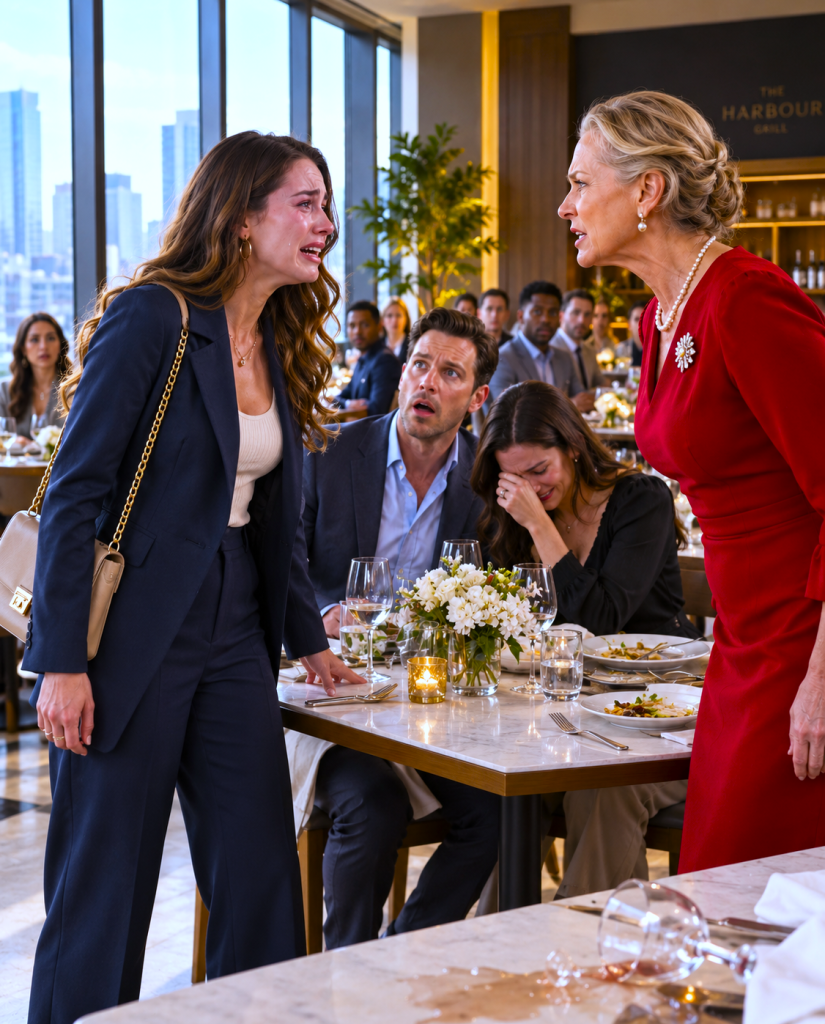
PART 1: THE MOTHER’S DAY THAT ENDED EVERYTHING
On Mother’s Day, my mother looked directly at me across a table covered with flowers, untouched cheesecake, and the expensive brunch I had paid for. Then Diane Whitmore said something so cruel that for several seconds, I couldn’t even process that the words had come from my own mother.
“I wish you’d never been my daughter.”
My older brother, Ryan, immediately dropped his eyes toward his plate, while his wife, Melissa, suddenly became fascinated with her napkin. Neither of them defended me, and their silence told me this was going to be another family moment where I was expected to absorb the damage quietly.

“You heard me, Emily. Ever since you married Daniel, everything has become about your career, your house, your life. You barely remember this family exists.”
I was thirty-four and working as a regional operations manager in Charlotte, North Carolina, regularly putting in sixty-hour weeks. Since my father died, I had helped cover Mom’s mortgage, paid Ryan’s legal expenses during his divorce, and even driven four hours through freezing rain the previous Christmas because Mom said she couldn’t tolerate spending the holiday in an empty house.
Apparently, none of those things qualified as putting family first.
“What exactly would have made me a good daughter?”
“Someone who puts family first.”
Ryan finally raised his head, although his concern wasn’t directed toward what Mom had just said to me. As usual, he seemed more interested in preventing an uncomfortable confrontation than acknowledging who had caused it.
“Emily, maybe this isn’t the time.”
I gave a short laugh because that was how things always worked in our family. Whenever somebody hurt me, there was somehow never an appropriate moment to discuss it.
Mom pushed her chair away from the table and stared at me with the familiar expression she wore whenever she wanted gratitude to become an obligation.
“I sacrificed everything for you.”
“And I’ve spent half my adult life paying you back for sacrifices I never asked you to keep using against me.”
Her expression hardened immediately. Instead of reconsidering what she had said, she delivered the sentence that finally destroyed whatever remained of my willingness to keep playing my assigned role.