 Reading Time: 41 minutes
The first time I truly understood that my mother could take something from me while smiling, she was holding my birthday cake in one hand and the keys to my brand-new SUV in the other.
I had turned twenty-four the night before. For most people, twenty-four probably wasn’t a milestone worth remembering. For me, it was.
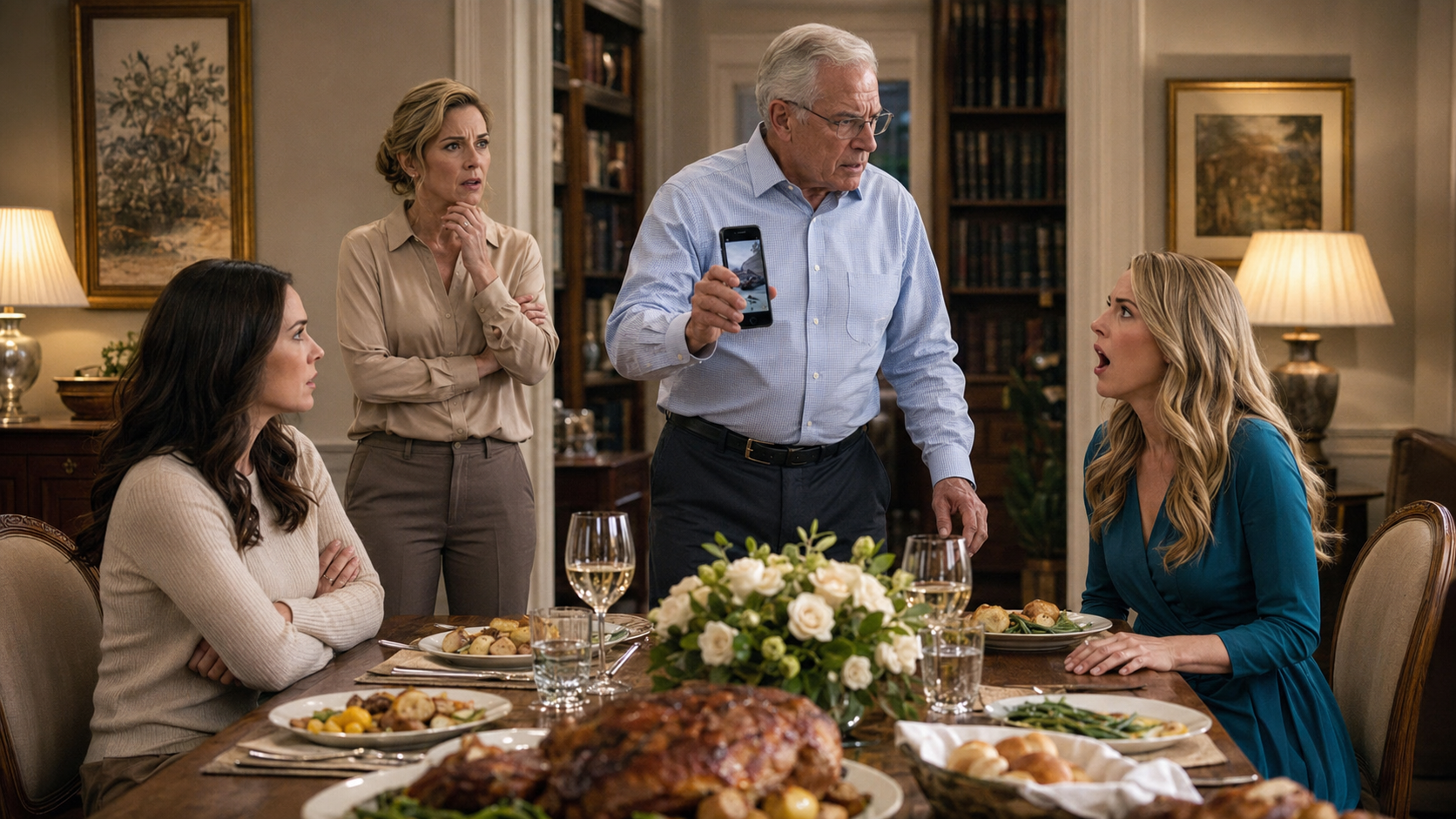
It was the first birthday in years when I had allowed myself to believe that maybe, just maybe, I could have one day that belonged entirely to me.
No emergency phone calls.
No requests for money.
No last-minute favor for my younger sister.
No quiet reminder from my mother that Ava needed more attention because she was “going through something.”
Just one day where I didn’t have to be the dependable daughter.
One day where I could be celebrated without apologizing for taking up space.
And for a few precious hours, that was exactly what happened.
My grandfather, Walter Bennett, had invited the family to his home outside Asheville, North Carolina.
Grandpa’s house sat at the end of a long brick driveway beneath oak trees so old their branches twisted toward one another like enormous hands.
I’d loved that house since childhood.
It smelled like cedar cabinets, coffee, and the faint trace of peppermint candies Grandpa kept in a glass dish beside the front door.
That evening, yellow lights glowed beneath the porch.
My grandfather grilled steaks.
Ava complained that the wine wasn’t cold enough.
Mom spent half the evening taking pictures of the cake she’d bought as though she had personally baked it.
Nothing unusual.
Then, after dinner, Grandpa stood.
He had one hand resting on his cane.
The other disappeared into his jacket pocket.
“Amelia,” he said.
Everyone looked at me.
My stomach tightened automatically.
Attention had always made me uncomfortable.
Growing up beside Ava had trained me to expect that any spotlight pointed at me would eventually be redirected toward her.
“Come outside.”
Ava immediately asked, “Why?”
Grandpa ignored her.
I followed him through the front door.
Mom and Ava came behind us.
The porch lights illuminated the driveway.
At first, I didn’t understand what I was looking at.
Then Grandpa stepped aside.
A white SUV sat beneath the oak trees.
A bright red ribbon stretched across the hood.
I stopped walking.
For a second, I thought it belonged to someone else.
Then Grandpa held out a set of keys.
“Happy birthday, sweetheart.”
I stared at him.
“What?”
He smiled.
“It’s yours.”
I actually laughed.
Not because anything was funny.
Because my brain couldn’t process the sentence.
“Grandpa.”
“Don’t argue.”
“I can’t accept this.”
“Good thing I didn’t ask whether you could.”
My throat tightened.
I walked toward the SUV slowly.
It was new.
Not flashy.
Not ridiculous.
Exactly the kind of vehicle I would have chosen for myself if I ever believed I could justify spending that kind of money.
Reliable.
Safe.
Large enough to handle mountain roads.
Good enough on gas that my forty-minute commute wouldn’t destroy my paycheck.
I ran my fingers across the driver’s door.
I could see my reflection in the spotless white paint.
Twenty-four years old.
Dark hair pulled into a loose ponytail.
Eyes already filling with tears.
Behind me, Ava said, “Wow.”
Her voice sounded flat.
I turned.
Grandpa was still holding out the keys.
When I finally took them, my hands shook.
“Why?”
That was all I could manage.
He frowned.
“Why what?”
“Why would you do this?”
His expression softened.
“You’ve worked since you were sixteen.”
My eyes burned.
“You finished college while working two jobs.”
I swallowed.
“You didn’t ask anyone to pay your tuition.”
Another pause.
“You built your life one piece at a time without expecting anybody to carry you.”
He closed my fingers around the keys.
“You deserve something reliable.”
That was when I cried.
Not because the SUV was expensive.
Not because it was beautiful.
Not because I’d spent the previous six years driving a fourteen-year-old Honda that made a sound like loose silverware whenever I turned left.
I cried because someone had noticed me.
Really noticed me.
Not what I could pay.
Not what I could fix.
Not what favor I could do.
Me.
Grandpa hugged me.
“Your grandmother would be proud of you,” he whispered.
That made me cry harder.
My grandmother had died when I was twelve.
I remembered very little from those last months except the smell of her perfume and the way she used to brush my hair slowly, as if there were nowhere else in the world she needed to be.
She used to tell me I had “old eyes.”
I never understood what she meant.
That night, standing beneath the oak trees with Grandpa’s arms around me and the keys pressed into my palm, I wondered whether maybe she had seen the same thing he did.
Someone who had learned too early not to expect much.
When I finally stepped back, Mom was smiling.
“Well,” she said brightly. “Walter certainly knows how to make a birthday dramatic.”
Something about her tone made Grandpa glance at her.
But she immediately hugged me.
“Congratulations, honey.”
Then Ava walked around the SUV.
She opened the passenger door.
Checked the leather seats.
Touched the dashboard.
“What year is it?”
Grandpa told her.
She whistled.
“This is nicer than mine.”
There was a joke in her voice.
I should have recognized the warning.
Instead, I was too happy.
I spent nearly an hour sitting in the driver’s seat after everyone went inside.
I adjusted the mirrors.
Connected my phone.
Figured out the navigation.
Ran my hand over the steering wheel like an idiot.
Then I drove home with the windows cracked, even though the night was chilly.
I remember smiling at every red light.
That was how small my happiness had become.
I was twenty-four years old, and driving something that was actually mine felt revolutionary.
I should explain my family.
My younger sister, Ava, was twenty-two.
Technically, she had been treated as the baby of the family from the day she was born.
But “baby” didn’t quite describe it.
Ava had always been magnetic.
Blonde hair.
Bright blue eyes.
A smile people noticed across rooms.
She had learned by age ten that if she cried hard enough, Mom became uncomfortable.
By fourteen, she’d learned that inconvenience could be rebranded as crisis.
By eighteen, crisis had become a lifestyle.
She missed a tuition payment?
Emergency.
She ran out of spending money?
Emergency.
She scratched her car?
Emergency.
A boyfriend didn’t text her back?
Apparently also an emergency.
I was different.
I remembered birthdays.
I balanced budgets.
I worked weekends.
I carried jumper cables.
I knew Mom’s insurance information.
I knew how much was left on the mortgage because Mom had once asked me to help restructure the payments.
When Grandma died, I was twelve.
When Dad left four years later, I became even more useful.
I learned that being dependable came with a hidden cost.
The more capable people believed I was, the less sympathy I was allowed to need.
Ava was fragile.
I was strong.
Ava needed help.
I would figure it out.
Ava needed the better bedroom because she struggled with sleep.
I could manage the smaller one.
Ava needed help paying for senior prom because memories mattered.
I worked extra shifts.
Ava needed Mom to attend her dance competition.
I understood why Mom missed my academic awards dinner.
I always understood.
That was my job.
Understanding.
By my twenties, the pattern had become so normal that I no longer questioned it.
Until the morning after my birthday.
I came downstairs dressed for work.
My coffee was already in a travel mug.
Laptop bag over my shoulder.
Hair still damp from the shower.
I reached toward the ceramic bowl near the door where I’d left my SUV keys.
The bowl was empty.
At first, I thought I’d put them somewhere else.
I checked the counter.
My purse.
The table.
Then I looked outside.
The driveway was empty.
My heart dropped.
Mom was sitting at the kitchen island in her robe, scrolling through her phone.
“Mom?”
“Hmm?”
“Where’s my car?”
She didn’t even look up.
“Ava took it.”
I stared at her.
“What?”
She sipped her coffee.
“Ava took the SUV.”
There are moments when your brain understands words individually but refuses to understand them together.
That was one.
“Ava took my car?”
“Yes.”
“Why?”
“She has an interview downtown.”
I looked toward the driveway again as if somehow the SUV might materialize.
“She has a car.”
“Her check engine light came on.”
“It came on three months ago.”
“Exactly.”
I stared at Mom.
“I need to work.”
She finally looked at me.
“Amelia, don’t start.”
My stomach tightened.
That phrase.
Don’t start.
It meant my feelings were already considered unreasonable before I expressed them.
“Start what?”
“Drama.”
“My car is gone.”
“Ava needed it.”
“So do I.”
Mom sighed.
It was the exact sigh she’d used when I was fifteen and complained that Ava had borrowed my laptop without permission.
The sigh that meant I was making her life harder by having boundaries.
“Amelia, she has an interview with important people. She needs to make a good impression.”
I laughed once.
“With my car?”
“It’s just a car.”
“Grandpa gave it to me yesterday.”
“And you’re acting like she’s stolen it.”
“She took it without asking.”
Mom waved a hand.
“She’ll be back this evening.”
“My office is forty minutes away.”
“You have Uber.”
I stopped.
Of everything she could have said, those three words hurt the most.
You have Uber.
As though my transportation was optional.
As though Grandpa had spent almost forty thousand dollars buying me a reliable vehicle so Ava could improve her “image” while I paid strangers to take me to the job that actually paid my bills.
“You want me to pay for an Uber to work so Ava can drive my birthday present?”
“Why are you saying it like that?”
“How else would I say it?”
Mom pushed her mug away.
“You’re being selfish.”
There it was.
The word I’d spent my whole childhood trying to avoid.
Selfish.
The word attached to every boundary I attempted to create.
I looked at the clock.
Arguing would make me late.
So I opened the rideshare app.
Seventy-three dollars.
One way.
My jaw clenched.
I ordered it.
Mom went back to her phone.
Not another word.
I stood on the sidewalk waiting.
When the Uber arrived, I climbed into the back seat and watched our house disappear through the rear window.
I didn’t cry.
Not then.
I spent the entire ride remembering Grandpa’s face the night before.
You’ve worked since you were sixteen.
You deserve something reliable.
Someone had finally given me something because I’d earned it.
And less than twelve hours later, my family had decided it belonged wherever Ava needed it most.
Ava came home that evening around eight.
I heard the SUV before I saw it.
Music blasting.
Bass vibrating the windows.
She parked crookedly across the driveway.
When she walked inside, she carried a giant iced coffee and her phone.
“Hey.”
I stared past her.
Fast-food wrappers filled the passenger seat.
A half-empty water bottle rolled across the floor.
The fuel gauge sat below half.
“You used half a tank?”
She shrugged.
“I had errands.”
“I thought you had an interview.”
“I did.”
“Then what errands?”
“Stuff.”
She tossed the keys onto the counter.
They slid toward me.
“Cute car, by the way.”
I looked at her.
“My car.”
She gave me a smile.
Not cruel exactly.
Worse.
Dismissive.
“Sure.”
I wanted to yell.
Instead, I picked up the keys.
Because some part of me still believed if I stayed calm, everyone else would eventually recognize how unreasonable they were being.
That belief survived two more days.
On Thursday morning, the keys disappeared again.
This time Ava had a lunch appointment.
On Friday, she needed to meet a friend about “business opportunities.”
Saturday, she wanted to go shopping.
Sunday, she drove the SUV to brunch.
By Monday, she had stopped pretending the borrowing was temporary.
I came downstairs to find her leaning against the counter, wearing sunglasses inside the house.
“Where are you going?”
“Meeting someone.”
“In my car?”
She jingled the keys.
“Mom said it’s fine.”
I looked toward Mom.
She was folding laundry in the living room.
“Why does Mom get to decide?”
Mom didn’t even turn around.
“Because we live in the same household.”
“That doesn’t make my car communal property.”
“It makes more sense for Ava to use it right now.”
I walked into the living room.
“Explain that.”
Mom folded a towel.
“She’s networking.”
“I commute forty minutes.”
“She needs it for her image.”
I actually laughed.
“Her image?”
Mom finally looked at me.
“You wouldn’t understand.”
Something in her tone stopped me.
Not because it hurt.
Because suddenly the absurdity was so complete that it became almost clarifying.
I wouldn’t understand.
I had graduated with honors.
I had a full-time job.
I paid part of the household utilities even though Mom had never asked Ava to contribute.
I spent years saving.
I had built actual stability.
But apparently a twenty-two-year-old with imaginary networking meetings needed my SUV because of her image.
Fine.
I went upstairs.
An hour later, Ava posted a picture online.
She was leaning against the driver’s side door of my SUV.
Sunglasses on.
One ankle crossed over the other.
The red ribbon was gone.
The caption read:
NEW WHIP. HARD WORK PAYS OFF.
I stared at the screen.
My thumb hovered over the comment button.
I could have written:
Hard work?
Grandpa gave that car to me.
I could have embarrassed her publicly.
I could have called Mom downstairs.
I could have screamed until somebody listened.
Instead, I took a screenshot.
Then another.
Then I created a folder on my laptop.
SUV.
I saved the photo.
Then I opened my rideshare receipts.
Monday.
Tuesday.
Thursday.
Friday.
I began recording every trip.
Every date.
Every amount.
Every excuse.
Because I suddenly understood something.
My entire life, I had participated in the same predictable cycle.
They crossed a boundary.
I protested.
Mom called me selfish.
Ava cried.
I explained myself.
Eventually, exhausted, I apologized.
Then everybody moved on without changing.
This time, I decided to remove the part where I apologized.
Actually, I removed something else too.
I stopped arguing.
A strange thing happens when the quiet person stops fighting.
People become careless.
They assume surrender.
For the next ten days, I never asked for the keys.
Ava took the SUV whenever she wanted.
Mom became visibly relieved.
“There,” she said one morning when she saw me ordering another ride. “Isn’t this easier?”
I looked at her.
“Much.”
She smiled.
She thought she’d won.
I took another screenshot.
A week later, the opportunity I hadn’t known I was waiting for finally arrived.
It was Sunday afternoon.
Mom appeared outside my bedroom.
“We’re going to Grandpa’s for dinner.”
I looked up from my laptop.
“What time?”
“Five.”
“Okay.”
“We’ll all take the SUV.”
I waited.
Mom added, “You can sit in the back.”
I genuinely thought I’d misheard her.
“The back?”
“Ava gets carsick in the passenger seat.”
I stared.
“Why is Ava driving?”
Mom blinked.
“Because she’s already got the keys.”
I almost laughed.
For years, I had imagined that one day my mother would finally go too far and hear herself.
I had imagined some sentence so unreasonable that she would stop midway through it and realize what she sounded like.
It never happened.
Instead, she stood there expecting me to climb into the back seat of my own birthday gift while Ava drove.
I closed my laptop.
“I’ll meet you there.”
Mom frowned.
“How?”
“Uber.”
Her expression shifted.
For half a second, uncertainty appeared.
Then she shrugged.
“Suit yourself.”
I waited until they left.
Then I requested a ride.
Forty-five minutes later, my Uber turned into Grandpa’s driveway.
The white SUV was already parked near the porch.
Ava had backed it in like she owned it.
Grandpa was standing outside.
His eyes followed the rideshare car as it stopped.
I paid the driver.
Climbed out.
Closed the door.
Grandpa watched the car disappear down the driveway.
Then he looked at me.
“Amelia?”
“Hey, Grandpa.”
He frowned.
“Why are you coming here in an Uber?”
I opened my mouth.
Before I could answer, Mom stepped onto the porch carrying a kitchen towel.
“Her sister needed the car more.”
She said it cheerfully.
Almost proudly.
Grandpa turned.
“What?”
Mom gave a little laugh.
“We’re sharing it.”
I said nothing.
For the first time in two weeks, Mom looked nervous.
Grandpa’s gaze moved past her toward the SUV.
Then back to me.
“Sharing?”
Mom’s smile tightened.
“Family shares things, Walter.”
Grandpa looked at me.
I saw the question in his eyes.
I could have protected Mom.
Old Amelia would have.
Old Amelia would have said:
It’s fine.
No big deal.
Ava just needed it today.
Instead, I said nothing.
Grandpa nodded slowly.
“Let’s eat.”
Dinner began twenty minutes later.
Grandpa had made roast beef.
Mashed potatoes.
Green beans.
Homemade gravy.
His expensive crystal glasses sat at every place setting.
Usually, Sunday dinners at his house were comfortable.
That night, every fork sounded too loud.
Ava filled the silence.
She talked about potential clients.
A marketing opportunity.
Some woman she had met who might know a real-estate investor.
Half of it sounded exaggerated.
The other half sounded invented.
Grandpa listened.
So did I.
Mom barely ate.
Then Ava made the mistake that changed everything.
She started talking about the SUV.
“It handles beautifully.”
Grandpa looked up.
“Does it?”
“Yeah. Especially on country roads.”
His knife stopped halfway through the roast.
“Country roads?”
“Yeah.”
She smiled.
“I drove toward the edge of town yesterday. I might help with some work at your farmhouse.”
My eyes lifted.
The farmhouse.
Grandpa owned an old farmhouse about thirty miles outside town.
It had belonged to Grandma’s family.
We rarely visited.
As kids, Ava and I had played beneath the pecan trees.
Grandma used to grow tomatoes behind the barn.
After she died, Grandpa mostly kept the place closed.
Grandpa lowered his fork.
“Is that right?”
Ava nodded.
“Yeah.”
Mom looked directly at me.
The expression was familiar.
A warning.
Fix this.
Redirect.
Protect the story.
For once, I didn’t.
I set down my fork.
“I wouldn’t know how it handles on country roads.”
Grandpa turned toward me.
I continued.
“I liked driving it the one day I actually got to drive it.”
Silence dropped over the table.
Ava’s face changed.
Mom’s fork hit her plate.
Grandpa stared at me.
“The one day?”
“The day you gave it to me.”
Mom rushed in.
“Walter, this is being made into something it isn’t.”
Grandpa didn’t look away from me.
Mom continued.
“We’re family. Ava needed transportation, and Amelia has been perfectly capable of—”
Grandpa raised one hand.
Mom stopped.
I’ve never seen anyone silence my mother so quickly.
He turned toward Ava.
“You drove the SUV toward the farmhouse yesterday?”
Ava swallowed.
“Yes.”
Grandpa pushed his chair back.
His cane struck the hardwood once.
“That’s interesting.”
He reached into his pocket.
Pulled out his phone.
“Because I had a tracker installed in that vehicle.”
Ava’s face drained white.
Mom’s did too.
I stared at Grandpa.
“What?”
He didn’t answer me immediately.
“Study.”
He stood.
“Now.”
Nobody argued.
We followed him down the hallway.
Grandpa’s study had always felt sacred to me.
Dark wooden shelves.
Old leather chairs.
Books stacked everywhere.
A framed photograph of Grandma above the fireplace.
The room smelled like cedar and old paper.
Grandpa walked behind his desk.
Set the phone down.
Opened an app.
A map appeared.
Lines traced roads across the county.
Tiny timestamps marked each stop.
Mom crossed her arms.
“So what? You’ve been tracking us?”
Grandpa’s eyes hardened.
“I tracked my property until the title transfer was completed.”
He enlarged the map.
I leaned closer.
There were routes downtown.
Shopping centers.
Restaurants.
Several coffee shops.
A hotel nearly two hours away.
I looked at Ava.
She looked away.
Grandpa tapped one location.
A storage facility.
Another.
A pawn and antique dealer.
Then the farmhouse.
My stomach tightened.
There wasn’t one visit.
There weren’t two.
There were five.
Grandpa looked at Ava.
“You told me you drove there yesterday.”
“I did.”
“Then explain the other four visits.”
Ava opened her mouth.
Nothing came out.
Her eyes moved toward Mom.
Mom stared at the rug.
Grandpa’s voice dropped.
“What did you take from my farmhouse?”
My heart began pounding.
“Take?”
Grandpa didn’t look at me.
“A month ago, I noticed items missing.”
He began counting.
“Your grandmother’s silver service.”
Mom’s face tightened.
“Two paintings.”
Ava swallowed.
“The antique jewelry box from the upstairs bedroom.”
Grandpa opened a drawer.
He removed several photographs.
Placed them across the desk.
Security camera images.
There was Ava.
Carrying a box.
Another image.
Mom standing beside the farmhouse door.
A key in her hand.
Another.
Mom and Ava loading something wrapped in a blanket into the SUV.
My stomach dropped.
“You were stealing from Grandpa?”
“We weren’t stealing!”
Mom’s voice cracked through the room.
Grandpa stared at her.
“Then what do you call it?”
“Those things were going to be ours eventually!”
Silence.
The instant the words left her mouth, Mom knew she’d made a mistake.
Grandpa leaned back slowly.
Ava whispered, “Mom.”
Mom’s chest rose and fell.
“I didn’t mean—”
“Yes,” Grandpa said quietly. “You did.”
Ava started crying.
Not dramatically.
Not like usual.
Her face had gone genuinely frightened.
“You don’t understand,” she said. “Mom said you were going to leave everything to Amelia anyway.”
I turned.
“What?”
Mom glared at me.
“Don’t act innocent.”
“I don’t know what you’re talking about.”
“Of course you don’t.”
Her voice sharpened.
“You never have to ask for anything. Dad just gives it to you.”
Grandpa’s expression changed.
Not anger.
Something colder.
“Why would you think I planned to leave everything to Amelia?”
Mom said nothing.
Grandpa opened the bottom drawer.
He removed a thick envelope.
Placed it on his desk.
“I planned to discuss this tonight.”
My heart began beating harder.
Mom whispered, “Walter.”
Grandpa looked at her.
“You know what this is, don’t you?”
Something about that question frightened me more than the stolen antiques.
Because Mom didn’t look confused.
She looked afraid.
Grandpa pushed the envelope toward me.
“Open it.”
My fingers trembled.
Inside was a legal document.
Dense paragraphs.
Signatures.
Account numbers.
Property descriptions.
I read the first page.
Then the second.
My name appeared again and again.
Amelia Grace Bennett.
Beneficiary.
Trust assets.
Property interest.
Accounts.
I looked at Grandpa.
“I don’t understand.”
He sat down.
“Your grandmother created a trust before she died.”
Mom closed her eyes.
Grandpa continued.
“She wanted certain assets protected until you turned twenty-five.”
“Why me?”
He looked toward Grandma’s photograph.
“Because she believed you would protect the family history instead of selling it.”
Ava laughed bitterly.
“There.”
Everyone looked at her.
“See? Amelia gets everything.”
Grandpa turned.
“No.”
His voice was firm.
“You received your share years ago.”
Ava froze.
“What share?”
Grandpa looked at Mom.
“Tell them.”
Mom shook her head.
“Not now.”
“Tell them.”
“Please.”
“Linda.”
That was the first time I realized Grandpa had stopped calling her “your mother.”
Mom sank into the chair.
Her hands trembled.
“When your grandmother died,” she began, “she left money for both of you.”
I stared at her.
“How much?”
Silence.
Grandpa answered.
“Two hundred thousand dollars each.”
The room tilted.
Ava whispered, “What?”
I heard myself laugh.
It sounded distant.
“Where is it?”
Mom started crying.
Real tears.
Her shoulders shook.
“I was trying to keep us afloat.”
My stomach turned cold.
“What did you do?”
“The money had restrictions.”
Grandpa’s jaw clenched.
“Education. Housing. Investments. She was trustee until the girls reached the required age.”
Mom wiped her face.
“I intended to replace it.”
My mouth went dry.
“How much did you spend?”
She stared at her hands.
Grandpa clearly already knew.
He wanted her to say it.
“Most.”
I stood.
“Most?”
Mom flinched.
“How much of mine is left?”
She couldn’t answer.
Grandpa did.
“Approximately eleven thousand dollars.”
For several seconds, I felt nothing.
Then memories began hitting me.
One after another.
My first semester of college.
The night I called Mom crying because I needed $480 for textbooks and didn’t have enough.
She told me:
Welcome to adulthood.
The summer I worked opening shifts at a coffee shop and closing shifts at a restaurant.
Mom praised my independence.
The scholarship applications.
The cheap noodles.
The secondhand laptop.
The cracked phone screen I used for fourteen months because I refused to replace it.
All those years, I had believed there was no money.
There had been money.
My money.
Money Grandma had left me.
Money Mom had been spending.
“One hundred eighty-nine thousand dollars.”
My voice barely worked.
“You stole one hundred eighty-nine thousand dollars from me.”
Mom’s head snapped up.
“I raised you!”
Grandpa slammed his palm against the desk.
“She was a child!”
Mom jumped.
He stood.
“You don’t invoice a child against her inheritance.”
“I fed her!”
“Because she was your daughter!”
“I clothed her!”
“That was your responsibility!”
Ava suddenly stood.
“What about mine?”
Mom looked at her.
Ava’s voice cracked.
“What about my money?”
Silence.
Ava began shaking her head.
“No.”
Mom reached toward her.
“Ava—”
“You spent mine too?”
“You benefited from it.”
“I didn’t know!”
“The private school wasn’t free.”
Ava stared.
“Mom.”
“Your pageants.”
“Stop.”
“Your first car.”
“I said stop.”
“Vacations.”
Ava’s face crumpled.
“You told me Grandpa never left us anything.”
Mom’s expression twisted.
“I did what I had to do.”
Grandpa looked disgusted.
“No. You did what you wanted to do.”
For the first time in our lives, Ava and I stood on the same side of the room.
Not sisters competing.
Not the golden child and the reliable child.
Two young women realizing we’d both been lied to.
Then Grandpa tapped the map.
“We aren’t finished.”
Mom went rigid.
“The farmhouse.”
His finger moved toward the hotel location.
“Who is Daniel Mercer?”
Mom’s entire face changed.
I recognized the name.
A real-estate developer.
He’d bought several properties around Asheville.
Ava looked genuinely confused.
“Who?”
Grandpa continued.
“The SUV stopped at a hotel where Daniel Mercer attended a development conference.”
Mom said nothing.
“Two days later, you went to the county records office.”
Her lips tightened.
“Yesterday, you went back to the farmhouse.”
Mom stood.
“We’re leaving.”
“No.”
“Now, Ava.”
Grandpa opened another folder.
He removed copies of documents.
Property surveys.
Maps.
A proposed sales agreement.
Then I saw the signature.
Walter Bennett.
Grandpa’s name.
Something about it looked wrong.
Too shaky.
Too carefully imitated.
Grandpa pointed at it.
“I didn’t sign that.”
My stomach dropped.
I looked at Mom.
“You forged Grandpa’s signature?”
Mom turned pale.
Ava stepped away from her.
“Don’t look at me.”
Grandpa’s voice was frighteningly calm.
“You attempted to sell the farmhouse.”
Mom exploded.
“It’s falling apart!”
Nobody spoke.
“You don’t use it!”
Grandpa’s jaw clenched.
“The land alone is worth nearly three million dollars. Mercer was willing to buy everything.”
“It isn’t yours.”
“It was going to become mine!”
“No.”
One word.
Mom stopped.
Grandpa leaned forward.
“The farmhouse was never going to you.”
Mom stared.
He pointed toward the trust document in front of me.
“It belongs to Amelia.”
My breath caught.
“What?”
Grandpa looked at me.
“Technically, it has belonged to you since your grandmother died. I retained lifetime management rights.”
Mom looked at me.
For the first time in my life, I saw something in her eyes I couldn’t explain away.
Hatred.
Not frustration.
Not disappointment.
Hatred.
And suddenly, the SUV made sense.
The car hadn’t created the resentment.
It had exposed it.
Mom wasn’t angry because Ava needed transportation.
She was angry because Grandpa had given me something.
Something visible.
Something she couldn’t pretend wasn’t mine.
Something that reminded her that Grandma had protected assets from her.
Ava whispered, “You knew.”
Mom didn’t look at her.
Ava stepped closer.
“You knew the farmhouse belonged to Amelia.”
Silence.
“How long?”
“Ava.”
“How long?”
Mom’s face hardened.
“Years.”
Ava looked like she’d been slapped.
“And you told me Grandpa favored her.”
Mom said nothing.
“You told me Amelia was trying to take everything.”
“I was protecting your future.”
“No.”
Ava’s voice became steadier.
“You were using me.”
I looked at her.
Her face changed as memory rearranged itself.
Every time Mom whispered that I thought I was better.
Every time she’d told Ava that Grandpa respected me more.
Every time she framed our relationship as a competition.
Suddenly I saw my entire childhood differently.
Ava sat down.
Grandpa turned toward me.
“I owe you an apology.”
I stared.
“You?”
“I suspected Linda had been accessing things she shouldn’t.”
He rubbed his forehead.
“I didn’t know how far it had gone.”
His eyes moved toward the tracker.
“So when I bought you the SUV, I had GPS installed.”
Mom laughed bitterly.
“You set us up.”
Grandpa looked at her.
“No.”
His voice was calm.
“I protected my granddaughter’s property.”
He pointed toward the security photographs.
“You chose what to do afterward.”
My eyes burned.
I looked at the trust documents again.
“Why didn’t you tell me?”
Grandpa looked away.
“Your grandmother asked me not to.”
“Why?”
“Until your twenty-fifth birthday.”
“Why?”
He hesitated.
That hesitation terrified me.
I suddenly knew.
There was more.
Something bigger than the money.
Something bigger than the farmhouse.
Something Mom had known all along.
Grandpa opened the envelope again.
“There is another document.”
Mom became completely still.
“No.”
Grandpa ignored her.
He removed a yellowed envelope.
My name was written across the front.
Amelia.
I recognized the handwriting immediately even though I hadn’t seen it in years.
Grandma.
My hands began trembling.
The room disappeared around me.
I remembered sitting at her kitchen table.
Her writing grocery lists.
Birthday cards.
Little notes in my lunchbox when I stayed with her.
Grandpa handed me the envelope.
“This was supposed to wait until next year.”
Mom whispered, “Dad, don’t.”
Grandpa looked at her.
“She has waited long enough.”
I opened it.
The paper inside smelled faintly old.
My eyes found the first line.
My darling Amelia,
If you are reading this, then Walter has decided you are ready for a truth I was too afraid to tell you while I was alive.
My heart stopped.
I read it again.
Truth?
I looked at Grandpa.
He nodded.
“Keep reading.”
The next paragraph made no sense.
Then it made too much sense.
My vision blurred.
I read the words twice.
Three times.
“No.”
Nobody moved.
Ava whispered, “What does it say?”
I couldn’t speak.
Grandpa answered.
“Amelia isn’t your sister.”
Ava frowned.
“What?”
I stared at him.
“Grandpa.”
His eyes filled.
He looked toward Mom.
Then Ava.
“Amelia is your aunt.”
The room disappeared.
I laughed once.
A broken sound.
“That’s impossible.”
“No.”
“It doesn’t even make sense.”
Grandpa pointed toward the photograph of Grandma.
“Your grandmother had another daughter.”
I stared at Mom.
Linda.
The woman I had called Mom every day of my life.
Her face was buried in her hands.
Grandpa continued.
“Her name was Caroline.”
The name felt strangely familiar.
Like something I’d heard in dreams.
“Caroline was Linda’s younger sister.”
I tried to breathe.
My lungs refused.
“Where is she?”
Grandpa looked down.
“She died giving birth to you.”
Everything inside me went quiet.
Not peaceful.
Empty.
The kind of silence after an explosion.
I stared at Linda.
My mother.
Not my mother.
My aunt.
Ava wasn’t my sister.
She was my cousin.
The woman who had raised me wasn’t the woman who gave birth to me.
The farmhouse.
The inheritance.
Grandma’s strange sadness whenever she looked at me.
All of it shifted.
“Why?”
My voice came out small.
Grandpa rubbed his eyes.
“Caroline became pregnant at seventeen.”
He paused.
“She was terrified.”
Mom whispered, “Stop.”
I looked at her.
“No.”
She lifted her face.
Tears streaked her cheeks.
“You wanted me to stay quiet my entire life.”
My voice strengthened.
“You don’t get to ask for silence now.”
Grandpa continued.
“Caroline didn’t tell us who the father was for months. Your grandmother and I were angry at first. Afraid. We thought about adoption.”
My hands curled around the letter.
“But Caroline loved you before you were born.”
His voice broke.
“She said you were the one thing she had done that she refused to be ashamed of.”
Tears filled my eyes.
Grandpa looked toward the window.
“Labor became complicated.”
I couldn’t breathe.
“Doctors tried.”
He swallowed.
“They saved you.”
The words sliced through me.
“They couldn’t save Caroline.”
I pressed my hand over my mouth.
Somewhere beside me, Ava was crying.
Grandpa continued.
“Before she died, Caroline asked Linda to raise you.”
I looked at the woman who’d been my mother.
“You knew?”
Linda nodded.
“All my life?”
“Yes.”
The answer came without hesitation.
That hurt more.
“Every birthday?”
“Yes.”
“Every Mother’s Day?”
She closed her eyes.
“Yes.”
“Every time I asked why I didn’t look like you?”
Her shoulders shook.
“Yes.”
I suddenly remembered being nine years old.
Standing in a grocery store line beside Mom and Ava.
A woman behind us had smiled.
“Your younger daughter looks just like you.”
She’d pointed at Ava.
Then she looked at me.
“And she must look like her father.”
Mom had gone completely quiet.
At the time, I thought she was annoyed.
Now I understood.
Grandpa spoke.
“Your grandmother left the farmhouse to you because it belonged to Caroline.”
I looked at him.
“Caroline owned it?”
“It was supposed to become hers.”
He nodded.
“Your grandmother planned to give it to her when she turned twenty-one. After Caroline died, she changed the trust so it would eventually pass to you.”
Suddenly the years of resentment made sense.
But one question still burned.
I looked at Linda.
“Why did you spend my trust?”
Her expression twisted.
Something dark moved through her grief.
“Because your mother destroyed my life.”
Grandpa stood.
“Enough.”
Linda stood too.
“No!”
She pointed toward me.
“She wanted the truth.”
I flinched.
Linda laughed bitterly.
“I was twenty-one years old.”
Her voice cracked.
“I had plans.”
I stared.
“I had been accepted into a nursing program in Raleigh.”
Tears poured down her cheeks.
“I had a boyfriend.”
Grandpa said, “Linda—”
“No.”
She looked at me.
“Then Caroline got pregnant.”
My fingers tightened around Grandma’s letter.
“Everything became about Caroline.”
Her voice rose.
“Caroline was scared.”
“Caroline was sick.”
“Caroline needed support.”
“Then Caroline died.”
Her face crumpled.
“And suddenly there was a newborn baby everybody expected me to love because it was her dying wish.”
My chest hurt.
“I did love you.”
She whispered it.
“For a while.”
For a while.
Two words.
Twenty-four years of childhood collapsed beneath them.
“But every time Dad looked at you, he saw Caroline.”
Linda’s tears fell faster.
“Every time Mom held you, she cried.”
She shook her head.
“The whole house became a shrine to my dead sister.”
I couldn’t move.
“I was alive.”
Her voice broke.
“But nobody noticed.”
I understood pain.
For one dangerous second, I almost felt sorry for her.
Then she continued.
“So yes, I was angry.”
I swallowed.
“You punished me.”
“I was angry.”
“I was a baby.”
“I know!”
“You punished a baby because her mother died.”
Linda covered her face.
I heard Ava sob.
I looked at her.
For years, I had believed Ava was simply the favorite.
Now I saw something uglier.
Linda had used both of us.
She spoiled Ava because Ava belonged to her.
She diminished me because I didn’t.
She used Ava’s victories to punish Caroline’s memory.
She used my accomplishments as proof that Grandpa loved Caroline more.
She took two girls who could have grown up loving each other and taught them to compete for affection she had already divided unevenly.
I looked at Ava.
She looked back.
Neither of us spoke.
But something changed between us.
We weren’t enemies.
We had been pieces moved around someone else’s board.
Grandpa stepped toward me.
I moved backward.
He stopped immediately.
Not because I blamed him the same way.
I simply couldn’t let anyone touch me.
My whole identity felt unstable.
I needed my body to belong to me.
Then Ava stood.
She walked toward the desk.
Reached into her purse.
Pulled out the SUV keys.
She placed them in front of me.
“I’m sorry.”
Her voice trembled.
I looked at her.
She wiped her face.
“I knew it was yours.”
No excuses.
“I knew taking it was wrong.”
She swallowed.
“I told myself Mom was right because believing you were spoiled made me feel better about being jealous.”
I said nothing.
“But I didn’t know any of this.”
I believed her.
That surprised me.
Linda laughed bitterly.
“Oh, please.”
We turned.
“Now you’re going to become best friends?”
Ava faced her.
“No.”
Her voice steadied.
“But I’m done being your weapon.”
Linda stared.
Ava pulled out her phone.
Mom’s face changed.
“What are you doing?”
“Calling the police.”
Linda moved toward her.
Grandpa stepped between them.
“You wouldn’t.”
Ava looked straight at her mother.
“You stole from Grandpa.”
Her voice cracked.
“You stole from Amelia.”
A tear rolled down her cheek.
“You stole from me.”
Linda shook her head.
“Ava.”
“And you tried to sell property that didn’t belong to you.”
She started dialing.
Then Linda looked at me.
“Amelia.”
That voice.
Soft.
Desperate.
The voice that had controlled me for years.
The voice that could pull me back into being twelve.
The instinct rose instantly.
Fix this.
Calm everyone down.
Protect Mom.
Convince Grandpa not to call anyone.
Tell Ava she’s overreacting.
Sacrifice myself so the room could become peaceful again.
For twenty-four years, that instinct had been trained into me.
I let it rise.
Then I let it die.
I looked at Linda.
“My name was on the paperwork.”
She blinked.
“What?”
“The SUV.”
I picked up the keys.
“My name was on the title paperwork.”
“This isn’t about the car.”
“I know.”
“Then why are you—”
“Because you knew it belonged to me.”
She stopped.
“You knew Grandpa gave it to me.”
My voice shook.
“You took it anyway.”
“Amelia—”
“Then you told me to take Ubers.”
Her eyes dropped.
“Because you thought something small would be easy.”
I stepped closer.
“You thought I’d complain.”
My heart pounded.
“You’d call me selfish.”
Another step.
“Ava would cry.”
My eyes burned.
“And eventually I’d apologize.”
Linda stared.
“You were counting on the girl you raised me to be.”
Grandpa watched silently.
I wrapped my fingers around the keys.
“But she doesn’t live here anymore.”
The police arrived forty minutes later.
Real life didn’t become cinematic.
Nobody kicked down doors.
Linda wasn’t dragged screaming from Grandpa’s study.
Two officers arrived.
They took statements.
They photographed documents.
They examined the security images.
Grandpa gave them information about the stolen antiques.
Ava showed them messages where Mom had told her to use the SUV.
I handed over the screenshots I’d saved.
The social media post.
The Uber receipts.
The dates.
One officer looked at me.
“You documented all this?”
I nodded.
“Why?”
I thought about it.
“Because I was tired of being told things hadn’t happened the way I remembered them.”
He didn’t respond.
But Grandpa looked at me.
Something passed across his face.
Pain.
The investigation grew quickly.
The forged sale documents brought lawyers.
The antique dealer returned the silver and paintings when police contacted him.
Daniel Mercer denied knowing Grandpa’s signature was forged.
His attorneys produced emails showing that Linda had represented herself as authorized to negotiate the sale.
County records confirmed she had requested property documents multiple times.
Then came the trust records.
Years of withdrawals.
Transfers.
Payments.
Receipts.
Some legitimate.
Many not.
The numbers hurt more than I expected.
Seeing betrayal reduced to dollar amounts made it feel almost obscene.
$8,400.
Vacation.
$12,000.
Ava’s pageant expenses.
$17,500.
Car.
$6,200.
Credit cards.
$3,900.
Home renovation.
$11,000.
Loan payment.
My education fund had paid for everyone except my education.
A forensic accountant eventually confirmed that only a fraction of either trust remained.
Grandpa sat beside me when the attorney explained it.
“We can pursue restitution.”
I stared at the papers.
“I don’t care about the money.”
That wasn’t entirely true.
Of course I cared.
Money represented years.
Hours.
Two jobs.
Missed weekends.
Anxiety.
But the amount itself wasn’t what broke me.
“What bothers you most?” the attorney asked.
I looked through the window.
“She watched me struggle.”
That was it.
She watched me panic over tuition.
Watched me eat cheap food.
Watched me turn down trips with friends.
Watched me work late.
Watched me believe independence was the only option.
And every time, she knew.
She could have helped me using money Grandma had specifically left for that purpose.
Instead, she used my struggle as evidence of my character.
You’re so responsible, Amelia.
You’re so mature.
You’ve always been independent.
Words that had once felt like compliments now sounded like camouflage.
Three months after Grandpa’s dinner, the farmhouse transfer was officially finalized.
My name appeared alone on the deed.
When the lawyer handed it to me, I felt nothing like I’d expected.
No victory.
No rush.
Just grief.
This property had belonged to a mother I never met.
Caroline.
I began saying her name privately.
At first, it felt strange.
Mother.
Caroline.
My mother, Caroline.
I had photographs but no memories.
That was a particular kind of grief.
Missing someone I’d never been given the chance to know.
Grandpa started telling me stories.
Not all at once.
I couldn’t handle that.
One story at a time.
Caroline hated peas.
She loved thunderstorms.
She was terrible at math.
She could climb the oak tree beside the farmhouse faster than any boy in her class.
She loved yellow.
She wanted to become a photographer.
She once rescued an injured dog and hid it in the barn because Grandma had said no more pets.
Every detail became precious.
I collected them.
Wrote them down.
Like I was rebuilding a person from fragments.
Ava began visiting too.
At first, our conversations were painfully awkward.
What do you say to someone who was your sister yesterday and your cousin today?
Eventually, we decided the technical definition didn’t matter much.
She called me one Tuesday night.
“Are you okay?”
I laughed.
“Which part?”
“Fair.”
Silence.
Then she said, “Can I ask you something?”
“Sure.”
“Do you hate me?”
The question surprised me.
“No.”
She exhaled.
“Why not?”
I thought about it.
“I was angry with you.”
“Past tense?”
“Mostly.”
“That sounds suspicious.”
I smiled for the first time that day.
“You were selfish.”
She groaned.
“Okay.”
“Entitled.”
“Amelia.”
“Annoying.”
“I regret calling.”
“But you weren’t the person who built the system.”
Silence.
“You benefited from it.”
I continued.
“So did I, sometimes, in ways I didn’t understand.”
“How?”
“Grandpa protected me.”
“He loved you.”
“He loved you too.”
She didn’t answer.
I knew that was one wound that would take longer.
The following spring, I turned twenty-five.
Grandpa invited Ava and me to the farmhouse.
By then, it looked completely different.
The porch had been repaired.
The shutters repainted.
The roof replaced.
Broken windows fixed.
The garden cleared.
Ava had done much of the work.
Not because I asked.
After the investigation, some of her trust money was recovered through restitution and account tracing.
She used fourteen thousand dollars of it on the farmhouse roof.
When I discovered that, I called her.
“You can’t do that.”
“Too late.”
“It’s my house.”
“Technically.”
“Ava.”
“Consider it restitution for all the gas I used.”
I laughed.
Fourteen thousand dollars was a lot of gas.
She became serious.
“I’m not trying to buy forgiveness.”
“I know.”
“I just need to put something back.”
That sentence stayed with me.
So on my twenty-fifth birthday, the three of us stood beneath the oak tree behind the farmhouse.
Grandpa carried an old wooden box.
He set it on the porch table.
“This belonged to Caroline.”
My breath caught.
I opened it.
Photographs.
Dozens.
Caroline at fourteen.
Caroline with Grandma.
Caroline sitting on Grandpa’s shoulders when she was little.
Caroline at sixteen wearing overalls and laughing beside the lake.
Then one photograph stopped me.
Caroline pregnant.
She was standing beside the farmhouse.
One hand rested on her stomach.
Her hair blew across her face.
She looked young.
Too young.
But she was smiling.
On the back, Grandma had written:
Caroline and Amelia.
I pressed the photograph to my chest.
Ava sat beside me.
She didn’t say anything.
She had learned, over those months, that silence could sometimes be kindness.
Under the photographs rested another document.
I frowned.
“What’s this?”
Grandpa smiled.
“The final page of your grandmother’s trust.”
I unfolded it.
Read slowly.
Then again.
I looked toward Ava.
She stared back.
“What?”
I handed it to her.
The farmhouse belonged to me.
That part was clear.
But Grandma had included an unusual provision.
If I ever willingly chose to share ownership with Linda’s biological child, the property could be divided equally between us.
Not because Ava was entitled to it.
Not because I owed her anything.
But because, as Grandma had written:
Caroline’s daughter and Linda’s daughter should have the opportunity to build the relationship their mothers never could.
Ava immediately shook her head.
“No.”
I laughed.
“What?”
“I’m not taking half your farmhouse.”
“You haven’t even finished reading.”
“I don’t need to.”
“Ava.”
“No.”
She shoved the paper back.
“This is yours.”
“You spent six months repairing it.”
“That was my choice.”
“You paid fourteen thousand dollars toward the roof.”
Her head snapped toward Grandpa.
“You told her?”
Grandpa looked offended.
“Eventually.”
“You’re terrible at secrets.”
I laughed.
“Given everything we’ve learned, maybe that’s healthier.”
Ava rolled her eyes.
I held out my hand.
She looked at it.
“What are you doing?”
“Sharing.”
Her face changed.
“Amelia.”
“You were my sister for twenty-four years.”
“Technically cousin.”
“Don’t ruin the moment.”
Her eyes filled.
“You don’t owe me this.”
“I know.”
That mattered.
For the first time, nobody was telling me what I owed because of family.
Nobody was taking.
Nobody was pressuring.
I was choosing.
I kept my hand extended.
“I don’t want this place to become another thing that divides us.”
Ava swallowed.
“What if we screw it up?”
“We probably will.”
“Comforting.”
“We’ll argue.”
“Definitely.”
“You’ll leave coffee cups everywhere.”
“Obviously.”
“You’ll probably ask to borrow my car.”
She smiled.
“Maybe.”
I narrowed my eyes.
“Don’t.”
Then she started laughing.
Through tears.
She took my hand.
Grandpa wiped his eyes.
“You girls haven’t heard the best part.”
Ava groaned.
“There is more?”
Grandpa pointed past the trees.
The farmhouse sat on dozens of acres.
Fields stretched toward the hills.
For years, developers had offered money for the land.
Grandma always refused.
We assumed she was sentimental.
Grandpa shook his head.
“Your grandmother was sentimental.”
He smiled.
“But she wasn’t foolish.”
A renewable-energy infrastructure company had recently contacted him.
New transmission expansion in the county made part of the property strategically valuable.
They didn’t want the house.
They didn’t want the historic portion of the land.
They wanted a long-term lease across the distant fields.
“How much?” Ava asked.
Grandpa handed us a proposal.
I read the number.
Then read it again.
“$186,000?”
“Per year.”
Ava’s mouth dropped open.
“For grass?”
Grandpa laughed.
“Essentially.”
She looked at me.
I looked at her.
Split equally.
Neither of us spoke.
Then Ava sat down hard.
“I think I’m going to throw up.”
“Please don’t.”
“I’m serious.”
“Not on Caroline’s porch.”
She laughed.
And I did too.
But the money wasn’t the ending.
I used to believe justice would feel dramatic.
Like a courtroom verdict.
Like someone shouting the truth in front of everyone who doubted me.
Like watching the person who hurt me finally understand how much damage they’d caused.
Real justice was quieter.
It was my name on the farmhouse deed.
It was my grandmother’s photographs in my hands.
It was Ava learning how to apologize without demanding immediate forgiveness.
It was Grandpa learning that protecting secrets could become its own form of harm.
It was me learning that boundaries didn’t make me cruel.
And eventually, it was facing Linda.
She pleaded guilty to financial exploitation, forgery, and theft-related charges.
Her attorney negotiated a sentence that included restitution, probation requirements, and suspended jail time under strict conditions.
When I heard the outcome, I felt almost disappointed by how ordinary it sounded.
No thunder.
No dramatic confession.
Just paperwork.
Consequences.
Numbers.
Signatures.
Months later, she requested a visit.
I said no.
Then she requested again.
No.
The third time, I agreed.
Not because she deserved it.
Because I realized I wanted to see what happened inside me when I looked at her.
The visitation room was colder than I expected.
Linda looked older.
Gray had appeared near her temples.
Her face seemed smaller without makeup.
When she saw me, she started crying immediately.
“Amelia.”
I sat across from her.
For several seconds, neither of us spoke.
Then she whispered, “You look like Caroline.”
The words went through me.
I’d spent twenty-four years wondering who I looked like.
I stared at her.
“Did you always know?”
“Yes.”
“Was that why you hated looking at me?”
She closed her eyes.
“I didn’t hate you.”
“You said you loved me at first.”
Her shoulders shook.
“I’m sorry.”
“For which part?”
She looked at me.
“The money?”
I continued.
“The lying?”
“Amelia—”
“The way you treated Ava?”
Her mouth tightened.
“The farmhouse?”
I leaned forward.
“Or the fact that you let me believe you were my mother every day for twenty-four years?”
She started sobbing.
Old Amelia would have softened immediately.
Old Amelia couldn’t stand watching her cry.
Old Amelia would have reached across the table.
Said:
It’s okay.
I understand.
Please don’t cry.
I did none of those things.
She wiped her face.
“Do you hate me?”
I thought about it.
Really thought.
The inheritance.
The Uber rides.
The birthday SUV.
The farmhouse.
The lies.
The mother whose name I’d been denied.
The little girl who learned that needing less was the easiest way to be loved.
“No.”
Linda looked surprised.
“I don’t hate you.”
Hope flashed across her face.
I didn’t let it become forgiveness.
“But I don’t forgive you yet.”
Her expression collapsed.
The sentence hung between us.
For once, I didn’t rush to rescue her from it.
“Maybe someday.”
She nodded desperately.
“I’ll do anything.”
“Then change.”
“I will.”
“No.”
I shook my head.
“Don’t change because you want access to me.”
She went still.
“Change because what you did was wrong even if I never forgive you.”
Tears rolled down her face.
“I raised you.”
“I know.”
“I loved you.”
“I think part of you did.”
She cried harder.
That was the saddest truth.
Linda wasn’t a monster who had never felt anything for me.
Monsters are easy.
She had packed school lunches.
Sat beside me when I had the flu.
Taught me to drive.
Stayed awake when I came home late.
And she had also lied to me.
Stolen from me.
Resented me.
Punished me for a death I didn’t cause.
People could contain both tenderness and cruelty.
One didn’t erase the other.
“I don’t know how to fix this,” she whispered.
“You don’t.”
She looked up.
“You live with what happened.”
I stood.
“Forgiveness isn’t something you get because you’re family.”
Her face crumpled.
“It’s something that might come after you’ve changed.”
I walked toward the door.
“Amelia.”
I stopped.
She whispered, “Caroline loved you.”
My eyes closed.
“How do you know?”
Linda wiped her face.
“She talked to you every night when she was pregnant.”
I turned.
“She called you Millie.”
My breath caught.
“She’d sit by the farmhouse window and talk to you.”
Linda’s voice trembled.
“She said she wanted you to grow up somewhere you never had to earn your place.”
I couldn’t speak.
Something inside me broke open.
Because that was exactly what I had spent my whole life doing.
Earning my place.
Through work.
Through obedience.
Through silence.
Through usefulness.
Linda looked down.
“I’m sorry I gave you the opposite.”
For the first time that afternoon, I believed her apology.
That didn’t mean I forgave her.
But I believed she understood one piece of what she’d done.
I left.
Outside, Ava was waiting beside the SUV.
My SUV.
The same white SUV Grandpa had given me on my twenty-fourth birthday.
She sat in the passenger seat.
When she saw me, she climbed out.
“You okay?”
I looked toward the building.
“Not exactly.”
She nodded.
“Fair.”
Then she held out the keys.
I caught them.
“Your car.”
A smile pulled at my mouth.
“My car.”
We climbed inside.
Before I started the engine, Ava looked at me.
“So.”
I raised an eyebrow.
“Our farmhouse?”
I smiled.
“Our farmhouse.”
She leaned back.
“Good.”
I turned the key.
Then she said, very casually, “Can I drive?”
I slowly turned my head.
She held a straight face.
For two seconds.
Then she exploded laughing.
I grabbed the small travel pillow from the back seat and hit her with it.
“Too soon.”
“Okay!”
She blocked the second hit.
“Way too soon.”
We laughed until my stomach hurt.
And for the first time in our lives, neither of us was competing.
Not for attention.
Not for Grandpa.
Not for money.
Not for approval.
We drove toward the farmhouse instead of going home.
The evening sun turned the mountains gold.
When we arrived, the fields moved beneath the wind.
Ava climbed onto the porch.
I stayed near the SUV for a moment.
The white paint reflected the sunset.
I thought about how ridiculous it was that everything had started with a car.
Except it hadn’t.
The car was only the loose thread.
My mother pulled it because she thought it was harmless.
A birthday gift.
Keys in a ceramic bowl.
A daughter too obedient to protest for long.
She believed my silence meant surrender.
Ava believed my silence meant weakness.
For years, I believed silence was simply how I survived.
But sometimes silence can become something else.
Sometimes, when you stop arguing with people determined to misunderstand you, they grow comfortable.
Careless.
They reveal what they believe they’re entitled to.
They show you how far they will go.
The SUV tracker hadn’t created Linda’s choices.
It recorded them.
The security camera hadn’t caused the theft.
It documented it.
My screenshots hadn’t made Ava disrespect me.
They simply preserved what happened.
And Grandpa hadn’t tricked anyone into betraying me.
He gave them room to choose.
They chose.
That changed how I understood justice.
I used to believe I needed the perfect argument.
The perfect explanation.
The perfect words that would finally make my mother look at me and say:
You’re right.
I treated you unfairly.
I’m sorry.
I don’t need that anymore.
Some people will never admit the truth until consequences speak louder than you can.
And sometimes, even then, they will admit only enough to survive.
The farmhouse taught me something else.
Inheritance wasn’t just money.
It wasn’t land.
It wasn’t a trust.
It was the story people handed you.
For years, Linda handed me a story.
You are difficult.
You need less.
Ava needs more.
Grandpa favors you.
You should be grateful.
You should share.
You should understand.
You should forgive.
Then Grandma’s letter gave me another story.
Caroline loved you.
You were wanted.
You came from somewhere.
You didn’t need to earn your place.
I chose that one.
Months later, Ava and I turned the front room of the farmhouse into a small family archive.
Grandma’s photographs.
Caroline’s letters.
Old maps.
Documents.
Grandpa’s military photographs.
Ava found an antique frame for the picture of Caroline standing pregnant beside the farmhouse.
We hung it above the fireplace.
The first time I saw it there, I cried.
Ava stood beside me.
“She looks like you.”
I shook my head.
“I look like her.”
“Same thing.”
“No.”
I smiled through tears.
“It isn’t.”
For twenty-four years, people had told me who I looked like based on guesses.
Now I knew.
That mattered.
A few weeks later, Grandpa joined us for dinner.
Nothing fancy.
Takeout containers on the farmhouse table.
Ava complained about the sauce.
Grandpa complained that we spent too much money renovating the upstairs bathroom.
I told him the plumbing was ancient.
He said ancient things had character.
Ava said leaking through the ceiling wasn’t character.
For a moment, it felt almost normal.
Then Grandpa became quiet.
“I’m sorry.”
Ava looked up.
“For what?”
He looked at both of us.
“For secrets.”
I set down my fork.
He continued.
“Your grandmother and I thought hiding the truth protected everyone.”
He shook his head.
“It protected nobody.”
His eyes moved toward me.
“I should have told you about Caroline sooner.”
I swallowed.
“I would’ve hated you.”
“Maybe.”
“I would’ve hated Linda.”
“Maybe.”
“I would’ve been confused.”
“Definitely.”
I smiled slightly.
Grandpa did too.
“But at least the confusion would’ve belonged to the truth.”
He nodded.
“Exactly.”
Ava looked at him.
“And my trust?”
Grandpa’s face tightened.
“I should have watched more carefully.”
“You trusted Mom.”
“I did.”
Ava looked down.
“So did we.”
Nobody said anything after that.
There are some sentences that don’t need answers.
The following summer, the renewable-energy lease was finalized.
The first payment arrived.
Ava called me immediately.
“Do you see this?”
“I’m looking at it.”
“This is disgusting.”
I laughed.
“Disgusting?”
“We did nothing.”
“We own land.”
“Exactly. We’re being paid obscene amounts of money because Grandma refused to sell a field forty years ago.”
“Apparently stubbornness is hereditary.”
Ava paused.
“That explains you.”
I hung up.
She called back laughing.
We agreed early that the money wouldn’t become another family weapon.
Part went into maintaining the farmhouse.
Part into investments.
Part into a scholarship fund for young women from our county who were working through college.
That was my idea.
The first recipient was nineteen.
She worked mornings at a bakery.
Studied nursing.
Her mother couldn’t afford tuition.
When I handed her the scholarship letter, she started crying.
“I don’t know how to thank you.”
I thought about my grandmother.
About Caroline.
About the money that should have paid for my education.
“You don’t.”
She looked confused.
“Finish school.”
That was enough.
Ava funded a second scholarship the following year.
When I teased her about becoming responsible, she threatened to borrow my car.
Some jokes never die.
Grandpa got older.
His steps slowed.
His cane became a walker.
Then, eventually, a wheelchair for long distances.
But every Sunday he could manage it, we ate at the farmhouse.
Sometimes I cooked.
Sometimes Ava did.
Grandpa strongly preferred when I cooked.
Ava accused him of favoritism.
He said, “I favor edible food.”
She threw a napkin at him.
Those Sundays gave me something I hadn’t known I needed.
Not replacement childhood memories.
You can’t replace those.
But new memories could grow beside the old wounds.
They didn’t erase what happened.
They made the wounds less lonely.
Linda wrote letters.
At first, I didn’t read them.
Then I read one.
She didn’t ask for forgiveness.
That mattered.
She wrote about therapy.
About Caroline.
About the years after Caroline died.
About how resentment had become a habit so gradually she stopped recognizing it as a choice.
One line stayed with me:
I thought loving you meant Caroline had won.
I stared at those words for a long time.
Then another:
I understand now there was never supposed to be a competition.
I didn’t respond for several months.
Eventually, I sent one sentence.
I’m glad you’re beginning to understand.
That was all.
Healing doesn’t always look like reconciliation.
Sometimes healing is being able to remember without becoming the person you were when it happened.
I didn’t need Linda to become my mother again.
She never had been.
But eventually, I stopped needing her to be only my villain too.
She was Linda.
My aunt.
The woman who raised me.
The woman who hurt me.
The woman who sometimes loved me.
The woman who failed me.
All of those truths could exist together.
Ava once asked whether I regretted sharing the farmhouse.
We were sitting on the porch one autumn evening.
Leaves covered the field.
She held a mug of coffee.
I had tea.
“Do you?”
I asked.
“Regret taking it?”
“Sometimes I feel guilty.”
“Why?”
“Because technically none of this would’ve happened if I hadn’t kept stealing your SUV.”
I laughed.
“Borrowing.”
“Let’s not rewrite history.”
“Fair.”
She looked toward the fields.
“I was awful to you.”
“Sometimes.”
“Often.”
“Correct.”
She smiled weakly.
“I’m serious.”
I studied her.
She was different now.
Not completely.
Ava was still dramatic.
Still late.
Still capable of spending twenty minutes deciding what coffee she wanted.
People don’t transform into saints because they learn one painful truth.
But she listened now.
She apologized without defending herself.
She noticed other people.
That was enough.
“I don’t regret it.”
Her eyes lifted.
“Sharing the farmhouse wasn’t about what you deserved.”
She frowned.
“That sounds rude.”
“It was about what I wanted.”
I looked toward the photograph of Caroline visible through the living room window.
“I wanted to choose family instead of being forced into it.”
Ava’s eyes filled.
“That’s different.”
“Very.”
She nodded.
Then she smiled.
“So can I borrow—”
“No.”
“I didn’t even finish.”
“My answer is no.”
She laughed.
The white SUV eventually became old enough to stop looking new.
A scratch appeared along the passenger door after a grocery cart incident.
The leather cracked slightly near the driver’s seat.
The tires were replaced twice.
Eventually, the mileage crossed one hundred thousand.
Grandpa once suggested I trade it in.
I refused.
Not because I was sentimental about cars.
Because every time I held those keys, I remembered the moment my life changed.
It wasn’t the night Grandpa gave me the SUV.
It wasn’t even the night he opened the tracker.
The moment my life truly changed was earlier.
Standing in my bedroom.
Looking at Ava’s social media post.
NEW WHIP. HARD WORK PAYS OFF.
Something inside me had become still.
I had stopped trying to force people to respect a boundary they already understood.
That’s the part nobody tells you.
Sometimes people aren’t confused.
Sometimes they understand your boundary perfectly.
They simply believe your discomfort is less important than what they want.
Explaining it again won’t fix that.
Consequences might.
Distance might.
Documentation might.
Leaving might.
Silence might.
That lesson followed me everywhere afterward.
At work.
In friendships.
In relationships.
I stopped saying yes automatically.
Stopped apologizing before disagreeing.
Stopped adding “if that’s okay” after reasonable requests.
The first time a coworker asked me to cover her weekend shift because she had made social plans, I said:
“No, I can’t.”
She stared.
No explanation followed.
No elaborate excuse.
No apology.
Just no.
I went home smiling.
Boundaries became easier every time I survived somebody else’s disappointment.
And eventually I understood something that would have changed my childhood if I’d known it then:
Being needed is not the same thing as being loved.
Being useful is not the same thing as being valued.
Being quiet is not the same thing as being kind.
And being family does not give anyone ownership over you.
Not your money.
Not your property.
Not your story.
Not your forgiveness.
Years after that birthday, I found Grandma’s original trust letter again while reorganizing the farmhouse archive.
The paper was fragile.
Her handwriting faded.
At the bottom, beneath all the legal instructions and family history, she had written one sentence I hadn’t noticed the first time.
Perhaps I had been too overwhelmed.
Perhaps I simply wasn’t ready.
It said:
Amelia, what belongs to you should never require you to become smaller in order to keep it.
I sat alone at the farmhouse table.
Read that sentence again.
Then again.
Outside, Ava was arguing with someone on the phone about delivery windows.
Grandpa was asleep in his chair.
Sunlight stretched across the wooden floor.
My mother’s old voice appeared in my memory.
Don’t start.
You’re selfish.
Ava needs it more.
You can manage.
You have Uber.
Then Grandma’s words answered.
You should never have to become smaller.
I cried quietly.
Not from pain.
Not exactly.
Sometimes grief and freedom feel strangely similar.
Both leave an empty space where something used to be.
The difference is what you build there afterward.
I built a life.
My own home.
My own money.
My own relationships.
A farmhouse full of photographs.
A repaired relationship with the girl I had once believed was my sister and later learned was my cousin.
A complicated, careful peace with the woman who raised me.
And a connection to the mother I’d never met.
Every year on my birthday, I drove to the farmhouse.
Sometimes alone.
Sometimes with Ava.
Sometimes Grandpa came while he still could.
I’d park beneath the oak trees.
The same kind of trees that stood outside Grandpa’s house when he first handed me the SUV keys.
One year, Ava brought a red ribbon.
She tied it around the hood.
I walked outside and stared.
“No.”
She laughed.
“Happy birthday.”
“You have issues.”
“I brought you something.”
She held out a small box.
Inside was a keychain.
Simple silver.
Engraved with two words.
YOUR CAR.
I laughed so hard I cried.
On the other side, she’d engraved:
OUR FARMHOUSE.
I still have it.
Sometimes the people who hurt alongside you become the people who understand you best.
Not because pain automatically makes relationships stronger.
Often it destroys them.
But Ava and I did something our mothers never managed.
We stopped treating love like a limited resource.
Her success wasn’t my failure.
My inheritance wasn’t her rejection.
Grandpa’s love for me didn’t mean he had none left for her.
There had always been enough room.
Linda had simply spent years convincing us otherwise.
Maybe that was the greatest inheritance Grandma left.
Not the farmhouse.
Not the trust.
Not the land lease.
A chance to end something.
A chance for two women to look at the rivalry they’d inherited and say:
It stops here.
Years later, I asked Grandpa whether he’d known the SUV would uncover everything.
We were sitting on the farmhouse porch.
He was much older then.
His hair almost entirely white.
His hands shook slightly around his coffee cup.
“No,” he said.
“You really didn’t?”
“No.”
“Then why the tracker?”
He smiled.
“Because I know my daughter.”
I frowned.
“You thought she’d take it?”
“I thought she might.”
“And if she hadn’t?”
“Then nothing would’ve happened.”
I looked toward the driveway.
“So the whole thing was an accident.”
Grandpa thought about that.
“No.”
He turned toward me.
“The discovery was an accident.”
He tapped his cane against the porch.
“But their choices weren’t.”
I never forgot that.
We spend too much time blaming the thing that reveals the truth.
The text message.
The receipt.
The tracker.
The photograph.
The accidental conversation.
The open laptop.
The missing keys.
But evidence doesn’t betray us.
People do.
Evidence simply removes our ability to pretend.
The night Grandpa opened that map, I thought I was losing my family.
In some ways, I did.
The mother I believed I had disappeared.
The sister I believed I had became something technically different.
My childhood story shattered.
But underneath it, I found another family.
A grandfather willing to admit his mistakes.
A cousin willing to confront hers.
A grandmother who had tried, imperfectly, to protect me.
A seventeen-year-old mother named Caroline who had loved me before I had a face she could memorize.
And myself.
That was the person I’d been missing longest.
The girl who didn’t exist only to solve problems.
The woman who didn’t have to be the easiest person in the room.
The daughter who wasn’t responsible for carrying everyone else’s guilt.
The granddaughter who could receive something without immediately dividing it into pieces for other people.
The owner of the white SUV.
The owner of half a farmhouse.
The owner of her own decisions.
I used to think my mother’s greatest theft was the money.
One hundred eighty-nine thousand dollars.
Then I thought it was the truth about Caroline.
Later, I thought it was my childhood.
I was wrong.
The greatest thing she stole was my belief that I had a right to say:
This is mine.
My time.
My money.
My car.
My grief.
My story.
My boundary.
My life.
Getting that belief back was worth more than every dollar in the trust.
It started with a ceramic bowl.
Missing keys.
An Uber receipt.
A social media caption.
A grandfather standing on his porch asking one simple question.
“Where is your car?”
My mother believed my silence meant she’d won.
My sister believed my silence meant weakness.
For years, I believed silence was simply how I survived.
I know better now.
Sometimes silence is fear.
Sometimes silence is surrender.
But sometimes silence is what happens when you finally stop wasting words on people who already know exactly what they’re doing.
Sometimes you don’t need to argue.
You don’t need to scream.
You don’t need to convince anyone.
You simply step aside.
You let the truth breathe.
You let people make their choices.
You let consequences follow.
And when everyone has finally revealed who they are, you decide who still gets access to you.
That night, when Grandpa opened the tracking map, I thought the story was about a stolen SUV.
Then I thought it was about money.
Then property.
Then inheritance.
Then family secrets.
It took me years to understand what it was really about.
It was about ownership.
Not of cars.
Not of houses.
Of yourself.
My mother had spent years teaching me that love meant giving pieces of myself away whenever someone else wanted them.
Grandma’s letter taught me something different.
Love that requires you to disappear isn’t love worth protecting.
The last photograph we added to the farmhouse archive was taken on a bright October afternoon.
Grandpa sat in the center of the porch.
I stood on one side.
Ava stood on the other.
Behind us hung a framed photograph of Caroline.
The fields stretched toward the mountains.
My white SUV sat in the driveway.
Older.
Scratched.
Still running.
Right before the camera clicked, Ava leaned toward me.
“Can I borrow your car?”
I burst out laughing.
The camera captured it.
Not posed.
Not perfect.
My head thrown back.
Grandpa smiling.
Ava laughing beside me.
For years, every family photograph had felt like evidence of who mattered most.
That photograph felt different.
Nobody was competing.
Nobody was being compared.
Nobody was shrinking.
When the print arrived, I wrote something on the back.
Not a date.
Not our names.
Just one sentence.
The truth didn’t destroy our family.
It destroyed the lie we had mistaken for one.
I placed the photograph beside Caroline’s.
And every time I walk past it, I remember the twenty-four-year-old woman standing beside an empty ceramic bowl, realizing her birthday gift had disappeared again.
She thought she was losing a car.
She had no idea she was about to find her mother.
Her inheritance.
Her history.
Her voice.
Her family.
And herself.
All because, for once, she stopped protecting everyone else from the truth.
And let them reveal it themselves.
THE END! THANK YOU FOR READING!❤️