 Reading Time: 36 minutes
The moment Dr. Vance looked at me and sighed, I knew what he was going to say. I had heard some version of it for months. “New mothers sometimes worry more than necessary.”
His tone was gentle. Professional. Almost sympathetic. But somehow that made the words hurt more. Because he wasn’t really telling me my baby was fine.
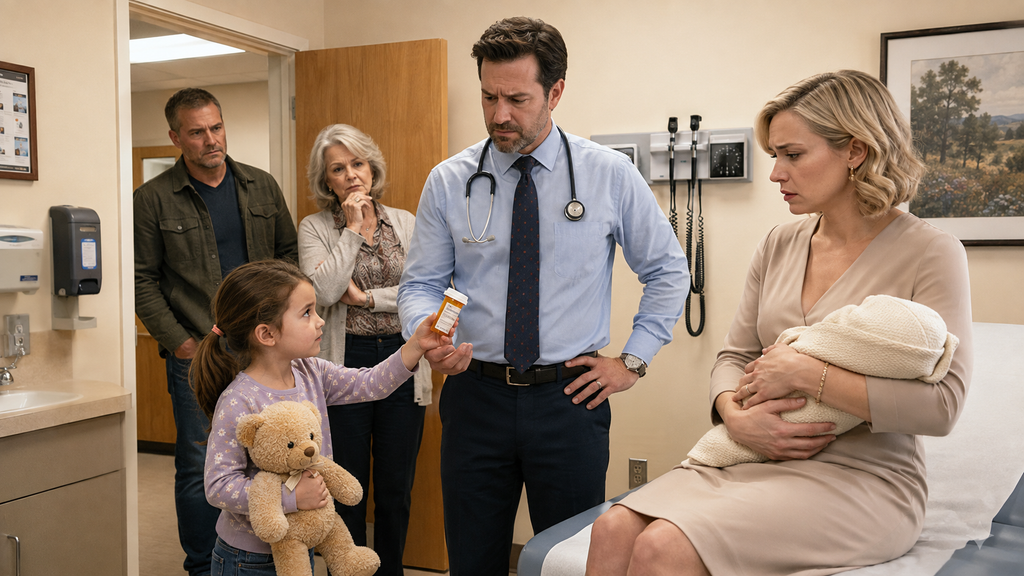
He was telling me that I was the problem.
I sat on the edge of the examination table with my eight-month-old son, Toby, burning against my chest.
His little cheek rested beneath my collarbone.
His breathing was faster than usual.
Every few seconds, a tiny shiver moved through him even though his skin felt frighteningly hot.
I hadn’t slept properly in two nights.
I had changed his pajamas three times because he kept sweating through them.
I had checked his temperature so often that Julian finally took the thermometer away from me that morning and told me I was making myself crazy.
And now, inside the pediatric clinic, I was being told once again that I worried too much.
Across the room, my mother-in-law, Evelyn, gave me a faint smile.
Not a comforting smile.
Not the kind of smile one woman gives another when a child is sick.
It was a tiny, knowing curve of the lips.
A smile that said:
See?
I told you.
My husband noticed it too.
Instead of defending me, Julian leaned against the wall and gave Dr. Vance an exhausted little laugh.
“Clara has been anxious about everything since Toby was born.”
Something tightened inside my chest.
I looked down at my son.
I didn’t argue.
That was what six months of being corrected had taught me to do.
Be quiet.
Don’t embarrass yourself.
Don’t prove them right.
Dr. Vance continued examining Toby.
He listened to his chest.
Checked his ears.
Looked at his throat.
Asked me how many wet diapers he’d had.
Asked whether he had vomited.
Asked what his temperature had been overnight.
I answered every question.
But I could feel Julian and Evelyn watching me.
Waiting for me to exaggerate.
Waiting for me to say something they could exchange looks about later.
So I forced myself to speak calmly.
“He was over one hundred and three during the night.”
Julian interrupted.
“For a little while.”
I looked at him.
“It happened twice.”
“But it came down.”
“Then it went back up.”
Evelyn sighed softly.
“Babies get fevers, Clara.”
I closed my eyes for one second.
One second.
That was all I allowed myself.
Because if I kept them closed any longer, I was afraid I might cry.
And if I cried, Julian would tell me I was overwhelmed.
Evelyn would tell me motherhood was difficult for everyone.
Dr. Vance might decide my emotions were more concerning than Toby’s fever.
So I kissed my baby’s damp hair instead.
“I know babies get fevers.”
My voice was barely above a whisper.
“I just know something isn’t right.”
Dr. Vance glanced at me.
Before he could respond, a small voice came from the corner.
“Dr. Vance?”
Everyone turned.
My seven-year-old daughter, Lily, had been sitting quietly in a plastic chair near the window.
She had come with us because school was closed for a teacher training day.
She was hugging Mr. Buttons, the old brown teddy bear she had carried around since she was four.
One of his ears had been sewn back on twice.
His left eye was slightly crooked.
Lily took him almost everywhere.
Usually I would have told her not to interrupt adults.
But there was something about her face that stopped me.
Her eyes were too serious.
Dr. Vance softened immediately.
“Yes, Lily?”
She looked at me.
Then at Julian.
Then at Evelyn.
Her fingers tightened around the teddy bear.
“Should I tell you what Grandma gave Toby instead of his real medicine?”
The room went silent.
Not quiet.
Silent.
The kind of silence where every small sound suddenly becomes enormous.
The hum of the overhead light.
The clicking of the clock.
Toby’s uneven breathing against my chest.
I felt my body go completely still.
Dr. Vance slowly lowered his stethoscope.
“What do you mean?”
Lily swallowed.
Her eyes moved toward her grandmother.
Evelyn sat straighter.
“Lily,” she said quickly, “you probably misunderstood something.”
Lily shook her head.
“No.”
“Sweetheart—”
“I didn’t.”
Something in Lily’s voice made Dr. Vance step away from the examination table.
He crouched slightly so he was closer to her eye level.
“You’re not in trouble,” he said.
Lily looked relieved for half a second.
Then frightened again.
“Can you tell me what you saw?”
She stared at Mr. Buttons.
“I saw Grandma pour Toby’s medicine away.”
My stomach dropped.
Evelyn gave a sharp laugh.
“That is ridiculous.”
Lily kept talking.
“She poured it into the sink.”
“Lily.”
“And then she gave him something else.”
I looked at Evelyn.
Her face had changed.
Only slightly.
But enough.
The smugness was gone.
“Something else?” Dr. Vance asked.
Lily nodded.
“What did it look like?”
“A purple bottle.”
Evelyn stood abruptly.
“She is seven years old. She has no idea what she’s talking about.”
Lily flinched.
I saw it.
And something inside me changed.
For months, I had allowed Evelyn to speak over me.
Correct me.
Dismiss me.
Walk into my kitchen and rearrange Toby’s bottles because she didn’t like where I kept them.
Pick him up after I had just gotten him to sleep.
Tell me I was making him dependent because I responded when he cried.
Tell Julian I was “too sensitive.”
Tell friends that motherhood had made me “a nervous little thing.”
I had tolerated it because she was his mother.
Because Julian kept telling me she meant well.
Because every time I fought back, somehow the argument became about my attitude.
But when I saw my daughter shrink beneath Evelyn’s voice, something inside me finally snapped into place.
“Sit down.”
Evelyn stared at me.
“What?”
“I said sit down.”
My voice didn’t sound like mine.
It was calm.
Cold.
Evelyn blinked.
Julian stepped forward.
“Clara—”
“Not now.”
He stopped.
Maybe it was my face.
Maybe it was the way I held Toby closer.
Whatever it was, for once, my husband didn’t immediately tell me to calm down.
Dr. Vance turned back to Lily.
“What happened after your grandmother poured the medicine away?”
Lily looked at me.
Tears were gathering in her eyes.
“I thought maybe I was wrong.”
“You’re okay, baby.”
“I knew Toby had medicine because his name was on the bottle.”
I nodded slowly.
He had been prescribed medication several days earlier.
I had given him the first doses myself.
Then Evelyn had come to stay.
She said I looked exhausted.
She insisted she could help during the night.
Julian loved the idea.
I hated it.
But they both told me I needed sleep.
I remembered Evelyn smiling as she took the medicine from my hand.
“I raised three children, Clara. Go to bed before you fall over.”
I had almost protested.
Almost.
Then Julian put his hands on my shoulders and guided me toward the stairs.
“Mom knows what she’s doing.”
The memory made my skin crawl.
Dr. Vance asked Lily another question.
“What happened to Toby’s medicine bottle?”
“I found it.”
Evelyn’s head snapped toward her.
“You what?”
Lily looked frightened.
But she reached beneath the denim overalls on Mr. Buttons.
At first I didn’t understand what she was doing.
Then she pulled something out.
An amber prescription bottle.
My son’s name was printed across the white pharmacy label.
TOBIAS BENNETT.
My heart stopped.
For several seconds, no one moved.
Lily held the bottle with both hands.
“I found it in the trash.”
I heard myself whisper, “Oh my God.”
Dr. Vance held out his hand.
“May I see that?”
Lily nodded and gave it to him.
He turned the bottle slowly.
Checked the label.
Checked the dosage instructions.
Then held it toward the light.
His entire expression changed.
I knew immediately why.
The bottle was nearly full.
Toby had supposedly been receiving that medicine for several days.
There should not have been that much left.
Not even close.
Julian stepped away from the wall.
“Maybe Mom opened another bottle.”
“No,” I said.
He looked at me.
“There was only one.”
“Clara—”
“There was only one bottle.”
I remembered picking it up from the pharmacy myself.
Remembered paying for it.
Remembered putting it into the cabinet above the kitchen counter.
Remembered Evelyn complaining that I was writing down the times of Toby’s doses.
“You act like you’re running a hospital,” she had said.
I had laughed awkwardly.
Then stopped keeping the written log where she could see it.
Because apparently even being organized made me anxious.
Dr. Vance pressed the call button beside the examination table.
A nurse entered a few moments later.
“I’d like Toby moved into a treatment room,” he said.
My heart began pounding.
“Why?”
“We need to review everything he may have been given.”
Julian frowned.
“Is all of this really necessary?”
Dr. Vance looked at him.
The expression on his face was completely different now.
No reassuring smile.
No gentle suggestion that perhaps the mother was worrying too much.
“Yes.”
One word.
Firm.
Immediate.
Julian said nothing.
The nurse took the prescription bottle from Dr. Vance and carefully placed it inside a clear medication bag.
I watched her seal it.
Something about that little plastic bag terrified me more than anything that had happened so far.
Because suddenly this wasn’t a family disagreement.
It wasn’t Evelyn giving unwanted advice.
It wasn’t Julian taking his mother’s side.
It wasn’t me being sensitive.
It was evidence.
Documented evidence.
Dr. Vance turned back to Lily.
“You said the other bottle was purple?”
She nodded.
“Do you remember anything written on it?”
Lily thought for a moment.
“It said nighttime.”
A strange ringing filled my ears.
I looked at Evelyn.
“What did you give my son?”
She rolled her eyes.
“Oh, for heaven’s sake.”
“What did you give him?”
“I was helping him settle.”
“With what?”
“Clara, stop acting hysterical.”
I stood.
Toby stirred against me.
I adjusted him carefully, never taking my eyes from her.
“I am not hysterical.”
Evelyn crossed her arms.
“You haven’t slept properly in months. Every time that baby coughs, you behave as if he’s dying.”
“What did you give him?”
She didn’t answer.
Dr. Vance did.
“Mrs. Bennett, I need to know the exact product.”
Evelyn looked offended.
As if she were the person being mistreated.
“It was something I have used before.”
“That is not what I asked.”
“It was safe.”
“For whom?”
Her lips tightened.
Dr. Vance stepped closer.
“What exactly did you give this infant?”
For the first time since I had known her, Evelyn looked uncertain.
Julian stepped in.
“Mom?”
She looked at him.
That look lasted half a second.
Maybe less.
But I saw something pass between them.
Something familiar.
Something shared.
And suddenly my body went cold.
I looked at my husband.
“Julian.”
He avoided my eyes.
No.
My heart began hammering.
“Julian.”
He rubbed his jaw.
“Clara, let the doctor handle this.”
I almost laughed.
There was something so absurd about it.
For months, whenever I wanted a doctor to handle something, Julian told me I was overreacting.
Now he wanted the doctor to handle it because he didn’t want to answer me.
“Did you know?”
He looked at the floor.
My throat closed.
“Did you know your mother was giving Toby something different?”
No answer.
Evelyn intervened immediately.
“We were trying to help you.”
My eyes stayed on Julian.
“I didn’t ask her.”
“Clara.”
“I asked my husband.”
He finally looked at me.
And the guilt on his face told me the truth before he spoke.
My knees almost gave out.
Dr. Vance stepped between us slightly.
“Mr. Bennett, I need a direct answer.”
Julian swallowed.
“Did you know your mother was giving Toby medication other than what had been prescribed?”
Julian rubbed both hands down his face.
My baby whimpered.
I pressed my lips to his forehead.
He was still burning.
Every second Julian remained silent made me feel sicker.
Finally, he whispered,
“Yes.”
One word.
That was all it took.
Seven years of marriage seemed to split cleanly in half.
Before that word.
After that word.
Evelyn turned toward him sharply.
“Julian!”
He looked miserable.
“I didn’t know exactly what it was.”
I stared at him.
“You knew she was giving him something.”
“I thought Mom knew what she was doing.”
“You knew.”
“Clara—”
“You knew.”
My voice cracked.
That was the first moment I felt tears burn behind my eyes.
Not because Evelyn had done it.
Some part of me had always known Evelyn believed rules applied differently to her.
But Julian?
The man who had stood beside me in the delivery room?
The man who cried when Toby was born?
The man who kissed my forehead and promised we were going to be a team?
He had known.
He had watched me stumble through weeks of fear and exhaustion.
He had watched me question myself.
He had watched me cry quietly in the bathroom because I was terrified motherhood had somehow damaged my mind.
And the whole time, there had been something real happening behind my back.
“Why?”
The word barely came out.
Julian stared at me.
“Why would you do that?”
“Toby wasn’t sleeping.”
I almost couldn’t understand the sentence.
“What?”
“He wasn’t sleeping for more than an hour or two.”
“He was sick.”
“This started before he was sick.”
My pulse roared in my ears.
Julian continued quickly.
“Mom said if he settled for a few hours, you could finally sleep. You were exhausted, Clara.”
“So you changed our baby’s medication without telling me?”
“I didn’t change it.”
“You stood there while she did.”
“That isn’t fair.”
I laughed.
It sounded terrible.
Broken.
Almost like a sob.
“Not fair?”
“I thought she was giving him something harmless.”
“You thought?”
Julian looked around the room as though someone might rescue him.
No one did.
Dr. Vance was writing something down.
The nurse was standing near the door.
Lily had gone silent.
My seven-year-old daughter was watching her father unravel in front of us.
And somehow, even then, Julian seemed more concerned about being blamed than about what had happened to Toby.
I lowered my voice.
“You let me believe I was losing my mind.”
His expression changed.
“I never said that.”
“You said I was irrational.”
“I said you were anxious.”
“You told me I imagined things.”
“I said exhaustion can make things feel worse.”
“You told your mother I needed to stop controlling everyone.”
“You were controlling.”
The words came out before he could stop them.
The room froze.
Julian closed his eyes.
“Clara, that’s not what I meant.”
But suddenly I remembered every little moment.
Every single one.
The night Toby cried for almost three hours and I said something about him seemed unusually sluggish afterward.
Julian had told me I was obsessing.
The morning I noticed his feeding seemed different.
Evelyn said babies change all the time.
The afternoon Toby slept longer than he ever had before and I stood over his crib counting his breaths.
Julian laughed gently and wrapped his arms around me.
“You’re going to drive yourself crazy.”
I had believed him.
God help me.
I had believed him.
I started wondering whether I really was becoming unstable.
I googled postpartum anxiety at three in the morning.
I deleted the search history because I was embarrassed.
I stood in the shower one morning and cried because I didn’t know whether my instincts could be trusted anymore.
All while my husband knew his mother was secretly giving our baby something I had never approved.
It wasn’t just betrayal.
It was theft.
They had stolen my confidence in my own mind.
I looked at Julian.
Something inside me went very quiet.
“Don’t come near me.”
His face collapsed.
“Clara.”
“Don’t.”
“I never wanted Toby hurt.”
“I don’t care what you wanted.”
“That’s not fair.”
“Stop saying that.”
My voice rose.
Toby startled.
I immediately lowered it again.
“I don’t care what you intended. I care what you did.”
Evelyn stood.
“This is becoming ridiculous.”
Dr. Vance turned toward her.
“No, Mrs. Bennett. It is becoming documented.”
That silenced her.
He turned to the nurse.
“We need a complete medication history, vital monitoring, and further evaluation. Contact the pediatric team.”
My stomach twisted.
“Is he going to be okay?”
Dr. Vance looked at me.
His voice softened.
“We’re going to find out exactly what he may have received and make sure he’s safe.”
I nodded.
Tears finally spilled down my cheeks.
For the first time that day, I didn’t apologize for them.
The nurse led us into a larger treatment room.
I went with Toby.
Lily immediately followed.
Julian tried to come too.
I blocked the doorway.
“No.”
“I’m his father.”
I looked directly into his eyes.
“Then you should have acted like one.”
His face went white.
“Clara, please.”
“No.”
The nurse looked at me.
“Would you like us to ask him to remain outside for now?”
“Yes.”
Julian’s eyes widened.
“Seriously?”
“Yes.”
“Clara—”
“Please.”
The nurse stepped between us.
“Sir, I’m going to ask you to wait outside.”
Julian stared at me as though he didn’t recognize me.
Maybe he didn’t.
Maybe neither did I.
The Clara he knew would have worried about making a scene.
She would have softened her words.
She would have considered how embarrassed Julian might feel.
She would have wondered whether Evelyn would complain to relatives.
That woman had disappeared somewhere between Lily’s question and the medicine bottle.
I sat beside Toby’s bed while nurses worked around him.
They checked him repeatedly.
Asked questions.
Wrote down times.
Asked me when he had last eaten.
How much.
What medication had been prescribed.
When I personally had given it.
When Evelyn began helping.
Where the purple bottle might be.
Every answer made my heart hurt more.
Because I kept realizing how many opportunities Julian had had to tell me.
He could have told me the first night.
He could have told me the second.
He could have stopped his mother.
He could have called the pediatrician.
He could have handed me the purple bottle and said, “Mom thinks this helps. What do you think?”
He did none of those things.
He decided my opinion didn’t matter.
Then he helped convince me my concern was a symptom of instability.
Lily sat beside me with Mr. Buttons squeezed against her chest.
I noticed she looked frightened.
I reached for her.
“Come here.”
She climbed into the chair beside me.
I put one arm around her.
For a while, neither of us spoke.
Then Lily whispered,
“Are you mad at me?”
The question nearly broke me.
“What?”
She looked down.
“Because I took the medicine.”
I pulled her closer.
“Oh, baby. No.”
“I took it out of the trash.”
“I know.”
“I thought maybe that was stealing.”
I kissed her forehead.
“No.”
Her lower lip trembled.
“Grandma said kids shouldn’t touch medicine.”
I had to swallow before I could answer.
“She’s right about that part. Usually you should never touch medicine without an adult.”
Lily’s eyes filled.
“I’m sorry.”
“Listen to me.”
I gently lifted her chin.
“You are not in trouble.”
She stared at me.
“You saw something that scared you. You kept the bottle because you thought someone needed to know.”
She nodded.
“That was very brave.”
A tear rolled down her cheek.
“But I waited.”
My heart cracked.
“What do you mean?”
“I saw Grandma before.”
“When?”
“The first night.”
I forced myself to breathe slowly.
Lily picked at the loose thread on Mr. Buttons’ paw.
“I came downstairs because Toby was crying.”
I remembered that night.
Evelyn had arrived around six.
She made dinner.
Then complained that I barely ate.
At ten, I tried to take Toby upstairs.
Evelyn insisted she would stay with him.
Julian said I looked like a ghost.
I slept nearly five uninterrupted hours.
When I woke up, I felt guilty.
Toby was sleeping deeply in his crib.
Too deeply, I had thought.
I touched his chest twice to make sure he was breathing.
Julian woke beside me.
“See?” he whispered. “You finally got rest.”
I had smiled at him.
God.
I had smiled.
Lily continued.
“Grandma was in the kitchen.”
“With Toby?”
She nodded.
“She had the little syringe.”
My stomach twisted.
“What happened?”
“She put the medicine in it.”
“The prescribed medicine?”
Lily shook her head.
“The purple one.”
I closed my eyes.
“Was anyone else there?”
She hesitated.
Immediately I knew.
“Lily.”
She looked toward the closed treatment-room door.
“Daddy.”
The word felt like a physical blow.
“He was there?”
“Yes.”
“What was he doing?”
“He was holding Toby.”
I covered my mouth.
My husband had held our son while his mother gave him something behind my back.
Not once.
Not accidentally.
He had actively participated.
Lily’s voice grew smaller.
“I asked what they were doing.”
“What did Daddy say?”
“He told me to go back upstairs.”
I stared at my daughter.
“Did he seem angry?”
“No.”
She thought.
“Just serious.”
“And Grandma?”
“Grandma said it was grown-up stuff.”
I felt cold everywhere.
I could picture it perfectly.
The kitchen light.
Julian standing near the island.
Toby in his arms.
Evelyn with the syringe.
My daughter barefoot on the stairs.
And me upstairs sleeping because everyone had insisted I needed rest.
“How many times did you see it?”
Lily counted on Mr. Buttons’ paw.
“One…”
Pause.
“Two…”
Another finger.
“Three.”
Three times.
I stared at her.
“You saw them do this three times?”
She nodded.
“Grandma waited until you went upstairs.”
Of course she did.
The door opened.
Dr. Vance entered with another doctor.
Lily immediately went quiet.
He gave her a reassuring smile.
“You’ve been very helpful.”
Then he looked at me.
“We’re going to keep Toby under observation.”
My heart jumped.
“Is something wrong?”
“He’s stable right now.”
The words right now terrified me.
“But because we don’t yet know exactly what he received, we want to be careful.”
“Can I stay?”
“Absolutely.”
“What about Lily?”
“We’ll work that out.”
He paused.
“There are also some reporting procedures we are required to follow when an infant may have been given medication outside medical instructions.”
I knew what he meant.
My stomach tightened.
“Do whatever you need to do.”
Dr. Vance nodded.
Behind him, through the opening door, I saw Julian.
He looked destroyed.
A few hours earlier, I would have felt sorry for him.
That instinct was gone.
Not forever, perhaps.
But for now.
Gone.
A staff member eventually asked me if I wanted to speak with Julian.
I said no.
Then I changed my mind.
Not because I wanted comfort.
Because I wanted answers.
He came into a small consultation room alone.
His shoulders were hunched.
His hair looked messy from running his hands through it.
For the first time since I met him, Julian Bennett looked small.
He sat across from me.
“Is Toby okay?”
“He’s being monitored.”
Julian nodded.
Tears filled his eyes.
“I’m sorry.”
I stared at him.
That sentence had once been powerful between us.
When we were newly married, “I’m sorry” could stop an argument.
It meant one of us understood.
It meant we mattered more than pride.
Now it sounded empty.
“You’re sorry for what?”
He looked confused.
“For everything.”
“No.”
I shook my head.
“Be specific.”
“Clara—”
“No. Tell me what you are sorry for.”
He looked down.
“For not telling you.”
I waited.
“And?”
“For letting Mom give him something.”
“And?”
His jaw tightened.
“For making you feel like you were overreacting.”
“Making me feel?”
Julian flinched.
“You told me I was overreacting.”
“I was trying to calm you down.”
“You lied to me.”
“I didn’t think of it that way.”
“Well, I do.”
He closed his eyes.
“I was scared.”
I almost laughed.
“You were scared?”
“Yes.”
“Of what?”
“You weren’t yourself.”
That hurt more than I expected.
I sat back.
“What does that mean?”
“You were exhausted all the time. You cried. You checked on Toby constantly.”
“He was a newborn.”
“I know.”
“I had just had a baby.”
“I know.”
“Apparently you don’t.”
My voice shook.
“You know what I needed?”
Julian didn’t answer.
“I needed you to stand beside me.”
Tears blurred my vision.
“I needed you to say, ‘Clara, I know you’re tired, but I trust you.’”
He stared at me.
“I needed you to tell your mother that I was Toby’s mother, and that she did not get to decide what went into his body.”
“Clara…”
“I needed you to talk to me.”
My chest ached.
“I needed you to let me be tired without turning my exhaustion into evidence that I couldn’t be trusted.”
Julian began crying.
Actually crying.
I had seen him cry only a handful of times.
At our wedding.
When Lily was born.
When his grandfather died.
When Toby arrived.
Once, I would have moved across the room and held him.
I stayed in my chair.
“Mom kept saying you needed help.”
“I did need help.”
He looked at me.
“But help is washing bottles.”
My voice broke.
“Help is making dinner. Help is taking Lily to school. Help is sitting beside me while I call the doctor. Help is holding Toby so I can shower.”
I leaned forward.
“Help is not secretly replacing his medicine.”
Julian covered his face.
“I know.”
“No.”
I stood.
“You know now.”
That distinction mattered.
Because remorse after getting caught is not the same thing as judgment before causing harm.
I walked toward the door.
Julian stood too.
“Clara.”
I stopped.
“What?”
“Please don’t make any decisions today.”
I turned.
He looked terrified.
Not of losing Toby.
Not entirely.
Of losing the life he knew.
Our house.
Our marriage.
Our family.
Me.
“Do you know what the saddest part is?”
He shook his head.
“If Lily hadn’t said anything, I might still believe you.”
His face collapsed.
“And that terrifies me more than anything.”
I left him standing there.
That night, Toby slept under medical observation.
I stayed beside him.
The room was dim except for the monitors and a small light above the sink.
Lily had finally fallen asleep curled in a chair beneath a thin hospital blanket.
Mr. Buttons was tucked under her chin.
I watched both of my children breathe.
One.
Two.
Three.
Four.
The old habit.
Counting.
Watching.
Checking.
For months, Julian had joked about it.
Now I realized something.
Maybe anxiety had made me check more than necessary sometimes.
Maybe exhaustion had made me afraid.
Maybe not every fear I had was reasonable.
But none of that meant I deserved to be lied to.
A person can be anxious and still be right.
A person can be exhausted and still deserve informed consent.
A mother can be scared without surrendering her authority over her child.
At three in the morning, Lily woke.
She sat up suddenly.
“Mom?”
“I’m here.”
She climbed down from the chair and came beside me.
“Is Toby going to die?”
The question destroyed whatever remained of my composure.
I pulled her into my arms.
“No, sweetheart.”
I kissed her hair.
“The doctors are taking good care of him.”
“But is he really okay?”
“He’s doing better.”
She pressed her face into my shoulder.
“I should have told you sooner.”
I held her tightly.
“No.”
“Yes.”
“No, Lily.”
“I was scared.”
“Of Grandma?”
She nodded.
“And Daddy.”
That hurt.
Not because Julian had ever hit Lily.
He hadn’t.
Not because he screamed at her.
He rarely did.
But somehow our daughter had learned that challenging her father felt dangerous.
Maybe not physically dangerous.
Emotionally dangerous.
She had learned there were truths adults didn’t want to hear.
I stroked her hair.
“You should never have had to be the grown-up in this situation.”
“But I knew.”
“I know.”
“I thought maybe Grandma was right.”
“About what?”
“She said you worry too much.”
I froze.
Lily pulled back.
“She told me sometimes you get upset because your brain gets too tired.”
My eyes filled.
“When did she say that?”
“A lot.”
Of course she did.
Evelyn hadn’t just undermined me to Julian.
She had been undermining me to my daughter.
Turning my children into observers of my supposed instability.
Slowly.
Quietly.
One comment at a time.
I held Lily’s face.
“Listen carefully.”
She nodded.
“Adults can be wrong.”
Her eyes widened.
“Even Grandma?”
“Even Grandma.”
“Even Daddy?”
The question almost stopped me.
“Yes.”
I swallowed.
“Even Daddy.”
“What about you?”
I smiled through my tears.
“Especially me sometimes.”
That made her smile a little.
“But when someone tells you to keep something secret that affects your safety, Toby’s safety, or makes you feel scared, you can always tell me.”
“What if they say I’ll get in trouble?”
“You still tell me.”
“What if it’s family?”
“Especially then.”
Lily nodded slowly.
Then she looked at Toby.
“Do you think he knows I helped?”
I followed her gaze.
My little boy was sleeping.
His fist rested beside his cheek.
“I think someday I’m going to tell him.”
“Really?”
“Really.”
“What will you say?”
I kissed Lily’s temple.
“I’ll tell him his big sister was the bravest person in the room.”
The next morning, Toby’s fever finally began coming down.
Not temporarily.
Not for twenty minutes.
Gradually.
Steadily.
The doctors continued monitoring him, but by midmorning he looked more like himself.
His eyes were brighter.
He turned his head when I spoke.
Then a nurse adjusted his blanket.
Toby let out an angry scream.
A beautiful, furious, offended baby scream.
I burst into tears.
The nurse laughed softly.
“That’s a good sound.”
“I know.”
I picked him up carefully.
“Oh, sweetheart.”
He cried louder.
I kissed his forehead.
“I know.”
Another kiss.
“I know.”
Lily woke and hurried over.
“Is he okay?”
“He’s mad.”
Lily smiled.
“That’s good.”
“It’s very good.”
She leaned toward him.
“Hi, Toby.”
He immediately grabbed a piece of her hair.
“Ow!”
I laughed.
Lily laughed.
Even the nurse smiled.
For a few seconds, the nightmare loosened its grip.
Just enough for me to remember what normal joy felt like.
We went home two days later.
But not to the house I shared with Julian.
I couldn’t.
The thought of walking into that kitchen made me sick.
I imagined the sink where Lily said Evelyn had poured away Toby’s medicine.
The staircase where my daughter had stood.
The bedroom where I had slept.
The crib I had hovered over.
Every room had become contaminated by memory.
My older sister, Rachel, lived twenty minutes away.
When I called and asked whether Lily, Toby, and I could stay for a few nights, she didn’t ask questions.
“Come.”
That was all she said.
Later I found out she had already made up the guest room before we arrived.
She put Lily in her daughter’s old bedroom.
Set up a portable crib for Toby.
Filled the refrigerator with food.
And when I walked through the front door holding my baby, Rachel wrapped her arms around me.
I broke.
Not delicately.
Not beautifully.
I broke like someone whose body had finally realized it was safe enough to collapse.
“I should have known.”
Rachel held me tighter.
“No.”
“I should have stopped it.”
“You didn’t know.”
“I’m his mother.”
“And the people you trusted lied to you.”
“I let her take care of him.”
“You trusted family.”
“I slept.”
“Clara.”
“I slept while—”
Rachel pulled back.
“Stop.”
I stared at her.
“You were allowed to sleep.”
That sentence destroyed me.
Because somewhere during the previous months, I had stopped believing I was allowed to need anything.
Rest.
Help.
Reassurance.
Kindness.
“You were allowed to sleep,” Rachel repeated. “Your husband was supposed to keep your child safe while you did.”
I cried harder.
Rachel held me until my legs stopped shaking.
The next weeks were a blur.
Phone calls.
Appointments.
Medical follow-ups.
Statements.
Questions.
Documentation.
An investigator spoke with me.
Then separately with Julian.
Then Evelyn.
I learned that truth, once exposed, becomes paperwork.
Dates matter.
Messages matter.
Prescriptions matter.
Receipts matter.
Little comments you nearly forgot become important.
I went through months of texts between Julian and me.
I found things I had forgotten.
Messages where I asked whether Toby seemed unusually sleepy.
Julian replying:
He’s fine. Please stop spiraling.
Another:
Mom says he ate normally. Relax.
Another:
You cannot call the pediatrician every time something seems off.
And another that made me sit down on the floor.
I had written:
Something feels wrong.
Julian answered:
Clara, this is exactly what Mom means. You always think something is wrong.
I stared at those words for a long time.
At the time, I had apologized.
I had actually written:
I’m sorry. I’m probably just tired.
Reading that message weeks later felt like reading a letter from a stranger.
A woman asking permission to believe herself.
I wanted to reach through the screen and hold her.
Tell her:
You’re not crazy.
You’re not difficult.
You’re noticing things.
Keep asking.
Eventually I contacted an attorney.
Her name was Sarah Morgan.
She was in her early fifties, wore dark-framed glasses, and had the calmest voice I had ever heard.
I told her everything.
I expected shock.
Instead, she listened.
That was strangely powerful.
She didn’t interrupt to tell me what I should have done.
She didn’t ask why I didn’t notice sooner.
She took notes.
When I finished, she folded her hands.
“What do you want?”
The question caught me off guard.
“What?”
“What do you want to happen?”
I looked at the documents spread across her desk.
“I want my children safe.”
“Good.”
“I don’t want Evelyn alone with them.”
“Okay.”
“I don’t trust Julian.”
Sarah nodded.
“And the marriage?”
My throat tightened.
That answer came more slowly.
For seven years, Julian had been my person.
There were memories before the betrayal.
Real ones.
Good ones.
He proposed to me in the rain because he forgot to check the weather.
He once drove four hours because I left my grandmother’s necklace at a hotel.
When Lily was born, he spent two nights sleeping upright beside my hospital bed because I was afraid.
When my father died, Julian handled every phone call because I couldn’t speak.
People are rarely monsters every minute of their lives.
That would make leaving easier.
Julian had loved me.
I believed that.
Maybe part of him still did.
But love without respect becomes something frightening.
And whatever Julian felt for me had not stopped him from deciding that my judgment could be removed from decisions about my own baby.
“I can forgive mistakes,” I said.
Sarah waited.
“I don’t think I can forgive someone helping me doubt my own mind.”
She nodded slowly.
“That sounds like your answer.”
I filed for divorce.
Julian called me immediately after he was served.
I didn’t answer.
He called nine times.
Then texted.
Please don’t do this.
I stared at the message.
The old Clara would have responded immediately.
She would have worried he was suffering.
She would have explained herself.
She would have spent hours crafting gentle sentences so Julian wouldn’t feel attacked.
Instead, I placed my phone facedown.
Five minutes later, another message arrived.
Seven years can’t mean nothing.
Then:
I made a horrible mistake.
Then:
Mom convinced me it was okay.
Then:
Please talk to me.
I eventually replied with one sentence.
Our marriage did mean something, which is why what you did mattered so much.
He didn’t answer for several hours.
When he finally did, he wrote:
I love you.
I cried when I read it.
Because part of me still loved him too.
That is something nobody warns you about.
Leaving someone does not always mean love disappears.
Sometimes love remains.
But trust dies.
And love cannot carry a marriage alone.
The investigation continued.
Evelyn told anyone who would listen that I had destroyed the family.
According to her version, she had merely been helping an overwhelmed daughter-in-law.
I had “twisted” the story.
Doctors had “overreacted.”
Lily had “misunderstood.”
Julian had been “pressured” into blaming his mother.
Every time I heard a new version, something inside me became calmer.
Because I realized Evelyn would never take responsibility.
Not really.
One afternoon, she called me from an unfamiliar number.
I almost didn’t answer.
“Clara.”
The sound of her voice made my stomach tighten.
“What do you want?”
“I want to see my grandchildren.”
“No.”
“They’re my family.”
“They’re my children.”
“You cannot keep them from me forever.”
“I can follow whatever protective arrangements are established.”
She went silent.
Then laughed bitterly.
“You always wanted this.”
“What?”
“To separate Julian from me.”
I actually looked at my phone because I couldn’t believe what I was hearing.
“Evelyn.”
“You never liked how close we were.”
“This has nothing to do with how close you are.”
“It has everything to do with it.”
“No.”
My voice became very quiet.
“This is about the fact that you secretly gave my infant something I never approved.”
“I was helping.”
“You threw away his prescribed medicine.”
“He didn’t need it the way you thought he did.”
“You are not his doctor.”
“I raised children.”
“And that does not make you his doctor.”
“You were barely functioning!”
There it was.
The old weapon.
The one she had used until I forgot I was allowed to defend myself.
Except now it didn’t work.
“Yes,” I said.
She went quiet.
“I was exhausted.”
I continued.
“I was emotional. I cried. I worried. I checked on my baby repeatedly.”
Evelyn had no response.
“None of those things gave you permission.”
She inhaled sharply.
“You always think you’re right.”
“No.”
I looked across Rachel’s kitchen where Lily was helping Toby stack plastic cups.
“I know I can be wrong.”
I watched Toby knock over the cups and laugh.
“The difference is that when I might be wrong about my child’s medicine, I call a doctor.”
I ended the call.
My hands shook afterward.
But only for a minute.
Lily looked over.
“You okay, Mom?”
I smiled.
“Yeah.”
And for the first time in a long time, I meant it.
The divorce took months.
There were difficult meetings.
Hard conversations.
Legal arrangements.
Parenting discussions.
Safety plans.
I won’t pretend I walked through any of it gracefully.
Some mornings I felt strong.
Other mornings I sat on the bathroom floor crying before Lily woke up.
Sometimes I missed Julian so badly I physically ached.
I missed the man I thought he was.
I missed stupid things.
The sound of him making coffee.
The way he always forgot where he put his keys.
The ridiculous dance he did whenever Lily begged him to embarrass himself.
Our Sunday pancakes.
Our old life.
Grief is strange when the person you’re grieving is still alive.
You are mourning a future.
A version of reality.
A person who existed partly in memory and partly in hope.
Sarah once told me, “Missing someone is not the same as being safe with them.”
I wrote that sentence down.
On difficult nights, I read it.
Julian eventually began taking responsibility.
Not immediately.
At first he blamed Evelyn.
Then stress.
Then sleep deprivation.
Then me.
Not directly.
But indirectly.
He would say things like:
“I wish you had told me how bad things felt.”
Or:
“I didn’t understand how much you were struggling.”
Every sentence shifted one tiny piece of responsibility back toward me.
Then something changed.
Maybe therapy.
Maybe consequences.
Maybe losing his home and routine.
Maybe hearing Lily describe what she saw.
I don’t know.
But one afternoon, months after we separated, I received a letter.
A real letter.
Not a text.
Not an email.
His handwriting filled four pages.
I almost threw it away.
Instead, I read it.
He wrote that he had spent months convincing himself he had been caught between his wife and his mother.
Now he understood that framing had been dishonest.
There had been no neutral middle ground when the issue was our child’s safety.
He wrote that he had treated my exhaustion as incompetence.
That he had accepted his mother’s opinion because it was easier than disagreeing with her.
That each time I became upset, he used my reaction as proof I was unreasonable instead of asking whether he had given me a reason to be upset.
Then I reached the line that made me cry.
You asked me to trust your instincts, and instead I helped you stop trusting yourself.
I put the letter down.
For twenty minutes, I couldn’t read another word.
Eventually, I finished it.
At the end, Julian wrote:
I know apologizing does not restore what I broke.
For the first time, I believed he understood.
That didn’t mean I went back.
Understanding can be valuable without becoming reconciliation.
An apology can be sincere without erasing consequences.
I wrote him a short response.
Thank you for finally understanding why I left. I hope you continue doing the work, especially for the children.
That was all.
Weeks later, Lily asked me whether Daddy and I would ever get married again.
We were sitting on her bedroom floor sorting through old clothes Toby had outgrown.
I stopped folding a tiny blue onesie.
“No, sweetheart.”
She frowned.
“Never?”
“I don’t think so.”
“Do you hate him?”
The question made me pause.
“No.”
“Grandma Rachel says people get divorced when they hate each other.”
I smiled.
“Aunt Rachel sometimes makes things sound simpler than they are.”
Lily considered that.
“Do you love Daddy?”
I took a breath.
“Part of me probably always will.”
She looked confused.
“Then why can’t you be married?”
I put the onesie down.
“Because loving someone and trusting them are different things.”
“Oh.”
I could see she didn’t fully understand.
That was okay.
She was seven.
Then eight.
Then eventually she would be older.
There would be time.
I touched her nose.
“Sometimes people can love each other and still not be good at being married to each other.”
“Is Daddy bad?”
“No.”
I thought carefully.
“Daddy made some very serious choices that hurt us.”
She nodded.
“And Grandma?”
My chest tightened.
“Grandma made choices too.”
“Bad ones?”
“Yes.”
Lily looked at Mr. Buttons sitting on her pillow.
Then she whispered,
“I still love her.”
I pulled her into my arms.
“You’re allowed to.”
She looked surprised.
“I am?”
“Of course.”
“But you’re mad at her.”
“I am.”
“So I should be mad too.”
“No.”
I kissed her forehead.
“You’re allowed to have your own feelings.”
That mattered to me.
Maybe more than anything.
I did not want to rebuild my life by teaching Lily another version of the same lesson Evelyn had taught us.
I didn’t want her believing love required obedience.
I didn’t want her believing loyalty meant silence.
I didn’t want her thinking she had to borrow my anger simply because I was her mother.
“You can love someone and still know they did something wrong,” I told her.
Lily leaned against me.
“Like Daddy?”
“Yes.”
“Like Grandma?”
“Yes.”
“Like when I colored on the wall?”
I laughed.
“Exactly.”
She grinned.
“Except mine washed off.”
I laughed harder.
And for the first time, the conversation didn’t feel tragic.
It felt like healing.
Several months later, the children and I moved into a townhouse of our own.
It wasn’t huge.
The kitchen was smaller than our old one.
The living room had one strange wall that made arranging furniture nearly impossible.
The upstairs bathroom had ugly green tiles.
But it was ours.
The first night, we ate pizza sitting on the floor because the dining table hadn’t arrived yet.
Lily held up her plastic cup of apple juice.
“We should toast.”
I raised my cup.
“To what?”
She thought dramatically.
“To our new house.”
I smiled.
“Home.”
“Our new home.”
We clinked cups.
Toby banged his bottle against the floor like he wanted to participate.
Lily laughed.
“Toby agrees.”
I looked around.
Boxes everywhere.
Bare walls.
Cheap lamps.
Half-unpacked dishes.
And peace.
Actual peace.
Nobody was evaluating me.
Nobody was calling me dramatic.
Nobody was rearranging my kitchen.
Nobody was standing over my shoulder when I checked medication.
Nobody sighed when I asked questions at the pediatrician’s office.
It took months before my body understood the danger was over.
For a while, every time Toby became sick, panic returned.
The first cold after we moved nearly destroyed me.
He woke coughing at two in the morning.
My heart immediately raced.
I checked him.
Then checked him again.
I reached for my phone.
Then stopped.
The old voices came back.
You’re overreacting.
He’s fine.
Stop spiraling.
I stood beside his crib, fighting myself.
Then I did something different.
I called the after-hours pediatric line.
A nurse answered.
I explained Toby’s symptoms.
She asked questions.
I answered them.
Then she told me what to watch for and when to seek care.
No judgment.
No mocking.
No one telling me I was unstable.
Just information.
When I hung up, I cried.
Not because Toby was seriously ill.
He wasn’t.
I cried because I realized how simple support could have been.
I hadn’t needed Julian to agree with every worry.
I didn’t need a doctor to tell me every instinct was correct.
I needed people to respect the question.
That was all.
Respect the question.
Listen.
Evaluate.
Respond.
The next morning Toby woke congested but cheerful.
Lily came downstairs wearing mismatched socks.
“Did he die?”
My eyes widened.
“Lily!”
She laughed.
“Sorry.”
I threw a dish towel at her.
She ducked.
Toby laughed from his high chair.
And just like that, ordinary life returned.
Not perfect.
Ordinary.
I learned to love ordinary.
Ordinary meant banana on the floor.
Ordinary meant forgotten homework.
Ordinary meant laundry baskets that somehow reproduced overnight.
Ordinary meant Toby screaming because I wouldn’t let him eat a crayon.
Ordinary meant Lily complaining that brushing her hair was “a violation of human rights.”
Ordinary was beautiful.
On the morning my divorce became final, Sarah came to the townhouse.
She carried a folder.
I knew what was inside before she spoke.
Lily was at the kitchen table eating chocolate-chip pancakes.
Toby was in his high chair attempting to grab banana pieces from his tray.
Sarah placed the folder gently on the counter.
“It’s finalized.”
I stared at it.
For months, I had imagined that moment.
I thought I would feel victorious.
Or devastated.
Instead, I felt quiet.
Julian Bennett was no longer my husband.
Seven years reduced to a legal conclusion printed on paper.
I opened the folder.
Read the first page.
Then closed it again.
Sarah watched me.
“You okay?”
I looked toward the children.
Lily was pouring so much maple syrup onto her pancakes that the plate looked like a lake.
“Lily.”
“What?”
“That is enough syrup.”
She looked offended.
“It’s a celebration.”
Sarah laughed.
I did too.
Toby slapped both hands against his tray.
A piece of banana landed on his cheek.
Lily pointed.
“He has banana face.”
She grabbed a napkin and wiped him.
Toby immediately tried to eat the napkin.
“No.”
Lily pulled it away.
He screamed.
“Drama king.”
I laughed again.
And somewhere in the middle of that ridiculous little breakfast, I understood that my life had not ended.
A marriage had ended.
Trust had ended.
One version of family had ended.
But my life?
It was sitting at the kitchen table demanding more syrup.
It was smearing banana across its face.
It was laughing.
It was alive.
Sarah left after coffee.
I put the divorce papers inside a drawer.
Then I stood at the sink.
Morning sunlight poured through the window.
For months, I had been told I worried too much.
That I overreacted.
That motherhood had made me irrational.
That I needed to relax.
I heard those words so many times that eventually they became my own internal voice.
That was the most dangerous part.
Not Evelyn’s criticism.
Not Julian’s dismissal.
The moment their voices became mine.
The moment I began telling myself:
Don’t ask.
Don’t make trouble.
Don’t embarrass anyone.
You’re probably wrong.
I looked at Lily.
My brave girl.
The truth hadn’t come out because Evelyn suddenly confessed.
It hadn’t come out because Julian developed a conscience in the examination room.
It hadn’t come out because I found the medicine.
The truth came out because a seven-year-old girl with a battered teddy bear noticed something adults wanted hidden.
And she spoke.
Even though Grandma told her she was confused.
Even though Daddy told her to go upstairs.
Even though she was scared.
She spoke.
“Mom?”
Lily was watching me.
I realized I had been staring.
“What?”
She grinned.
“You’re doing that thing.”
“What thing?”
“The weird smile.”
“I do not have a weird smile.”
“You do.”
“What does it look like?”
She stretched her lips into the ugliest expression imaginable.
I gasped.
“That is insulting.”
She laughed.
Toby laughed because Lily was laughing.
I walked toward them.
“What are you doing?” Lily asked.
“Nothing.”
I wrapped my arms around her.
She squealed.
“Mom!”
Then I leaned over Toby’s high chair and kissed his soft cheek.
Banana and all.
“Gross,” Lily said.
“I survived.”
She rested her head against me.
For a moment, the three of us stayed that way.
My daughter.
My son.
Me.
Not the family I had imagined.
But a family.
Safe.
Imperfect.
Healing.
I thought about the woman I had been in Dr. Vance’s examination room.
Baby burning against her chest.
Afraid to argue.
Afraid everyone would think she was irrational.
I wished I could go back and sit beside her.
I wished I could take her hand.
I knew exactly what I would say.
You do not have to be perfectly calm to deserve to be heard.
You do not have to prove that every fear is correct before someone treats you with respect.
You are allowed to ask questions.
You are allowed to say no.
You are allowed to change doctors.
You are allowed to protect your children even when the person crossing the boundary is family.
And you are allowed to trust yourself again.
Because that was the lesson I had nearly learned too late.
Being worried does not automatically mean you are wrong.
Being emotional does not make facts disappear.
Being exhausted does not cancel your voice.
And someone repeatedly calling you “dramatic” does not mean they are right.
Sometimes people use that word because your questions are inconvenient.
Sometimes they call you difficult because obedience would make their lives easier.
Sometimes they tell you to calm down because listening would require them to admit something uncomfortable.
That doesn’t mean every fear is correct.
It doesn’t mean instinct replaces medicine or professional advice.
It means you are allowed to keep asking until someone actually evaluates what is happening.
Especially when the person who cannot speak for himself is a child in your arms.
Years from now, Toby probably won’t remember that examination room.
He won’t remember the fever.
He won’t remember the monitors.
He won’t remember his mother sitting beside him all night counting every breath.
But I will.
And Lily will.
Someday, when Toby is old enough, I’ll tell him the story.
I’ll tell him how tiny he was.
How angry his little cry sounded when the nurse disturbed his blanket.
How his sister refused to leave the hospital.
How she slept in an uncomfortable chair hugging a crooked teddy bear.
And eventually I’ll tell him about the bottle.
Maybe not all at once.
Maybe when he is old enough to understand.
I’ll tell him his big sister found something adults tried to hide.
I’ll tell him she was frightened.
I’ll tell him she spoke anyway.
And when he asks whether she saved him, I’ll probably tell him the doctors saved him.
Because that is true.
The professionals evaluated him.
They treated him.
They kept him safe.
But I will tell him something else too.
I’ll say:
“Your sister made sure they knew what they needed to know.”
And I hope Toby grows up understanding what courage actually looks like.
Not loud.
Not fearless.
Not dramatic.
Sometimes courage is a seven-year-old girl sitting in the corner of a doctor’s office.
Sometimes courage is trembling.
Sometimes courage is hugging a teddy bear.
Sometimes courage is looking at adults you love and saying:
Something is wrong.
And sometimes that one sentence changes an entire family.
That morning, after Sarah left, I washed the breakfast dishes while Lily played with Toby on the living-room rug.
I heard her teaching him the names of animals.
“Cow.”
“Ba!”
“No. Cow.”
“Ba!”
“Cow.”
“Ba!”
I laughed from the kitchen.
“He thinks everything says ba.”
“He’s wrong.”
“He’s a baby.”
“He can still improve.”
I dried my hands and walked toward them.
Toby spotted me and raised both arms.
“Mama!”
One word.
Clear.
Certain.
Mama.
I picked him up.
He buried his face against my neck.
For a second, I closed my eyes.
There had been a time when hearing that word made me wonder whether I was good enough to deserve it.
Not anymore.
I wasn’t a perfect mother.
I still worried.
Sometimes too much.
I still called the pediatrician.
I still checked Toby’s temperature twice when once probably would have been enough.
I still peeked into his bedroom before I went to sleep.
I still made mistakes.
Lots of them.
But I no longer confused imperfection with incompetence.
I no longer apologized for caring.
And I no longer handed other people authority over my instincts simply because they spoke with more confidence.
Lily climbed beside me.
“Group hug.”
She wrapped her arms around my waist.
Toby squealed between us.
I laughed.
“Careful.”
“I am careful.”
“You’re crushing your brother.”
“He likes it.”
Toby laughed.
“See?”
I looked down at both of them.
And there it was again.
That strange smile Lily teased me about.
Maybe it was weird.
Maybe it was the face people make when they finally understand they survived something.
Not perfectly.
Not without scars.
But survived.
Outside, cars passed along the street.
Someone nearby was mowing grass.
A dog barked.
The dishwasher hummed.
Nothing dramatic.
Nothing extraordinary.
Just life moving forward.
I kissed Lily’s hair.
Then Toby’s forehead.
His skin felt cool.
Normal.
Perfectly ordinary.
And that simple coolness beneath my lips still felt like a miracle.
The truth had cost me a marriage.
It had changed my daughter.
It had forced Julian to confront parts of himself he had spent years avoiding.
It had taken Evelyn out of the center of our lives.
It had dragged our family through doctors’ offices, legal meetings, investigations, therapy, anger, guilt, and grief.
But truth had also given something back.
My voice.
I had spent months believing strength meant staying calm.
Keeping the peace.
Not upsetting anyone.
Being grateful for help.
Smiling when I wanted to scream.
I understood differently now.
Sometimes strength is peace.
Sometimes strength is patience.
And sometimes strength is standing in a room full of people who think you are difficult and saying:
“No.”
Sometimes strength is asking the question again.
Sometimes it is refusing to move.
Sometimes it is protecting someone who cannot protect himself.
And sometimes strength is leaving a person you still love because loving them does not make what they did safe.
Lily pulled away from the hug.
“Can we go to the park?”
I looked outside.
“After you change your socks.”
She looked down.
One sock was pink.
The other had dinosaurs.
“What’s wrong with them?”
“They don’t match.”
“That’s fashion.”
I stared at her.
She stared back.
I sighed.
“Fine.”
She raised both arms.
“Yes!”
I laughed.
“Go get your shoes.”
She ran toward the stairs.
Toby pointed after her.
“Ba!”
“Yes,” I told him.
“Your sister is ridiculous.”
From upstairs came a shout.
“I HEARD THAT!”
I laughed so hard I had to sit down.
And with Toby balanced on my hip and Lily thundering through the house looking for shoes she had probably left directly beside the front door, I realized something else.
This was the ending I wanted.
Not revenge.
Not Evelyn begging.
Not Julian destroyed.
Not some courtroom victory where everyone clapped for me.
I wanted this.
Morning sunlight.
A healthy baby.
A loud daughter.
A peaceful home.
The freedom to trust myself.
The freedom to breathe.
The freedom to know that when something felt wrong, I could ask a question without first wondering whether I had permission.
I picked up Toby’s tiny jacket.
Lily ran downstairs wearing one sneaker.
“Where’s your other shoe?”
“I don’t know.”
“You had two yesterday.”
“Maybe Toby took it.”
“Toby cannot walk.”
“Exactly. Perfect crime.”
I shook my head.
Five minutes later, we found the missing shoe beneath the couch.
Lily put it on.
I strapped Toby into his stroller.
Then the three of us stepped outside.
The sky was bright.
The air smelled like late spring.
Lily ran ahead toward the sidewalk, then stopped.
“Mom?”
“Yes?”
She came back.
“What?”
She reached up and took my hand.
“Nothing.”
I smiled.
She held my hand on one side.
I pushed Toby with the other.
And we started walking.
No one behind us.
No one telling me to calm down.
No one telling Lily she had misunderstood.
No one telling us family loyalty required silence.
Just the three of us moving forward.
I used to think families were protected by keeping secrets inside the house.
By forgiving quickly.
By not embarrassing one another.
By giving relatives the benefit of the doubt.
I know better now.
Families are protected by truth.
By accountability.
By boundaries.
By listening when the smallest person in the room says something is wrong.
Especially then.
Because the smallest voice may be the one carrying the truth everyone else is trying not to hear.
My daughter taught me that.
She was seven years old.
She had a teddy bear with one crooked eye.
Her hands shook when she pulled that prescription bottle from beneath his little denim overalls.
But she did it anyway.
And when everyone in that examination room went silent, Lily spoke.
That was the moment everything changed.
Not when Evelyn was confronted.
Not when Julian confessed.
Not when I filed for divorce.
Not when Sarah placed the finalized papers on my kitchen counter.
The real turning point happened when a frightened little girl decided the truth mattered more than keeping adults comfortable.
And because she spoke, Toby got the care he needed.
Because she spoke, I finally saw what had been happening to me.
Because she spoke, Julian could no longer hide behind excuses.
Because she spoke, Evelyn’s version of “help” was finally examined for what it really was.
Because she spoke, our entire future changed.
I squeezed Lily’s hand as we walked toward the park.
She looked up.
“What?”
“Nothing.”
“You keep saying that.”
“I know.”
“That’s suspicious.”
I laughed.
“Okay.”
I stopped.
She stopped too.
I crouched in front of her.
“One thing.”
“What?”
“I’m proud of you.”
She smiled awkwardly.
“For what?”
“You know.”
Her expression changed.
The smile became softer.
“Oh.”
“For telling the truth when you were scared.”
Lily looked down.
“I was really scared.”
“I know.”
“What if nobody believed me?”
The question stayed between us.
I glanced back at Toby.
He was kicking his little feet inside the stroller.
Then I looked at my daughter.
“Then you keep telling.”
Lily stared at me.
“Until someone listens?”
I smiled.
“Until someone listens.”
She nodded.
Then she reached for my hand again.
We kept walking.
I don’t know exactly what our lives will look like ten years from now.
Maybe Julian will become the father our children deserve.
I hope he does.
Maybe Lily will eventually choose to rebuild some relationship with Evelyn.
Maybe she won’t.
That will be something we navigate carefully.
Toby will grow.
He’ll become a toddler.
Then a boy.
Then a teenager who probably eats everything in my refrigerator and thinks I know absolutely nothing.
Lily will grow too.
There will be other moments when she has to decide whether to speak.
Other rooms where adults are louder.
Other situations where remaining quiet would be easier.
And when those moments come, I hope she remembers the doctor’s office.
Not the fear.
Not the fever.
Not even the betrayal.
I hope she remembers that her voice mattered.
And I hope I remember too.
Because motherhood did make me anxious sometimes.
It made me frightened in ways I had never understood before.
Suddenly there were two human beings walking through the world with pieces of my heart inside them.
Of course I worried.
But motherhood also taught me courage.
Not because mothers know everything.
We don’t.
Not because instinct is always perfect.
It isn’t.
But because love gives you a reason to keep searching for the truth even when other people would rather you stop asking questions.
That is what I will carry forward.
Not Evelyn’s voice.
Not Julian’s dismissals.
Not the humiliation of sitting in that clinic while everyone treated me like the nervous woman in the room.
I will remember what happened next.
My daughter lifted her teddy bear.
She told the truth.
The doctor listened.
And I finally stopped apologizing.
That was the beginning.
Not the ending.
The beginning of trusting myself again.
The beginning of teaching Lily that her voice matters.
The beginning of creating a home where questions are allowed.
Where mistakes can be admitted.
Where love never requires silence.
Where nobody gets to hurt someone and call it help.
By the time we reached the park, Toby had fallen asleep in his stroller.
Lily ran toward the swings.
“Push me!”
“Give me a second.”
“Hurry!”
I parked the stroller beneath a shady tree and checked Toby.
Old habit.
Two fingers lightly against his forehead.
Cool.
Breathing normally.
I smiled.
Then I walked toward Lily.
She was already sitting on the swing.
“Higher.”
“I haven’t even pushed you yet.”
“When you do.”
I laughed and placed my hands against her back.
I pushed gently.
She swung forward.
Her laughter carried across the park.
“Higher!”
Another push.
“Higher!”
Another.
Sunlight flashed across her face each time she came back toward me.
And suddenly I saw both versions of her.
The little girl in the doctor’s office, frightened and clutching Mr. Buttons.
And this girl.
Laughing.
Free.
Alive.
“Higher, Mom!”
I pushed again.
And for once, I didn’t think about everything we had lost.
I thought about everything that remained.
My children.
My voice.
My future.
My ability to trust what I see.
My ability to ask questions.
My ability to walk away when love becomes an excuse for disrespect.
And the knowledge that truth can come from anywhere.
Even from a seven-year-old girl.
Even from inside a teddy bear.
Even in a room where everyone else is certain you are the one who is wrong.
Lily swung toward the sky.
Toby slept beneath the tree.
And I stood between them, watching.
Not panicking.
Not apologizing.
Just watching.
Their mother.
Exactly where I was supposed to be.
And for the first time in a very long time, that was enough.
THE END! THANK YOU FOR READING!❤️