 Reading Time: 33 minutes
The headlights appeared through the rain twenty minutes after I made the phone call I had sworn I would never make again.A black SUV slowed outside my little neighborhood clinic, its tires whispering over the wet pavement before it stopped beside the mailbox.
I stood behind the front desk and watched through the rain-streaked glass. For several seconds, nobody got out. Behind me, a seven-year-old boy slept on the narrow examination cot.
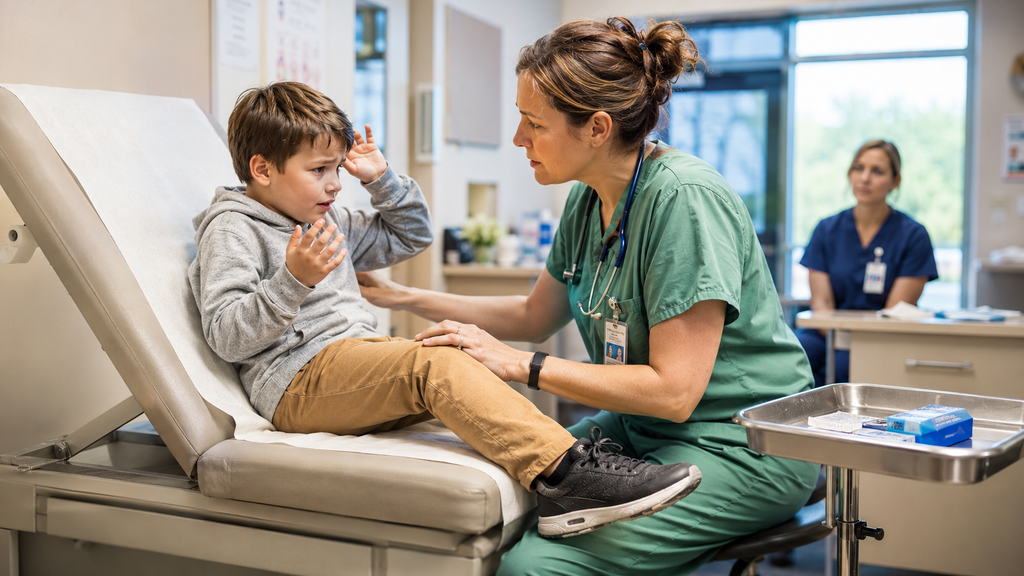
His name was Noah.
At least, that was the name he had been given.
One hand was tucked beneath his cheek.
The other rested near the side of his head as though even in sleep he expected to protect himself from something.
Beside the cot sat a thin plastic grocery bag.
Inside were three empty soda bottles, two crushed aluminum cans, several sticky coins, and a few wrinkled dollar bills.
Twelve dollars.
That was everything Noah had brought with him.
Twelve dollars to pay for a broken leg.
Twelve dollars he had gathered from trash bins and recycling because someone had taught him that asking for help without money was dangerous.
But the twelve dollars were no longer the part of the evening that frightened me most.
What frightened me was his face.
Because once I had really looked at him, I had recognized it.
The straight brow.
The stubborn chin.
The wide brown eyes that became darker whenever he was frightened.
He had his father’s mouth.
But those eyes were mine.
Five years earlier, I had signed papers surrendering my little boy to one of the wealthiest families in the county.
Five years earlier, I had been told he would have everything I could never give him.
The best schools.
The safest neighborhood.
Private doctors.
Vacations.
Music lessons.
A future without worry.
And now that same child had walked into my clinic alone during a thunderstorm with a broken leg and twelve dollars in recycling money.
The SUV door opened.
I stopped breathing.
Michael stepped out.
My former husband looked different from the man I remembered.
His hair was shorter and touched with gray near his temples.
His shoulders seemed heavier.
He was still dressed like someone who had spent his entire adult life around expensive offices and people who measured success by numbers on paper.
Dark coat.
White shirt.
Polished shoes already darkening in the rain.
For a moment he simply stood beside the SUV.
Then he looked through the clinic window.
He saw me.
Something in his face broke.
I had imagined seeing Michael again thousands of times.
Sometimes I imagined screaming at him.
Sometimes I imagined telling him exactly what losing Noah had done to me.
Sometimes I imagined walking past him without saying a word.
But I had never imagined seeing him while our injured son slept twenty feet behind me.
Michael crossed the sidewalk quickly.
I unlocked the clinic door but did not open it all the way.
He stopped on the other side.
“Emma.”
His voice sounded almost the same.
I hated that.
“Come inside.”
He entered and immediately looked past me.
“Where is he?”
I pointed toward the examination room.
Michael started forward.
I stepped into his path.
“Not yet.”
His eyes snapped back to mine.
“Emma, you called me and said—”
“I know what I said.”
“He’s my son.”
“He’s my patient.”
The words landed between us.
Michael stared at me.
I continued quietly.
“And right now, that matters more.”
He looked toward the cot again.
“What happened?”
“That is what you’re going to tell me.”
“I don’t know.”
“Think carefully before you answer.”
His jaw tightened.
“I am telling you I don’t know.”
I opened Noah’s medical file.
“His right leg is fractured.”
Michael’s face lost color.
“The injury isn’t fresh.”
“What?”
“The fracture began healing without proper treatment.”
He stared at me.
I kept going.
“There are bruises on his back, arms, shoulders, and thighs in different stages of healing.”
Michael said nothing.
“There are marks on his wrists.”
His breathing changed.
“He flinched when I reached toward him.”
I swallowed.
“He covered his head and begged me not to hit him.”
Michael closed his eyes.
That reaction made my stomach turn.
“Did you know?”
“No.”
“Did you know his leg was broken?”
“No.”
“Did you know somebody was hurting him?”
“No.”
“Then where have you been?”
That question struck harder than the others.
Michael looked at me.
“At work.”
I almost laughed.
Not because anything was funny.
Because sometimes an answer is so inadequate that anger does not know where else to go.
“At work?”
“I’ve been traveling.”
“For how long?”
“A lot this year.”
“How much is a lot?”
He hesitated.
“Probably eighteen or nineteen weeks altogether.”
I stared at him.
“Almost five months.”
“Not continuously.”
“That doesn’t make it better.”
“I know.”
“Who was taking care of Noah?”
Michael looked toward the examination room.
“My mother.”
There it was.
The answer I had been afraid of.
Eleanor Hayes.
The woman who had placed custody papers and a check in front of me five years earlier.
The woman who had told me my son would grow up grateful that I had been mature enough to understand what was best for him.
I felt the old room return around me.
The marble table.
The lawyer.
The smell of Eleanor’s perfume.
Michael sitting silently beside his mother.
And the check.
Two hundred and fifty thousand dollars.
I had never deposited it.
I had torn it into six pieces in a gas station bathroom two hours after signing the papers.
Nobody knew that.
Not Michael.
Not Eleanor.
No one.
They probably spent five years believing they had purchased my disappearance.
“What about you?” I asked. “When you were home?”
“I saw him.”
“How often?”
Michael looked ashamed.
“Not enough.”
“That isn’t an answer.”
“Weekends. Some dinners. Sometimes I’d pick him up from school.”
“And you never noticed the bruises?”
“He always wore long sleeves.”
“In July?”
Michael stopped.
I watched realization move across his face.
Slowly.
Terribly.
“He told me he liked them.”
“He is seven.”
“I know.”
“Seven-year-olds don’t develop strategic wardrobe preferences to hide injuries, Michael.”
“I didn’t know.”
“You keep saying that.”
“Because it’s true.”
I wanted to believe him.
I hated that part of me wanted to believe him.
Because once upon a time, before lawyers and custody documents and Eleanor’s money, I had loved him.
Not the version standing in front of me.
The younger man.
The one who brought me coffee during residency.
The one who sat on the bathroom floor with me when the pregnancy test turned positive.
The one who cried when he first heard our baby’s heartbeat.
That man had existed.
But when his mother told him I was unsuitable for the Hayes family, he had become smaller in ways I had not understood until it was too late.
Noah stirred behind us.
Michael froze.
A tiny voice came from the examination room.
“Doctor?”
I went immediately.
Noah was awake.
His eyes moved from me to Michael.
Then every muscle in his body stiffened.
Michael stopped at the doorway.
“Noah.”
The boy’s expression became impossible to read.
Not relief.
Not excitement.
Fear.
Michael saw it.
I saw him see it.
Noah pulled the blanket higher.
“You came.”
Michael took one careful step forward.
“Of course I came.”
Noah looked at me.
“Am I in trouble?”
Those five words nearly destroyed the room.
Michael’s mouth opened.
Nothing came out.
I sat beside Noah.
“No.”
“But I left.”
“You came here because you were hurt.”
“Grandma said I’m not allowed to leave.”
Michael’s eyes went toward me.
I kept my voice calm.
“Why aren’t you allowed to leave?”
Noah’s fingers twisted the blanket.
“Because people ask questions.”
Michael whispered, “Oh, God.”
Noah flinched at the sound.
Michael immediately lowered his voice.
“I’m sorry.”
Noah watched him suspiciously.
I asked, “Does your grandmother know your leg is hurt?”
The boy nodded.
Michael stepped closer.
“Noah, what did Grandma say happened to your leg?”
The boy stared at the blanket.
“She said I was dramatic.”
Michael’s face changed.
“She said that?”
“I fell.”
“Where?”
“Down the stairs.”
I looked at Michael.
That was new information.
“How long ago?”
Noah counted silently on his fingers.
“Before the school picnic.”
Michael stared at him.
“The school picnic was three weeks ago.”
Noah nodded.
I felt cold.
“Did you fall by yourself?”
Silence.
“Noah?”
His eyes filled with tears.
Then he looked at Michael.
Not at me.
At his father.
And asked the question that told me everything.
“If I tell you, are you going to tell Grandma?”
Michael’s face crumpled.
“No.”
Noah watched him.
“Promise?”
“I promise.”
“Real promise?”
Michael crouched slowly so he was closer to eye level.
“Real promise.”
Noah swallowed.
“She pushed me.”
The rain seemed louder.
Michael’s hands curled into fists.
I reached toward him and shook my head.
Not because he didn’t deserve anger.
Because Noah was watching.
Michael understood.
His fingers relaxed.
“Why did she push you?” I asked.
“I wasn’t supposed to touch the picture.”
“What picture?”
“The baby picture.”
Michael glanced at me.
I knew before Noah finished.
“The one in Dad’s office.”
Michael looked down.
Noah continued.
“There was a lady holding me.”
My chest stopped moving.
“I asked Grandma who she was.”
Michael closed his eyes.
Noah looked at him.
“You said she was somebody from the hospital.”
I turned sharply toward Michael.
He looked sick.
Noah continued.
“But Grandma got mad because I kept asking.”
The room seemed to tilt.
“What happened then?” I asked gently.
“She took the picture away.”
“And then?”
“I tried to get it.”
He paused.
“She pushed me.”
“Down the stairs?”
A nod.
“Did you lose consciousness?”
“I don’t know.”
“Did you hit your head?”
“Maybe.”
“Did anyone take you to a hospital?”
“No.”
Michael stood abruptly and walked into the hallway.
I heard him breathe once.
Twice.
Then his fist struck the wall.
Noah jumped.
“Michael!”
He turned immediately.
“I’m sorry.”
I went to him.
“You do that again and you leave.”
His eyes were wet.
“She pushed him down the stairs.”
“I heard him.”
“My mother pushed my son down the stairs and didn’t take him to a doctor.”
“I heard him.”
“She told me he had growing pains.”
My anger sharpened.
“When?”
“Last week.”
“What did you do?”
“I asked if he needed an appointment. She said she already had the family doctor check him.”
I stared at him.
“Which doctor?”
“Dr. Caldwell.”
I knew Dr. Caldwell.
Everyone in the county did.
Private physician.
Hospital board member.
Golf partner of the Hayes family.
“Did you speak to Caldwell yourself?”
“No.”
“Did you see medical records?”
“No.”
“Did you even call?”
Michael rubbed both hands over his face.
“No.”
I turned away.
“Emma.”
“Don’t.”
“I should have checked.”
“Yes.”
“I trusted her.”
“Yes.”
“She raised me.”
“And look how well that worked out.”
He winced.
I did not apologize.
For several seconds neither of us spoke.
Then Noah asked quietly, “Doctor?”
I returned to him.
“Yes?”
“Can you fix it?”
He pointed toward his leg.
“I can help.”
“Is twelve dollars enough?”
Michael stared at the plastic bag.
“What twelve dollars?”
Noah pointed toward it.
“I brought money.”
Michael walked toward the bag like a man approaching evidence from a crime scene.
He looked inside.
The cans.
The bottles.
The coins.
Then he sat down.
Not elegantly.
Not carefully.
He simply lowered himself into one of my cheap plastic waiting-room chairs and stared at the bag.
“Where did you get this?”
Noah seemed worried that he had done something wrong.
“Outside the grocery store.”
“You collected cans?”
“And bottles.”
“By yourself?”
He nodded.
“In the rain?”
Another nod.
Michael covered his mouth.
I saw his shoulders move.
He was crying.
Silently.
Noah watched him.
Then he asked, “Did I do bad?”
Michael lowered his hands immediately.
“No.”
“But you’re crying.”
“I’m crying because I did something bad.”
Noah looked confused.
“Adults don’t get in trouble.”
Michael made a sound that was somewhere between a laugh and a sob.
“They should.”
I looked away.
Because that sentence reached somewhere I had spent five years trying to keep closed.
Noah touched the grocery bag.
“I can get more tomorrow.”
Michael knelt beside him.
“You don’t need more.”
“But the doctor has to get paid.”
I said quietly, “You already paid me.”
Noah’s eyes widened.
“With what?”
“With coming here.”
He frowned.
“That doesn’t count.”
“It does tonight.”
He considered this.
“But you’ll keep the money?”
“No.”
His face immediately filled with worry.
“Why?”
“Because it’s yours.”
“I don’t need it.”
“You might.”
“Grandma says kids don’t need money.”
Michael lowered his head.
I asked, “How did you get to the clinic?”
Noah pointed vaguely through the rain.
“I walked.”
“From where?”
“Home.”
Michael and I looked at each other.
The Hayes estate was almost four miles away.
Four miles.
On a broken leg.
In the rain.
“Noah,” I whispered, “you walked all the way here?”
“Some.”
“What does some mean?”
“I crawled when it hurt too much.”
Michael stood and walked away again.
This time he did not hit anything.
He pressed his forehead against the wall.
I could not comfort him.
I barely had enough room inside myself for my own emotions.
I took out my phone.
“What are you doing?” Michael asked.
“Calling the hospital.”
His expression changed.
“My mother will know.”
“I hope she does.”
“Emma—”
“Your son’s fracture needs orthopedic treatment and imaging beyond what I can do here.”
“I understand.”
“And I am making a report.”
His face hardened slightly.
“Child protection?”
“Yes.”
“Police?”
“Yes.”
Michael nodded.
No argument.
That mattered.
Not enough to forgive him.
But it mattered.
I made the calls.
Once professionals heard Noah’s age, his condition, the untreated fracture, the bruises, and his statements, everything moved quickly.
An ambulance was dispatched.
So was an investigator.
Michael stood near the window while I talked.
He did not call his mother.
At least not while I could see him.
When I finished, Noah was watching me.
“Are police coming?”
“Yes.”
His breathing became faster.
I sat beside him.
“They’re not coming because you’re in trouble.”
“They always come when somebody’s in trouble.”
“Then they’re coming because an adult is in trouble.”
He stared at me.
“Grandma?”
I hesitated.
“I don’t know what will happen.”
“You promised.”
“I promised nobody here would hit you.”
He nodded carefully.
“That promise is still true.”
The ambulance arrived twelve minutes later.
Two paramedics entered.
Noah grabbed my wrist.
“You’re coming?”
I looked at Michael.
He immediately said, “Go.”
I did.
Of course I did.
At the hospital, X-rays confirmed what I already suspected.
The fracture was complicated.
Not life-threatening.
But serious.
It had begun healing in poor alignment.
There were signs suggesting he had walked on it repeatedly after the injury.
The orthopedic surgeon studied the images with a frown.
“Three weeks?”
“Approximately.”
“He’s been weight-bearing?”
“Yes.”
The surgeon looked through the glass toward Noah.
“That kid has an incredible pain tolerance.”
I knew what he meant as praise.
But I didn’t hear it that way.
Children should not need incredible pain tolerance.
They should not learn to endure enough pain to walk four miles through rain because they are afraid to ask an adult for help.
The police interview happened carefully.
A child advocate sat with Noah.
I was not permitted in the room for much of it.
Neither was Michael.
So we waited together.
A vending machine hummed across the hallway.
It was nearly ten o’clock.
Michael bought coffee and handed me a cup.
I took it.
Old habits survive in strange ways.
He remembered that I took mine black.
For several minutes, neither of us spoke.
Then he said, “You never cashed the check.”
I turned toward him.
“How do you know?”
“My mother mentioned it once.”
“When?”
“About six months after you left.”
“And you never called me?”
His jaw tightened.
“I thought you hated me.”
“I did.”
“I know.”
“That didn’t stop you calling tonight.”
He nodded.
“I deserved that.”
“Yes.”
He stared at the coffee.
“I should have stopped the adoption.”
“It wasn’t an adoption.”
“I know.”
“You were his father.”
“I know.”
“You already had rights. Your mother convinced me to surrender mine.”
“I know.”
“And you sat there.”
He looked at me.
“I was a coward.”
I hadn’t expected him to say it so plainly.
No excuse.
No defense.
Just the word.
Coward.
I swallowed.
“Why?”
Michael leaned back against the wall.
“Because I spent my entire life believing my mother was always the smartest person in the room.”
“That doesn’t answer the question.”
“She told me we were too young. She said your clinic would fail. She said we would fight over money. She said you resented my family and eventually you would use Noah to punish us.”
“And you believed her.”
“I believed enough of it.”
“That was all she needed.”
“Yes.”
I looked through the interview-room window.
Noah sat with the child advocate holding a stuffed bear someone had given him.
“I begged you to come with me.”
“I remember.”
“I told you we could leave.”
“I remember.”
“You said your family would destroy us.”
Michael closed his eyes.
“I remember every word.”
“I didn’t.”
His eyes opened.
“For a long time, I tried to forget.”
“Were you able to?”
“No.”
Neither of us said anything after that.
A detective joined us twenty minutes later.
She was in her forties, calm, direct, with tired eyes and a notebook in her hand.
“Mr. Hayes?”
Michael stood.
“Yes.”
“We need to discuss your mother’s location.”
“At home.”
“Is anyone else currently at the residence?”
“Staff. A housekeeper, probably security.”
“Does your mother have access to firearms?”
Michael hesitated.
“There are firearms in a locked safe.”
“Does she know the combination?”
“Yes.”
The detective wrote something down.
“Has anyone contacted her since Noah left?”
“Not me.”
The detective looked at me.
“Dr. Carter?”
“No.”
Michael reached into his pocket and stared at his phone.
His face changed.
“What?”
He held up the screen.
Twenty-three missed calls.
All from his mother.
Then a text arrived.
WHERE IS HE?
A second followed.
CALL ME NOW.
Then:
DO NOT INVOLVE EMMA.
The detective’s eyes sharpened.
“May I see that?”
Michael handed her the phone.
Another message appeared while she held it.
YOU HAVE NO IDEA WHAT SHE WILL DO TO THIS FAMILY.
I laughed once.
Quietly.
The absurdity of it hurt.
“What I’ll do to the family.”
Michael looked at me.
The detective photographed the messages.
Then Michael’s phone rang again.
Mother.
The detective looked at him.
“You can answer if you want. Put it on speaker.”
Michael accepted.
“Mother.”
Eleanor’s voice filled the hallway.
“Where is Noah?”
Michael’s expression became cold.
“The hospital.”
Silence.
Then:
“You had no right.”
I watched Michael.
“He has a broken leg.”
“He fell.”
“Three weeks ago.”
“I had it evaluated.”
“By whom?”
Another pause.
“Caldwell.”
Michael looked toward the detective.
“Really? Because we’re going to call him.”
Eleanor’s voice sharpened.
“Don’t be childish.”
“Did you take Noah to Caldwell?”
“He gave me advice.”
“That isn’t what I asked.”
“Michael.”
“Did Dr. Caldwell physically examine my son?”
Silence.
Michael’s face hardened.
“No.”
“He did not need an examination.”
I shut my eyes.
Michael stared at the wall.
“My seven-year-old son had a broken leg.”
“He was walking on it.”
“That doesn’t mean it wasn’t broken.”
“Children exaggerate.”
The detective’s pen moved rapidly.
Michael looked at me.
Then he asked the question I knew he was afraid to ask.
“Did you push him down the stairs?”
The call went completely silent.
Eleanor finally spoke.
“He was behaving hysterically.”
My stomach turned.
“That wasn’t my question.”
“He grabbed something that didn’t belong to him.”
“A photograph?”
Eleanor exhaled sharply.
“So Emma has already filled his head.”
Michael’s face twisted.
“Noah told us.”
“He doesn’t know what he’s talking about.”
“He said he found Emma’s picture in my office.”
“This is exactly why I told you to remove it.”
Michael stared ahead.
“You told me it was better not to confuse him.”
“It was.”
“He asked who his mother was.”
“You are making this much larger than it needs to be.”
“He asked who his mother was, and you pushed him down the stairs.”
“I tried to stop him from running.”
“By pushing him?”
“He slipped.”
The detective pointed to herself, then toward the phone, silently asking Michael to keep Eleanor talking.
Michael continued.
“And after he slipped?”
“He was fine.”
“He wasn’t.”
“I have raised children before.”
“You abused mine.”
Eleanor laughed.
Actually laughed.
Not loudly.
Almost dismissively.
“Oh, Michael. Don’t let Emma turn you against your own family.”
My hands became cold.
Michael’s expression changed completely.
For the first time that night, I saw something in him that reminded me of the boy he had been before Eleanor taught him obedience.
“No,” he said.
His voice was quiet.
“You don’t get to say that anymore.”
“What?”
“You don’t get to decide who my family is.”
“Michael—”
“Noah is my family.”
A pause.
“Emma is his mother.”
My eyes filled.
I looked away.
“And you,” Michael continued, “are the person who hurt him.”
Eleanor’s voice became icy.
“You will regret speaking to me this way.”
“I already regret not doing it five years ago.”
Then Michael ended the call.
Nobody moved.
The detective took his phone gently.
“We have enough to move forward with an emergency protective action tonight.”
Michael nodded.
“What happens to Noah?”
“That will depend on the investigation.”
“He can’t go back there.”
“He won’t tonight.”
Michael looked at me.
The detective followed his gaze.
Then she asked, “Dr. Carter, are you Noah’s biological mother?”
I nodded.
“Yes.”
Her eyebrows lifted slightly.
“That complicates things.”
“Story of my life.”
For the first time, she almost smiled.
Then the door opened.
The child advocate stepped out.
“Noah is asking for Dr. Carter.”
I entered the room.
He was sitting on a couch with the stuffed bear in his lap.
His cheeks were wet.
I sat beside him.
“You okay?”
“No.”
Fair answer.
“What do you need?”
He looked at me for a long time.
Then he said, “The lady asked if I know my mom.”
Everything inside me stopped.
“What did you say?”
“I said Grandma told me she went away.”
I could barely breathe.
Noah studied my face.
“Did you know her?”
There are moments when truth should be immediate.
And there are moments when truth requires tenderness.
I had spent the entire night telling myself I would wait.
Wait until he was medically stable.
Wait until the professionals advised me.
Wait until there was a safer time.
But he was looking directly into my eyes.
My eyes.
And asking whether I knew his mother.
I could not lie.
“Yes.”
His fingers tightened around the bear.
“What was she like?”
My throat closed.
“Well…”
I searched for words.
“She was young.”
“Was she bad?”
“No.”
The answer came too quickly.
Too fiercely.
Noah blinked.
I softened my voice.
“No. She wasn’t bad.”
“Then why did she go?”
I looked toward the observation window.
The detective stood beyond the glass.
She did not interrupt.
I turned back to Noah.
“She was scared.”
“Of Grandma?”
My heart broke.
“Yes.”
Noah looked down.
“I’m scared of Grandma too.”
I moved closer.
“I know.”
He studied me again.
“What’s her name?”
“Emma.”
He frowned.
“Like you?”
I nodded.
There are things the human heart understands before the mind accepts them.
I watched that understanding begin in his face.
Slowly.
His eyes moved over me.
My hair.
My chin.
My hands.
Then back to my eyes.
“You’re her?”
I could not speak.
I nodded.
Noah’s mouth opened.
No sound came.
I forced myself to breathe.
“Yes.”
His eyes immediately filled with tears.
“You’re my mom?”
“Yes.”
“But Grandma said—”
He stopped.
“What?”
“She said my mom didn’t want me.”
Pain has a physical location.
Anyone who says otherwise has never heard their child repeat a lie designed to make them feel unwanted.
It struck directly beneath my ribs.
I reached for Noah’s hand but stopped before touching him.
I had learned that much already.
I let him decide.
“Noah, I wanted you every day.”
He looked confused.
“Then why weren’t you there?”
There was no good answer.
Only a truthful one.
“Because I made a decision when I was scared and believed adults who told me they knew what was best.”
“But you’re an adult.”
“I was an adult.”
“Then why didn’t you know?”
I almost laughed through my tears.
“Adults can be wrong.”
He thought about that.
“Really wrong?”
“Yes.”
“How wrong?”
I looked at his broken leg.
“This wrong.”
Noah started crying.
Not loudly.
His face simply folded.
“I thought you didn’t like me.”
I opened my arms.
He moved into them.
For the second time that night, I held my son.
But this time he knew who I was.
His arms wrapped around my neck.
His face pressed into my shoulder.
I felt seven years of grief collapse into one impossible moment.
“I wanted you,” I whispered.
He cried harder.
“I wanted you.”
Again.
“I wanted you.”
Again.
“I never stopped.”
Outside the room, Michael was crying too.
I saw him through the glass.
But he did not come inside.
He let that moment belong to Noah and me.
And for once, Michael understood when not to interfere.
Noah went into surgery the following morning.
The orthopedic team had to correct the poor healing before stabilizing the fracture properly.
It would require physical therapy.
Follow-up visits.
Pain management.
Time.
But the surgeon believed he would recover.
Physically, at least.
The other injuries would take longer.
At seven in the morning, while Noah slept under anesthesia, police officers arrived at the Hayes estate.
Eleanor Hayes was arrested.
The story spread faster than I expected.
Powerful families attract attention when they fall.
By lunchtime, local reporters were parked outside the hospital.
By evening, the same newspapers that had printed photographs of Eleanor handing charity checks to children’s foundations were asking questions about an injured grandson discovered walking alone through the rain.
The irony was almost unbearable.
The Hayes Foundation released a statement.
Michael rejected it publicly.
His family’s attorney called.
Michael fired him.
Members of the hospital board called.
Michael ignored them.
Then Dr. Caldwell called.
That conversation changed the investigation again.
He admitted Eleanor had telephoned him after Noah was injured.
She described the injury vaguely.
She never brought Noah in.
Caldwell told her clearly that the boy needed an X-ray and immediate examination.
Eleanor ignored him.
He had documentation of the call.
For once, documentation worked in our favor.
The physical evidence kept growing.
Medical records.
Photographs.
Messages.
Household staff interviews.
A security camera recording from the hallway near the stairs.
That last piece nearly ended me.
The camera did not capture the staircase itself.
But it captured sound.
Noah asking:
“Who is she?”
Eleanor telling him:
“Put that down.”
Noah saying:
“Dad keeps her picture.”
Then footsteps.
Eleanor’s voice rising.
A child’s cry.
A thud.
Silence.
And then Noah crying.
I listened once.
Only once.
I never listened again.
Michael did.
Several times.
I think he was trying to punish himself.
One night, three days after Noah’s surgery, I found him sitting in a hospital corridor with earbuds hanging from his neck.
“You need to stop.”
He looked at me.
“I should hear it.”
“No.”
“I need to remember what my ignorance cost him.”
“You already know.”
“I don’t think I do.”
I sat beside him.
We were quiet for a while.
Then he said, “I am going to give you custody.”
I looked at him.
“No.”
His eyebrows lifted.
“No?”
“You don’t get to fix everything by disappearing again.”
“Emma—”
“He needs a father.”
“I failed him.”
“Yes.”
Michael looked stunned.
I continued.
“You failed him badly.”
He stared at me.
“But if every parent who failed once surrendered their child, half the world would be orphaned.”
“This wasn’t one mistake.”
“No.”
“I left him with her.”
“Yes.”
“I ignored things I should have noticed.”
“Yes.”
“I believed her over him.”
“Yes.”
His eyes filled.
“Why are you defending me?”
“I’m not.”
“Then what are you saying?”
“I’m saying Noah has already lost enough.”
Michael was silent.
“I don’t want your money,” I said.
“I know.”
“I don’t want your house.”
“I know.”
“I don’t want revenge.”
That one took me a moment.
“But I want you to spend the rest of his childhood proving that when he calls, you answer.”
Michael nodded slowly.
“And if you ever put work, reputation, your mother, your company, or anyone else ahead of his safety again, I will fight you with everything I have.”
“I believe you.”
“You should.”
A small smile passed over his face.
It disappeared quickly.
“What about us?”
I looked at him.
“There is no us.”
He nodded.
“I figured.”
“We can be his parents.”
“I’d like that.”
“That is all I’m promising.”
“I understand.”
And surprisingly, he did.
The emergency custody process moved faster once my identity was confirmed.
It was legally messy.
Five years earlier, I had signed away parental rights under circumstances that now received much more scrutiny than they had the first time.
My attorney discovered things I had never known.
Eleanor’s legal team had misrepresented parts of my financial situation.
They had exaggerated medical debt.
They had submitted statements suggesting I planned to leave the state.
They had described me as emotionally unstable because I cried during a custody meeting six weeks after giving birth.
The more we looked, the uglier it became.
But none of that automatically restored my rights.
Law is not built from emotions.
It is built from documents.
Hearings.
Findings.
Standards.
And occasionally, justice.
For the first several weeks, I was granted supervised contact while the court evaluated everything.
Supervised.
That word almost made me laugh.
I had treated Noah’s broken leg.
I had called the authorities.
I had spent nights sleeping in a chair beside him.
But technically, I was still the mother who had surrendered him.
So I followed every rule.
Because Noah had spent enough of his life paying for adults who believed rules did not apply to them.
The first supervised visit happened in a family-services room decorated with puzzles and cheap posters.
Noah came in on crutches.
The moment he saw me, he smiled.
It was the first real smile I had seen from him.
Not cautious.
Not polite.
A child’s smile.
“Mom!”
The social worker looked at me.
I looked at her.
She smiled.
“Go ahead.”
Noah crashed into me as carefully as a child on crutches could crash into anyone.
I hugged him.
“You’re getting fast.”
“I almost fell twice.”
“Maybe slightly less fast.”
He laughed.
That laugh stayed with me all night.
We played a card game.
He cheated badly.
I pretended not to notice for ten minutes.
Then I caught him hiding three cards beneath his thigh.
“You have got to improve your technique.”
He froze.
Then something strange happened.
His smile disappeared.
His shoulders hunched.
“I’m sorry.”
I immediately understood.
“Noah.”
“I won’t do it again.”
“Noah, look at me.”
He did.
“You aren’t in trouble.”
“But I cheated.”
“Yes.”
“That’s bad.”
“Cheating in cards means you lose the game.”
He waited.
“And?”
“And nothing.”
His eyebrows pulled together.
“You don’t hit?”
“No.”
“You don’t lock the door?”
My stomach tightened.
“What door?”
He looked down.
The social worker became very still.
“Noah?”
“The closet.”
I didn’t speak.
He continued.
“Grandma made me sit in the coat closet when I lied.”
“How long?”
“I don’t know.”
“Was the light on?”
“No.”
My hands shook.
The social worker gently intervened.
“We can talk about that another time.”
Noah looked confused.
“Did I say something wrong?”
“No,” I said immediately. “You said something important.”
He stared at me.
“You’re not mad?”
“At you? Never for telling me the truth.”
He nodded slowly.
Then he pushed the deck of cards toward me.
“Can we start over?”
So we did.
And when he cheated again ten minutes later, I dramatically accused him of running an international card-smuggling operation.
He laughed so hard he nearly dropped his crutch.
That was when I understood something.
Healing was not going to happen only in courtrooms and therapy offices.
It would happen in tiny moments.
A spilled drink that resulted in a towel instead of punishment.
A broken glass followed by “Are you okay?”
A bad report card followed by a conversation.
A nightmare followed by someone staying.
A mistake followed by another chance.
We would teach his nervous system that ordinary life was not a trap.
One ordinary moment at a time.
Eleanor’s preliminary hearing took place two months later.
I attended because I needed to.
Not for revenge.
For closure.
She entered the courtroom wearing navy blue.
Perfect hair.
Pearl earrings.
The same controlled expression she had worn the day she convinced me to surrender my child.
When she saw me, she smiled.
Not warmly.
That old Eleanor smile.
The one that said she believed she knew exactly how every room would eventually bend in her direction.
It didn’t work anymore.
Michael arrived separately.
He sat beside me.
His mother saw that too.
Her smile vanished.
The prosecution presented photographs.
Medical records.
The emergency-room findings.
The hallway audio.
Statements from household staff.
One housekeeper described hearing Noah cry at night.
Another said Eleanor often dismissed meals as punishment.
A former nanny described quitting after Eleanor slapped Noah across the face because he spilled juice during a fundraiser preparation.
I turned toward Michael.
His face was white.
“You didn’t know about the nanny?”
“No.”
“She quit two years ago.”
“My mother told me she stole jewelry.”
Of course she did.
The nanny had reported concerns at the time.
But Eleanor’s attorney threatened legal action.
The complaint went nowhere.
That revelation hurt almost as badly as everything else.
Because it meant somebody had tried.
Someone had seen.
Someone had spoken.
And power had buried it.
Then Eleanor’s attorney argued that she had been a devoted grandmother managing a difficult child while her son worked demanding hours.
Difficult child.
I wanted to stand.
Michael touched my wrist.
I looked at him.
He shook his head.
Wait.
The prosecutor asked to play the recording.
The courtroom went silent.
Noah’s little voice filled the room.
“Who is she?”
Eleanor’s voice.
“Put that down.”
“Dad keeps her picture.”
“Stop asking questions.”
“Is she my mom?”
Then footsteps.
A shout.
A thud.
A child crying.
I watched Eleanor.
For the first time, she looked old.
Not defeated.
Not sorry.
Just exposed.
When the recording stopped, the judge stared at her for several long seconds.
Then Michael was called.
He walked to the witness stand.
His mother’s eyes followed him.
The prosecutor asked basic questions.
Relationship.
Residence.
Work travel.
Noah’s care.
Then:
“When did you first learn your son had suffered a fracture?”
Michael looked at me.
“The night his mother found him.”
The prosecutor paused.
“By his mother, you mean Dr. Emma Carter?”
“Yes.”
Eleanor’s attorney objected.
The judge overruled.
Michael continued.
“Emma is his mother.”
Something in my chest loosened.
Maybe because five years earlier, Michael had sat silent while his family turned motherhood into a clause on paper.
This time he said it publicly.
Clearly.
No hesitation.
The prosecutor asked, “Did you know your mother had physically disciplined your son?”
“No.”
“Did you authorize physical punishment?”
“No.”
“Did you know she had confined him in a dark closet?”
“No.”
“Did you know she had restricted food?”
“No.”
“Did you know she pushed him down the stairs?”
“No.”
“Mr. Hayes, you appear to have known very little about what happened inside your own home.”
Michael closed his eyes briefly.
“Yes.”
“Why?”
“Because I was absent.”
The courtroom became very quiet.
“I cared more about work than I should have. And when I was home, I accepted explanations because they were easier than asking harder questions.”
“Do you blame Dr. Carter?”
“No.”
“Do you blame your son?”
Michael’s face twisted.
“No.”
“Who do you blame?”
“My mother for hurting him.”
He paused.
“And myself for not protecting him.”
Eleanor stared at him.
If she expected him to rescue her reputation, he did not.
The judge ordered the case forward.
Eleanor remained under strict restrictions and was prohibited from contacting Noah.
Later, after additional charges and plea negotiations, she accepted a deal rather than force Noah to testify at trial.
She received prison time.
Not as much as part of me wanted.
More than her attorneys believed she would.
Her foundation removed her name from several programs.
The hospital asked her to resign from its board.
The newspaper photographs came down.
The world she had built around being admired began to collapse.
But none of that gave Noah back the years he had spent afraid.
That became the hardest lesson.
Justice can punish.
It cannot rewind.
Six months after the night Noah arrived at my clinic, the court restored my parental rights.
I cried before the judge even finished speaking.
Michael supported the petition.
That mattered.
We were given shared legal custody, with Noah living primarily with me while Michael rebuilt trust through regular contact and counseling.
The arrangement was not perfect.
It was real.
The first night Noah officially slept at my apartment, he stood in the doorway of his bedroom for almost five minutes.
I had painted nothing.
Bought nothing extravagant.
I did not know what seven-year-old boys liked.
So I had asked him.
Blue blankets.
Space posters.
A lamp shaped like the moon.
A cheap wooden bookshelf.
A secondhand desk.
And a basket for dirty clothes.
He inspected everything carefully.
“This is mine?”
“Yes.”
“Forever?”
I paused.
“For as long as you want it.”
He walked to the door.
“Can I close this?”
“Of course.”
“Will it lock?”
“There is a lock.”
He became nervous.
I immediately added, “But nobody outside this room will ever lock you in.”
His shoulders relaxed.
“What if I lock myself in?”
“Then I knock.”
“What if I don’t answer?”
“I keep knocking.”
“What if I’m mad?”
“You can be mad.”
“What if I say I hate you?”
That one hurt, but I smiled.
“Then I might be sad.”
He waited.
“But?”
“But I still make breakfast.”
He stared at me.
“What if I break something?”
“We clean it up.”
“What if it’s expensive?”
“We still clean it up.”
“What if I do something really bad?”
I crouched beside him.
“There will be consequences when you do something wrong.”
His eyes dropped.
“But consequences mean things like losing screen time, apologizing, fixing what can be fixed, or doing extra chores.”
“No hitting?”
“No hitting.”
“No closet?”
“No closet.”
“No dinner taken away?”
“No.”
He considered everything.
Then he whispered, “Okay.”
That night, I tucked him into bed.
I turned off the lamp.
Ten minutes later, he came into my room.
“I can’t sleep.”
“Nightmare?”
“No.”
“What is it?”
He stood beside my bed.
“Can I see if you’re still here?”
I pulled back the blanket.
“Come on.”
He climbed beside me.
He fell asleep with one hand gripping the sleeve of my shirt.
For several months, that became our routine.
Eventually he stopped checking every night.
Then every week.
Then almost completely.
Healing.
Slowly.
Michael changed too.
Not immediately.
People do not become different because they regret one terrible night.
They become different by making different choices repeatedly.
He cut his travel schedule.
Then he resigned from the executive role his mother had groomed him for.
His board was stunned.
I was too.
“What are you going to do?” I asked him.
“I don’t know.”
“That seems unlike you.”
He smiled.
“I’ve spent twenty years knowing exactly what I was supposed to do.”
“And?”
“I think that’s how I ended up not knowing who I was.”
He began consulting instead.
Fewer hours.
Less money.
More time.
Every Wednesday, he picked Noah up from school.
At first Noah barely spoke during those afternoons.
Then they started building model airplanes.
Then fishing.
Then cooking.
Michael was terrible at cooking.
Noah found this hilarious.
One Wednesday evening, they arrived at my apartment carrying a blackened baking tray.
“What is that?”
“Pizza,” Michael said.
I stared.
“Was there a fire?”
Noah burst out laughing.
“Dad forgot it!”
“I did not forget it.”
“You went outside to call Uncle Ryan.”
“For four minutes.”
“Twenty-one minutes.”
Michael looked at me.
“He timed it.”
“You should be proud.”
“I am not feeding him this.”
“Good.”
Noah held up another box.
“We bought real pizza.”
“Excellent crisis management.”
These were the moments nobody writes into court records.
The moments that mattered anyway.
A year after the night Noah walked into my clinic, he asked about the twelve dollars.
We were closing up after school.
He occasionally came to the clinic with me now.
He liked sitting behind the front desk and pretending to manage appointments.
I paid him in hot chocolate.
He opened one of my desk drawers while searching for a pencil.
Inside was a small clear bag.
Three empty soda bottles.
Two crushed cans.
Coins.
Wrinkled bills.
He froze.
“You kept it.”
I looked up.
“Yes.”
“Why?”
I walked over.
“Because I never want to forget.”
“Forget what?”
“That you saved yourself.”
His brow furrowed.
“You saved me.”
“No.”
“I walked here.”
“Yes.”
“But you fixed me.”
“I helped after you arrived.”
I touched the bag.
“But you were the one who decided you deserved help enough to come looking for it.”
He stared at the twelve dollars.
“I was really scared.”
“I know.”
“I thought you might send me away.”
“I almost called your father before I knew who you were.”
“What would you have done if Dad didn’t come?”
“I still would’ve protected you.”
“What if you didn’t know I was your kid?”
I smiled.
“You were an injured seven-year-old standing in my clinic.”
“So?”
“So you were already somebody’s kid.”
He considered that.
Then he smiled.
“You say doctor things.”
“I am a doctor.”
“You also say mom things.”
“I’m getting better at those.”
He nodded solemnly.
“You are.”
Then he picked up the bag.
“Can I have the twelve dollars?”
I laughed.
“I thought you might ask.”
He grinned.
“What are you buying?”
“I don’t know.”
“Something good?”
“Maybe.”
Two weeks later, I learned what he had done.
I arrived at the clinic one morning and found a new container on the front desk.
An old cookie jar.
Noah had taped a handwritten label onto the front.
I read it twice.
NO KID NEEDS MONEY TO GET HELP.
Inside were twelve dollars.
The same twelve dollars.
He had put them back.
I stood there with my hand over my mouth.
Michael walked in behind me.
He read the note.
For a long moment, neither of us spoke.
Then he said, “That’s our kid.”
Our kid.
This time, the words did not hurt.
“No,” I said.
Michael glanced at me.
“What’s that supposed to mean?”
I smiled.
“That’s Noah.”
And somehow that was better.
Because for years adults had fought over who he belonged to.
The Hayes family.
Michael.
Me.
His grandmother.
The truth was simpler.
Noah belonged to himself.
Our job was not to own him.
It was to love him.
Protect him.
Teach him.
And make sure he never again believed his value depended on what he could carry through the rain in a plastic grocery bag.
Two years passed.
Noah’s leg healed.
The scar remained.
So did some of the fear.
Trauma does not disappear because the dangerous person is gone.
Sometimes it hides in ordinary places.
A raised voice.
A slammed door.
The sound of footsteps on stairs.
Once, at age nine, Noah dropped a bowl in my kitchen.
Ceramic shattered across the floor.
His face turned white.
Before I could move, he dropped to his knees and covered his head.
I froze.
Then I slowly sat on the floor several feet away.
“Noah.”
He trembled.
“Look at me.”
Eventually he did.
“Are you hurt?”
He shook his head.
“Then we need a broom.”
He stared at me.
“That’s it?”
“Unless you’re hiding a secret ceramic-smashing business I should know about.”
His mouth twitched.
“No.”
“Good. Because the insurance would be terrible.”
He laughed.
Small.
But real.
We cleaned it together.
That night, I cried in the shower where he could not hear me.
Not because I was losing hope.
Because I understood that recovery would continue showing me the shape of what he had survived.
And because every time it happened, I wished I could go backward.
Back to the day I signed those papers.
Back to the room with Eleanor and the lawyer.
Back to Michael sitting silently beside her.
I would pick up the pen.
Then put it down.
I would take my baby.
I would walk out.
But regret does not provide transportation.
It only tells you where you wish you could go.
So I stopped trying to travel backward.
I stayed where Noah needed me.
In the present.
On his tenth birthday, we celebrated at a park.
Nothing extravagant.
Pizza.
Cupcakes.
A rented pavilion.
About fifteen children from school.
Michael brought an enormous cooler.
I brought sunscreen nobody used.
Noah spent most of the afternoon racing around with his friends.
Watching him run still did something to me.
The first time I saw him, he could barely stand.
Now he sprinted across the grass yelling because someone had stolen his water gun.
Michael stood beside me.
“He’s fast.”
“He’s obnoxious.”
“That too.”
We watched in silence.
Then he said, “I used to think giving him everything meant money.”
I glanced at him.
“My mother taught me that.”
“You believed her.”
“Yes.”
“And now?”
Michael watched Noah.
“I think everything is having somebody show up.”
I smiled slightly.
“That’s annoyingly wise.”
“Therapy.”
“Worth every dollar.”
He laughed.
Across the grass, Noah shouted, “MOM!”
I turned.
He pointed accusingly at another boy.
“BEN PUT CAKE ON MY FACE!”
Ben immediately shouted, “HE DID IT FIRST!”
I cupped my hands around my mouth.
“SOLVE IT WITHOUT A LAWSUIT!”
Michael laughed so hard he nearly dropped his drink.
Noah rolled his eyes.
Then went back to running.
A woman standing nearby approached me a few minutes later.
She looked vaguely familiar.
“You’re Dr. Carter, right?”
“Yes.”
“I remember the story.”
My smile faded slightly.
People still remembered.
Not as much as before.
But some did.
She looked toward Noah.
“Is that him?”
“Yes.”
“He looks happy.”
I watched my son laughing.
“He is.”
She hesitated.
“I remember reading about the twelve dollars.”
I nodded.
“It was heartbreaking.”
“Yes.”
“You must hate his grandmother.”
I considered the question.
For a long time, I had.
Maybe some part of me always would.
But hatred required a kind of attention I no longer wanted to give Eleanor.
“I don’t think about her much anymore.”
The woman looked surprised.
“How?”
I looked toward Noah.
“Because she already took enough time from us.”
The answer surprised even me.
But it was true.
I had spent years angry about what Eleanor took.
My first years as a mother.
Noah’s early childhood.
His sense of safety.
Michael’s courage.
Our marriage.
But eventually, anger became another way of letting her occupy our home.
And I had no room left for her.
Not when Noah had school projects.
Soccer games.
Nightmares.
Birthday parties.
Bad jokes.
Lost shoes.
Dentist appointments.
A mysterious inability to put laundry into the hamper despite standing six inches away from it.
Real life filled the space.
That was enough.
On the fifth anniversary of the night Noah came to the clinic, rain started around four in the afternoon.
I noticed immediately.
Of course I did.
Some dates live in your body.
The clinic was busier now.
We had expanded into the neighboring storefront.
Three examination rooms.
Another doctor.
Two nurses.
A community grant.
And something called the Noah Fund.
That had not been my idea.
It had been his.
The cookie jar eventually became a formal program for children whose families could not immediately pay for care.
No questions about money before urgent treatment.
No child turned away because they arrived without insurance information.
Local businesses donated.
Michael donated anonymously until Noah discovered it and demanded his name appear on the donor wall.
“Why?” Michael asked.
“Because hiding good things is weird too.”
Michael couldn’t argue with that.
At 6:10 p.m., I stood near the same front door where Noah had appeared five years earlier.
Rain streaked the windows.
For a second, memory replaced reality.
I saw the tiny soaked boy.
The oversized shirt.
The grocery bag.
The bent leg.
“Doctor, can you fix me? I have money.”
My chest tightened.
Then the real Noah appeared behind me.
Twelve years old now.
Taller.
Hair too long because he refused to cut it.
He wore a backpack over one shoulder.
“You’re doing it again.”
I turned.
“Doing what?”
“The staring thing.”
“I don’t stare.”
“You definitely stare.”
“At what?”
“The door.”
I smiled.
“Maybe.”
He came beside me.
“Thinking about that night?”
“Yes.”
He looked outside.
“Me too.”
That surprised me.
“You remember much?”
“Some.”
“What?”
He shrugged.
“The rain.”
I waited.
“The bottles making noise.”
Another pause.
“My leg hurting.”
He looked at me.
“And your face.”
“My face?”
“You looked scared.”
“I was.”
“I thought doctors weren’t supposed to be scared.”
“Doctors are scared all the time.”
“That’s not comforting.”
“It shouldn’t be.”
He laughed.
Then his expression became serious.
“Mom?”
“Yes?”
“Do you ever wish I didn’t come here?”
I stared at him.
“What kind of question is that?”
“I mean…”
He struggled.
“If I didn’t come here, maybe none of the court stuff would have happened. Dad wouldn’t have lost his job. Grandma wouldn’t have gone to prison. Everybody wouldn’t have been on the news.”
I turned fully toward him.
“Noah.”
He stared at the rain.
“This is important.”
He looked at me.
“You did not cause what happened.”
“But—”
“No.”
I rarely interrupted him.
This time I did.
“You walking through that door did not create the truth.”
He was quiet.
“It revealed it.”
He swallowed.
“Your grandmother went to prison because of what she did. Your father changed his job because of choices he made. The court case happened because adults failed to protect you.”
I touched his shoulder.
“You coming here was the bravest thing anyone did in the entire story.”
His eyes grew wet.
He looked away.
“You always make things dramatic.”
“I am your mother.”
“You were dramatic before that.”
“True.”
He smiled.
I pointed toward the old cookie jar, still sitting near the front desk.
The handwritten label had faded.
But we kept it.
NO KID NEEDS MONEY TO GET HELP.
“You know what I think about every time I see that?”
“What?”
“You thought you needed twelve dollars.”
He smiled faintly.
“Yeah.”
“But the most valuable thing you brought into this clinic was yourself.”
He groaned.
“That is extremely cheesy.”
“I practiced it.”
“That makes it worse.”
I laughed.
Then a woman hurried through the front door carrying a little girl.
The child was crying.
The mother looked panicked.
“Please,” she said. “I don’t have insurance right now, but my daughter fell and—”
Noah and I looked at each other.
I stepped forward.
“Bring her in.”
The woman hesitated.
“I can’t pay today.”
“You don’t need to.”
“But—”
“We can deal with paperwork later.”
I opened the examination-room door.
“Right now, let’s take care of your daughter.”
The woman nearly cried from relief.
Noah watched me.
Then he walked to the desk and turned the old cookie jar so the handwritten label faced the waiting room.
No kid needs money to get help.
The little girl turned out to have a sprained wrist.
No fracture.
No serious injury.
Within forty minutes, she left wearing a brace and eating a lollipop.
Her mother thanked us three times.
After they disappeared into the rain, Noah began putting on his jacket.
“Ready?” he asked.
“Almost.”
I shut down the computer.
Checked the medications.
Turned off the lights.
Then I picked up the grocery bag containing the original bottles and cans.
I no longer kept them hidden in the drawer.
They sat in a small display case beside the community fund.
Not as a spectacle.
As a reminder.
Twelve dollars.
Three bottles.
Two cans.
A frightened child.
The beginning of everything.
I locked the clinic door.
Outside, the rain had softened.
Michael waited at the curb.
Not in a black SUV anymore.
He had sold that car years earlier.
Noah teased him endlessly about his ordinary gray pickup.
Michael leaned over and opened the passenger door.
“Move it, birthday boy.”
Noah frowned.
“My birthday was two months ago.”
“I can still call you that.”
“No, you can’t.”
“Get in the truck.”
Noah looked at me.
“See what I deal with?”
“I survived him longer than you.”
“Barely,” Michael said.
I got into the back seat.
Noah immediately objected.
“Why am I in front?”
“Because your legs are longer.”
“Mom, you’re shorter than everyone.”
“Careful.”
Michael started the truck.
“Where are we eating?”
Noah answered immediately.
“Burgers.”
“You had burgers yesterday.”
“So?”
“Human beings require variety.”
“Dad, you ate the same salad for six years.”
“That was efficiency.”
“That was sad.”
I laughed.
Michael looked at me through the mirror.
For a second, all three of us were quiet.
Then Noah turned on the radio too loudly.
Michael complained.
Noah made it louder.
I told them both to stop arguing.
Neither listened.
And as we drove away from the little clinic, rain tapping gently against the windshield, I realized how ordinary the moment was.
That was what made it extraordinary.
For years, I had believed a happy ending would feel dramatic.
A courtroom victory.
An apology.
A punishment.
A grand declaration.
But real happy endings are quieter.
They are a child who no longer flinches when someone reaches toward him.
A father who answers when his son calls.
A bedroom door that can close without becoming a prison.
A broken bowl that results in a broom.
A nightmare followed by a light turning on.
A mistake followed by forgiveness.
A birthday party in a public park.
Burned pizza.
Model airplanes.
Arguments about music in the car.
And one little clinic where a plastic grocery bag containing twelve dollars became a reminder that asking for help should never require payment in fear.
I still have the papers I signed five years before Noah found me.
For a long time, I kept them because I hated them.
Later, I kept them because I thought forgetting would be dangerous.
Now they sit in a box in the back of my closet.
I almost never open it.
I do not need to.
When I want to remember what matters, I look at Noah.
I look at the child who once crawled part of four miles through the rain on a broken leg because he believed strangers might be kinder than the people responsible for protecting him.
And I remember the first words he ever said to me after five lost years.
“Doctor, can you fix me? I have money.”
I could not fix everything.
No doctor could.
I could not erase the stairs.
The bruises.
The closet.
The hunger.
The lies about his mother.
The nights he spent wondering why nobody came.
I could not erase my signature.
Michael could not erase his absence.
Nothing could give Noah back a childhood that had already happened.
But we learned something together.
Healing is not the same thing as erasing.
A bone heals by building new tissue around what was broken.
A family can do something similar.
We did not pretend the fracture never existed.
We built something stronger around it.
Truth.
Safety.
Accountability.
Time.
Love.
A thousand ordinary promises kept after one enormous promise had been broken.
Years later, when Noah was old enough to understand the whole story, he asked me one last question about that night.
We were sitting at my kitchen table.
He was fourteen.
Almost taller than Michael.
Far taller than me.
The old twelve-dollar bag had become part of a school project about community healthcare.
He turned one of the crushed cans in his hand.
“Mom?”
“Yes?”
“If you could go back to that night, what would you change?”
I thought about it.
I could have given the obvious answer.
I would change the abuse.
I would change the custody papers.
I would change the years apart.
I would change Michael’s silence.
I would change Eleanor.
But that was not what he asked.
He asked about that night.
So I told him the truth.
“I would’ve unlocked the clinic door sooner.”
He smiled.
“That’s it?”
“No.”
“What else?”
“I would’ve told you who I was immediately.”
“Why didn’t you?”
“Because I thought protecting you meant waiting until everything was stable.”
“And now?”
“Now I know children deserve the truth when the truth can be given safely.”
He nodded.
Then he looked at the can again.
“I don’t think I would’ve believed you.”
“I wouldn’t have blamed you.”
He smiled.
“I probably would’ve thought you were some crazy doctor.”
“You did think I was some crazy doctor.”
“True.”
He reached into the plastic bag and removed one of the old dollar bills.
“Can I keep this?”
“Why?”
He shrugged.
“So when I’m rich, I remember I started with twelve bucks.”
I laughed.
“You weren’t starting a business.”
“Still.”
I handed him the entire bag.
“Take it.”
He stared at me.
“Really?”
“It’s always been yours.”
He held the bag carefully.
Not the way he had held it at seven.
Not like it contained his only chance of receiving help.
Like it contained a piece of history.
His history.
Then he stood, walked around the table, and hugged me.
“I’m glad you were there.”
My throat tightened.
“I’m glad you came.”
He rested his chin on my head.
“You’re really short.”
“Get away from me.”
He laughed.
And I pushed him toward the hallway.
The bag crackled in his hand as he walked away.
The same sound I remembered from that rainy night.
But everything else was different.
No swollen leg.
No trembling.
No fear.
No child asking permission to exist.
Just my son.
Safe.
Loved.
Going upstairs to his room.
A room with a door nobody would ever lock from the outside.
And that, after everything, was enough.
More than enough.
Because Noah had once walked into my clinic carrying twelve dollars and believing he had to purchase mercy.
Instead, he found his mother.
His father eventually found his courage.
And I found the chance I thought I had lost forever.
Not the chance to rewrite the past.
Something better.
The chance to be there for everything that came next.
THE END! THANK YOU FOR READING!❤️