 Reading Time: 24 minutes
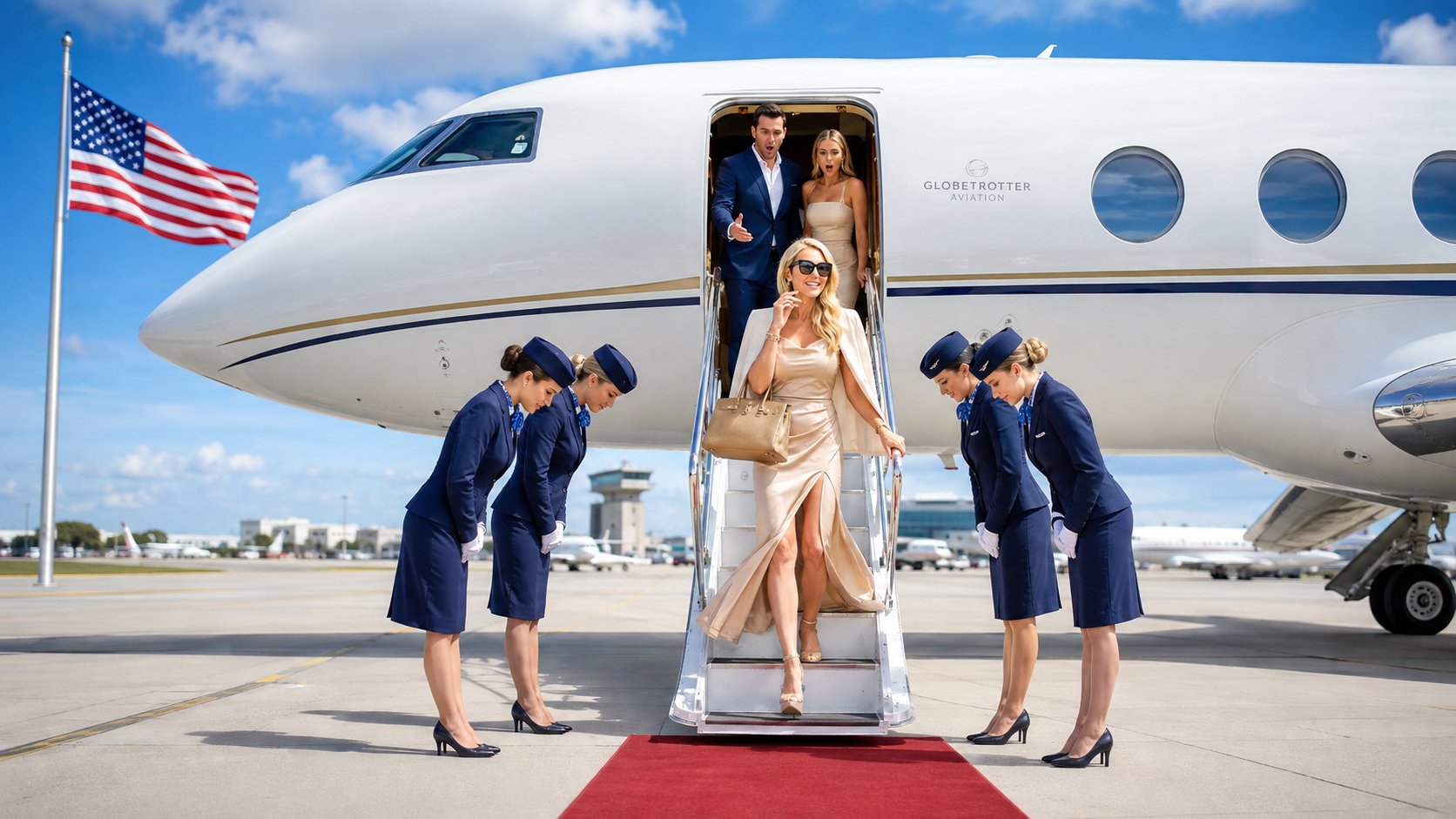
The Captain straightened the moment he saw me. Then he removed his cap. The First Officer did the same. Behind them, the lead flight attendant lowered her head respectfully.
“Mrs. Vance,” the Captain said carefully, “we weren’t informed you would be leaving the aircraft.” I stopped. Behind me, I could still hear movement inside the cabin.
Aaron was probably expecting me to disappear quietly into the terminal.
He had no idea what was about to happen.
The Captain glanced toward the open aircraft door.
Then he looked back at me.
“Ma’am,” he asked, “should we cancel the flight?”
The terminal bridge went silent.
I could almost feel the shock traveling through the people standing behind me.
Aaron appeared at the doorway.
“What did he just call you?”
I turned slowly.
Jasmine stood behind him.
My mother-in-law, Patricia, was beside her.
Several members of Aaron’s executive board were now watching from their seats.
Nobody was smiling anymore.
I looked at the Captain.
“Yes.”
Aaron blinked.
I continued.
“Cancel it.”
The Captain nodded immediately.
“Of course, ma’am.”
Aaron stepped forward.
“Excuse me?”
I met his eyes.
“The flight is canceled.”
For several seconds, he simply stared at me.
Then he laughed.
Not because anything was funny.
Because he genuinely thought the situation was impossible.
“Alyssa, stop being ridiculous.”
He turned toward the Captain.
“You have clearance for San Francisco. We have meetings tomorrow morning. Prepare for departure.”
The Captain didn’t move.
Aaron’s smile vanished.
“I said prepare for departure.”
The Captain’s expression remained professional.
“I’m sorry, Mr. Prescott.”
He glanced at me.
“The aircraft owner has withdrawn authorization.”
Aaron looked from him to me.
“Aircraft owner?”
Patricia pushed past him.
“What nonsense is this?”
I reached into my handbag and pulled out my phone.
One notification was already waiting.
Vance Aviation Holdings — Flight authorization suspended.
I held the screen where Aaron could see it.
“This jet belongs to Vance Aviation Holdings.”
Aaron frowned.
“So?”
I almost smiled.
He really didn’t know.
Four years of marriage.
Four years of using this aircraft.
Four years of boasting about “his private jet.”
And he had never bothered to ask who actually owned it.
“Vance Aviation Holdings,” I said, “is part of my family trust.”
His face changed.
Only slightly.
But I saw it.
Confusion.
Then calculation.
Then disbelief.
Patricia recovered first.
“That’s impossible. Aaron pays for this plane.”
“No,” I replied.
“Aaron’s company pays operational fees.”
I looked around the cabin.
“The plane itself belongs to my family.”
Nobody spoke.
Jasmine slowly removed her hand from Aaron’s arm.
I continued.
“You’ve been flying on it because I authorized your access.”
Aaron’s jaw tightened.
“This is absurd.”
“Is it?”
“You’re canceling a corporate trip over a seat?”
“No.”
I slipped my phone back into my bag.
“I’m canceling access to my property.”
His face hardened.
“Get back on the plane.”
I looked at him.
“No.”
“Alyssa.”
His voice had that familiar edge.
The one that used to make me reconsider every decision.
The one that had trained me to apologize whenever he became uncomfortable.
“Get back on the plane.”
I smiled.
“Remember my place?”
The words hit him.
I watched his expression shift.
A few executives lowered their eyes.
They remembered.
Everyone remembered.
Aaron had said it less than five minutes earlier.
In front of all of them.
I stepped farther away from the door.
“My place is apparently not beside you.”
I glanced toward Jasmine.
“So I thought I would stop occupying things that don’t belong to me.”
Then I looked directly at Aaron.
“And you should probably start doing the same.”
He stared at me.
For the first time in years, Aaron Prescott looked uncertain.
His phone began ringing.
He ignored it.
Then it rang again.
And again.
Around the cabin, several executives suddenly checked their own phones.
One of them, CFO Martin Webb, frowned at his screen.
Another board member sat upright.
Then another.
Whispers spread across the cabin.
Aaron noticed.
“What is it?”
Nobody answered immediately.
Martin finally looked up.
“Aaron…”
“What?”
Martin swallowed.
“There’s been a filing.”
Aaron’s eyes narrowed.
“What filing?”
Martin looked at me.
Then back at Aaron.
“Vance Capital has called an emergency board meeting.”
Aaron went very still.
I checked the time.
“Eight minutes early.”
He stared at me.
“What did you do?”
I didn’t answer.
Because the truth was bigger than a canceled flight.
The flight was only the first door closing.
The second door was already slamming shut.
Four years earlier, Aaron had been brilliant.
Hungry.
Restless.
And completely broke.
When I met him, Prescott Dynamics existed mostly on a laptop and inside his imagination.
He had fourteen employees.
Three months of cash.
A prototype that overheated after twenty-seven minutes.
And investors preparing to walk away.
But Aaron believed in it.
More importantly, I believed in him.
My father didn’t.
“You’re looking at him with your heart,” my father warned me.
“Then I’ll use my heart,” I said.
I thought love meant standing beside someone when everyone else walked away.
So when Aaron’s company entered a cash crisis that would have destroyed it within weeks, I intervened.
Quietly.
I transferred $1.5 billion through Vance Capital.
Not directly into Aaron’s personal hands.
Into Prescott Dynamics through a structured rescue package.
Aaron knew the investment existed.
What he apparently never understood was the structure behind it.
Vance Capital didn’t simply hand him money.
It received preferred shares.
Convertible rights.
Board protections.
Voting provisions.
And most importantly, contingency authority if the company breached certain governance requirements.
At the time, Aaron had kissed my forehead and told me none of that would ever matter.
“We’re building this together,” he had said.
I believed him.
Then came the patents.
Thirteen of them.
The technology Aaron eventually built his empire around had originated from research conducted by a small engineering group my grandfather had financed years earlier.
The patents had been sitting inside another Vance holding company.
Aaron desperately needed access.
My father refused.
I begged.
We fought.
Eventually, I convinced him.
Aaron received a long-term exclusive license.
He called it the moment that changed his life.
He was right.
But somewhere along the way, “we built this” became “I built this.”
Then “I built this” became “you wouldn’t understand.”
Then “you wouldn’t understand” became “stay out of company matters.”
And eventually—
“Remember your place.”
Aaron stepped onto the bridge.
“Alyssa.”
His voice was quieter now.
Dangerously quiet.
“Tell me exactly what you did.”
I looked at him.
“I stopped protecting you from consequences.”
His phone rang again.
This time he answered.
“What?”
I watched his face.
“What do you mean the license is under review?”
Silence.
“No. That agreement runs for another eleven years.”
More silence.
His eyes lifted toward me.
“What breach?”
I could hear someone speaking rapidly on the other end.
Aaron’s complexion slowly drained of color.
I knew exactly what they were telling him.
The patent agreement contained a morality clause.
Not the tabloid kind.
A corporate governance clause.
Prescott Dynamics was required to disclose any executive relationships capable of creating conflicts of interest involving procurement, hiring, promotion, compensation, confidential data, or fiduciary decisions.
Jasmine had joined the company nine months earlier.
Three months after that, Aaron had personally ordered her salary doubled.
Two months later, he had approved a housing allowance.
Then a company car.
Then unrestricted access to executive files.
And last week, Jasmine had been added to a confidential acquisition project despite having no legal clearance to see it.
Maybe Aaron thought I didn’t notice.
I noticed everything.
I simply said nothing.
Until today.
He ended the call.
The silence around him felt different now.
The arrogance had disappeared.
“Alyssa.”
I waited.
“You contacted Vance Intellectual?”
“Yes.”
“You can’t terminate those licenses.”
“I didn’t.”
He exhaled slightly.
Then I finished.
“The trust’s legal committee initiated a breach review.”
His relief vanished.
“If they determine that Prescott Dynamics violated the agreement, the licenses can be suspended pending arbitration.”
“You would destroy thousands of jobs because you’re jealous of my secretary?”
The words came quickly.
Too quickly.
And he knew he had made a mistake the moment they left his mouth.
Several executives looked at Jasmine.
Jasmine’s face turned bright red.
I tilted my head.
“Jealous?”
Aaron said nothing.
“Interesting choice of word.”
Patricia pushed forward.
“You know what he means. Jasmine is his employee. Stop twisting everything.”
I looked at her.
“Then perhaps you can explain why an employee needed to spend last weekend at your lake house.”
Patricia froze.
Aaron’s face changed.
Jasmine looked at him.
I continued.
“Or why Patricia sent a message saying, ‘Once Alyssa is out of the picture, you won’t have to hide anymore.’”
Patricia opened her mouth.
Nothing came out.
Aaron stared at his mother.
“You told her that?”
Jasmine whispered, “Aaron…”
I reached into my bag again.
This time I removed a thin folder.
Not because I needed the papers.
I had digital copies.
But paper has weight.
People respect consequences more when they can see them.
I handed the folder to Martin.
The CFO hesitated before taking it.
Inside were printed records.
Expense reports.
Hotel invoices.
Messages retrieved from company devices.
Transportation receipts.
Executive authorizations.
Compensation approvals.
None of them proved an affair by themselves.
They didn’t need to.
They proved undisclosed conflicts.
Misuse of corporate assets.
Improper access.
Potential fiduciary violations.
The things that actually frightened a board of directors.
Martin flipped through the pages.
His expression became worse with each one.
“How did you get these?”
“I didn’t.”
I looked at Aaron.
“Your compliance department did.”
Aaron turned sharply.
“What?”
“They submitted an internal report eleven days ago.”
Martin looked stunned.
“I never saw it.”
“Exactly.”
The board member nearest him muttered something under his breath.
Aaron didn’t blink.
I continued.
“The complaint was intercepted before it reached the audit committee.”
Martin looked at Aaron.
“Intercepted by whom?”
Nobody needed to answer.
Aaron’s silence did it for him.
Martin stepped out of the aircraft.
Then another board member followed.
Then another.
Suddenly, the people who had been sitting comfortably behind Aaron were physically moving away from him.
It was almost poetic.
Power disappears quietly before it collapses loudly.
Aaron looked back at them.
“You’re seriously listening to this?”
Martin shut the folder.
“We have a fiduciary obligation to investigate.”
“Investigate what?”
“Everything.”
Aaron laughed sharply.
“Martin, I hired you.”
Martin’s expression hardened.
“And the board can fire me.”
He paused.
“Just like it can fire you.”
Jasmine whispered, “Aaron, maybe we should go somewhere private.”
He turned on her.
“Stop talking.”
Her face fell.
For a fraction of a second, I almost felt sorry for her.
Almost.
Then I remembered the orange.
The smug smile.
The way she had rubbed Aaron’s thigh while looking directly at me.
She had wanted me humiliated.
She simply hadn’t understood the audience.
Aaron stepped toward me again.
“We’re going home.”
“No.”
“We’re going to discuss this privately.”
“No.”
“Alyssa.”
“You keep saying my name as if it still gives you authority over me.”
His eyes flashed.
“I’m your husband.”
“For the moment.”
The sentence landed harder than anything else I had said.
Even Patricia went silent.
Aaron stared at me.
“What does that mean?”
I reached into my handbag one final time.
This time I removed an envelope.
I handed it to him.
He didn’t take it.
He looked at the envelope.
Then at me.
“What is that?”
“You’re intelligent.”
His expression darkened.
“Alyssa.”
“Divorce papers.”
Jasmine inhaled sharply.
Nobody else made a sound.
Aaron finally took the envelope.
He stared at it as if holding it could somehow make it unreal.
Then he laughed again.
But there was no confidence left in the sound.
“You filed for divorce?”
“Yes.”
“When?”
“Two hours ago.”
His head snapped up.
“Before the plane?”
“Yes.”
That shook him.
Because suddenly he understood.
The seat had not created the decision.
The seat had only confirmed it.
I had already reached the end.
He just hadn’t known.
Aaron looked down at the papers.
“You planned this.”
“No.”
I shook my head.
“I prepared for it.”
“There’s a difference?”
“A huge one.”
For months, I had watched my marriage disappear in small pieces.
A canceled anniversary dinner.
A password suddenly added to his phone.
A secretary receiving gifts charged to the company.
A husband who stopped asking where I wanted to spend Christmas because his mother had already decided.
A man who rolled his eyes whenever I mentioned the sacrifices I had made because, according to him, bringing up the past was “emotional accounting.”
I kept hoping.
That was my mistake.
I kept believing the Aaron I loved was buried somewhere beneath the ego.
So I asked my attorneys to prepare documents.
I reviewed my holdings.
I separated accounts.
I updated beneficiaries.
I created contingency instructions.
But I didn’t file.
Not until today.
This morning, before leaving for the airport, I saw a message on Aaron’s tablet.
From Jasmine.
Don’t forget. I want the seat beside you. Make her understand where she stands.
Aaron had replied with one word.
Done.
That was when I filed.
The humiliation aboard the plane had simply been the final performance.
And they had all played their roles perfectly.
Aaron stared at me.
“You went through my messages?”
“No.”
“You just said—”
“You left your tablet on our kitchen counter.”
I held his gaze.
“Unlocked.”
Jasmine looked pale now.
Aaron turned toward her.
“You sent that?”
Her mouth opened.
“I was joking.”
“You told me you were scared of flying.”
“I am.”
“You said you needed to sit near me because you panic.”
“I do.”
“You wrote that message?”
Jasmine looked around.
The entire board was watching.
She folded her arms.
“It wasn’t supposed to become this.”
I almost laughed.
That was often the defense of cruel people.
Not that they hadn’t meant to hurt someone.
Only that they hadn’t expected consequences.
Patricia stepped toward her.
“You stupid girl.”
Jasmine’s eyes widened.
“Excuse me?”
“You’ve embarrassed my son.”
Jasmine stared at her.
Then something inside her seemed to snap too.
“Your son?”
She laughed bitterly.
“Your son told me Alyssa was practically gone.”
Aaron’s head turned.
“Jasmine.”
“No.”
She looked at him.
“You don’t get to tell me to stop talking now.”
She pointed at Patricia.
“Your mother told me you two were divorcing after the company’s next funding round.”
Patricia went pale.
Aaron stared at her.
Jasmine continued.
“She told me Alyssa was dead weight. She said once the trust money was no longer useful, you would finally be free.”
A heavy silence fell.
I looked at Patricia.
For once, she couldn’t look back.
Aaron’s face hardened.
“Mom?”
Patricia waved a hand.
“She’s lying.”
“I have messages.”
Jasmine grabbed her phone.
Patricia moved toward her.
“Give me that.”
Jasmine stepped back.
“Don’t touch me.”
Suddenly the elegant private jet trip looked less like a corporate retreat and more like a family demolition site.
I should have enjoyed it.
A younger version of me would have.
But standing there, I felt mostly tired.
This wasn’t victory.
Not yet.
Victory would be leaving.
I turned toward the terminal.
Aaron grabbed my wrist.
Every person nearby froze.
I looked down at his hand.
Then back at his face.
“Let go.”
His fingers loosened immediately.
He knew better.
“Alyssa, please.”
That word surprised everyone.
Maybe him most of all.
Please.
Aaron Prescott never said please when he could issue an order.
I waited.
“We can fix this.”
“No.”
“Yes, we can.”
He lowered his voice.
“Come home. We’ll talk. Jasmine is fired.”
Jasmine laughed.
“You cannot be serious.”
He ignored her.
“I’ll restructure compliance. I’ll replace whoever you want. We’ll go to counseling.”
I looked at him.
“Aaron.”
“What?”
“You still don’t understand.”
“I understand perfectly.”
“No.”
I shook my head.
“You’re trying to negotiate because something finally costs you.”
He went quiet.
“When I cried alone on our anniversary, there was nothing to lose.”
“When you allowed your mother to insult me at dinner, there was nothing to lose.”
“When you stopped introducing me as the person who saved your company and started introducing me as someone who ‘does charity things,’ there was nothing to lose.”
“When Jasmine mocked me in my own house and you told me not to be insecure, there was nothing to lose.”
“When you put her in my seat today and told me to remember my place, there was nothing to lose.”
I looked at the divorce papers in his hand.
“But now there is.”
He stared at me.
“And suddenly you want to talk.”
Nobody moved.
For four years, Aaron had always had an answer.
He could walk into a room of hostile investors and control it within minutes.
He could destroy arguments with numbers.
He could convince billionaires to give him money.
But now he had nothing.
Because there was no argument against the truth.
His phone rang again.
Martin looked at his own screen.
“The board meeting is starting.”
Aaron ignored him.
Martin’s voice grew firmer.
“Aaron.”
“What?”
“You need to join.”
“I’m dealing with my wife.”
Martin looked at me.
Then at Aaron.
“I think your wife is dealing with you.”
Someone behind him coughed to hide a laugh.
Aaron glared.
Martin didn’t look away.
That was the second moment I saw Aaron understand that something fundamental had changed.
People weren’t afraid of him anymore.
Not because he had become less powerful in the last ten minutes.
Because they had discovered his power was borrowed.
And borrowed power is fragile once the lender asks for it back.
The flight was officially canceled.
Ground personnel began unloading luggage.
Executives stepped off one by one, phones pressed to their ears.
Aaron watched his carefully planned corporate retreat disintegrate around him.
Jasmine was still arguing with Patricia.
The Captain quietly approached me.
“Ms. Vance?”
I turned.
He corrected himself.
“Ms. Vance. Your car is waiting at the private terminal.”
“Thank you.”
Aaron heard him.
“Her car?”
The Captain nodded.
“Yes, sir.”
Aaron looked toward the windows.
A black sedan was parked below.
Not one of Aaron’s cars.
Mine.
I started walking.
“Alyssa!”
I didn’t stop.
“Alyssa!”
I kept moving.
Then he said the one thing that finally made me turn.
“I loved you.”
Past tense.
Maybe he didn’t even realize it.
But I did.
I faced him.
“I loved you too.”
His expression softened.
Then I added quietly,
“That’s why I stayed too long.”
And I walked away.
By the time I reached the car, the emergency board meeting had begun.
My attorney, Rachel Cho, was waiting inside.
She had been my friend before she became my lawyer.
That made the disappointment in her face especially painful.
“You okay?”
I slid into the seat.
“No.”
“Good answer.”
The driver closed the door.
Rachel handed me a tablet.
“Board call is live.”
I looked at the screen.
Nine faces appeared.
Martin.
Four independent directors.
Three Vance Capital representatives.
And Aaron.
He was back inside the terminal now.
His tie was loosened.
Jasmine and Patricia were nowhere in sight.
For the first time I could remember, he looked alone.
The chairman began.
“This emergency session of the Prescott Dynamics board is now in order.”
Aaron immediately interrupted.
“This meeting is improperly called.”
One of the directors replied.
“It was called under Section 7.3 of the shareholder agreement.”
“Section 7.3 requires a material governance risk.”
The chairman lifted the folder Martin had received.
“We appear to have several.”
Aaron looked at my image on the screen.
“So this is what you wanted?”
I said nothing.
The chairman continued.
“We have received evidence alleging that the Chief Executive Officer knowingly suppressed an internal compliance report involving an employee with whom he may have had an undisclosed personal relationship.”
Aaron’s face tightened.
“I deny that.”
“We also have concerns about unauthorized access to confidential acquisition materials.”
“I authorized the access.”
“That,” the chairman said, “is part of the concern.”
Another director spoke.
“There are also compensation irregularities.”
“Jasmine worked extraordinary hours.”
I almost smiled.
Apparently Patricia’s defense had made it into Aaron’s corporate strategy.
The chairman didn’t react.
“Mr. Prescott, Ms. Lane’s compensation increased by 240 percent in six months.”
“She took on additional responsibilities.”
“She is listed as an executive secretary.”
“She functioned as more.”
The chairman’s eyebrow lifted.
“I suspect that wording may become relevant.”
Aaron realized the mistake.
His jaw tightened.
The meeting continued.
Piece by piece, the board reviewed the evidence.
The corporate apartment leased under Jasmine’s name.
The vehicle.
The spending account.
The private travel.
The confidential access.
The buried compliance report.
Then came the item Aaron hadn’t expected.
Rachel leaned toward me.
“Here.”
She tapped the screen.
A new document appeared.
Prescott Dynamics had recently entered preliminary negotiations to acquire a semiconductor company.
Jasmine had forwarded confidential acquisition materials to a private email account.
From there, portions had somehow reached a third party connected to a competing bidder.
Nobody yet knew whether it was deliberate.
But legally, it didn’t matter.
It was catastrophic.
Aaron looked genuinely stunned.
“I didn’t know about this.”
For once, I believed him.
The chairman asked,
“Why did she have the documents?”
Aaron said nothing.
“Mr. Prescott?”
He looked exhausted.
“I gave her access.”
“Why?”
Silence.
“Why did an executive secretary need access to a confidential acquisition?”
Aaron finally answered.
“She asked.”
Nobody spoke.
Three words.
That was all it took.
She asked.
Years of governance structures.
Legal protocols.
Confidentiality restrictions.
Security policies.
And the CEO had ignored them because his secretary asked.
The chairman removed his glasses.
“I believe we should move to executive session.”
Aaron’s face changed.
“No.”
The chairman continued.
“The motion before the board is to place Aaron Prescott on immediate administrative leave pending investigation.”
Aaron leaned toward the camera.
“You cannot remove me from my own company.”
Martin looked almost sad.
“It isn’t your company.”
That sentence broke something.
Aaron stood.
“I founded it!”
His voice echoed through the call.
“I built everything you people are sitting around discussing!”
One of the Vance representatives replied calmly.
“You founded it.”
A pause.
“That does not exempt you from governance.”
Aaron looked at me.
“This is you.”
“No.”
“Yes, it is.”
“You gave Jasmine confidential access.”
“You triggered this.”
“You suppressed a compliance report.”
“You’re doing this because of our marriage.”
I shook my head.
“Our marriage ended because of the same thing destroying your career.”
“What?”
“You started believing rules were for everyone except you.”
The vote began.
One by one, the directors voted.
In favor.
In favor.
In favor.
Abstain.
In favor.
In favor.
By the time they reached me, my vote wasn’t even necessary.
Still, the chairman asked.
“Ms. Vance?”
Aaron looked at the screen.
For one second, I saw the man I had married.
Not the billionaire.
Not the CEO.
Aaron.
The young founder who once ate noodles with me on an office floor because he couldn’t afford furniture.
The man who held my hand while pitching investors.
The man who once whispered, “If this ever works, I’ll spend the rest of my life making sure you know it was because you believed in me.”
My throat tightened.
Memories are cruel that way.
They preserve people long after those people stop existing.
“Ms. Vance?”
I looked at Aaron.
“In favor.”
The motion passed.
Effective immediately, Aaron Prescott was suspended as CEO.
He didn’t speak.
The chairman continued explaining the terms.
Restricted system access.
Suspended signing authority.
Company devices to be surrendered.
Internal investigation.
Independent counsel.
But Aaron wasn’t listening.
He was staring at me.
Eventually the call ended.
Rachel closed the tablet.
The car had already left the airport.
City lights passed beyond the window.
I leaned back.
Then, to my embarrassment, I started crying.
Not delicate tears.
Not the glamorous single tear women somehow produce in movies.
I covered my face and sobbed.
Rachel said nothing.
She simply moved closer and held my hand.
“I thought it would feel better,” I whispered.
“What?”
“Winning.”
Rachel squeezed my fingers.
“You didn’t win.”
I looked at her.
“You left.”
I wiped my face.
She continued.
“There’s a difference.”
I understood what she meant three weeks later.
The Prescott Dynamics investigation moved quickly.
Faster than Aaron expected.
Once employees realized the board was seriously examining executive conduct, people began talking.
The buried compliance report was only the beginning.
Former employees described retaliation after challenging Jasmine’s access.
Finance staff produced records of questionable reimbursements.
Security teams documented requests from Aaron’s office to bypass normal protocols.
Human resources revealed that two complaints involving Jasmine had been quietly reassigned.
None of the evidence suggested some elaborate criminal conspiracy.
The truth was almost more disappointing.
Aaron had simply become careless.
Entitled.
He had become convinced his judgment was inherently superior to every system built to restrain him.
And because he believed that, he had gradually surrounded himself with people who agreed.
The empire wasn’t destroyed by one scandal.
It had been hollowed out by arrogance long before anyone saw the cracks.
Jasmine hired an attorney.
Then she gave the investigators everything.
Messages.
Emails.
Photographs.
Voice recordings.
She insisted she had been promised a future with Aaron.
Aaron denied making any formal promise.
Patricia denied encouraging the relationship.
Jasmine produced messages proving otherwise.
One of Patricia’s texts became especially infamous inside the legal team.
Alyssa gave him money. You give him peace. Men eventually choose peace.
When Rachel showed it to me, I stared at the screen for a long time.
Then I started laughing.
Rachel looked concerned.
“What?”
“I spent four years trying to earn the approval of a woman who thought her son’s affairs were spiritual wellness.”
Rachel laughed so hard she had to put the phone down.
It was the first time the entire situation felt funny.
The patent review concluded six weeks later.
The licenses were not permanently terminated.
I didn’t want thousands of employees punished for Aaron’s behavior.
Instead, Vance Intellectual renegotiated the agreement.
Prescott Dynamics would retain access to the patents under stricter governance oversight and significantly higher royalties.
A portion of those royalties would fund employee equity grants.
That decision irritated Aaron more than losing the jet.
He claimed I was using his company to make myself look generous.
Maybe he never understood that the employees had helped build the company too.
Maybe he never understood because doing so would have required admitting he wasn’t the only person responsible for its success.
The board eventually made his suspension permanent.
Aaron Prescott resigned as CEO eight weeks after the canceled flight.
The announcement called it a “mutual decision.”
Corporate language is beautiful.
It can make a public execution sound like a scheduling conflict.
He remained wealthy.
Extremely wealthy.
I didn’t take that away.
Nor could I.
His shares still had value.
His inventions still mattered.
His work still mattered.
But the mythology ended.
The magazines stopped calling him a self-made billionaire.
Journalists started digging into Prescott Dynamics’ earliest funding rounds.
They discovered Vance Capital.
Then they discovered the patents.
Then they discovered me.
Suddenly the woman who had spent years being described as Aaron Prescott’s “socialite wife” had a name.
A career.
An investment record.
A portfolio.
And, unfortunately, several photographers waiting outside my apartment every morning.
I hated that part.
But I learned something strange.
The truth does not always need revenge.
Sometimes it simply needs daylight.
Three months after the airport incident, I attended a Vance Foundation event in New York.
It was my first major public appearance since filing for divorce.
Reporters shouted questions.
“Ms. Vance, did you intentionally force Aaron Prescott from his company?”
“Ms. Vance, were you aware of his relationship with Jasmine Lane?”
“Ms. Vance, do you regret saving Prescott Dynamics?”
That last question stopped me.
I turned.
“Do I regret investing in the company?”
The reporter nodded.
I thought about it.
“No.”
Cameras flashed.
“I regret confusing sacrifice with love.”
The crowd went quiet.
I continued.
“Supporting someone you love doesn’t mean disappearing so they can feel larger.”
Then I walked inside.
That quote went everywhere.
I wished it hadn’t.
But I meant every word.
The divorce took seven months.
Aaron fought almost everything.
Not because he needed more money.
Because losing control infuriated him.
He challenged the separation date.
The valuation of several assets.
The ownership of artwork he once called ugly.
The wine collection he never drank.
Even a beach house he had visited exactly twice.
Eventually, Rachel looked across the conference table and asked his attorney,
“Does Mr. Prescott actually want these things?”
Aaron answered before his lawyer could.
“That’s not the point.”
I looked at him.
And suddenly everything became clear.
That had always been the point.
Possession.
He wanted the company because it was his.
The jet because he used it.
My time because I gave it.
My silence because he expected it.
Me because I had once promised to stay.
He had mistaken access for ownership.
I leaned toward Rachel.
“Give him the beach house.”
Aaron blinked.
Rachel looked at me.
“Alyssa—”
“And the wine.”
Aaron frowned.
“And the artwork.”
His attorney looked pleased.
Aaron didn’t.
Because he knew me.
He knew that when I stopped fighting over things, I was truly finished.
“What do you want?” he asked.
The room became quiet.
I looked at him.
“My name.”
His brow furrowed.
“I’m dropping Prescott.”
He looked genuinely wounded.
More wounded than when the board suspended him.
“Alyssa…”
“I want my name back.”
That was the last day he fought the divorce.
A month later, the settlement was signed.
I walked out as Alyssa Vance.
No photographers were waiting.
No reporters.
No dramatic rainstorm.
Just sunlight.
Rachel stood beside me holding two coffees.
“How does freedom taste?”
I sipped mine.
“Needs more sugar.”
She laughed.
For the first time in years, I had nowhere I was required to be.
No dinner with Aaron’s investors.
No charity event Patricia had selected.
No corporate retreat where I was expected to smile quietly.
I went home.
Changed into sweatpants.
Ordered noodles.
And slept for eleven hours.
It was magnificent.
Six months passed.
Then something unexpected happened.
Aaron asked to see me.
Not through lawyers.
Not through assistants.
He sent a handwritten letter.
It contained only three sentences.
I owe you an apology that doesn’t ask for anything.
If you’ll allow me ten minutes, I’d like to give it.
If not, I’ll understand.
I nearly threw it away.
Instead, two weeks later, I agreed.
Public place.
One hour.
Rachel knew where I was.
Aaron arrived early.
He looked different.
Not physically, exactly.
Still expensive suit.
Still perfect posture.
Still the face that had once appeared on magazine covers beneath headlines about innovation and genius.
But something had changed around the eyes.
The certainty was gone.
He stood when I approached.
“Hi.”
“Hello.”
I sat.
He didn’t try to hug me.
That alone told me he had learned something.
For several seconds, neither of us spoke.
Then Aaron said,
“I was awful to you.”
I waited.
He looked down.
“I’ve spent months trying to explain it.”
“Did you succeed?”
“No.”
That surprised me.
He continued.
“I could tell you I was stressed. That the company became too much. That people around me constantly told me I was extraordinary.”
He shook his head.
“But millions of people are stressed and don’t humiliate their wives.”
I said nothing.
“I could blame Jasmine.”
“You could.”
“It would be dishonest.”
He looked at me.
“She behaved badly. But I was the married one.”
That was perhaps the first adult sentence Aaron had spoken about the entire situation.
He continued.
“My mother encouraged things she shouldn’t have.”
“I know.”
“But I let her.”
“Yes.”
“I told myself you didn’t understand me anymore.”
I almost laughed.
“You stopped talking to me.”
“I know.”
“And then complained I didn’t understand.”
“I know.”
We sat in silence.
Finally he said,
“The worst part is that I genuinely believed I built everything alone.”
My chest tightened.
Aaron looked toward the window.
“I rewrote my own history.”
His voice was quieter now.
“I told the story so many times that eventually I believed it.”
“What story?”
“That I had nothing.”
He looked at me.
“That no one helped.”
A faint smile touched his face.
“The heroic founder sleeping under his desk.”
“You did sleep under your desk.”
“Twice.”
“Three times.”
“One was because I was drunk.”
I almost smiled.
He did too.
Then the smile disappeared.
“You saved the company.”
“I helped.”
“You saved it.”
“A lot of people saved it.”
He nodded.
“That’s what I couldn’t admit.”
I looked at him.
“Why?”
He thought for a long moment.
“Because if other people helped build me, then I wasn’t invincible.”
That was probably the closest Aaron would ever come to understanding himself.
He folded his hands.
“I treated gratitude like debt.”
I frowned slightly.
He continued.
“Every time I looked at you, some part of me remembered how much I owed you.”
“Aaron, I never asked you to repay me.”
“I know.”
“But you resented me anyway.”
“Yes.”
There it was.
The truth.
Ugly.
Simple.
Human.
Aaron had not humiliated me because I was worthless.
He had humiliated me because my existence contradicted the story he wanted to tell about himself.
I represented help.
And he wanted to believe he had never needed any.
“I’m sorry,” he said.
I looked at him.
“For Jasmine?”
“For everything.”
He swallowed.
“For making your loyalty feel embarrassing.”
My throat tightened.
“For letting my mother disrespect you.”
He continued.
“For acting like your family’s money made your work meaningless while happily using that money whenever I needed it.”
I almost laughed at the brutal accuracy.
“For the anniversary.”
I looked away.
“For the things I said about you.”
Silence.
“For the plane.”
That one still hurt.
Not because of the seat.
Because of the pleasure in his face when he told me to move.
He had wanted me small.
Aaron seemed to know exactly what I was remembering.
“I wanted to embarrass you,” he admitted.
I looked back at him.
“Why?”
He closed his eyes briefly.
“Because Jasmine had been telling me you controlled me.”
I said nothing.
“And I wanted to prove she was wrong.”
“So you proved it by controlling me.”
“Yes.”
A sad laugh escaped him.
“When you say it out loud, it sounds insane.”
“It was.”
“I know.”
He looked at me.
“I’m not asking you to forgive me.”
“Good.”
“And I’m not asking you to come back.”
“Good.”
A tiny smile.
“You always hated unnecessary meetings.”
“I still do.”
He nodded.
Then he stood.
“That was all.”
I looked at him.
“You’re leaving?”
“You gave me ten minutes.”
I checked the clock.
Nine minutes.
He picked up his coat.
At the edge of the table, he stopped.
“For what it’s worth…”
I waited.
“I’m glad you canceled the flight.”
I raised an eyebrow.
“That makes one of us.”
“No.”
He shook his head.
“If you hadn’t, I think I would have kept becoming that person.”
I studied him.
“Maybe.”
He gave a small nod.
Then he walked away.
I never married Aaron again.
This isn’t that kind of story.
Some apologies are meaningful.
Some people genuinely change.
That doesn’t mean you have to return to the place where they hurt you.
Forgiveness is not a key you hand someone so they can reopen the same door.
Sometimes it is simply permission you give yourself to stop standing beside it.
A year after the canceled flight, Prescott Dynamics stabilized under a new CEO.
Martin became chairman.
Employees received a larger equity pool.
The company launched two successful products.
Its stock recovered.
Aaron remained a significant shareholder but stayed away from daily management.
Jasmine left the technology industry.
Patricia moved to Palm Beach and, according to mutual acquaintances, still told anyone who would listen that I had “destroyed her family over an airplane seat.”
I never corrected her.
If that version helped her sleep, she was welcome to it.
As for me, I returned to the work I had neglected during my marriage.
Vance Capital launched a new technology fund.
But I structured it differently.
Any founder receiving significant investment had to establish independent governance before receiving the second funding tranche.
One journalist called it the “Aaron Clause.”
I refused to confirm the nickname.
Rachel thought it was hilarious.
We funded twenty-three companies that first year.
Seven were founded by women.
Nine by first-generation entrepreneurs.
One was created by an engineer whose previous employer had repeatedly rejected his ideas.
At the launch event, he thanked me for “believing in people before everyone else does.”
The words nearly broke me.
Because once, that had been who I was.
I had thought Aaron destroyed that woman.
He hadn’t.
I had simply buried her beneath years of compromise.
Now she was coming back.
Slowly.
One decision at a time.
The strangest part of my new life was the jet.
For months, I refused to use it.
Every time I thought about stepping aboard, I remembered Jasmine in my seat.
Aaron’s voice.
Go back to row five.
So I flew commercial.
Rachel mocked me mercilessly.
“You realize you own an airplane.”
“I’m aware.”
“You flew middle seat from Chicago.”
“The woman beside me gave me cookies.”
“Alyssa.”
“They were excellent cookies.”
But nearly eighteen months after that day, I finally returned to the private terminal.
I had a meeting in Seattle.
The same aircraft waited on the runway.
The same silver stripe.
The same quiet cabin.
For a moment, I stood at the entrance.
Memories rushed back.
The orange.
The laughter.
Patricia’s voice.
Aaron’s contempt.
Then the lead flight attendant appeared.
She was the same woman from that day.
Her face lit up.
“Ms. Vance.”
“Hello, Elena.”
She smiled.
“Welcome back.”
I walked inside.
The cabin looked almost exactly as it had before.
Except for one thing.
The seat beside the window.
My old seat.
I stopped beside it.
Elena waited.
“Would you like something different prepared?”
I ran my fingers across the leather.
Then I shook my head.
“No.”
I sat down.
For several seconds, I looked at the empty seat beside me.
Once, I had believed that seat represented my place in someone else’s life.
Beside my husband.
Beside his success.
Beside the empire I helped build.
But a seat is just a seat.
And a place no one gives you can be taken away.
I looked out the window.
The Captain’s voice came over the intercom.
“Ms. Vance, we’re cleared for departure whenever you’re ready.”
I smiled.
“Let’s go.”
The engines started.
The aircraft began moving.
As we rolled toward the runway, my phone vibrated.
A message from Rachel.
Big meeting. Nervous?
I typed back.
Terrified.
She replied instantly.
Good. Means you care.
I smiled.
Then another message appeared.
Unknown number.
I almost ignored it.
But something made me open it.
It was Aaron.
We had not spoken in months.
Saw the announcement about the new fund. Congratulations. You built something incredible.
I read the message twice.
Not your father built.
Not your family paid for.
Not you got lucky.
You built something incredible.
For the first time, Aaron had described my success without attaching himself to it.
I typed three words.
Thank you, Aaron.
Then I deleted the conversation.
Not angrily.
Not dramatically.
I simply didn’t need to carry it anymore.
The plane reached the runway.
The engines roared.
I leaned back.
Eighteen months earlier, I had walked off this aircraft believing my life was collapsing.
I had lost my marriage.
My image of the man I loved.
My place inside the company I helped save.
The future I thought I had already chosen.
But I had gained something I didn’t know I had lost.
Myself.
The aircraft accelerated.
The city disappeared beneath us.
And as we climbed above the clouds, I thought about the woman who had stood in that cabin while her husband told her to move to row five.
I wanted to reach back through time and tell her something.
Not to fight harder for the seat.
Not to expose Jasmine sooner.
Not to destroy Aaron before he could destroy her.
Something simpler.
Leave.
Not because leaving guarantees revenge.
Not because everyone who hurts you will eventually fail.
Not because the world always rewards good people and punishes cruel ones.
Life isn’t that convenient.
Leave because anyone who needs you to become smaller so they can feel powerful has already told you what kind of future they are offering.
Leave because love should not require humiliation as proof of loyalty.
Leave because gratitude that must be begged for isn’t gratitude.
Leave because being needed is not the same as being valued.
And above all—
Never confuse the seat someone allows you to occupy with the life you are capable of building for yourself.
I looked through the window.
Sunlight spilled across the clouds.
Elena approached quietly.
“Ms. Vance?”
“Yes?”
She smiled.
“Would you like breakfast?”
I laughed.
“Do you have oranges?”
She hesitated.
Then her eyes widened as she remembered.
“Oh.”
I started laughing harder.
Elena covered her mouth.
“I am so sorry.”
“No.”
I wiped my eyes.
“It’s okay.”
She was trying not to laugh now too.
“Yes,” she said carefully.
“We have oranges.”
“Perfect.”
“Peeled?”
I looked at her.
“Absolutely not.”
We both laughed.
She brought me the orange whole.
I peeled it myself.
Piece by piece.
Outside, the horizon stretched endlessly ahead.
No husband telling me where to sit.
No mother-in-law telling me what I owed.
No secretary smiling from a place she thought she had stolen.
No boardroom waiting for me to stay quiet.
Just my seat.
My plane.
My work.
My name.
My life.
And this time—
I knew exactly where I belonged.
THE END! THANK YOU FOR READING!❤️