 Reading Time: 12 minutes
My brother drained every account I had and vanished with his girlfriend. I thought my life was over until my ten-year-old daughter looked at me and said, “Mom, don’t worry. I handled it.” Two days later, my brother called me screaming so loudly I almost dropped the phone.
My name is Laura Mitchell, and until last spring, I still believed blood meant something. I believed family could disappoint you, hurt you, borrow money they never returned, embarrass you at holidays, and still somehow be family.
But I never believed family could sit across from you at dinner, smile at your child, eat food you bought, sleep under your roof, and quietly plan to destroy you.
My older brother, Ethan, had always been the wild one.
Bad jobs.
Bad friends.
Bad timing.
Every few years, he would disappear into some new dream.
A trucking business.
A crypto investment.
A food truck.
A real estate flipping course.
Each one ended the same way: unpaid bills, angry people, and Ethan calling me with that broken voice he knew I could never ignore.
“Laura, I just need a little help.”
I was the responsible one.
That was what everyone called me.
Responsible.
Reliable.
The one who showed up.
The one who kept receipts.
The one who answered calls at midnight.
The one who never said no fast enough.
So when Ethan called me crying after losing his apartment and said he needed “a place to breathe,” I opened my door.
He showed up two days later with three duffel bags, a cracked phone, and his girlfriend Maya, who wore sunglasses indoors and looked around my little townhouse like she was judging it for an invisible magazine.
“This is nice,” she said, in a tone that made nice sound like unfortunate.
I ignored it.
My daughter Emily peeked from behind the stair railing.
She was ten, small for her age, with serious brown eyes and a way of noticing things adults thought she missed.
Ethan crouched down and opened his arms.
“There’s my favorite niece.”
Emily stepped forward carefully and hugged him.
She had always liked Ethan.
He brought funny gifts, told dramatic stories, and made pancakes shaped like animals.
Children do not always know the difference between charm and goodness.
Sometimes adults do not either.
At first, having Ethan there felt manageable.
He helped with groceries once.
Picked Emily up from school twice.
Fixed the loose cabinet handle in the kitchen.
Maya came and went, spending most of her time scrolling on her phone in the guest room or asking if I had oat milk.
After two weeks, Ethan told me he had a new job lined up but needed help getting “back on paper.”
His bank account was frozen because of some dispute.
His phone bill was behind.
He needed access to pay shared household expenses until he got stable.
I should have said no.
Instead, I did what I always did.
I made it easy for someone else.
I added him as a temporary authorized user on one household checking account so he could transfer money for utilities and groceries while staying with us.
I did not give him my savings password.
I did not give him permission to touch my emergency fund.
I did not imagine he would need to.
I told myself it was temporary.
I told myself he was my brother.
That was the stupidest thing I ever believed.
For the first month, things were quiet.
Too quiet, I realize now.
Ethan was extra helpful.
He made dinner twice.
He drove Emily to soccer practice.
He asked me questions about my work schedule, when I got paid, which bills came out automatically, which bank app I used, whether I still kept “old-school paperwork” in my desk.
I answered without suspicion.
Why would I suspect my own brother?
Maya became friendlier too.
She complimented my curtains.
Asked where I bought my work blazers.
Once, I caught her standing near my desk in the hallway, looking at the framed photo of Emily and me at the lake.
She smiled when she saw me.
“You two are lucky,” she said.
I laughed tiredly.
“Lucky isn’t the word I’d use.”
But maybe to her, we were.
A home.
A routine.
Accounts worth stealing.
On a Monday morning, everything collapsed.
I was packing Emily’s lunch when I opened my banking app to check whether my paycheck had cleared.
At first, I thought the app had glitched.
My checking account was almost empty.
Forty-two dollars and eighteen cents.
I stared at the screen, confused.
Then I checked my savings.
The emergency fund I had built one painful paycheck at a time for ten years.
The money for rent if I got sick.
The money for Emily’s braces.
The money for car repairs, school fees, winter coats, doctor visits, and the kind of disaster you hope never comes.
Gone.
Every cent.
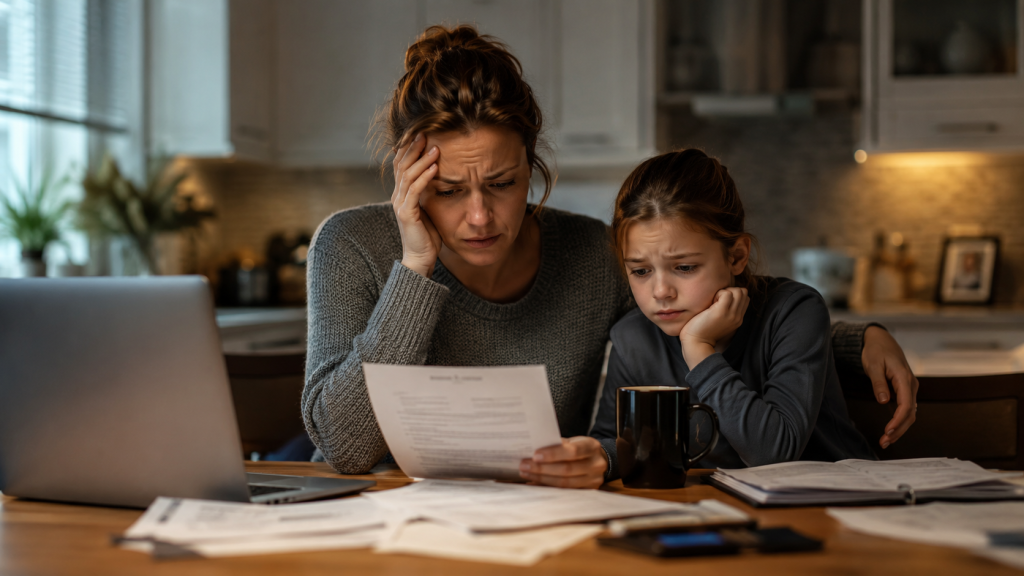
My hands started shaking so badly the lunch bag slipped off the counter.
Emily looked up from tying her shoes.
“Mom?”
“I’m okay,” I lied.
I called the bank from the pantry so she would not hear the panic in my voice.
The woman on the phone sounded sorry.
Too sorry.
“Ma’am, the transfers were completed by an authorized user.”
“No,” I said. “That’s impossible.”
“I’m showing multiple transfers initiated from your linked account and verified through saved device access.”
“By who?”
A pause.
“Ethan Mitchell.”
The name hit like cold water.
My brother.
Authorized by Ethan.
I called him once.
Voicemail.
Twice.
Voicemail.
Then I texted.
Ethan, call me now.
Where is my money?
This is not funny.
You need to answer me.
Nothing.
By noon, I walked into the guest room.
It was stripped bare.
His clothes were gone.
His laptop was gone.
Maya’s makeup bag was gone.
Even the cheap spare phone he kept in the nightstand was gone.
The bed was made.
That detail broke me.
He had made the bed.
Like a guest leaving politely after committing a crime.
That was when I understood.
He had not panicked.
He had not made one bad decision.
He had planned all of it.
I sank onto the kitchen floor and sobbed until my throat hurt.
Rent was due.
Groceries were low.
Emily had school fees coming up.
My car insurance payment would hit in three days.
I had spent years building a wall between my daughter and desperation, and my own brother had kicked it down while sleeping in my guest room.
That night, Emily sat beside me at the kitchen table.
I had tried to hide how bad things were, but children feel fear in the walls.
She looked at me with those serious brown eyes.
Calm.
Too calm.
Then she whispered, “Mom, don’t worry. I handled it.”
I wiped my face and tried to smile.
“Sweetheart, this is grown-up stuff.”
She nodded slowly.
“That’s why I did what I did.”
I was too exhausted to ask questions.
That is the part I hate admitting.
I should have asked.
But I had spent the whole day on the phone with the bank, filing a police report, calling creditors, begging for extensions, and trying not to vomit from fear.
So I kissed the top of her head and said, “Thank you, baby.”
Two days passed in a blur.
Bank calls.
Police forms.
Sleepless nights.
Frozen meals.
Declined autopay notices.
I moved through the house like someone carrying a heavy glass bowl, terrified one more thing would make me drop it.
Then Wednesday afternoon, my phone rang.
It was Ethan.
The second I answered, he screamed my name.
“Laura! What did you do?”
His voice cracked with panic, not guilt.
I stood frozen in the kitchen while Emily sat at the table, calmly eating cereal like she had been expecting the call.
“What are you talking about?” I asked.
“Don’t play dumb! My card got declined, Maya’s hotel kicked us out, and the police showed up asking about stolen funds!”
My knees weakened.
Emily looked up and whispered, “Ask him about the camera.”
My stomach dropped.
“What camera?”
Ethan went silent.
Emily slid her tablet across the table.
On the screen was footage from the little nanny camera I had installed months earlier after packages kept disappearing from our porch.
I had forgotten it also recorded part of the hallway outside the guest room and the desk nook.
There was Ethan at 2:13 a.m., opening my desk drawer.
There was Ethan taking my bank folder.
There was Ethan photographing account information.
There was Maya beside him, whispering, “Hurry up.”
And then Ethan’s voice, clear as day.
“Once the transfers clear, Laura can cry all she wants.”
My hand flew to my mouth.
“Emily,” I whispered.
She shrugged, but her eyes were wet.
“I saw Uncle Ethan taking papers when I got water. I got scared, so I saved the video and sent it to Aunt Rachel.”
Aunt Rachel was not really her aunt.
Rachel was my best friend from college.
She also happened to be a fraud investigator at the bank.
Ethan started yelling again.
“She’s a child! That doesn’t count!”
But it did.
Rachel had received the video the same morning I discovered the theft.
She had immediately flagged the accounts, escalated the fraud claim, frozen remaining transfers, traced the outgoing accounts, and sent the evidence to the police detective assigned to my report.
She had not told me everything because she knew I was overwhelmed.
She had simply said, “I’m working on it.”
And Emily, my ten-year-old daughter, had been the reason there was proof.
I finally found my voice.
“You robbed your sister and your niece.”
Ethan breathed hard into the phone.
“Laura, please. I can explain.”
I looked at Emily.
Then at the empty guest room.
“No,” I said. “This time, you can explain it to a judge.”
He hung up.
For the first time in three days, the silence did not feel like defeat.
It felt like a door closing in the right direction.
An hour later, Rachel arrived at my house with takeout, printed documents, and the expression of a woman who had been waiting for permission to destroy someone.
She hugged me first.
Then she hugged Emily.
“You,” she said, looking at my daughter, “are the bravest kid I know.”
Emily looked down.
“I didn’t know if I did the right thing.”
Rachel crouched in front of her.
“You protected your mother. You told a safe adult. That is exactly the right thing.”
I started crying again.
Emily came around the table and wrapped her arms around me.
“I didn’t want you to be scared,” she whispered.
“Oh, baby,” I said. “You are not supposed to protect me.”
“But we protect each other,” she said.
That sentence hurt and healed me at the same time.
Rachel explained what had happened.
Ethan had moved money through multiple accounts connected to Maya and one prepaid business account.
He had bought plane tickets.
Booked hotels.
Paid off Maya’s credit cards.
Tried to withdraw cash.
But once Rachel flagged the activity and the police contacted the receiving banks, some funds were frozen before they could disappear completely.
Not all.
But enough to give me hope.
“The video changes everything,” Rachel said. “He can’t claim misunderstanding. He can’t claim you gave permission. He was recorded stealing information and discussing the transfers before they happened.”
“What happens now?” I asked.
“Now,” Rachel said, “you stop protecting him.”
That was harder than it should have been.
Not because I wanted to forgive Ethan.
But because family betrayal brings two kinds of grief.
You grieve what they did.
And you grieve the person you thought they were.
The police arrested Ethan two days later outside a motel three towns away.
Maya was with him.
They had argued with the manager after their card declined.
According to the detective, Ethan shouted my name several times before being placed in the patrol car.
As if this was my fault.
As if consequences were something I had done to him, not something he had earned.
Maya tried to claim she knew nothing.
Then detectives showed her the video.
She stopped talking.
My mother called that night.
I had not heard from her much since she moved to Arizona with her new husband.
She cried into the phone.
“Laura, he’s your brother.”
I closed my eyes.
“Yes.”
“You can’t ruin his life.”
“He emptied my accounts.”
“He made a mistake.”
“He stole from my child.”
Silence.
Then she said, “You always were too harsh with him.”
There it was.
The old family pattern.
Ethan destroyed.
Someone else cleaned.
I was responsible.
He was misunderstood.
I looked across the room.
Emily was asleep on the couch under a blanket, exhausted from a week no child should have had to live through.
Something in me hardened.
“Mom, I love you. But if you ask me to protect him again, I won’t answer your calls.”
She gasped.
“You don’t mean that.”
“I do.”
And I hung up.
The recovery took time.
The bank returned part of the money quickly because of the fraud investigation and internal documentation.
The rest became part of the criminal case.
Rachel helped me open new accounts, change every password, freeze my credit, file identity protection reports, and remove Ethan from every authorized connection he had ever touched.
She also helped me do something I should have done years earlier.
Build a boundary that did not depend on guilt.
Ethan wrote me from jail once.
Laura,
I know you hate me. I messed up. Maya pressured me. I was desperate. I never meant to hurt Emily. I just needed a reset. You always land on your feet. I thought you’d figure it out.
That line burned.
You always land on your feet.
People who use you love to admire your strength after they are done breaking your legs.
I did not reply.
At the court hearing, Ethan looked smaller than I remembered.
Maya sat apart from him, already negotiating her own deal.
My brother turned when I entered.
His eyes filled.
For one second, I saw the boy who used to walk me home from school.
The boy who taught me how to whistle.
The brother I had loved before life turned him into someone who mistook kindness for opportunity.
Then he looked at Emily and started crying.
That was when I knew he finally understood the thing I had been saying from the beginning.
He had not just stolen money.
He had stolen safety.
Emily gave a recorded statement privately, with a child advocate present.
She did not have to face him in court.
I made sure of that.
When the judge reviewed the evidence, the video was mentioned repeatedly.
A child had preserved what adults might have missed.
Ethan eventually pled guilty to several financial crimes.
Maya too.
Restitution was ordered.
Whether I would ever see every dollar again, I did not know.
But the court order mattered.
The truth was official now.
Not a family argument.
Not a misunderstanding.
Not Laura being dramatic.
A crime.
After the hearing, Ethan asked to speak to me.
My attorney advised against it.
I agreed anyway, but only in the courthouse hallway with people around.
He stood in front of me, twisting his hands.
“I’m sorry,” he said.
I nodded once.
“I believe you’re sorry you got caught.”
His face crumpled.
“That’s not fair.”
“No, Ethan. What wasn’t fair was Emily thinking she had to save us because her uncle robbed her mother.”
He looked past me toward where Emily sat with Rachel.
“I didn’t think she knew.”
“That’s worse.”
He flinched.
“I was going to pay you back.”
“No, you weren’t.”
He had no answer.
I stepped closer, lowering my voice.
“You were my brother. I would have helped you. I did help you. You could have asked for almost anything. But you chose to take everything.”
Tears ran down his face.
“I know.”
“No,” I said. “You don’t. Not yet.”
Then I walked away.
Six months later, life looked different.
Not perfect.
But different.
My accounts were safer.
My rent was paid.
Emily’s school fees were covered after Rachel organized a private hardship grant through a local community fund.
I worked extra hours and rebuilt slowly.
Every deposit felt like reclaiming a brick from a collapsed house.
Emily started therapy.
So did I.
Her therapist told me children who act “too calm” in crisis often feel responsible for adults around them.
That sentence hurt me deeply.
I had tried so hard to protect her from fear, but fear had still found her.
One night, while we washed dishes together, Emily said, “Did I get Uncle Ethan arrested?”
I turned off the faucet.
“No, sweetheart. Uncle Ethan got himself arrested.”
“But I sent the video.”
“You told the truth.”
She looked down.
“Grandma said family doesn’t do that.”
I dried my hands and knelt in front of her.
“Family does not steal from family. Family does not make children keep scary secrets. Family does not get to hurt us just because we share a last name.”
She nodded slowly.
“Then Rachel is family?”
I smiled.
“Yes. Rachel is family.”
“Because she helped?”
“Because she showed up with love.”
Emily thought about that.
Then she said, “Blood isn’t enough.”
“No,” I whispered. “It isn’t.”
On her eleventh birthday, Rachel gave Emily a small silver necklace with a tiny shield charm.
Emily wore it every day for months.
I asked her once why she liked it so much.
She said, “It reminds me I can be brave, but I don’t have to be in charge.”
I went into the bathroom and cried quietly after that.
Not from sadness exactly.
From relief.
From guilt.
From love.
From the strange miracle of realizing your child survived something and still found words wiser than most adults.
A year after Ethan drained my accounts, I opened a new savings account under only my name.
The first deposit was small.
One hundred dollars.
I stared at the confirmation screen for a long time.
Then I called Emily over.
“Look,” I said.
She leaned against my shoulder.
“Emergency fund?”
“Emergency fund.”
“How much do we need?”
“A lot.”
She nodded seriously.
“Okay. We start here.”
We.
That word no longer felt like a burden.
It felt like a promise.
I used to believe blood meant family.
Now I believe family is the person who protects your peace when you cannot.
Family is Rachel answering a ten-year-old’s scared message and taking it seriously.
Family is my daughter saving a video because something felt wrong.
Family is a bank investigator bringing takeout with fraud forms.
Family is a judge making the truth official.
Family is not the brother who eats at your table while planning to empty your accounts.
Ethan took my money.
He took my trust.
He took the last childish belief I had that blood alone could make someone safe.
But he did not take everything.
Because my ten-year-old daughter saw what I did not.
She acted when I was too exhausted to notice.
She saved the proof.
And when my brother called screaming two days later, thinking I had ruined him, I finally understood the truth.
He had ruined himself.
Emily had simply turned on the light.
Today, our life is smaller in some ways.
I spend more carefully.
I trust more slowly.
I keep documents locked.
I check accounts every morning.
But our home is calmer.
Safer.
Cleaner in the emotional sense.
No guest room full of secrets.
No brother asking for one more chance.
No girlfriend judging my curtains while planning to run.
Just me, Emily, and the people who actually show up when everything falls apart.
Sometimes Emily still asks about Ethan.
Not often.
Mostly around holidays.
“Do you miss him?” she asked last Christmas.
I thought about lying.
Then I told her the truth.
“I miss who I thought he was.”
She nodded.
“Me too.”
We hung one ornament after that.
A little silver shield.
Right in the center of the tree.
My brother drained every account I had and vanished with his girlfriend.
I thought my life was over.
Then my daughter looked at me and said, “Mom, don’t worry. I handled it.”
She was only ten.
She should have been thinking about homework and cereal and birthday parties.
Instead, she protected us from a man I had been too loyal to fear.
I will always wish she had never needed to be that brave.
But I will also always be grateful that when betrayal walked through our house wearing my brother’s face, my daughter saw clearly.
And because she did, we survived.
THE END! THANKS FOR READING!