 Reading Time: 14 minutes
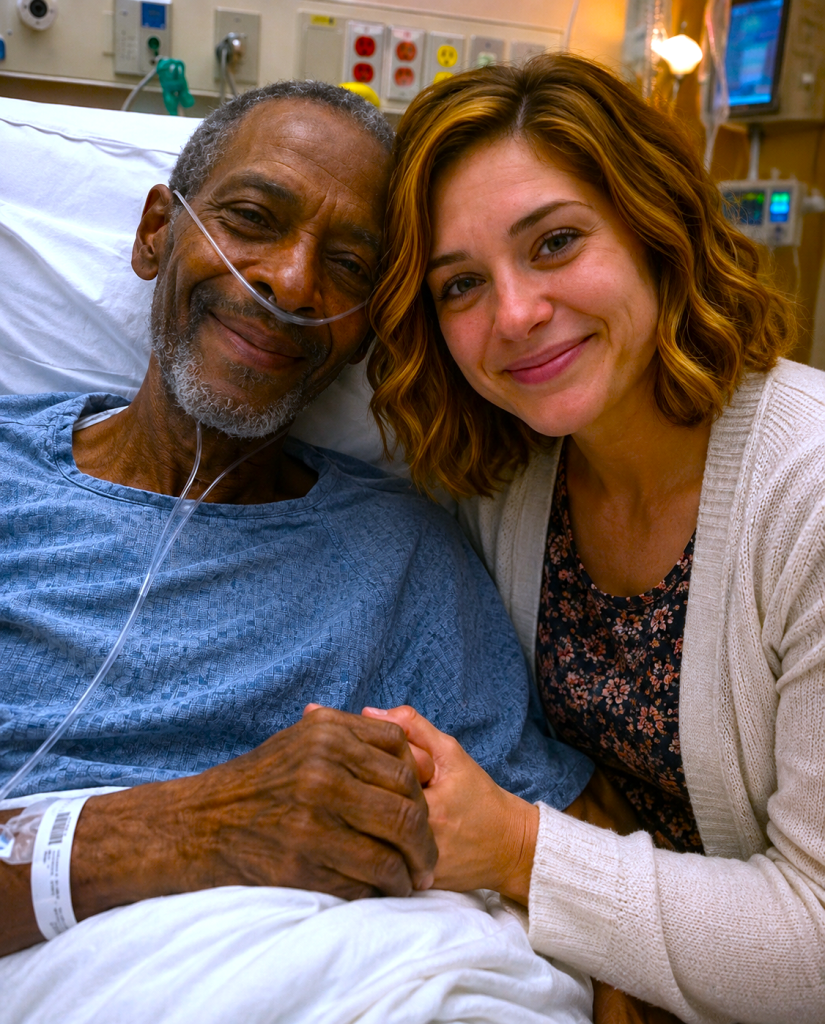
My stepdad raised me after I lost my mother at four. Just hours before he passed away, he grabbed my hand and whispered five words that destroyed everything I thought I knew. “I’ve lied to you your entire life.” I was four when Frank married my mother.
At least, that was the story I had always been told. My memories from those years were scattered pieces rather than a complete picture. My mother singing while washing dishes. Her perfume lingering on my pillow after she kissed me goodnight. Frank carrying me upstairs when I fell asleep watching television.
And apple pancakes. Always apple pancakes.
Mom used to slice them thin and sprinkle cinnamon over them. After she died, Frank learned to make them exactly the same way.

I was told my mother died in an accident not long after she married him.
There had been a funeral.
There had been flowers.
There had been a small white dress Frank helped me put on.
I remembered adults crying.
I remembered asking when Mommy was coming home.
And I remembered Frank kneeling in front of me afterward, taking both my hands and saying, “It’s you and me now, kiddo. But I’m not going anywhere.”
He kept that promise.
For thirty-four years.
Frank never remarried.
He packed my school lunches, badly at first. He learned to braid my hair from a library book because this was long before you could simply pull up a tutorial on your phone.
He attended parent-teacher conferences.
He sat through dance recitals.
He taught me how to drive in his battered blue Ford and somehow survived six months of me confusing the brake and accelerator.
When my first boyfriend broke my heart, Frank sat beside me on the porch and said, “Want me to tell you he was never good enough?”
“Yes.”
“He was never good enough.”
I laughed through my tears.
When I married Daniel at twenty-seven, Frank walked me down the aisle.
Before the church doors opened, he looked at me and whispered, “Your mom would be proud of you.”
I cried so hard the photographer had to redo my makeup.
Years later, when my daughter Sophie was christened, Frank stood beside me with his hand resting on my shoulder.
He was never my stepfather.
Not in my heart.
He was Dad.
So when his health began failing rapidly, I hardly left his hospital bedside.
Cancer had reduced the strongest man I knew to someone who needed help lifting a cup of water.
I hated seeing him that way.
But Frank never complained.
Even during those final weeks, he worried about everyone except himself.
“Go home, Claire,” he would tell me. “Daniel and Sophie need you.”
“They have each other.”
“And I have nurses.”
“You have me.”
He would smile.
“That I do.”
Then came the night everything changed.
The doctor entered Frank’s room shortly after nine and quietly explained that his body was shutting down.
Hours, perhaps.
Not days.
I sat beside him after the doctor left, listening to the rhythmic beeping of the machines.
Rain streaked the hospital window.
Frank appeared asleep.
Then suddenly his hand closed around my wrist.
His eyes opened.
They were clearer than they had been all week.
“Claire.”
“I’m here.”
“Promise you’ll hear me out before you hate me.”
I leaned closer.
“I could never hate you.”
His icy fingers tightened against my skin.
“I’ve lied to you your entire life.”
I stared at him.
“What?”
“Everything you believe is false. Your childhood. Who I am. All of it.”
The walls seemed to shift around me.
I managed a weak smile.
“Dad, none of this makes sense. Do you need me to get the doctor?”
Frank shook his head.
“My mind is completely clear.”
His voice cracked.
“I need you to discover the truth before I die, even though I was begged to take it to my grave.”
Questions crowded my thoughts faster than I could form them.
“What truth?”
Instead of answering, Frank struggled to reach beneath his blanket.
I helped him.
His trembling fingers found a folded scrap of paper beneath his pillow.
He pushed it into my palm.
“Go there.”
I unfolded it.
There was an address.
“Who lives there?”
Frank turned his face toward the window.
Tears disappeared into his gray stubble.
“Go there. Now.”
“Dad—”
“Please.”
Those were the final words Frank ever said to me.
I wish I had known that at the time.
I kissed his forehead and promised I would return quickly.
Then I rushed into the hallway and unfolded the paper again.
The address was only a short drive from Frank’s house—the same modest home where I had spent nearly my entire childhood.
I called Daniel from the parking garage.
“Frank gave me an address.”
“At this hour?”
“He says he lied to me.”
“About what?”
“I don’t know.”
Daniel was silent.
“Do you want me to come?”
I looked toward the hospital doors.
“No. Stay with Sophie. I’ll call you.”
“Claire, be careful.”
Twenty minutes later, I pulled up outside an unremarkable two-story house on a quiet residential street.
One porch light was burning.
Everything else was dark.
I sat behind the steering wheel for almost a minute.
My heart was pounding.
Maybe Frank had become confused.
Maybe the medication had affected him despite what he said.
Maybe I was about to wake some innocent elderly couple because a dying man had remembered the wrong address.
Eventually, I got out.
Rain had slowed to a mist.
I walked toward the porch, silently practicing an apology.
I climbed the three steps.
Raised my hand.
My knuckles barely touched the wood.
The door swung open.
And when I saw who was standing behind it, I screamed.
The woman standing there looked nearly seventy.
Her hair was silver.
There were deep lines around her eyes.
She wore a cream cardigan over a faded blue dress.
But none of that mattered.
Because I knew those eyes.
I had seen them every morning of my life.
In the mirror.
The woman covered her mouth.
“Claire.”
My knees almost gave way.
“No.”
She began crying.
“Oh, sweetheart.”
“No.”
I stumbled backward.
She reached toward me.
I recoiled.
“Don’t touch me!”
Her hand froze.
I stared at her face.
At the small crescent-shaped scar beside her left eyebrow.
A scar I remembered touching when I was a child.
A scar belonging to a woman who had supposedly been dead for thirty-four years.
“You’re dead,” I whispered.
She sobbed.
“I know.”
“You’re dead.”
“I know what you were told.”
I backed toward the porch railing.
“No. I went to your funeral.”
“You were four.”
“I remember it!”
“You remember what they allowed you to see.”
My stomach twisted.
“Who are you?”
The woman looked directly at me.
“My name is Evelyn.”
My mother’s name.
I shook my head.
“No.”
“Claire—”
“My mother died.”
“I’m your mother.”
Something inside me broke.
I ran.
She called after me, but I was already halfway across the yard.
I reached my car and fumbled with the keys so badly that I dropped them.
The woman stayed on the porch.
She didn’t chase me.
She simply stood beneath the yellow porch light crying.
When I finally opened the car door, my phone rang.
The hospital.
I answered immediately.
“Hello?”
A nurse spoke softly.
“Is this Claire Bennett?”
“Yes.”
“I’m calling about Frank Bennett.”
My chest tightened.
“I’m coming back. I just had to—”
“I’m very sorry.”
Everything stopped.
“Mr. Bennett passed away a few minutes ago.”
I stared through the windshield.
The woman on the porch sank into a chair.
My mother.
Alive.
My father.
Dead.
And between them stood thirty-four years of lies.
I don’t remember driving back to the hospital.
I remember walking into Frank’s room.
The machines had been turned off.
The room seemed impossibly quiet.
Frank looked peaceful.
I sat beside him.
Then I became angry.
Not ordinary anger.
The kind that rises from grief when there is nowhere else for grief to go.
“You lied to me.”
My voice shook.
“You looked me in the eye every day and lied to me.”
I grabbed his cold hand.
“You let me cry for her.”
My tears fell onto the blanket.
“You let me grow up thinking she was dead.”
But even as I said those words, memories fought against my anger.
Frank sitting beside my hospital bed when I had appendicitis.
Frank applauding too loudly at graduation.
Frank slipping fifty dollars into my purse when Daniel and I were struggling financially.
Frank holding Sophie for the first time and crying.
None of those memories felt fake.
That made everything worse.
Two days later, I buried him.
The funeral was small.
Frank had outlived most of his friends.
Daniel stood beside me.
Sophie held my hand.
I kept looking toward the back of the chapel.
Part of me expected Evelyn to appear.
She didn’t.
Afterward, Frank’s attorney approached me.
“Claire, your father left instructions.”
I almost corrected him.
Stepfather.
But I couldn’t.
“What instructions?”
“He asked that I give you this after his funeral.”
The attorney handed me a wooden box.
Inside were dozens of letters.
Every envelope had my name on it.
Claire — Age 5.
Claire — Age 8.
Claire — Age 12.
Claire — Graduation.
Claire — Wedding.
Claire — Sophie’s Birth.
My hands began shaking.
All the envelopes were sealed.
None had been mailed.
The return name on every one was the same.
Evelyn.
My mother had been writing to me my entire life.
That night, Daniel found me sitting on our bedroom floor surrounded by letters.
I opened the first one.
My darling Claire,
Today you turned five.
Frank sent me a photograph.
You are wearing a yellow sweater and holding a stuffed rabbit.
I stared at that photograph for three hours.
I wanted to come home.
God knows I wanted to.
But wanting something and being able to do it safely are not always the same thing.
Please believe that wherever I am, there has never been one morning when you were not my first thought.
Love always,
Mom.
I opened another.
Then another.
Every birthday.
Every milestone.
She knew about my graduation.
My marriage.
My daughter.
She knew everything.
Which meant Frank had been communicating with her.
For decades.
I threw one of the letters across the room.
Daniel sat beside me.
“He knew.”
“Yes.”
“All this time.”
“Yes.”
“Why?”
“I don’t know.”
But there was one envelope beneath all the others.
Frank’s handwriting.
FOR CLAIRE — READ LAST.
I opened it.
Kiddo,
If you’re reading this, I’m gone.
I wish that made what I’m about to tell you easier.
It doesn’t.
Your mother did not abandon you.
And despite what you may think right now, she did not disappear because she stopped loving you.
She disappeared because someone threatened to kill you.
I stopped reading.
My blood went cold.
Daniel leaned closer.
I continued.
Before Evelyn married me, she had been married to your biological father, Thomas Mercer.
That was the first time I had ever seen his name.
Thomas came from a wealthy family.
To outsiders, he was charming.
Behind closed doors, he was controlling, violent, and dangerous.
Evelyn tried to leave several times.
Each time, he found her.
When you were three, she finally escaped with you.
She filed for divorce and sought full custody.
Thomas told her that if she took his daughter away permanently, she would spend the rest of her life wondering where you were buried.
My hands went numb.
Frank’s letter continued.
Police reports were made.
Restraining orders were filed.
But Thomas had money, connections, and patience.
He followed Evelyn.
He followed you.
Then he found me.
I had been friends with your mother years earlier.
I helped her relocate.
Eventually, we married because we loved each other, but also because I wanted to give you both stability.
For several months, things were quiet.
Then Thomas appeared outside your preschool.
That was when we knew paperwork wasn’t going to stop him.
I stopped again.
A memory surfaced.
A man standing beside a black car.
My mother pulling me against her coat.
Her voice saying, “Don’t look at him.”
I had always thought it was a dream.
I kept reading.
Your mother made an impossible decision.
A staged death would remove the target.
Evelyn would disappear.
You would remain with me under my surname.
Thomas would believe the connection had been permanently severed.
It was not legal.
It was not perfect.
But we were desperate.
Only a handful of people knew.
The funeral you remember contained a closed casket.
There was never a body inside.
I stood up so quickly the letters scattered.
“This is insane.”
Daniel stared at me.
“Claire…”
“They faked her death.”
I began pacing.
“They made a four-year-old attend her own mother’s fake funeral.”
Then I remembered something else from Frank’s letter.
My biological father.
Thomas Mercer.
I searched the name online.
The first article appeared immediately.
Thomas Mercer, 72, Dies After Long Illness.
He had died eight months earlier.
Suddenly I understood.
My mother had stayed hidden because the man she feared had remained alive.
And now he wasn’t.
So why hadn’t she come for me?
The following morning, I drove back to Evelyn’s house.
This time, she didn’t open the door before I knocked.
When she saw me, she stepped aside.
“I hoped you’d come back.”
“I read the letters.”
Her face crumpled.
“Frank kept them?”
“Every one.”
She nodded slowly.
“I asked him to.”
“Why?”
“Because writing them was the only way I could survive missing you.”
I remained standing.
“I need the truth.”
“You deserve it.”
“All of it.”
She led me into the living room.
There were photographs everywhere.
Not photographs of her.
Photographs of me.
School pictures.
Graduation.
My wedding.
Sophie as a baby.
My entire life covered the walls of a stranger’s house.
“How did you get these?”
“Frank.”
“You were watching me.”
“I was loving you from a distance.”
“That isn’t the same thing.”
“No.”
Her answer was immediate.
“It isn’t.”
That stopped me.
She didn’t defend herself.
She didn’t ask for forgiveness.
She simply sat across from me and began telling the story.
Thomas had been charming when they met.
His family owned several businesses.
He bought flowers.
Opened doors.
Remembered birthdays.
Then came the rules.
What she could wear.
Who she could speak to.
Where she could go.
After I was born, the control became worse.
When she finally left, Thomas treated me not like a daughter but like property that had been stolen from him.
“He threatened you repeatedly,” Evelyn said.
“Did he ever hurt me?”
“No.”
“But you believed he would?”
“I knew he would.”
“How?”
Her eyes filled.
“Because he killed our dog and left its collar on my windshield.”
I felt sick.
She didn’t elaborate.
She didn’t need to.
“Why didn’t you take me with you?”
“I wanted to.”
“Then why didn’t you?”
“Because Thomas wasn’t looking for Frank.”
She explained that Frank had been ordinary.
A mechanic with a modest house and no powerful relatives.
Thomas’s obsession had centered on Evelyn.
If she vanished while I remained behind under Frank’s care, the hope was that Thomas would eventually lose interest.
“And he did?”
“Not immediately.”
For years, she said, Thomas had occasionally hired investigators.
Frank changed jobs twice.
We moved once.
I remembered that move.
Frank had told me our landlord was selling the house.
Another lie.
“Why didn’t you come back when I became an adult?”
That was the question that mattered most.
Evelyn looked down.
“Fear.”
I laughed bitterly.
“I was twenty-one.”
“I know.”
“Twenty-five.”
“I know.”
“Thirty.”
“I know.”
“Thirty-eight!”
“I know!”
For the first time, she raised her voice.
Then she began crying.
“I know every birthday I missed.”
Her hands trembled.
“I know the date you lost your first tooth. I know you broke your wrist when you were eleven. I know you won a scholarship. I know Daniel proposed at the lake. I know Sophie weighed seven pounds, four ounces.”
“Stop.”
“I know because Frank told me.”
“Stop!”
She covered her face.
“I was afraid.”
“Thomas died eight months ago.”
“I know.”
“Why didn’t you come then?”
Her answer came in a whisper.
“Because by then, I was afraid of you.”
I stared at her.
“What?”
“I knew you would hate me.”
“I thought you were dead.”
“I know.”
“You let me mourn you for thirty-four years.”
“I know.”
“You could have called.”
“Yes.”
“You could have written directly.”
“Yes.”
“You could have stood outside my house and waited.”
“Yes.”
“Instead, you waited until Frank was dying.”
She looked up.
“I didn’t know he was going to tell you.”
That surprised me.
“He promised you he wouldn’t?”
“Yes.”
Frank had broken his final promise to my mother.
To keep her secret.
Because he apparently decided I deserved the truth more.
I left without hugging her.
For the next three weeks, I did nothing.
Evelyn didn’t call.
She didn’t appear at my house.
She didn’t pressure me.
Then one Saturday morning, Sophie came into the kitchen while I was making breakfast.
“Mom?”
“Yes?”
“Why are you crying?”
I hadn’t realized I was.
I looked down.
Apple pancakes.
Frank’s recipe.
I sat at the table.
Sophie was ten.
Old enough to understand part of the truth.
So I told her.
Not everything.
But enough.
When I finished, she asked a question only a child would ask.
“So Grandma isn’t dead?”
I swallowed.
“No.”
“Can I meet her?”
I froze.
Sophie looked confused.
“She missed you for a really long time, right?”
“Yes.”
“Then maybe she’s lonely.”
Children have an irritating ability to find simple truths adults spend years avoiding.
The following Sunday, I called Evelyn.
“I want you to meet someone.”
She arrived twenty minutes early and waited in her car until exactly two o’clock before knocking.
When I opened the door, she was holding nothing.
No gifts.
No flowers.
No attempt to purchase affection.
Sophie stood behind me.
Evelyn saw her.
Her entire face changed.
“Oh.”
That was all she managed.
Sophie looked at me.
I nodded.
She walked forward.
“Are you my grandma?”
Evelyn knelt.
“If you’ll let me be.”
Sophie hugged her.
Evelyn’s knees nearly buckled.
I turned away because watching them hurt too much.
But healing sometimes hurts.
For months, Evelyn and I built something cautiously.
Not the relationship we should have had.
That was gone.
We could never recover Christmas mornings, scraped knees, graduations, wedding dress shopping or the birth of my daughter.
But we could build something new.
She never asked me to call her Mom.
Eventually, I did anyway.
The first time it happened was almost accidental.
She was leaving our house after dinner.
“Mom?”
She stopped.
Her shoulders trembled.
I almost took it back.
Instead, I said, “You forgot your coat.”
She pressed her hand over her mouth.
Then she laughed and cried at the same time.
Frank had been gone six months when his attorney contacted me again.
“There is something else,” he said.
I nearly laughed.
“Of course there is.”
He gave me a small envelope Frank had instructed him not to deliver until six months after his death.
Inside was one final letter.
Claire,
If six months have passed, I hope you’ve had enough time to decide what your mother means to you.
I won’t ask you to forgive her.
I won’t ask you to forgive me.
Forgiveness demanded isn’t forgiveness.
But there is one thing I need you to know.
Your mother saved your life.
And you saved mine.
When Evelyn disappeared, I thought I had lost my wife forever.
Then I looked at a terrified four-year-old girl who had already lost too much.
You needed a father.
I needed a reason to get out of bed.
So I became Dad.
Maybe I lied about how our family began.
But I never lied when I said you were my daughter.
Not once.
Not for one second.
Every birthday cake, every school pickup, every argument about curfew, every Christmas morning, every scraped knee, every pancake—I wanted all of it.
If I had been given the choice again, knowing exactly how it would end, I would still choose you.
Every time.
Love,
Dad.
I sat in my car outside the attorney’s office and cried until I couldn’t breathe.
For months, I had wondered whether Frank’s greatest legacy was his lie.
That afternoon, I finally understood it wasn’t.
It was his choice.
He had chosen a frightened little girl who wasn’t biologically his.
And then he had chosen her every day for thirty-four years.
A year after Frank died, Evelyn and I visited his grave together.
It was the first time.
She carried flowers.
I carried a small container of apple pancakes.
She laughed when she saw them.
“He always burned the first batch.”
I stared at her.
“He told me that was intentional.”
“It absolutely wasn’t.”
For the first time, we laughed together about him.
Not cautiously.
Not painfully.
Really laughed.
Then Evelyn touched the gravestone.
“Thank you,” she whispered.
I stood beside her.
For protecting me.
For raising me.
For finally breaking the promise he had kept too long.
There were no heroes in the story of my childhood.
Only frightened people making impossible decisions.
My mother had disappeared because she believed distance was the only way to keep me alive.
Frank had lied because he believed the truth could put me in danger.
And eventually, both became trapped inside the choices they had made.
I used to think truth and lies were opposites.
Frank taught me otherwise.
Sometimes a lie can be born from love.
That doesn’t make it harmless.
It doesn’t erase the damage.
But understanding why someone hurt you can change what you choose to do with the pain.
I couldn’t recover the mother I should have known.
I couldn’t ask Frank the thousand questions I still carried.
But I could decide what happened next.
So I chose not to spend the rest of my life mourning years that could never be returned.
I chose the years still available to us.
Today, Evelyn lives fifteen minutes away.
Sophie calls her Grandma Evie.
Every Sunday, she comes to our house for breakfast.
And every Sunday, I make apple pancakes.
Last week, Evelyn stood beside me at the stove while I sliced the apples.
“You’re cutting them too thick,” she said.
I looked at her.
“Frank taught me.”
“That explains it.”
I laughed.
Then she reached for the knife and showed me how she used to slice them when I was little.
For one brief second, the smell of cinnamon filled the kitchen, and I wasn’t thirty-nine anymore.
I was four.
My mother was beside me.
Frank was somewhere nearby.
And the family I thought had been destroyed all those years ago suddenly felt close enough to touch.
I still miss him every day.
I still get angry sometimes.
And there are moments when I look at my mother and think about everything we lost.
But then Sophie runs into the kitchen asking whether Grandma made enough pancakes, and Evelyn smiles at me across the table.
And I remember Frank’s final gift.
It wasn’t the address.
It wasn’t the letters.
It wasn’t even the truth.
It was the chance to decide what I would do once I knew it.
Frank lied to me for almost my entire life.
But the most important thing he ever told me was true.
I was his daughter.
He was my dad.
And when he finally broke the promise that had kept our family separated for thirty-four years, he gave me back the mother I had spent my whole life believing was buried in the ground.
Sometimes I wonder what would have happened if I had refused to leave the hospital that night.
If I had crumpled up the address.
If I had stayed beside Frank until his final breath.
I would have watched my father die.
But somewhere only a few miles away, my mother would have continued living as a ghost.
Instead, Frank used his final words to open a door he had helped keep closed for most of my life.
And behind that door stood the woman I had mourned since I was four.
Older.
Terrified.
Alive.
Waiting for me.
THE END! THANKS FOR READING!