 Reading Time: 21 minutes
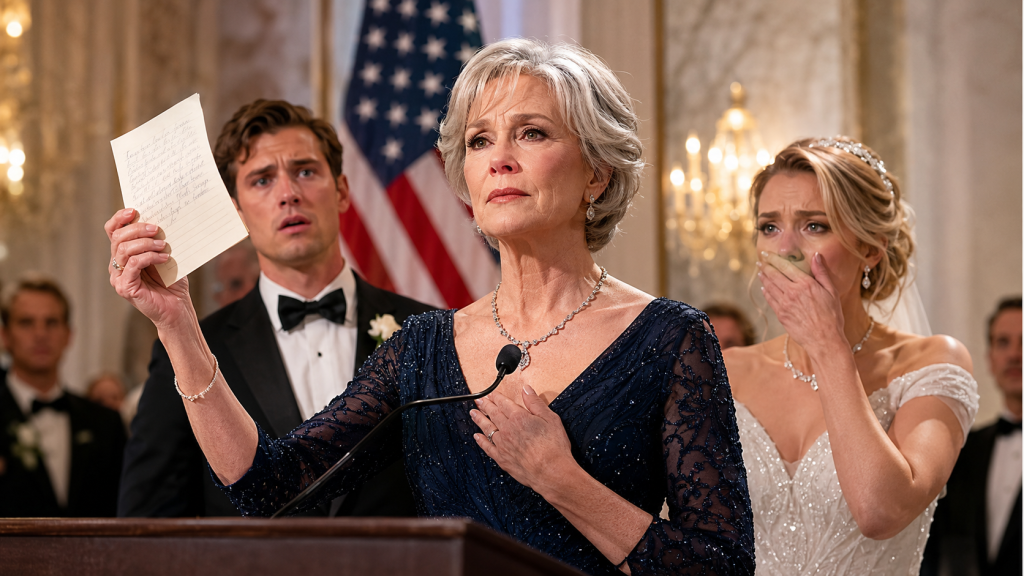
I woke up on the morning of my son’s wedding to find my head completely shaved. Beside my bed lay a note from my future daughter-in-law. “Now you finally look like the worthless old woman I’ve always seen.”
In just a few hours, I was expected to transfer $120 million into the newlyweds’ family trust. By the time the wedding speeches began, however, I was no longer the one being humiliated. My name is Eleanor Vance.
I was sixty-eight years old when my only son married the woman who believed she had finally outsmarted me.
For most of my life, I had been called many things.

Difficult.
Ambitious.
Old-fashioned.
Intimidating.
After my husband, Arthur, and I built Vance Industrial Holdings from a struggling regional company into an international business, newspapers occasionally called me one of the most powerful women in American manufacturing.
But until the morning of Julian’s wedding, nobody had ever called me worthless.
At least not to my face.
That morning began at 5:42.
I remember the exact time because the digital clock beside my bed was glowing in the darkness when I opened my eyes.
For several seconds, I simply lay there.
Then I smiled.
My son was getting married.
Julian was thirty-seven, and although mothers are supposed to accept that their children eventually become adults, some part of me still saw the seven-year-old boy who used to crawl into our bed during thunderstorms.
I reached toward my head automatically, intending to smooth my hair.
My fingers touched skin.
I froze.
I touched my head again.
Nothing.
No silver hair.
No carefully styled waves.
Bare skin.
I threw back the covers and hurried into the dressing room.
When I switched on the lights and looked into the mirror, I barely recognized myself.
My head had been completely shaved.
Not trimmed.
Not cut badly.
Shaved.
My scalp was irritated in several places.
For a moment, I couldn’t breathe.
Then I saw the envelope.
It rested neatly against my jewelry box.
My name was written across the front.
Eleanor.
I recognized the handwriting immediately.
Victoria’s.
My future daughter-in-law had beautiful handwriting.
Elegant loops.
Perfect spacing.
The kind of handwriting that looked as though every letter had been rehearsed.
Inside was a single sheet of cream stationery.
One sentence had been written across the center.
“Now you finally look exactly like what you’ve always been—a useless old woman taking up space.”
I read it three times.
I wish I could tell you that anger was my first emotion.
It wasn’t.
It was heartbreak.
Because I had tried so hard with Victoria.
For my son’s sake, I had overlooked things I should never have overlooked.
And somehow she had mistaken kindness for weakness.
I sat down.
Arthur’s photograph stood on the dressing table.
It had been almost four years since cancer took him.
We had been married forty-two years.
When we met, we had almost nothing.
Arthur owned an unreliable Chevrolet and three suits.
I had $740 in savings and a bookkeeping job.
We built everything together.
The company.
The house.
Our investments.
Our family.
And Julian.
Especially Julian.
He was our only child.
Arthur adored him.
A few months before Arthur died, when he knew there would be no miracle, he made me promise something.
We were sitting on the terrace overlooking the gardens.
“Ellie,” he said, “when Julian builds a family of his own, make sure he never has to live with the fear we had when we were young.”
I knew exactly what he meant.
We remembered overdue electric bills.
We remembered choosing between repairing the car and paying the rent.
We remembered counting grocery money at the kitchen table.
“How much?” I asked.
Arthur thought for a moment.
“Enough that his children and grandchildren are secure.”
After Arthur died, I worked with our attorneys to create a plan.
When Julian married, $120 million would be transferred into a family trust.
The transfer was scheduled for nine o’clock the morning after his wedding.
Victoria knew about it.
That had been my first mistake.
My second mistake had been believing money could not change people before they actually possessed it.
I stood and walked to my closet.
My wedding outfit hung behind protective fabric.
At least, it was supposed to.
When I unzipped the garment bag, strips of pearl-blue silk fell onto the floor.
Someone had cut my gown apart.
I stared at the ruined fabric.
Then I opened my jewelry cabinet.
Empty.
The diamond earrings Arthur gave me on our thirtieth anniversary were gone.
My mother’s sapphire brooch was gone.
So was the pearl necklace I had intended to wear.
I pressed the security button beside my bedroom door.
“Martha?”
My housekeeper answered immediately.
“Yes, Mrs. Vance?”
“Please come upstairs.”
She arrived less than two minutes later.
The moment she saw me, her face changed.
“Oh, my God.”
“Martha, did anyone enter this wing last night?”
She looked frightened.
“I saw Miss Victoria.”
“When?”
“A little after three.”
“Here?”
She nodded.
“She was coming from this hallway. I asked whether she needed anything. She said you had asked her to collect something for the ceremony.”
“Was she alone?”
“I think so.”
Martha stared at my shaved head.
Tears filled her eyes.
“I should have stopped her.”
“No.”
I took her hand.
“You had no reason to believe she would do this.”
“But how could someone shave your hair without waking you?”
That question bothered me too.
Then I remembered the tea.
Victoria had visited me before leaving after the rehearsal dinner.
She had been unusually affectionate.
“Tomorrow we finally become family,” she had said.
She prepared chamomile tea in my sitting room.
I drank it.
Within twenty minutes, I felt exhausted.
Far more exhausted than usual.
I slept nearly nine hours without waking once.
I looked at Martha.
“Save the cup I used last night.”
Her expression changed.
“Do you think—”
“I don’t know what I think yet. Put it somewhere safe. Don’t wash it.”
Then I called Julian.
No answer.
I called again.
Still nothing.
Finally, I texted him.
I need to see you immediately. Something terrible happened.
A response appeared less than a minute later.
But it wasn’t from Julian.
It came from Victoria’s number.
Don’t bother him today. If you’re planning to create drama over your appearance, stay home.
I stared at those words.
She knew.
Of course she knew.
My phone rang.
It was my sister Sarah.
I answered.
“Eleanor? Why are you whispering?”
“Can you come over?”
“What happened?”
I looked at myself in the mirror.
“Victoria shaved my head.”
There was silence.
“What?”
“She shaved my head while I was asleep.”
Sarah arrived forty minutes later.
She took one look at me and said a word I won’t repeat.
Then she hugged me.
I hadn’t cried until that moment.
Once my sister wrapped her arms around me, the tears came.
“I tried,” I whispered.
“I know.”
“I tried to love her.”
“I know.”
“For Julian.”
Sarah pulled back.
“Then stop protecting people who won’t protect you.”
That sentence stayed with me.
Sarah was five years younger and had spent most of our lives saying things I didn’t want to hear.
This time, she was right.
I called my chief attorney, Benjamin Cole.
Benjamin had represented our family for twenty-six years.
I explained what happened.
He did not interrupt once.
When I finished, he said, “Do not transfer one dollar tomorrow.”
“The trust documents have already been prepared.”
“Prepared isn’t funded.”
“I promised Arthur.”
“You promised Arthur you would protect your son and his future family. You did not promise to hand $120 million to someone who may have drugged you and entered your bedroom while you were unconscious.”
The word drugged sounded terrible.
But I couldn’t dismiss it.
“Can we stop the transfer?”
“You control the assets. Absolutely.”
“Don’t stop it yet.”
“Eleanor—”
“I said not yet.”
There was a pause.
“What are you planning?”
“I want to give Julian one opportunity to tell me the truth.”
“And if he doesn’t?”
I looked at Victoria’s note.
“Then I will.”
Sarah helped me prepare.
She found an elegant silver wig from a stylist she knew in Manhattan.
She brought a navy gown from her own closet.
Fortunately, we had always been almost the same size.
When I looked into the mirror after the stylist finished, I saw something unexpected.
Not humiliation.
Not weakness.
I saw myself.
Older, yes.
Wounded, certainly.
But still standing.
Sarah adjusted the collar of my gown.
“You look beautiful.”
“I look like a woman wearing someone else’s hair and someone else’s dress.”
“No. You look like the woman who once walked into a room full of bankers who refused to finance Arthur’s factory and walked out with three offers.”
I almost smiled.
“That was forty years ago.”
“And?”
She picked up my purse and placed Victoria’s note inside.
“Age didn’t erase you, Eleanor.”
We drove to the Grand Plaza Hotel shortly before noon.
The ceremony was scheduled for two.
When I entered through a private side entrance, I heard laughter coming from the bridal suite corridor.
Then Victoria’s voice.
“If she shows up wearing some ridiculous wig, I’ll make sure she’s seated with the children.”
One of her bridesmaids laughed.
Another woman said, “Victoria, that’s awful.”
“Oh, please. She’s been unbearable for months. Tomorrow the money moves. After that, Julian and I can finally start living our own lives.”
My sister grabbed my arm before I could step forward.
“Not yet,” Sarah whispered.
We continued down the hallway.
I found Julian in the groom’s suite.
He was standing in front of a mirror adjusting his tie.
For one terrible second, I saw Arthur.
Same shoulders.
Same dark eyes.
Same nervous habit of pressing his lips together when concentrating.
“Mom.”
He turned.
“Where have you been? Victoria said you were having some kind of problem.”
“I am.”
I closed the door.
Then I removed my wig.
Julian stared.
“What happened?”
“Victoria happened.”
His face went pale.
“What are you talking about?”
“She entered my bedroom last night and shaved my head while I was unconscious.”
“That’s insane.”
“She left me a note.”
I handed it to him.
He read it.
His expression changed.
But not enough.
I watched him carefully.
“Do you recognize her handwriting?”
“Mom, I don’t know.”
“You’ve been with her for three years.”
“People can imitate handwriting.”
“My gown was cut apart. My jewelry was taken. Martha saw Victoria leaving my private hallway after three this morning.”
Julian rubbed his forehead.
“Why would she do something like this?”
“I was hoping you could tell me.”
“I can’t.”
“Then ask her.”
“Today?”
“Yes, Julian. Today.”
His jaw tightened.
“Mom, there are three hundred people downstairs.”
“I am aware.”
“Some flew from Europe.”
“I know.”
“The ceremony starts in two hours.”
“And someone assaulted your mother in her own bedroom.”
He looked away.
That was when I understood something.
He wasn’t shocked enough.
“Julian.”
He wouldn’t look at me.
“What aren’t you telling me?”
Before he could answer, the door opened.
Victoria entered.
She looked magnificent.
Her wedding gown probably cost more than my first house.
For half a second, her eyes went directly to my uncovered head.
Then she widened them theatrically.
“Oh, Eleanor!”
She covered her mouth.
“What happened?”
I watched her performance.
“You already know.”
“Excuse me?”
I held up the note.
Victoria’s expression barely moved.
“That isn’t mine.”
“Your handwriting.”
“Someone is obviously trying to sabotage my wedding.”
“Your wedding?”
“Yes, Eleanor. My wedding.”
Julian stepped between us.
“Can everyone calm down?”
I turned toward him.
“Ask your fiancée where she was at three fifteen this morning.”
Victoria answered immediately.
“At the hotel.”
“No, you weren’t.”
Her eyes narrowed.
“Martha saw you.”
“Martha is seventy-four. She gets confused.”
That sentence told me everything.
Victoria hadn’t denied being at my house.
She attacked the witness instead.
I put my wig back on.
“Thank you.”
Victoria blinked.
“For what?”
“For answering my question.”
“I didn’t answer anything.”
“You answered more than you realize.”
I walked toward the door.
Julian caught my arm.
“Mom.”
I looked down at his hand until he released me.
“Are you still coming to the ceremony?”
I stared at my only son.
That question hurt worse than everything else.
Not Are you all right?
Not Should we call the police?
Not What can I do?
Are you still coming to the ceremony?
“Yes,” I said quietly. “I wouldn’t miss it.”
The ceremony was beautiful.
That’s the strange part.
A string quartet played.
White orchids covered the chapel.
Sunlight poured through stained glass.
Victoria walked down the aisle on her father’s arm looking like the heroine of a fairy tale.
Julian smiled when he saw her.
I sat in the front row wearing my sister’s dress and a silver wig, wondering how many families had smiled for photographs while something rotten was spreading underneath.
They exchanged vows.
“For richer or poorer,” Victoria said.
I nearly laughed.
At the reception, I learned the situation was worse than I thought.
I was walking toward my table when I heard Victoria speaking to two guests.
“Eleanor hasn’t been herself since Arthur died.”
One woman looked concerned.
“Really?”
“Unfortunately. Memory problems. Paranoia. Emotional episodes.”
My steps slowed.
Victoria lowered her voice just enough to make people lean closer.
“Julian and I may need to arrange professional care after the honeymoon.”
My blood went cold.
This wasn’t merely cruelty.
It was preparation.
She was establishing a story.
Eleanor is confused.
Eleanor is unstable.
Eleanor cannot manage her own affairs.
Suddenly the conversation I’d overheard the previous evening returned to me.
During the rehearsal dinner, I had entered the ladies’ lounge and heard Victoria talking behind the inner door.
One bridesmaid had joked, “At least the old woman is paying for everything.”
Victoria had laughed.
“There are one hundred twenty million reasons to tolerate her for one more day.”
Then she said something I had tried to dismiss.
Once the money arrived, she and Julian would move to London.
If I caused trouble, Victoria claimed they could find a doctor willing to say I was no longer competent.
At the time, I had told myself she was showing off.
Now I knew better.
I walked into an empty hallway and called Benjamin.
“Cancel the transfer.”
He didn’t hesitate.
“Done.”
“And Benjamin?”
“Yes?”
“Call Dr. Kaplan. Ask him to meet us tomorrow morning. I want bloodwork.”
There was silence.
“Because of the tea?”
“Yes.”
“I’ll arrange it.”
“And send someone to collect the cup from Martha.”
“I will.”
I ended the call.
Then I looked at my reflection in a gilded hallway mirror.
For almost four years after Arthur died, I had been terrified of losing Julian too.
That fear had made me generous when I should have been observant.
Quiet when I should have spoken.
Forgiving when I should have demanded respect.
I had mistaken preserving the peace for preserving my family.
They were not the same thing.
When I returned to the ballroom, the speeches had begun.
Victoria’s father spoke first.
Then the best man.
Then the maid of honor.
Finally, the emcee smiled.
“And now, please welcome the mother of the groom, Mrs. Eleanor Vance.”
Applause filled the room.
Victoria lifted her champagne glass.
She smiled at me.
Confident.
Almost triumphant.
I walked toward the microphone.
I had originally written a beautiful speech.
It was still folded inside my purse.
Three pages about Julian’s childhood.
About Arthur.
About love.
About family.
I didn’t use a single word of it.
I looked at my son.
Then at his bride.
“Good evening.”
The room quieted.
“For those who don’t know me, I’m Eleanor Vance, Julian’s mother.”
A few people laughed politely.
“I had prepared a speech about marriage. But this morning taught me that sometimes the most important thing a family can offer newlyweds isn’t advice.”
I paused.
“It’s honesty.”
Victoria’s smile disappeared.
“Last night, I went to sleep in my home with a full head of silver hair.”
Confused murmurs moved through the ballroom.
“This morning, I woke up bald.”
Silence.
I reached up.
And removed my wig.
Gasps spread across the room.
Julian stood.
“Mom.”
I held up one hand.
“Please sit down.”
He did.
“My head was shaved while I was unconscious. My wedding gown was destroyed. My jewelry disappeared. And beside my bed, I found this.”
I removed Victoria’s note.
I read it aloud.
“Now you finally look exactly like what you’ve always been—a useless old woman taking up space.”
Nobody moved.
Victoria stood abruptly.
“This is insane.”
I looked directly at her.
“Please allow me to finish.”
“You’re humiliating me!”
“No, Victoria. I’m telling the truth.”
She turned toward Julian.
“Are you going to let her do this?”
Julian remained frozen.
I continued.
“My housekeeper saw Victoria leaving my private hallway shortly after three this morning.”
Victoria shook her head.
“She’s lying.”
“Security records show a guest access card entering my wing at 3:07 a.m.”
Her face changed.
That detail was new to her.
“And before anyone asks, the access card has already been secured by my attorney.”
The room erupted in whispers.
Victoria’s father stood.
“This isn’t the place.”
I looked at him.
“Sir, your daughter selected the place when she decided to do this on her wedding day.”
Then I turned toward Julian.
“My son was informed before the ceremony.”
Julian looked down.
The silence that followed was different.
People weren’t looking only at Victoria anymore.
They were looking at him.
“I asked him to confront her.”
I swallowed.
“He asked me not to create drama.”
Julian whispered, “Mom, please.”
I nodded.
“Yes. I imagine this is uncomfortable.”
Then I looked across the ballroom.
“Some of you may also know that tomorrow morning I was scheduled to transfer $120 million into a family trust established for Julian and Victoria.”
Now the room became completely still.
Victoria stared at me.
“The transfer,” I said, “has been canceled.”
Her champagne glass slipped from her fingers.
It struck the carpet without breaking.
“You can’t do that.”
Those were her first words.
Not I didn’t shave your head.
Not I’m sorry.
Not Eleanor, you’ve misunderstood.
You can’t do that.
I almost felt sorry for her.
Almost.
“I can,” I replied. “And I have.”
Victoria looked at Julian.
“Tell her!”
Julian stood.
“Mom, Arthur wanted—”
“Your father wanted to protect his family.”
My voice remained calm.
“He did not spend forty years building something so that the woman marrying his son could call his widow worthless while planning to have her declared incompetent.”
Several guests audibly gasped.
Victoria’s face turned white.
“I never said that.”
“You did.”
“Prove it.”
A voice came from behind me.
“I can.”
Everyone turned.
One of Victoria’s bridesmaids stood near the head table.
Her name was Rachel.
Victoria stared at her.
“Sit down.”
Rachel didn’t.
“You said it Thursday too.”
“Rachel.”
“You said once the trust was funded, Eleanor wouldn’t matter anymore.”
Victoria’s face twisted.
“You’re drunk.”
“I haven’t had anything.”
Another bridesmaid slowly stood.
“I heard it too.”
Then something extraordinary happened.
The carefully constructed image of Victoria began collapsing not because of anything I said, but because people stopped protecting her.
A cousin admitted Victoria had joked about putting me in a nursing facility.
A wedding planner said Victoria repeatedly referred to me as “the bank.”
One of Julian’s friends said she had once told him that marrying Julian was “the smartest acquisition” she would ever make.
Victoria began shouting.
“They’re jealous!”
I looked at Julian.
He appeared devastated.
But there was still something in his expression I couldn’t understand.
Fear.
Not surprise.
Fear.
“Julian,” I said, “is there something else I should know?”
He didn’t answer.
Victoria grabbed his arm.
“Don’t.”
The entire ballroom seemed to inhale.
I stared at my son.
“What is she afraid you’ll tell me?”
Julian closed his eyes.
Then he said five words that changed everything.
“She knows about the documents.”
I frowned.
“What documents?”
Victoria stepped backward.
“Julian, shut up.”
My son looked at me.
“Three months ago, she had me sign papers.”
“What papers?”
“She said they were preliminary trust documents.”
Benjamin, who had quietly entered the ballroom several minutes earlier, moved closer.
“What exactly did you sign?”
Julian shook his head.
“I don’t know.”
My attorney’s expression hardened.
“Where are they?”
“Victoria has them.”
She laughed nervously.
“This is absurd.”
Benjamin looked at her.
“If the documents concern Mrs. Vance’s assets, you’ll provide copies.”
“I don’t have to provide you anything.”
“No,” he said. “But you may eventually have to provide them to someone with a subpoena.”
That ended the reception.
Not officially.
The band continued playing.
Dinner remained on the tables.
But the wedding celebration was over.
Victoria disappeared upstairs with her parents.
Julian sat alone in a side room.
I found him there twenty minutes later.
He was crying.
I had seen my son cry only a handful of times as an adult.
When Arthur died.
When his closest friend was killed in an accident.
And now.
“Mom.”
I remained near the door.
“Did you know she was planning to hurt me?”
“No.”
“Did you know she hated me?”
His silence answered.
I closed my eyes.
“How long?”
“Maybe a year.”
“And you said nothing?”
“I thought she’d change.”
“Why?”
“Because I loved her.”
I nodded slowly.
“So you allowed her to disrespect me because confronting her might cost you the relationship.”
“That’s not fair.”
“Neither is waking up without your hair.”
He flinched.
“I know.”
“No, Julian. You don’t.”
He covered his face.
“She told me you were controlling.”
“And you believed her?”
“Sometimes.”
“Was I controlling when I paid your graduate-school tuition?”
“No.”
“When I gave you the down payment for your first home?”
“No.”
“When I welcomed Victoria?”
“No.”
“When I offered you both $120 million?”
He looked ashamed.
“I messed up.”
“That is a very small phrase for a very large betrayal.”
He began crying again.
The mother in me wanted to cross the room.
I wanted to hold him.
But motherhood isn’t always comfort.
Sometimes love means refusing to protect your child from the consequences of his choices.
“What documents did you sign?”
He wiped his face.
“I really don’t know.”
“Then we’re going to find out.”
The next morning, we did.
Victoria had prepared paperwork establishing a private holding company.
Julian had signed documents granting her broad authority over assets transferred into it.
The planned trust money had not yet arrived, so she controlled nothing belonging to me.
But her intention was obvious.
Once the $120 million was funded, she wanted Julian to move substantial portions into accounts and investments she could influence.
Benjamin spent hours reviewing everything.
“This wasn’t improvised,” he finally told me.
“She planned this carefully.”
Things became worse when my medical results arrived.
A sedating medication was detected in my system.
I will not speculate about exactly how it got there.
That became a matter for investigators.
But I knew I hadn’t knowingly taken it.
The teacup was turned over to the proper authorities along with security footage and Victoria’s note.
My missing jewelry was recovered two days later.
It was found inside luggage associated with Victoria’s wedding party.
At that point, I stopped asking myself whether I had overreacted.
I had underreacted for far too long.
Julian’s marriage lasted eleven days.
He initially resisted ending it.
Love does strange things to intelligent people.
He kept saying Victoria had panicked.
That she’d been under pressure.
That maybe someone else had influenced her.
Then Benjamin obtained additional financial records.
Victoria had debts.
A great many of them.
Her “old Boston family” had very little money left.
She had borrowed heavily to maintain an expensive lifestyle.
She owed money on jewelry, clothing, travel and private loans.
The $120 million hadn’t simply represented luxury.
To her, it represented rescue.
And control.
When Julian confronted her, she finally stopped pretending.
“You think I married you for your personality?” she reportedly said.
Julian told me that himself several weeks later.
I didn’t celebrate.
Watching your child discover that someone never loved him isn’t satisfying.
Even when he ignored every warning.
Especially then.
He moved into a small apartment in Manhattan.
For the first time in years, he refused financial help from me.
“I need to know I can stand on my own,” he said.
I respected that.
The investigation into what happened in my bedroom continued.
I won’t pretend every consequence happened overnight.
Real life is rarely that tidy.
There were lawyers.
Interviews.
Statements.
Evidence.
Victoria denied intentionally harming me.
Her attorneys claimed the note was misunderstood and argued that several events surrounding the wedding had innocent explanations.
But the evidence told its own story.
The security access.
The witnesses.
The note.
My missing belongings.
And the medical findings.
Eventually, Victoria faced serious legal consequences arising from what investigators determined had happened.
I did not attend every proceeding.
I had no desire to watch her life collapse one hearing at a time.
I had already spent enough of my life looking at her.
The newspapers discovered the story, of course.
For several weeks, photographs of me in the silver wig appeared everywhere.
One headline called it “The $120 Million Wedding Disaster.”
I hated that.
Because money wasn’t the real story.
The real story was what happened when someone assumed an older woman’s kindness meant she could be erased.
Six months after the wedding, my hair began growing back.
Short.
White.
Uneven.
Sarah kept suggesting stylists.
I refused.
One Sunday, Julian came to my house for lunch.
He had changed.
Not dramatically.
Real change doesn’t usually announce itself.
He arrived carrying groceries instead of flowers.
He helped Martha clear the table.
He asked about my board meeting and actually listened to the answer.
After lunch, we walked through the garden.
Eventually, we reached the bench Arthur loved.
Julian sat beside me.
“Do you hate me?”
I looked at him.
“No.”
“Sometimes I think you should.”
“I was furious with you.”
“You still are.”
“Yes.”
He gave a sad little laugh.
“Fair.”
I looked toward the roses.
“But anger isn’t hatred.”
“I should’ve protected you.”
“Yes.”
“I should’ve believed you.”
“Yes.”
“I was a coward.”
I turned toward him.
“That is the first completely honest thing you’ve said about the wedding.”
He nodded.
“I was afraid she’d leave.”
“So you were willing to let me be hurt instead.”
His eyes filled.
“I know.”
We sat silently.
Then he asked the question I knew was coming.
“What happened to Dad’s trust?”
I studied his face.
“The $120 million?”
“Yes.”
“It’s gone.”
His eyes widened.
“Gone?”
“Not lost. Reassigned.”
“To where?”
I smiled.
“Come with me tomorrow.”
The following morning, I took Julian to a building in Queens.
It had once been a warehouse.
Now construction crews were transforming it into something new.
A large temporary sign stood outside.
THE ARTHUR VANCE FAMILY FOUNDATION
Julian stared at it.
“What is this?”
“Your father’s money is going to families.”
He looked confused.
“It was always supposed to.”
I explained.
The $120 million would establish a foundation supporting widowed parents, older adults facing financial exploitation, scholarships for children from low-income households, and emergency housing for women rebuilding their lives after family crises.
Julian didn’t speak for a long time.
Finally he said, “Dad would’ve liked this.”
“Yes.”
“More than giving it to me?”
I smiled.
“Your father loved you more than anything.”
“That isn’t an answer.”
“No. He would not have liked watching you become dependent on an inheritance.”
Julian looked through the construction fencing.
“What about me?”
“You have a job.”
He laughed.
“I walked into that one.”
“You did.”
“And someday?”
“Someday what?”
“The inheritance.”
I took his hand.
“You’ll inherit what I decide is healthy for you to inherit.”
He nodded.
No argument.
That surprised me more than anything.
Then he said, “I don’t want the $120 million.”
I raised an eyebrow.
“Careful. Personal growth is one thing. Let’s not become unrealistic.”
He laughed.
And for the first time since the wedding, so did I.
A year passed.
My hair returned completely.
I kept it shorter than before.
People sometimes asked why.
I told them the truth.
I discovered I liked seeing my own face.
Julian began volunteering at the foundation twice a month.
Eventually, twice a month became every Saturday.
He never remarried quickly.
I’m glad.
He needed time to understand why he had tolerated Victoria’s behavior.
He eventually admitted that after Arthur died, he became terrified of losing anyone else.
Victoria understood that weakness.
She threatened to leave whenever he disagreed with her.
So he learned to surrender.
First small things.
Then important things.
Then me.
Understanding it didn’t excuse his behavior.
But it helped him change it.
Two years after the wedding, Julian invited me to dinner.
There was a woman sitting beside him.
Her name was Claire.
She was a public-school librarian.
She wore almost no jewelry.
She spilled water ten minutes after sitting down and laughed at herself.
I liked her immediately, which made me suspicious.
So I waited.
Six months later, I still liked her.
One evening, Claire came to the foundation with Julian.
She stopped in front of Arthur’s photograph.
“He looks kind,” she said.
“He was.”
“Julian talks about him all the time.”
Then she looked at me.
“He talks about you more.”
I smiled.
“Hopefully not all of it is flattering.”
“It isn’t.”
I laughed.
Good answer.
When Julian eventually married Claire, they had forty guests.
No imported orchids.
No orchestra.
No society photographers.
The ceremony took place in my garden beneath the oak tree Arthur planted when Julian was born.
I wore my natural silver hair.
Before walking outside, I stood at the same dressing table where I had discovered Victoria’s note years earlier.
I still had that note.
Benjamin once asked why I kept it.
I told him it was evidence.
That wasn’t entirely true.
I kept it because sometimes the cruelest words ever spoken to you can become useful.
Not because they’re true.
Because they reveal the person who wrote them.
“Worthless old woman.”
I had thought about those words many times.
Age has a peculiar way of changing your relationship with insults.
When you’re young, you desperately want other people to tell you who you are.
When you’re older, if you’re fortunate, you finally understand they never had that authority.
At Claire and Julian’s wedding, my son gave a toast.
He stood beneath the lights strung through the trees.
“My father taught me how to build things,” he said.
“My mother taught me something harder.”
He looked at me.
“How to rebuild them.”
I felt Sarah squeeze my hand.
Julian continued.
“A few years ago, I failed someone who had never failed me.”
The garden became quiet.
“My mother came to me when she needed me. I chose convenience over courage. I can’t undo that. But she taught me that forgiveness isn’t pretending something never happened. It’s giving someone the opportunity to become better after they finally admit that it did.”
I lowered my eyes.
Then Julian smiled.
“And for anyone wondering, no, I did not receive $120 million.”
Everyone laughed.
“Apparently I’m expected to work for a living.”
I called from my table, “Your father would be thrilled.”
More laughter.
Julian raised his glass.
“To my mother.”
Everyone followed.
“To Eleanor.”
I looked around the garden.
At my sister.
At Claire.
At my son.
At Arthur’s oak tree.
And I understood something I wish I’d understood much earlier.
Money can protect a family.
But it cannot create one.
A trust can transfer wealth.
It cannot transfer character.
And an inheritance given without wisdom can become the very thing that destroys the people you hoped it would protect.
The $120 million never entered Julian’s bank account.
Years later, the Arthur Vance Family Foundation had helped thousands of people.
Parents who thought they would lose their homes.
Older women whose relatives had tried to take advantage of them.
Young people who became the first members of their families to attend college.
Widows who suddenly had to learn how to live without the person beside whom they had built an entire life.
That last group remained closest to my heart.
Sometimes I visited the foundation without announcing myself.
I sat in the lobby and watched families come and go.
Nobody there knew that the organization existed partly because, one terrible morning, I woke up and discovered someone had shaved my head.
Life is strange that way.
Humiliation can become direction.
Betrayal can become clarity.
Loss can become generosity.
And sometimes the worst morning of your life prevents an even greater disaster the following day.
On the fifth anniversary of Arthur’s death, I returned alone to his grave.
I brought peonies.
Victoria had removed them from Julian’s first wedding because she thought they looked old-fashioned.
Arthur loved them.
So did I.
I sat beside his grave and told him everything.
About the wedding.
About Julian.
About the foundation.
About Claire.
About my hair.
I even told him about the $120 million.
“I broke my promise,” I whispered.
Wind moved softly through the trees.
Then I smiled.
“No. I suppose I changed how I kept it.”
Arthur wanted his money to protect family.
He simply hadn’t specified how large that family needed to be.
I touched his name carved into the stone.
“You’d like Claire.”
I paused.
“And Julian finally grew up.”
That would have made Arthur laugh.
Before leaving, I placed the peonies beside his headstone.
Then I walked back toward my car.
I was seventy-three by then.
My hair was silver again.
My face carried more lines than it had on Julian’s first wedding day.
My steps were slightly slower.
And I had never felt less worthless.
Victoria had wanted me to look into the mirror that morning and see an old woman who could be pushed aside.
Instead, she accidentally reminded me who I was.
I was the girl who started with $740.
I was the woman who built a company beside the man she loved.
I was Arthur’s wife.
Julian’s mother.
Sarah’s sister.
And eventually, the founder of an organization that would continue helping people long after I was gone.
Victoria had shaved away my hair.
But she couldn’t shave away forty years of work.
She couldn’t erase my judgment.
She couldn’t take my dignity unless I handed it to her.
And she certainly couldn’t spend money that had never belonged to her.
That is the part she misunderstood.
She thought the $120 million was already hers.
She thought the wedding was the finish line.
She thought she only had to tolerate one “worthless old woman” for one more night.
Instead, the handwritten note she left beside my bed became the most expensive sentence she ever wrote.
It cost her the fortune she believed she had secured.
It exposed the contempt she had hidden behind perfect manners.
And most importantly, it forced my son to decide what kind of man he wanted to become.
For a long time, I believed my greatest responsibility as a mother was making sure Julian never struggled.
I was wrong.
A parent’s job isn’t to remove every hardship from a child’s path.
Sometimes hardship is where character is built.
Sometimes saying no is more loving than writing a check.
Sometimes closing the door to an inheritance opens the door to adulthood.
And sometimes the person everyone expects to humiliate is simply the person who has been quiet long enough.
Victoria gave me a note.
I gave her nothing.
Not revenge.
Not cruelty.
Not $120 million.
I simply stopped protecting her from the consequences of the truth.
And in the end, that was enough.
THE END! Thank you for reading.