
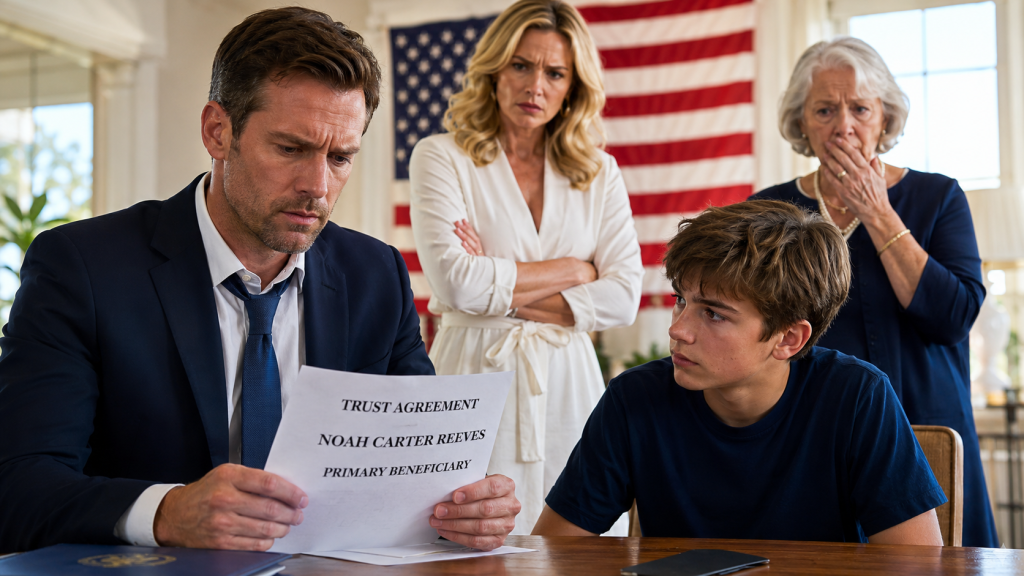
I arrived home from the Denver airport five days earlier than anyone expected, still wearing the navy suit I had slept in during the flight.
My consulting assignment in Phoenix had ended unexpectedly after the client’s board suspended the project. I should have been annoyed. The assignment was supposed to last another week, and I had rearranged half my life around it.
Instead, as I sat on the first available flight back to Colorado, I found myself strangely relieved.
I wanted my own bed. I wanted a shower that didn’t involve tiny hotel bottles.

Most of all, I wanted to see my fourteen-year-old son. It was 12:17 a.m. when my Uber pulled up outside our house in Lakewood.
I paid the driver, dragged my suitcase up the walkway, and stopped.
Every window was dark.
That immediately felt unusual.
My wife, Madison, always left the porch light on whenever I traveled. My mother, Evelyn, rarely went to bed before one in the morning. My seventeen-year-old daughter, Chloe, usually had music playing behind her bedroom door late enough for me to complain about it.
Yet the house looked abandoned.
I unlocked the front door.
“Madison?”
Nothing.
“Mom?”
Silence.
Then I heard it.
A low mechanical hum coming from the back of the house.
The washing machine.
I left my suitcase beside the stairs and followed the sound.
The laundry-room door was partly open.
My son, Noah, stood barefoot beneath the bright ceiling light.
He was wearing gray sweatpants and an old Denver Broncos T-shirt. A basket of clean clothes sat on the dryer. He was carefully folding one of his school shirts.
For a moment, I simply watched him.
There was something about the scene that bothered me before I even understood why.
Fourteen-year-old boys can wash clothes. That wasn’t the problem. Noah had been doing his own laundry for more than a year because I believed children should know how to take care of themselves.
It was the time.
It was the silence.
It was the way his shoulders tightened when he heard me enter.
He turned.
“Dad?”
The shirt slipped from his hands.
His face changed so quickly that I will never forget it.
First surprise.
Then relief.
Then fear.
Not fear of me.
Fear of what my being home might mean.
“What are you doing awake?” I asked.
He stared at me.
“You’re supposed to be in Phoenix.”
“The project ended early.”
He swallowed.
I looked around.
“Where is everybody?”
Noah didn’t answer immediately.
Instead, he pointed toward the kitchen.
That was when I knew something was seriously wrong.
I walked into the kitchen.
There was a sheet of white paper on the counter.
My name was written across the top.
ETHAN.
Madison had written it in the neat, rounded handwriting she used on birthday cards and grocery lists.
I picked it up.
There were only two sentences.
Took the family on a cruise.
The boy isn’t invited—he’s your mistake.
I read it twice.
Then a third time.
I wish I could say I immediately became furious.
I didn’t.
At first, I felt nothing.
Sometimes the worst sentences don’t hit you like explosions.
They remove the air from the room.
I turned slowly.
Noah was standing in the kitchen doorway.
He was watching my face.
That hurt more than the note.
My son was studying my expression as though preparing himself for the possibility that I might agree with what had been written.
I folded the note once.
Then again.
I slipped it into my pocket.
“Noah,” I said, “how long have they been gone?”
“Since this morning.”
“Who went?”
“Madison. Grandma. Chloe. Aunt Rebecca and Uncle Dean met them at the airport.”
My sister and her husband.
Apparently, everybody qualified as family except my son.
“Where?”
“Caribbean cruise. They flew to Miami this morning.”
I stared at him.
Madison and I had discussed taking a family vacation.
We had not discussed booking one.
Certainly not while I was away.
Certainly not without Noah.
“Why didn’t you call me?”
Noah looked down.
“Grandma told me not to.”
“What exactly did she say?”
He hesitated.
“Tell me.”
“She said you already knew.”
My stomach tightened.
“She said you’d agreed I shouldn’t come because I make family trips uncomfortable.”
I had to turn away.
I walked to the refrigerator and opened it.
Half a carton of milk.
Three eggs.
Mustard.
A container of leftover pasta.
Two apples.
A nearly empty loaf of bread.
That was what they had left a fourteen-year-old boy for what they believed would be almost a week.
There was money in Noah’s account. He knew how to order food. Our neighbors knew him. He wasn’t helpless.
That wasn’t the point.
They had intentionally abandoned him emotionally and then made him believe his father had approved.
I closed the refrigerator.
“Did Madison say goodbye?”
He shook his head.
“Chloe?”
Another shake.
“Grandma?”
“She told me there were frozen dinners downstairs.”
I closed my eyes for a second.
My mother had been living with us for eighteen months.
After my father died, she had struggled with the large house they had shared, so I invited her into mine.
I converted my downstairs office into a bedroom.
I paid most of her expenses.
I drove her to appointments.
And apparently she had helped my wife leave my son behind while they vacationed together.
But Noah wasn’t finished.
“Dad?”
I looked at him.
“There’s something else.”
“What?”
He glanced toward the hallway.
“Grandma has no idea I found something in her cupboard.”
I almost told him it could wait.
Then I saw his expression.
“Show me.”
He pulled out his phone.
The first photograph showed the locked cabinet at the end of the upstairs hallway.
I knew that cabinet.
My mother had moved it into our house with her belongings. It was an antique walnut cupboard that had belonged to my grandfather.
She kept it locked.
Whenever anyone asked what was inside, she said old tax records and family papers.
Noah swiped to the next photograph.
Folders.
Bank statements.
Property records.
Insurance documents.
Then he showed me a photograph of a legal document.
I enlarged it.
My father’s full name appeared near the bottom.
WILLIAM HENRY REEVES.
His signature was notarized.
Across the first page were words that made my hands start trembling.
THE WILLIAM H. REEVES FAMILY TRUST
And beneath it:
PRIMARY BENEFICIARY: NOAH CARTER REEVES
I looked at my son.
“Where did you get this?”
“Grandma’s cabinet.”
“How did you open it?”
“She left the key.”
“Where?”
“In her desk drawer. I wasn’t trying to snoop.”
He said that quickly.
“I was looking for my passport.”
“Your passport?”
He nodded.
“I thought maybe they’d changed their minds and were going to take me. Grandma said she needed everybody’s passport last week. I couldn’t find mine, so after they left, I looked in her room.”
That detail almost broke me.
Even after they had left him behind, my son had spent part of the day hoping there had been a misunderstanding.
I pulled out a chair.
“Sit down.”
We sat at the kitchen table.
“Start from the beginning.”
Noah explained that while searching for his passport, he had found a small brass key inside my mother’s desk.
He recognized it because he had seen her use it on the hallway cupboard.
Curiosity got the better of him.
He opened it.
Inside were seven folders.
One contained my father’s estate documents.
Another contained records for two rental properties.
Another contained investment statements.
Noah had photographed everything because he was afraid Grandma would return and move them.
“How much did you read?”
“Not much.”
He looked embarrassed.
“I don’t understand most of it.”
Neither did I.
But I understood enough.
My father had died three years earlier.
At the time, my mother told me his estate was simple.
She said everything had passed directly to her.
I never questioned it.
Why would I?
She was my mother.
My father and I had been close, but he had always trusted her with financial matters.
Or so I believed.
I enlarged another photograph.
The trust had been established six years before Dad died.
Noah would have been five.
There were amendments.
Property schedules.
Account numbers.
A letter from a law firm in Denver.
And one sentence appeared repeatedly.
Upon the grantor’s death, control was to pass to an independent successor trustee for the benefit of Noah Carter Reeves.
Not Evelyn.
Not me.
Noah.
My son stared at me.
“Am I in trouble?”
The question hit me harder than anything else that night.
I reached across the table.
“No.”
“For opening Grandma’s cupboard?”
“Noah, look at me.”
He did.
“You are not in trouble.”
His eyes filled, but he blinked quickly.
I continued.
“And there’s something else you need to understand.”
“What?”
“I did not know about that cruise.”
He said nothing.
“I would never agree to leave you here.”
His chin trembled.
“Never.”
He looked down.
“I figured maybe you were tired of fighting about me.”
That sentence told me how badly I had failed him.
Not because I had mistreated him.
Because I had allowed other people to do it gradually enough that I could pretend each incident was small.
Madison forgetting to buy him a Christmas gift one year.
My mother correcting him more harshly than Chloe.
Family photographs where someone always seemed to ask Noah to stand at the edge.
Restaurant reservations accidentally made for four instead of five.
Madison calling him “your son” whenever she was angry.
My mother describing Chloe as “our family’s future” while calling Noah “that serious little boy.”
I had noticed.
I had confronted them sometimes.
But then came apologies.
Excuses.
Promises.
And I had accepted them because keeping peace seemed easier than admitting the peace was fake.
My son had paid the price for my comfort.
I stood.
“Pack a bag.”
Noah looked alarmed.
“Why?”
“We’re going somewhere.”
“Where?”
“A hotel.”
“Are we leaving?”
“For tonight.”
He glanced upstairs.
“What about Grandma’s papers?”
“We’re not touching them.”
“Why?”
“Because tomorrow morning I’m calling an attorney.”
The First Call
At 8:03 the next morning, I called a man I hadn’t spoken to in nearly two years.
His name was Daniel Mercer.
Daniel and I had gone to college together. He later became an estate attorney in Denver.
When my father died, I had almost asked Daniel to review the estate documents.
My mother persuaded me not to.
“Don’t turn your father’s death into a legal circus,” she had said.
So I backed away.
Now I understood why she had been so determined.
Daniel agreed to meet us at ten.
Before leaving the hotel, I bought Noah breakfast.
He ordered pancakes.
Then he asked if he could get bacon too.
The question nearly destroyed me.
“Buddy, you can order whatever you want.”
He gave me a small smile.
For the first time since I had walked into that laundry room, he looked fourteen again.
At Daniel’s office, I showed him the photographs.
His expression changed immediately.
“Where are the originals?”
“At my house.”
“Accessible?”
“Yes.”
“Does Evelyn know you have seen them?”
“No.”
“Keep it that way for the moment.”
He spent nearly forty minutes reading the photographs Noah had taken.
Finally, Daniel removed his glasses.
“Ethan, this isn’t something I can conclusively interpret from photographs, but if these documents are authentic, your father established a substantial trust for Noah.”
“How substantial?”
Daniel looked at Noah, then back at me.
“We should discuss numbers carefully.”
“Noah can hear it.”
Daniel nodded.
“The real estate alone could be worth well over a million dollars at current values. The investment account shown on these statements was approximately $1.4 million three years ago.”
Noah’s eyes widened.
I barely reacted.
Money wasn’t what had my attention.
“What was my mother’s role?”
Daniel pointed to the document.
“Limited administrative authority before the successor trustee assumed control.”
“Who was the successor trustee?”
“A professional fiduciary named Margaret Sloan.”
“Never heard of her.”
“That’s concerning.”
“Why?”
“Because according to this document, she should have been notified immediately after your father’s death.”
“Could Mom legally hide this?”
Daniel paused.
“Let’s establish facts before we use words like hide.”
Fair enough.
He made several calls.
One was to the county recorder.
Another was to a title company.
A third went to the law firm named on Dad’s trust documents.
That firm still existed.
And so did the attorney who had prepared the trust.
His name was Samuel Greene.
Daniel spoke with him privately.
Twenty minutes later, he returned.
His face was serious.
“We need to retrieve those original documents.”
What My Father Had Done
My father had always loved Noah.
Not casually.
Not in the distant way some grandparents love children through birthday cards and Christmas checks.
Dad understood him.
When Noah was six, Dad bought him his first telescope.
When he was eight, they built a model railroad together.
When he was ten, Dad taught him how to change a tire.
Noah could sit silently beside my father for an hour, and neither of them felt the need to fill the room with noise.
I once asked Dad why the two of them got along so well.
He laughed.
“Because the boy listens before he talks. That’s becoming rare.”
What I hadn’t known was that Dad had become worried about the way my mother treated Noah.
Samuel Greene later explained it.
Six years before his death, Dad had visited Samuel alone.
He wanted to establish a trust.
Not for me.
For Noah.
Dad believed I could support myself.
He also knew my marriage to Madison was becoming increasingly centered around Madison, Chloe, and my mother’s expectations.
He worried Noah would eventually become an outsider inside his own family.
He had been right.
Dad transferred two rental properties into the trust.
He designated an investment account.
And most surprisingly, he placed his Lakewood property into the trust as well.
The house where my mother had lived before moving in with us.
The house she repeatedly referred to as “my house.”
Legally, it wasn’t.
It belonged to the trust established for Noah.
My mother had been permitted to remain there during her lifetime under certain conditions.
But eighteen months earlier, she had rented it out.
The rental income should have been reported to the trust.
According to Daniel, that opened a much bigger question.
Where had the money gone?
We returned home that afternoon with Daniel and a professional locksmith.
I wasn’t changing locks yet.
We were opening the cupboard properly and documenting its contents.
Daniel photographed everything before moving a single sheet.
Then he found a sealed envelope.