
At 38 weeks pregnant with twin boys, I could not pass the nursery without stopping. Two white cribs stood beneath wooden stars. Two blue blankets rested across the rails, each embroidered with a name:
Finn and Jonah. My sister, Lydia, had made them herself. My pregnancy had gone remarkably well. Both babies were growing normally, every scan had been reassuring, and my scheduled cesarean was only 3 days away. My husband, Wesley, seemed prepared.
He installed the car seats, assembled the cribs, attended most appointments, and rubbed my swollen feet after work. Our friends often told me how fortunate I was. “You found one of the good ones,” Lydia said. “I know,” I replied. I believed it. Still, there were moments I noticed and then explained away.

Wesley began taking long phone calls in the garage. If I entered unexpectedly, he lowered his voice or ended the conversation. “Work?” I asked once. “Just numbers,” he said. “Nothing interesting.” He also became tense whenever we discussed the cost of raising 2 children.
One evening, I found him staring at the spreadsheet where I had estimated diapers, childcare, medical insurance, and future expenses. “We’ll manage,” I said. “You always say that.” “Because we will.” He closed the laptop and looked toward the nursery. “One baby would change our lives. Two will control them.” I assumed he was frightened. Wesley had spent much of his childhood helping care for a younger brother with serious health problems.
His parents’ marriage had collapsed under the pressure, and Wesley still hated hospitals. Whenever he spoke about those years, he described waiting rooms, medical bills, and a house where every decision revolved around one sick child.
I believed he was afraid of repeating his childhood.
I did not realize he had already decided what he would do to prevent it.
Two days later, I stood at the kitchen sink rinsing a mug when a violent pain tore through my abdomen.
The cup slipped from my hand and shattered.
I collapsed before I could call for help.
Wesley ran into the kitchen and called emergency services. I remember hearing him say that I was pregnant with twins and bleeding heavily.
Then the ceiling blurred, and everything disappeared.
I woke 2 days later in intensive care.
My throat burned. My body felt heavy and unfamiliar, and every breath hurt.
Wesley sat beside my bed with both hands wrapped around mine.
“You had a placental abruption,” he said. “They had to deliver the boys immediately.”
“Where are they?”
“Finn is in the NICU. He’s stable.”
“And Jonah?”
Wesley lowered his head.
“I’m sorry, Tessa. He didn’t survive.”
For several seconds, the words meant nothing.
“He was healthy.”
“The abruption deprived him of oxygen. His heart and lungs were badly affected.”
“Did I see him?”
“You were unconscious.”
“Did you hold him?”
Wesley began to cry.
I cried with him because I believed we were mourning the same child.
For the next several days, he rarely left my room. He brought flowers, updated relatives, and thanked every nurse who entered. He spoke softly, adjusted my pillows, and reminded everyone that I had nearly lost my life too.
The nurses called him devoted.
But whenever I asked what had happened to Jonah after the delivery, Wesley avoided giving me a clear answer.
“Was he alive when he was born?” I asked.
“For a while.”
“How long?”
“I don’t know exactly.”
“Did they try to transfer him?”
His jaw tightened.
“You need to rest.”
“I need to understand.”
“The doctors said he was too sick.”
“That isn’t an answer.”
“Tessa, Finn is still here. He needs you.”
The words stayed with me.
Finn is still here.
As though Jonah had become a mistake we were supposed to move past.
I asked for my medical records, but Wesley told me they were under review. I was still heavily medicated, drifting in and out of sleep, and he repeatedly told the staff that I was not emotionally ready to discuss the delivery in detail.
A formal meeting with the neonatal team had been scheduled for my fifth afternoon in the hospital.
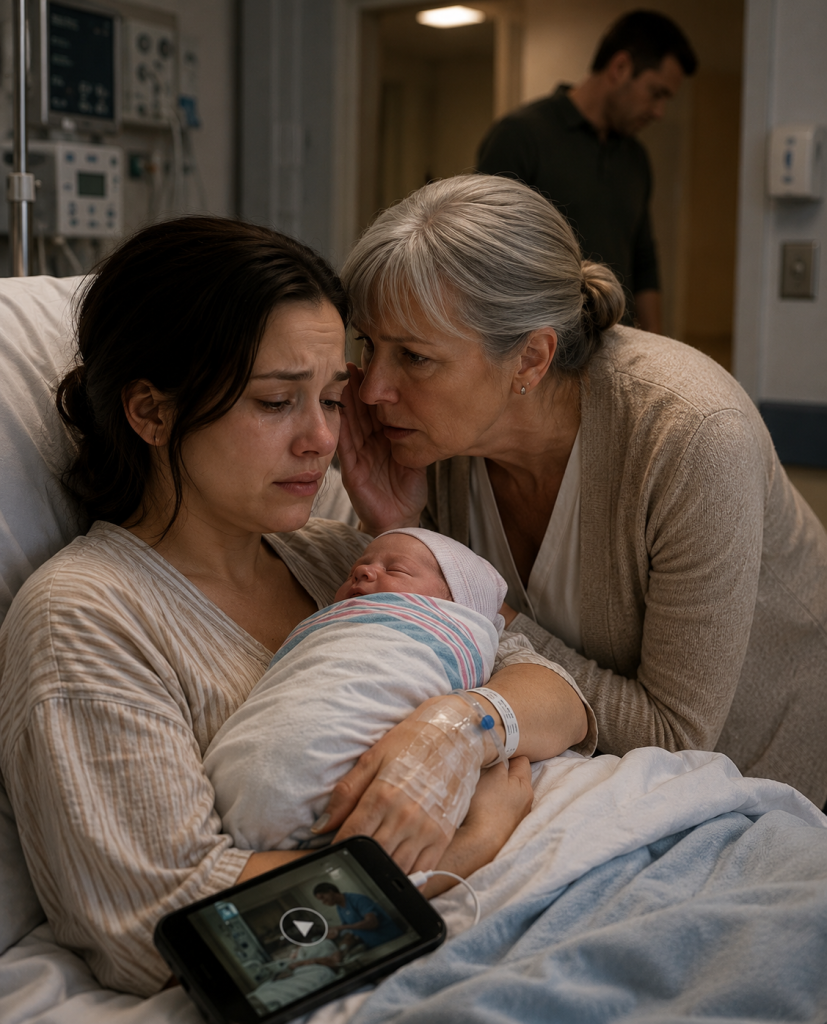
That morning, a silver-haired nurse named Judith brought Finn into my room.
While she adjusted his blanket, she leaned toward me.
“Do not react,” she whispered. “I need to speak to you before that meeting.”
My heart began pounding.
An hour later, Wesley left to shower and change clothes.
Judith returned and closed the door.
She sat beside my bed.
“Jonah did not pass away immediately,” she said.
I gripped the sheet.
“What happened?”
“He was born in severe respiratory distress. The oxygen deprivation caused persistent pulmonary hypertension, and his heart and lungs could not support him properly. Our neonatal team stabilized him temporarily.”