 Reading Time: 7 minutes
The rain started before sunrise. By the time I reached the cemetery, the entire world looked gray. The sky was covered with heavy clouds, the kind that made the afternoon feel like midnight. The wind pushed against my coat, and the rain soaked through every layer of clothing I wore.
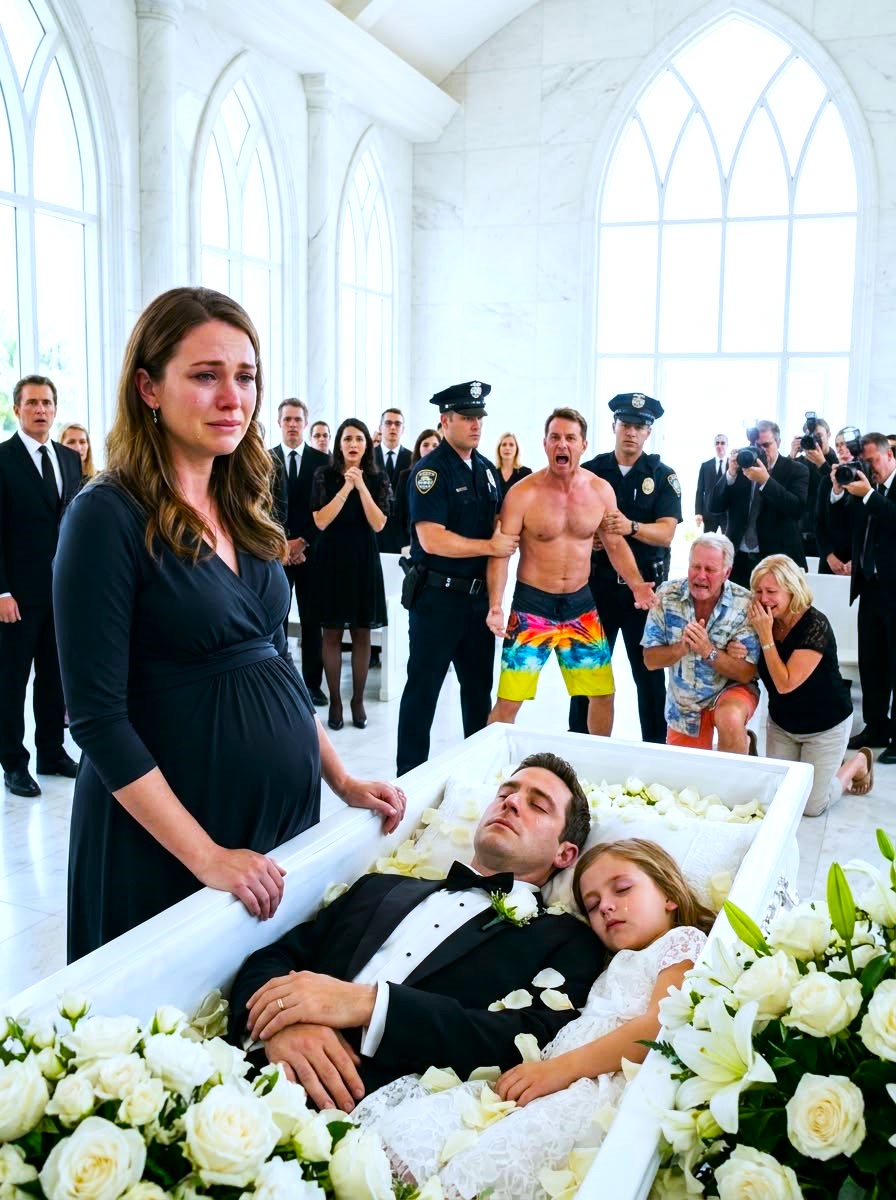
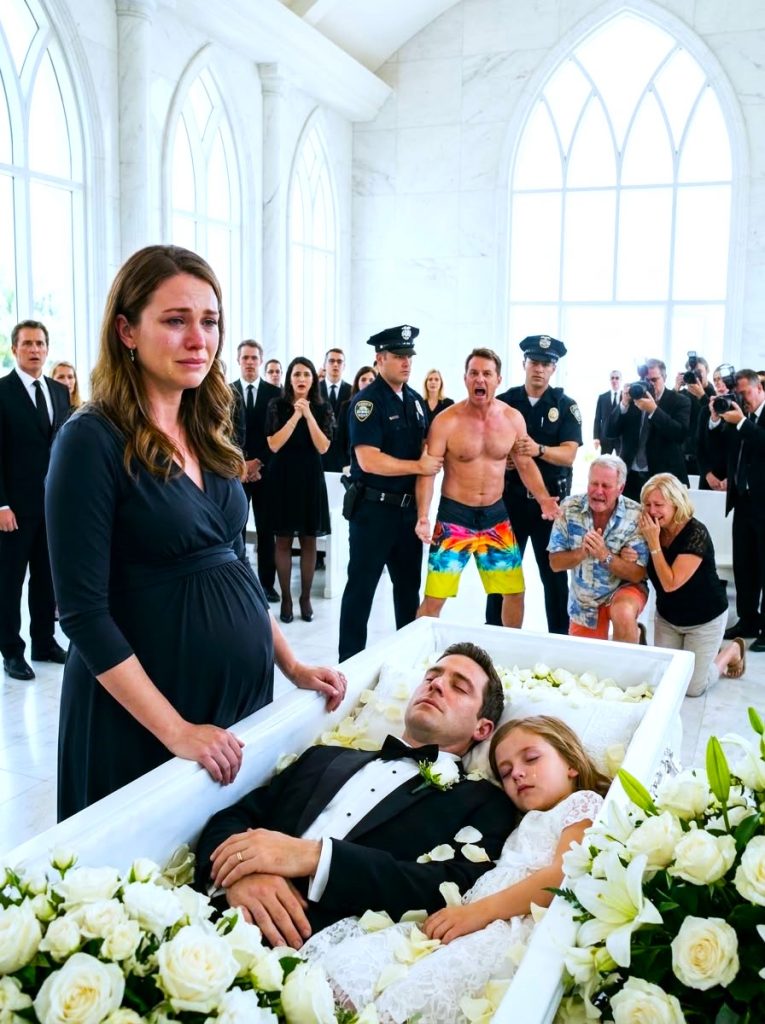
But I barely noticed. Nothing outside of me mattered anymore. Because standing in front of two graves, I was looking at the remains of the life I had spent years building. One coffin was dark mahogany. The other was small and white. My husband, Samuel, was in the first. My daughter, Penelope, was in the second.
Two people.
Two pieces of my heart.
Gone forever.
I stood there without moving.
People around me cried.
They whispered prayers.
They held umbrellas over each other.
But I remained still.
I couldn’t cry anymore.
The tears had stopped somewhere between the hospital hallway and the moment the doctor looked into my eyes and said the words no parent should ever hear.
“We’re sorry.”
That sentence had divided my life into two parts.
The life where Samuel and Penelope existed.
And the life where they didn’t.
Samuel was the kind of man who made ordinary moments feel special.
He wasn’t famous.
He wasn’t wealthy.
He didn’t own expensive things.
But he had a heart bigger than anyone I had ever known.
Every Sunday morning, he made pancakes for us.
He always made too many because he believed leftovers were “future happiness.”
Penelope would sit on the kitchen counter wearing her pajamas, watching him cook.
“Daddy, you’re the best pancake maker in the world,” she would say.
Samuel would look at me proudly.
“Did you hear that? I’m officially better than restaurant chefs.”
I would laugh.
He loved making her smile.
He loved making me smile.
He was my best friend.
My daughter was only seven years old.
Seven years of laughter.
Seven years of drawings on the refrigerator.
Seven years of bedtime stories.
Seven years of her little footsteps running through our home.
A week before the accident, she stood in front of me holding a piece of paper.
“Mommy, look!”
She had written her name.
The letters were uneven.
One was backward.
But she looked at that paper like she had created something priceless.
“Penelope,” I said, smiling, “this is beautiful.”
She crossed her arms proudly.
“I know. I made it myself.”
That was my last normal memory with her.
The accident happened three days later.
A truck lost control during a storm.
Samuel was driving Penelope home from school.
They never made it.
And now I stood beside their graves while the rain poured down.
Then my phone vibrated.
I slowly pulled it from my pocket.
A message from my mother.
I almost didn’t open it.
But something inside me told me I needed to see it.
The message contained a picture.
My parents were standing on a beach.
A beautiful beach.
Blue water.
White sand.
Bright sunlight.
My mother was wearing expensive sunglasses.
My father held a tropical drink.
And standing between them was my older brother, Marcus.
All three were smiling.
Below the picture, my mother had written:
“Sweetheart, we are so sorry we couldn’t make it. The flights were extremely expensive, and this vacation was already paid for. We thought it would be better not to waste the money. Funerals are emotionally exhausting. We hope you understand.”
I stared at the message.
My husband and daughter were being buried.
And my parents were worried about losing vacation money.
I felt something inside me go numb.
Then another message arrived.
“When you’re done with everything, call us. We need to discuss Samuel’s estate.”
I read that sentence several times.
Estate.
Not grief.
Not my daughter.
Not how I was surviving.
Money.
My aunt Josephine noticed my expression.
“Jane?” she whispered.
I looked up.
“Is everything okay?”
I locked my phone.
“No.”
She followed my eyes.
“Is it your parents?”
I nodded.
Her face changed.
“They didn’t come?”
I shook my head.
“They’re on vacation.”
My aunt closed her eyes.
For a moment, she looked like she was trying not to say something she would regret.
Finally, she whispered:
“Some people don’t understand what family means.”
I looked back at the two coffins.
I didn’t answer.
Because I was beginning to understand that too.
Three days later, I walked into my house.
But it didn’t feel like home anymore.
It felt like a place where memories lived.
Penelope’s yellow rain boots sat beside the front door.
She loved those boots.
Every time it rained, she begged me to let her jump in puddles.
Samuel’s coffee mug was still beside the kitchen sink.
The same chipped mug he refused to replace.
“It has personality,” he always said.
I touched it gently.
Then I pulled my hand away.
Because everything hurt.
The clock on the wall continued ticking.
The refrigerator continued humming.
The world continued moving.
Even though mine had stopped.
At exactly seven o’clock that evening, someone knocked.
Not softly.
Three hard knocks.
I slowly walked to the door.
For a moment, I hoped it was someone coming to help.
Someone bringing comfort.
Someone who cared.
Then I opened the door.
And I saw my parents.
My mother stood there wearing expensive linen clothes.
My father looked relaxed.
Behind them was Marcus, leaning against a luxury SUV.
They looked like people returning from a vacation.
Not people who had missed their granddaughter’s funeral.
My mother looked at my face.
“Jane,” she said, “you look terrible.”
I stared at her.
That was the first thing she said.
Not “I’m sorry.”
Not “How are you holding up?”
You look terrible.
My father walked inside without waiting.
His eyes moved around the room.
The furniture.
The decorations.
The television.
Like he was inspecting property.
My stomach tightened.
“Why are you here?”
My mother sighed.
“Don’t start.”
“Why are you here?”
She placed her handbag on the table.
“We need to talk.”
“About what?”
She looked at me.
“The insurance.”
I felt my entire body freeze.
“What?”
My father stepped forward.
“Samuel had a life insurance policy.”
I stared at him.
“My husband was buried three days ago.”
“We know.”
“And you came here for money?”
My mother frowned.
“That’s unfair.”
I laughed quietly.
A painful laugh.
“Unfair?”
She crossed her arms.
“Jane, after everything we’ve done for you, you owe us.”
The room became silent.
I looked at the people in front of me.
The people who raised me.
The people who were supposed to love me.
And I finally understood.
They didn’t see my pain.
They saw an opportunity.
“What exactly do I owe you for?” I asked.
My mother looked offended.
“For raising you.”
I nodded slowly.
“So being my parents was a loan?”
Nobody answered.
I continued.
“You missed Samuel’s funeral.”
Silence.
“You missed Penelope’s funeral.”
Silence.
“But you came three days later asking about money.”
My father’s face hardened.
“You are emotional.”
“No.”
I looked at him.
“For the first time in my life, I’m thinking clearly.”
Marcus stepped forward.
“Jane, stop making everyone the enemy.”
I turned toward him.
“You weren’t there either.”
He looked away.
“I was with Mom and Dad.”
“On the beach?”
He didn’t answer.
That was enough.
I walked to the door.
“Leave.”
My mother stared at me.
“Excuse me?”
“Leave my house.”
Her face became cold.
“You’ll regret treating your family this way.”
I opened the door.
“No.”
I looked at her.
“I regret trusting people who abandoned me when I needed them most.”
They left.
And when the door closed behind them, I finally collapsed.
Not because they hurt me.
Because I finally accepted the truth.
The people who share your blood are not always the people who stand beside you.
The next morning, Samuel’s attorney called.
His name was Robert.
“Jane, I need you to come to my office.”
“Why?”
“There are things Samuel wanted you to know.”
I arrived an hour later.
Robert placed a folder on the desk.
“Samuel updated his estate plan six months ago.”
I frowned.
“Why?”
Robert hesitated.
“Because he was worried.”
“About what?”
“Your parents.”
My heart sank.
“What do you mean?”
Robert opened the file.
“Samuel told me they had repeatedly asked you for money.”
I looked down.
He was right.
They had.
But I always defended them.
“They’re my parents,” I used to tell Samuel.
And he would gently reply:
“Being family doesn’t give someone permission to hurt you.”
Robert continued.
“Samuel made sure everything was protected.”
“Protected from who?”
Robert looked at me.
“Anyone who tried to take advantage of you.”
My eyes filled with tears.
Because even after death…
Samuel was protecting me.
The insurance money was not just money.
It was our daughter’s future.
My future.
A future Samuel wanted me to have.
But my parents didn’t know that.
And they were about to learn a painful lesson.
Three weeks later, my parents returned.
This time they didn’t come alone.
They brought documents.
My mother walked into my driveway confidently.
“We need to settle this.”
I looked at the papers.
“What is this?”
“A family agreement.”
I almost smiled.
Family agreement.
After everything?
“No.”
My mother looked shocked.
“You haven’t even read it.”
“I don’t need to.”
My father stepped forward.
“You owe us.”
I shook my head.
“No.”
He froze.
“No?”
“No.”
I looked at them.
“I spent my whole life trying to earn your love.”
My voice trembled.
“But I don’t have to anymore.”
My mother’s expression softened slightly.
“Jane…”
I interrupted.
“When Samuel died, I learned something.”
They waited.
“People show you who they are when life gets difficult.”
I looked at Marcus.
“You showed me.”
Then I looked at my parents.
“You chose a beach.”
I touched my heart.
“I chose my family.”
My mother started crying.
But for the first time, I didn’t feel responsible for fixing her emotions.
I walked back inside.
I closed the door.
And I began rebuilding.
Not because I forgot Samuel.
Not because I forgot Penelope.
But because they loved me enough to want me to keep living.
Months later, I planted a tree in the backyard.
A small one.
Penelope loved trees.
She once told me:
“Mommy, trees remember everything.”
I stood there holding the shovel.
Looking at the little tree growing from the earth.
And I whispered:
“I remember too.”
I remembered Samuel’s laugh.
I remembered Penelope’s smile.
I remembered the day I lost them.
But I also remembered the day I found myself.
Because sometimes the greatest strength comes from the moment everything breaks.
And sometimes losing the wrong people makes room for the right ones.
My parents wanted $40,000.
They thought money would prove they mattered.
But they never understood something.
The greatest inheritance Samuel left me wasn’t money.
It was the courage to finally choose myself.
And that was worth more than anything they could ever take.
THE END! THANKS FOR READING!